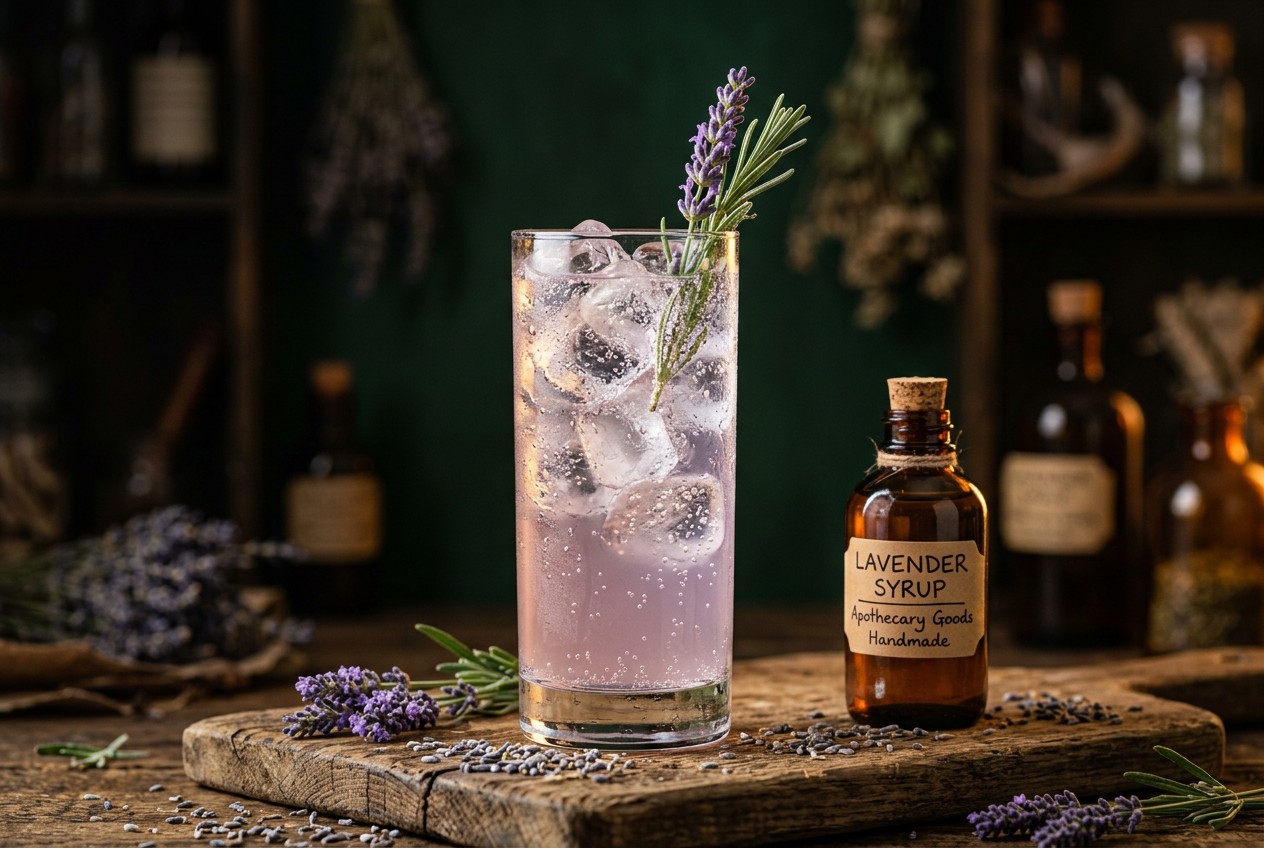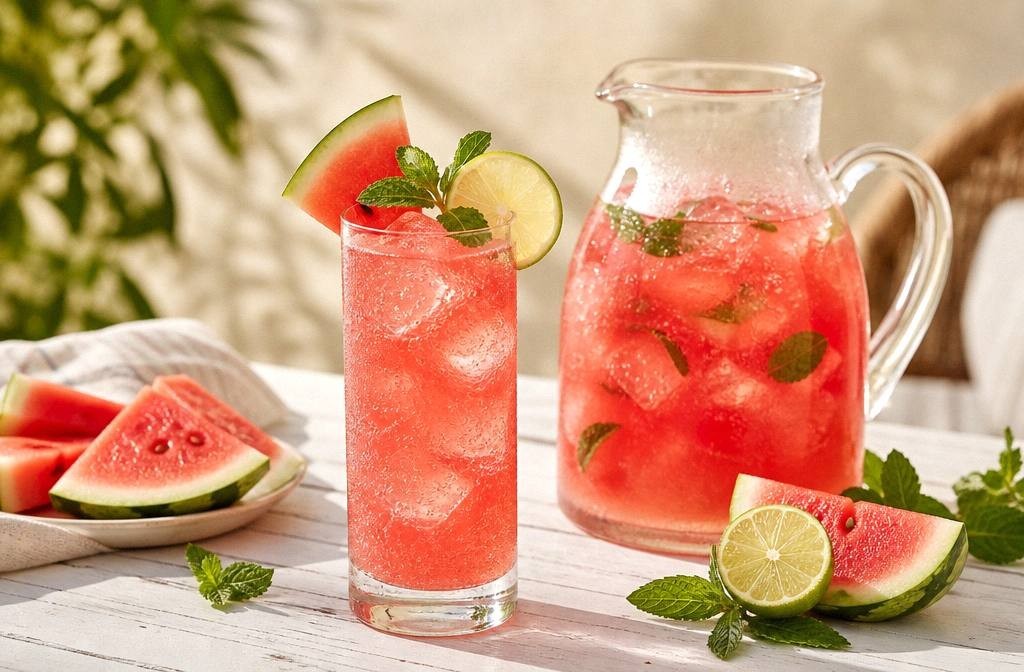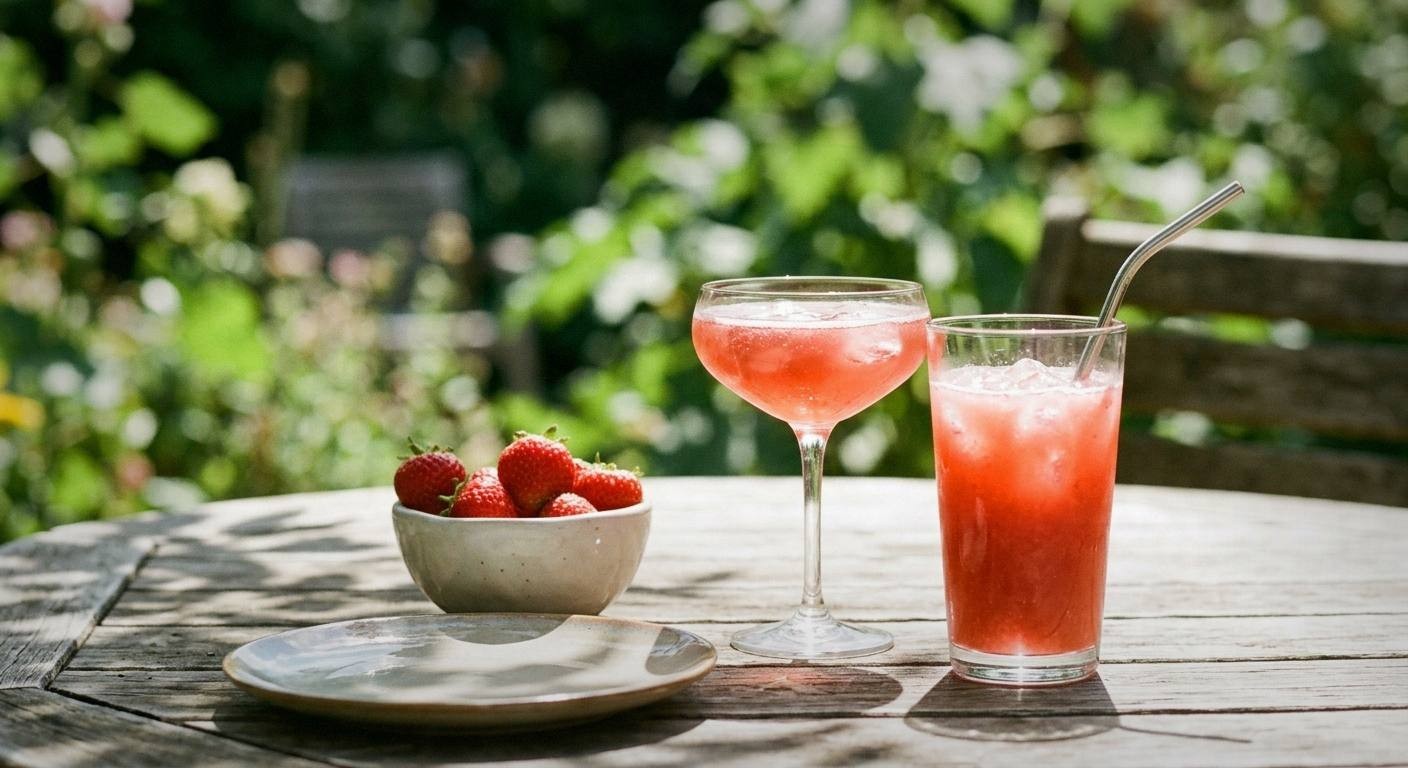
Pick a drink by the preparation you want to do. Basil and mint are individual glasses; rose and lavender are pitcher recipes; elderflower starts with a separate strawberry-basil syrup. Each recipe has its own quantities. None shares a universal strawberry-and-soda base.
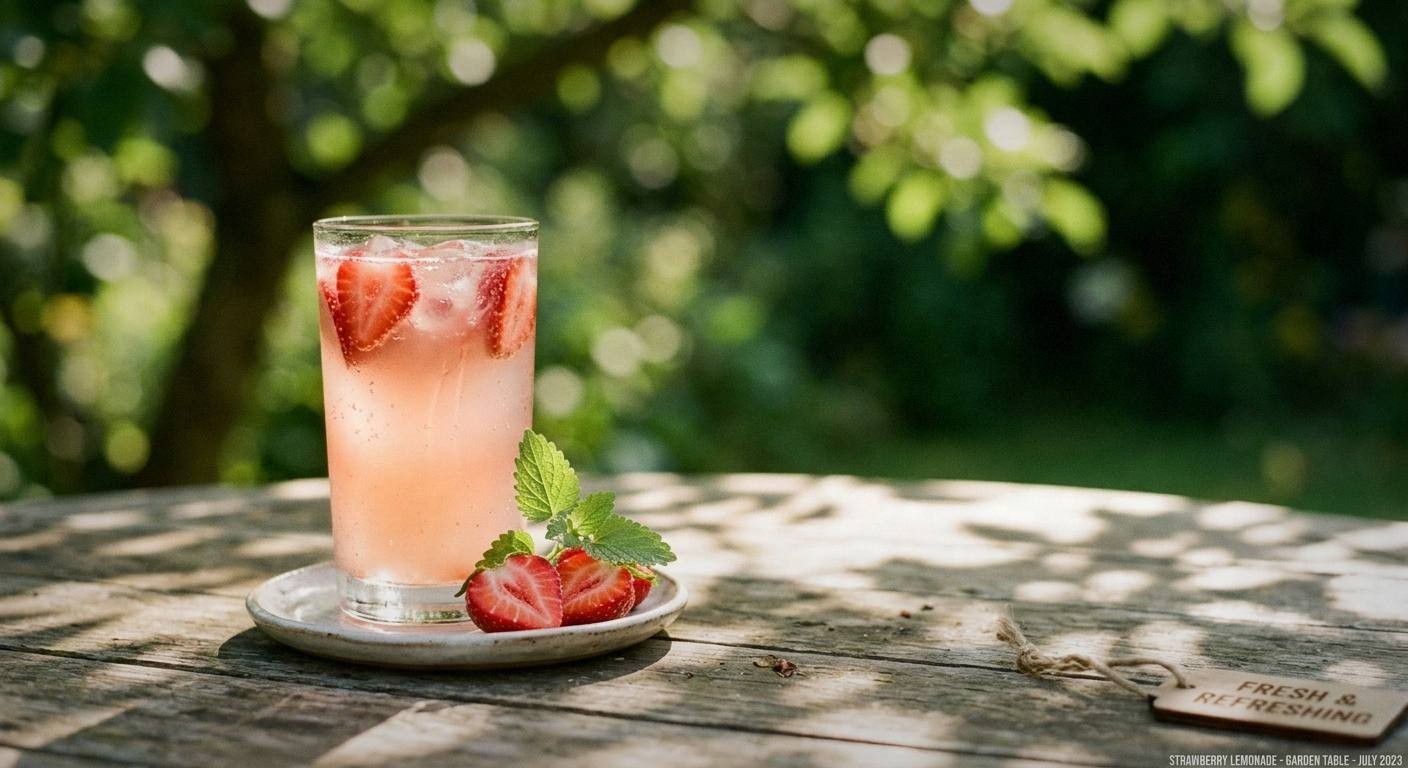
Compare the five preparations
| Drink | What to prepare | Serving basis |
|---|---|---|
| Basil fizz | Honey syrup, then muddle | One glass; extra syrup |
| Rose lemonade | Two cooked fruit/citrus components | Six servings |
| Mint mocktail | Muddle fruit, mint, lime and sweetener | One glass |
| Elderflower tonic | Blend, strain and simmer a fruit syrup | About 1 1/2 cups syrup; measure each glass |
| Lavender berry lemonade | Simmer lavender, cool and blend berries | Four glasses; mixed berries include strawberries |
1. Strawberry honey basil fizz
This follows Spices in My DNA’s published mocktail . For the syrup, heat 1/2 cup honey and 1/2 cup water just to boiling, remove from heat, stir until dissolved and cool. This makes a preparation to measure from, not one glass of syrup.
For one drink, muddle 1–2 sliced strawberries and 2–3 torn basil leaves in a glass. Add crushed ice, 3/4 oz fresh lime juice and 1 oz cooled honey syrup. Finish with 2–3 oz plain sparkling water, stir and optionally garnish with strawberry, lime or basil.
The separate TFA strawberry basil smash is a different measured build. Don’t combine its ratios with this one.
2. Strawberry rose lemonade
Maureen Abood’s complete published recipe serves six. Its two preparations use different sugar amounts:
- Lemon component: 1 cup sugar, 1 cup water and 1 cup fresh lemon juice.
- Strawberry component: 2 cups hulled, chopped strawberries, 1/2 cup sugar and 1 tsp culinary rose water.
- Finish: 4 cups ice-cold water, plus ice for serving.
Boil the lemon component’s sugar and water, then reduce heat and simmer 3–5 minutes until dissolved. Remove from heat, stir in strained lemon juice and cool. Separately bring strawberries and their sugar to a boil; simmer 3–5 minutes, mashing the juicy berries. Add the measured rose water and strain. Combine both cooled components with the cold water in a pitcher; add ice just before serving. The source allows more water, lemon or rose water to taste; those adjustments change the flavor and volume.
Use rose water sold for food use. It’s a flavoring, not a skin product or a treatment ingredient.
3. Strawberry mint mocktail
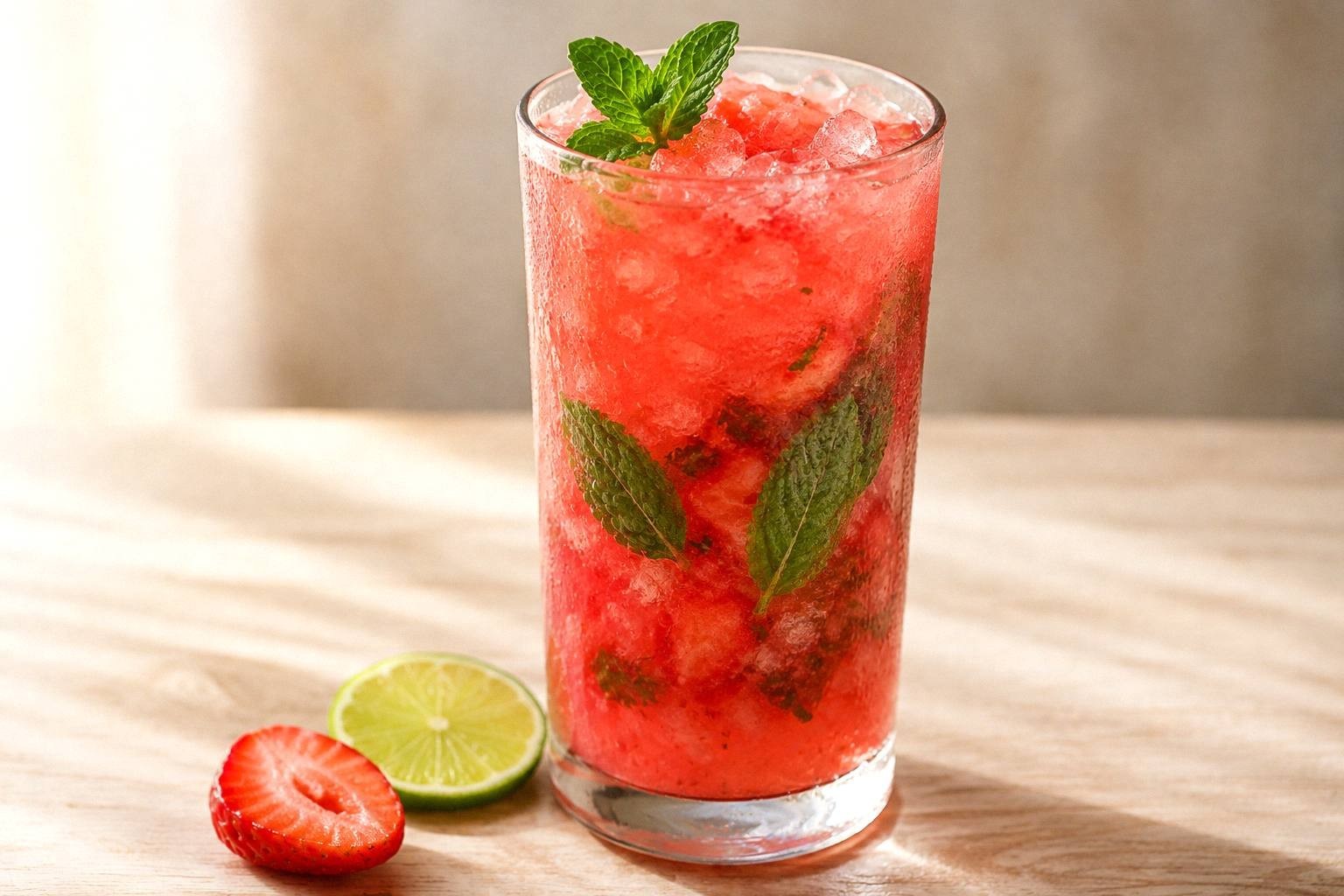
Love, Chef Laura’s published one-glass recipe uses 4 large strawberries, 6–8 large mint leaves torn in half, juice of 1/2 lime and 1 tbsp honey or maple syrup. Hull and chop the berries, then gently muddle them with the mint, lime and chosen sweetener. Add ice, top with a splash of club soda and stir. The source does not prescribe a fixed soda volume.
For a separate detailed mojito-style route, see the virgin strawberry mojito . Choose its full recipe rather than adding its ingredients to this glass.
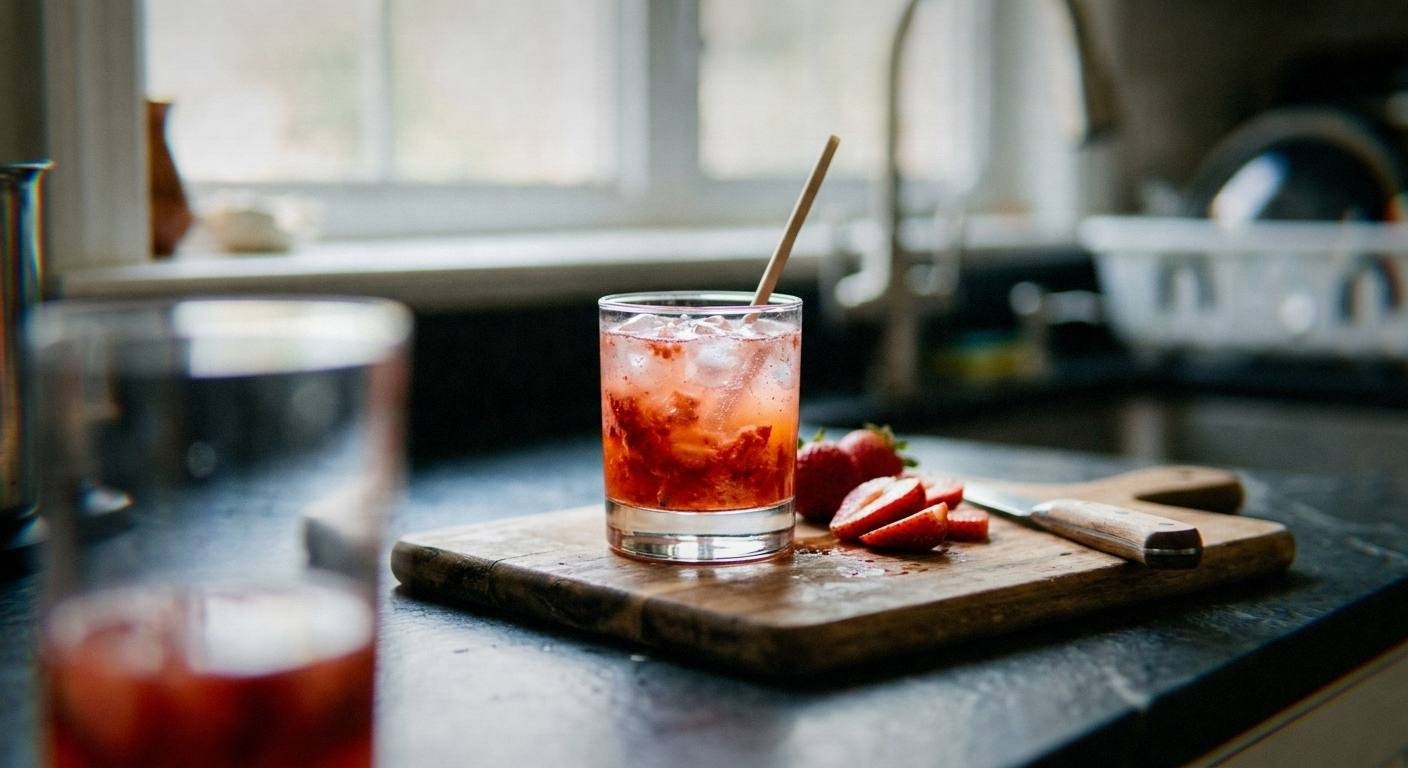
4. Strawberry elderflower tonic
Nguyet Vo’s The 5-30 makes about 1 1/2 cups strawberry-basil syrup. Blend 16 oz hulled strawberries, 1 cup sugar, 1 cup basil leaves, 1/4 cup lemon juice, 1/4 cup lime juice and 2 tbsp water for 30–60 seconds. Strain into a large saucepan, pressing the solids. Bring to a boil, then simmer low, stirring continuously, for about 10 minutes, until a thin syrup forms. Watch for boil-over. Refrigerate until very cold.
For a glass, stir about 3/4 oz syrup with about 4 oz chilled elderflower tonic water, or tonic to taste, in a coupe. The syrup batch yield is not a finished-drink yield. Elderflower tonic is the mixer here; liqueur would add alcohol and is not the specified ingredient.
The elderflower cordial guide covers another ingredient; cordial and elderflower tonic are not interchangeable at identical amounts.
5. Lavender berry lemonade
Trinity Health Michigan’s Berry Lavender Lemonade makes four glasses using 4 cups water, 2 tbsp dried culinary lavender, 2 tbsp honey, juice of 2 large lemons, 1 cup mixed strawberries/blueberries/raspberries and 1 cup optional ice.
Bring the water to a boil; add lavender and simmer low for 10 minutes. Remove from heat and dissolve the honey. Cool in the refrigerator for 2 hours, then strain into a pitcher. Puree the mixed berries, optionally strain out seeds, then combine with the lemon juice and lavender infusion. Divide among four glasses with optional ice. This is a still-water mixed-berry drink, not an all-strawberry sparkling variation.
The lavender honey lemon mocktail has a different fresh-lavender formula. Its bud quantity is not a dried-lavender conversion.
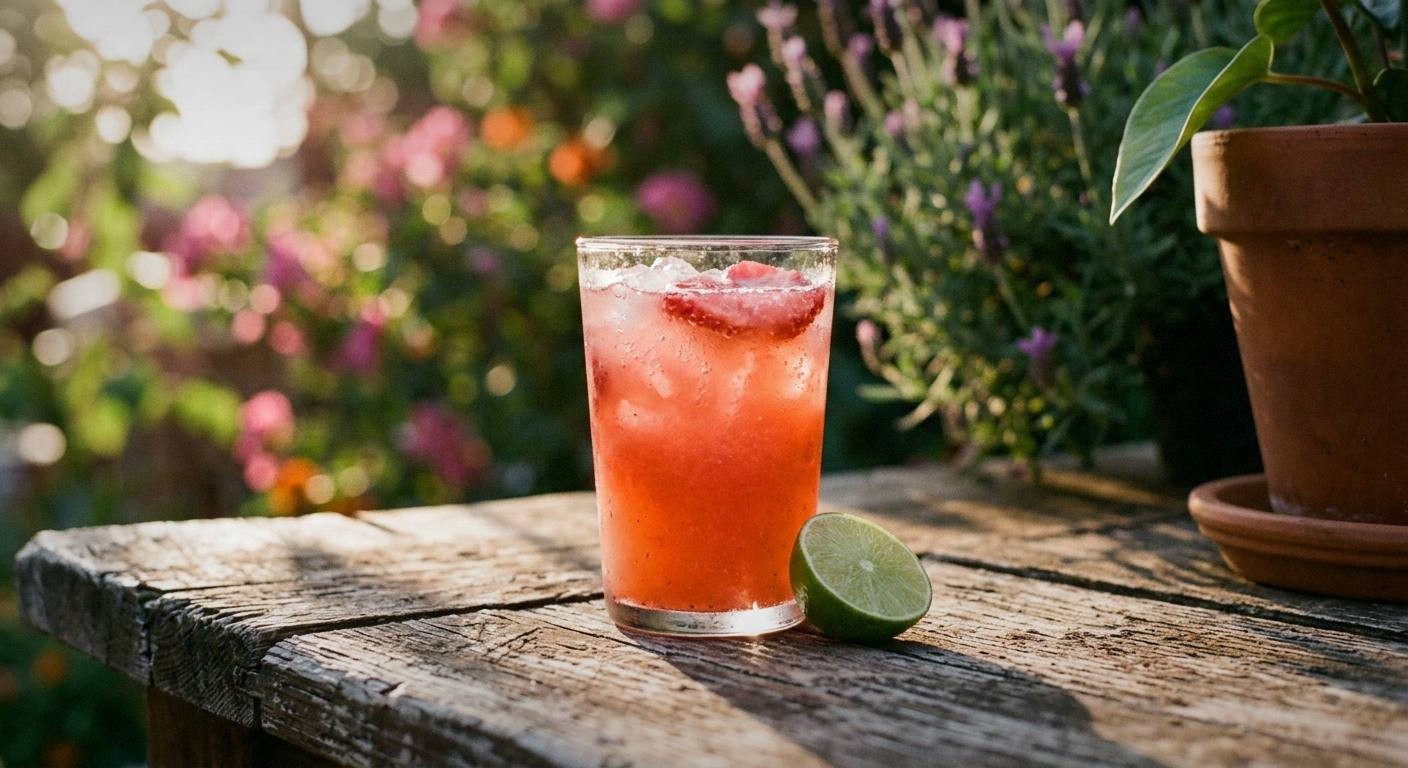
Shop and serve by the recipe you chose
For a few immediate glasses, choose basil or mint. For a pitcher, rose yields six servings and lavender four; their waiting and cooking steps differ. Elderflower requires a cold syrup first. Measure that syrup per glass rather than dividing its whole batch into a guessed number of drinks.
FDA produce guidance recommends washing fruit under running water; don’t wash berries with soap. Use clean equipment and ingredients sold for food use. These recipes do not establish a combined-base storage life or treatment benefit. For mixer and syrup distinctions, use the mocktail pantry guide .