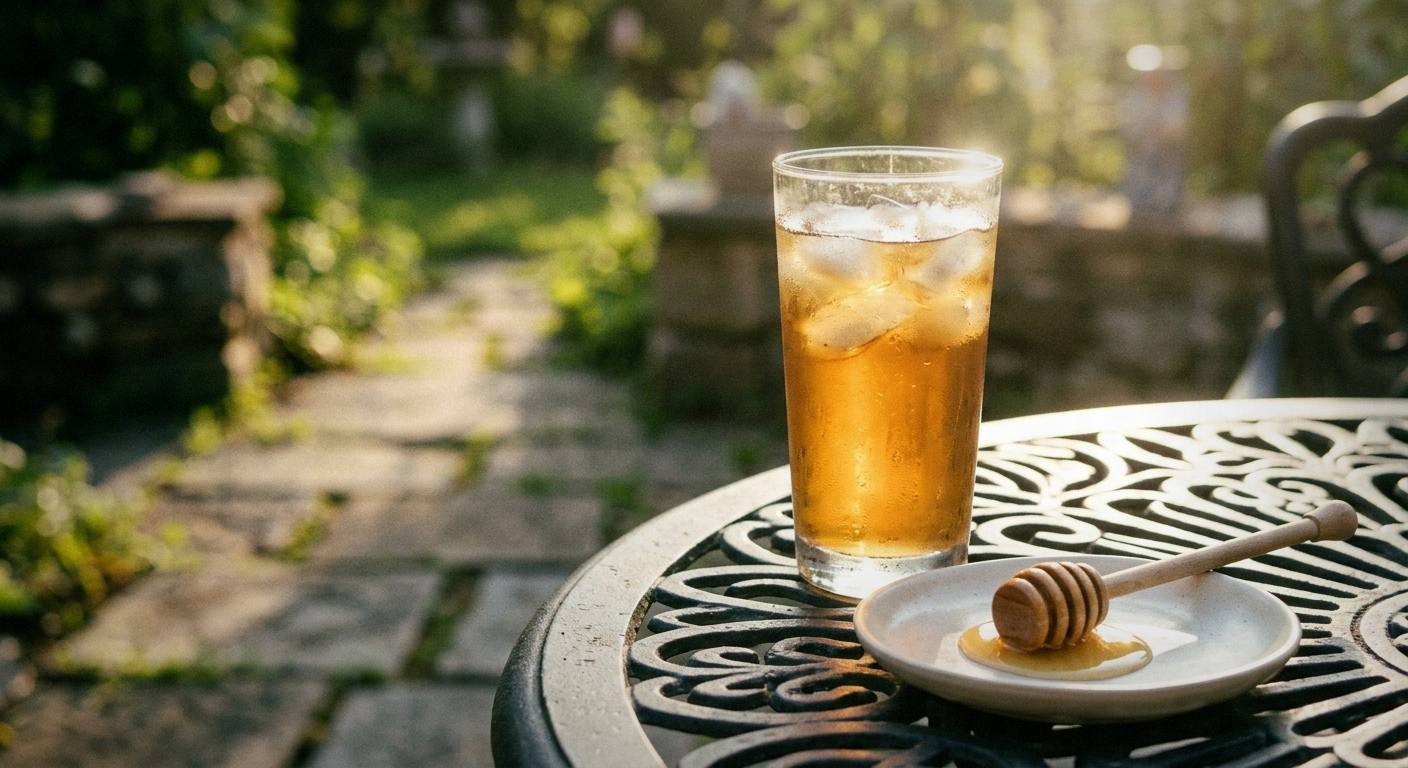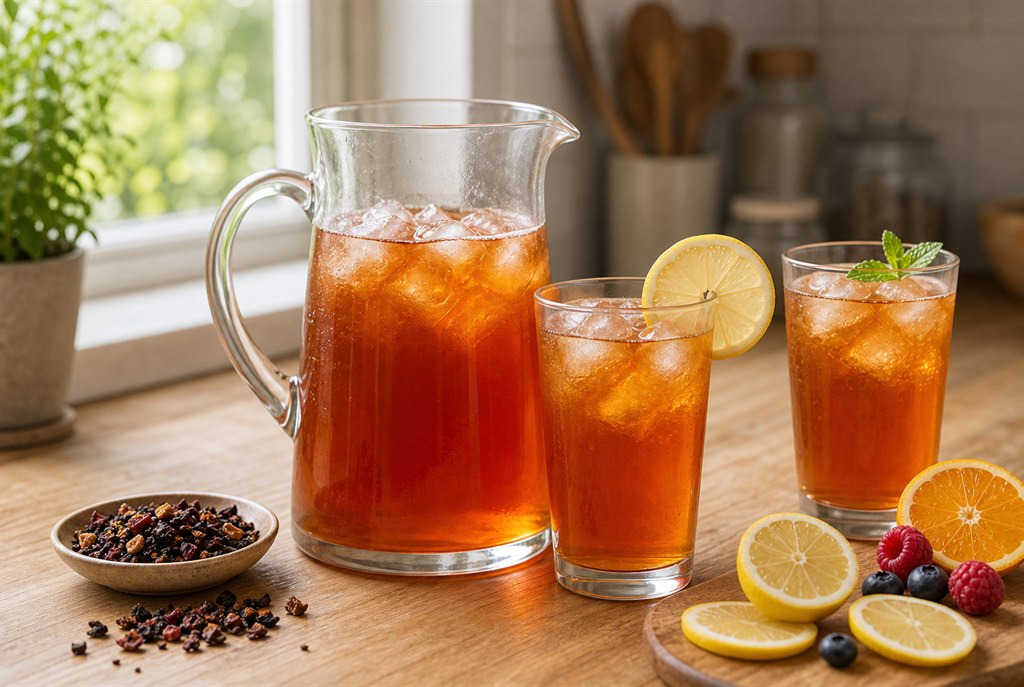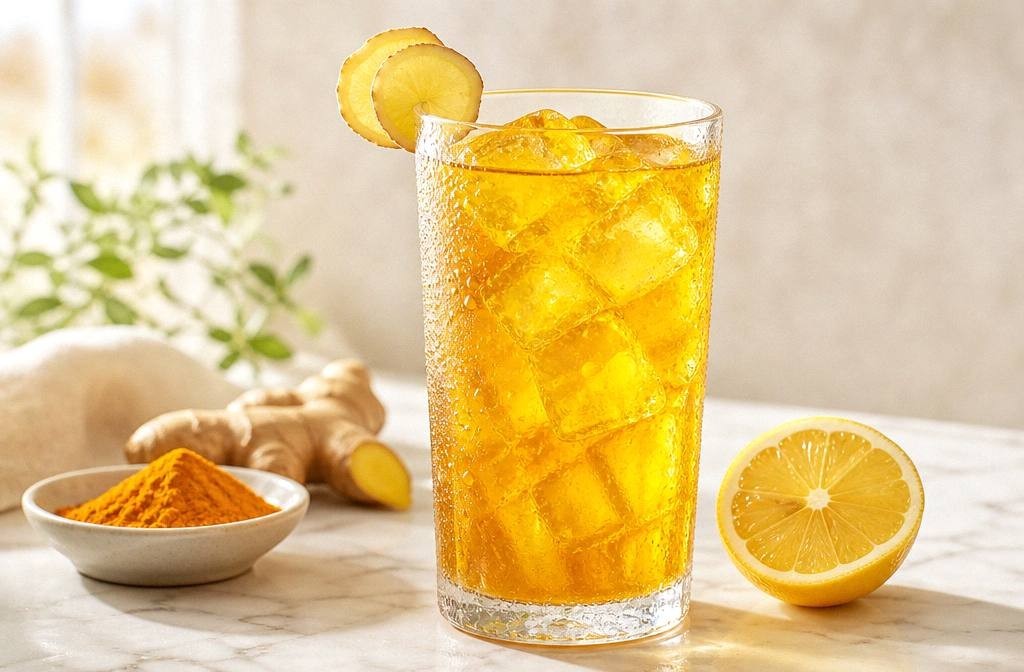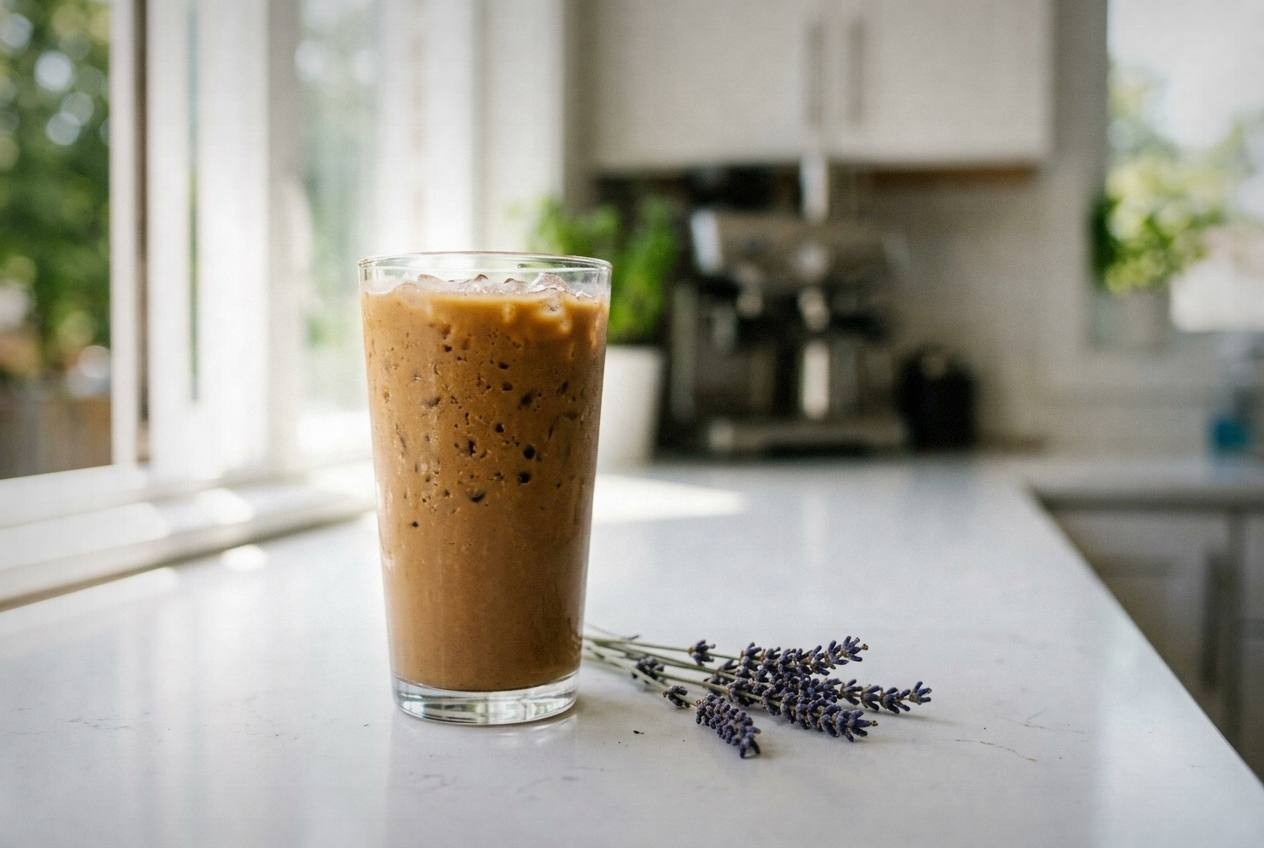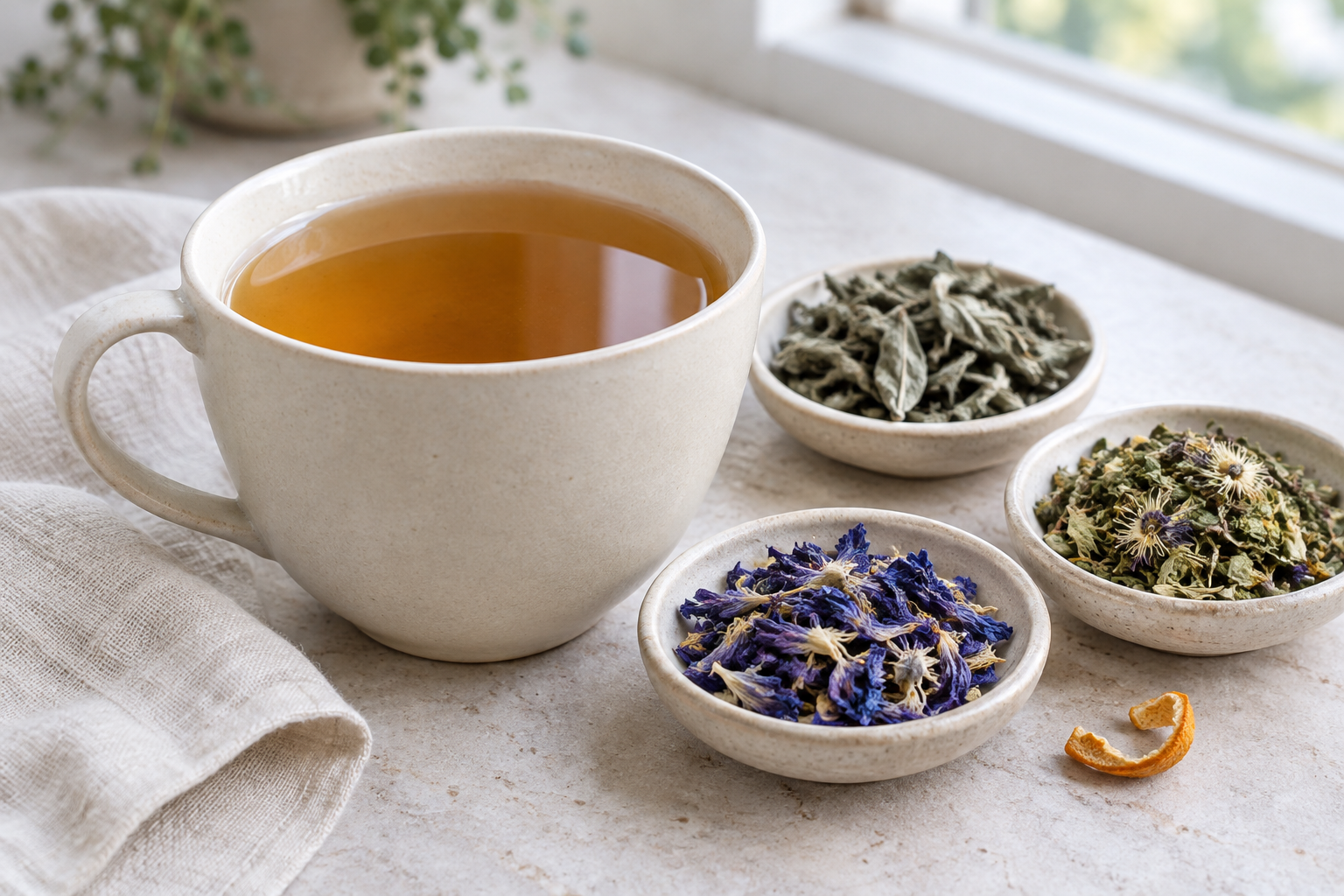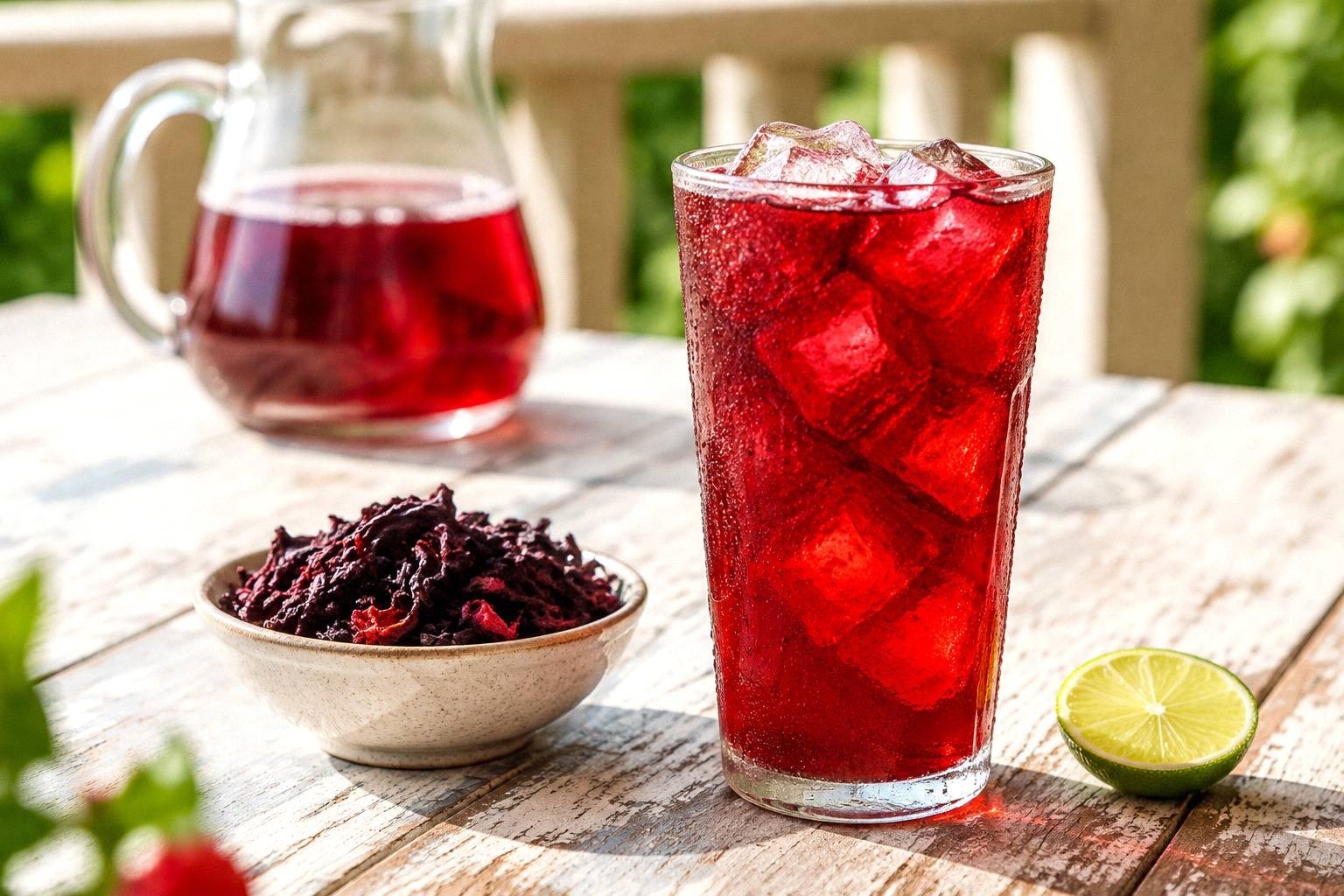
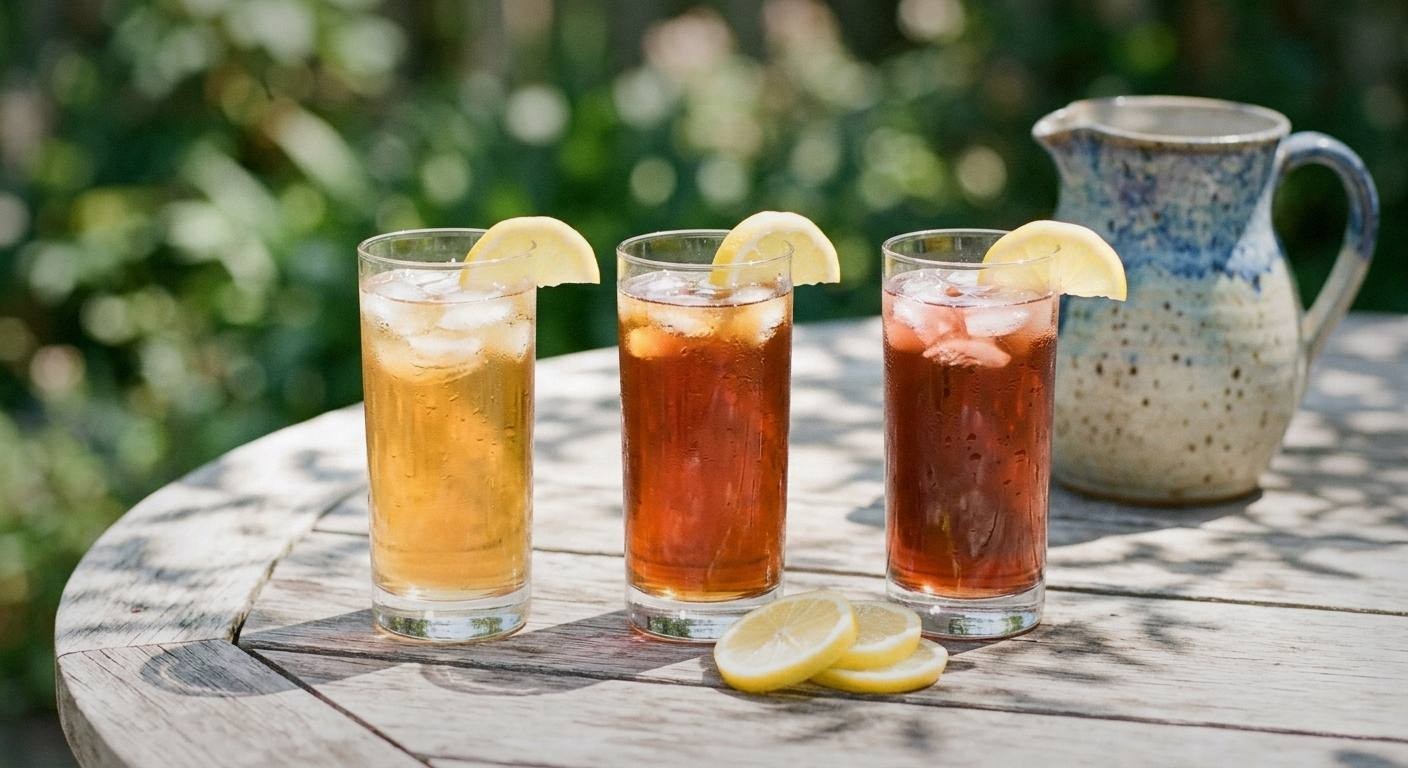
These seven iced teas are original culinary flavor builds. Brew the botanicals hot, then chill promptly. The earlier overnight cold extraction, accidental counter-steep story and two-hour room-temperature shortcut are removed. No kitchen or shelf-life testing is claimed.
BfR herbal-tea hygiene advice calls for boiling water and at least five minutes of infusion. Follow any longer package instructions. Harney’s herbal preparation guidance supports boiling water, five-minute steeping and measured loose tea; Simply Recipes’ agua de jamaica supports hot hibiscus extraction followed by chilling. These support the method, not an identical source recipe for each house combination.
Ingredients and Infusion Times
Each option starts with 4 cups (32 fluid ounces) water and makes four portions of strained tea, with volume losses to the botanicals. Use a heat-safe vessel holding at least 6 cups; a quart jar is too small for four cups water plus herbs. Ice and optional sparkling water are extra. Wash fresh fruit and herbs under running water.
Use products labeled for food or tea, not decorative flowers, essential oils, supplement extracts or casually identified foraged plants. Check the species, ingredients, preparation directions and suitability warnings on the product. A culinary name alone does not establish suitability for every person. Honey-containing versions are not for infants under 12 months.
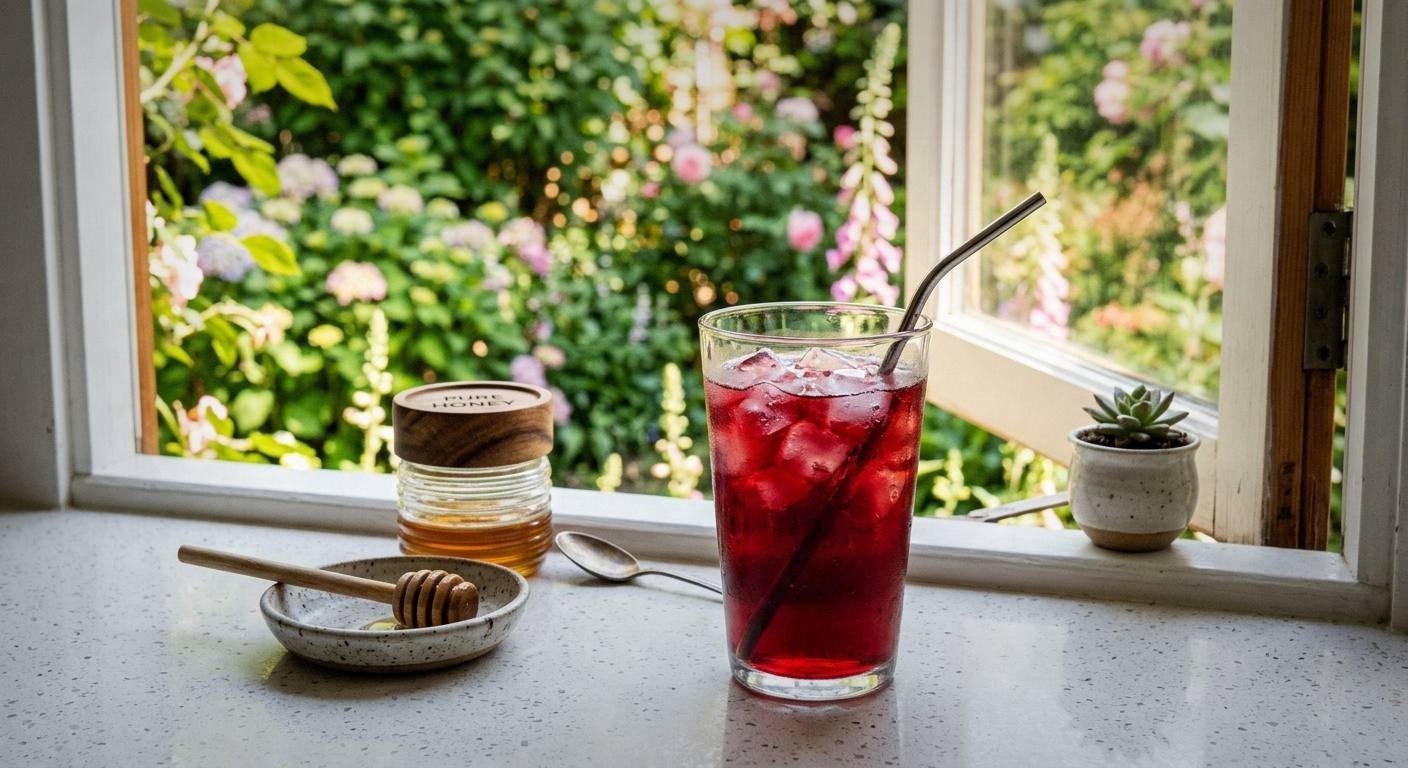
1. Hibiscus Lime Cooler
- 1/4 cup dried food-use hibiscus (Hibiscus sabdariffa)
- 4 cups freshly boiling potable water
- 2 tablespoons honey
- 2 tablespoons fresh lime juice
- 4 small washed mint leaves, optional
Infusion time: 10 minutes. Sweetener and fruit additions come after straining.
2. Mint Limeade Tea
- 1/2 cup washed fresh spearmint leaves
- 4 cups freshly boiling potable water
- 1 tablespoon maple syrup
- 2 tablespoons fresh lime juice
- 4 lime wheels, optional
Infusion time: 5 minutes. Sweetener and fruit additions come after straining.
3. Butterfly Pea Lemonade
- 2 tablespoons dried food-use butterfly pea flowers (Clitoria ternatea)
- 4 cups freshly boiling potable water
- 2 teaspoons agave nectar
- 2 tablespoons fresh lemon juice
- 4 lemon slices, optional
Infusion time: 5 minutes. Sweetener and fruit additions come after straining.
4. Chamomile Peach Fizz
- 4 single-cup pure chamomile tea bags, each labeled for 8 fluid ounces
- 4 cups freshly boiling potable water
- 1/4 cup commercially pasteurized peach juice
- 1 tablespoon honey
- 1 cup chilled sparkling water, optional, divided across 4 glasses
Infusion time: Follow the package, at least 5 minutes. Sweetener and fruit additions come after straining.
5. Rose Lavender Iced Tea
- 1 tablespoon dried food-use rose petals (Rosa damascena)
- 1 teaspoon culinary lavender buds (Lavandula angustifolia)
- 4 cups freshly boiling potable water
- 2 tablespoons honey
Infusion time: 5 minutes. Sweetener and fruit additions come after straining.
6. Nettle Mint Tea
- 4 single-cup nettle leaf tea bags, each labeled for 8 fluid ounces
- 4 cups freshly boiling potable water
- 8 washed fresh spearmint leaves
- 1 tablespoon fresh lemon juice
- 4 washed cucumber slices, optional
Infusion time: Follow the package, typically 10 to 15 minutes. Sweetener and fruit additions come after straining. For another measured nettle blend with oatstraw and lemon balm, see this nettle and oatstraw iced tea ; its page does not claim a measured magnesium amount.
That iced tea uses a different blend and package directions. A concentrated nettle, oatstraw and red-clover infusion is documented in this separate preparation-limits review ; its former long cold-steep directions are withdrawn.
7. Rooibos Orange Ginger
- 4 teaspoons loose rooibos (Aspalathus linearis)
- 1 teaspoon dried food-use ginger pieces
- 4 cups freshly boiling potable water
- 2 tablespoons honey
- 4 washed orange wheels
Infusion time: 5 to 10 minutes. Sweetener and fruit additions come after straining.
The butterfly-pea method is supported by Harney’s product guidance , which uses boiling water for five minutes. Acid changes its color, but no exact finished pH is promised. The chamomile and nettle versions use measured single-cup bags rather than equating arbitrary loose spoon volumes with bags. Traditional Medicinals chamomile and nettle leaf give product-specific preparation and cautions. Do not use a senna/chamomile laxative blend as plain chamomile.
Shared Method
- Put only the selected tea botanicals into a clean heat-safe vessel. For nettle mint, include the mint with the bags. For rooibos ginger, include the ginger with the rooibos. Keep fruit, sweetener, garnishes and sparkling water separate.
- Pour 4 cups freshly boiling potable water over the botanicals. Cover and infuse for the option’s stated time, at least 5 minutes and any longer time required by the package. Protect hands from steam and hot glass.
- Strain or remove the bags. Stir in the selected sweetener while the infusion is warm.
- Cool promptly using a clean ice-water bath around the vessel or divide into shallow heat-safe containers and refrigerate promptly. Do not wait for the tea to cool completely on the counter. Keep covered once chilled at 40 F (4 C) or below.
- Add the measured juice and prepared fruit at service. For the chamomile option, stir in the 1/4 cup peach juice, divide into four glasses and optionally add 1/4 cup sparkling water per glass. For the rooibos option, divide the orange wheels among four glasses. Add optional garnishes and serve over ice.
Preparation takes about 10 minutes, plus 5 to 15 minutes of infusion and variable chilling. A one-hour or overnight chilling promise is not a temperature endpoint; check that the tea has chilled through. Finished portions are divided evenly, not guaranteed eight-fluid-ounce glasses after straining and additions.
Storage and Variations
Prepare only what you need for the day, refrigerate promptly and use the same day. This conservative plan is not a tested storage life. The former three-day flavor and safety promise is removed. Tea cubes may be made from a freshly prepared, properly handled batch in clean covered freezer trays; no freezer life is established here.
For eight portions, double every measured ingredient and the starting water, using a vessel with adequate spare capacity. Keep the same infusion time; chill in smaller containers. Optional sparkling water is added at service. Do not mix botanical recipes into a new medicinal blend. An optional sweetener omission changes flavor; a juice substitution must be commercially pasteurized and used at service.
Keep perishable drinks at 40 F (4 C) or below, using a thermometer to check. Discard after more than two cumulative hours without cold holding, or one hour above 90 F (32 C). FoodSafety.gov explains these handling limits. Ice nearby and shade alone do not establish the drink temperature. Normal smell and appearance do not prove safety.
Use potable tap or bottled water; filtration is a flavor preference, not a substitute for hygienic brewing. Tea-bag contents vary, so no universal 50-percent bag conversion is provided. Sun tea, prolonged counter extraction, diuretic claims, nutrient rankings, bedtime effects and unverified precise color/shelf-life predictions are removed.