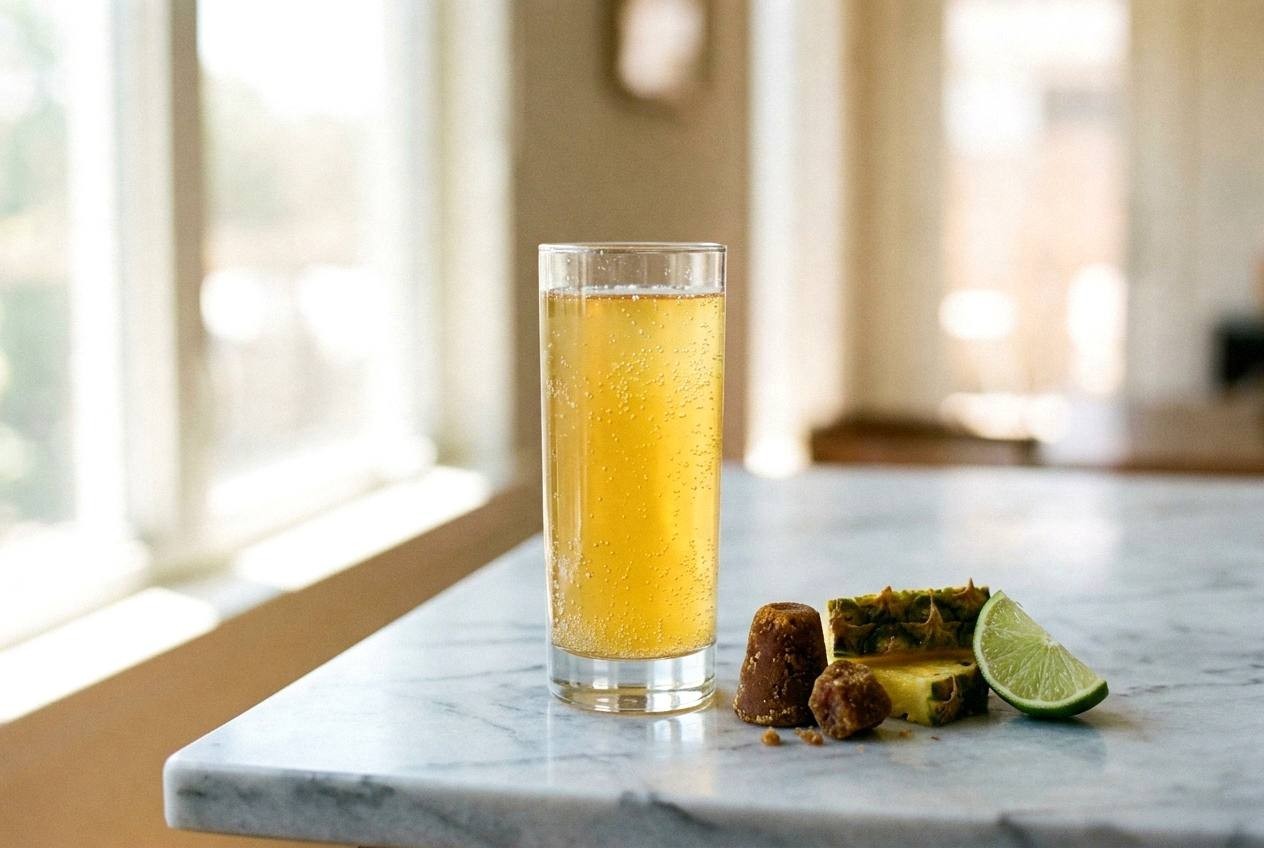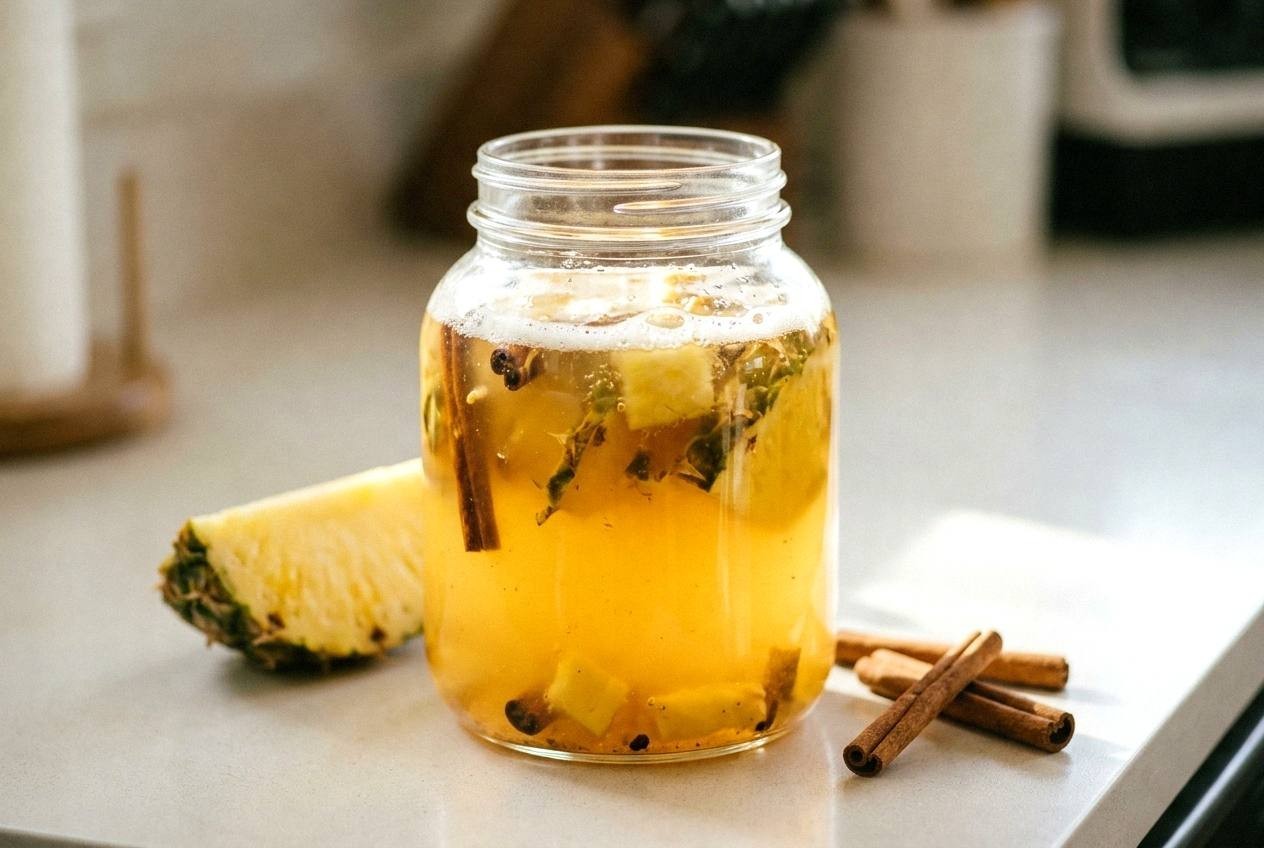
How Long to Ferment Tepache?
This page cannot establish a safe fermentation endpoint for a home batch. The previous two-to-four-day chart and temperature-specific tasting schedule are withdrawn. A shorter ferment is not proof of a low alcohol content or safe product.
Audit hold: This page does not establish a validated home tepache process. Preparation, tasting, bottling, second-fermentation and consumption directions are withdrawn pending a recipe-specific safety review. Linked TFA recipes and troubleshooting pages do not release this hold. No safe storage period or alcohol level is established here.
Public-health fermentation guidance describes the need for process-specific controls. It is not a validated tepache recipe. A tepache fermentation study measured changing sugars, acids and ethanol over time in its particular process; those measurements cannot certify a different home batch. Smell, bubbles, sweetness and sourness do not measure pathogens, alcohol or safe bottle pressure.
Refrigeration can slow microbial activity; it does not sanitize a questionable ferment. Freezing also does not release the hold. A sealed ferment can generate gas and pressure. A clock, headspace, refrigeration, or routine burping is not a validated pressure-control plan. Do not attempt to rescue a suspect batch by tasting, diluting, freezing, heating, or using it in food.
What Research Supports
In one published tepache study , investigators observed shifts in sugars, acids, ethanol and microbial communities over 72 hours. That is evidence of fermentation chemistry in the studied process, not a home recipe, challenge study or shelf-life guarantee. It does not validate the former 36-hour taste check, day-two bottling endpoint or twelve-hour carbonation window.
Rick Bayless’s complete culinary recipe describes a variable fermentation period, whereas Allrecipes tepache uses a different pineapple, sugar and spice formula with a two-day schedule. These are useful recipe references, not evidence that this guide’s precise temperature chart, sealed carbonation schedule or skimming decisions apply universally. The hold concerns the incomplete TFA procedures and unresolved controls here; it is not a finding that all culinary tepache recipes are unsafe.
Withdrawn Procedures and Claims
The daily timeline, counter/fridge cycling, daily stirring, “give it another twelve to twenty-four hours” correction, sealed second ferment, over-fermented drinking-vinegar use and lime/honey/sparkling mixer are on hold. Their preparation, tasting and consumption directions are removed. The suggestion that pineapple could be washed “too aggressively” is also withdrawn: FDA recommends washing produce under running water ; retaining surface microbes is not a reason to omit hygiene.
Homemade tepache may contain alcohol. Neither ferment duration nor taste establishes its amount. The claim that it is always in the same trace-alcohol range as kombucha or kefir is withdrawn. This page does not support presenting an unmeasured ferment as alcohol-free or advising someone how to increase its alcohol content.
The storage guide and surface-growth guide explain why cold storage and normal appearance do not clear a batch. A recipe-specific process, alcohol assessment, pressure controls and storage evidence remain unresolved.