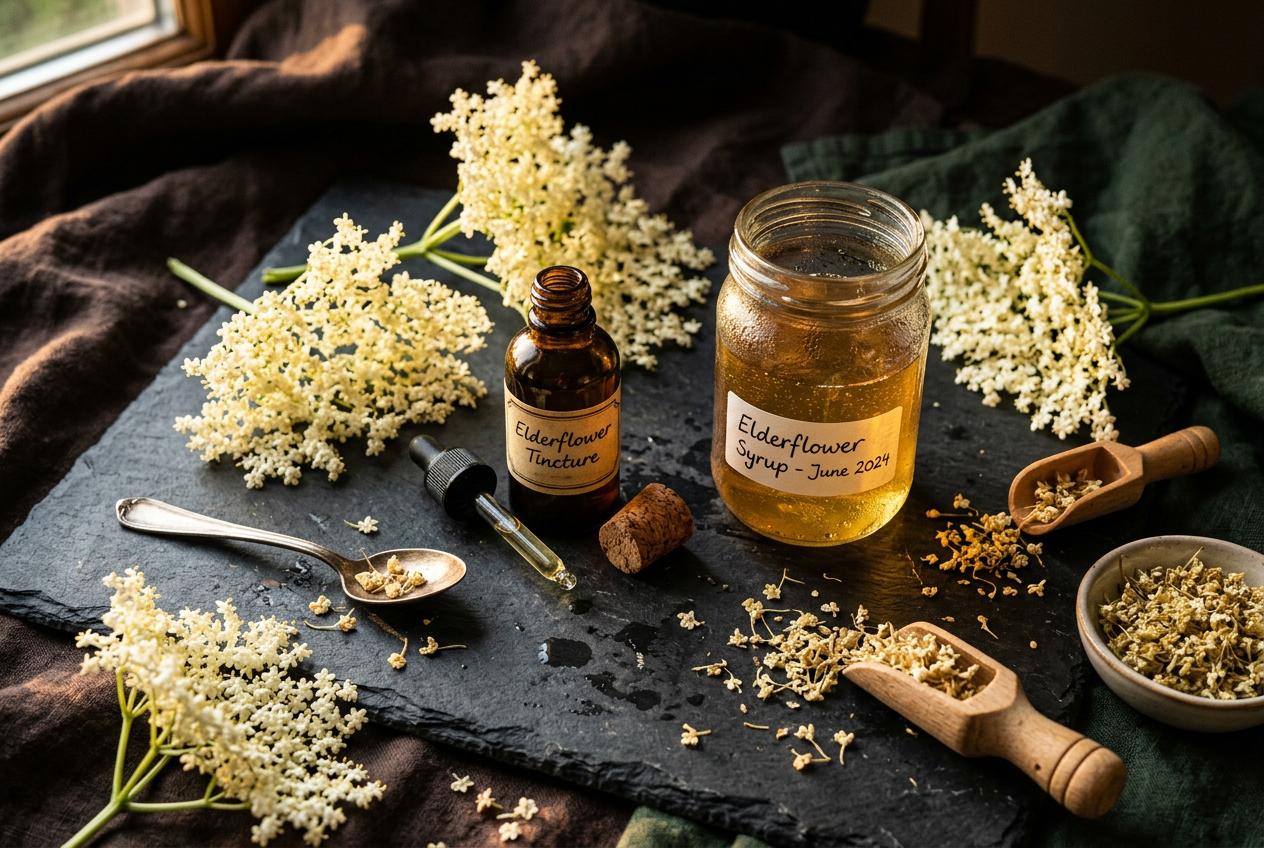
An herbal tincture is an alcohol extract. Its concentration depends on the identified plant part, moisture, solvent strength and extraction process. A jar fraction and a dropper count cannot establish a safe supplement dose.
Audit hold: The former folk method, generic weight-to-volume method, six herb-specific formulas and drink-dosing directions are withdrawn. Do not prepare or consume supplements using those instructions. No working quantities, extraction steps or Recipe output are supplied here.
What Was Unresolved
The former guide treated fresh and dried plants inconsistently, recommended very strong alcohol broadly, and gave one dose range for unlike extracts. It mixed alcohol percentage with US proof terminology. A ratio is a relationship between plant mass and solvent volume; it is not the final potency, safety or milligrams per drop.
Lemon balm, calendula, fresh ginger, chamomile, peppermint and elderberry require plant-part and product-specific assessment. The dried-elderberry alcohol soak omitted a demonstrated heat treatment. NCCIH’s elderberry information describes toxic constituents in raw or unripe berries and other parts; an alcohol soak is not an established substitute for appropriate cooking.
The Mountain Rose Herbs extraction guide differentiates solvent strengths and notes that very high alcohol is not needed for most plant materials. That overview does not establish the suitability, final concentration or dose of the six withdrawn TFA extracts.
Drops and Drinks
Droppers and individual drops vary. Water, juice, tea, sparkling water, smoothies, sodas, shrubs and cocktails do not correct an unknown dose or unsafe plant material. Hot tea is not a verified method for removing all alcohol. The former sublingual, dropper-range and drink-delivery instructions are held along with custom blends, glycerin additions, wildcrafting and long storage assurances.
NCCIH’s supplement guidance explains that products can differ from studied preparations and can interact with medicines. Pregnancy, breastfeeding, children and medical conditions need individual assessment. A clinician or pharmacist can review a named, labeled product; this page does not supply a home dosing regimen.
What Would Be Needed Before Restoring a Procedure
A specific botanical identity and plant part, food or supplement suitability, product concentration, appropriate solvent and dilution controls, handling and storage evidence, and an independently supported intended use are needed. Where raw plant toxicity is relevant, a validated treatment must be specified. These are unresolved questions about these extracts, not a claim that ordinary culinary ginger or mint drinks are unsafe.
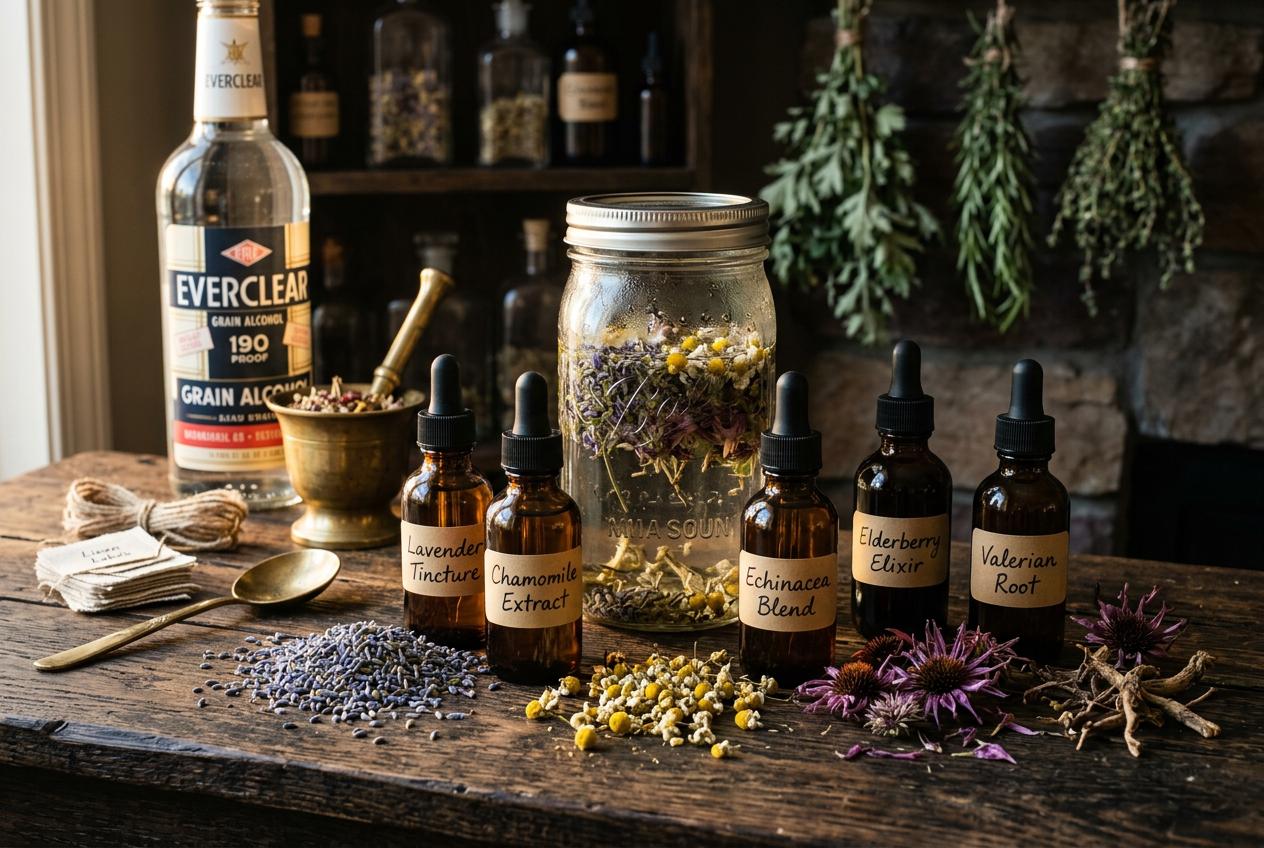
This review did not test extraction, potency, alcohol, contamination or shelf life. Images of jars and droppers do not establish any of those measurements.