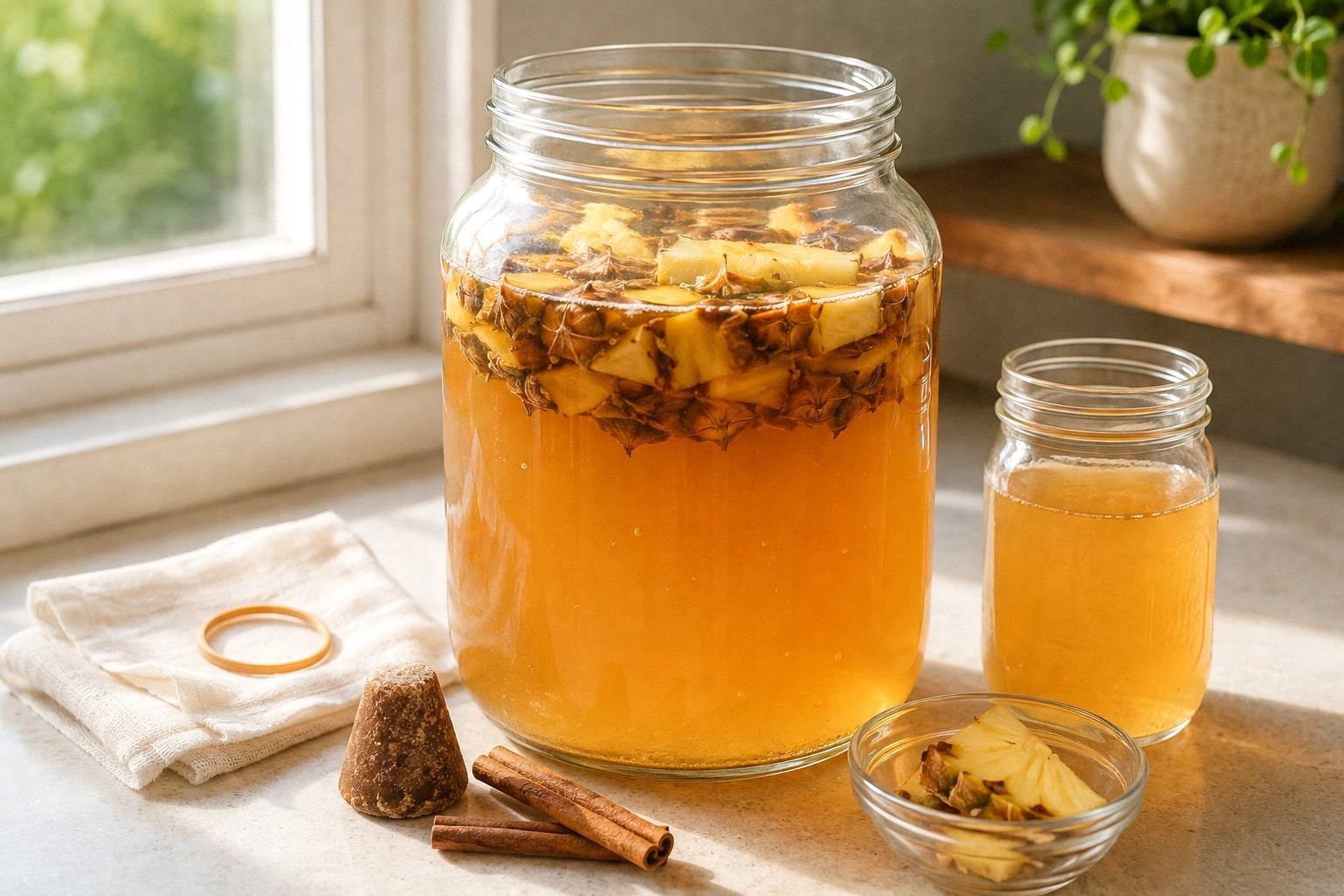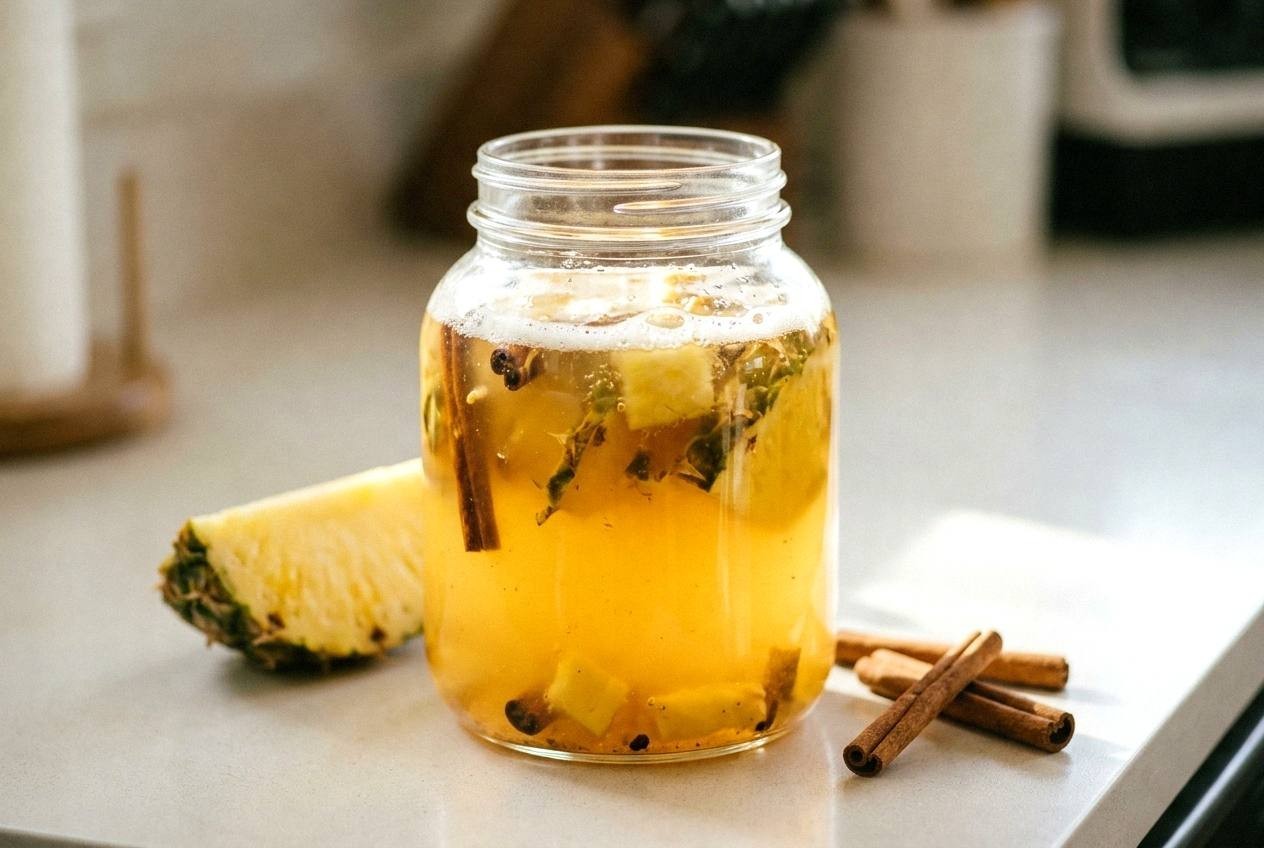
Tepache Mold and White Films
Do not taste a suspect batch or skim surface growth and then drink what remains. A white film is not a reliable identification of a harmless organism. White growth can also be mold. Color, texture and odor alone cannot establish that a home ferment is safe.
Audit hold: This page does not establish a validated home tepache process. Preparation, tasting, bottling, second-fermentation and consumption directions are withdrawn pending a recipe-specific safety review. Linked TFA recipes and troubleshooting pages do not release this hold. No safe storage period or alcohol level is established here.
Public-health fermentation guidance describes the need for process-specific controls. It is not a validated tepache recipe. A tepache fermentation study measured changing sugars, acids and ethanol over time in its particular process; those measurements cannot certify a different home batch. Smell, bubbles, sweetness and sourness do not measure pathogens, alcohol or safe bottle pressure.
Refrigeration can slow microbial activity; it does not sanitize a questionable ferment. Freezing also does not release the hold. A sealed ferment can generate gas and pressure. A clock, headspace, refrigeration, or routine burping is not a validated pressure-control plan. Do not attempt to rescue a suspect batch by tasting, diluting, freezing, heating, or using it in food.
What the Visual Clues Can Tell You
Fuzzy, raised or colored growth is a warning sign, but an apparently flat white film is not permission to continue. The previous table’s “skim and continue” decisions, skimming method, post-skimming taste test and advice to refrigerate a good-tasting batch are withdrawn. This conservative disposition reflects unresolved identification and process controls; it does not claim every white film is pathogenic.
USDA mold guidance advises discarding moldy high-moisture foods because contamination may extend below the surface. Do not sniff moldy food. Discard the whole questionable batch rather than removing its top layer.
Prevention Claims Have Limits
Clean equipment and hygienic handling matter, but the former daily stirring, fruit-submersion and two-to-four-day schedule did not constitute a validated safety process. Those operative fermentation directions are withdrawn. A clean-smelling or sour batch is not cleared for vinegar or mixer use.
For context, the storage guide and timing guide document the same hold. A specific tested process and qualified identification are needed before replacing these withdrawn instructions.