The Short Answer
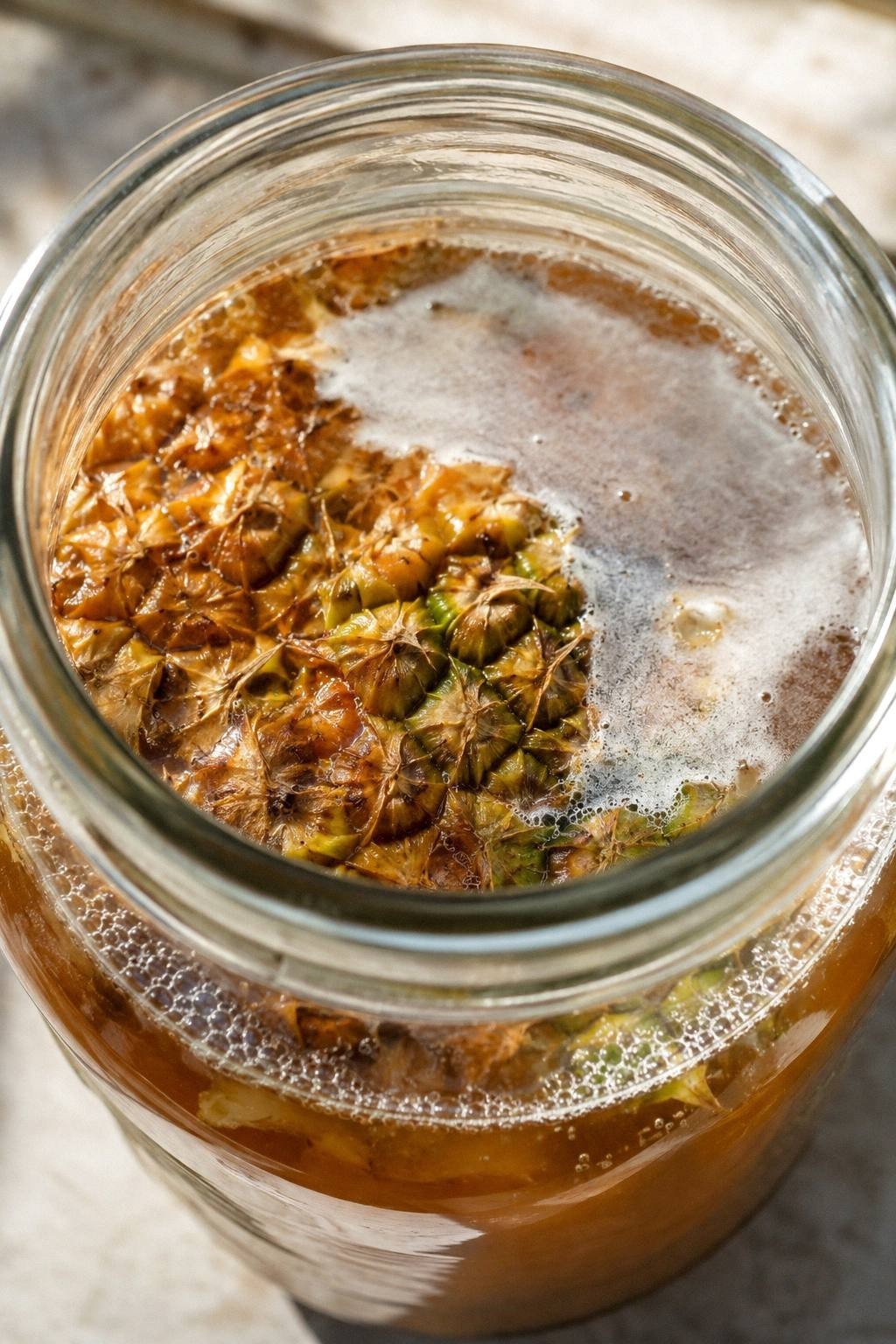
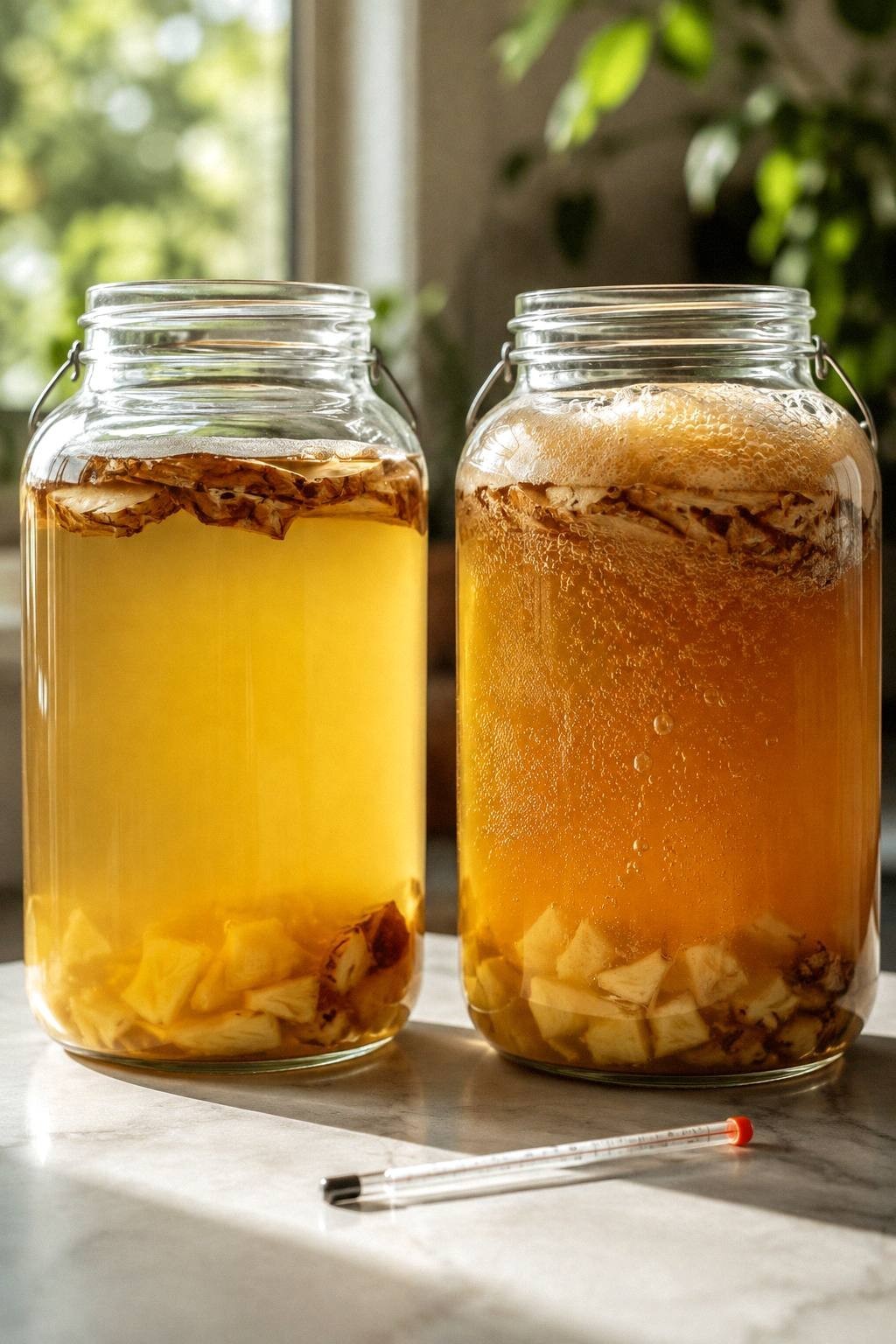
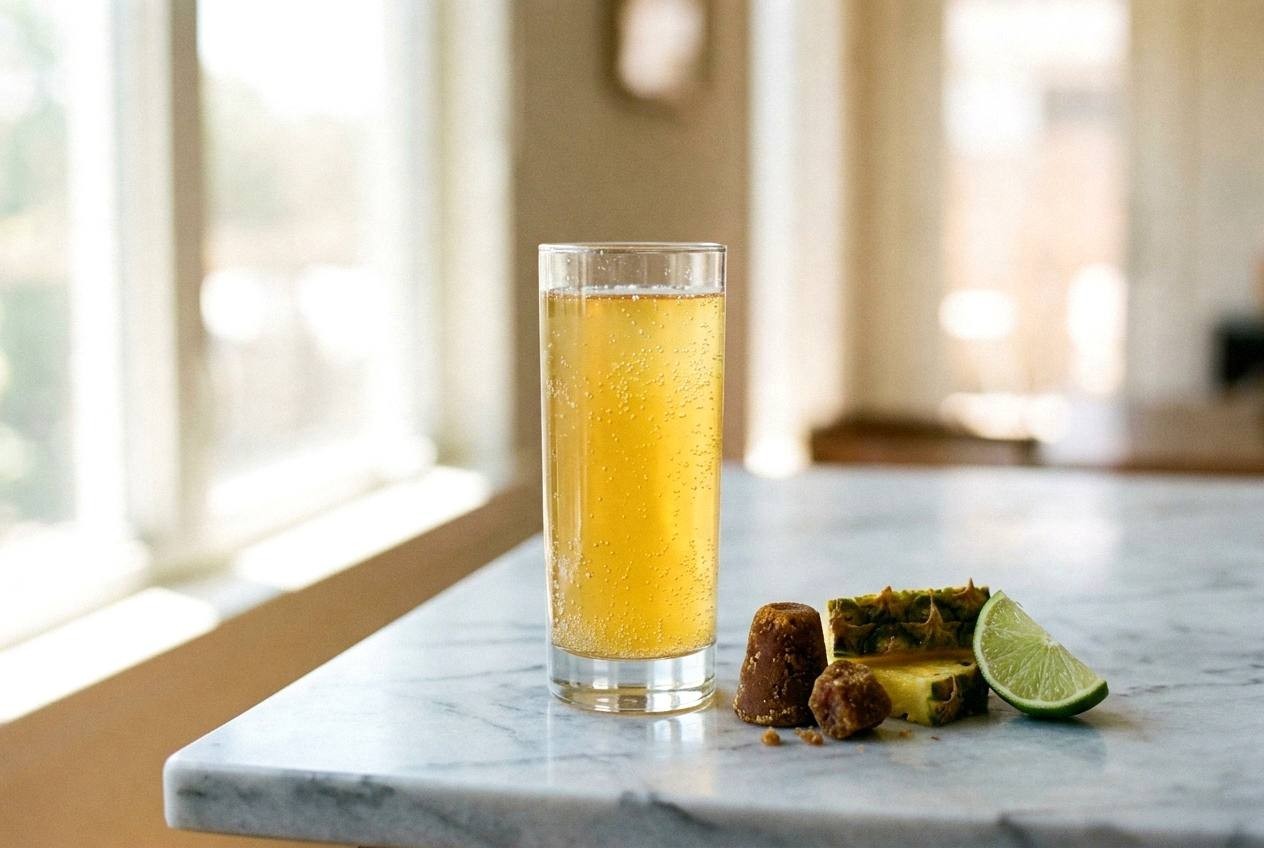
Bubbles show gas production. They cannot establish the safety, acidity or alcohol content of a pineapple ferment. A quiet jar is not enough evidence to prescribe another day on a warm counter.
Preparation guidance is on hold. The earlier advice to add sugar, move the jar somewhere warmer, stir, open a sealed jar or taste a stalled batch has been withdrawn. This page supplies no fermentation, bottling, rescue or consumption schedule.
Why the Troubleshooting Directions Were Removed
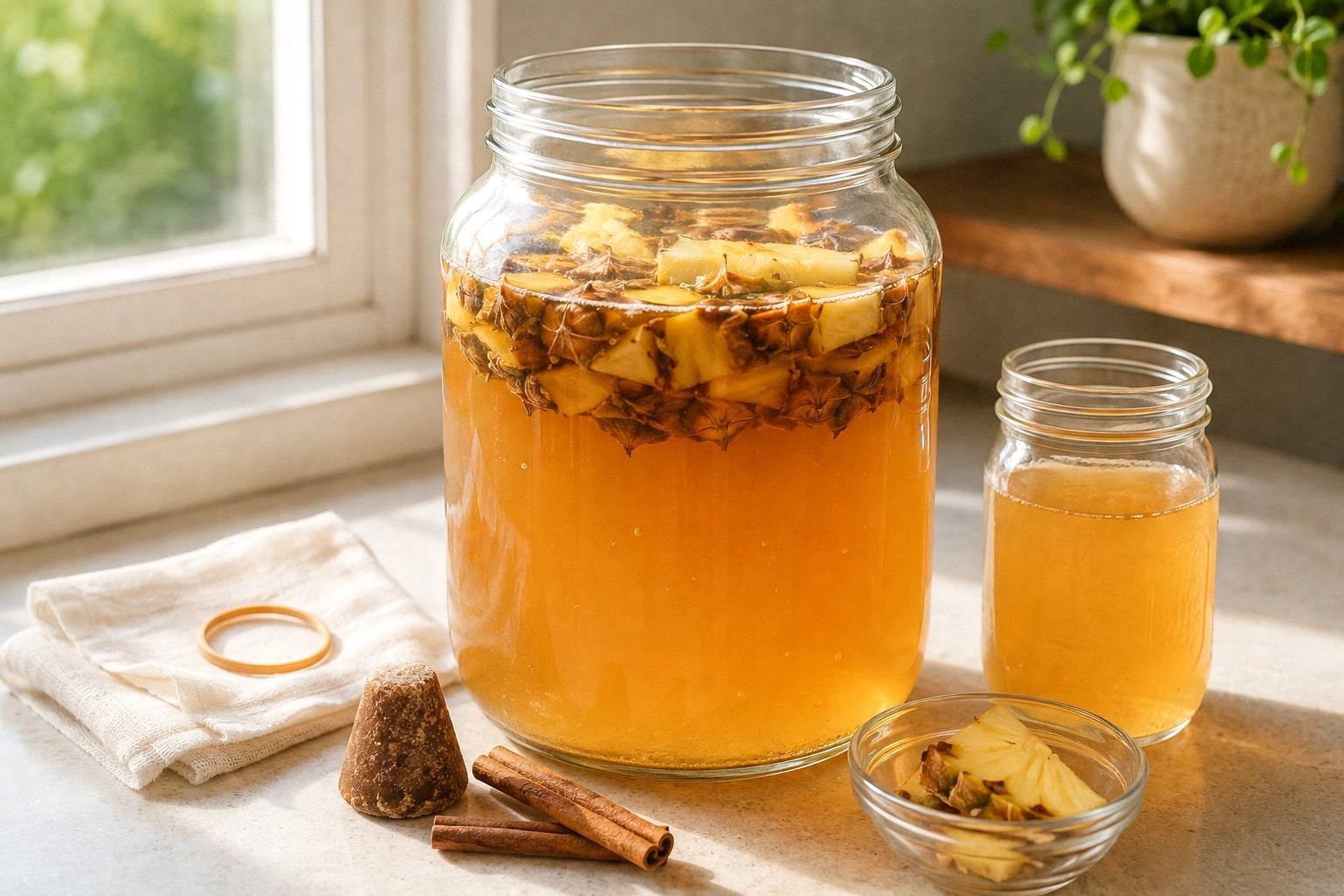
The previous seven explanations concerned room temperature, pineapple ripeness, water treatment, sugar, washing, closures and expected foam. Those can affect fermentation, but the page did not tie any adjustment to a defined, reviewed process. Its sugar addition had no batch volume; its extra waiting had no verified endpoint. It treated a clean smell, reduced sweetness and a thin white film as reassurance without establishing what organisms were present.
BC Centre for Disease Control’s fermented-food guidance describes process-specific critical controls. Guidance for another beverage, such as kombucha, does not establish controls for this pineapple process. The sources reviewed did not resolve this stalled-batch rescue method. That is the reason for this limited hold, not a claim that all tepache is inherently unsafe.
What Would Resolve the Hold
A reviewed process needs defined ingredients and batch size, equipment and sanitation, temperature and duration, appropriate monitored control limits, and clear failure, storage and packaging rules. A qualified food-safety reviewer should assess the particular method before it returns here. A pH reading alone would not validate every other part of a process.
If You Have an Uncertain Batch
Do not taste an uncertain batch to decide whether it is safe. Visible mold, unexpected slime or an off odor are reasons to discard, and their absence is not clearance. Do not try to rescue it by adding sugar or yeast or by warming it. A swollen or pressurized sealed container needs careful handling; do not shake it or casually open it near your face. Seek advice from your local extension or food-safety service about the specific batch and container.
Common Questions
Can I diagnose a stalled ferment from bubbles or smell?
No. Neither observation supplies the missing process record or verifies safety. There is no approved rescue sequence on this page.
Does this guide recommend restarting a batch?
It does not give restart or preparation directions. Use a complete process reviewed for this beverage rather than converting these observations into a recipe.
Is a white film always harmless yeast?
No identification can be made from this description. The former blanket reassurance has been removed.