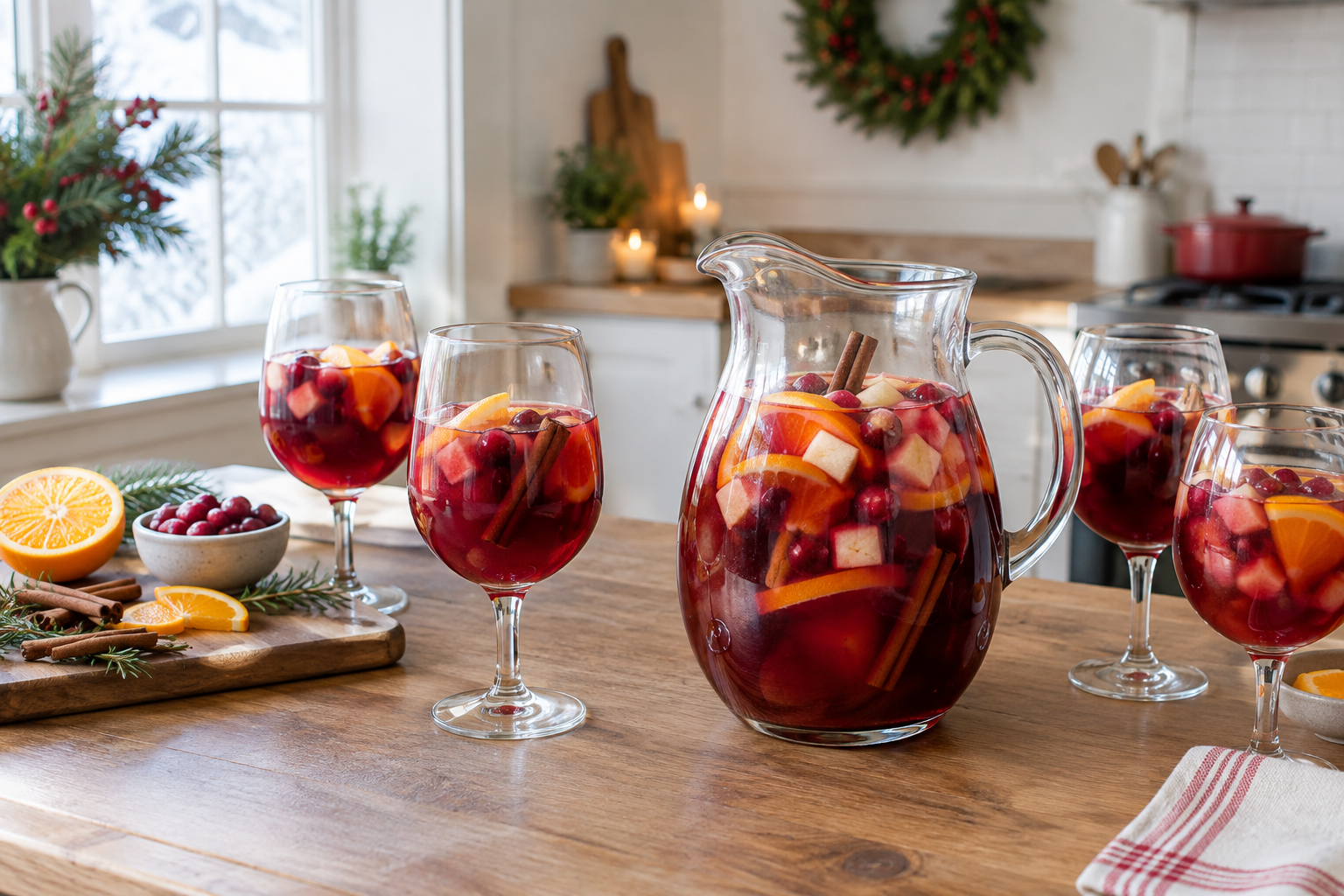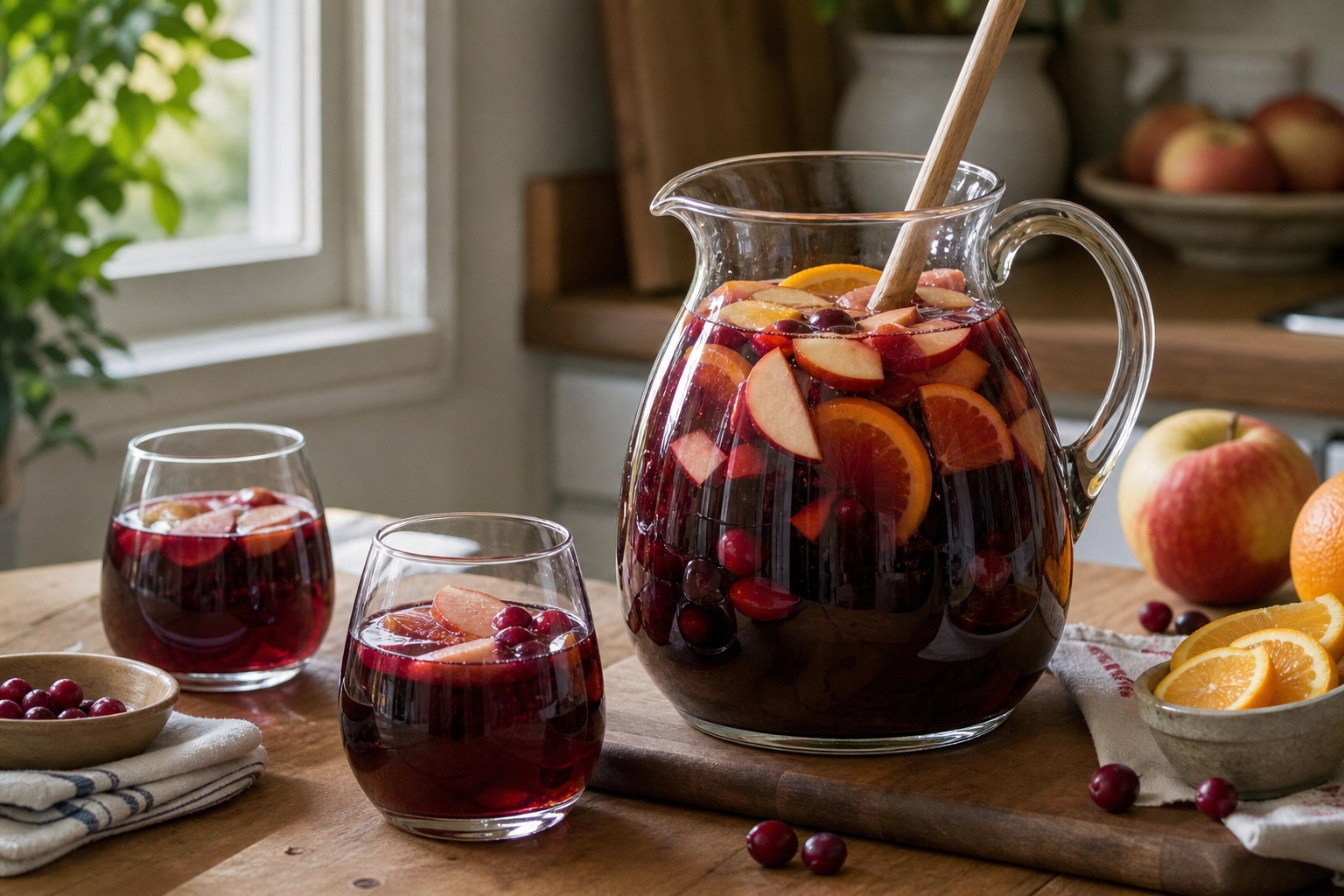
Fall sangria brings together the season’s best flavors in a single pitcher. These eight recipes layer apples, pears, cranberries, and warm spices with wine that ranges from crisp white to full-bodied red, giving you options for every autumn gathering from casual weeknight dinners to Thanksgiving feasts. Some pour straight from the pitcher and some chill for hours, so you can pick one that fits your prep time.
1. Apple Cider Sangria
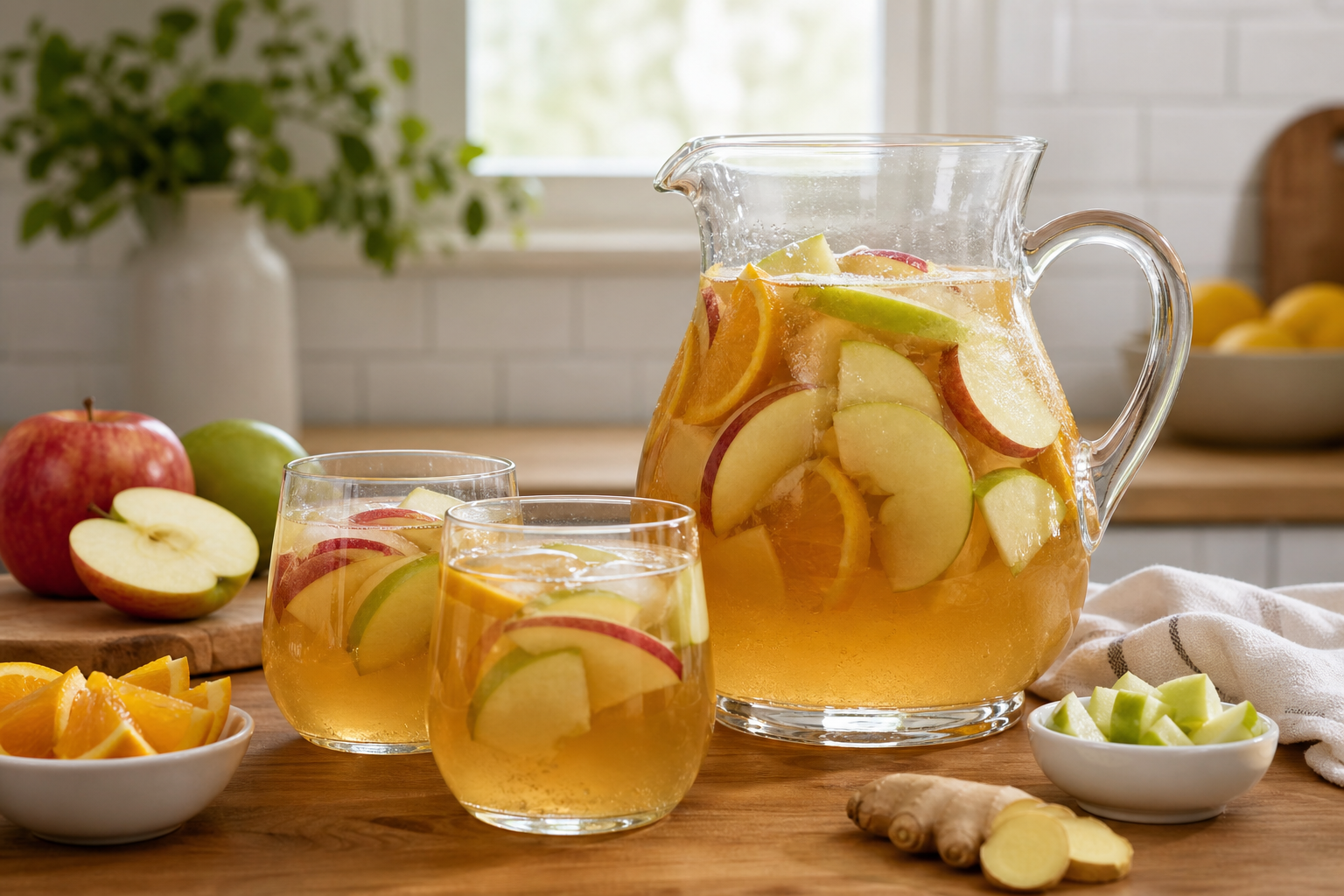
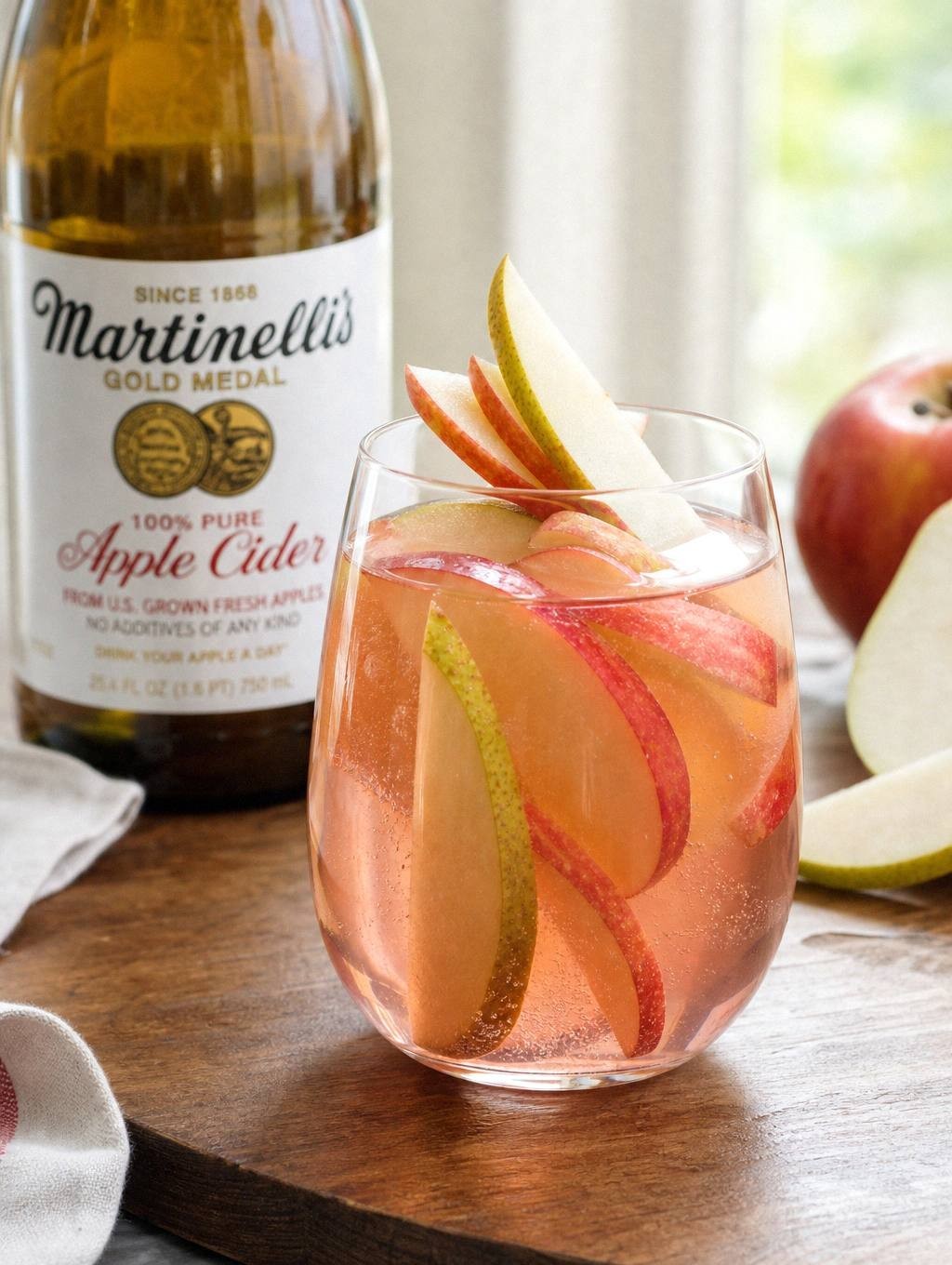
This white wine sangria balances crisp apple cider with ginger beer’s spicy fizz, making it the lightest option on the list. The two apple varieties give you both tart snap and honeyed sweetness in every glass, while citrus slices keep the pitcher bright. It’s the one to serve when you want fall flavor without the heaviness of red wine.
Ingredients
- 1 Granny Smith apple, thinly sliced
- 1 Honeycrisp apple, thinly sliced
- 1 orange, thinly sliced
- 1 lemon, thinly sliced
- 1 (750-mL) bottle white wine, chilled
- 2 c. apple cider, chilled
- 1 (12-oz.) can ginger beer, chilled
Instructions
- Add the apple slices, orange slices, and lemon slices to a large pitcher.
- Pour in the white wine, apple cider, and ginger beer.
- Stir the sangria to combine, then divide among serving glasses.
The ginger beer adds carbonation and a gentle heat that plays well with the apples’ natural sweetness. If you want a sweeter rim, dip each glass in lemon juice and then cinnamon sugar before pouring. This version stays light enough to pair with appetizers or a cheese board without overwhelming delicate flavors.
2. Cranberry Orange Sangria
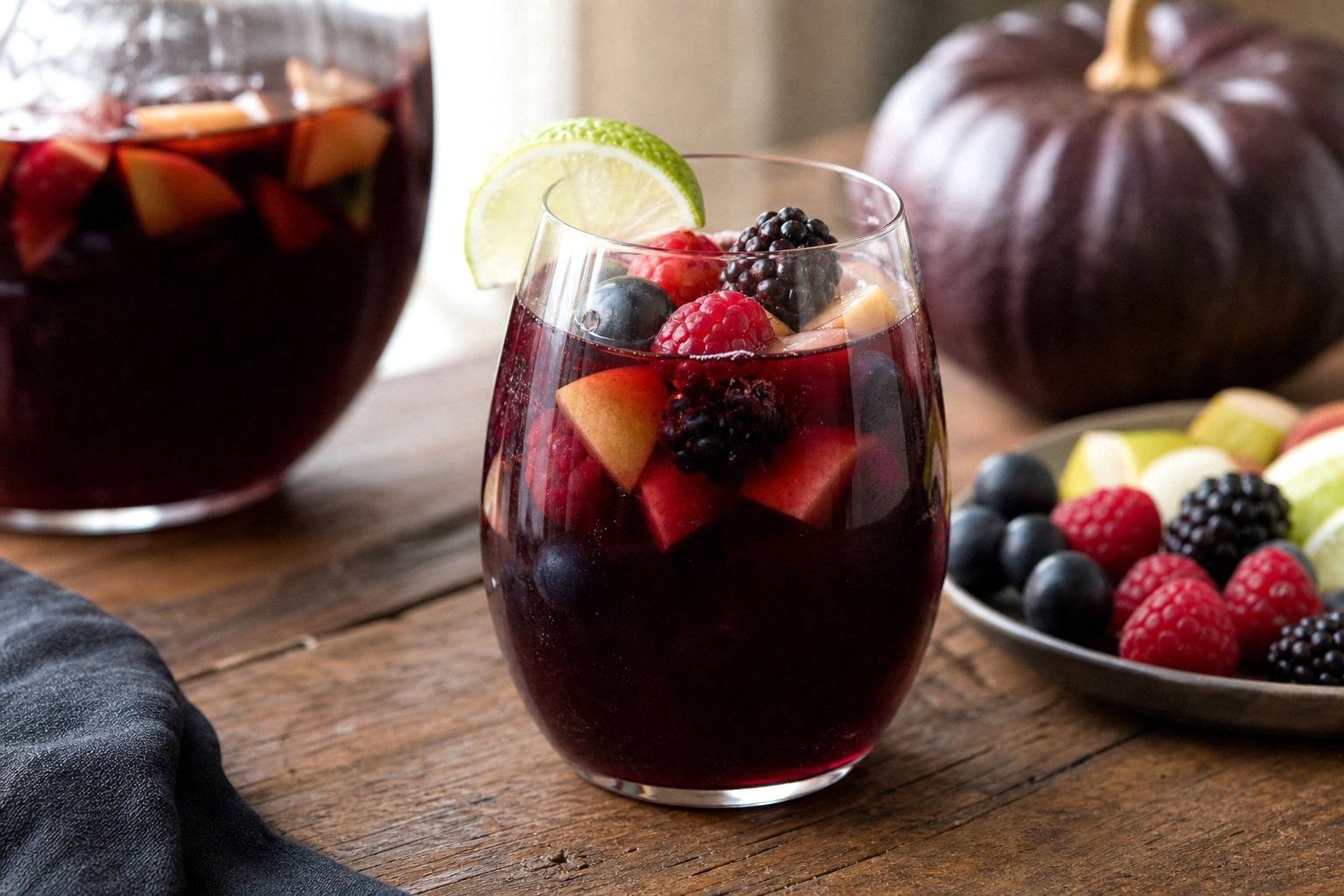
Cranberry and orange is the classic Thanksgiving pairing, and this red wine sangria makes it the centerpiece of your drink menu. The overnight soak pulls tart cranberry and bright citrus into the wine, while simple syrup and orange liqueur round out the edges. It’s bold enough to stand up to turkey and gravy, and the deep ruby color looks right at home on a holiday table.
Ingredients
- 1 medium orange, halved and thinly sliced
- 1 medium apple, quartered and thinly sliced
- 1/2 cup fresh or frozen cranberries
- 1 bottle (32 ounces) cranberry juice
- 1 bottle zinfandel or other fruity red wine
- 1 cup simple syrup
- 1/2 cup orange liqueur
- Ice cubes
- GARNISHES:
- Optional: Thinly sliced oranges, thinly sliced apples and fresh cranberries
Instructions
- Place the orange slices, apple slices, and cranberries in a large pitcher.
- Pour in the cranberry juice, red wine, simple syrup, and orange liqueur.
- Stir to combine, then cover and refrigerate overnight.
- Serve over ice, garnishing each glass with additional orange slices, apple slices, and cranberries if desired.
The overnight rest is what makes this recipe work. Fresh cranberries soften just enough to release their tartness without turning mushy, and the wine picks up the fruit’s flavor in a way that a quick stir can’t match. If you’re short on time, three hours in the fridge will get you most of the way there, but the full overnight soak delivers the deepest flavor.
3. Spiced Pear Sangria
Pears and warm spices turn this red wine sangria into something closer to mulled wine , but served cold. The spiced pear syrup you make first carries cinnamon, ginger, cardamom, and nutmeg through every sip, giving the pitcher a complexity that plain fruit can’t deliver. It’s the most aromatic option here, and the one that makes the whole kitchen smell like fall while you’re putting it together.
Ingredients
- 1 cup water
- 1/2 cup sugar
- 1 tablespoon lemon juice
- 2 pears (cored and chopped)
- 1 cinnamon stick
- 1/4 teaspoon ginger
- 1/4 teaspoon cardamom
- Pinch of nutmeg
- 1 bottle Spanish red wine
- 1/3 cup triple sec
- 3/4 cup spiced pear simple syrup
- 2 apples (chopped)
- 1 orange (sliced)
Instructions
- Add the water, sugar, lemon juice, chopped pears, cinnamon stick, ginger, cardamom, and nutmeg to a saucepan. Bring it to a boil.
- Turn the heat down and let it cook for 5 minutes until the sugar dissolves and the pears turn tender.
- Take the pan off the heat and let it cool. Strain out the pears and cinnamon stick and toss them. Pour the syrup into a mason jar.
- Drop the chopped apples and orange slices into a pitcher. Pour in the red wine, triple sec, and spiced pear simple syrup. Stir everything together.
- Chill the sangria in the fridge for 2 hours before serving, or serve it right away over ice. Garnish each glass with orange slices and a cinnamon stick.
Serves 6. Ready in 10 minutes, plus time to cool the syrup and chill the sangria.
Make the syrup ahead and you can have sangria ready in minutes when guests arrive. The spices bloom in the hot syrup in a way they wouldn’t if you just dropped them into cold wine, and straining out the cooked pears keeps the pitcher from turning cloudy. If you prefer your sangria drier, add the syrup a little at a time and taste before adding more.
4. White Wine Sangria
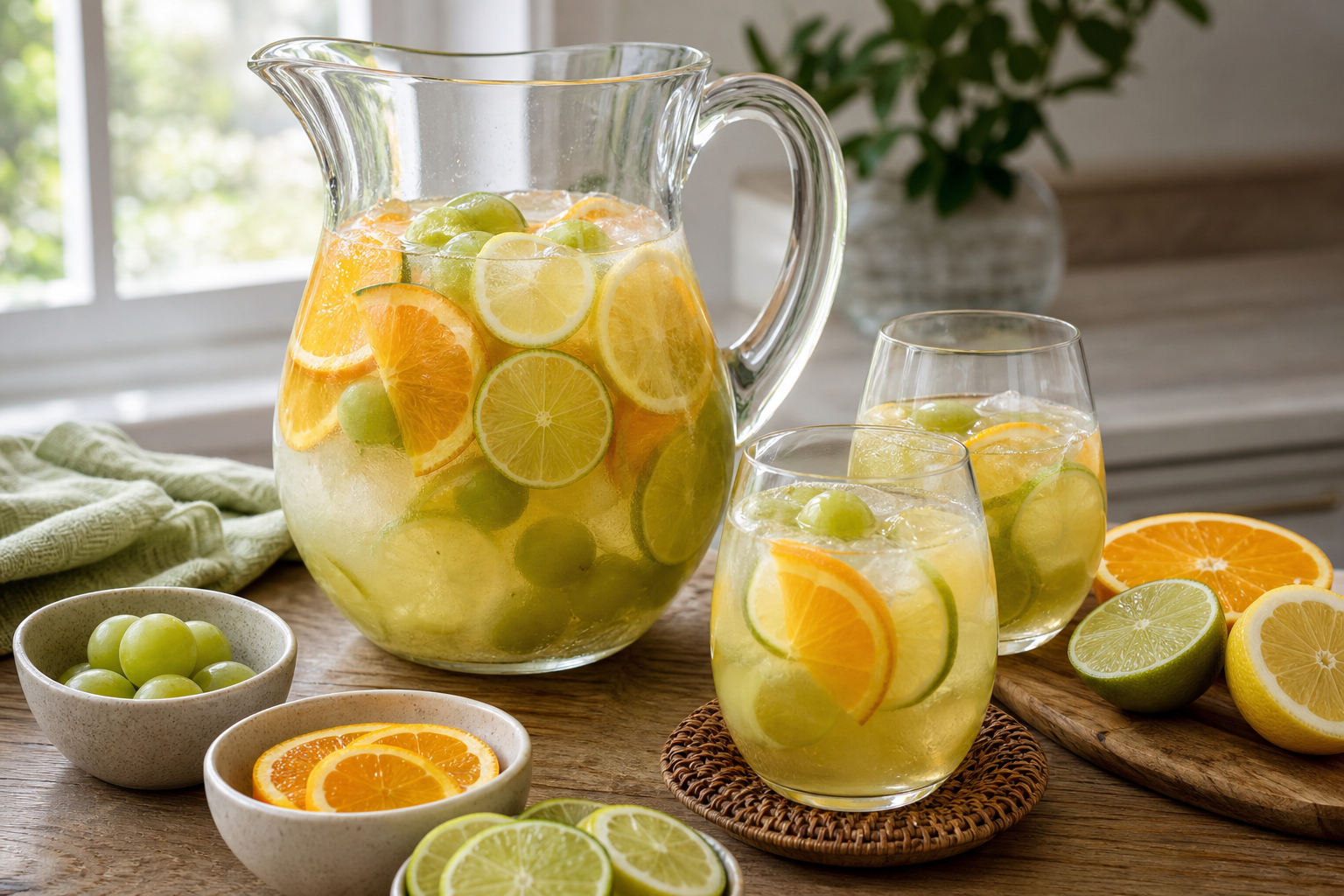
This is the simplest white sangria on the list, built on rum, orange juice, and apple, lemon, and lime slices that keep it bright and easy to drink. Frozen grapes chill each glass without watering it down, and the lemon-lime soda added at the end gives it a gentle fizz. It’s the one to make when you want something refreshing that still feels like fall, especially for afternoon gatherings that start before the sun goes down.
Ingredients
- 1 bottle white wine
- 3/4 cup rum
- 1/2 cup orange juice
- 1/3 cup white sugar
- 1 green apple, cored and sliced
- 1 lemon, sliced
- 1 lime, sliced
- 1 (12 fluid ounce) can or bottle lemon-lime soda
- 1 cup seedless green grapes, or to taste, frozen
Instructions
- In a large pitcher, stir together the white wine, rum, orange juice, and sugar until the sugar dissolves. Drop in the apple, lemon, and lime slices. Gently stir in the lemon-lime soda.
- Drop the frozen grapes into serving glasses and pour the sangria over them.
The frozen grapes are the trick that makes this work. They keep the sangria cold without diluting it the way ice cubes would, and they soak up the wine as they thaw, turning into boozy little bites by the time you reach the bottom of the glass. If you don’t have time to freeze grapes, regular ice works fine, but the grapes add a textural element that makes the drink feel more special.
5. Caramel Apple Sangria
Caramel vodka and apple cider turn this white wine sangria into liquid caramel apple, minus the stick. The caramel flavor runs through the whole pitcher rather than sitting on top, and the mild white wine base lets it shine without competing. It’s the sweetest option here, and the one that tastes most like dessert, making it perfect for the end of a meal or a party where you’re serving it alongside cookies and pie.
Ingredients
- 1 bottle pinot grigio (-or your favorite mild white wine)
- 1 cup caramel flavored vodka
- 6 cups apple cider
- 2 medium apples (-cored and chopped)
Instructions
- Pour the wine, vodka, and apple cider into a large pitcher and stir them together.
- Add the chopped apples to the pitcher, or drop them into individual glasses.
- Serve cold or over ice.
Letting the pitcher sit gives the apples time to soak up the caramel and wine, turning them into boozy apple chunks that are almost as good as the drink itself. If you want to lean even harder into the caramel apple theme, drizzle caramel sauce around the inside of each glass before pouring.
6. Pumpkin Spice Sangria
Pumpkin pie syrup brings the flavor of Thanksgiving dessert into a white wine sangria that’s surprisingly balanced. Two bottles of wine and a half to full cup of spiced rum give you control over how strong you want the pitcher, while chopped apples and pears add texture and a bit of natural sweetness. It’s the most divisive recipe here, people either love the pumpkin spice angle or want nothing to do with it, but for fans of the flavor, it’s the one that tastes most like the season.
Ingredients
- 3 cups apple cider
- 2 750ml bottles chilled dry/semi-dry white wine (like Sauvignon Blanc, Chardonnay, Pinot Grigio)
- ½-1 cup spiced rum
- 2 apples (chopped)
- 2 pears (chopped)
- 1 cup pumpkin pie syrup (plus more to sweeten to taste)
- Cinnamon sticks and star anise pods (for garnish)
Instructions
- Combine the apple cider, white wine, rum (start with 1/2 cup), apples, and pears in a large pitcher or punch bowl.
- Add 1 cup of pumpkin pie syrup, stir well, and taste the sangria. Add more syrup until it reaches your desired level of sweetness.
- Ladle the sangria into cups and garnish with cinnamon sticks and star anise if desired.
Pumpkin pie syrup is sold in the coffee aisle and carries the full spice blend, cinnamon, nutmeg, ginger, cloves, so you don’t have to measure them individually. Start with one cup and taste before adding more; the syrup is sweet and concentrated, and it’s easier to add than to fix an overly sweet pitcher. The two bottles of wine make this a true punch-bowl recipe, perfect for larger gatherings where you need volume.
7. Sparkling Cranberry Sangria
This is the only sangria on the list that cooks part of its fruit first, and that step is what makes it special. Simmering cranberries with orange juice and sugar breaks them down into a tart, jammy base that colors the whole pitcher deep red and gives it a concentrated cranberry flavor no amount of fresh fruit could match. Sparkling wine added at the end keeps it lively, and the combination of cooked and fresh cranberries gives you both intensity and texture.
Ingredients
- 3 cups fresh cranberries, divided
- 1 cup orange juice
- ½ cup granulated sugar
- ¾ cup brandy
- 1 bottle sweet white wine
- 1 bottle sparkling wine, chilled
- 1 orange, sliced
Instructions
- Add 2 cups of cranberries, the orange juice, and sugar to a medium pot. Place over medium heat and cook, stirring now and then, for 15 minutes, until all the cranberries have burst open. You may need to turn the heat down to low once the cranberries start bursting, since the liquid will get frothy and could bubble over.
- Take the pot off the heat and let it cool for 5 minutes. Stir the brandy into the cranberry mixture. Transfer to the refrigerator to chill for 2 hours. Pour the brandy mixture through a fine mesh strainer into a large bowl. Toss out the cranberry pulp. Transfer the sweetened cranberry brandy to a serving pitcher. Drop in the sliced orange and 1 cup of fresh cranberries. Pour the white wine (not sparkling) into the pitcher. Stir. Refrigerate for at least 2 hours. Just before serving, add the chilled sparkling wine.
The cooked cranberries give this sangria a deeper, more complex flavor than the fresh-fruit-only versions, and the two-hour chill lets the brandy mellow into the mixture rather than sitting on top as a sharp note. Add the sparkling wine right before you serve so it stays fizzy; if you pour it in too early, it’ll go flat while the pitcher sits.
8. Autumn Harvest Sangria
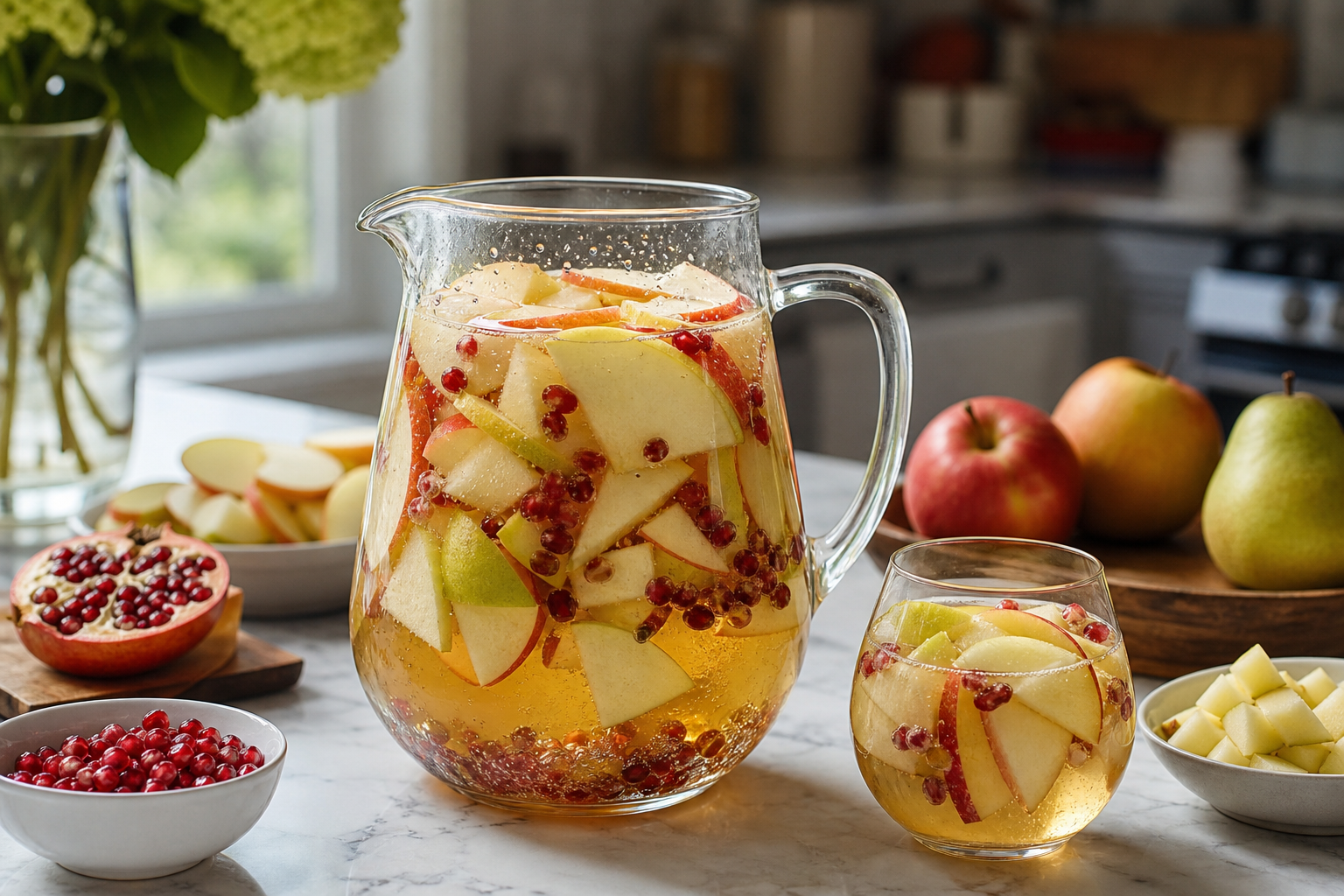
This white wine and prosecco sangria packs in the most fruit of any recipe here, layering apples, pears, and pomegranate seeds for a pitcher that looks as good as it tastes. The prosecco goes in at the end, keeping the sangria light and bubbly, while the apple cider base ties all the fruit together. It’s the most elegant option on the list, and the one that works best for formal gatherings where presentation matters as much as flavor.
Ingredients
- 1 750 ml bottle white wine
- 1 cup apple cider
- 1 Granny Smith apple
- 1 honey crisp apple
- 1 Bartlett pear
- 1/4 cup pomegranate seeds
- 1 750 ml bottle Prosecco or sparkling white wine
- fresh rosemary and cinnamon sticks (to garnish, optional)
Instructions
- In a large pitcher, pour in one bottle of white wine and the apple cider. Core and chop the apples and pear into small chunks (no need to peel them), then add them in along with the pomegranate seeds. Let it chill in the refrigerator for at least 1 hour, or up to overnight.
- When you’re ready to serve, pour into individual glasses, leaving 1 to 2 inches of room in each. Top with chilled Prosecco or sparkling white wine. Garnish as you like, and serve.
The overnight soak is optional but recommended; it gives the fruit time to release its juices and the flavors time to meld. Pomegranate arils add jewel-like pops of color and a tart burst that cuts through the sweetness of the apples and pears. Pour the prosecco into each glass individually rather than adding it to the pitcher so you can control the fizz level and keep the bubbles lively through multiple servings.
What Wine to Use for Fall Sangria
The wine you choose sets the base flavor, and fall sangria works with both red and white depending on what you’re serving it with. Red wine sangrias pair better with heavier foods like roasted meats and rich sides, while white wine versions stay light enough for appetizers and cheese plates. Here’s what to look for in each category.
Red Wine Options
- Zinfandel or Garnacha: Fruity and medium-bodied with berry notes that play well with cranberries and pomegranate. These are the most forgiving reds for sangria because their fruit-forward character doesn’t get lost under the other ingredients.
- Cabernet Sauvignon: Fuller-bodied with more tannin, which gives the sangria structure but can taste harsh if you don’t let it chill long enough. Best for recipes with cooked fruit or rich syrups that can stand up to the wine’s weight.
- Pinot Noir: Lighter and more delicate, with cherry and earth notes that work in sangrias where you want the fruit and spices to take center stage. It’s the red to use when you want something closer to white wine’s brightness.
White Wine Options
- Pinot Grigio: Crisp and neutral, which makes it the best base for sangrias with strong flavors like caramel or pumpkin spice. It won’t compete with the other ingredients, and it’s usually the cheapest option that still tastes good.
- Sauvignon Blanc: More acidic and herbaceous, with citrus and green apple notes that brighten fruit-heavy sangrias. Use it when you want the wine itself to contribute flavor rather than just acting as a base.
- Moscato or Riesling: Sweet and floral, which works in sangrias where you’re not adding much additional sweetener. These are the wines to use when you want a dessert-like pitcher without adding syrup or liqueur.
Avoid expensive bottles. Sangria’s other ingredients mask the wine’s nuance, so a $10 to $15 bottle delivers the same result as a $30 one. Look for wines labeled “fruity” or “easy-drinking” rather than “complex” or “age-worthy,” and skip anything with heavy oak or high tannins unless you’re specifically making a bold red sangria that can handle them.
Make-Ahead and Batch Instructions
Several sangrias on this list are built to sit in the fridge: the Cranberry Orange soaks overnight, the Spiced Pear chills for 2 hours, the Sparkling Cranberry chills for 2 hours twice, and the Autumn Harvest rests for at least 1 hour or up to overnight. The fruit macerates in the wine and releases its juices, the alcohol mellows, and the flavors blend into something more cohesive than what you get from a quick stir. Here’s how to time it and scale it up.
Timing
Chill times here run from none at all (the Apple Cider, White Wine, Caramel Apple and Pumpkin Spice sangrias pour straight away) to overnight for the Cranberry Orange. Any sparkling wine or soda goes in right before serving so it stays fizzy.
Sangria holds in the fridge for up to two days after you make it, though the fruit starts to look tired after the first day. If you’re making it more than 24 hours ahead, keep the fruit separate and add it the morning of your party so it still looks fresh when you pour.
Scaling Up
Most of these recipes serve six to ten people, which means one glass per person. If you’re hosting a larger crowd or want to offer refills, double the recipe and use a punch bowl instead of a pitcher. The ratios stay the same: for every bottle of wine, you’ll need roughly the same proportion of juice, liqueur, and fruit.
When you double a recipe, taste it before serving. Larger batches sometimes need a bit more sweetener or citrus to stay balanced, especially if you’re using a punch bowl where the fruit settles to the bottom and doesn’t distribute evenly. Stir the sangria every time you ladle it out so each glass gets its share of fruit.
Keeping It Cold
Sangria tastes best cold, but ice cubes water it down as they melt. Freeze extra fruit, grapes, cranberries, or apple chunks, and use those as ice cubes instead. They’ll keep the pitcher cold without diluting the flavor, and they soak up the wine as they thaw, turning into boozy snacks by the end of the party.
If you’re serving sangria outdoors or at a buffet where it’ll sit out for hours, set the pitcher in a larger bowl filled with ice. This keeps the whole thing cold without putting ice directly in the sangria, and you can refresh the ice in the outer bowl as it melts.
Common Problems and How to Fix Them
- Sangria tastes too sweet: Add a squeeze of fresh lemon or lime juice to brighten it, or pour in a splash of club soda to dilute the sweetness without watering down the alcohol. If you’re making it ahead, cut back on the syrup or liqueur next time.
- Sangria tastes too tart or acidic: Stir in a tablespoon of simple syrup, honey, or maple syrup until it balances out. Taste after each addition so you don’t overshoot into cloying territory.
- Fruit looks brown or mushy: You let it sit too long. Apples and pears oxidize after about 24 hours in the pitcher, and berries break down and turn the sangria cloudy. Make the base ahead but add fresh fruit the day you’re serving it.
- Sangria tastes flat: You added the sparkling wine or soda too early and it lost its fizz. Always pour carbonated ingredients right before serving, and stir gently so you don’t knock out the bubbles.
- Wine flavor is too strong: Add more juice or cider to soften the wine’s edge.
- Sangria is watery: You used too much ice or added it too early. Serve sangria over ice in individual glasses rather than adding ice to the pitcher, or use frozen fruit as ice cubes so the flavor stays concentrated as it melts.
Frequently Asked Questions
Can you make sangria without alcohol?
Yes. Replace the wine with white or red grape juice, use sparkling cider instead of sparkling wine, and swap the liqueur or rum for an equal amount of orange juice or apple cider. The fruit and spices will still give you the flavor, and the result tastes like a sophisticated punch rather than a watered-down version of the real thing.
What’s the best way to serve sangria at a party?
Set out a pitcher or punch bowl with a ladle and let guests serve themselves. Put a small bowl of extra fruit next to it so people can add more to their glass if they want, and keep a bucket of ice nearby for anyone who wants their drink colder. If you’re serving multiple sangrias, label each one with a small card so guests know which is red, which is white, and which one has the pumpkin spice.
Do you eat the fruit in sangria?
You can. The fruit soaks up the wine and turns boozy, so it’s a little snack at the bottom of your glass. Some people fish it out with a spoon, others leave it. If you want the fruit to be more of a feature, cut it into bite-sized pieces rather than thin slices so it’s easier to eat.
How much alcohol is in sangria?
It depends on the recipe, but most sangrias land somewhere between 8% and 12% ABV, which is lower than wine alone because you’re diluting it with juice, cider, and fruit. Recipes with added liquor like rum, brandy, or vodka will be stronger, closer to 12% to 15% ABV. If you want a lighter version, use less liquor and more juice.
Can you use frozen fruit in sangria?
Yes, and it works especially well for berries like cranberries or for fruit you’re using as ice cubes. Frozen fruit releases its juice faster than fresh, which can make the sangria more flavorful but also more watery if you let it sit too long. Use frozen fruit when you’re serving the sangria within a few hours of making it.
What foods pair well with fall sangria?
Red sangrias pair with roasted meats, hearty stews, and rich sides like mashed potatoes or stuffing. White sangrias work better with lighter fare like cheese plates, roasted vegetables, salads, and seafood. The fruit-forward sweetness of most sangrias makes them a good match for spicy foods, too, since the sugar tames the heat.
Conclusion
These eight sangrias cover the full range of fall flavors, from the bright citrus and ginger of apple cider sangria to the deep, jammy intensity of sparkling cranberry. Pick the one that matches your menu and your crowd, check its chill time, from none at all to overnight, and let it sit while you handle everything else. By the time your guests arrive, you’ll have a pitcher that tastes like you spent all day on it, even though the hardest part was slicing the fruit.