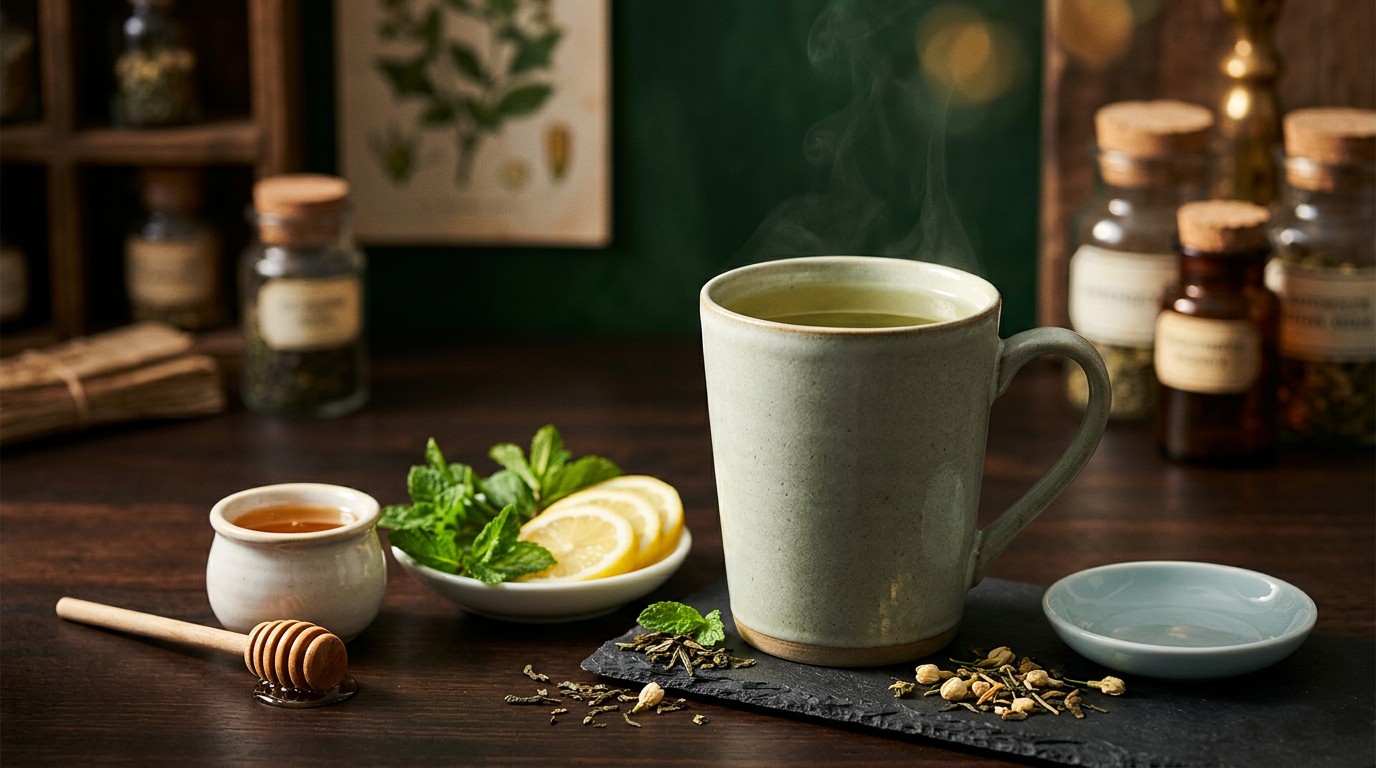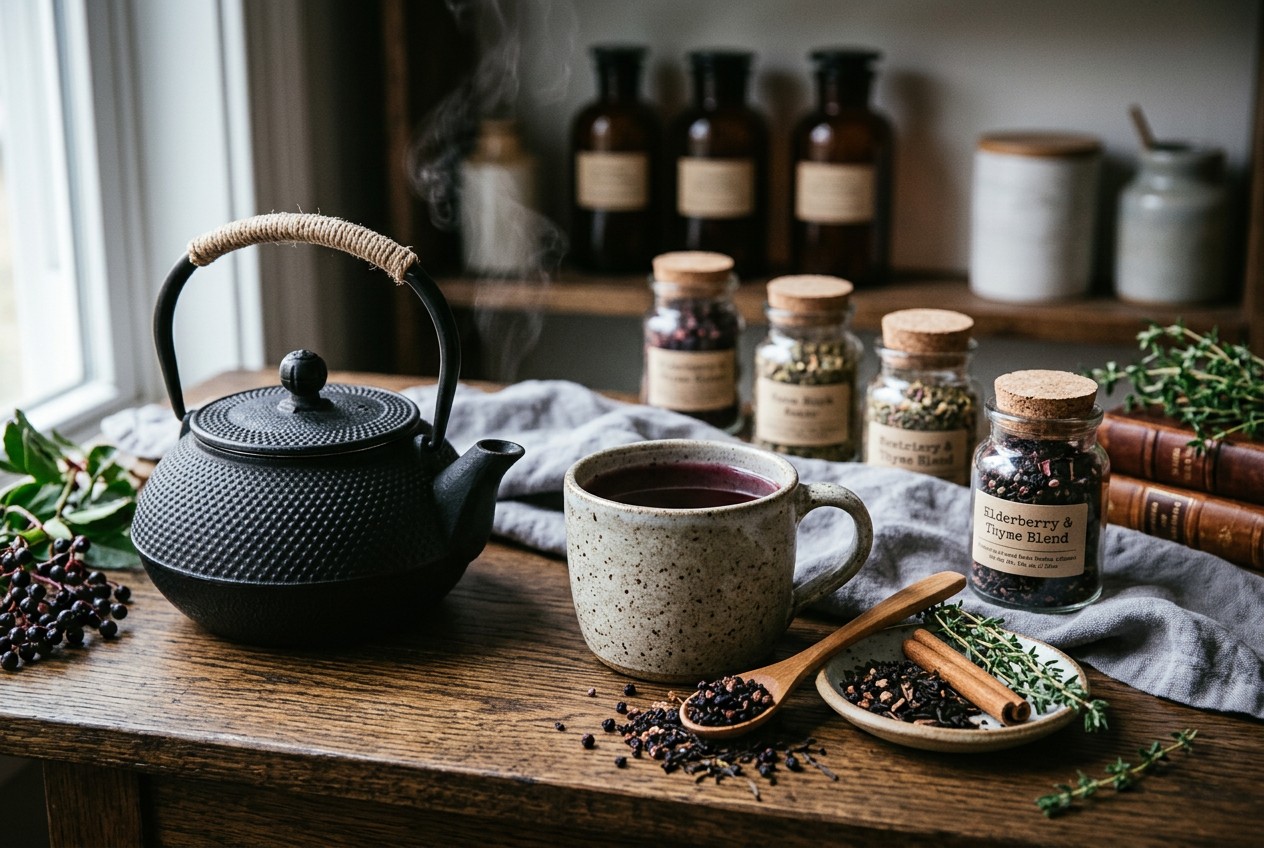
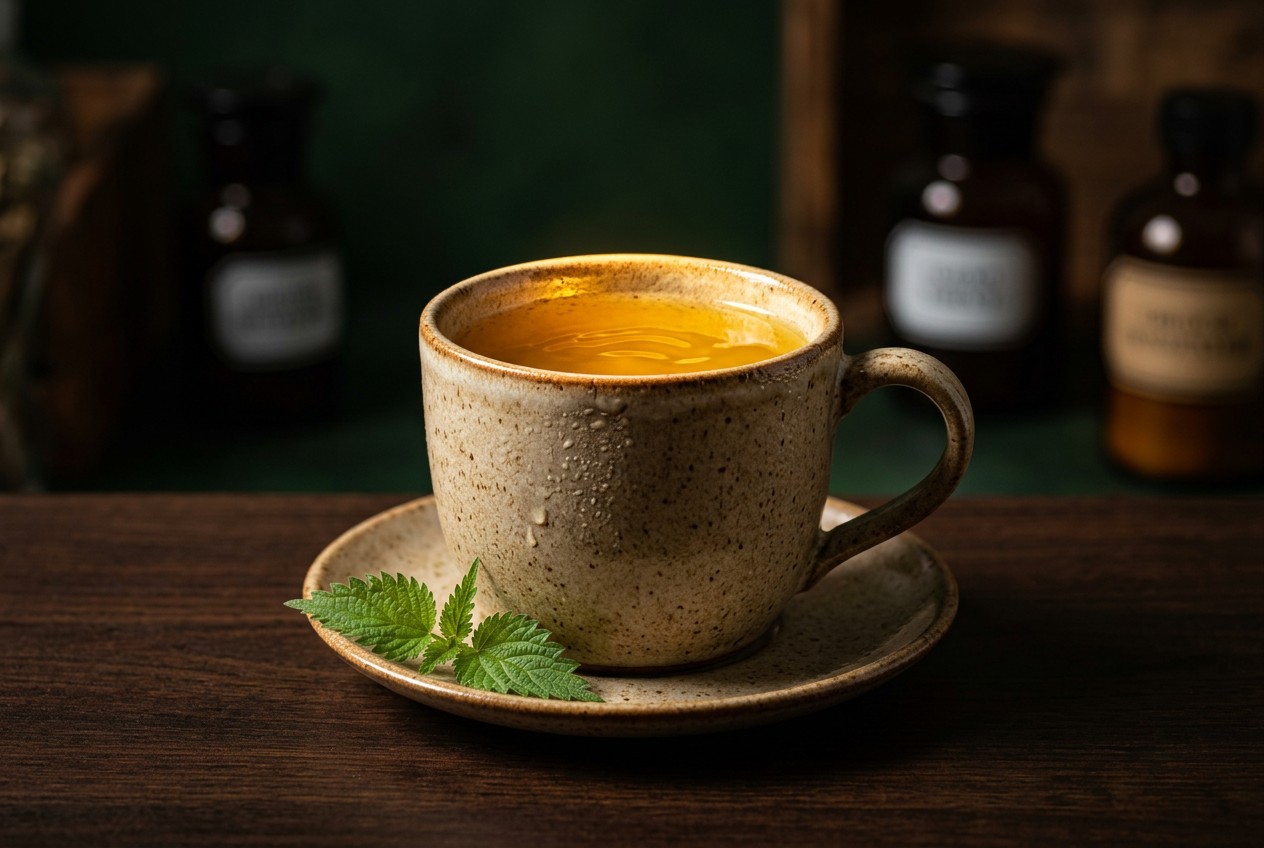
Spring allergy relief drink with nettle, elderflower, turmeric, and ginger. The classic hay-fever herbs of European folk medicine. Get the recipe.
Why You Will Love This
This is the spring cup I make when the pollen count goes up and my head feels like it is packed in wool. Nettle is one of the oldest folk remedies for hay fever in the European tradition, and elderflower sits right beside it in the same old books. Turmeric and ginger are here for warmth and colour as much as anything, and black pepper is the pairing that always goes with turmeric. The result tastes like a gentle, earthy tea with bright citrus notes, not a medicine cabinet. It takes under half an hour and most of that is waiting.
The Story Behind It
I started making this drink in March 2019 after three weeks of relentless pollen-induced brain fog. Western herbalism has used nettle for respiratory complaints since at least the 16th century, and Ayurvedic cooking has paired turmeric with black pepper for thousands of years, long before anyone had a word for why. This recipe puts both traditions in one mug with elderflower, the European folk remedy for a stuffed-up head, which also happens to make the whole thing smell like a hedgerow in June.

What You Will Need
- 2 cups (480ml) filtered water
- 1 tablespoon dried nettle leaf
- 1 teaspoon dried elderflower
- 1/2 teaspoon ground turmeric
- 1/4 teaspoon ground ginger
- 1/8 teaspoon black pepper (the classic turmeric pairing)
- 1 tablespoon raw honey (local if possible)
- 1 tablespoon fresh lemon juice
- Optional: 1/4 teaspoon quercetin powder
How to Make It
- Bring 2 cups filtered water to a boil, then remove from heat and let cool for 1 minute to 190°F (88°C).
- Add nettle leaf and elderflower to the hot water. Cover and steep for 15 minutes.
- Strain herbs through a fine-mesh sieve into a mug or jar.
- While tea is still warm (not boiling), whisk in turmeric, ginger, and black pepper until dissolved.
- Add honey and lemon juice, stirring until honey fully dissolves.
- If using quercetin powder, whisk in now.
- Drink warm, ideally 30 minutes before breakfast or at the first sign of allergy symptoms.

Herbalist Notes
Nettle leaf is the herb people reach for first in pollen season, and it has held that job in Western herbalism for a very long time. Use dried leaf, not root. They are different herbs with different traditional uses, and the root is not what you want in a spring cup. Good dried nettle is deep green and smells faintly of hay in a pleasant way; brown, dusty leaf makes a cup that tastes of nothing.
Turmeric and black pepper belong together, which every cook who has ever made a curry already knows. Turmeric on its own in a mug of water is thin and slightly chalky. The pepper sharpens it, the honey rounds it, and the lemon lifts the whole thing. Whisk the turmeric into warm rather than boiling liquid or it clumps and sinks, and you end up drinking pale water with a yellow sludge at the bottom.
Elderflower has been used in European folk medicine for a blocked-up head since long before anyone was measuring anything, and it is one of the loveliest smelling herbs in the cabinet. Look for organic European elderflower (Sambucus nigra). It goes stale faster than most dried flowers, so buy small amounts and keep it sealed and out of the light.
I should say plainly: this is a nice cup of tea made from herbs with a real folk history in pollen season, and that is a long way from proof that it clears hay fever. I am not going to tell you it does. If your spring is genuinely miserable every year, that is worth sorting out properly with someone who can look at what you are actually reacting to.
Make It Your Own
For a fuller-bodied cup, add 1/4 teaspoon quercetin powder, a bioflavonoid that also occurs naturally in onions and apples. If you tolerate spice, double the ginger to 1/2 teaspoon and the drink gets a proper warming bite. Local raw honey is a nice touch and some herbalists like the idea of the trace pollen in it, though I would treat that as folklore rather than a plan. Through pollen season I make this twice a day, morning and mid-afternoon, mostly because it is a good excuse to stop and sit down for ten minutes.

Common Questions
What drinks can help with allergies?
The herbs with the longest folk history in pollen season are nettle and elderflower, and this tonic is built on both. Green tea is the other one people mention often. Turmeric drinks and ginger tea come into the conversation for warmth and because a hot drink genuinely does help a stuffed-up head feel less awful for a while, which is not nothing. This spring tonic puts nettle, turmeric, elderflower, and ginger into one mug, which is mostly why I like it: one cup instead of four jars on the counter. See also our spring allergy relief tea.
What can I drink to get rid of allergies?
Nothing. I would rather say that clearly than dress it up. No tea gets rid of allergies, and a page that tells you otherwise is not being straight with you. What a warm herbal drink does is give you steam, hydration, and ten minutes sitting still, and the herbs in it carry a genuine tradition behind them in this season. Drink it in the morning and again in the afternoon if you like it. If pollen season is wrecking your sleep or your work, the real answer is a clinician and probably an allergy test, not a stronger infusion.
How can I make a turmeric drink?
Start with 1/2 teaspoon ground turmeric per cup of warm liquid rather than boiling, because boiling water makes it clump instantly. Add 1/8 teaspoon black pepper, which is the pairing every Indian kitchen uses and which makes the flavour far better besides. Whisk turmeric and pepper into the warm liquid until no clumps remain, then add honey or maple syrup to balance the earthy bitterness. For this version, use the strained nettle and elderflower tea as your base liquid instead of plain water and add ginger for a warmer finish. Drink it while it is still warm; it separates and goes grainy as it cools.
When should I drink this allergy relief tonic?
I drink it first thing, about half an hour before breakfast, mostly because that is when I actually have ten quiet minutes. If your afternoons are the rough part, make a second cup around 2 or 3 PM. I would keep it away from bedtime, not for any dramatic reason but because ginger and turmeric are warming and a big mug of anything at 10 PM has an obvious downside. The best time is genuinely the time you will keep doing it.
Can I make this ahead and store it?
Fresh is best, but you can refrigerate the strained nettle and elderflower tea base for up to 48 hours. Add the turmeric, pepper, honey, and lemon just before drinking, because turmeric never disperses properly in cold liquid and honey seizes into a lump when chilled. Reheat gently to 120-140°F (49-60°C), never boiling. Do not freeze it. Elderflower’s whole appeal is that delicate hedgerow perfume, and freezing flattens it into something that tastes vaguely of cordial gone wrong.
When to Serve and Pairings
This tonic works best as a small ritual drink: fresh enough for daytime, but still useful when you want something more intentional than water.
Perfect occasions include:
- Morning prep
- Afternoon reset breaks
- Post-garden cleanup
- Light brunches
- Meal-prep days
- Quiet weekend routines
Food pairings:
- Greek yogurt with fruit
- Seeded toast
- Simple grain bowls
- Citrus salads
- Soft scrambled eggs
- Roasted vegetables
Tonic-style drinks pair best with simple food because strong spices, heavy sauces, or too much sugar can bury the botanical notes.
Printable recipe
Allergy Relief Drink Recipe: Spring Herbal Tonic
Spring allergy relief drink with nettle, elderflower, turmeric, and ginger. The classic hay-fever herbs of European folk medicine. Get the recipe.
Ingredients
- 2 cups (480ml) filtered water
- 1 tablespoon dried nettle leaf
- 1 teaspoon dried elderflower
- 1/2 teaspoon ground turmeric
- 1/4 teaspoon ground ginger
- 1/8 teaspoon black pepper (the classic turmeric pairing)
- 1 tablespoon raw honey (local if possible)
- 1 tablespoon fresh lemon juice
- Optional: 1/4 teaspoon quercetin powder
Instructions
- Bring 2 cups filtered water to a boil, then remove from heat and let cool for 1 minute to 190°F (88°C).
- Add nettle leaf and elderflower to the hot water. Cover and steep for 15 minutes.
- Strain herbs through a fine-mesh sieve into a mug or jar.
- While tea is still warm (not boiling), whisk in turmeric, ginger, and black pepper until dissolved.
- Add honey and lemon juice, stirring until honey fully dissolves.
- If using quercetin powder, whisk in now.
- Drink warm, ideally 30 minutes before breakfast or at the first sign of allergy symptoms.
Keep browsing