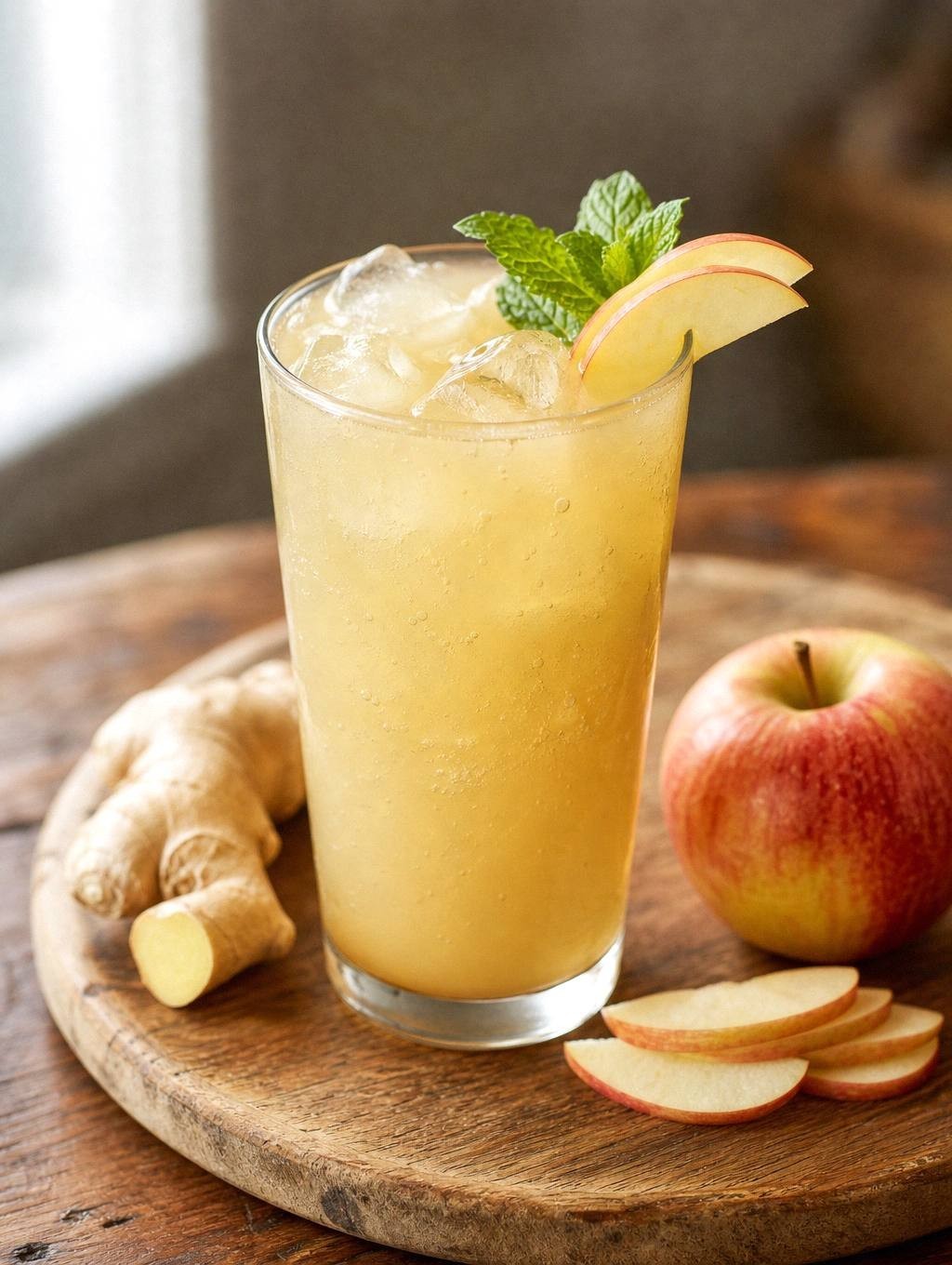
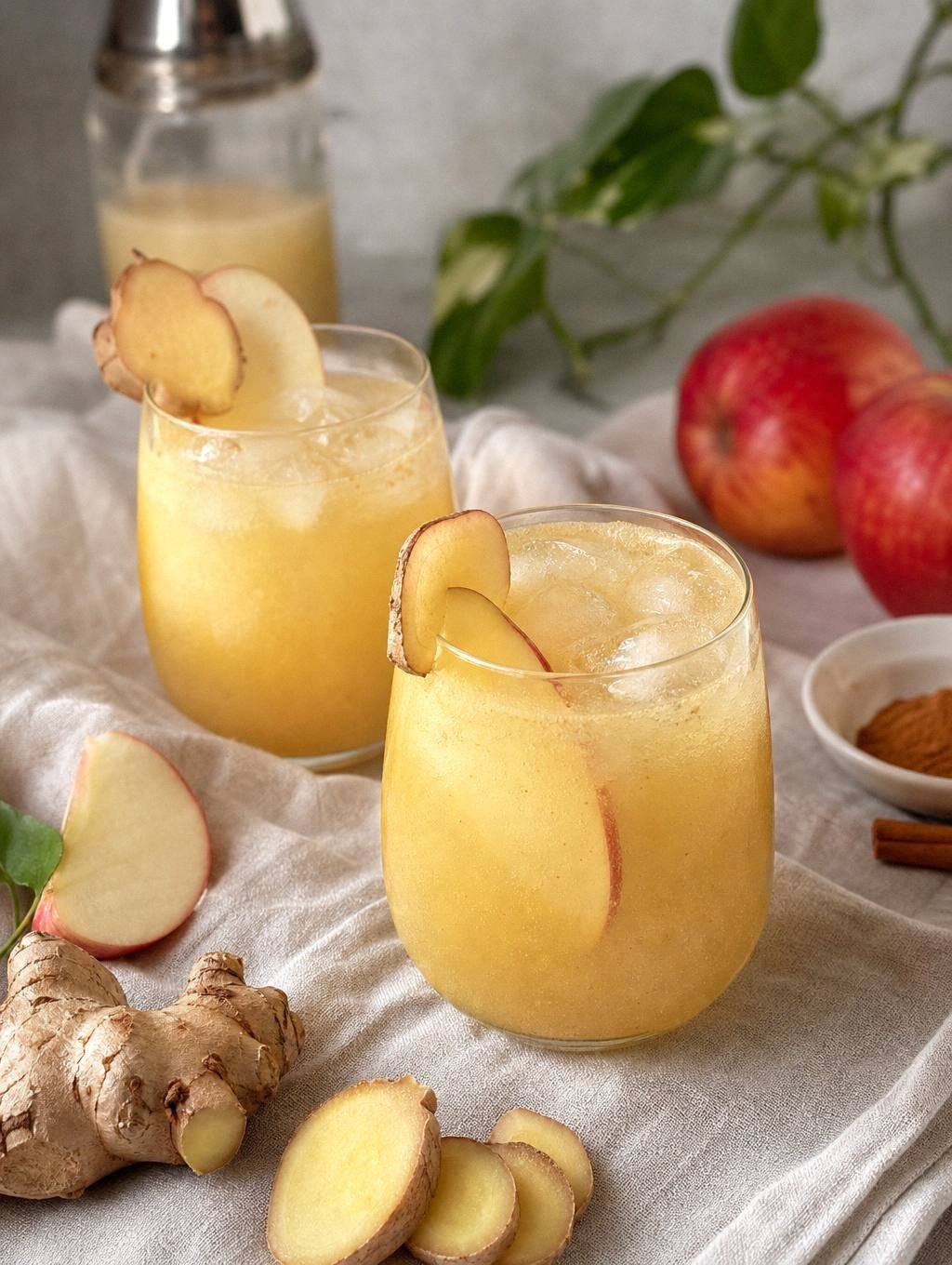
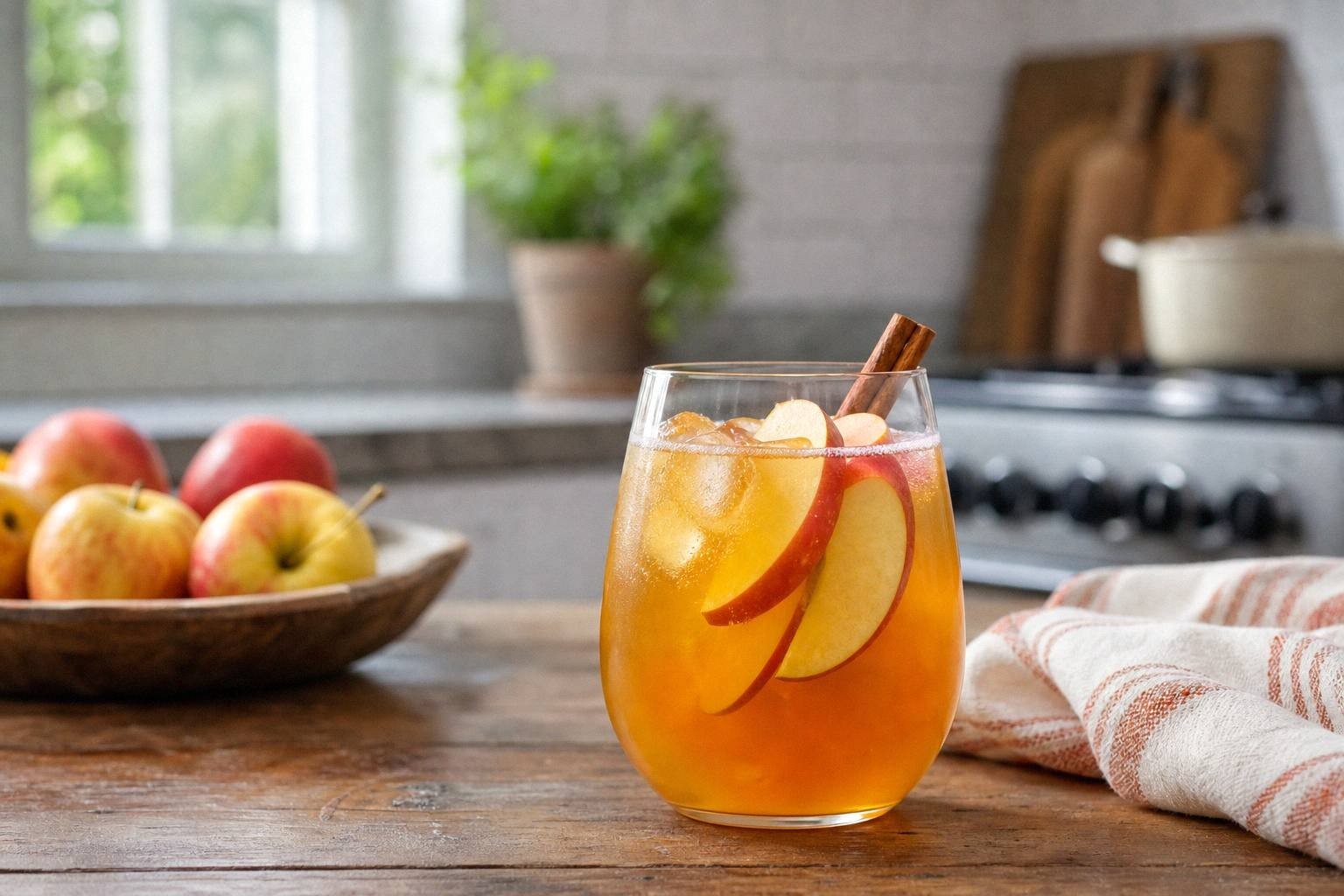
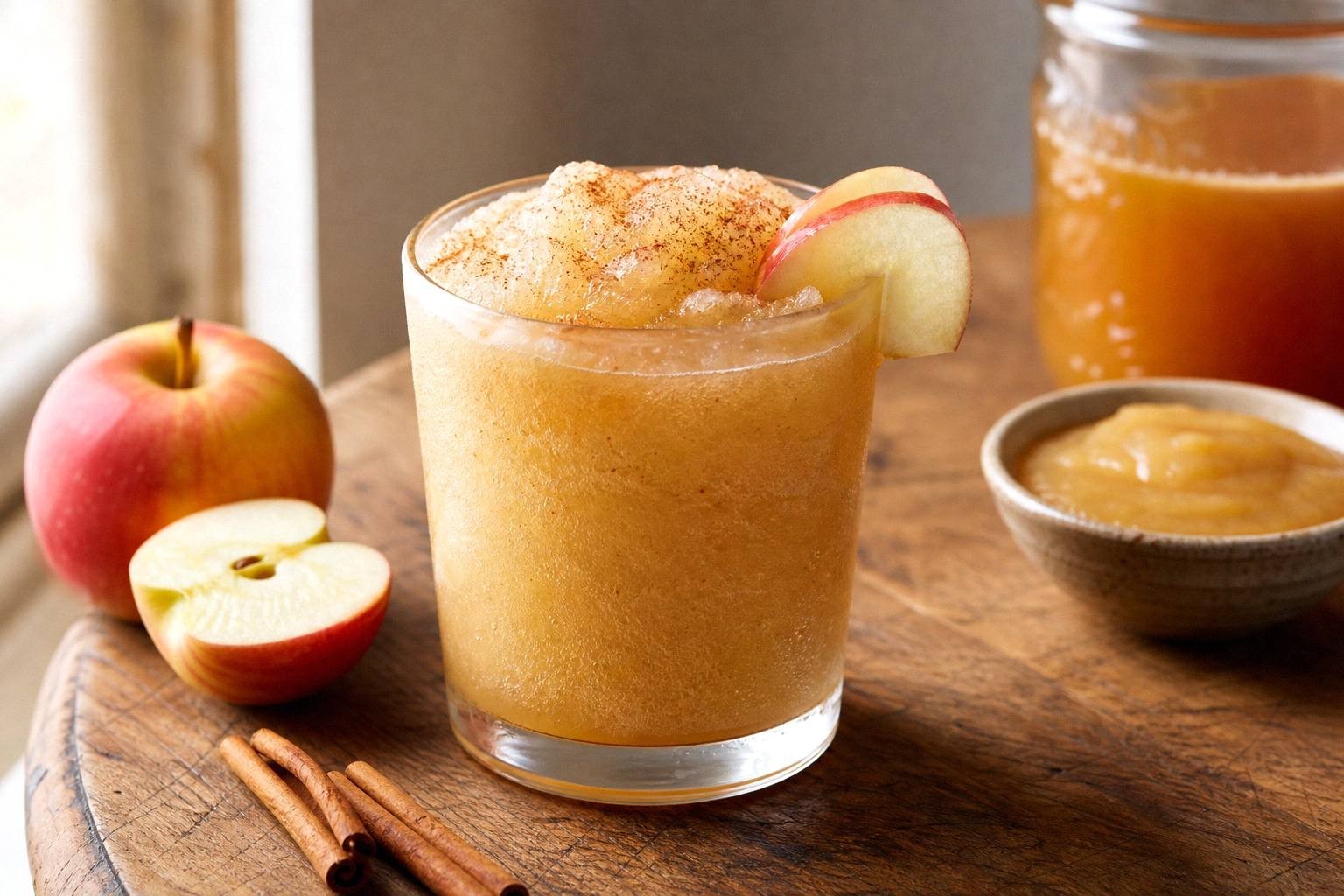
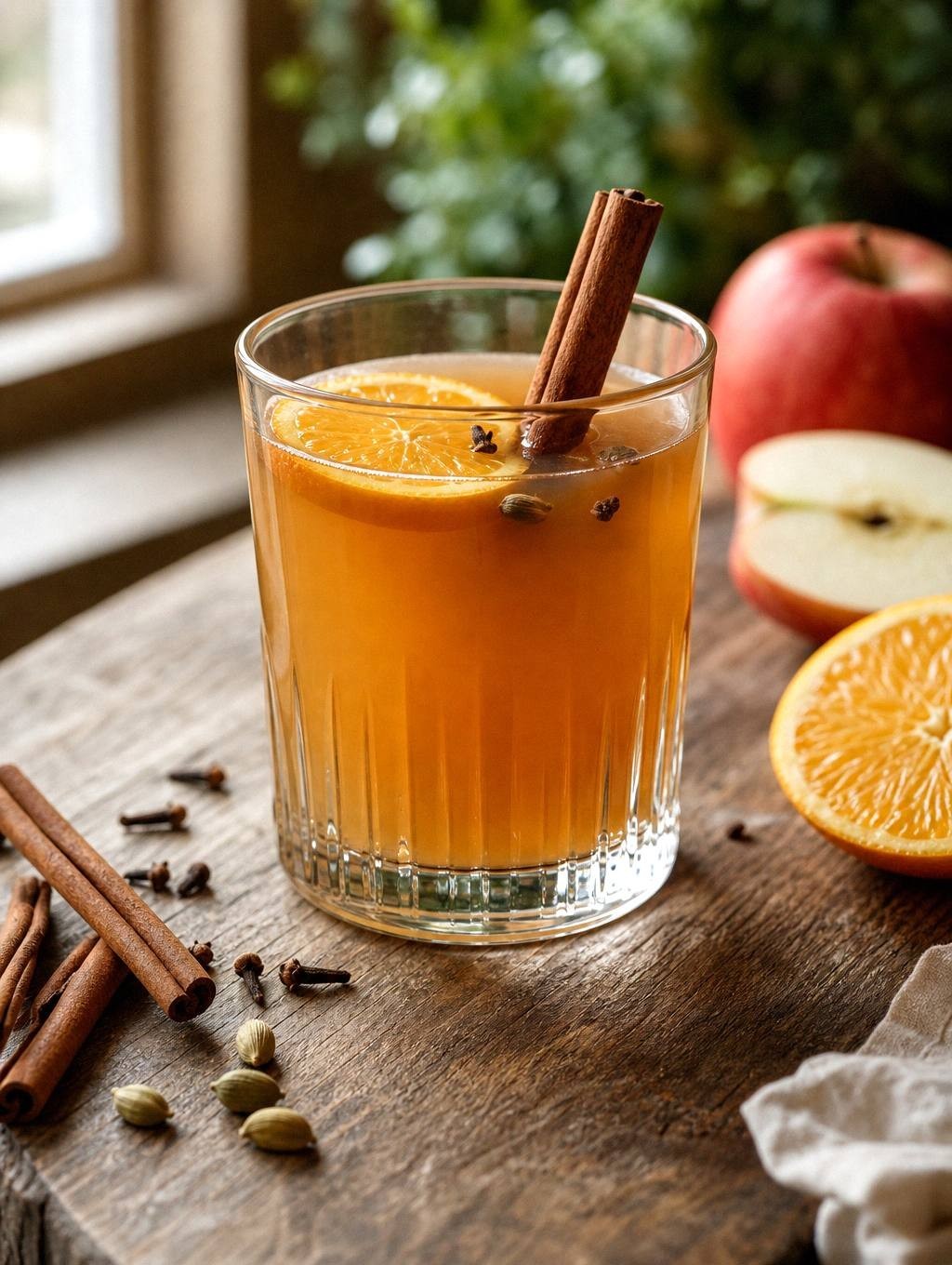
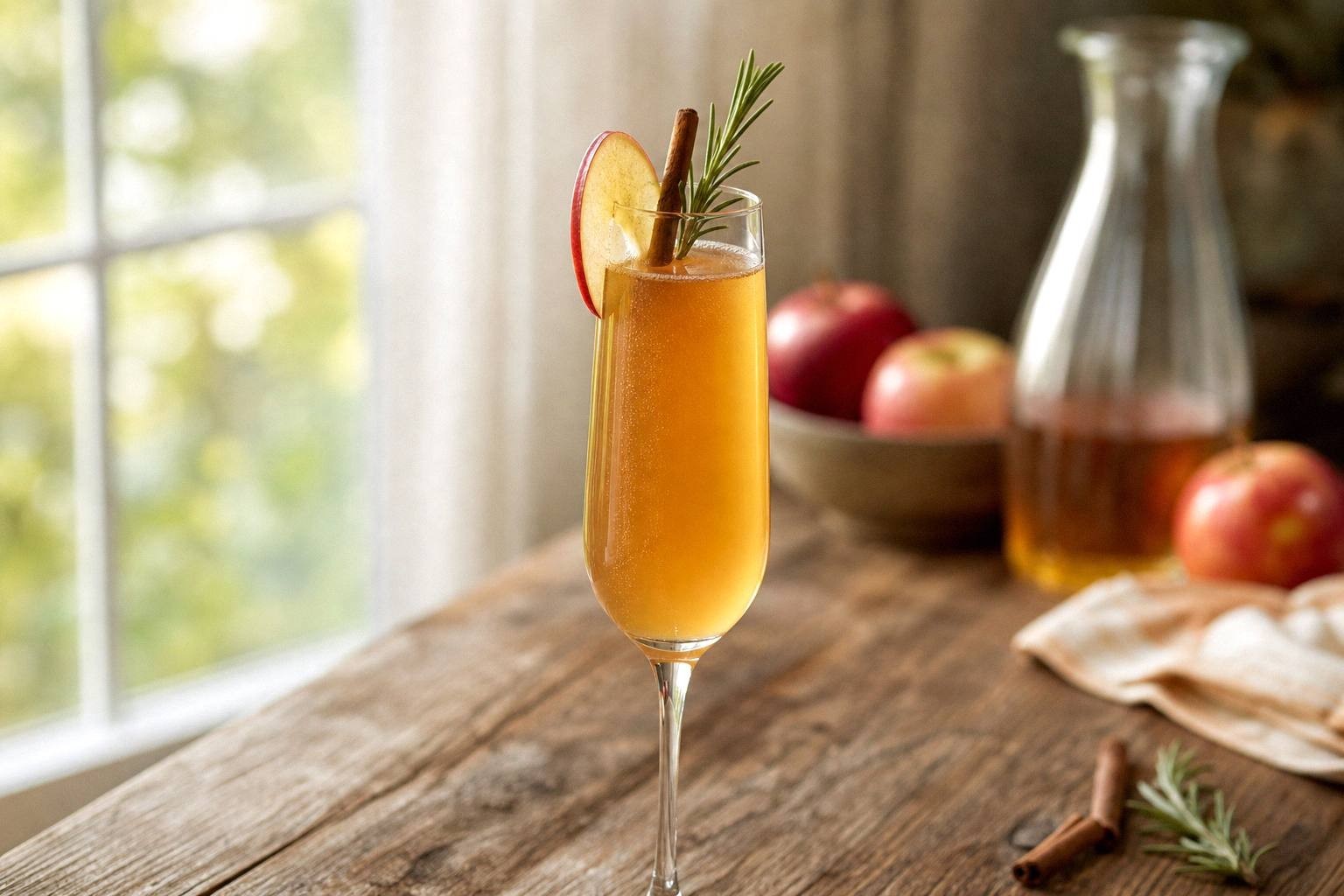
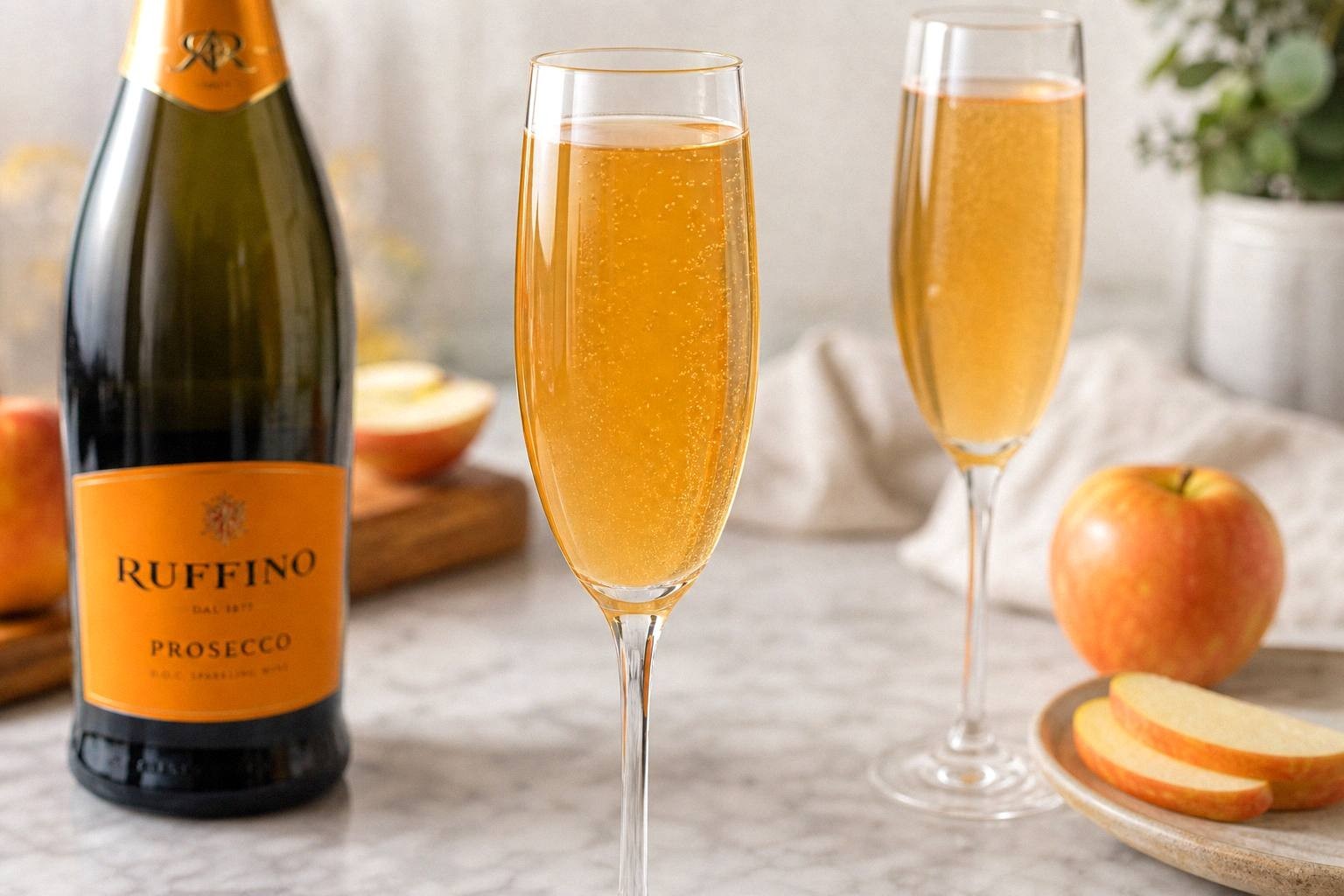
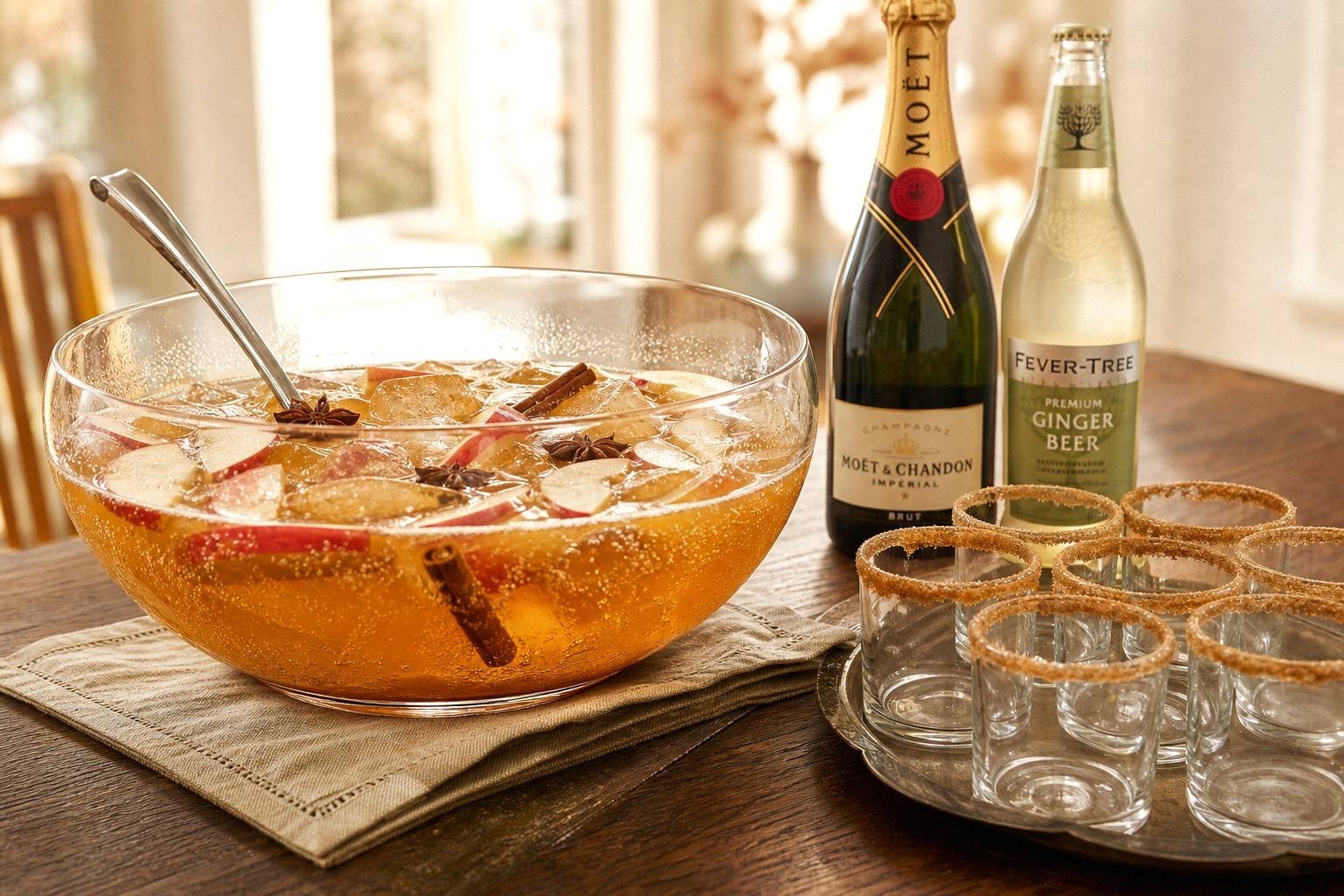
Apple cider and fresh ginger make a cloudy, spicy base. Blend the still ingredients first; add the bubbles in the glass. Turmeric and pepper are flavor choices, with no curcumin-activation or treatment promise.
Wash hands and equipment. Rinse fruit and culinary herbs under running water before cutting. Use correctly identified food ingredients, not florist plants or ornamental herbs. Choose pasteurized or otherwise safety-treated packaged juice and follow its label after opening.
Ingredients
- 1 1/2 cups chilled pasteurized apple cider or apple juice, plus extra only if needed after straining
- 1 ounce (28 g) peeled fresh ginger, weighed after peeling
- 1/4 teaspoon ground cinnamon
- 1/2 teaspoon ground turmeric (optional)
- 1/16 teaspoon ground black pepper (optional flavor addition)
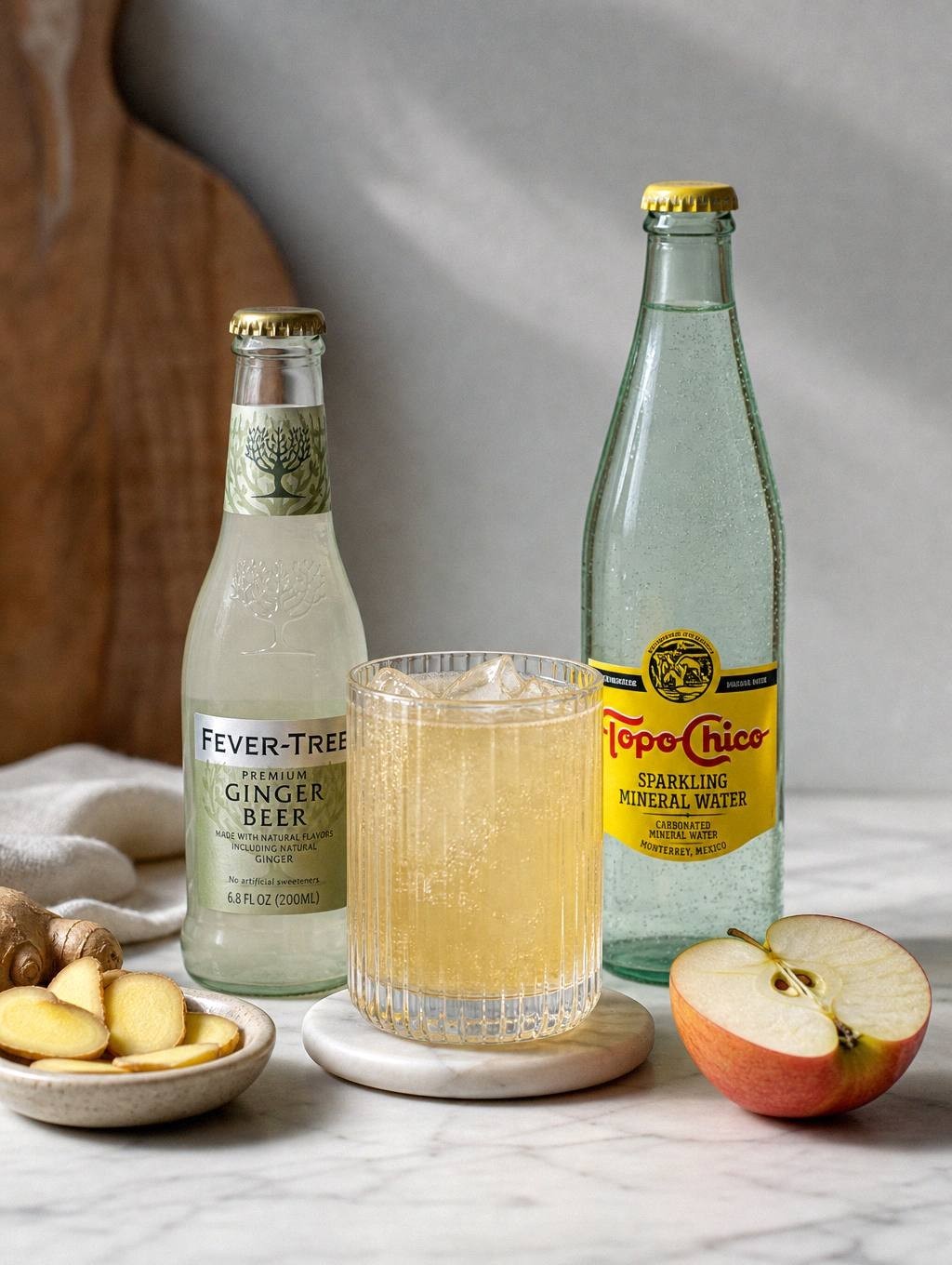
- 12 fluid ounces chilled labeled alcohol-free ginger beer, ginger ale or sparkling water, kept separate
- Ice for four 10-to-12-ounce glasses
- 4 thin washed apple slices (optional garnish)
Instructions
- Blend the cider, ginger and chosen spices for 20 to 30 seconds; keep all carbonated mixer out of the blender.
- Strain through a fine-mesh sieve and press gently. Measure the strained base; add enough extra chilled cider to reach exactly 1 1/2 cups. Stir the base before portioning.
- Put ice in four 10-to-12-ounce glasses. Divide the base into four 3-fluid-ounce pours, then add 3 fluid ounces of chilled mixer to each. Stir once gently and add an optional apple slice.
- Serve immediately. Refrigerate unused base promptly at 40 F (4 C) or below; prepare it on the day of serving or freeze it promptly for later refrigerator thawing. Discard after more than two hours without cold holding, or one hour above 90 F (32 C).
Makes four six-fluid-ounce drinks before ice. Active and total time: about 10 minutes with chilled ingredients. If starting with warm ingredients, allow additional refrigerator chilling until cold. Straining loses liquid, so measured top-up controls the finished yield.
Options and Batch Planning
- For less ginger heat, use 1/2 ounce (14 g) ginger in the same four-drink batch, or omit fresh ginger. Keep the same final measured base and mixer amounts. Ginger ale and sparkling water may taste milder, but check each product.
- For a clearer apple flavor, omit turmeric and pepper. For a spice change, replace cinnamon with 1/16 teaspoon nutmeg or cardamom in the batch.
- For brightness, add 1 teaspoon lemon juice per glass. For a sweeter glass, add 1 teaspoon prepared plain syrup , or use a labeled commercial simple syrup. Each adds 1/6 fluid ounce to that portion; stir gently.
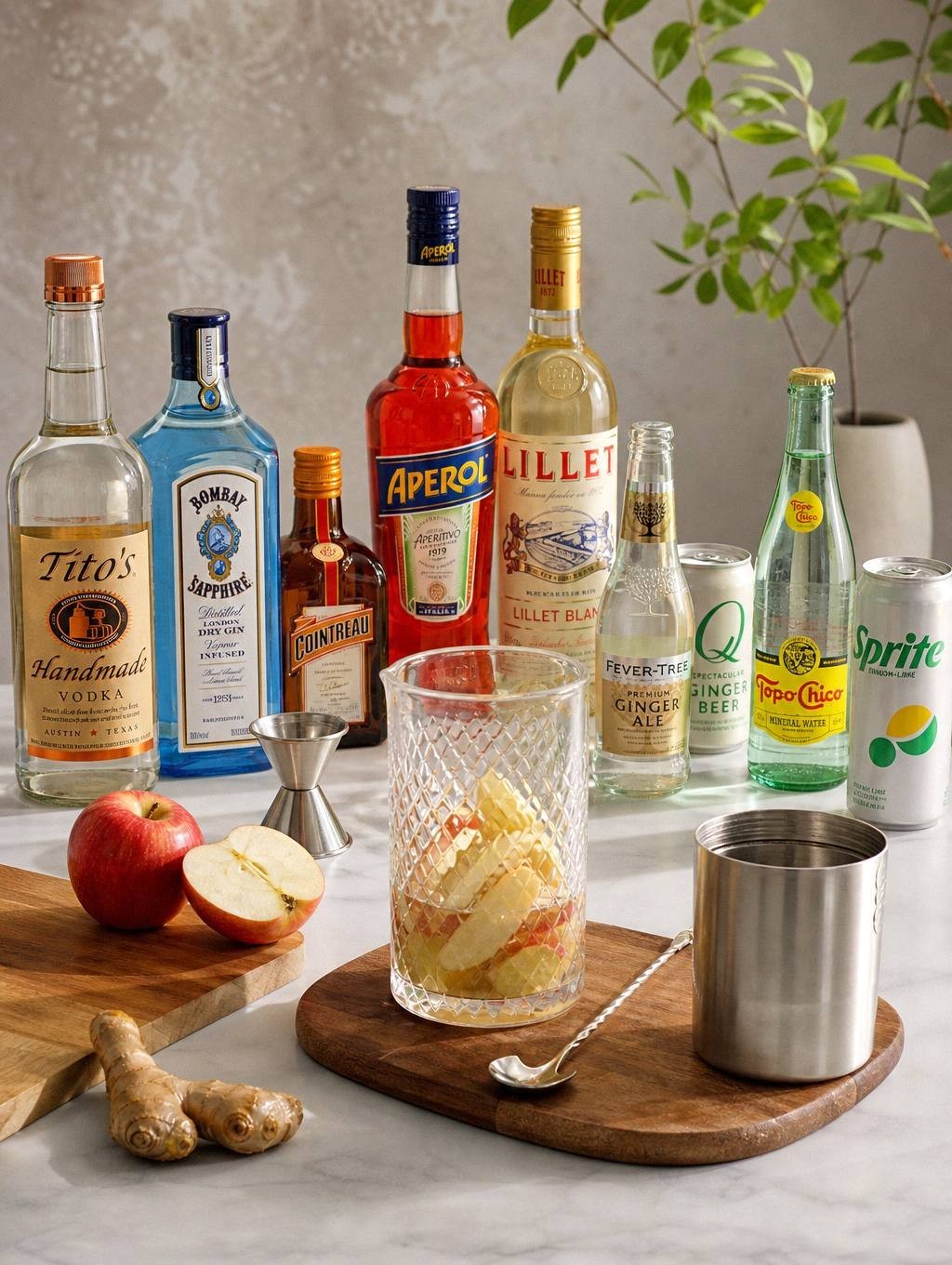
- For a separate adult cocktail, add 1 1/2 fluid ounces bourbon or dark rum per glass before the mixer. That makes 7 1/2 fluid ounces before ice. Label and serve separately.
- For an optional rim, combine 1 tablespoon sugar with 1/8 teaspoon cinnamon on a clean plate. Moisten only the outer rim with a lemon wedge and dip lightly. Make the rim just before assembly; discard used coating. Put whole cinnamon sticks on the table rather than in the drink.
- For eight drinks, double the base ingredients, measure 3 cups strained base after top-up, and supply 24 fluid ounces mixer. Blend only within the appliance’s marked capacity in separate loads. Each base pour is still 3 fluid ounces.
Storage and Ingredient Labels
Choose safety-treated nonalcoholic cider, not hard cider or an untreated farm juice. Commercial ginger beers differ in production, sweetness and alcohol content; a name alone does not verify the bottle. No home-fermented mixer is instructed here. Follow product labels after opening.
Make the strained base the day you serve it; for longer planning, freeze it promptly in clean covered portions and thaw in the refrigerator. This is a conservative house handling choice, not a tested storage duration. Carbonation is added at service. Refrigerate promptly at 40 F (4 C) or below. Use clean small containers and keep serving pitchers over ice, checking the liquid temperature. Discard after more than two cumulative hours without cold holding, or one hour above 90 F (32 C). Normal smell and appearance do not establish safety.
These are source-compared culinary house adaptations, not kitchen-tested recipes. Measured recovery controls portions; no shelf-life, sensory or medical testing is claimed.