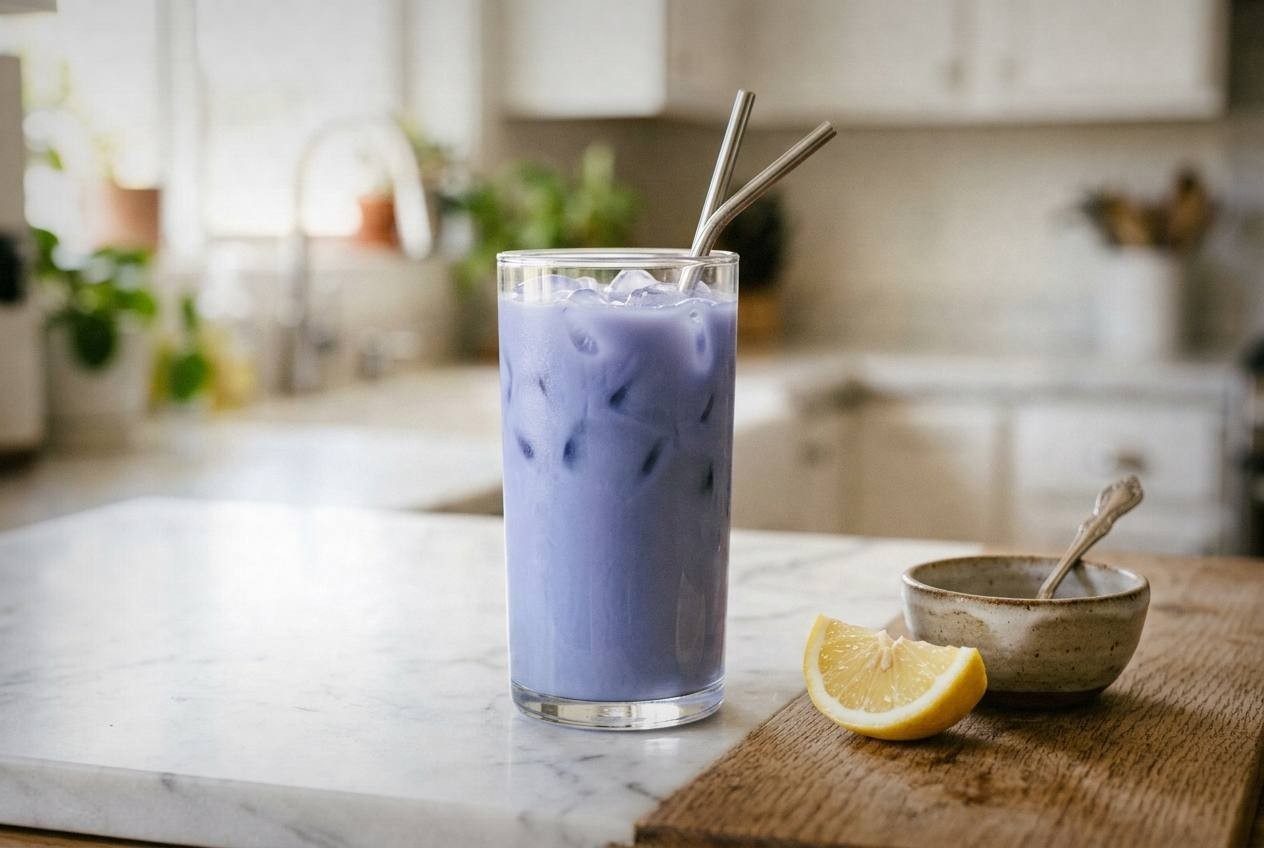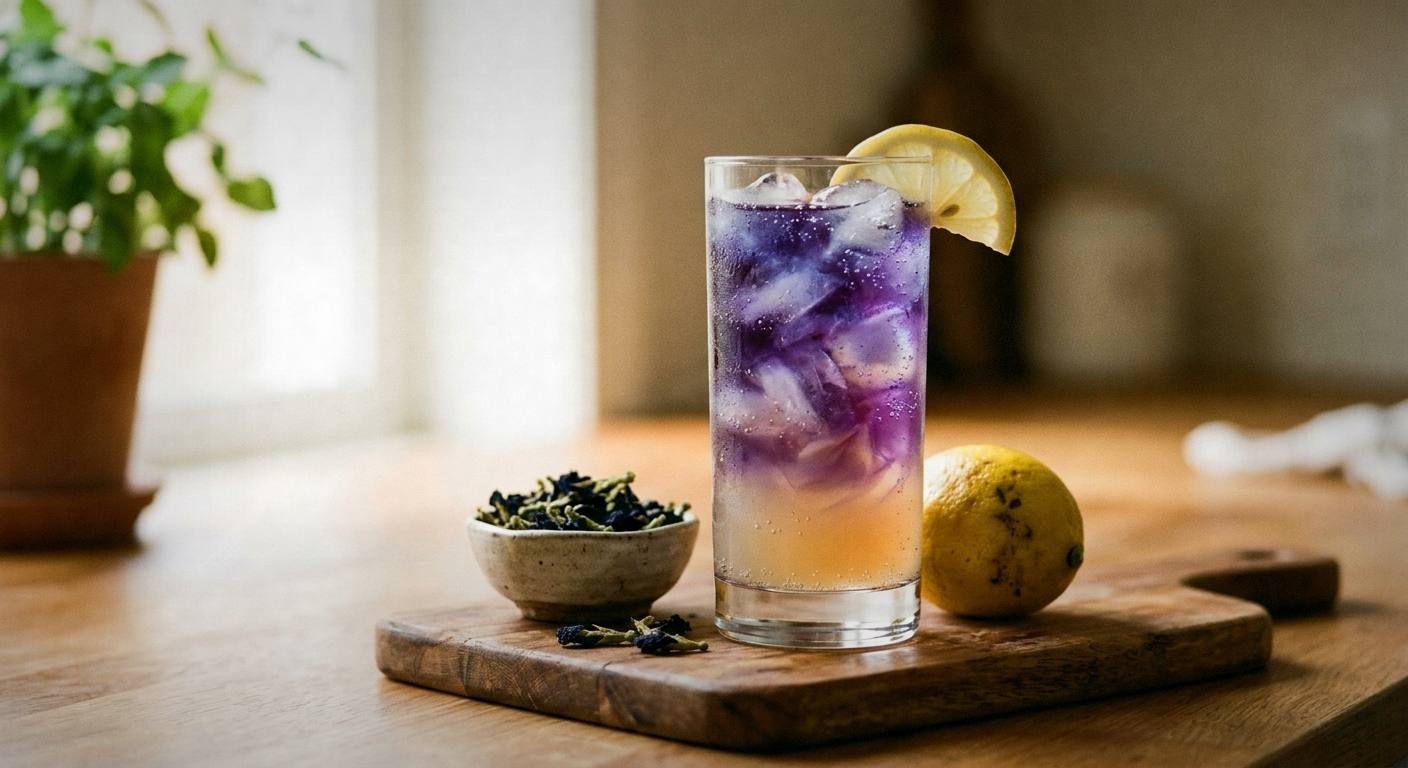
Blue tea meets lemon at the table in this six-glass lemonade. It is adapted from Lindsay Landis at Love and Olive Oil, whose recipe uses a ten-minute steep. Cooling is included here: allow about 60 minutes from scratch, and longer until cold. A fixed magenta endpoint or lasting layered gradient is not guaranteed.
Prep: 10 minutes. Total: about 60 minutes, longer if chilling is needed. Yield: 6 servings (260 ml each before ice).
Ingredients
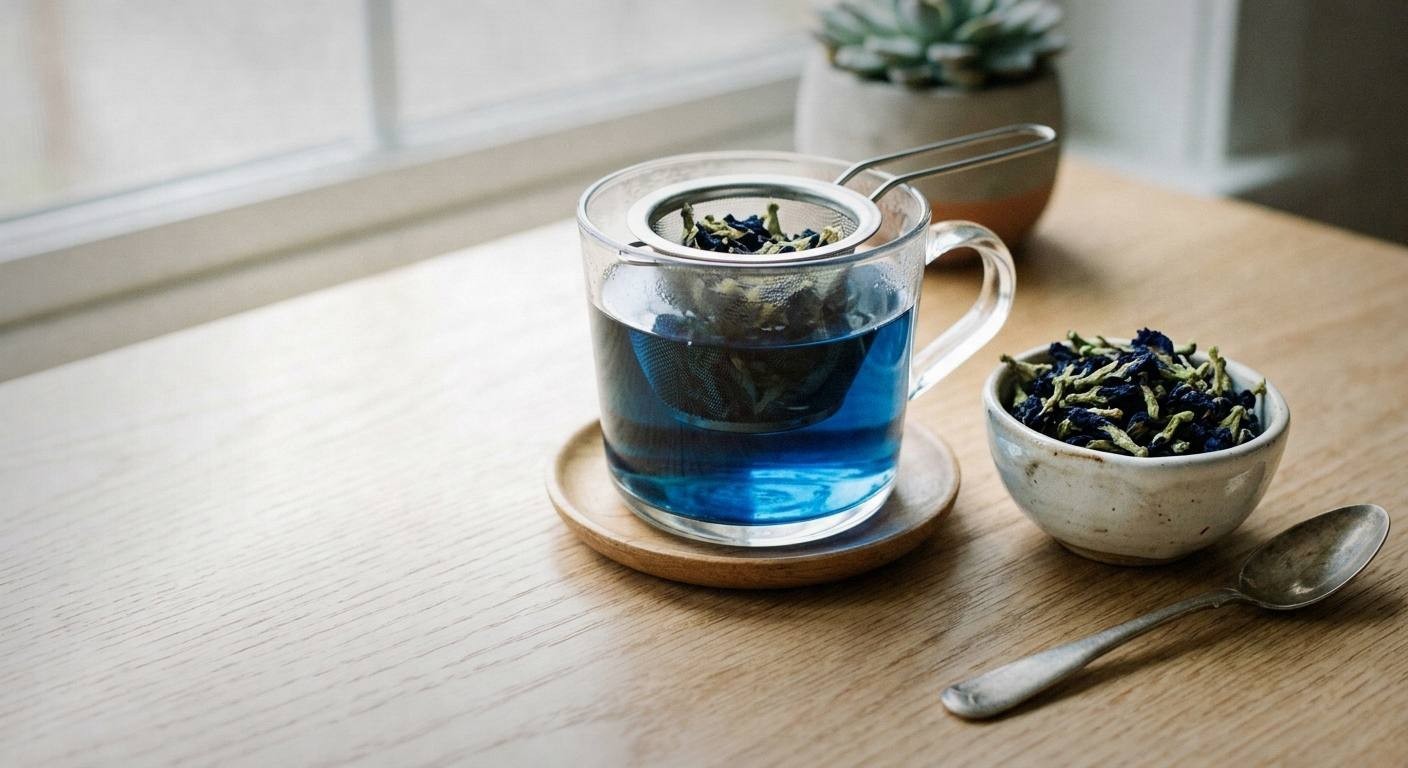
- 1/2 US cup (8 g) dried culinary butterfly pea flowers (Clitoria ternatea)
- 3 US cups (720 ml) water for blue tea, plus water to restore strained tea
- 1 US cup granulated sugar
- 1 US cup (240 ml) lemon juice
- 2 US cups (480 ml) cold water for lemon mixture
- Ice for serving
Method
- Heat 720 ml water with the sugar and butterfly pea flowers in a saucepan, stirring until sugar dissolves. Bring to a gentle simmer, remove from heat, cover and steep for 10 minutes.
- Strain completely into a heat-safe measuring jug. Add water as needed to bring the strained sweetened tea to 840 ml. Cool promptly over an ice-water bath and refrigerate until cold.
- In a separate jug combine lemon juice with 480 ml cold water, making 720 ml lemon mixture; refrigerate.
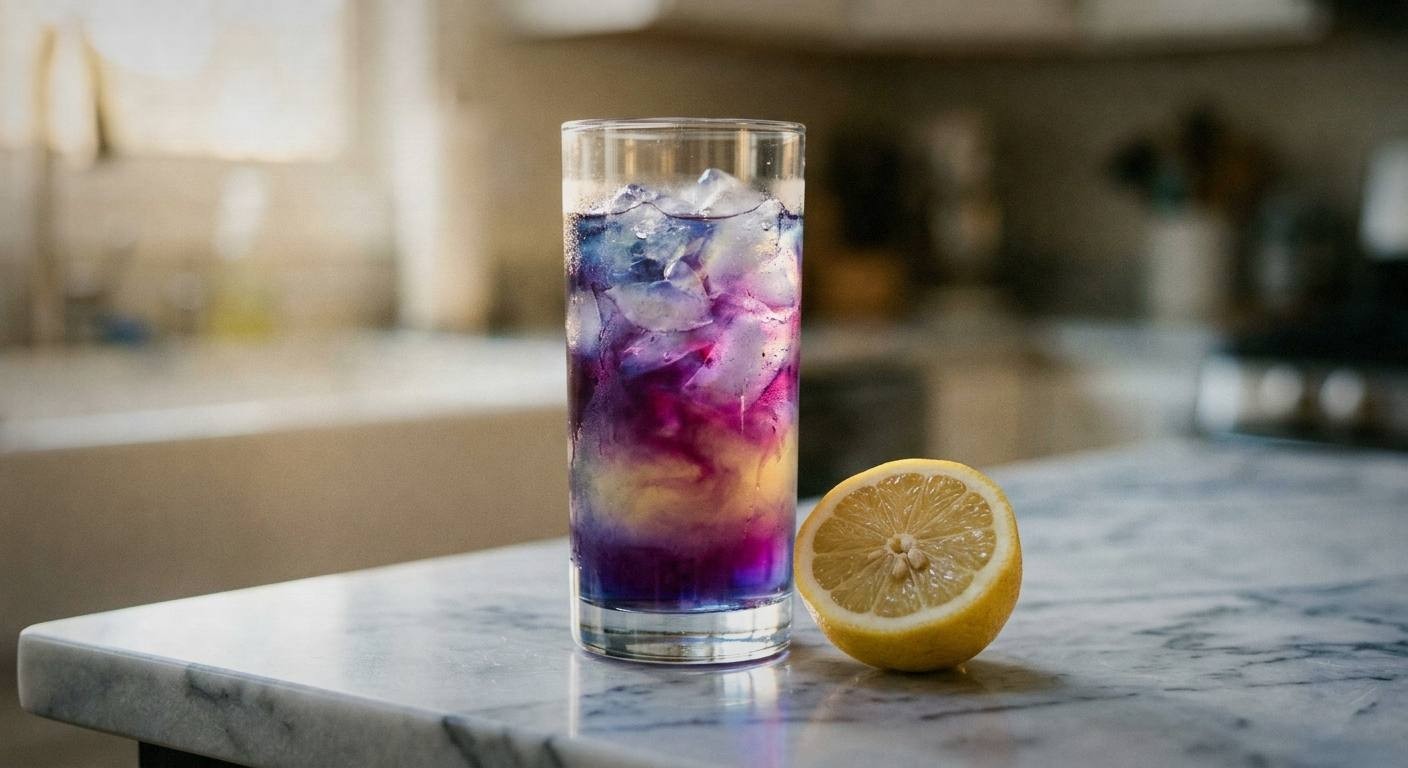
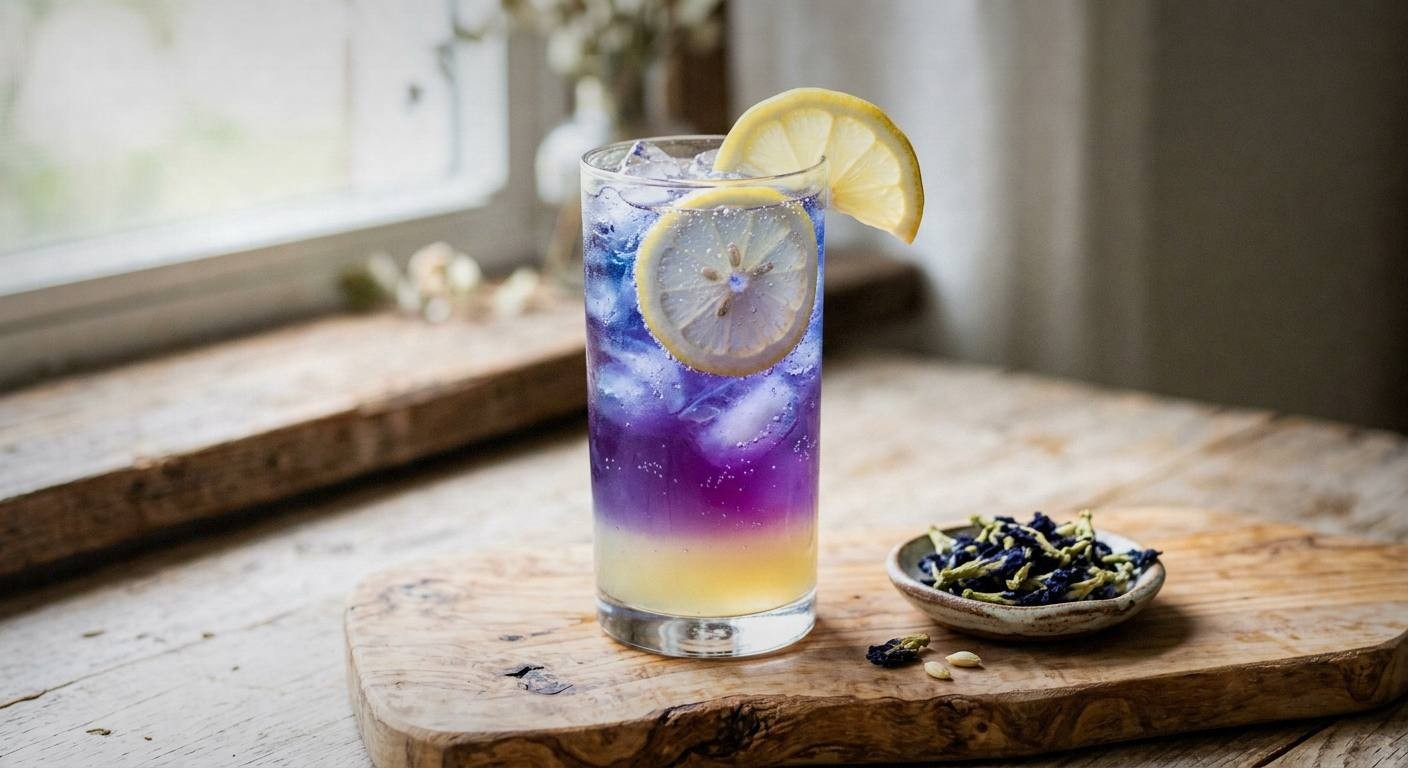
- For each of six 16-ounce glasses add ice, pour in 140 ml blue tea and then 120 ml lemon mixture slowly over a spoon. Stir and serve; colors and layering vary with ingredients and pouring.
Measured Options
For honey lemonade omit sugar during infusion, then stir 2/3 US cup (160 ml) light honey into the strained warm tea. Restore the sweetened tea to the same 840 ml mark and follow the same chilling/serving method. The honey changes sweetness and color; it is not equal to sugar by volume or a medical ingredient.
For sparkling lemonade keep the blue tea unchanged. Mix only the 240 ml lemon juice with 120 ml cold still water. Each glass takes 140 ml blue tea, 60 ml lemon mixture and 120 ml chilled sparkling water, totaling 320 ml before ice; use 20-ounce glasses or reduce ice. The sparkling mixer replaces part of the still water, not the liquid needed to infuse all the flowers.
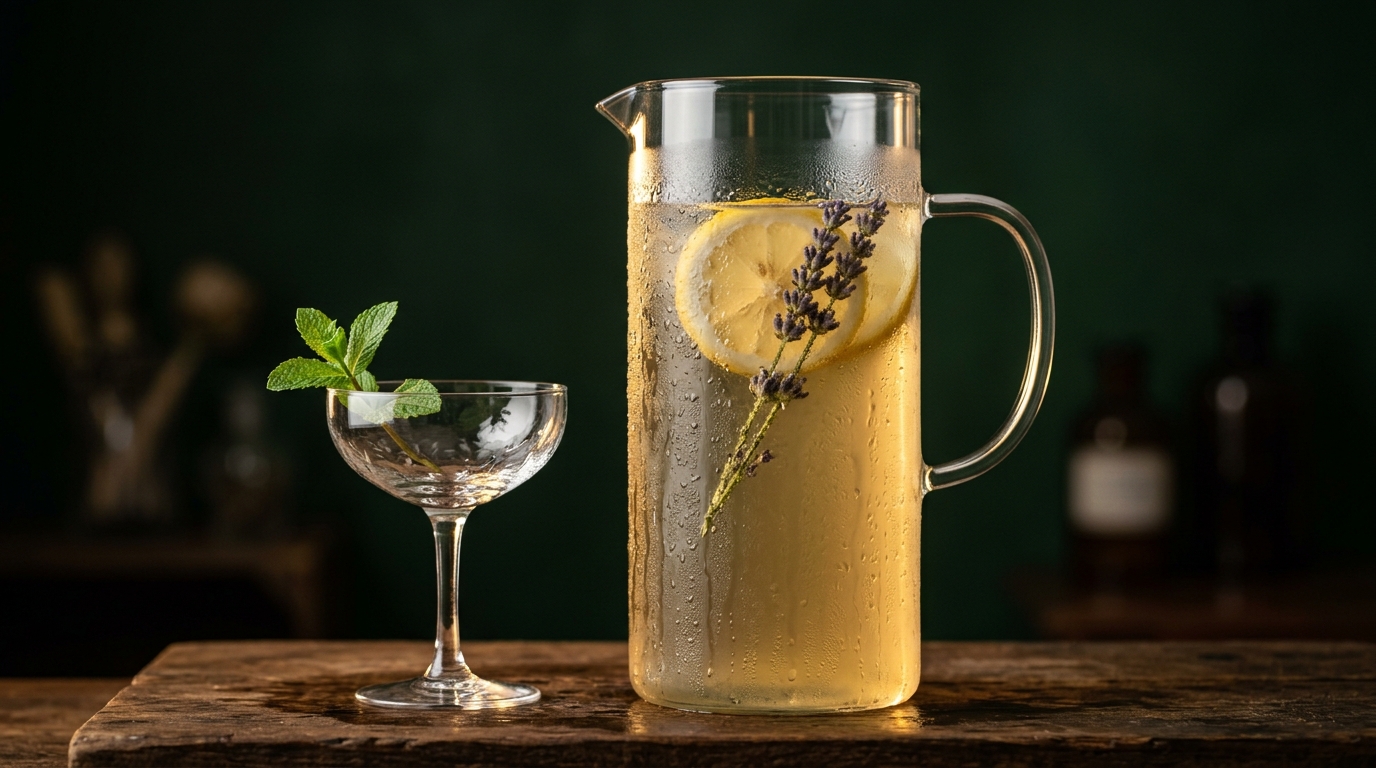
For lavender lemonade reduce sugar to 3/4 US cup, prepare the same blue tea and restore to 840 ml. Add 2 tablespoons (30 ml) cooled lavender syrup to the lemon mixture, then add only enough cold water to bring that mixture to 720 ml. A small lavender syrup component: heat 1/4 US cup sugar with 60 ml water and 1/2 teaspoon dried culinary lavender, stir until dissolved, steep off heat for 5 minutes, strain and cool. Allow about 30 minutes, longer until cold. Measure syrup recovery; use 30 ml only, refrigerate surplus. Lavender is a flavor addition and does not by itself guarantee a pinker color.
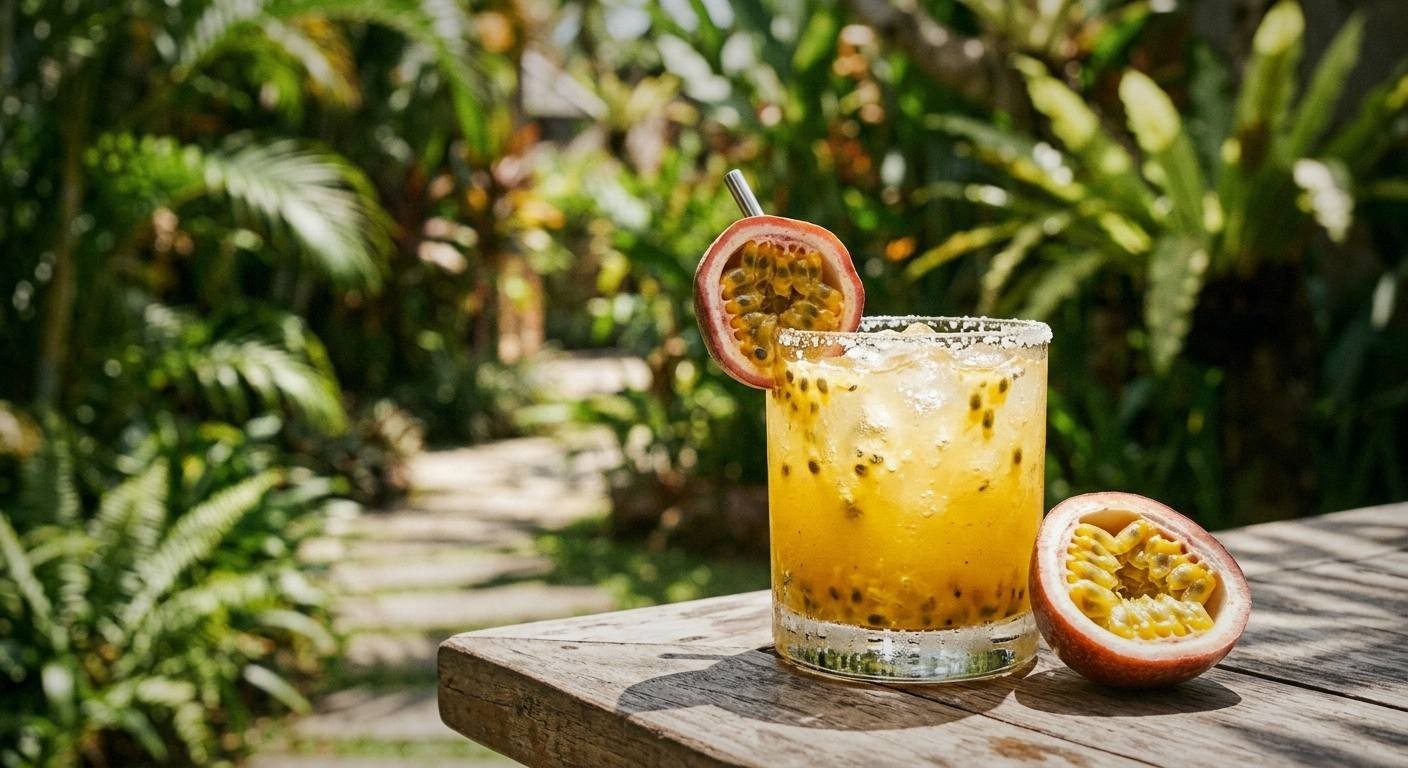
For a tropical option replace 120 ml of the lemon juice with 120 ml unsweetened passion fruit puree. Keep the other 120 ml lemon juice, 480 ml cold water and blue tea unchanged; divide evenly into six portions. Texture and the color shift differ.
Blue Ice Option
Use the prepared, cooled sweetened blue tea above. Freeze it in a clean ice tray, then measure or weigh the portions so each serving receives one-sixth of the batch (140 ml before freezing). Allow at least 6 hours, longer until solid; freezer performance and cube size vary. Pour one-sixth of the chilled lemon mixture (120 ml) over each measured blue-ice portion and let the cubes melt. This replaces liquid blue tea in the serving; it does not add an extra syrup portion to ordinary lemonade. Use a clean freezer-safe container for storage and use within one month for quality. Thaw leftovers in the refrigerator.
Color and Ingredient Notes
Butterfly pea pigments change color when mixed with acidic lemon; water, flowers and dilution affect the shade. Use flowers sold for culinary tea preparation. Pure butterfly pea tea contains no Camellia sinensis, but check blended products for added caffeinated ingredients. Store dry flowers according to their label in a dry sealed container, away from light and heat. No universal two-to-three-year shelf life, childhood safety guarantee, cognitive claim or legume-allergy prediction is made.
Preparation and Storage
Wash fresh produce under running water before cutting, and scrub firm fruit or cucumber. Use culinary botanicals sold for food or tea, not ornamental flowers. Keep ready-to-drink juices, opened milk and commercial mixers as their labels direct.
Refrigerate prepared bases promptly at 40 F (4 C) or below in clean covered containers. Cool hot infusions in shallow heat-safe containers or an ice-water bath; do not wait indefinitely for them to reach room temperature. Refrigerate within 2 hours, or within 1 hour above 90 F (32 C). Keep party pitchers refrigerated or on ice at refrigerator temperature. Add bubbles and serving ice at the last moment.
Use fresh-fruit/herb bases the same day, or within 24 hours, for flavor. Use strained tea or homemade syrup within 3 days. These are conservative house quality targets, not tested shelf lives. Finished fizzy drinks are best served immediately. Follow any shorter ingredient-label limit. Honey is unsuitable for infants under 12 months.
More Drinks
- Iced Butterfly Pea Flower Latte
- Lavender Simple Syrup Recipe
- Culinary Lavender Syrup Recipe
- Purple Butterfly Pea Gin and Lemon Cocktail
Sources and Recipe Notes
Published sources inform the method. House portion sizes, recovery marks, flavor variants, clocks and shorter storage targets are specified here; no kitchen or shelf-life testing is claimed.