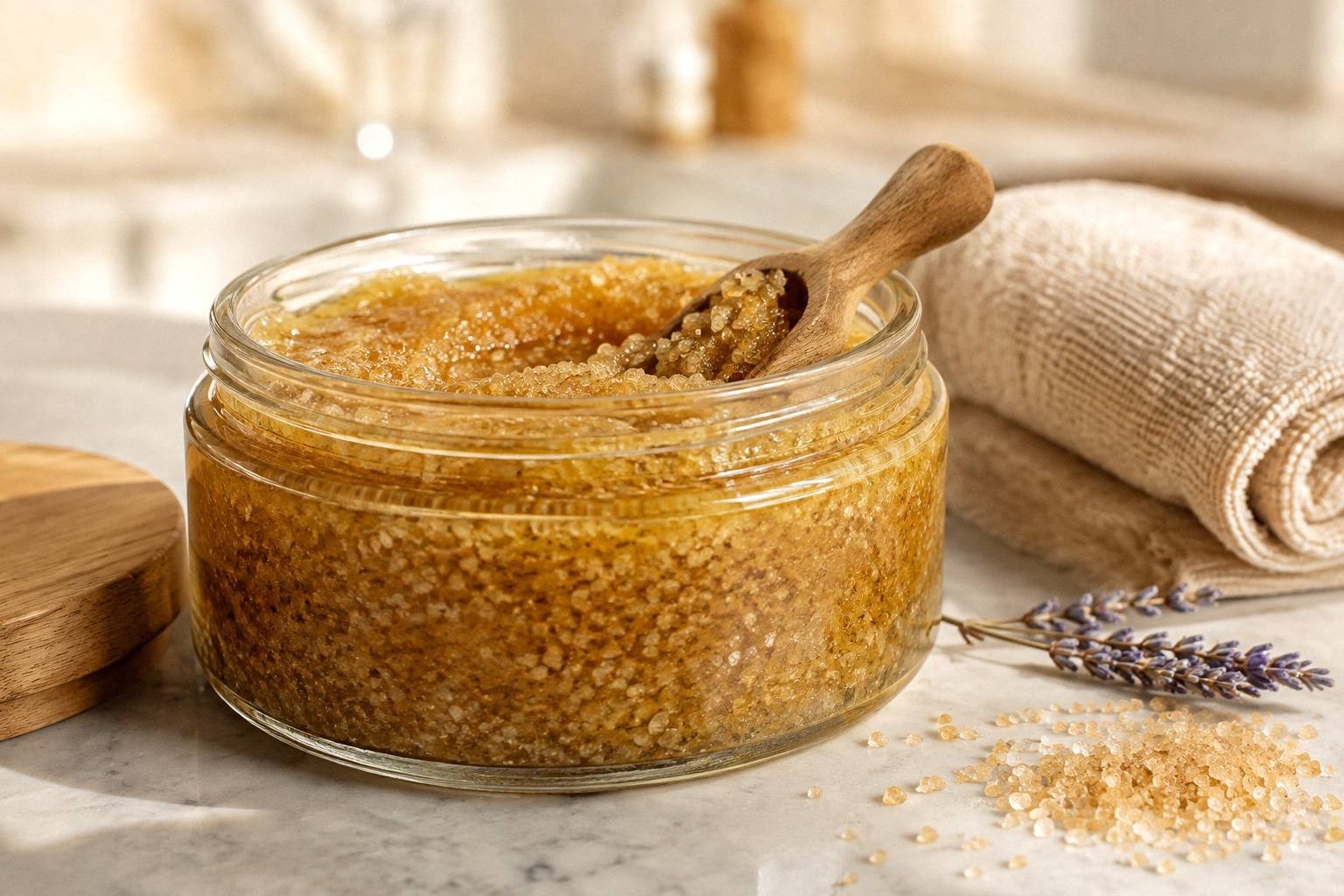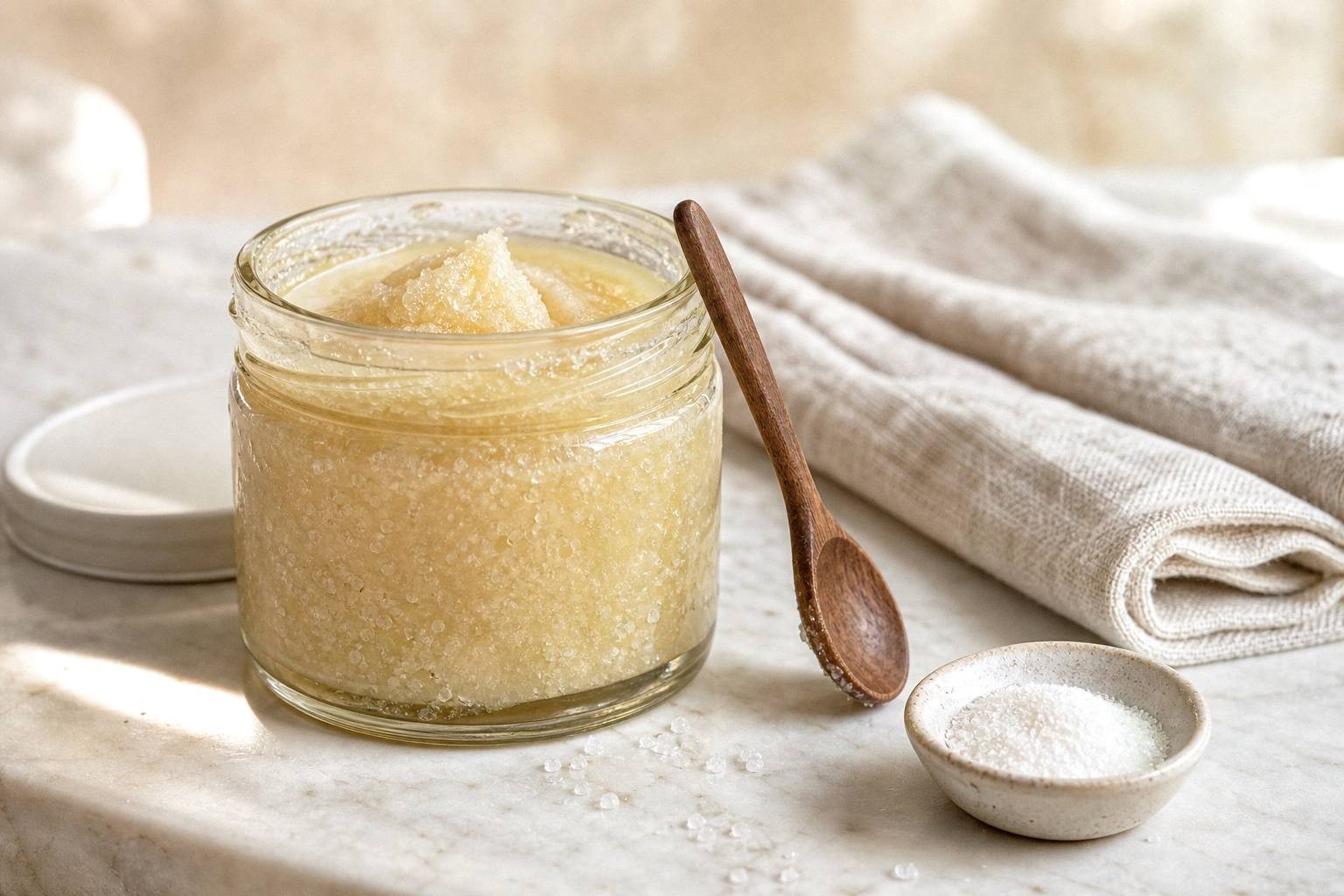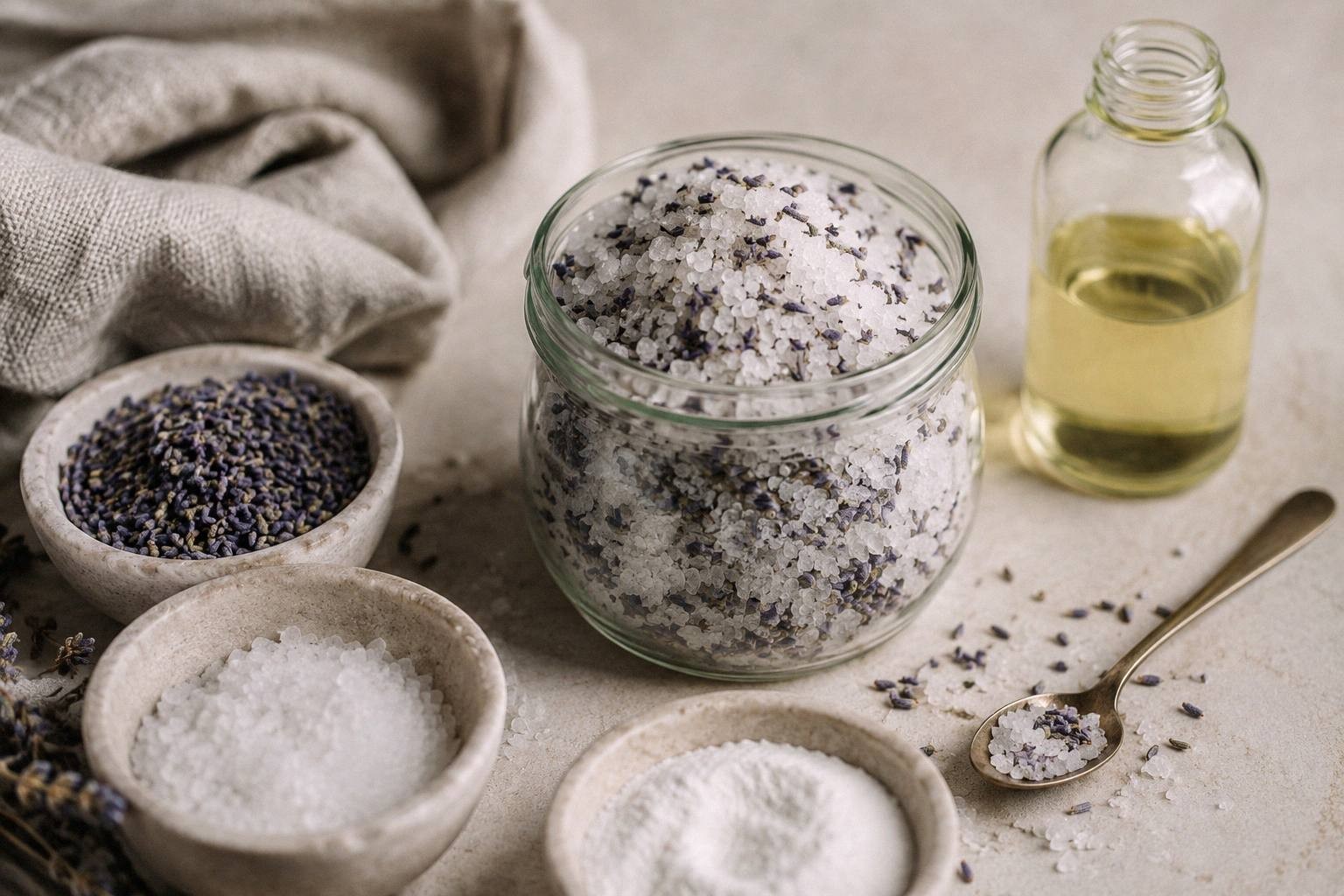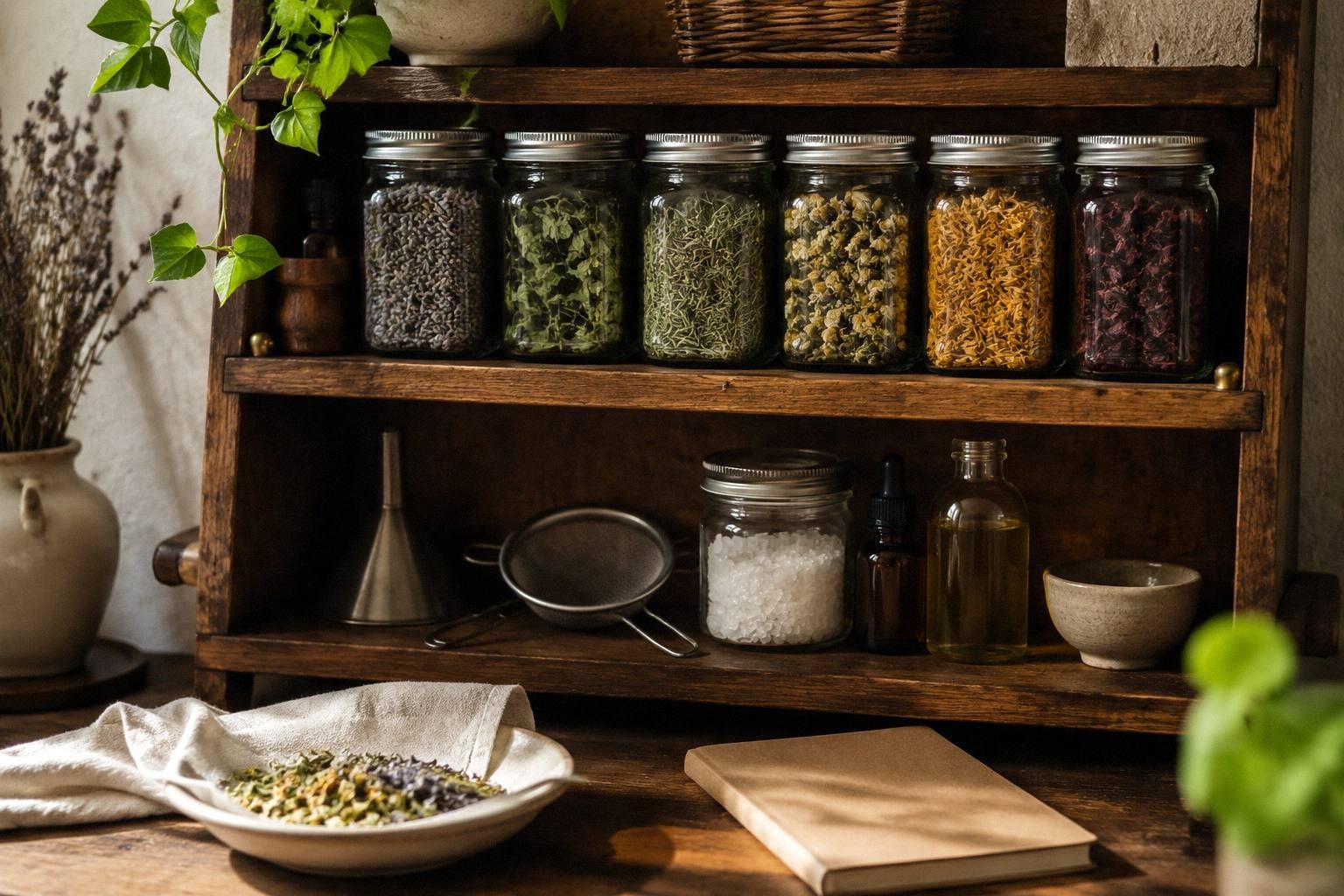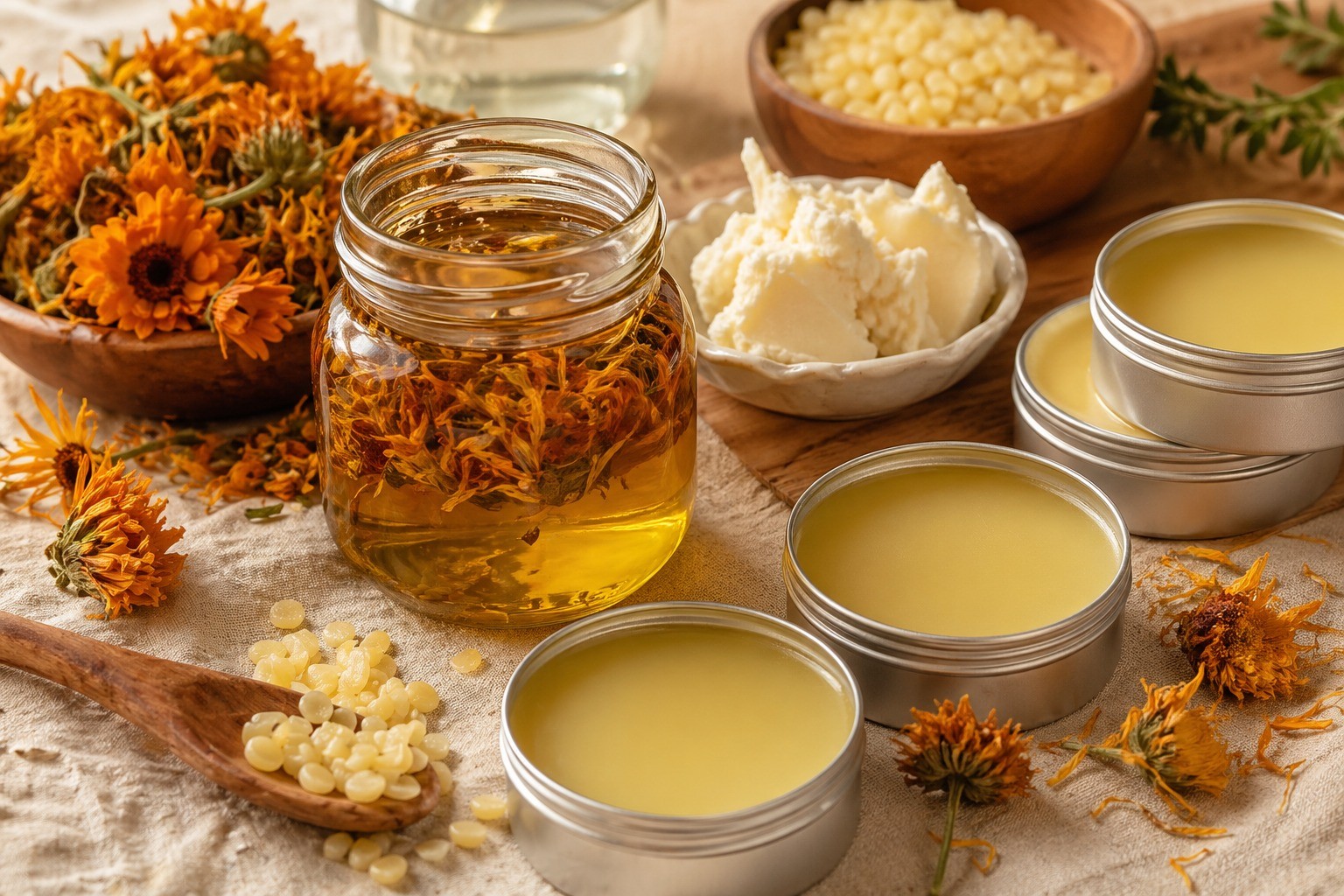
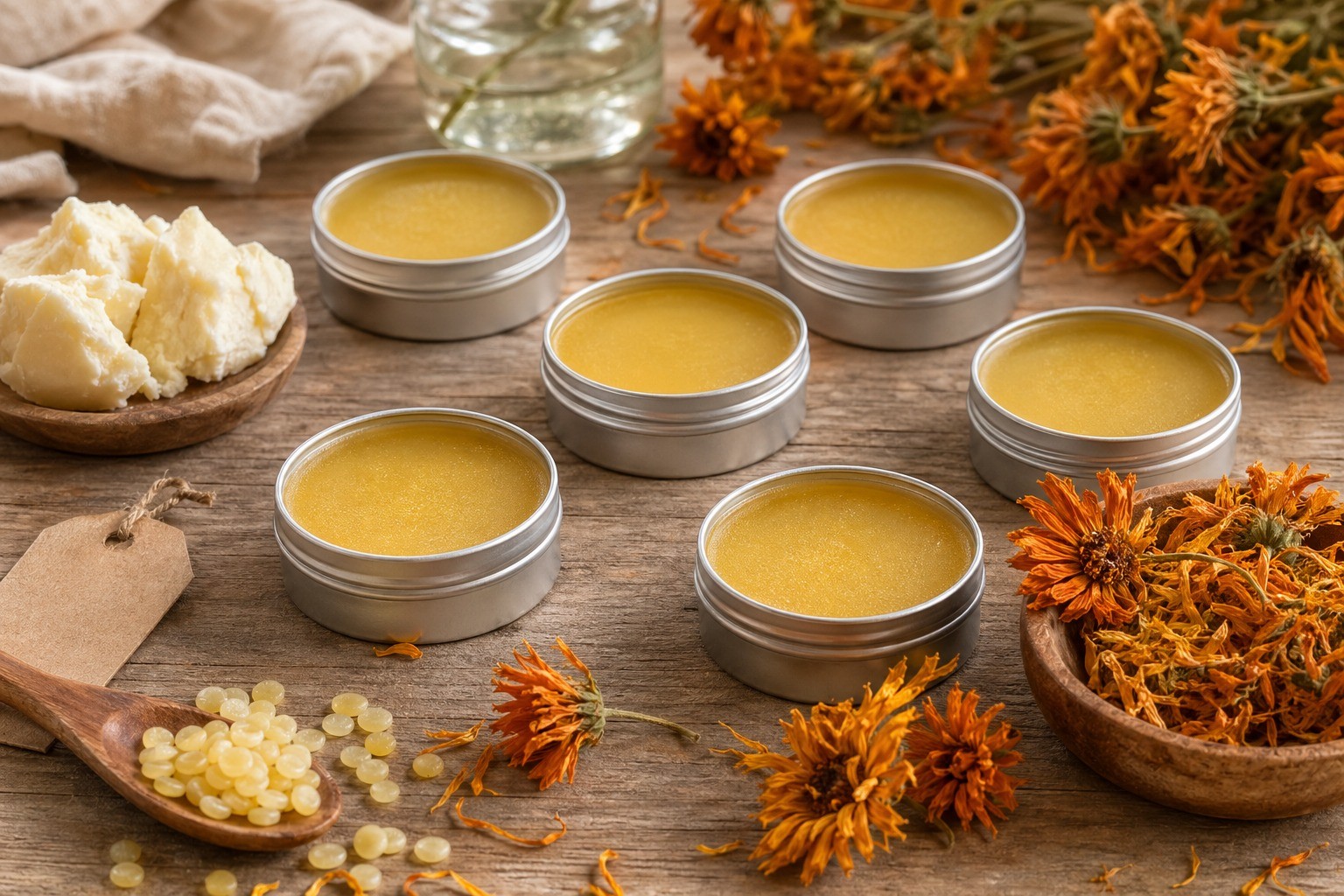
Calendula oil, beeswax and shea butter make a rich hand balm. The former cup of oil plus butter and wax could not fit six one-ounce tins: a US cup alone is eight fluid ounces. Tin capacity is a volume, not a finished product weight.
Ingredients and Timing
- 200 g prepared calendula-infused olive oil, for external use only
- 25 g beeswax pastilles, weighed
- 25 g shea butter, weighed
This house formula is 80% infused oil, 10% beeswax and 10% shea by mass: 250 g before transfer losses. Provide at least 350 mL total heat-safe container capacity and fill below the rim; weigh or measure actual fills rather than promising six tins. Texture changes with ingredients and room temperature. Mountain Rose Herbs supplies the oil/wax melting method; the shea formula is a house adaptation, not their identical salve.
Allow 10 minutes to weigh, about 10 minutes to melt and pour, and at least 40 minutes to cool, approximately 60 minutes with prepared oil. Starting with dried flowers adds heating, a two-hour infusion, cooling and straining; plan about four hours overall, longer if cooling takes longer.
Prepare Dried Calendula Oil
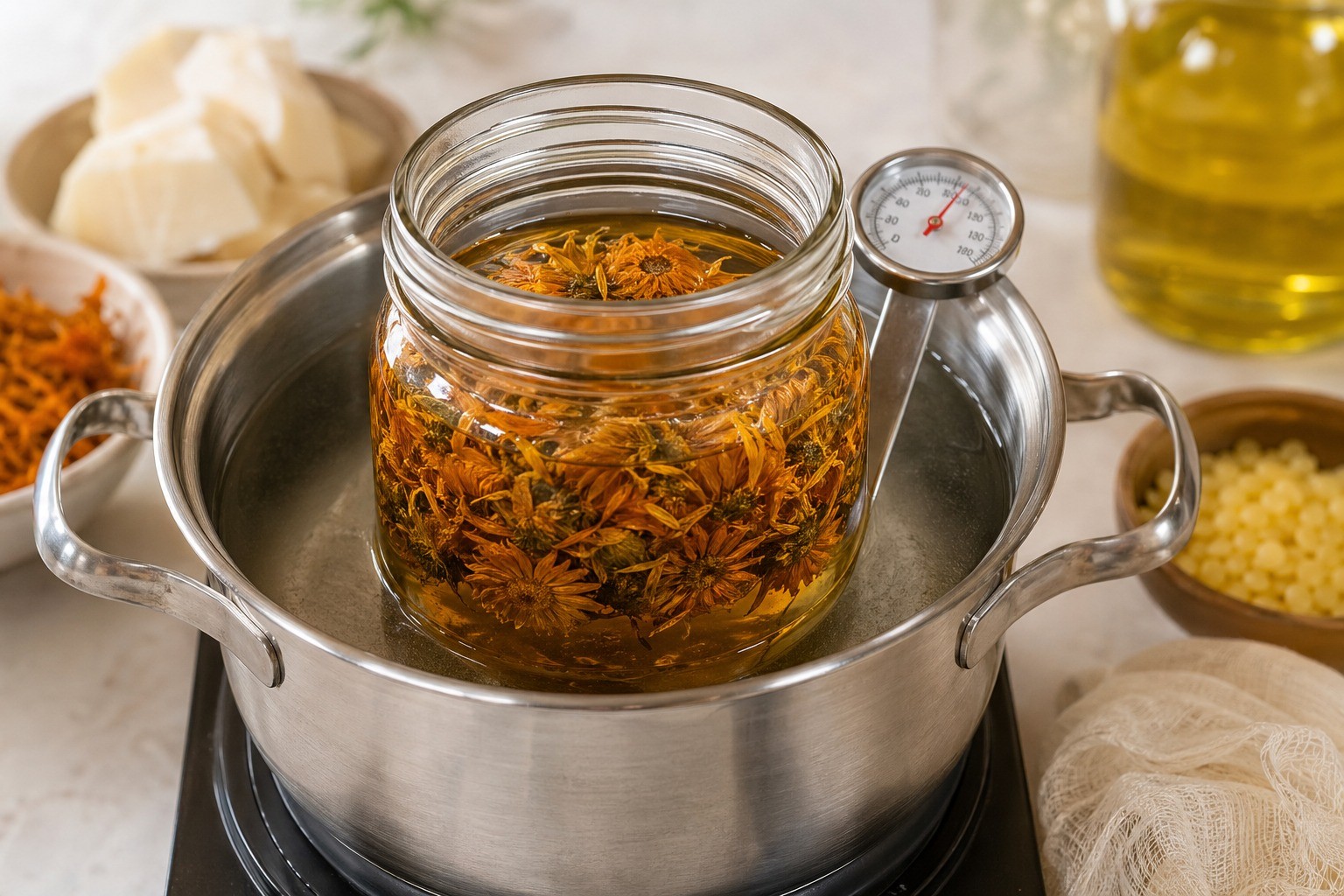
Use identified, fully dried Calendula officinalis flowers from a reputable supplier, not an unidentified flower sold under a marigold name. This is a topical preparation, not a food oil. Put 1 loosely filled cup dried flowers in a small dry double-boiler insert and add olive oil until flowers are covered by 1 inch, leaving expansion room. The former fixed 1 1/4 cups may not cover fluffy flowers or yield a cup after straining; coverage and actual strained oil matter. Record the amount used.
Use a thermometer to hold the oil at 100-140 F (38-60 C) for two hours, checking water level below and preventing water or condensation entering the oil. This selects a duration within Mountain Rose Herbs’ 1-5-hour quick method; it is not a sterilization step. Remove from heat, cool, then strain through clean dry cheesecloth; filter again if gritty. Discard the plant material. Weigh 200 g strained oil for the salve. If short, add enough fresh olive oil to reach 200 g, recording the amount; do not claim the same extraction strength. A labeled ready-made calendula oil is an alternative; follow its external-use label and ingredients. A calendula-infused sweet almond or jojoba cosmetic oil may replace the 200 g olive-oil ingredient by mass, retaining 25 g wax and 25 g shea. Check its ingredient and allergen labels; texture and individual tolerance differ, and no universal sensitive-skin or shelf-life promise follows.
The previous four-week warm-window alternative is omitted in favor of this measured hot method. Supplier folk durations vary, and an arbitrary calendar is not a microbial test. Never rescue moldy oil by skimming. Do not use fresh flowers, water, tea, hydrosol or damp herbs in this formula.
Make the Balm
- Use clean, completely dry heat-safe equipment and containers; keep water and steam out of the balm. Weigh oil, beeswax and shea butter into the top of a double boiler.
- Heat gently over simmering water, stirring until the wax and butter have just melted; do not heat oil directly over a flame. Remove from heat.
- Pour carefully into dry heat-safe cosmetic containers. Let cool completely, about 40 minutes or longer as needed, before capping. Label ingredients, preparation date and external use only.
- Apply a small amount to intact skin only after checking tolerance. Keep water and wet fingers out; use a clean dry spatula. Stop using if irritation occurs.
Optional Texture and Botanical Variations
For a firmer tin use 200 g oil, 30 g wax and 25 g shea, 255 g before losses. For a softer balm use 205 g oil, 25 g wax and 25 g shea, also 255 g. These are weighed house texture variations, not proof that a tin tolerates a hot car or shed. Melt a small sample and cool before judging; reheating and additions extend the stated time.
A lavender version replaces 1 tablespoon of the dried calendula with 1 tablespoon dried Lavandula angustifolia flowers. A rose version replaces 2 tablespoons calendula with 2 tablespoons dried Rosa petals from a supplier identifying the species and intended cosmetic use. Keep the dry volume at one cup, maintain oil coverage, use the same two-hour warm stage, strain and weigh 200 g oil. Botanical compatibility is individual; these variants are not sensitive-skin guarantees. For an unscented version use the base formula without added fragrance. Vitamin E and essential oils are omitted rather than treated as preservatives or vaguely dosed later additions.
Use and Storage
Use only on intact skin. Calendula and other ingredients may cause allergies; avoid known allergens, check tolerance on a small area and stop if irritation occurs. Do not use for wounds, infected skin or burns requiring care. This balm has no established wound-healing or anti-inflammatory efficacy.
Store cool, dry and away from light, using dry tools. Water-free does not mean sterile or universally preservative-free. No 6-12-month guarantee is supported for this exact house product; ingredient labels do not validate the finished mixture. Make small personal-use quantities. Discard with water contamination, mold, changed odor or appearance, or irritation; normal appearance cannot prove microbial safety. FDA identifies shelf-life testing as the maker’s responsibility. No kitchen, stability, microbial or clinical testing was performed.