What chamomile actually is, why it has been the bedtime herb for thousands of years, and how to brew it properly. Plus botanical drink recipes worth making.
Chamomile is the herb almost everyone has already met, usually in a supermarket teabag that tasted of warm hay and disappointment. Made properly it is a different drink: golden, faintly sweet, and unmistakably of apples. Steep 1 to 2 tablespoons of dried flowers in 8 oz of just-boiled water, covered, for 10 to 15 minutes. The covering is not a fussy detail. Chamomile’s aroma lives in volatile oils, and an uncovered mug sends most of them to the ceiling as steam, which is exactly why the bag version tastes of nothing.
The rest of this article covers what the plant actually is, the long history behind its reputation, how to brew and grow it, and a handful of drink preparations worth adding to your regular rotation.
What Is Chamomile?
Chamomile refers to two primary species used in herbal medicine: German chamomile (Matricaria chamomilla) and Roman chamomile (Chamaemelum nobile). Both varieties feature cheerful white petals surrounding golden centers, resembling miniature daisies that release a distinctive apple-like fragrance when crushed.
German chamomile grows as an annual plant reaching heights of 15 to 24 inches, with feathery leaves and hollow flower stems. Roman chamomile spreads as a low-growing perennial. While both species contain similar therapeutic compounds, German chamomile is most commonly used for internal consumption and medicinal preparations.
The dried flower heads contain the highest concentration of beneficial compounds, including essential oils, flavonoids, and bioactive constituents that give chamomile its renowned healing properties.
The Healing History of Chamomile
Ancient civilizations recognized chamomile’s therapeutic potential long before modern science validated their observations. Egyptian priests dedicated chamomile to the sun god Ra, considering it sacred above all other herbs. Egyptian nobles used chamomile preparations to treat fevers and as a cosmetic ingredient in beauty rituals.
Greek physicians including Hippocrates, Galen, and Dioscorides documented chamomile’s medicinal applications for digestive complaints, women’s health concerns, and inflammatory conditions. The name “chamomile” derives from Greek words meaning “ground apple,” referencing the plant’s low growth habit and apple-scented flowers.
Romans scattered chamomile across floors as a strewing herb, releasing its pleasant fragrance when walked upon. Roman soldiers carried chamomile into battle, applying it to wounds to prevent infection and promote healing.
Throughout medieval Europe, chamomile remained one of the most valued herbs in monastery gardens. Herbalists reached for it for restlessness, sore skin, and unhappy stomachs. What is striking is the consistency. Egypt, Greece, Rome, and medieval Europe were not comparing notes, and they all landed on the same small yellow flower for broadly the same short list of complaints. That does not prove anything on its own, but it is the kind of pattern that keeps a plant in the cupboard for four thousand years.

What Chamomile Is Known For
The Bedtime Herb
If chamomile has one job in the popular imagination, this is it. It is the cup people put in the hands of a child who cannot settle, the one in every “sleepy” blend on the shelf, the one Beatrix Potter gave to Peter Rabbit after a bad afternoon. Nothing else in the herbal cupboard has that kind of universal association.
I am not going to tell you it will put you to sleep. What I will say is that the ritual is doing real work whether or not the flowers are: the kettle, the ten minutes of waiting, the warm mug, the decision that the day is over. A great deal of what people call a bedtime remedy is a bedtime signal, and chamomile has been the herb we build that signal around for a very long time.
The After-Dinner Cup
The second thing chamomile is known for is settling a heavy stomach. Herbalists call this a carminative action, an old word for anything that eases the tight, gassy discomfort after too much food. Across European folk practice, chamomile is the standard cup after a big meal, in much the same way fennel seeds are in India.
The warm liquid is not incidental here either. A hot drink after a heavy dinner is comforting on its own terms, and the apple-sweet edge of a good chamomile makes it easy to keep drinking. If you want to lean into this use, brew it strong and add a slice of fresh ginger.
The Cup for a Wound-Up Day
Chamomile has a long-standing place among what Western herbalists call the nervines, the plants they reach for when someone is tense rather than ill. It sits at the gentle end of that group. Nobody has ever described chamomile as strong.
That gentleness is the point. It is the herb you can drink at two in the afternoon in the middle of a bad week without feeling foggy afterward, which is more than can be said for most things people reach for when they are wound up. Pair it with lemon balm if you want more of that.
On the Skin
Chamomile turns up in creams, compresses, baths, and facial steams across every tradition that has used it, and it is one of the gentler botanicals you can put on skin. Roman soldiers packed it into wounds. Medieval households used it in washes. Modern natural skincare puts it in almost everything marketed as calming or sensitive.
A cooled, strongly brewed cup makes a perfectly good compress for a hot patch of sunburn, and a bowl of chamomile flowers under just-boiled water makes a facial steam that smells extraordinary. Whether it is doing anything to the skin beyond warmth, moisture, and a lovely smell is a question I cannot answer honestly, and I would rather say that than dress the answer up.
What I Cannot Tell You
Here is the part I want to be plain about, because most pages about this plant are not.
Chamomile contains chamazulene and alpha-bisabolol, the compounds that give German chamomile oil its odd blue color, and apigenin, a flavonoid that shows up in a lot of plants we eat. Those are real names for real constituents. What I am not going to do is walk you from a compound name to a promise about your body, because that walk is where almost every herbal article quietly stops being true.
What holds up is this: chamomile is genuinely one of the safest and best-loved herbs in common use, it has been reached for by a very long line of people for calm, comfort, and sore skin, and it makes a lovely cup of tea. If a page tells you more than that with a percentage attached, be suspicious of the page.
What Good Chamomile Tastes Like
Worth knowing, because it is how you tell decent flowers from the sweepings.
Fresh, well-dried chamomile smells distinctly of apples when you crush a few heads between your fingers, with honey and a little hay behind it. The brewed cup should be clear gold, lightly sweet, and rounded. Stale chamomile smells of dust and nothing else, and brews thin, brown, and bitter at the back.
The other tell is what is in the bag. You want whole flower heads, small yellow domes with white petals still attached. If what you have is mostly broken stem, leaf fragments, and yellow powder, you are brewing the parts of the plant nobody wanted, which is precisely why supermarket chamomile has the reputation it does.

How to Use Chamomile in Drinks
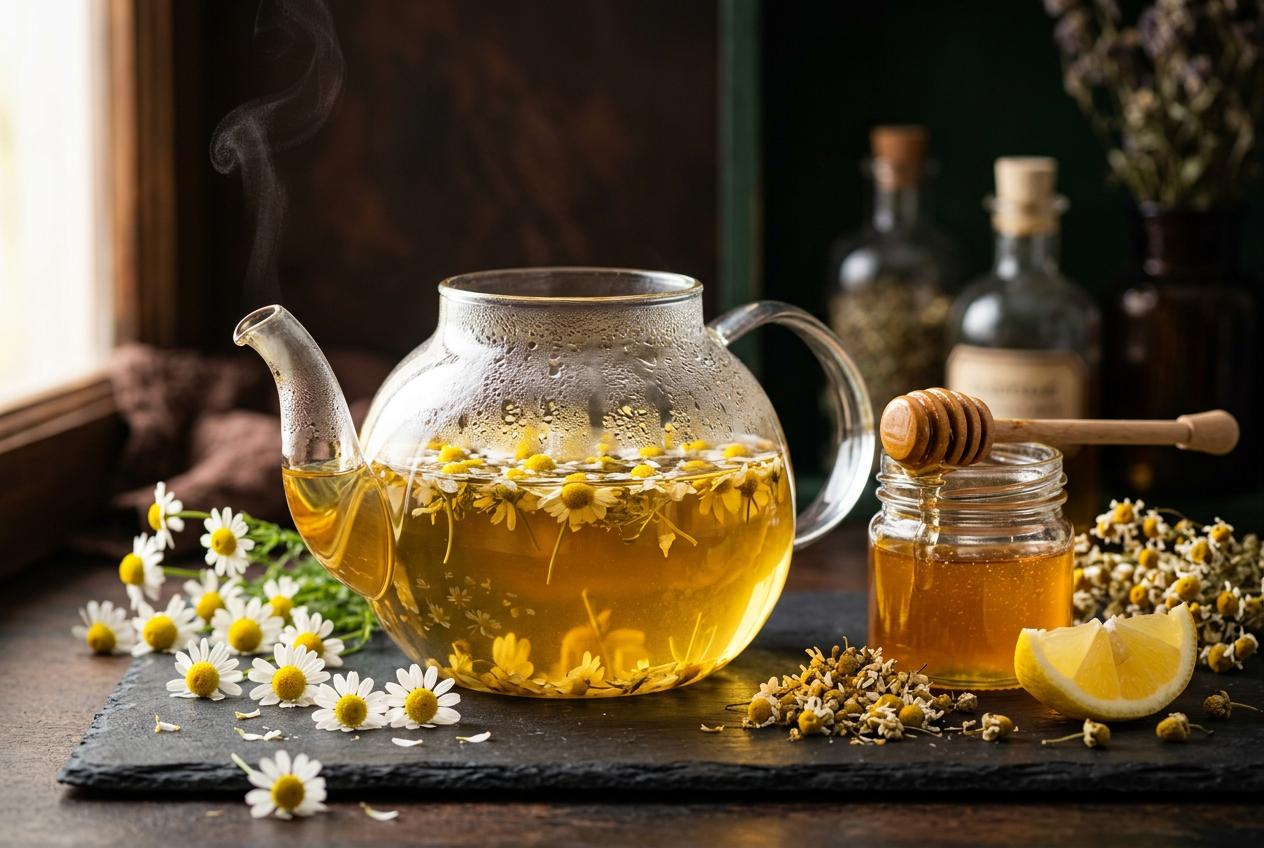
The classic chamomile tea requires only dried flowers and hot water, but the technique matters. Use 1 to 2 tablespoons of dried chamomile flowers per 8 ounces of hot water, steep covered for 10 to 15 minutes, then strain. The covering is critical: it traps the volatile oils that carry the apple aroma, which is most of what you are brewing for. Sweeten with honey if you like.
Chamomile simple syrup opens up a world of botanical drinks. Simmer 1 cup water, 1 cup sugar, and 3 tablespoons dried chamomile for 5 minutes, then steep covered for 30 minutes before straining. Use this syrup in sparkling water tonics, iced chamomile lemonade, or herbal cocktails.
For a soothing night drink, chamomile moon milk combines beautifully with warm oat milk, a pinch of cinnamon, and a spoonful of honey. Steep a strong chamomile infusion and stir it into the warmed milk. The result is creamy, gently sweet, and deeply calming.
Chamomile also pairs well with lavender in a bedtime blend, with lemon balm for a brighter, more lemony cup, and with peppermint after a heavy meal. Go easy on the lavender, which will bully everything else in the jar if you let it. In botanical cocktails, chamomile adds a soft floral note that complements gin, dry vermouth, and honey liqueur.
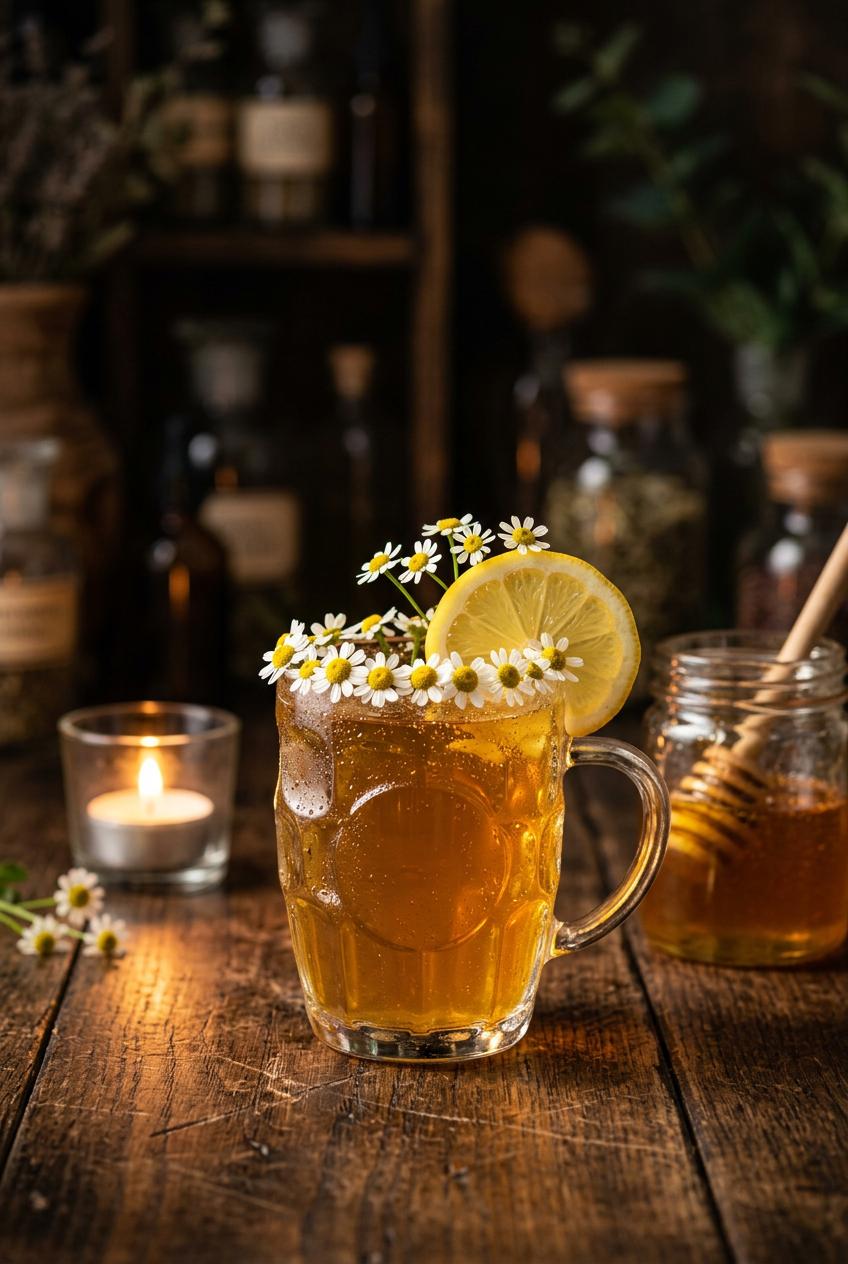
Chamomile Honey Tonic Recipe
This is the version I actually make, and the lemon and ginger are not decoration. Chamomile on its own can drift toward flat and slightly sweet. A squeeze of lemon sharpens the whole cup and a pinch of ginger puts a little heat underneath it.
Ingredients:
- 2 tablespoons dried chamomile flowers
- 8 ounces filtered water, just below boiling
- 1 tablespoon raw honey
- 1/2 lemon, juiced
- Small pinch of ground ginger
Instructions:
Place the chamomile flowers in a mug or teapot. Pour the hot water over them and cover immediately with a lid or small plate.
Steep for 10 to 12 minutes. A three-minute chamomile is pale water with a suggestion of flowers in it. Do not rush this step.
Strain out the flowers, pressing gently to capture all the liquid.
Stir in the honey while the tea is still warm, allowing it to dissolve completely. Add the fresh lemon juice and a pinch of ginger.
Drink slowly. This tonic works best when sipped mindfully rather than gulped. Enjoy it in the morning to set a calm tone, or in the afternoon when stress peaks.
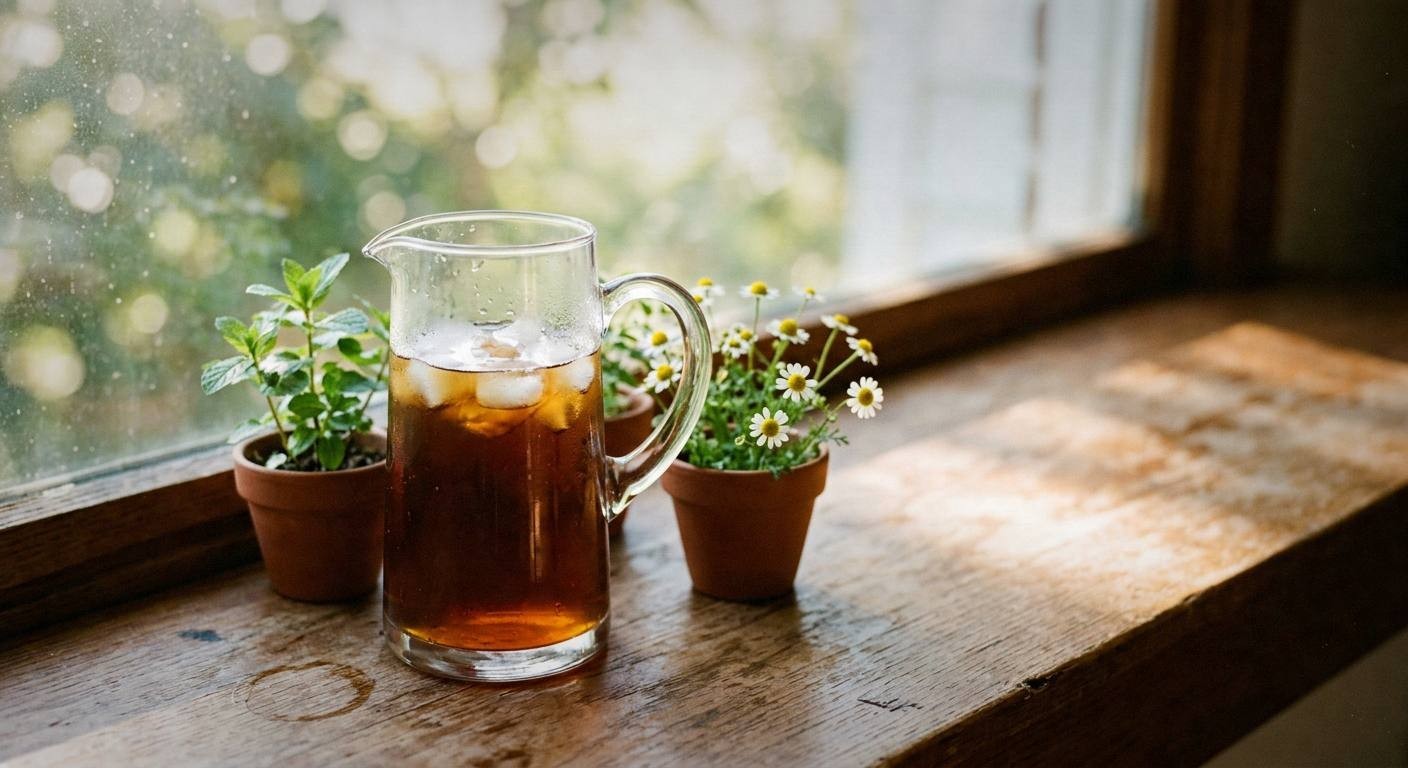
Makes 1 serving. Scale up easily for a day’s supply, store in the refrigerator, and reheat or drink over ice.

Sourcing and Precautions
Chamomile is among the safest herbs for general use, but a few things to flag. People with allergies to plants in the Asteraceae family (ragweed, chrysanthemums, marigolds) may also react to chamomile. If you are sensitive to this family of plants, start with a very small amount and observe your response.
If you are pregnant, nursing, or taking prescription medication, the person managing your care is the one to ask before you make any herb a daily habit. That is not a legal shrug. Your pharmacist can look at your actual prescriptions in about a minute, which is something no recipe page can do, and I would rather send you to them than guess in print.
Source dried chamomile from reputable herbal suppliers or certified organic farms. Look for whole flower heads rather than powdered chamomile, which can include stems and leaves that dilute potency. Stored in an airtight container away from light and heat, dried chamomile retains its quality for up to a year.
Buy the good flowers. Almost everything people dislike about chamomile turns out, on inspection, to be a complaint about cheap chamomile brewed uncovered for four minutes.
Common Questions
What is chamomile actually used for?
Three things, consistently, across every tradition that has used it: as a bedtime cup, as a settler after a heavy meal, and on the skin in washes, compresses, and baths. That short list has been remarkably stable from ancient Egypt through medieval monastery gardens to the box in your cupboard. Chamomile is also the standard gentle option, the herb people give children and reach for when they want something mild rather than something strong.
Is it safe to drink chamomile tea every day?
For most healthy adults, yes. Chamomile is among the most widely and casually consumed herbs on earth and has a long record of everyday use. The one real flag is allergy: it belongs to the Asteraceae family alongside ragweed, chrysanthemums, and marigolds, so if you react to those, start with a very small amount and pay attention. Anyone pregnant, nursing, or on prescription medication should run it past their own clinician or pharmacist first.
Does chamomile tea help with stress?
Honestly, I do not know, and I would not trust a page that told you it did with a number attached. What I can say is that chamomile has been the Western herbalist’s mild calming cup for centuries, that it is gentle enough to drink in the middle of a working afternoon, and that ten minutes spent waiting for a pot to steep is not nothing when you are wound up. If your stress or anxiety is heavy enough that you are searching for a remedy, that is worth raising with someone who can actually help you, and a cup of tea is a fine thing to have alongside that rather than instead of it.
Can you grow your own chamomile at home?
German chamomile is one of the easier herbs to grow from seed. It prefers full sun, tolerates poor soil, and self-seeds readily once established. Start seeds indoors 6 to 8 weeks before your last frost, or direct sow after frost in a well-drained spot. Plants bloom within 6 to 8 weeks of planting and produce continuously if you harvest regularly. Pick flower heads when they are fully open with petals just beginning to bend backward. Dry them in a single layer away from direct light and store in an airtight jar.
Does chamomile interact with any medications?
This is the one question on this page I am genuinely not qualified to answer, and I would be doing you a disservice by trying. Herb and drug interactions depend on the specific drug, the dose, and you, and the confident lists that circulate online are mostly copied from each other rather than from anything checked.
Your pharmacist can answer this properly, for free, usually in under two minutes, and will not find the question strange. Take the bag of flowers or a photo of it with you if you want to be thorough. If you take anything regularly, especially blood thinners or sleep and anxiety prescriptions, ask them before you start drinking any herb daily rather than reading it off a recipe page.
Printable recipe
Chamomile: Health Benefits and Botanical Drink Recipes
What chamomile actually is, why it has been the bedtime herb for thousands of years, and how to brew it properly. Plus botanical drink recipes worth making.
Ingredients
- 2 tablespoons dried chamomile flowers
- 8 ounces filtered water, just below boiling
- 1 tablespoon raw honey
- 1/2 lemon, juiced
- Small pinch of ground ginger
Instructions
- Heat the water until just below boiling.
- Add the dried chamomile flowers, cover, and steep for 10 to 15 minutes.
- Strain the flowers from the tea.
- Stir in the honey, lemon juice, and ginger while the tea is warm.
- Taste, adjust the lemon or honey, and sip warm.
Keep browsing