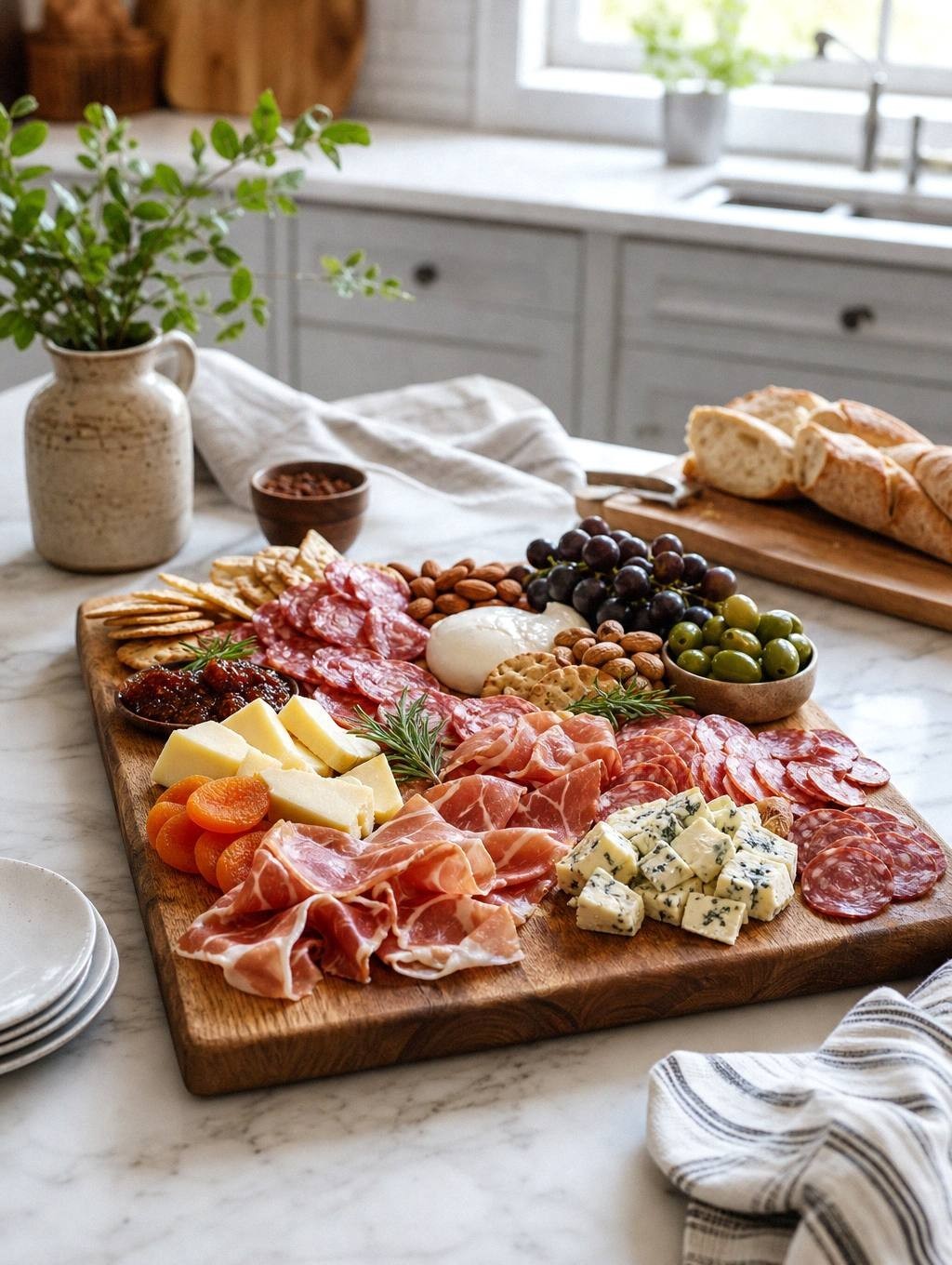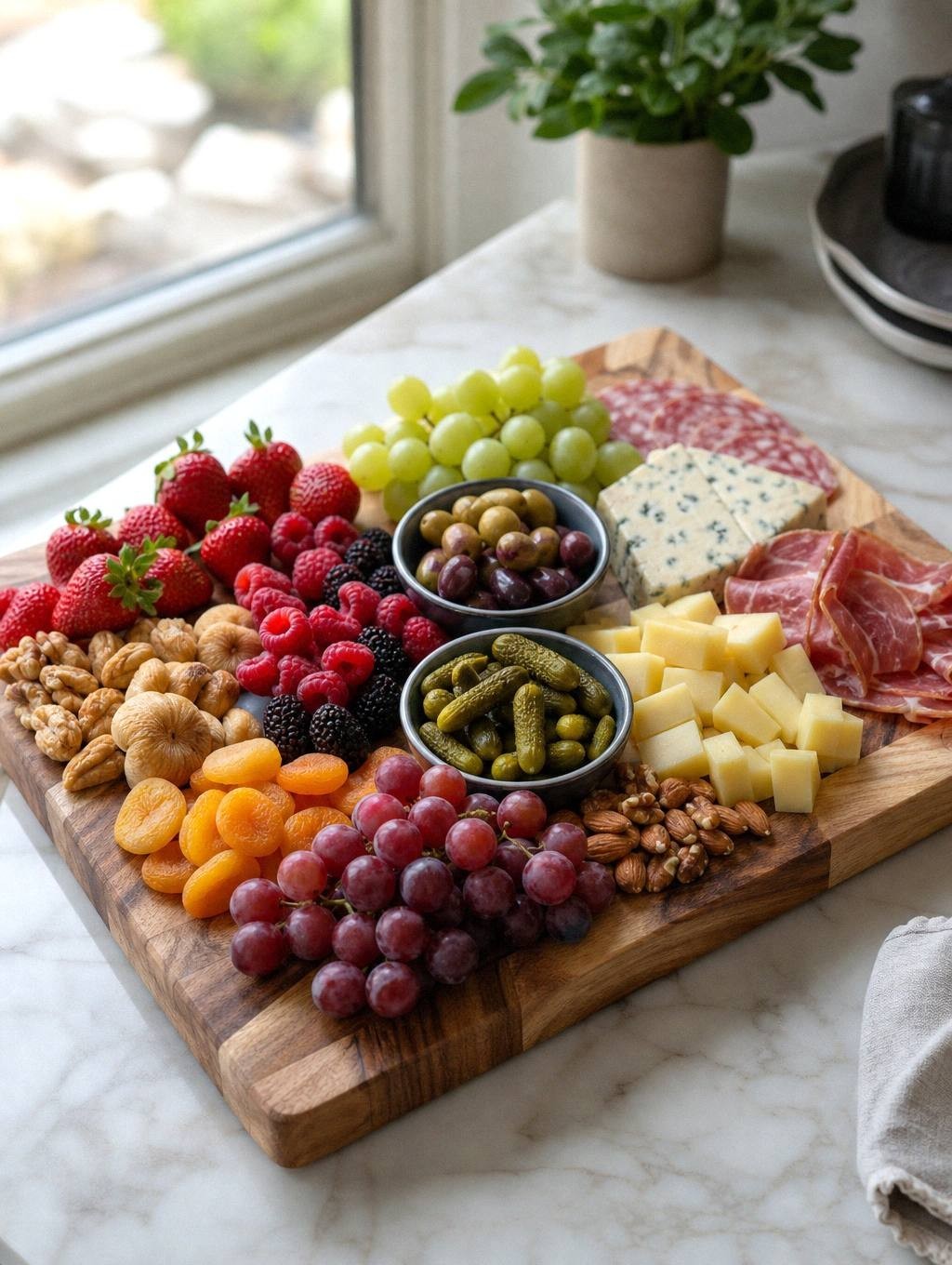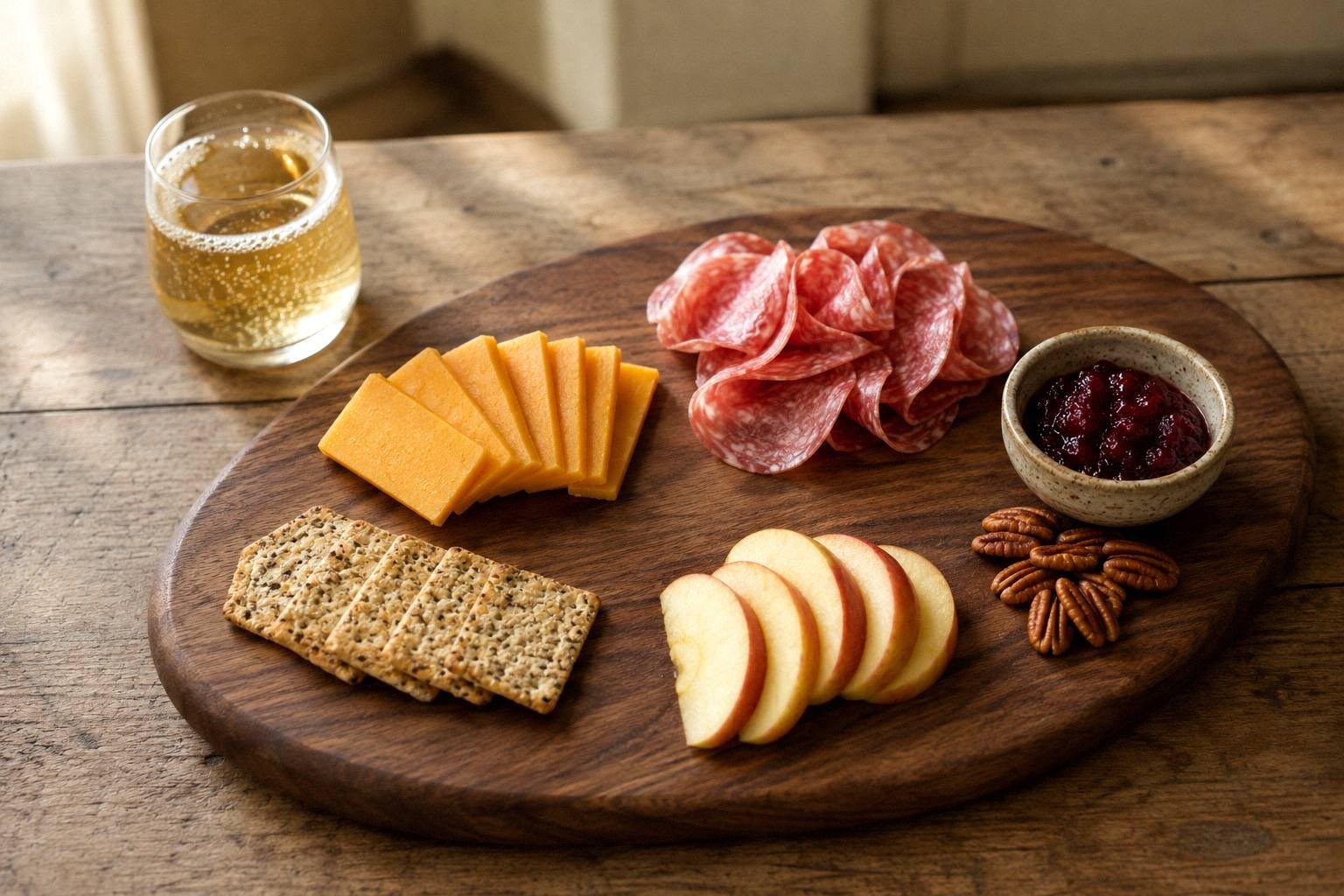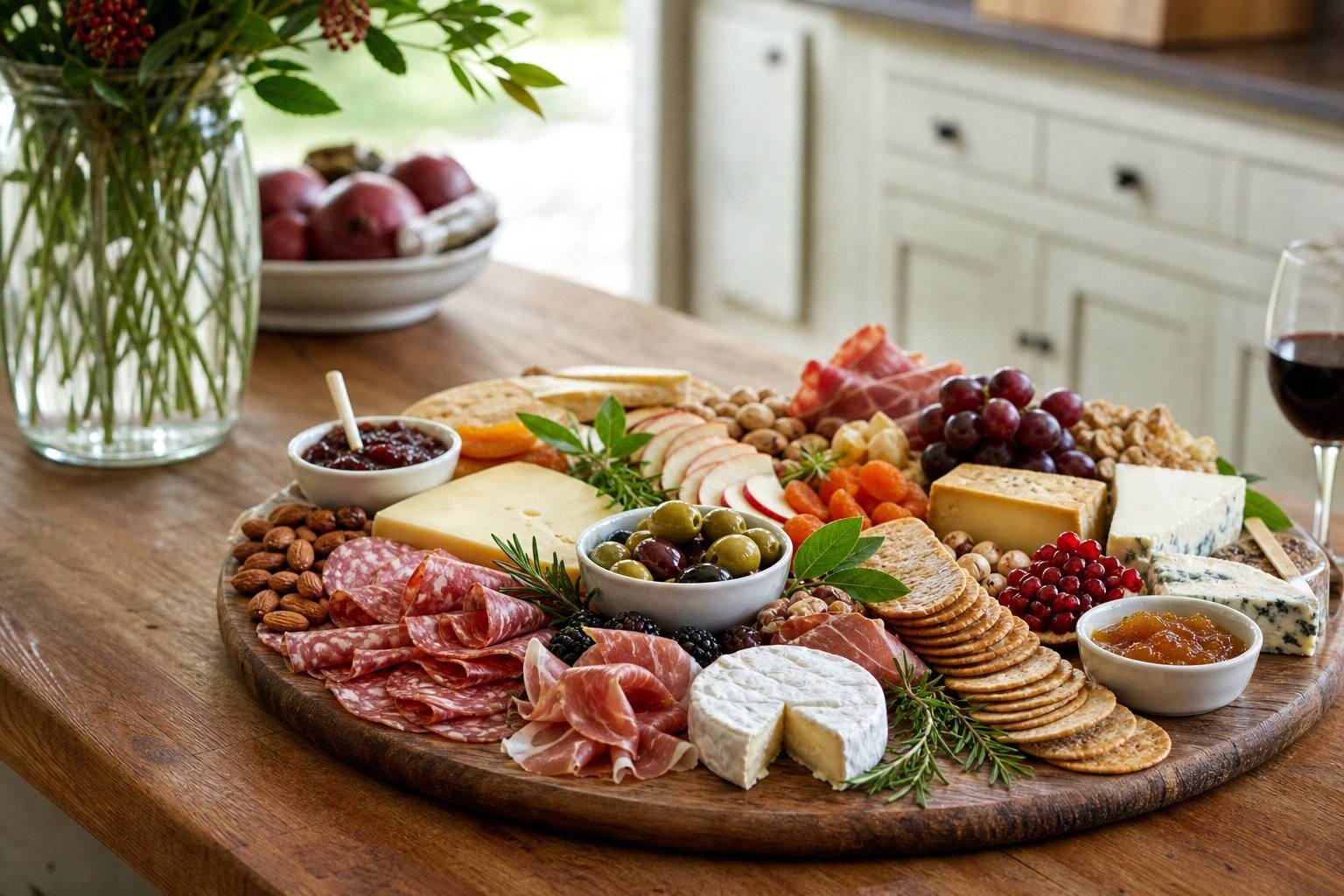
Best charcuterie board ideas for arranging a charcuterie board that serves a crowd without stress. Basic charcuterie board layout. Appetizers charcuterie.

The first time I made one of these for a real party I bought seven cheeses and ran out of board. Half of them ended up in a bowl on the counter, which is where they stayed all night.
Three cheeses would have been better. That’s most of what I’ve learned since: a charcuterie board is the one party food you assemble an hour ahead, cover, and forget about until people arrive. No timing six dishes to finish at once. You put it out, you pour yourself a drink, and the board does the rest of the evening’s work for you.
It also handles the diet problem quietly. The vegetarian, the person avoiding gluten, and the kid who only eats cheddar all find something without anybody having to announce anything.
How Much to Buy for Your Guest Count

Plan on two to three ounces of cheese per person and the same amount of cured meat. Use the lower number if the board is one appetizer among several, the higher number if it’s the food.
| Guests | Cheese | Cured meat | Types of cheese | Types of meat |
|---|---|---|---|---|
| 4 | 8 to 12 oz | 8 to 12 oz | 3 | 2 |
| 8 | 1 to 1.5 lb | 1 to 1.5 lb | 3 | 2 to 3 |
| 12 | 1.5 to 2.25 lb | 1.5 to 2.25 lb | 5 | 3 |
| 20 | 2.5 to 3.75 lb | 2.5 to 3.75 lb | 5 | 3 to 4 |
Board size matters more than you’d think. Match it to the crowd before you buy anything, because a board that’s too small looks stingy no matter how much you spent.
| Guests | Board size | Alternative |
|---|---|---|
| 4 to 6 | 12 x 18 inches | A large cutting board |
| 8 to 12 | 18 x 24 inches | Two smaller boards in different rooms |
| 12 to 20 | 24 inches or longer | Two 18 x 24 boards |
| 20+ | A parchment-lined sheet pan or two | Split by room, not by ingredient |
Buy three to five types of cheese depending on your crowd size, and two to four types of meat. Odd numbers look better when you arrange them, and variety matters more than quantity.
Choosing Cheeses That Work for a Crowd

Pick cheeses with different textures so the board doesn’t feel repetitive. The point isn’t range for its own sake, it’s that a guest gets a second bite that tastes different from the first.
| Texture | Pick one of these | What it does | Skip if |
|---|---|---|---|
| Hard | Aged cheddar, manchego, gouda | The safe, sliceable base everyone recognizes | Never skip this one |
| Soft | Brie, triple cream, goat cheese | Spreads on a cracker, reads as generous | You have nowhere cool to keep it |
| Semi-soft | Havarti, young gouda | Bridges the two, mild enough for kids | You’re only buying three and want a strong one |
| Strong | Gorgonzola, aged parmesan | Gives the cheese people something to find | It’s the only blue on a board of four |
Buy cheese in blocks or wedges rather than pre-sliced. Sliced cheese dries out fast at room temperature, and a whole wedge looks more generous for the same money.
Pull the cheese out of the fridge about thirty minutes before people arrive. Cold cheese tastes like almost nothing, and that’s the difference between a board guests pick at and one they stand around.
Selecting Cured Meats

Prosciutto and salami show up on nearly every board because they’re easy to find and most people like them. Prosciutto is mild and buttery, salami has more spice and chew. Two meats is plenty for eight people.
Thin-sliced meats like prosciutto fold easily and look elegant. Buy about four ounces of each type of meat for eight people, which gives you enough to arrange without crowding the board.
Folding Meats So They Look Intentional
Fold prosciutto slices in half lengthwise, then fan them out in a loose pile. For salami rounds, fold each slice in half and then in half again to make a small triangle, then overlap them in a row.
The trick with both is height. Meat laid flat disappears against the board. Meat with air under it catches light and is the reason a board photographs well.
Adding Fruits, Nuts, and Pickled Items
Fresh fruit balances the richness of cheese and meat. Grapes are the easiest option because they don’t brown and you can rinse and pile them straight onto the board.
Berries like raspberries, blackberries, and strawberries add color. Dried fruit like apricots or figs gives people a chewy sweet option and lasts longer at room temperature.
Nuts fill gaps and add crunch. Almonds, candied pecans, pistachios, and walnuts all work. Pickled items like olives, cornichons, and pepperoncini add a briny contrast that cuts through fat.
If you only add one thing from this section, make it the pickled one. It’s what keeps people coming back to a board after the third bite, and it’s the cheapest item on the table.
Crackers, Breads, and Spreads
Offer at least two types of crackers with different textures. Water crackers or plain wheat crackers let the cheese flavor come through, and something with seeds or herbs adds interest.
Sliced baguette is a good addition if you have room. Toast the slices lightly so they don’t go stale as fast.
Spreads and condiments go in small jars or ramekins with their own spoons. Whole grain mustard, fig butter, honey, and fruit preserves all pair well with cheese.
Keep most of the crackers off the board. A bowl beside it means you can refill without dismantling the arrangement, and crackers stacked against soft cheese go limp within the hour.
What to Pour Alongside It
This is the part most board guides skip, and it’s the part guests notice. A board with nothing to drink beside it turns into a plate of snacks.
| On the board | Pour this | Why it works |
|---|---|---|
| Aged cheddar, salami | Sparkling apple cider or a dry cider | Acid and bubbles cut the fat |
| Brie, honey, pear | A pear or apple spritz | Sweet next to sweet, but lighter |
| Goat cheese, herbs, olives | Cucumber or citrus water | Keeps a savory board from feeling heavy |
| Prosciutto, melon, parmesan | Grapefruit or blood orange soda | Bitter citrus is the classic partner |
| Blue cheese, figs, walnuts | Spiced tea or a mulled non-alcoholic option | Warm spice stands up to strong cheese |
The one rule that matters: whatever you pour needs acid or bubbles. Fat coats the palate, and a flat sweet drink beside a rich board makes both taste worse.
If you’re setting the drinks out for people to help themselves, the drink station guide covers the pouring order and how much to make per guest, which is the other half of this table.
Arranging the Board So It Serves Easily
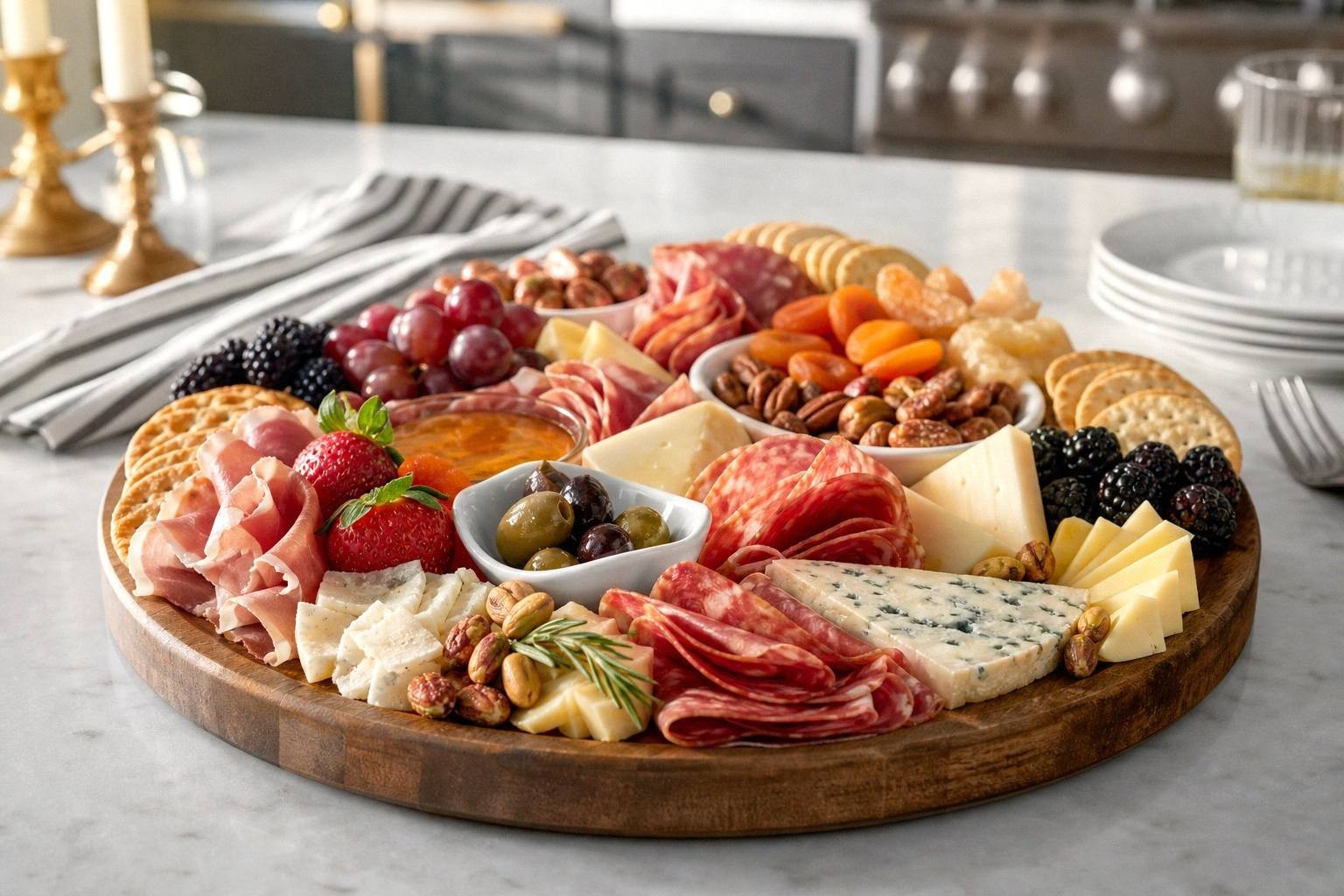
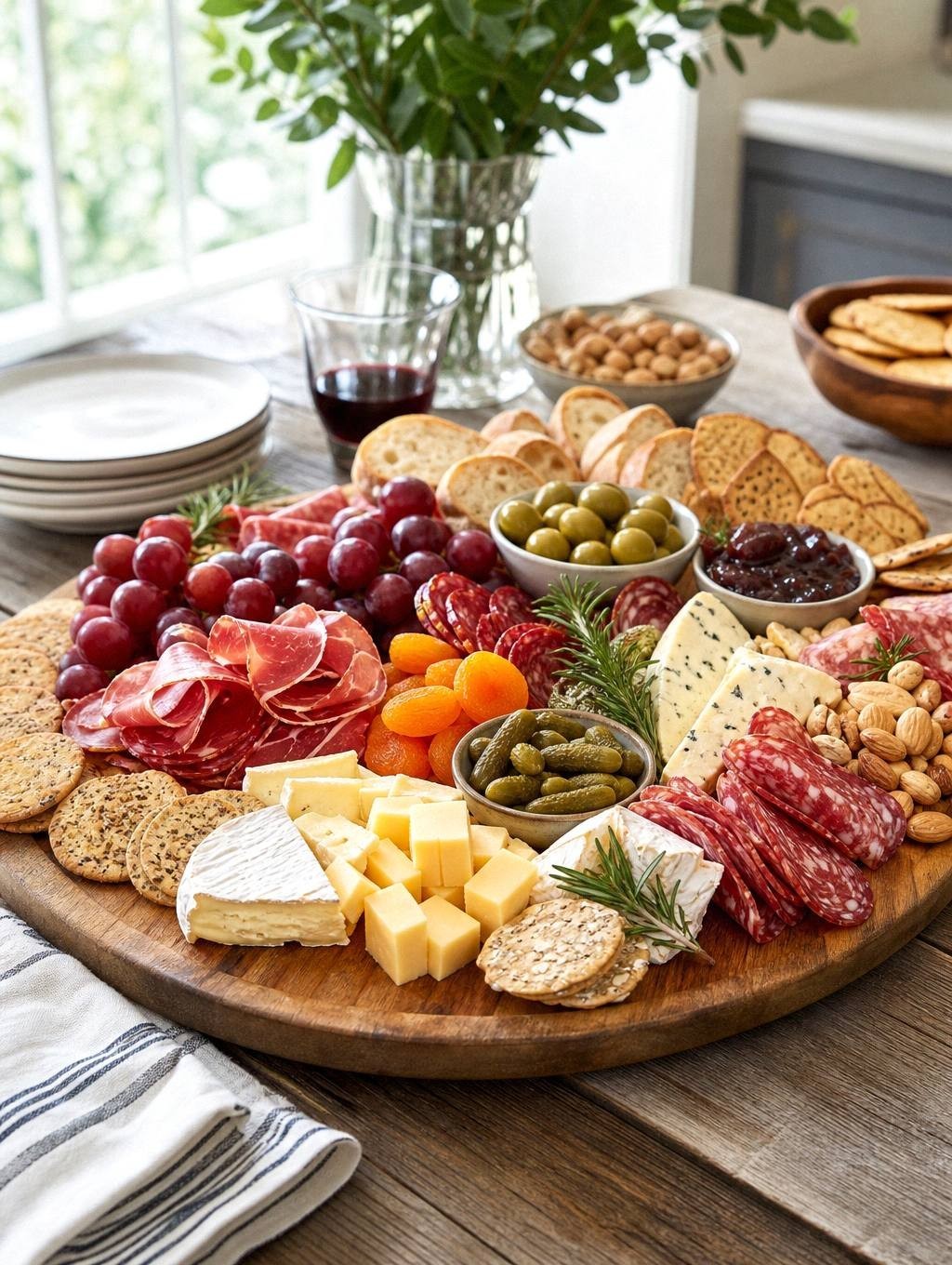
Start by placing the cheeses first because they anchor the layout. Space them around the board so guests can reach each one without leaning over something else.
Fold and arrange the meats in clusters rather than spreading them evenly across the whole board. Group colors together in a way that makes the brightest items stand out.
Leave a small knife or spreader next to each soft cheese so people can serve themselves without using their hands. If the party is large, set out small plates so guests don’t have to balance everything in their hands.
Then fill the gaps last, and fill them completely. An empty patch of wood between two clusters reads as unfinished, and a handful of nuts or a few grapes closes it in about four seconds.
Three Budget Levels
The same board works at very different prices. What changes is the cheese counter, not the arrangement.
| Level | Cheese | Meat | Everything else | Rough feel for 8 |
|---|---|---|---|---|
| Grocery basics | 3 store-brand blocks | Salami and pepperoni | Grapes, crackers, almonds, olives | The one most people make |
| A step up | 2 store blocks plus 1 deli-counter wedge | Salami plus prosciutto | Add fig jam, dried apricots, a seeded cracker | Where the board starts looking bought-for |
| Show off | 3 to 5 deli-counter cheeses | Prosciutto, soppressata, chorizo | Add honeycomb, candied pecans, a good mustard | Save this for a small group who’ll notice |
The upgrade with the biggest visible return is one deli-counter wedge instead of a third block. It costs a few dollars, it looks nothing like the rest, and it’s the piece people ask about.
Make-Ahead Timeline and Serving Temperature
You can prep most ingredients the day before. Wash and dry fruit, portion nuts into small bowls, and slice hard cheeses. Store everything in the fridge in airtight containers.
Assemble the board one to two hours before guests arrive. Once it’s arranged, cover it loosely with plastic wrap and refrigerate it until thirty minutes before people show up.
| When | What to do |
|---|---|
| Day before | Wash and dry fruit, portion nuts, slice hard cheese, jar the spreads |
| Morning of | Buy the soft cheese and meat, pick the board, clear the counter space |
| 2 hours before | Fold meats, arrange cheeses, build the board |
| 1 hour before | Cover loosely and refrigerate |
| 30 minutes before | Pull it out, add crackers and any cut apple, set out knives |
| 2 hours in | Swap in fresh crackers, tidy the gaps, refill the olive bowl |
A charcuterie board stays fresh at room temperature for about two hours. After that, soft cheeses start to look oily and meats can dry out.
Ingredients
- Hard cheeses: manchego, cheddar, swiss, gouda, gruyere, parmesan etc.
- Soft cheese: brie, triple cream, goat cheese, havarti, burrata, cream cheese with pepper jelly on top. Could also you blue cheese or gorgonzola, or anything you like!
- Cured Meats like prosciutto, salami, ham, chorizo, capricola, soppressata
- Nuts: almonds, candied pecans, pistachio nuts, cashews, walnuts, macadamia nuts.
- Briny, pickled or marinated: olives, cocktail onions, cornichons, dill pickles, pepperoncini, olive tapenade or bruschetta.
- Savory Dips and spreads: Whole ground mustard, hummus, ranch, balsamic dip, romesco.
- Cold cut veggies, if desired
- Fresh fruit and berries: grapes, apples, pears, oranges, raspberries, blueberries, blackberries, strawberries.
- Dried fruit: apricots, cherries, figs, pineapple, mango
- Sweet spreads: Fig butter, orange marmalade, blackberry jam or other sweet spreads.
- Chocolate: a few pieces of quality dark chocolate covered nuts.
- Pita crackers, whole grain crackers, croccantini, or your favorite kind of crackers
- Toasted baguettes or mini toasts crackers
Instructions
- Pick a board that fits your group, if you need more room, use two or three.
- Set out your cheeses first to anchor everything else. Use an odd number: three kinds for a small group, five or seven for a bigger one, and space them around the board.
- Fold the sliced meats so they’re easy to pick up: fold salami or soppressata in half and fan the slices like cards, or fold them in half twice to make little bundles. For delicate prosciutto, gather each slice into a loose ribbon.
- Add the savory things, mustard, olives, pickles, nuts, near the salami and aged cheeses, and put the sweet things, fresh fruit, jam, candied nuts, near the brie and goat cheese. Cheddar goes with both.
- Tuck crackers into the open spaces, then drop nuts or fruit into any gaps.
Five Mistakes That Flatten a Board
- Serving it cold. Straight from the fridge, cheese tastes like nothing. Thirty minutes on the counter is the single biggest improvement available and it costs nothing.
- Buying pre-sliced cheese. It dries at the edges within the hour and it looks like a deli tray. Blocks and wedges, always.
- Too many cheeses. Seven kinds means nobody remembers any of them, and the board runs out of room for the fruit that makes it look good.
- Crackers stacked on the board. They go soft against the cheese and there’s no way to refill without rebuilding. Keep them in a bowl beside it.
- No knife on the soft cheese. One missing spreader and a whole wheel of brie sits untouched, because nobody wants to be the person who used their fingers.
Frequently Asked Questions
Can I make a charcuterie board the night before?
You can prep ingredients the night before, but don’t assemble the board until the day of the party. Crackers get soft and cheese dries out if the board sits assembled overnight.
What size board do I need for ten people?
An eighteen by twenty-four inch board works for ten people if the charcuterie is an appetizer. If it’s the main food, use two smaller boards or one very large board at least twenty-four inches long.
Do I need to include vegetables on a charcuterie board?
Vegetables are optional. Some people add cherry tomatoes, sliced bell peppers, or cucumber rounds, but they’re not traditional and they take up space you could use for cheese or fruit.
How do I keep apple slices from turning brown?
Slice apples right before guests arrive and toss them with a little lemon juice. The acid slows browning for about an hour.
Where should I buy charcuterie ingredients?
Grocery store deli counters let you buy exact amounts and often slice meat to order. Specialty cheese shops cost more but offer unusual options if you want to impress guests who know their cheese.
Can I make a charcuterie board for a crowd on a budget?
Yes. Stick to three cheeses instead of five, choose salami over prosciutto, and use more crackers and fruit to fill space.
What should I serve to drink with a charcuterie board?
Something with acid or bubbles. Sparkling cider, citrus soda, cucumber water, or a dry spritz all cut through the fat in a way a flat sweet drink won’t. Match the drink to the strongest cheese on the board.
How long can a charcuterie board sit out?
About two hours at room temperature. After that the soft cheese looks oily and the meat dries at the edges. If the party runs longer, build a second smaller board and swap it in rather than leaving the first one out.
So which are you building, the three-cheese grocery version or the one with the deli-counter wedge?
Recipe sources
Measurements cross-checked against published recipes from tastesbetterfromscratch.com and natashaskitchen.com.
Keep browsing