Why You Will Love This

This iced adaptogenic tea tastes like spring itself: bright lemon balm, floral rose, and earthy holy basil with none of the bitterness hot steeping brings. Cold brewing for four hours is the whole trick with ashwagandha. Hot water turns that root aggressively bitter and medicinal, the flavor most people mean when they say they tried adaptogens once and hated it. Cold water pulls a rounder, sweeter, almost malty version of the same thing, and the rose petals and lemon balm sit on top of it beautifully.

The Story Behind It

I started making this last March, during a stretch where I was waking at five in the morning with my jaw already clenched and no particular reason for it. Hot adaptogenic teas felt too heavy for days that were finally warming up, so I put the whole blend in cold water instead and left it in the fridge overnight. It became the afternoon thing I did instead of a third coffee.

Did it fix me? I honestly do not know. The weeks that followed were also weeks I was sleeping more and outside more, and I am not going to hand you a number and pretend I isolated a variable. What I can tell you is that having a cold, green-tasting, faintly floral thing waiting in the fridge at three in the afternoon changed the shape of my day, and that holy basil and ashwagandha are the two herbs Ayurvedic practice has pointed at for exactly this kind of frayed, wired tiredness for a very long time.

Cortisol lowering iced tea with holy basil, ashwagandha, lemon balm, and passionflower in glass pitcher with fresh herbs and lemon slices on marble counter in spring sunlight
Cold brewing these adaptogenic herbs for four hours gives you a clean, rounded flavor instead of the harsh bitterness hot steeping pulls out of ashwagandha root.

What You Will Need

2 tablespoons dried holy basil (tulsi) leaf
1 tablespoon dried ashwagandha root
1 tablespoon dried lemon balm leaf
1 teaspoon dried passionflower
1 teaspoon dried rose petals
4 cups filtered water, room temperature
Ice cubes
Fresh lemon slices for garnish
Raw honey or maple syrup to taste (optional)

How to Make It

  1. Combine holy basil, ashwagandha, lemon balm, passionflower, and rose petals in a large glass jar or pitcher.

  2. Pour room temperature filtered water over the herbs. Stir gently to ensure all herbs are submerged.

  3. Cover and refrigerate for 4-8 hours. The longer steep extracts more adaptogenic compounds without bitterness.

  4. Strain through a fine-mesh sieve or cheesecloth into a clean pitcher. Press herbs gently to extract remaining liquid.

  5. Serve over ice. Add fresh lemon slices and sweeten with honey or maple syrup if desired.

  6. Store strained tea in the refrigerator for up to 3 days.

Hands straining cold-brewed adaptogenic stress relief tea through cheesecloth into glass pitcher, showing golden-amber liquid and spent herbs
Straining after the long cold steep gives you a clear, smooth, golden-amber tea with no grit and no bitter edge.

Herbalist Notes

Holy basil (Ocimum sanctum): Ayurvedic tradition calls this “the incomparable one,” and it is grown in courtyards across India as a household plant rather than a specialty herb. It is the classic tulsi of the tradition’s stress formulas. Use the Rama or Krishna variety for this recipe. Vana tulsi is too peppery for iced preparations, which you will taste immediately if you try it.

Ashwagandha root (Withania somnifera): The best known of the Ayurvedic adaptogens, and the one people mean when they say a herb is “grounding.” Its Sanskrit name refers to the smell of a horse, which is a fair warning about the raw root. Cold water is much kinder to it than hot. Look for root labeled KSM-66 or Sensoril if you are buying pre-ground, mostly because those growers tend to have better quality control than a generic bulk bin.

Lemon balm (Melissa officinalis): The friendly one. Western herbalism has used it as a nervine for centuries, and it is what makes this blend drinkable rather than merely worthy. Crushed fresh it smells like lemon sherbet. Dried it holds a softer version of that, and it is the first thing you taste in the finished glass.

Make It Your Own

If you like the blend but want more of that grounding, malty ashwagandha character, add another half tablespoon of root and give it the full eight hours. A pinch of black pepper is the traditional Ayurvedic partner for this root and it does add a nice warm edge at the back of the glass, so it is worth trying on flavor grounds alone. For a sweeter spring version, steep with 1 teaspoon dried hibiscus and serve with frozen strawberries instead of ice. The hibiscus turns the whole pitcher a startling pink and sharpens it considerably. If you find ashwagandha too earthy, replace half with dried schisandra berries, the tart five-flavor berry that Traditional Chinese Medicine puts in its own stress formulas.

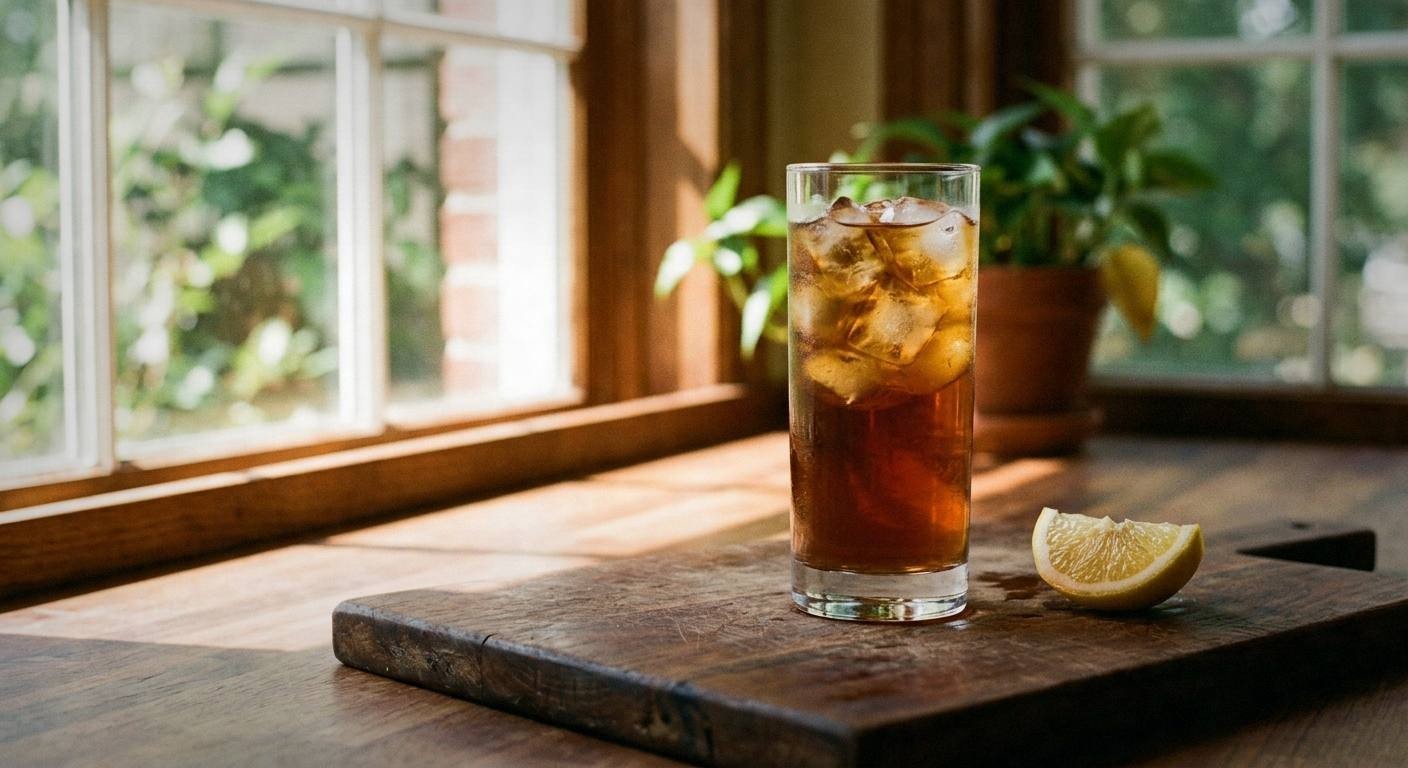
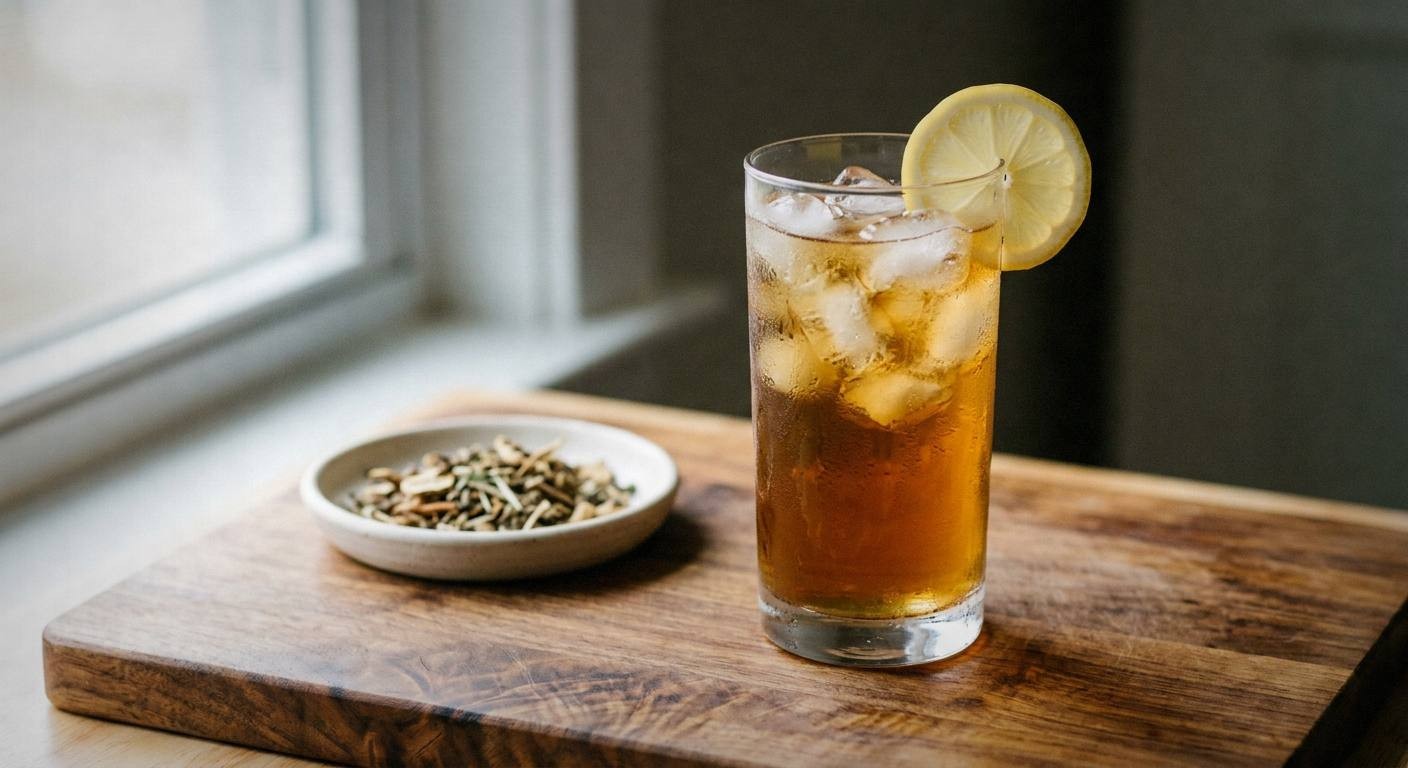
Tall glass of iced cortisol lowering tea with condensation, fresh lemon wheel, and sprig of fresh holy basil, photographed outdoors in natural spring light with garden background
Serve this over ice with a lemon wheel and a sprig of fresh holy basil. It is the three o'clock drink that is not another coffee.

Common Questions

What tea helps lower cortisol levels?

Holy basil and ashwagandha are the two herbs that come up first in this conversation, and they come up first because Ayurvedic practice has used them for stressful, depleting stretches of life for centuries. Lemon balm and passionflower are the Western equivalents, the nervines that show up in every old formula for a person who cannot settle.

Here is the part most pages skip. Herbs like these will never get the kind of large, expensive, drug-company-funded trial that would let anyone quote you a clean percentage, and any page that does quote you one is almost certainly dressing up something much smaller than it sounds. I would rather tell you what these plants are and how long people have reached for them than invent a number that makes the answer feel more solid than it is. This tea is a genuinely pleasant afternoon ritual made from herbs with deep traditional standing. That is the honest version of the claim.

How do you make a cortisol-lowering drink at home?

Cold brew the herbs for 4-8 hours in room temperature water. Use 2 tablespoons holy basil, 1 tablespoon ashwagandha root, 1 tablespoon lemon balm, and 1 teaspoon passionflower per 4 cups water. The long cold steep is doing two things at once: it gets enough out of a tough dried root that would otherwise need boiling, and it leaves behind the harsh bitter compounds that boiling drags along with it. Holy basil in particular keeps far more of its clove-like aroma this way, because those volatile oils simply cook off in hot water.

Strain it and keep the pitcher in the fridge. Most people drink it in the afternoon, which is when a cold herbal thing is most welcome anyway. It keeps for about three days before the flavor goes flat and slightly hay-like.

Can herbal tea reduce stress and anxiety naturally?

Something in this question is easy to answer and something in it is not, so let me separate them.

The easy part: yes, a hot or cold cup of something you made on purpose, drunk sitting down, is a real and unglamorous stress intervention, and people have known this in every culture that has a tea ritual. Lemon balm, passionflower, and rose have been the calming herbs in Western practice for centuries, and holy basil has held the same place in Ayurveda. That is a long track record and it deserves respect.

The hard part: whether the plant matter itself is doing something measurable in your bloodstream, separate from the sitting down and the fifteen quiet minutes, is a question I cannot answer for you and would not trust anyone who claims they can. If your stress or anxiety is heavy enough that you are searching for something to fix it, that is worth raising with a clinician, and a good one will not think less of you for also enjoying a nice iced tea.

What herbs are best for adrenal support and cortisol balance?

Four names come up again and again in the adaptogen conversation, and each belongs to a different tradition.

Ashwagandha is the grounding one, the root Ayurveda gives to people who are running on empty. Holy basil is the bright one from the same tradition, aromatic and clove-like, grown by the doorstep rather than bought in a shop. Rhodiola rosea is the cold-climate herb of Scandinavia and Siberia, traditionally taken by people facing hard physical work in hard weather, and it is the one herbalists tend to suggest when the tiredness is flat rather than wired. Schisandra chinensis is the Traditional Chinese Medicine berry known as the five-flavor fruit, because it genuinely does hit sweet, sour, salty, bitter, and pungent all at once.

This recipe uses the first two because they taste good together and because they come from the same tradition, which means the pairing is not something I invented. Rhodiola is worth knowing about but is far too bitter for an iced drink.

How long does it take for adaptogenic tea to work?

I do not have a timeline for you, and I want to be straight about why rather than making one up.

Adaptogens are traditionally described as slow herbs, the sort you take as a background habit through a hard season rather than the night before a difficult day. That framing is consistent across Ayurveda and Traditional Chinese Medicine and it is probably the most useful thing anyone can tell you. But “slow” is not the same as a number of weeks, and the confident timelines you will find on other pages are almost always someone’s guess wearing a lab coat.

What I would actually suggest: make a pitcher, drink it through a stretch where you know things are going to be busy, and pay attention to whether you look forward to it. If a small daily ritual you built yourself out of five plants makes an afternoon better, that is not nothing, and it does not need a percentage attached to be worth doing.