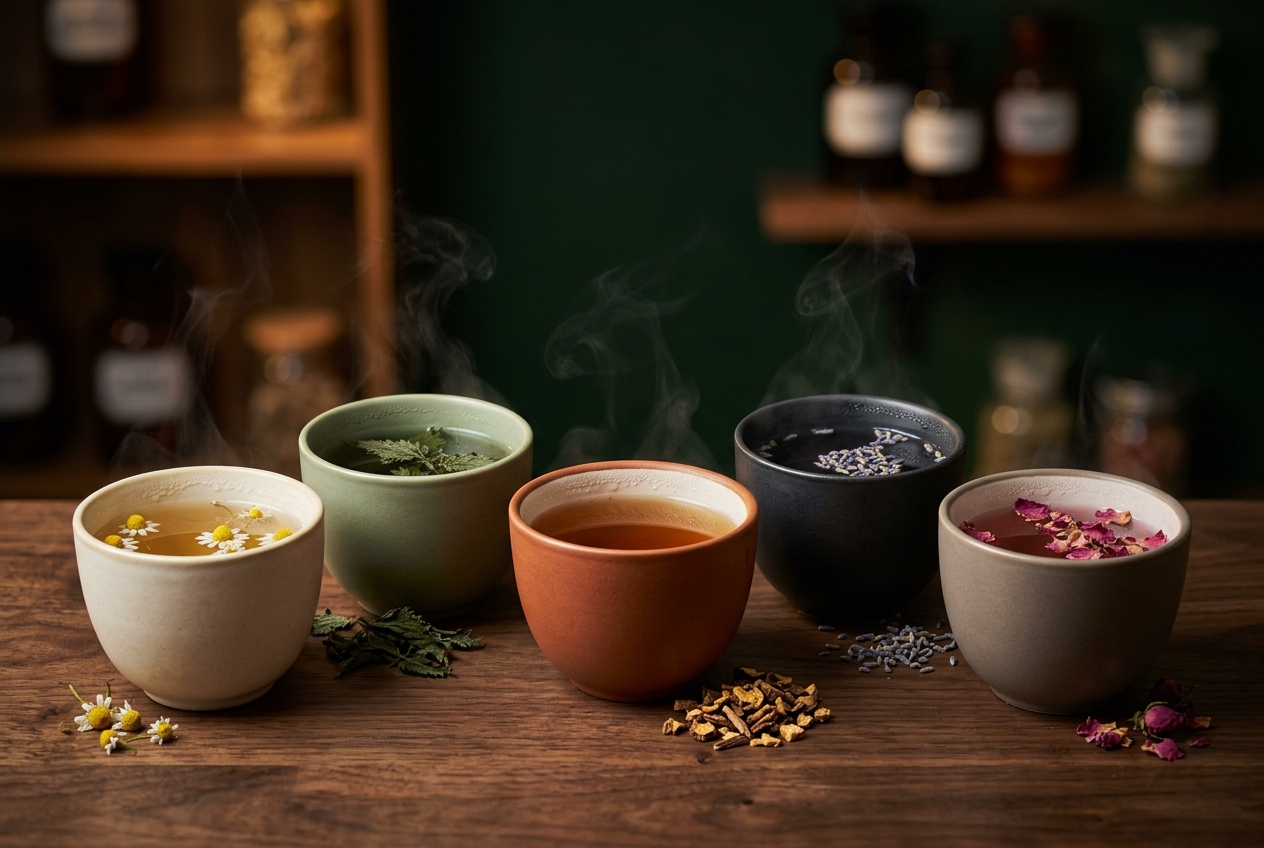
These five measured blends cover a black-tea cup, a floral pot, chamomile, fruit simmered with rooibos and an iced hibiscus pitcher. Choose by ingredients and preparation. The recipes are drinks; no blend is assigned to a diagnosis or supplied as a medicinal dose.
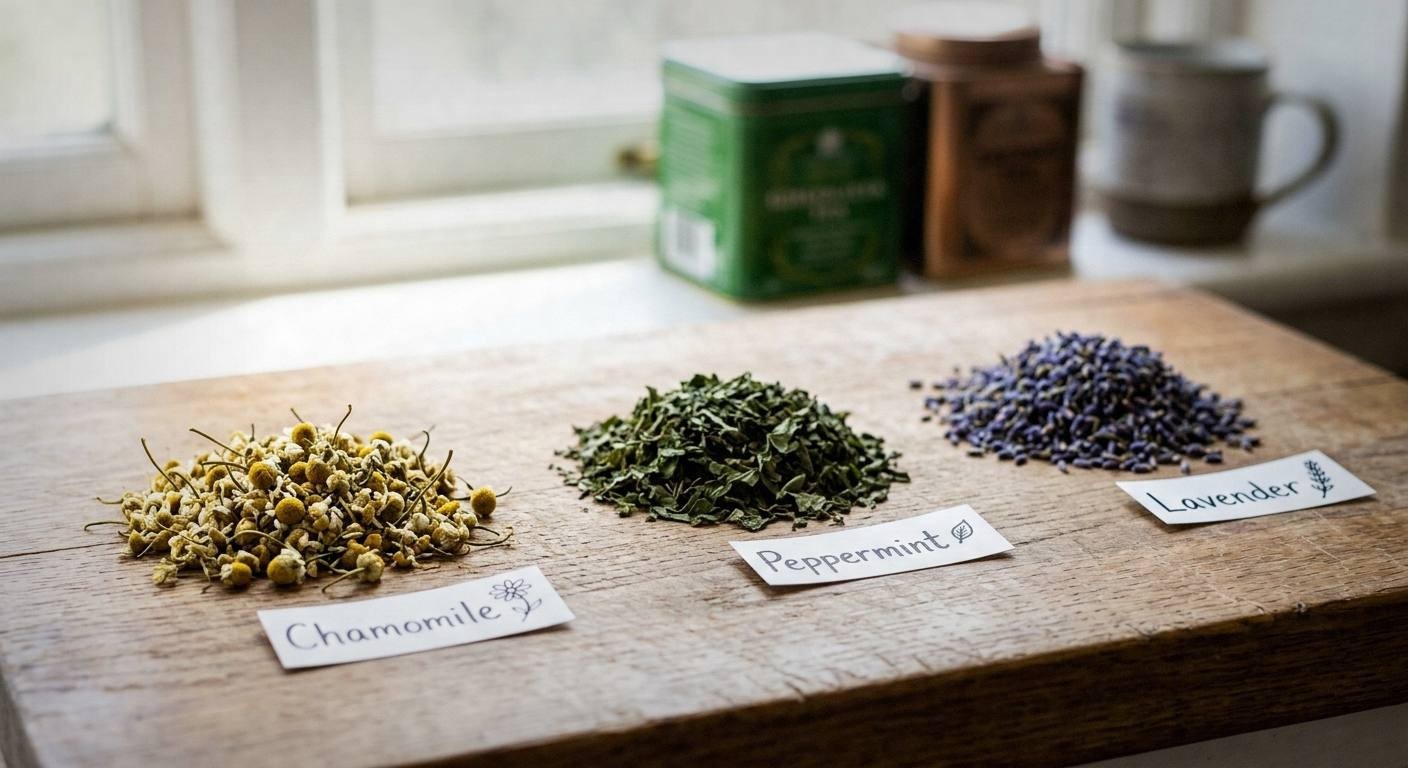
Choose the preparation
| Blend | Starting water | Method |
|---|---|---|
| Rose, rosemary and mint black tea | 1 1/2 cups | Boiling water; steep 3-4 minutes |
| Spearmint floral pot | 2-4 cups | Boiling water; steep 3-5 minutes |
| Chamomile with honey | 500-600 ml | Boil, stand 1 minute; steep 2-3 minutes |
| Pear and cinnamon rooibos | 600 ml | Simmer fruit 5-6 minutes; steep leaves 2-3 minutes |
| Hibiscus and fresh mint cooler | 1 1/2 quarts before ice | Just-boiled water; steep 10-15 minutes |
The first recipe contains caffeinated black tea. Fruit, fresh mint and ice take up space: starting water is not always finished strained yield. A larger pot does not turn these into interchangeable ratios.
1. Rose, rosemary and peppermint black tea
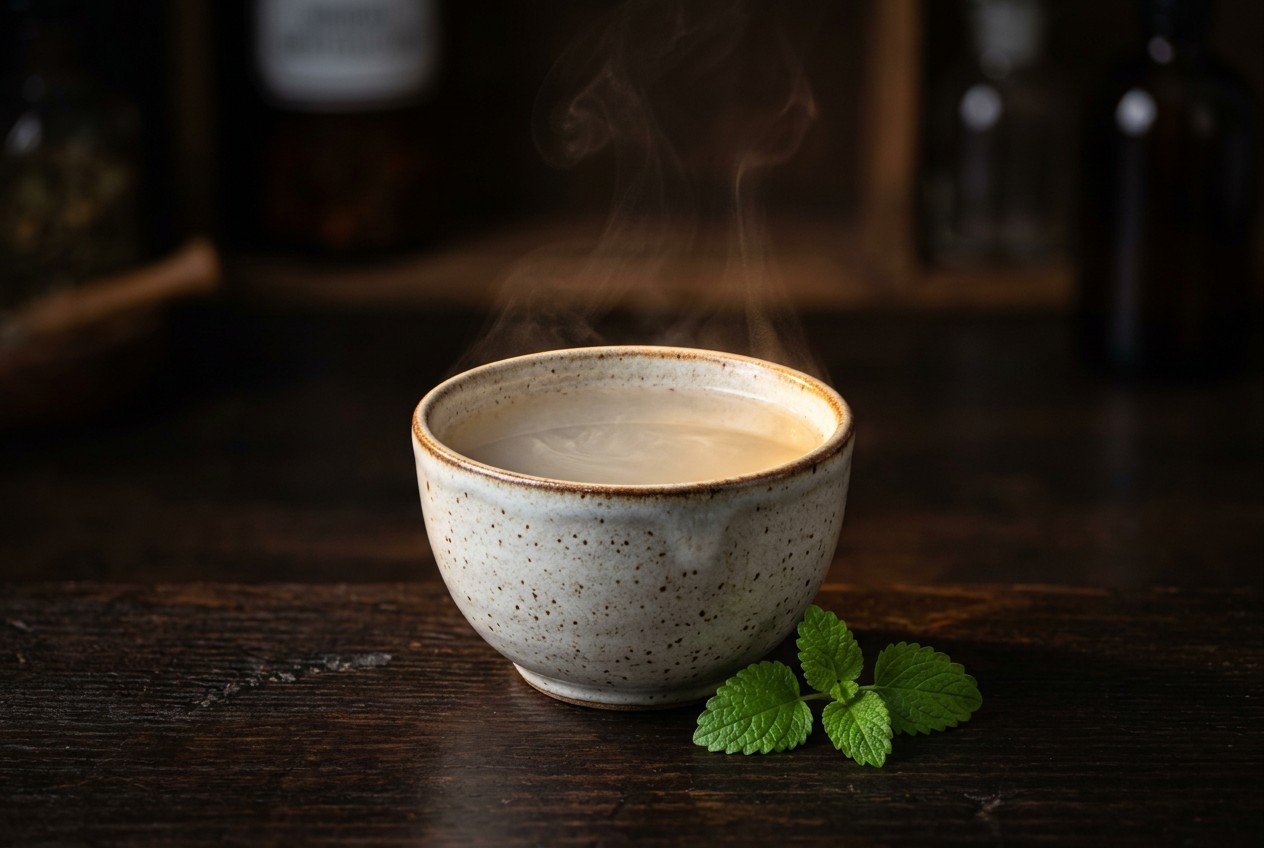
This blend combines 1 tsp Ceylon black tea, 1 tsp dried red rose petals, 1 tsp rosemary leaves and 1 tsp peppermint leaves. Put them in a roomy infuser, pour over 1 1/2 cups boiling water, steep 3-4 minutes and strain. Rosemary is a flavor ingredient here; no memory benefit is claimed.
2. Spearmint floral pot
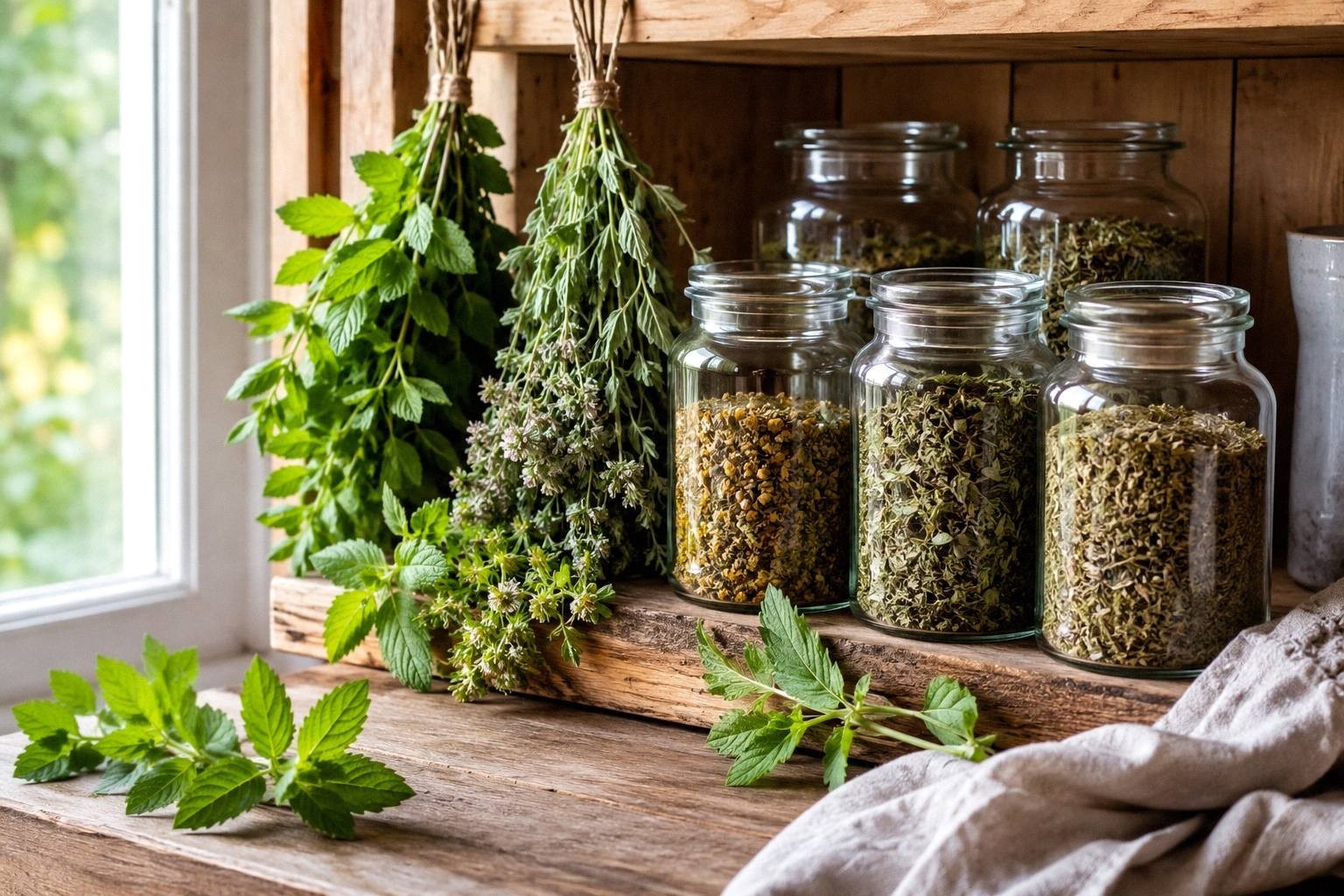
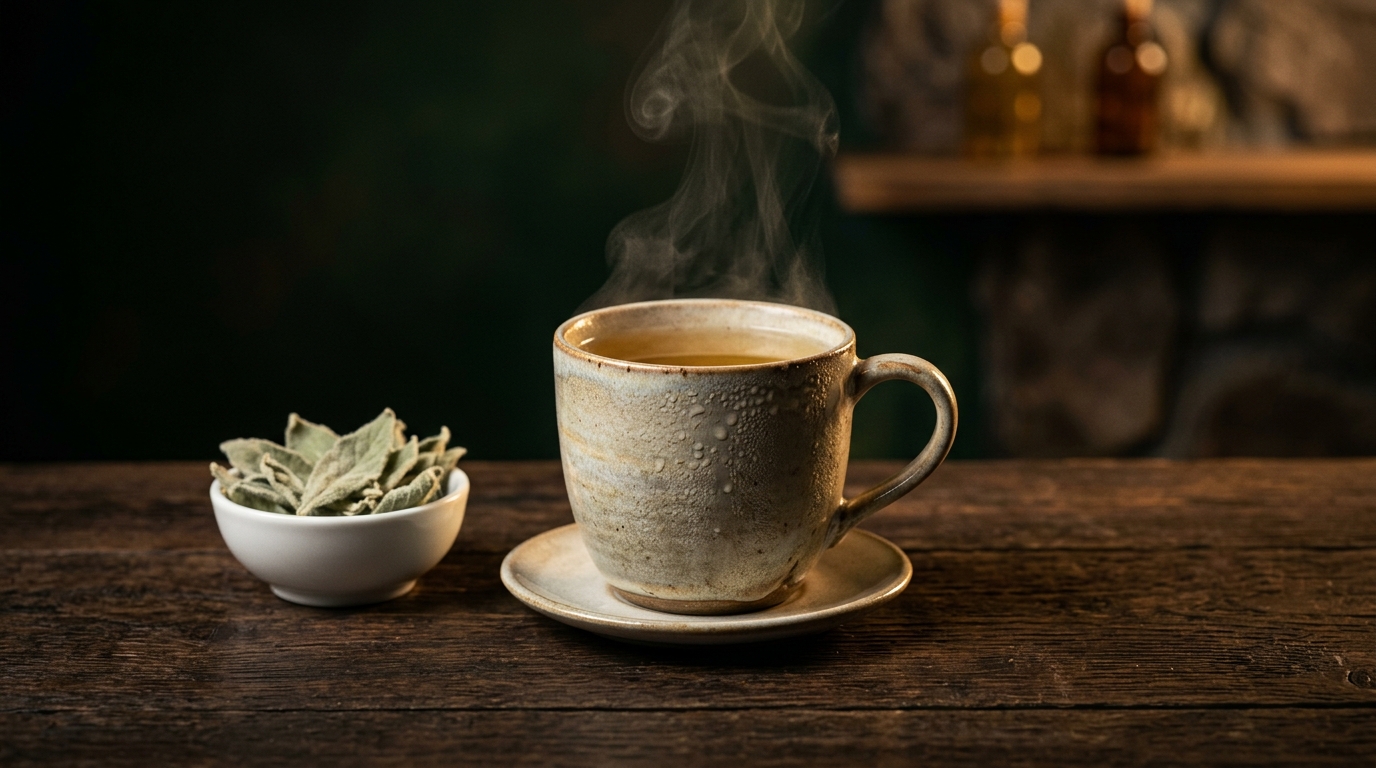
For the chamomile option, combine 1 tsp each dried spearmint, hibiscus, chamomile, sage and lemon peel. Pour over 2-4 cups boiling water, steep 3-5 minutes and strain. The water range changes strength; begin with the flavor strength you want rather than calling every pot one serving. These blends are adult culinary recipes; they do not establish suitability for children or pregnancy.
3. Chamomile tea with honey
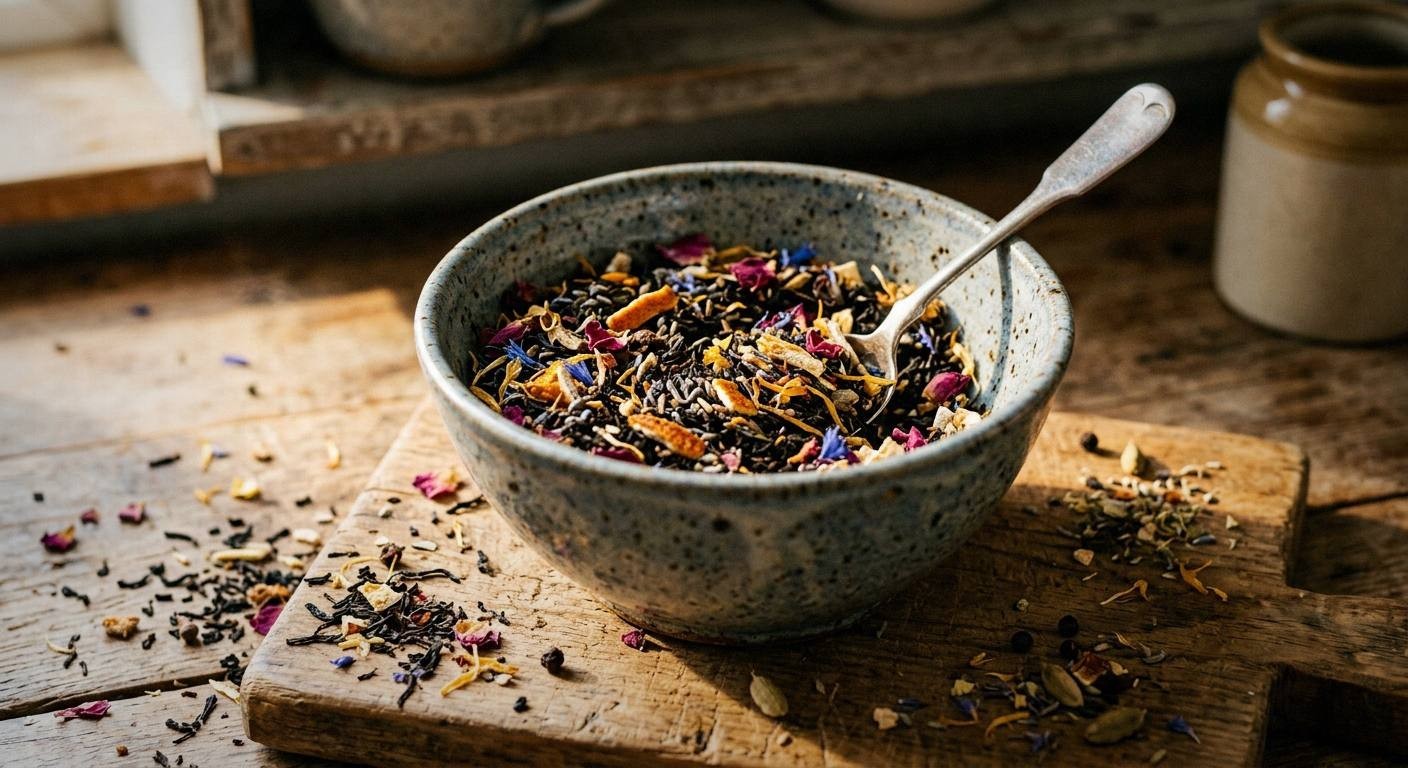
For one to two servings, use 2 tsp dried chamomile, an optional pinch of dried culinary lavender and 2 tsp honey in a 500-600 ml teapot. Boil water and let it stand for one minute. Pour over the flowers, steep 2-3 minutes, add honey and strain. Use culinary flowers, not a cosmetic fragrance or essential oil.
The separate chamomile tea page discusses sleep-evidence limits. This collection helps choose a preparation; the single-tea page owns that more specific question.
4. Pear and cinnamon rooibos
Slice one ripe pear and place in a saucepan with half a cinnamon stick and 600 ml water. Simmer 5-6 minutes, remove from heat, then add 2 tsp rooibos leaves. Steep 2-3 minutes and strain into a 500-600 ml pot, for one to two servings. Fruit simmers before the leaves steep; putting everything in an infuser for the black-tea time would make a different preparation.
5. Hibiscus and fresh mint cooler
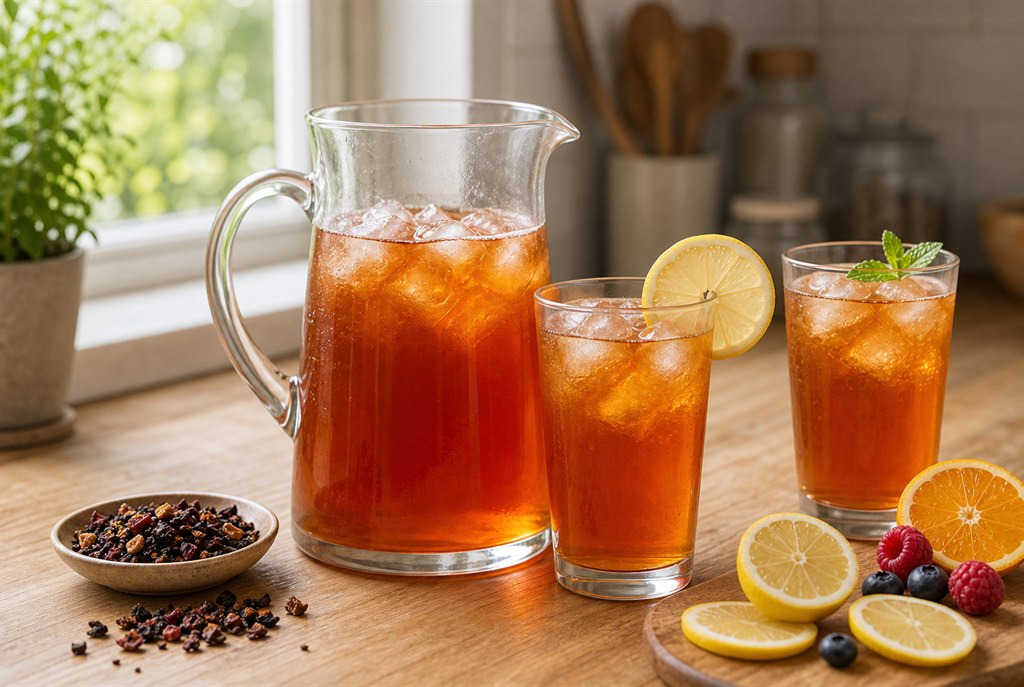
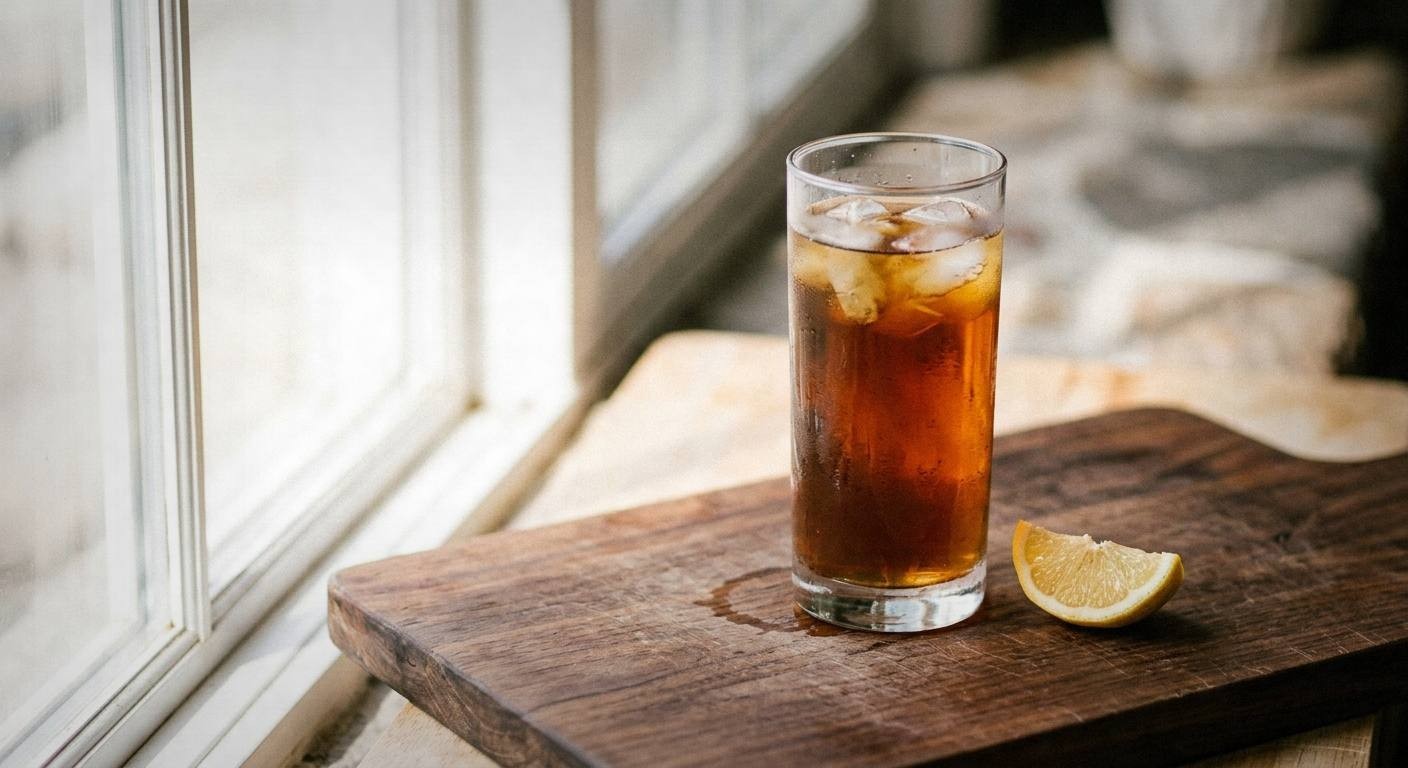
This hibiscus-and-spearmint version omits optional extra garden herbs. Use 20 g fresh spearmint, 5 g dried hibiscus (about 2 tbsp), 1 tbsp honey or to taste, and 1 1/2 quarts just-boiled water. Finely chop the mint; put it with hibiscus in a heat-safe vessel of at least two quarts. Add water, stir, cover and steep 10-15 minutes. Strain into a half-gallon vessel and dissolve honey while warm. Cool in the refrigerator. Shortly before serving, add ice to fill the vessel; the finished amount is approximately two quarts including ice, not two quarts of strained tea. No claim about heat stroke, blood pressure, PCOS or menstrual cramps is made.
Ingredients and health limits
Use food-grade identified botanicals and measure each recipe separately. Red clover and the former unverified bulk blends are not part of these five preparations. A black-tea blend is not a caffeine-free herbal infusion; dried and fresh herbs are not automatically equal by spoonful.
NCCIH’s chamomile review notes possible allergic reactions, especially with related-plant allergies, reported medicine interactions including warfarin, and limited pregnancy/breastfeeding information. If you have an allergy, take medicines or need pregnancy-specific advice, check ingredients with an appropriate clinician or pharmacist before choosing a blend. Recipes do not establish safety for every reader, and these pots have no clinical treatment schedule.
For a different floral drink, try the measured lavender honey lemon mocktail . For cold fruit drinks, compare the five strawberry drinks with herbs and flowers . For growing culinary ingredients, use the botanical garden guide . Keep this collection for blend selection rather than using it to replace the condition-specific tea pages.