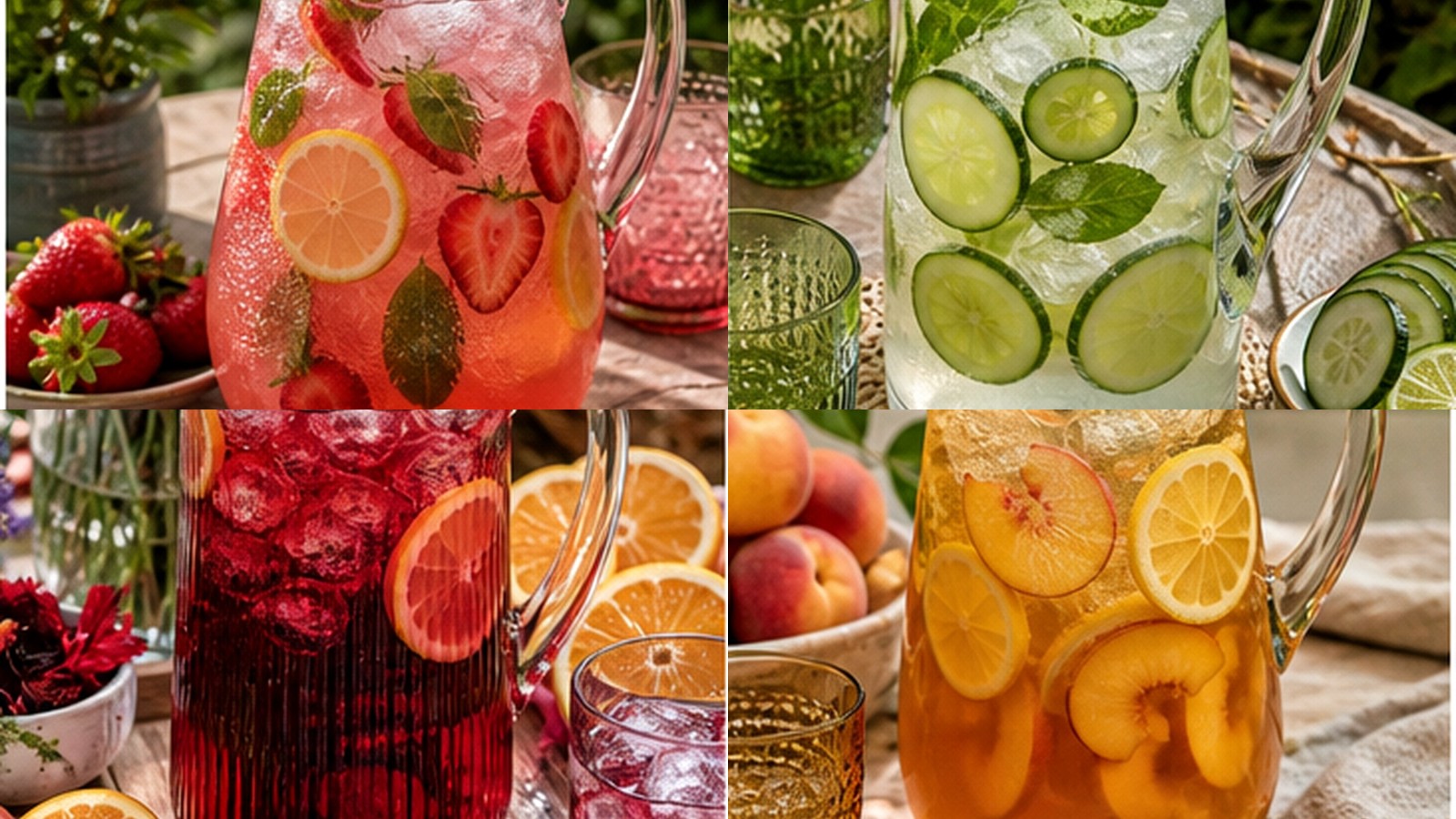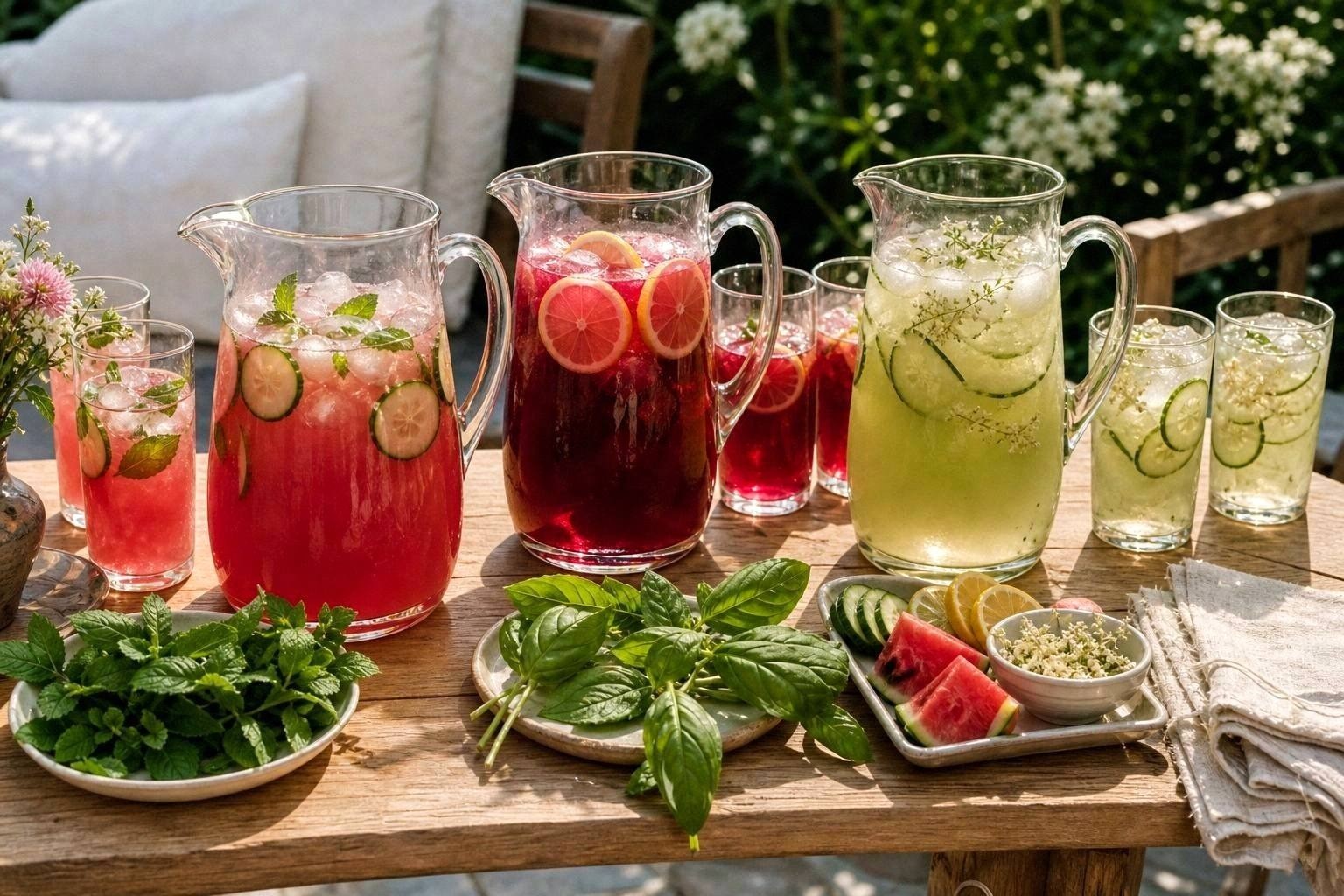
Seven fruit-and-herb pitchers, each with a measured yield. Peach raspberry rosemary and watermelon grape punch are house adaptations. A strained fruit volume is an endpoint to measure, not a promise about how many cups of cubes will produce it. US cups are 8 US fluid ounces (about 237 ml). If you are setting these out for guests to mix themselves, see the summer mocktail bar ideas .
The pitchers
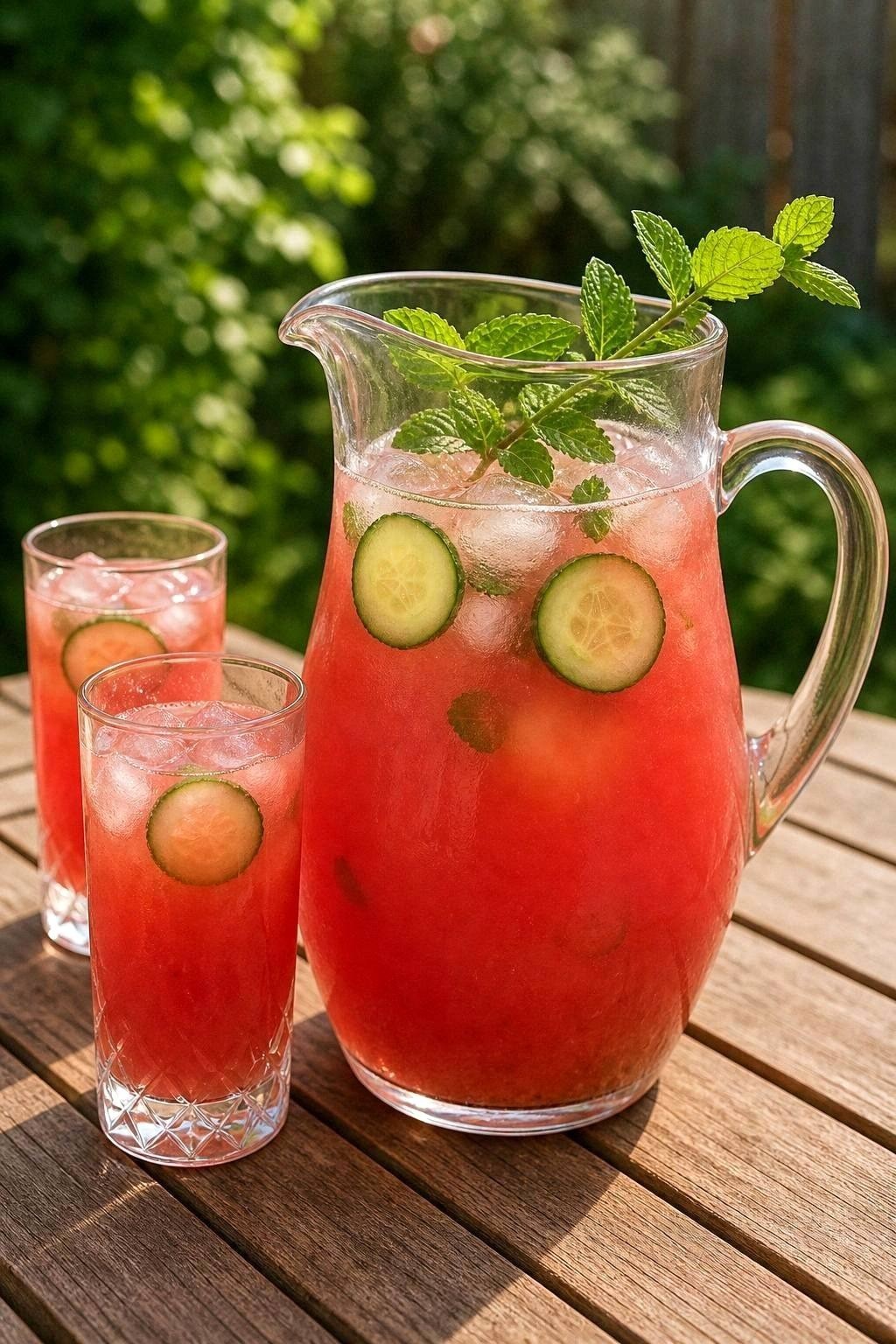
1. Watermelon Mint Cooler
Yield: 4 drinks; 10 fl oz each before ice. Time: 15 minutes active; about 45 minutes including chilling.
- 6 cups washed, rind-free watermelon cubes, plus more if needed to yield 3 cups strained juice
- 1/2 cup washed mint leaves
- 2 tablespoons lime juice
- 2 tablespoons honey or agave
- 2 cups chilled sparkling water
- Ice; 4 lime slices, optional
Blend melon, mint, lime and honey. Strain and measure; add more separately blended strained melon juice if needed to make 3 cups base. Reserve any extra separately.
Chill covered at 40 F (4 C) or below; allow about 30 minutes from room-temperature fruit, longer if needed.
Divide the 3 cups base equally among 4 large 16-ounce glasses with ice. Top each with 1/2 cup soda, not 2 cups. Garnish and serve.
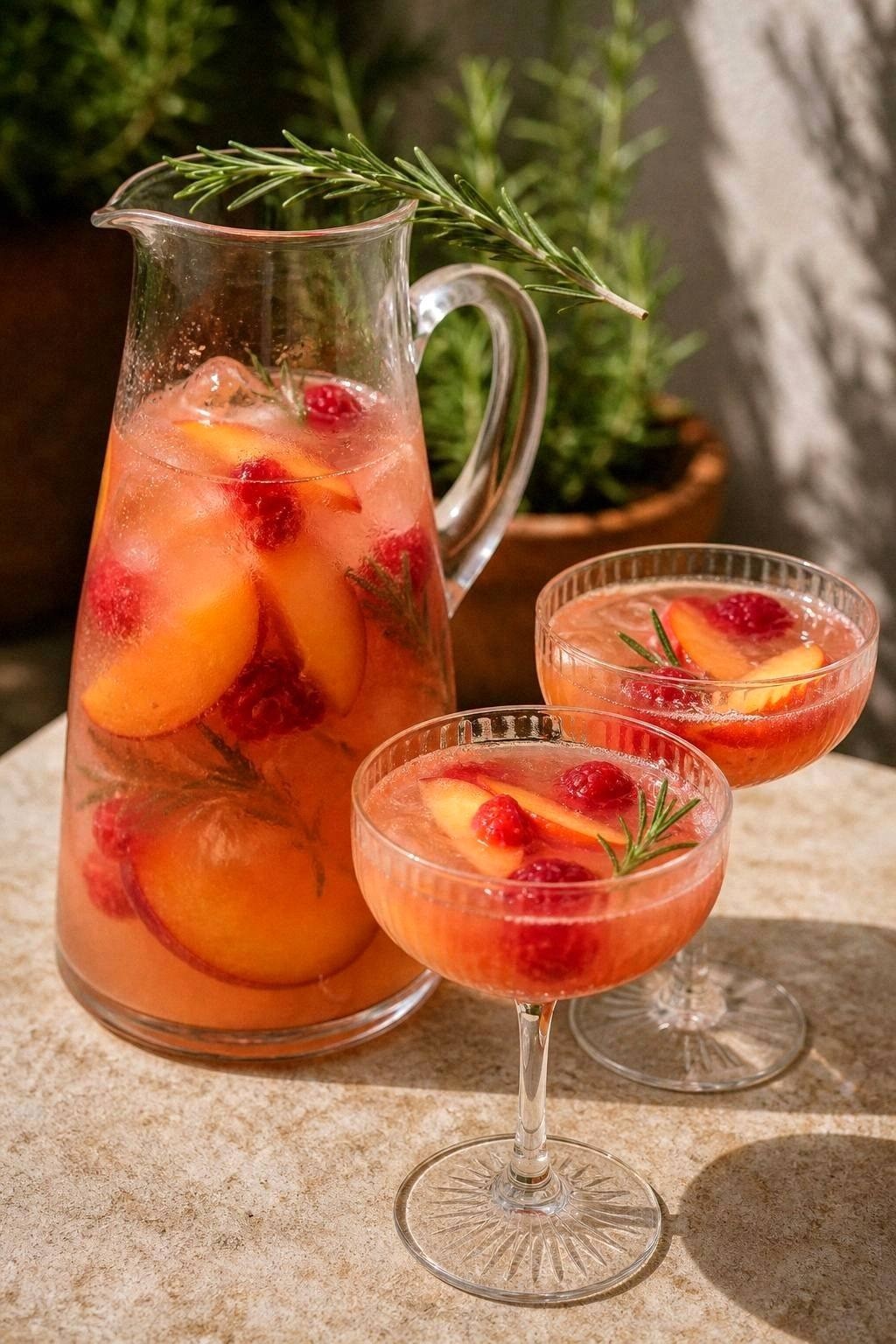
2. Peach Raspberry Rosemary Pitcher
Yield: 8 drinks; 8 fl oz each before ice; extra base possible. Time: 20 minutes active; about 75 minutes including steep/chill.
- 1 cup sliced washed pitted peaches
- 1 cup washed raspberries
- 1 cup granulated sugar
- 5 cups potable water, divided; additional water for measured base endpoint
- 1 washed rosemary sprig, about 4 inches
- 1 cup lemon juice
- 2 cups chilled sparkling water
Heat sugar, 1 cup water and rosemary, stirring until dissolved. Simmer 1 minute, then cover off heat 30 minutes. Remove rosemary and cool promptly.
Blend peaches, raspberries and 1 cup cold water; strain. Mix with all cooled rosemary syrup, lemon and remaining 3 cups water. Measure; use potable water to make at least 6 cups base. If recovery exceeds 6 cups, reserve extra.
Chill 6 cups base to 40 F (4 C) or below. Divide among 8 glasses and add 1/4 cup soda to each.
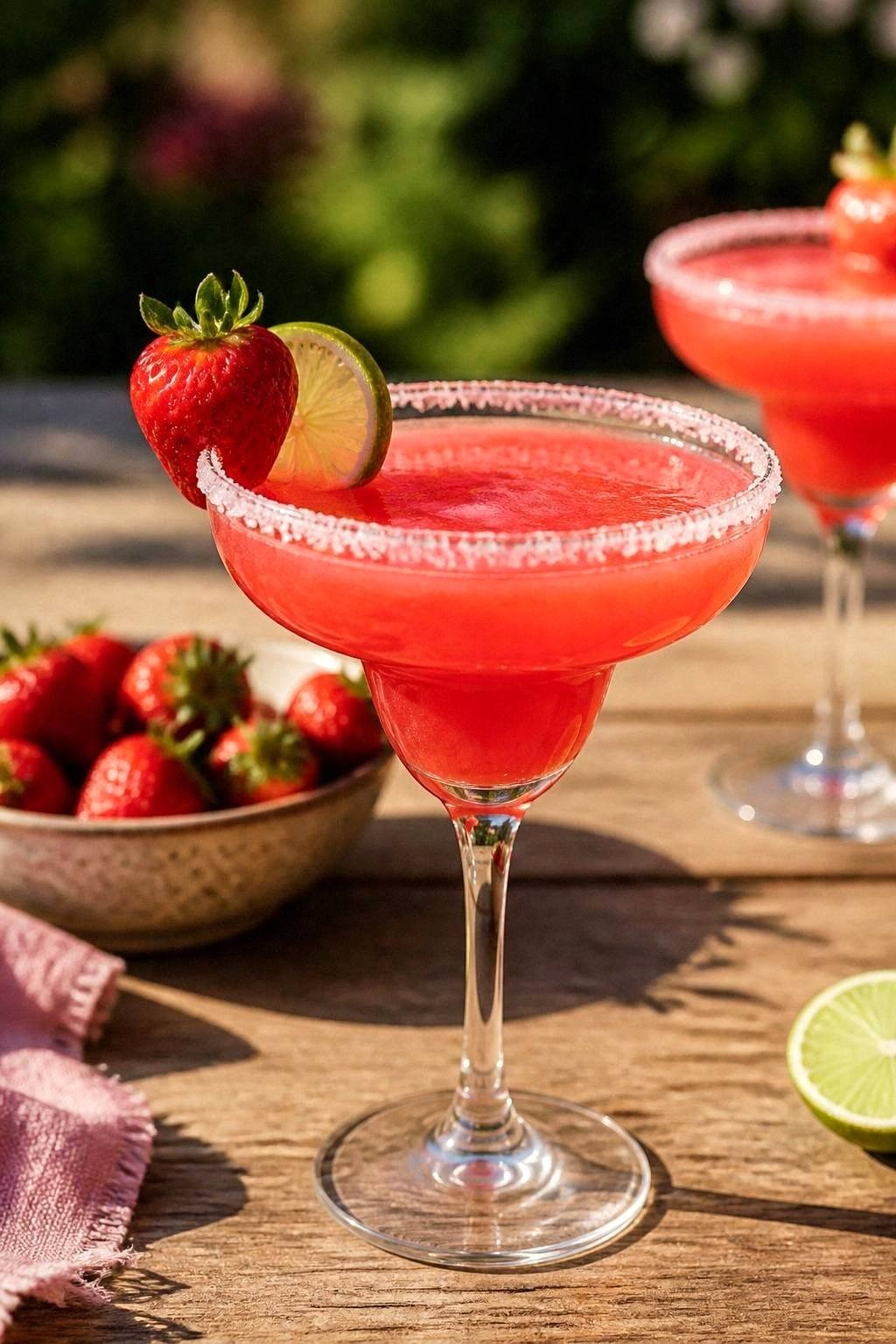
3. Strawberry Lime Mocktail Margarita
Yield: 4 drinks; 21 fl oz measured liquids total plus strawberry pulp. Time: 10 minutes.
- 16 washed medium strawberries, hulled
- 3 fl oz lime juice
- 4 tablespoons honey or agave
- 8 fl oz orange juice
- 8 fl oz chilled sparkling water, or labeled 0.0% commercial ginger beer
- Ice; 1 lime wedge and 1 teaspoon flaky salt for four partial rims, optional
Rub the optional lime wedge around half of each of 4 large glass rims and dip lightly in the measured salt.
Blend berries, juices and sweetener until smooth. Stir and divide all base equally among 4 glasses with ice.
Top each with 2 fl oz soda or commercial 0.0% ginger beer. Serve immediately.
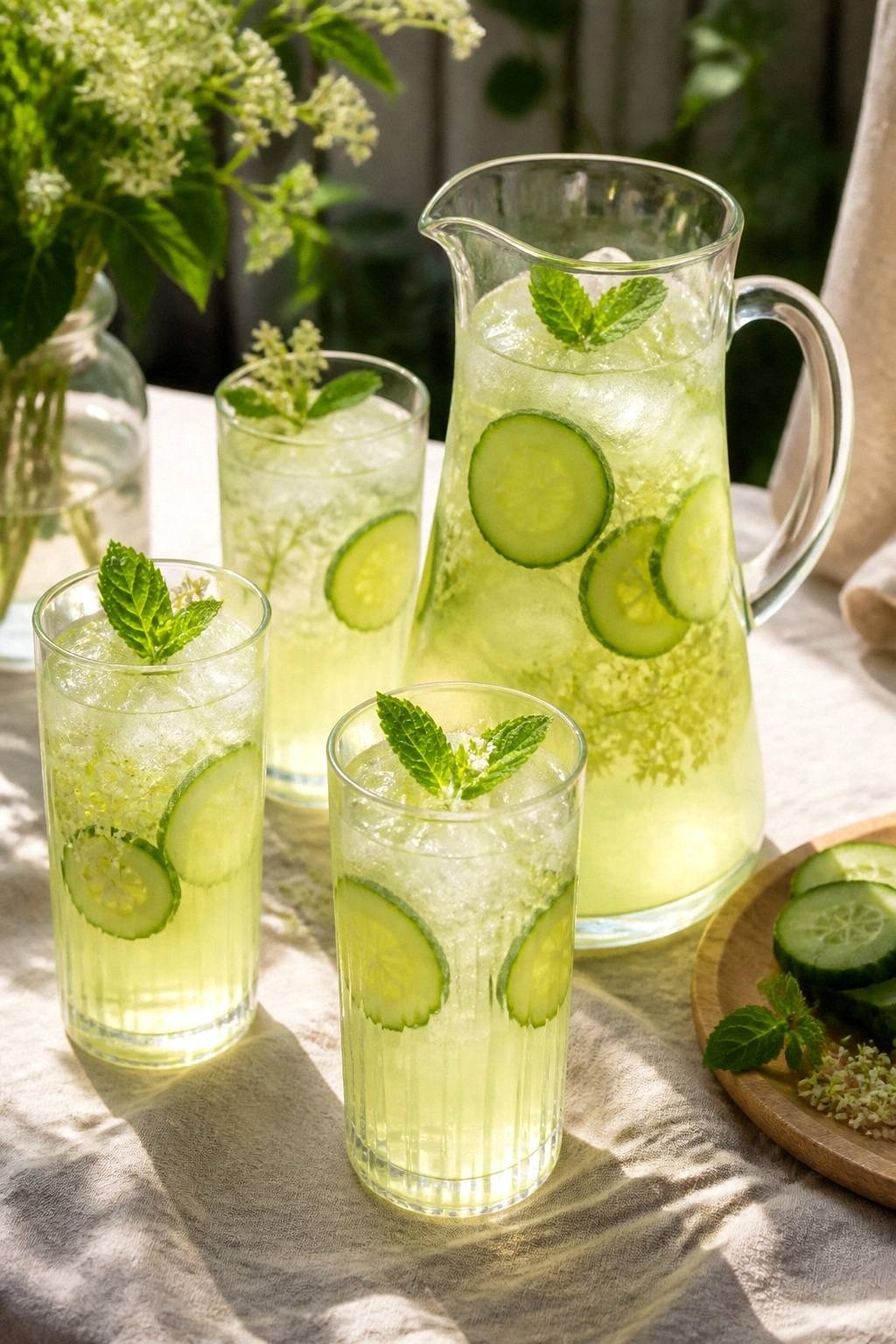
4. Cucumber Elderflower Spritz
Yield: 8 drinks; 7.5 fl oz each before ice. Time: 15 minutes with prepared juice; longer if juicing/chilling.
- 16 fl oz prepared cucumber juice
- 4 fl oz alcohol-free food elderflower cordial or syrup
- 8 fl oz lime juice
- 32 fl oz chilled sparkling water
- Ice; 8 washed cucumber ribbons, optional
For juice, blend washed cucumber pieces without water and strain; repeat until you have 16 fl oz, or use treated purchased cucumber juice. Measure recovery instead of assuming a cucumber length yields a fixed quantity.
Mix juice, cordial and lime in a covered jug; chill. Divide 28 fl oz base among 8 large glasses, 3.5 fl oz each.
Add ice and 4 fl oz soda per glass. Optional 0.0% labeled dry sparkling wine may replace the soda in the same quantity. Serve with cucumber ribbons.
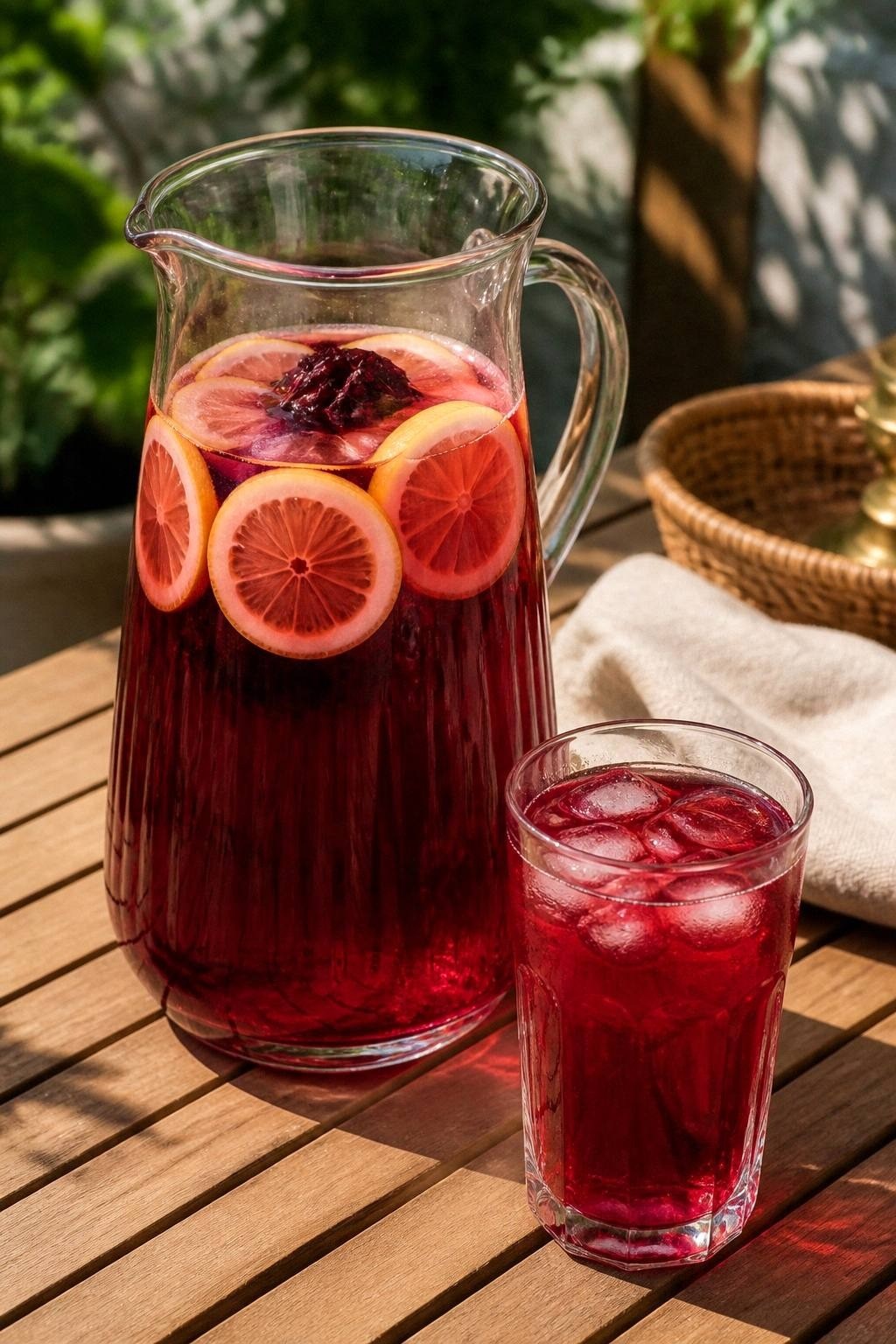
5. Hibiscus Lemonade Pitcher
Yield: 7 drinks; 8 fl oz each before ice. Time: 15 minutes active; about 60 minutes including cooling.
- 6 cups water, divided; extra for recovery
- 1/2 cup honey or granulated sugar
- 1/2 cup dried culinary Hibiscus sabdariffa calyces
- 1/2 cup lemon juice
- Ice
Bring 2 cups water, honey and hibiscus to a boil in a saucepan. Take off heat and steep 10 minutes.
Strain and measure; reserve any recovery above 2.5 cups, or add potable water if needed to bring the strained sweet infusion to 2.5 cups. Mix with remaining 4 cups water and 1/2 cup lemon.
Cool promptly in shallow heat-safe containers or an ice-water bath, then refrigerate until 40 F (4 C) or below. Divide 7 cups among 7 glasses; add ice at service.
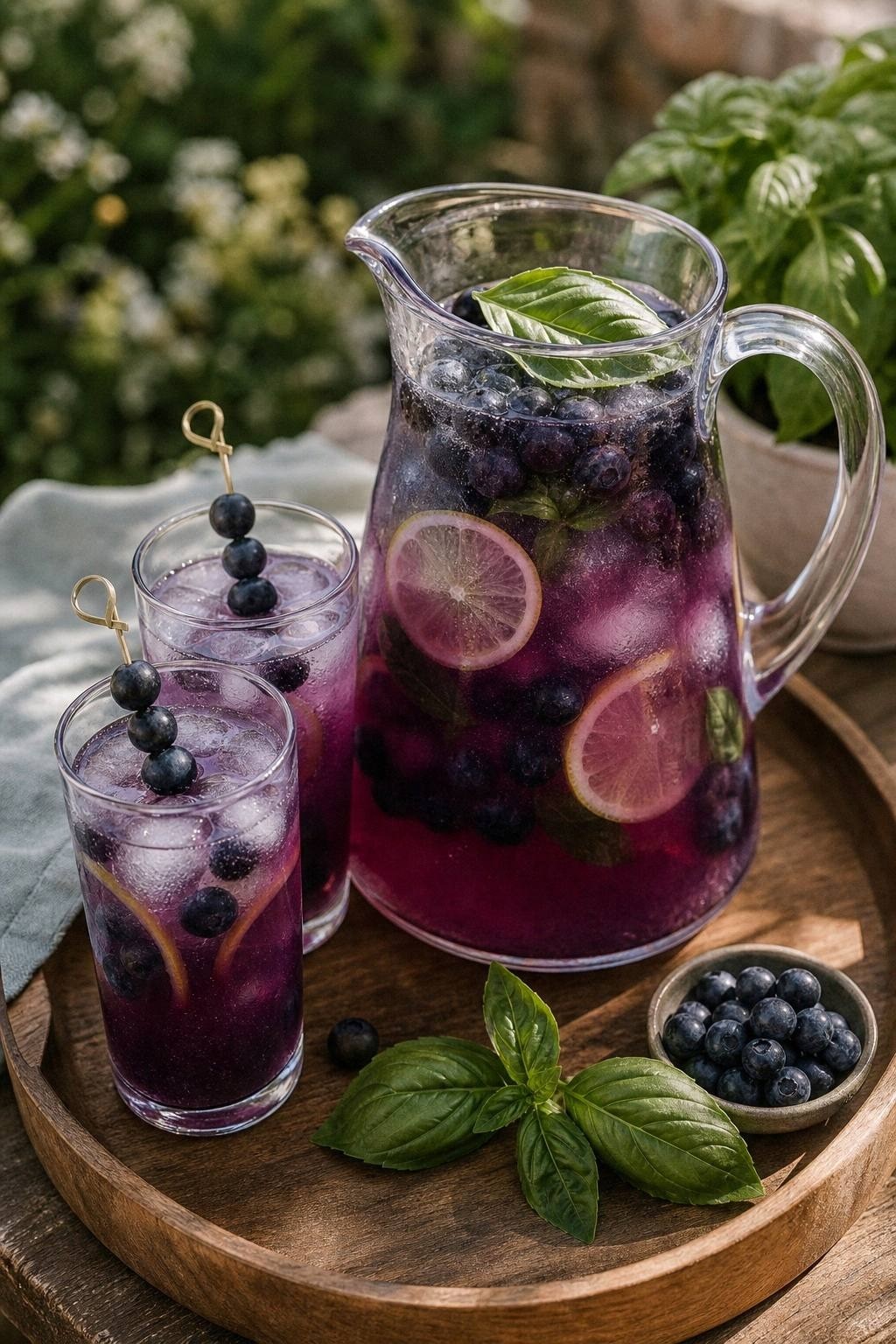
6. Blueberry Basil Lemonade
Yield: 6 drinks; 8 fl oz each before ice. Time: 15 minutes active; about 65 minutes with steep/cooling.
- 2 cups water, plus water to restore syrup recovery
- 1 cup sugar
- 1 cup washed blueberries
- 18 large washed basil leaves
- 1 cup lemon juice
- 2 cups chilled sparkling or still water
- Ice
Heat 2 cups water, sugar and berries. Once boiling, cook 5 minutes, stirring and crushing berries.
Take off heat, add basil, cover and steep 20 minutes. Strain; top up with potable water to 3 cups syrup, or reserve any recovery above 3 cups.
Mix 3 cups syrup and lemon. Cool promptly and refrigerate until 40 F (4 C) or below. Divide 4 cups base among 6 glasses, 2/3 cup each. Add ice and 1/3 cup soda or still water to each.
7. Sparkling Watermelon Mint Punch
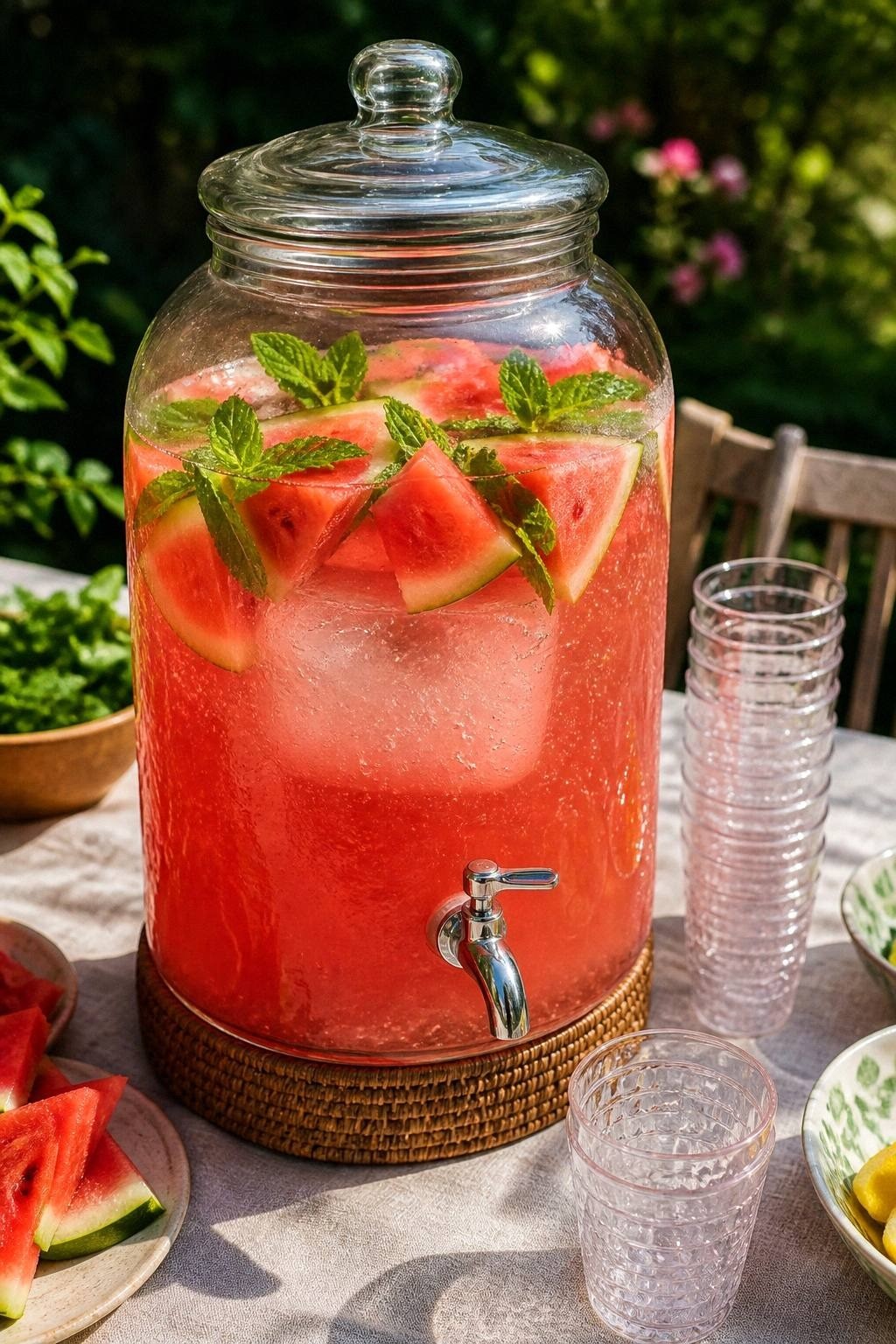
Yield: 12 drinks; 8 1/3 fl oz each before ice. Time: 15 minutes active; about 45 minutes including chilling.
- 6 cups cold strained watermelon juice; starting fruit recovery varies
- 2 cups pasteurized white grape juice
- 1/4 cup lime juice
- 1/4 cup honey or agave
- 12 washed mint leaves
- 4 cups chilled sparkling water
- Ice in glasses
Blend and strain enough washed watermelon to measure 6 cups juice. Mix with grape, lime, sweetener and gently bruised mint. Refrigerate 30 minutes or until 40 F (4 C) or below, then remove mint.
Divide 8.5 cups base among 12 large glasses, about 5 2/3 fl oz each. Add ice and 2 2/3 fl oz soda per glass.
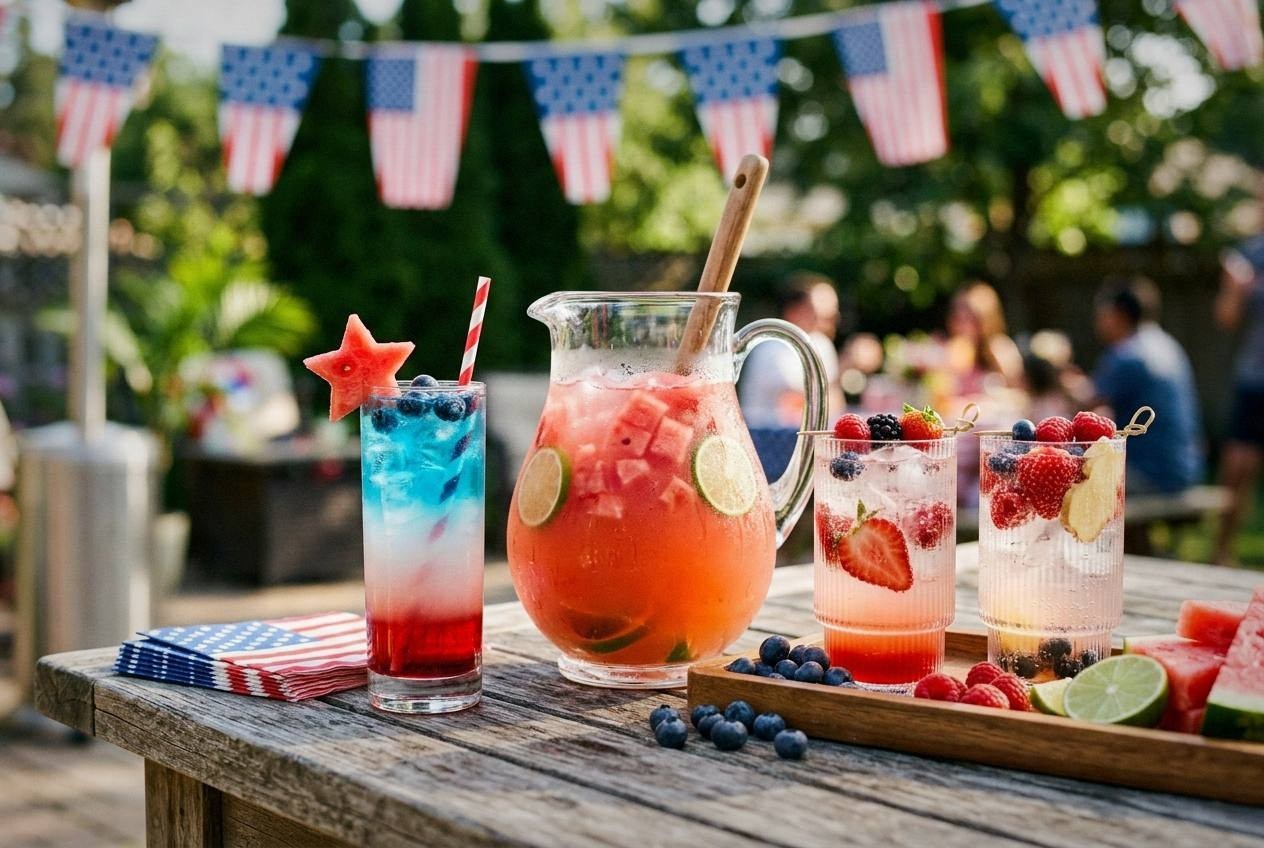
For immediate dispenser service, combine the base and 4 cups soda in a vessel holding at least 1 gallon; keep it cold and serve promptly. Ice in the glass limits pitcher dilution.
Serve a crowd
For 20 guests planning 2-3 drinks each, prepare 40-60 measured servings, roughly 320-480 fl oz (9.5-14.2 L) at 8 oz per drink. A 68-ounce pitcher cannot supply that: use refills from refrigerated covered batches. Choose recipes, add their actual yields and multiply each ingredient by the number of complete batches. Keep fizz and ice separate until each pour.
Refrigerate in a covered clean container at 40 F (4 C) or below and use within 24 hours, a conservative house handling limit. Keep ice and sparkling mixers separate until service. Discard perishable drinks left out more than 2 hours, or 1 hour above 90 F (32 C). Wash hands and rinse fresh produce under running water before cutting; scrub melon and cucumber skins. Use clean utensils and potable water. Honey drinks are unsuitable for infants under 12 months. Fresh blended or squeezed juice is untreated; use pasteurized juice options for guests at greater risk of foodborne illness.
Make ahead
Allow the stated hot steep and chilling times. Overnight bases are limited to 24 hours refrigerated; this is house handling, not tested preservation. Keep garnishes washed, covered and refrigerated until use. For fruit juice ice, freeze measured portions of chilled base in clean covered trays; ice adds liquid when it melts, so pour sizes will increase.
Gear That Makes These Pitchers Easier
Affiliate note: Links below are Amazon Associate links with my tag fabledetheric-20. If you buy through them, I may earn a commission at no extra cost to you. Every product here is already on our live bar cart essentials
or bar cart accessories
pages. No filler gadgets.
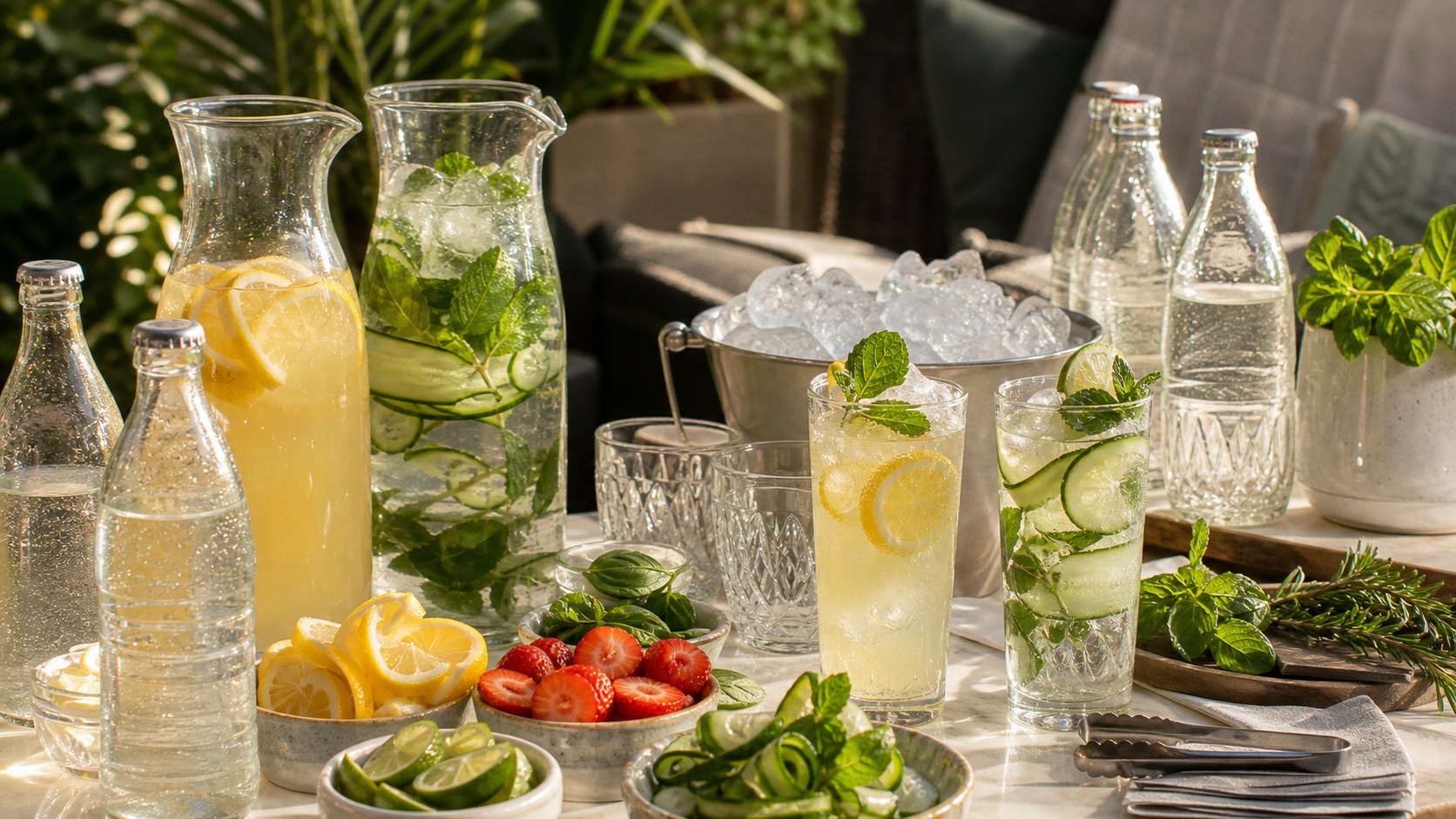
Three pitchers and a long afternoon need a vessel that holds fruit, glasses guests can refill, ice that stays out of the base, and a tray so the self-serve pieces move as one.
Buy for the part of the party that needs help
These are researched choices, not products we have tested. Start with what you own and choose one upgrade for the task below. Check the exact item, dimensions, care instructions, seller, and current terms on Amazon before ordering. The linked scenes are illustrations, not product photographs.
| Your bottleneck | Consider | Skip it when |
|---|---|---|
| Keeping a chilled base covered between refills | Bivvclaz lidded pitcher | Your current jug fits the fridge and pours cleanly |
| Too few tall glasses for indoor spritzers | JoyJolt Faye highballs | You have enough tumblers, or broken glass is a concern |
| Guests keep opening the backup-ice cooler | ChefBee covered ice bucket | A covered ice container and serving utensil already work |
| Several loose pieces need carrying to the table | Handled acacia tray | The table is beside the kitchen, or a tray you own fits |
The 68-ounce pitcher holds at most eight 8-ounce liquid pours with a little room left over, before allowing for fruit or ice. It is a refill vessel, not a whole-party supply. Use your recipe’s finished volume to plan batches. Our pitcher buying guide compares the vessel choices before you spend.
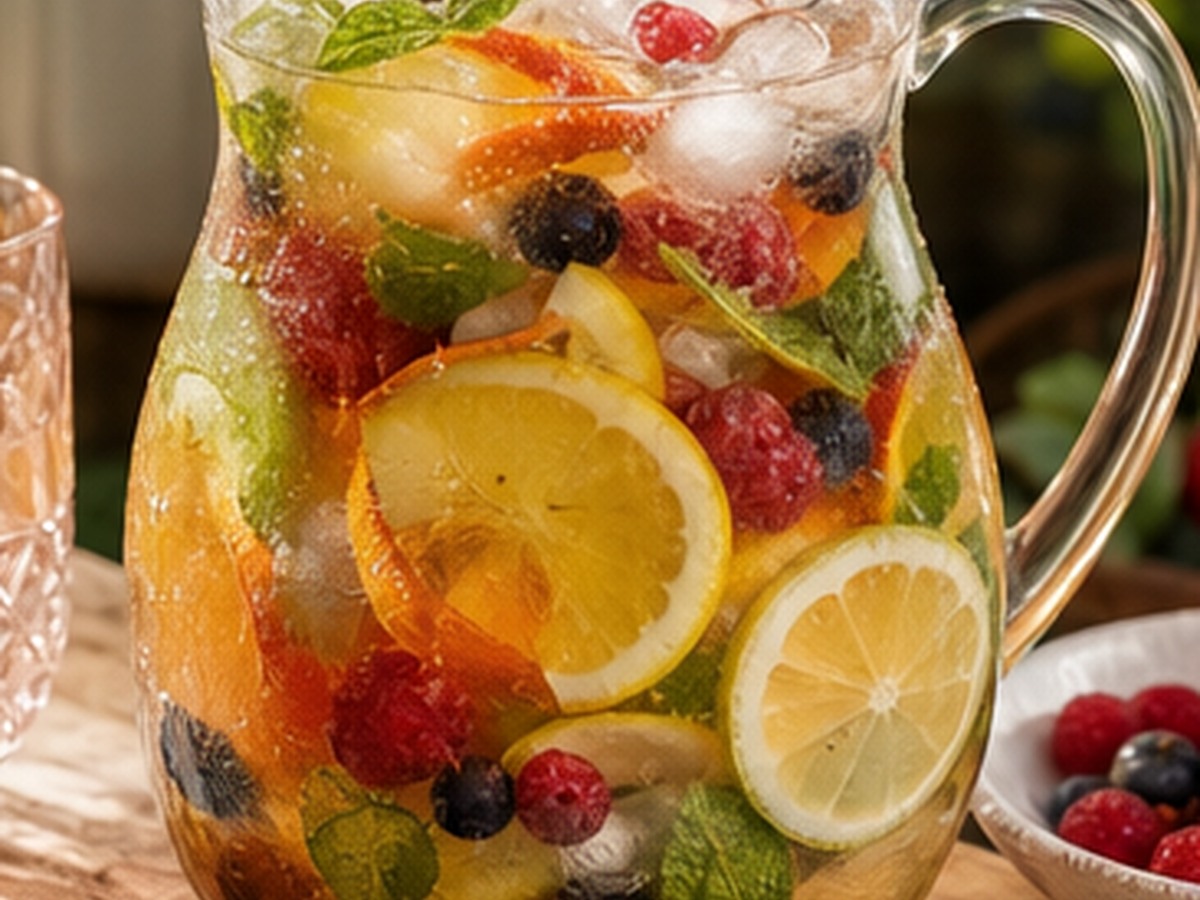
Bivvclaz 68-ounce glass pitcher
 Paid Amazon links: we may earn a commission if you buy through links in this article. Disclosure details.
Batch the fruit base in one vessel, chill it with the lid on, and leave sparkling water out until guests arrive. Glass keeps watermelon pink and hibiscus ruby honest.
See the Bivvclaz pitcher on Amazon
JoyJolt Faye highball glasses (set of 6)
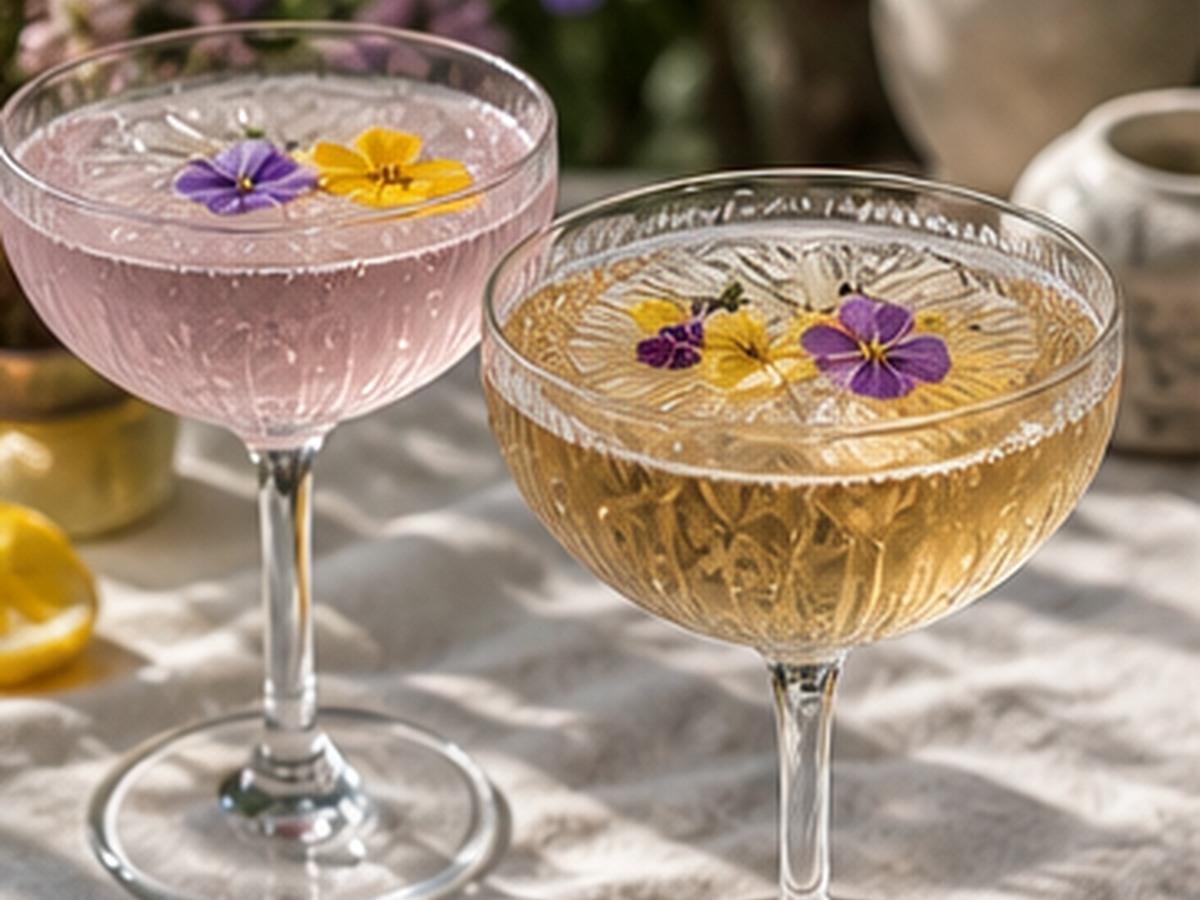
Tall plain highballs suit spritzes, lemonades, and watermelon pours without forcing a cocktail glass on every guest.
See the JoyJolt highballs on Amazon
ChefBee insulated ice bucket
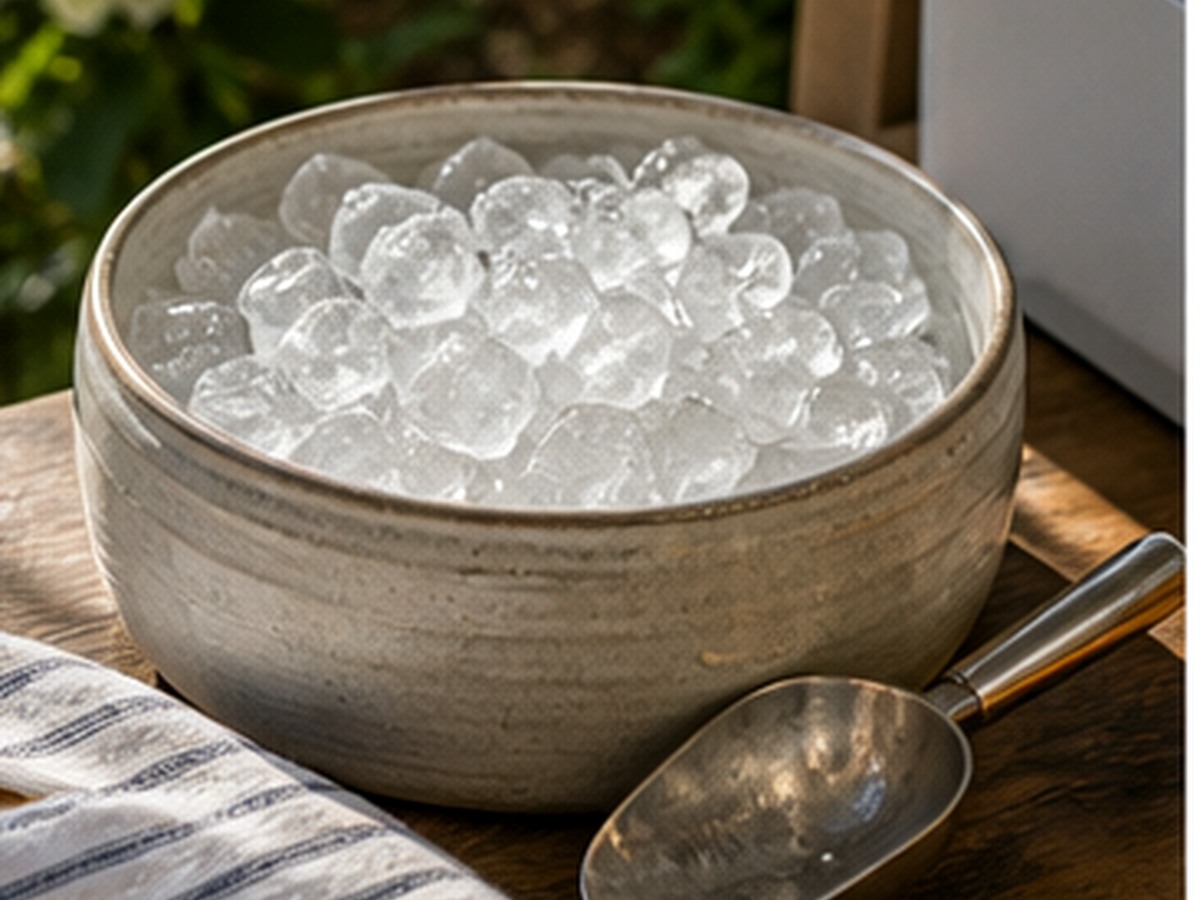
Keep cubes in a lidded bucket with tongs instead of dumping ice into every pitcher. That is the easiest dilution fix for a long cookout.
See the ChefBee ice bucket on Amazon
Acacia wood serving tray (17 in.)
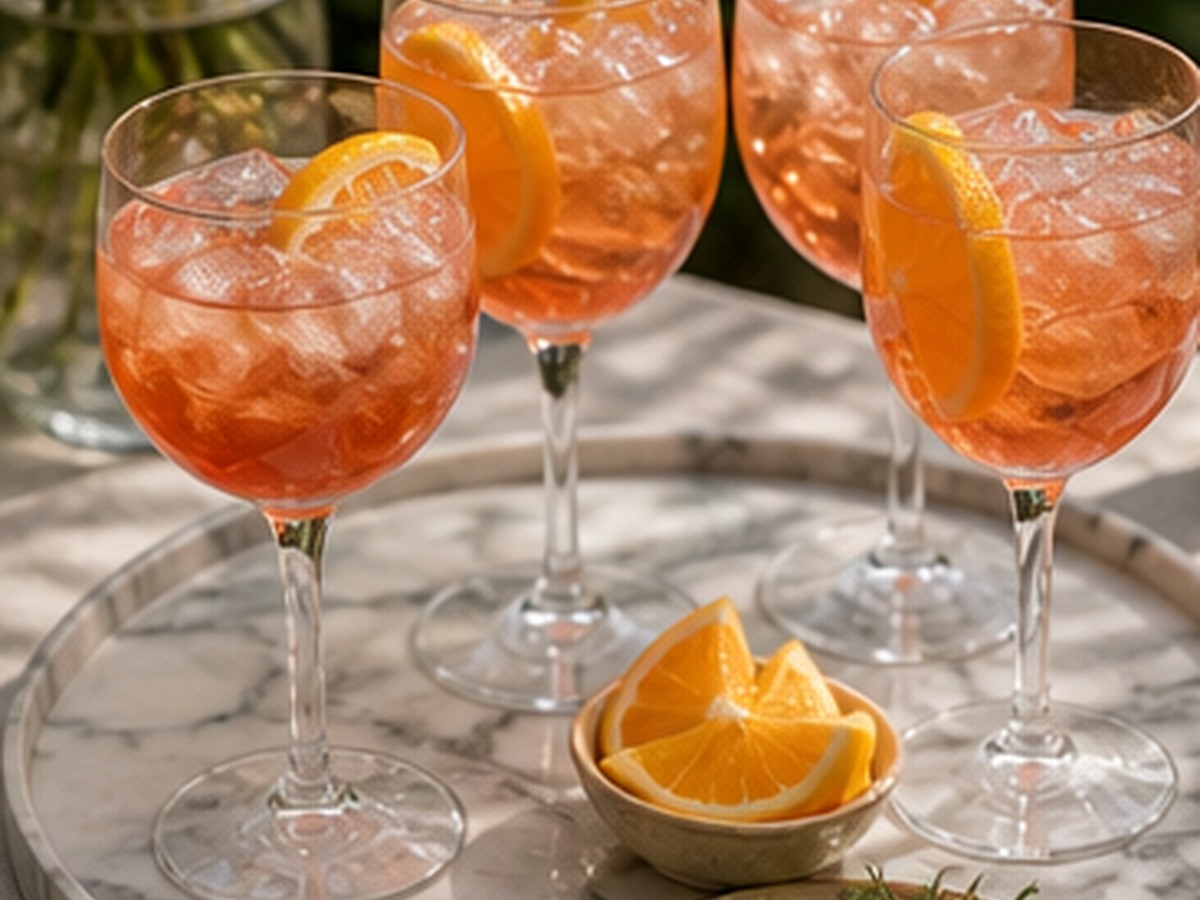
Group glasses, tongs, and garnish on one handled tray so the drink table stays a path, not a scavenger hunt.
Common Questions
How many pitchers do I need for 20 guests?
Count servings, not vessels. At 2-3 drinks each, you need 40-60 servings. A 68-ounce pitcher holds only about eight 8-ounce liquid servings before fruit or ice. Keep refill batches refrigerated.
Can I make the drinks overnight?
Keep the base covered at 40 F (4 C) or below for up to 24 hours. Add carbonation and ice at service.
Sources and recipe notes
These are house culinary adaptations. The linked originals support the ingredient combinations and preparation methods; measured recovery, serving sizes and cooling details are stated above. The 24-hour limit for fresh mixtures is a conservative house handling choice, not shelf-life testing.
- Allrecipes rosemary simple syrup
- Cookie and Kate watermelon juice
- Like Mother Like Daughter raspberry peach lemonade
- Jar of Lemons strawberry mocktail with lime
- Mindful Mocktail cucumber spritz
- The Endless Meal hibiscus lemonade
- A Farmgirl’s Dabbles blueberry basil lemonade
- FoodSafety.gov summer food safety
- FDA juice safety