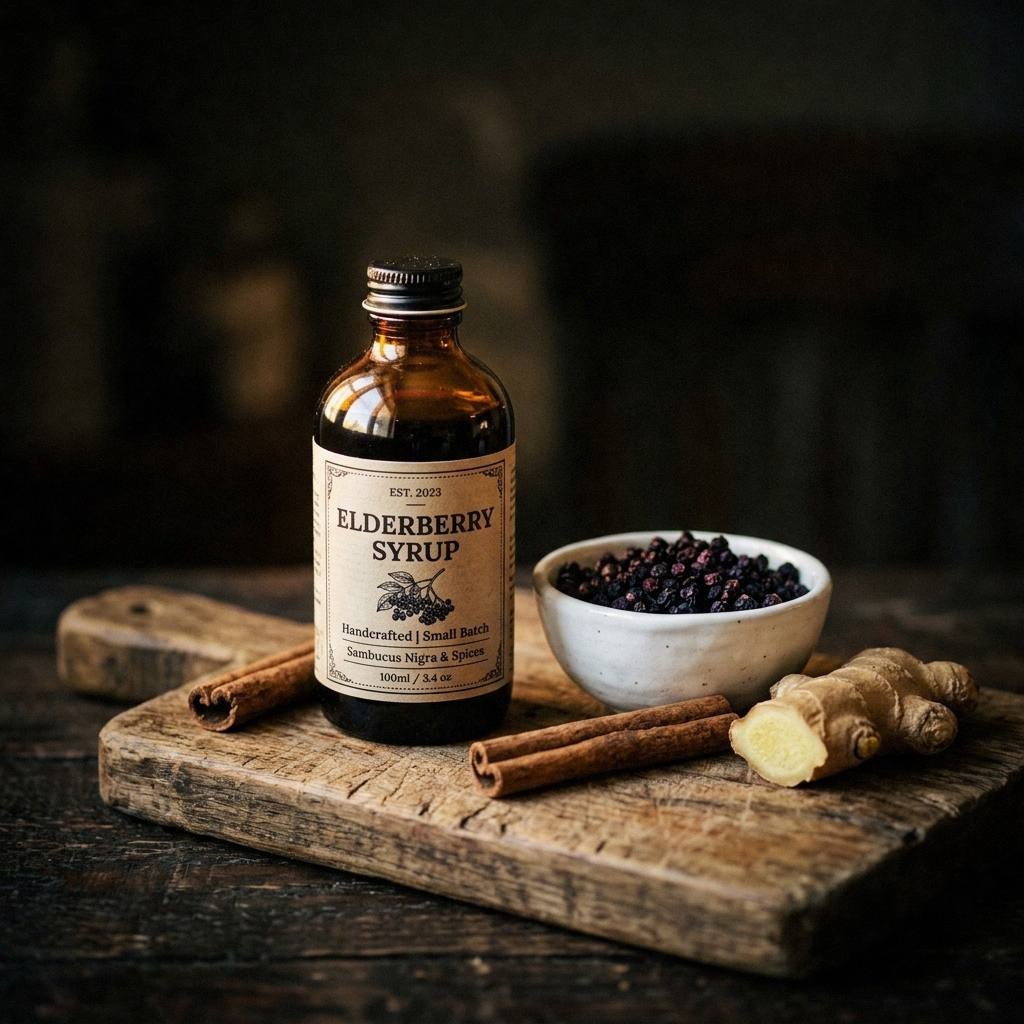
The original honey-spice elderberry preparation is withdrawn as a recipe while its exact cooking, concentration and storage controls remain unresolved. The ingredient record below is not a complete preparation guide. Do not prepare or serve it from this page; no replacement formula or medicinal dose is supplied.
At a Glance
| Detail | Status |
|---|---|
| Formula | Original dried-berry, honey and spice blend |
| Cooking and storage | Require a documented process |
| Former time accounting | 10 min prep + 45–60 min simmer + 20–30 min cooling, plus heating/straining |
| Yield | Not measured |
| Recipe instructions | Withdrawn pending review |
Why People Keep Making This
Elderberry appears in traditional syrups and cooked foods. Tradition does not validate the quantities, dose or storage life of this original honey-spice formula.
A Safety Note You Should Not Skip
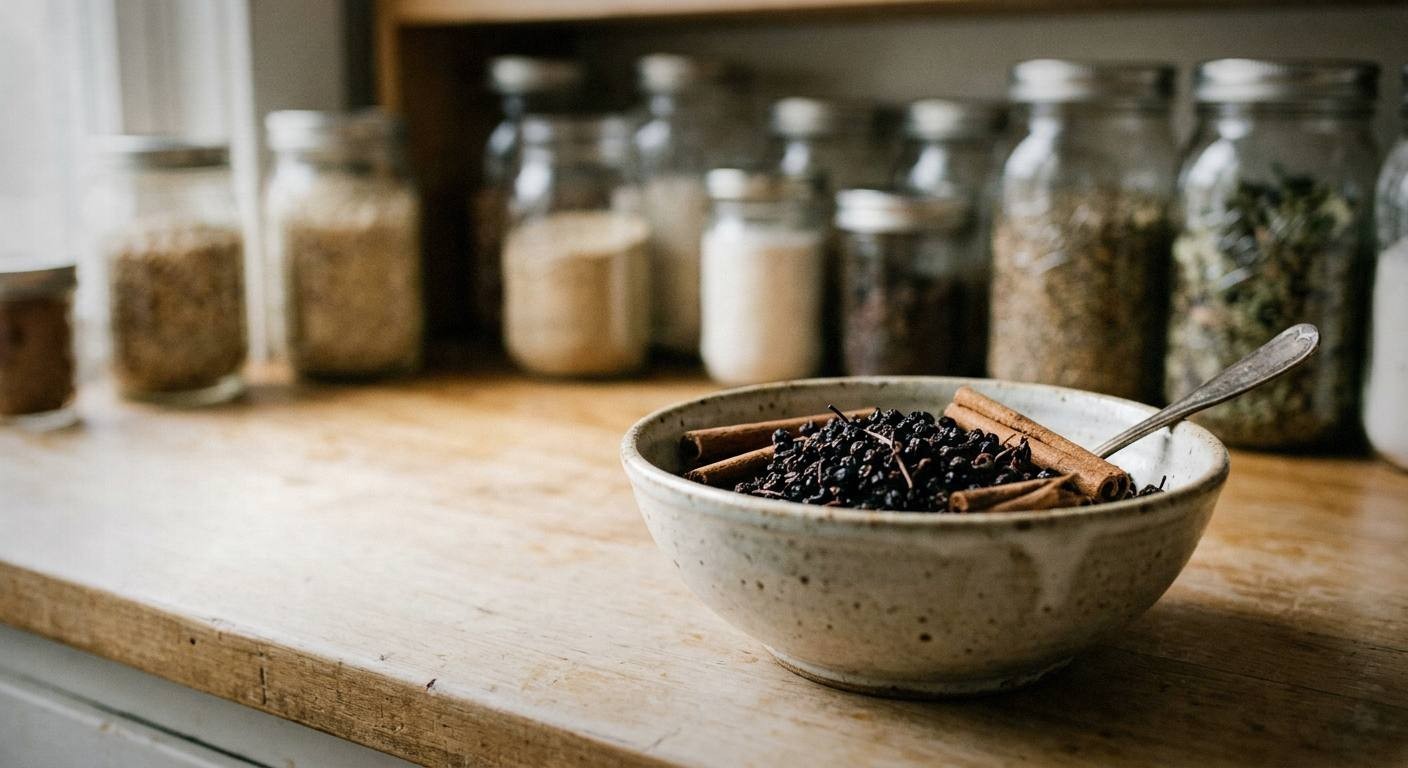
Raw elderberries, bark, and leaves are toxic. They contain sambunigrin, a cyanogenic glycoside that converts to cyanide in the body. Eating raw elderberries causes nausea, vomiting, and diarrhea. In severe cases, it can be dangerous.
Cook correctly identified ripe berries and remove stems and leaves; cooking is not permission to use unsuitable plant parts. A CDC report on the 1983 incident documented 11 of 25 people sickened in California after drinking elderberry juice that was pressed with leaves and stems. Eight were taken to hospital; the report identifies one person hospitalized overnight. All recovered. This incident does not establish a safe cooking time or validate the former 45–60-minute simmer for this formula. Never eat raw elderberries, never skip the cooking process, and never use leaves or stems. Use only correctly identified suitable plant material; this syrup calls for cooked berries, not flowers or other plant parts.
Dried elderberries from reputable suppliers (Mountain Rose Herbs, Frontier Co-op, Starwest Botanicals) are harvested and dried for exactly this purpose. Fresh elderberries must be cooked before use, and so must dried ones. The full picture, including which parts of the plant carry the most and what to do if someone has eaten them raw, is in are elderberries poisonous raw .
Original Formula Record
- 1 cup dried elderberries (Sambucus nigra)
- 3 cups filtered water
- 1 tablespoon fresh ginger, grated or thinly sliced
- 1 cinnamon stick
- 4 whole cloves
- 1 cup raw honey
On the elderberries: Sambucus nigra (European elderberry) is the species behind the European tradition and the one nearly every supplier means when they say elderberry. Sambucus canadensis (American elderberry) carries the same family of compounds and has its own long history of use on this side of the Atlantic. Mountain Rose Herbs and Frontier Co-op sell organic dried elderberries. The recorded cup quantity has no measured weight or validated batch yield here.
On the honey: Honey is the sweetener. A precise 110F enzyme threshold and preservation lifetime have not been established here. A same-volume maple substitution changes the formula; its storage life is also unvalidated. Honey also means this syrup is not for babies under a year, for reasons covered further down.
On the spices: Ginger and cinnamon add warmth and their own aromatic compounds (gingerols and cinnamaldehyde, respectively). The cloves are optional but bring eugenol, which is what gives clove its smell. These spices are not just flavor, they are part of the traditional formula.
How to Make It
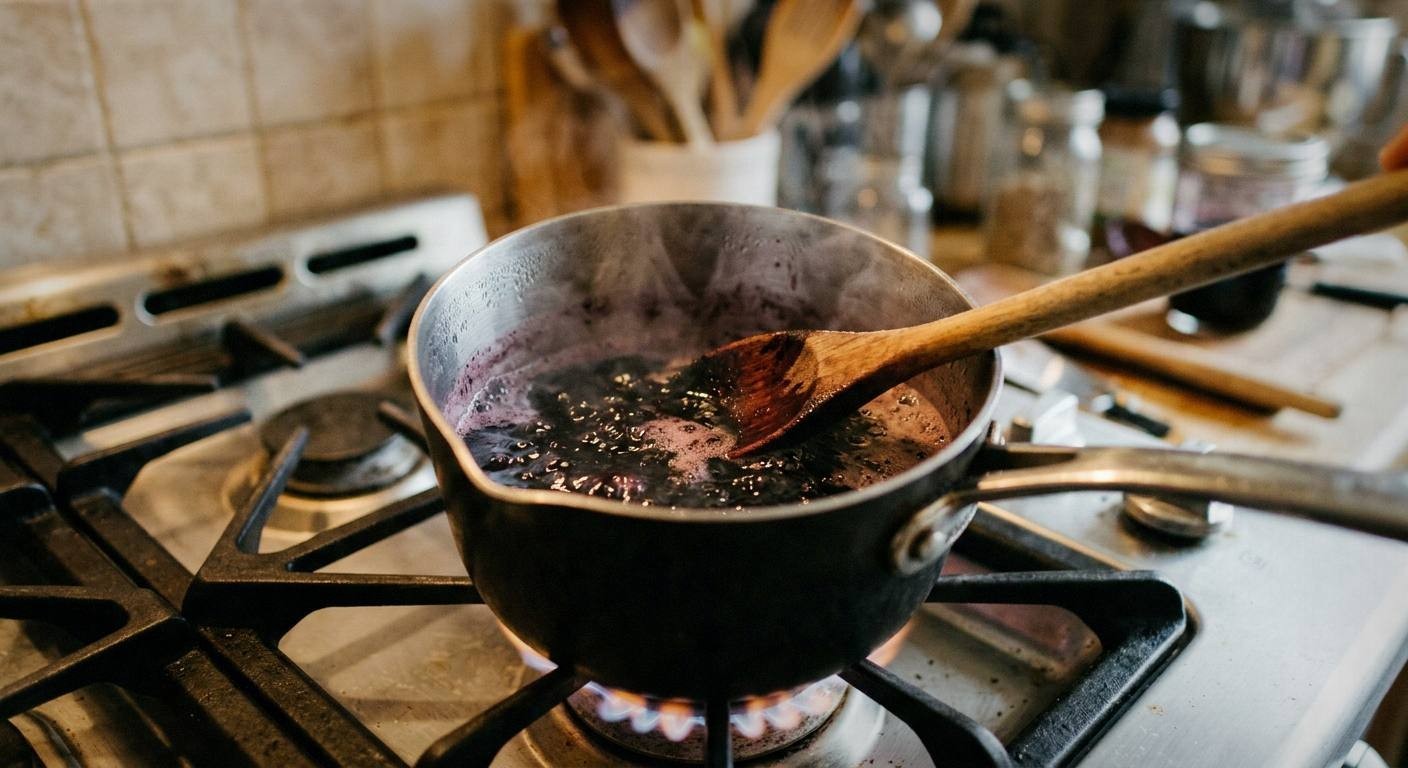
The former preparation steps are withdrawn. No exact cooking, reduction, cooling or storage process has been validated for this honey-spice blend. Do not infer a safe replacement from another syrup recipe. Use correctly identified plant material and a documented formula appropriate to that species; cooking is not permission to use unsuitable plant parts.
How to Use It
This page supplies no consumption instruction, medicinal dose or child serving for the unresolved syrup or its sparkling-water tonic. Honey must not be fed to infants under one year, as MedlinePlus explains . Removing honey does not validate an herbal preparation for infants.
Storage and Shelf Life
No finished shelf life or storage process is established for this honey-spice formula. Oregon State Extension publishes species-specific preservation guidance and distinct formulas. Its instructions do not validate this blend; do not can it using a different syrup’s process. Freezing cannot repair a spoiled product. Do not taste a questionable jar.
The former three cups water and one cup honey do not establish a sixteen-fluid-ounce yield after reduction and straining. No cost per tablespoon can be calculated without measured yield and documented ingredient costs.
The Elderflower Connection
Elderberries and elderflowers come from the same plant (Sambucus nigra). The flowers bloom in late spring and carry their own long folk history in hot infusions and cordials. Our elderflower healing benefits guide covers the flower side of the plant in detail.
If you want to use elderflowers in drinks, the elderflower cordial recipe is a UK-style preparation that makes a versatile mixer. And the St-Germain elderflower French 75 uses commercial elderflower liqueur for a faster cocktail route.
For another traditional winter preparation, our fire cider recipe takes a different approach with apple cider vinegar, horseradish, and hot peppers. The citrus and herb tonic uses fresh citrus and herbs instead.
The Rest of the Elderberry Guides
Five companion pages cover the questions that come up once the pot is on the stove or the jar is in the fridge:
- Are elderberries poisonous raw? Which parts of the plant carry cyanogenic compounds, why cooking is the step that matters, and what to do if someone has eaten them raw.
- Dried vs fresh elderberries What changes between the two, how to destem fresh clusters without losing an afternoon, and how to buy and store dried berries.
- Elderberry syrup not thickening Why a batch stays thin, what reduction actually does, and why thin is often the correct answer.
- How long does elderberry syrup last? Fridge life, what cuts a batch short, and how to read a jar that has been open a while.
- Can you freeze elderberry syrup? Portioning into cubes, how much headspace to leave, freezer life, and thawing without a mess.
Before You Start
Confirm the botanical identity and suitable plant parts. Do not forage by common name alone or use leaves and stems in berry syrup. Use a documented preparation for the actual species and product. This page does not certify a cooking time, concentration or storage method.
Common Questions
Can fresh berries or maple syrup replace the original ingredients?
A changed formula needs its own documented process. No fresh/dried volume swap or maple/honey storage equivalence is established here.
How much does a batch or serving cost?
No current ingredient-cost calculation or measured portion yield has been documented for this original formula.
Can children use it?
This page provides no child serving. Ask a pediatric clinician about herbal products, and never feed honey to infants under one year.
Can a tincture replace a cooked syrup?
A tincture is a separate extraction with its own composition and safety requirements; it is not a direct replacement for a documented cooked-berry preparation.