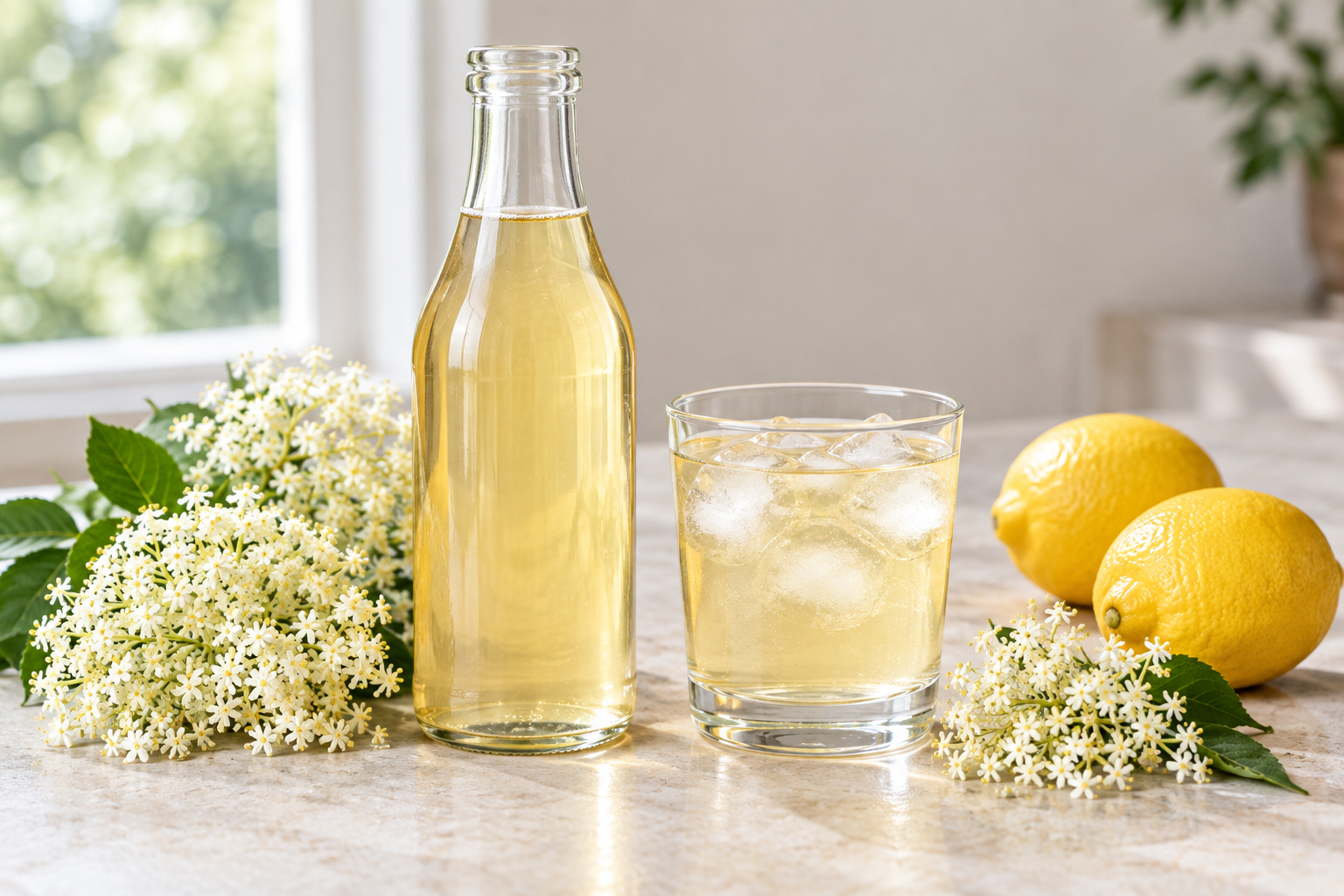
River Cottage lists citric acid as optional in its elderflower cordial pes/elderflower -cordial/) cordial. This adaptation keeps its flower, sugar, citrus and water amounts while moving the overnight infusion into the refrigerator and using prompt cooling. It is not a tested preservation process or an exact claim to the source’s timing.
Ingredients and Planning
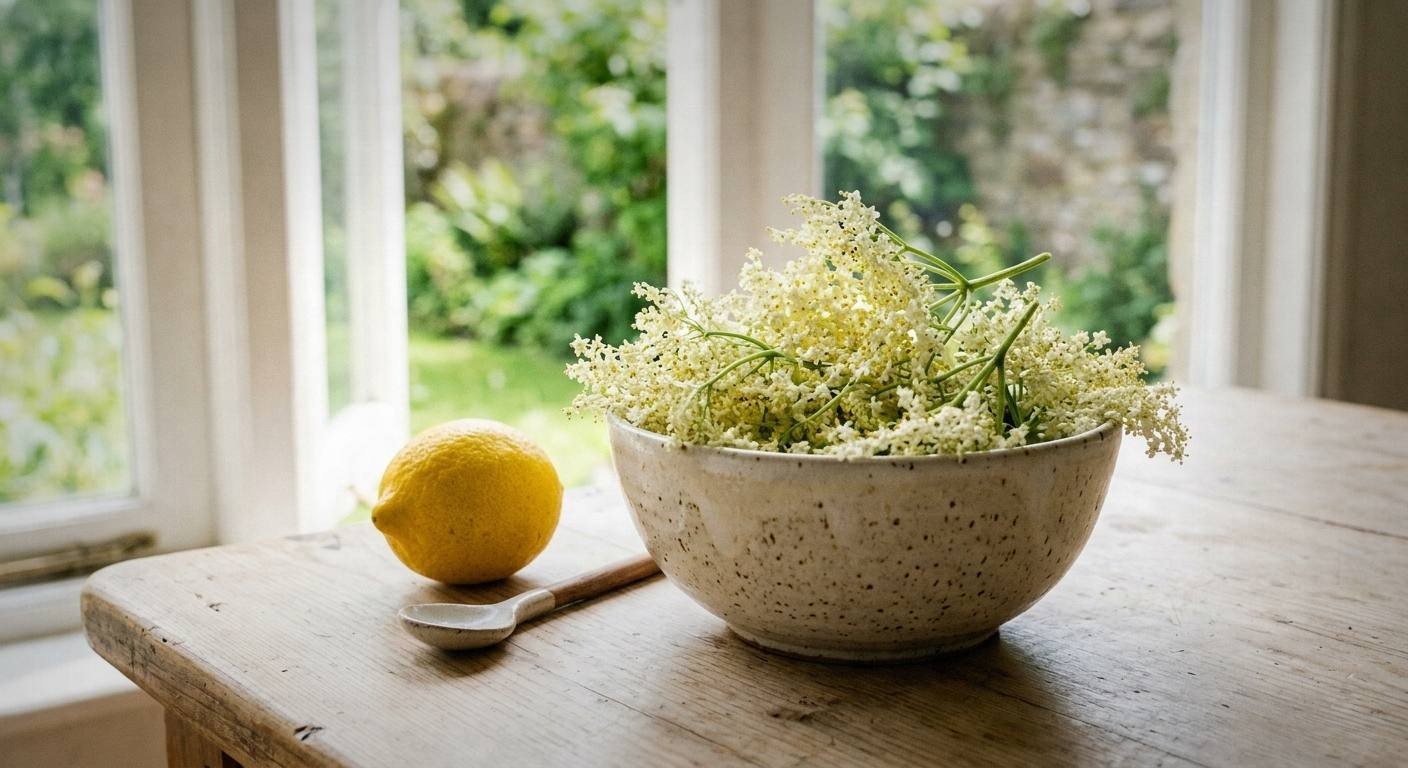
- 25 fresh correctly identified Sambucus nigra elderflower heads grown for food, large stalks removed
- Finely grated zest and juice of 3 rinsed lemons
- Finely grated zest and juice of 1 rinsed orange
- 1 kg granulated sugar
- 1.5 litres potable water
The source estimates about 2 litres; actual strained volume varies. Measure before labeling portions. Allow about 30 minutes active work and roughly 13 hours total for heating, prompt cooling, a 12-hour refrigerated infusion and reheating; cooling may extend this. A household refrigerator must have space for safe cooling.
Method
- Confirm the flower identity with a knowledgeable grower or foraging expert before harvesting. Remove insects, leaves and the large green stalks; use only food-grown flowers. Gently rinse the flowers under running water, then put flowers and citrus zest in a large heat-safe vessel.
- Bring 1.5 litres water to a rolling boil and pour over the flowers and zest. Cover; cool promptly using an ice bath or small heat-safe containers and refrigerate at 40 F (4 C) or below for an overnight 12-hour infusion. Do not leave overnight at room temperature.
- Strain through a clean muslin-lined sieve into a pan. Discard the flowers. Stir in sugar and citrus juices.
- Heat while stirring until sugar dissolves, bring to a simmer and cook 2 minutes.
- Transfer to small clean heat-safe containers, cool promptly and refrigerate at 40 F (4 C) or below. Use within the day after finishing; freeze extra with expansion space. This is not shelf-stable canning.
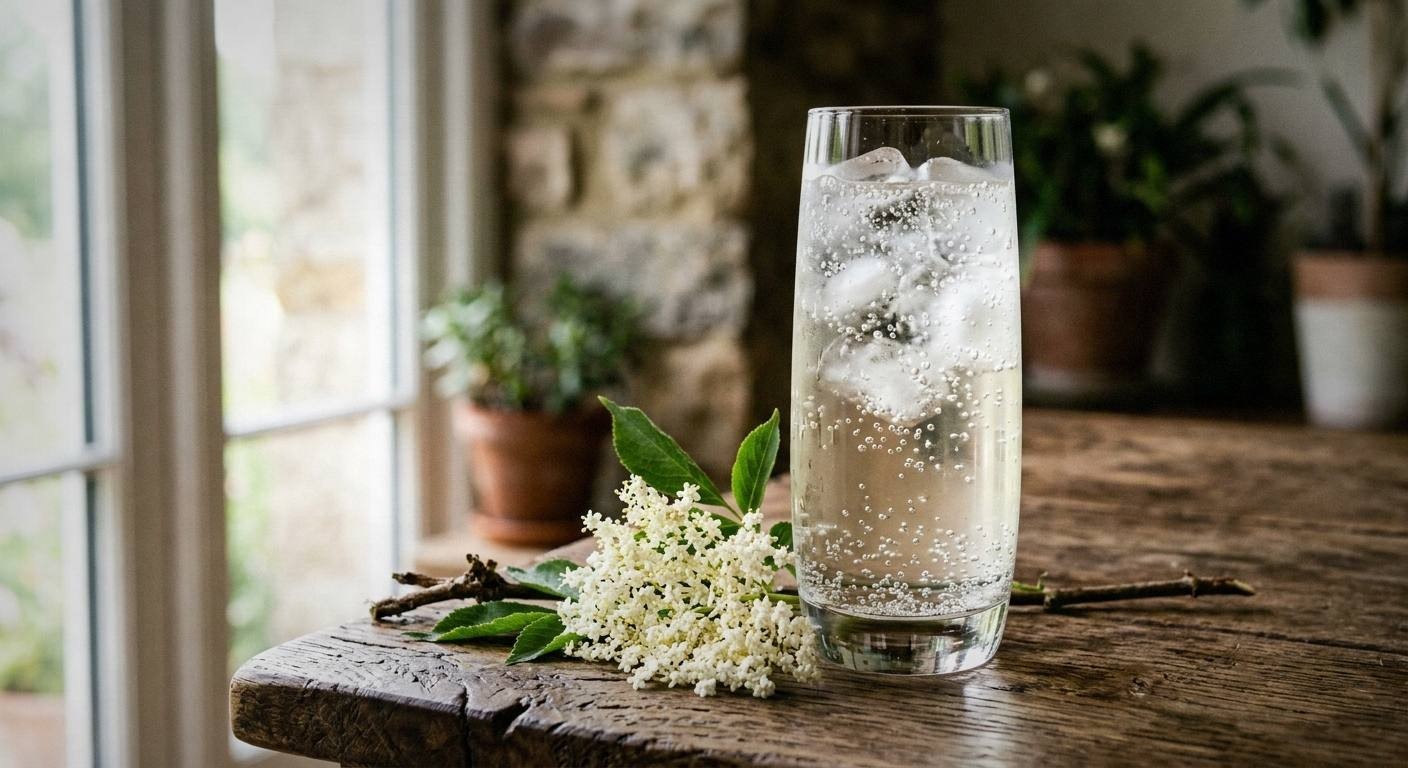
- Measure final yield. For each drink, stir 1 tablespoon cordial with 4 tablespoons cold still or sparkling water; increase both quantities together for a larger drink.
Identity and Storage
Do not identify elder from this recipe or a photograph alone. The NCCIH elderberry page identifies toxic substances in elder leaves and stems; it does not validate a wild-flower identification or a cordial’s shelf life. If you cannot establish the identity and food suitability, use a commercially made cordial labeled for the intended use instead. Do not taste an unknown plant to identify it.
Refrigerate promptly in small clean containers at 40 F (4 C) or below. Discard after more than two cumulative hours without cold holding, or one hour above 90 F (32 C). Do not wait for a large batch to cool on the counter. Normal smell and appearance do not establish safety. Same-day use and freezing are conservative handling plans, not validated shelf-life limits. Do not leave the finished cordial on a shelf or use hot filling as proof of canning safety. Lemon juice supplies flavor but no measured preservation endpoint. Discard fermented, moldy or mishandled cordial; appearance alone cannot clear it.
Serving and Changes
The 1:4 cordial-to-water ratio is a flavor starting point. For six small drinks use 6 tablespoons cordial and 24 tablespoons water; add bubbles at serving. Orange is part of the cited formula; omitting it or changing to dried flowers needs a different recipe. A citric-acid version is also a different formula and does not become shelf-stable by assumption. No kitchen, pH or shelf-life testing was performed.