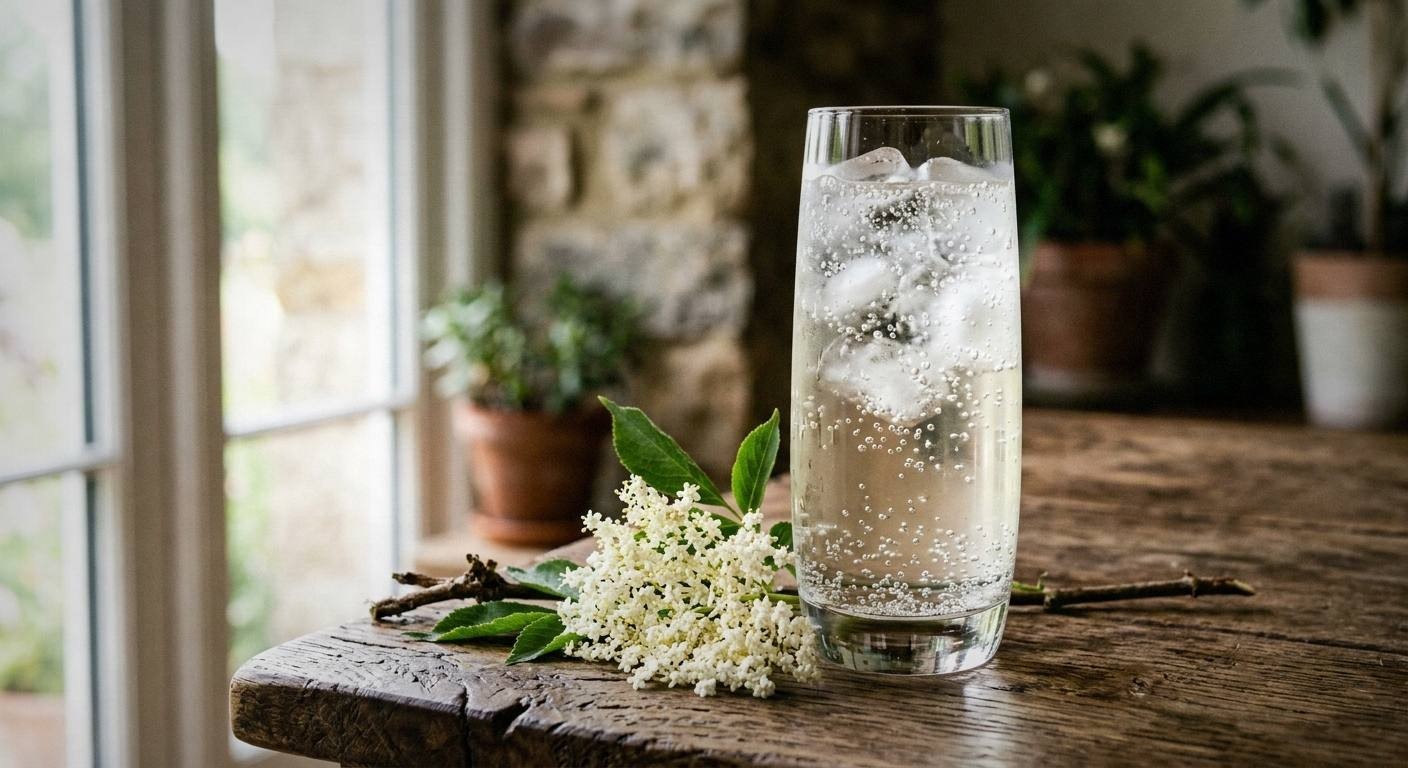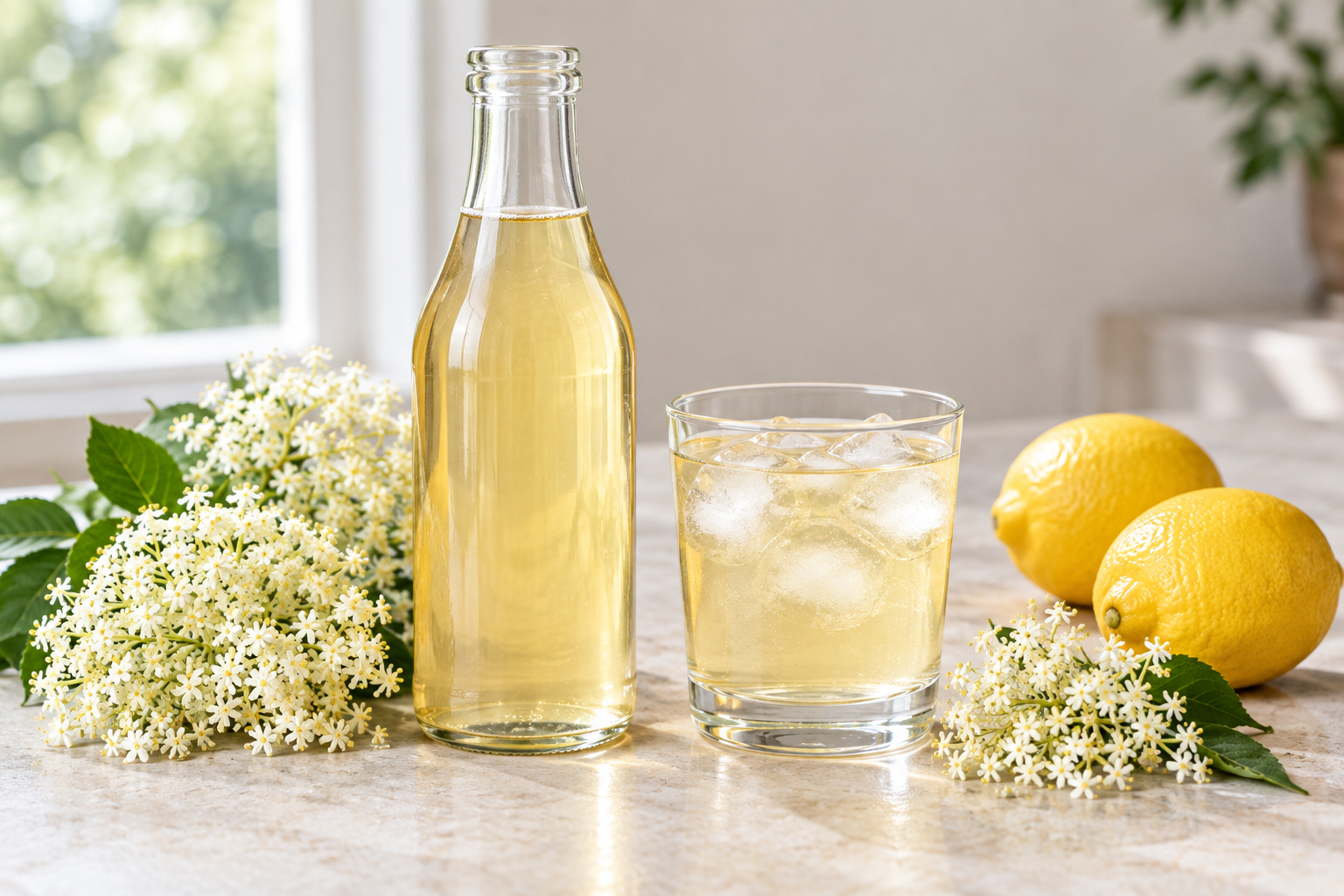
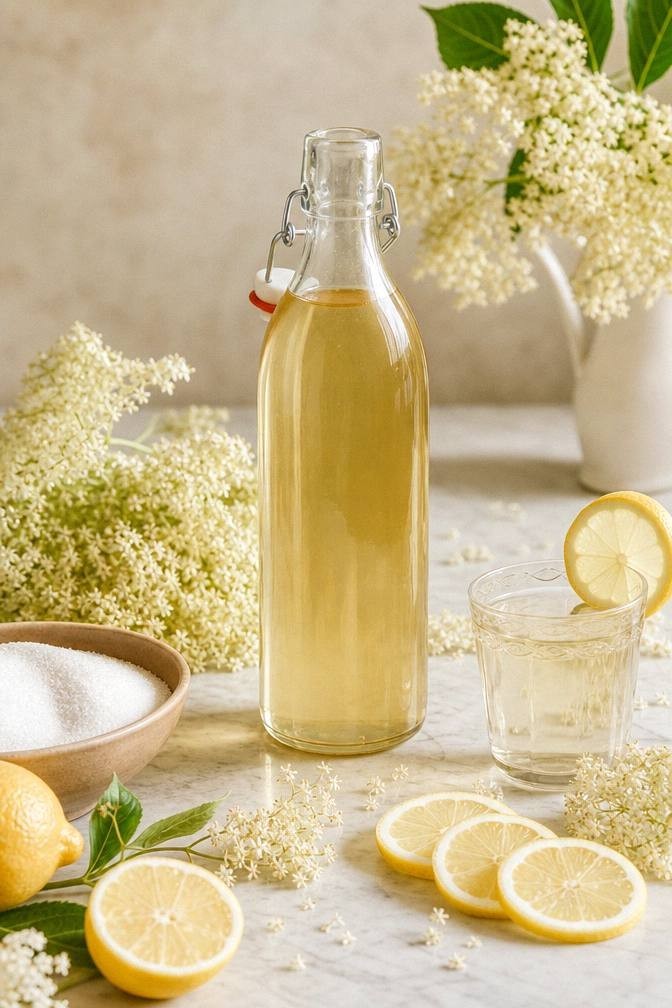
Elderflower cordial is a concentrated lemon-and-flower sugar syrup. The ingredient quantities follow Jane Hornby, Good Food elderflower cordial . This house handling method cools promptly and infuses in the refrigerator; the original room-temperature steep and six-week bottle storage are not claimed for this adaptation.
Elderflower Cordial
- 2.5 kg granulated sugar
- 1.5 litres potable water
- 2 washed unwaxed lemons
- 20 fresh food-grade Sambucus nigra elderflower heads, thick stalks and leaves removed
- 85 g food-grade citric acid
- Use supplied food-grade correctly identified elderflowers, or obtain identification from an experienced local forager. Reject unknown flowers and leaves, berries or large green stalks. Rinse gently in clean cold water, inspect for insects and trim. Wash lemons, pare zest and slice fruit. Gathering/identification time is additional.
- Dissolve sugar in water in a large pan over low heat while stirring. Bring just to a boil, then turn off heat. Add prepared flowers, lemons, zest and weighed food-grade citric acid; stir and cover.
- Cool promptly by dividing into shallow heat-safe covered containers or using an ice-water bath, then refrigerate within 2 hours at 40 F (4 C) or below. Infuse covered in the fridge for 24 hours, stirring once with a clean utensil.
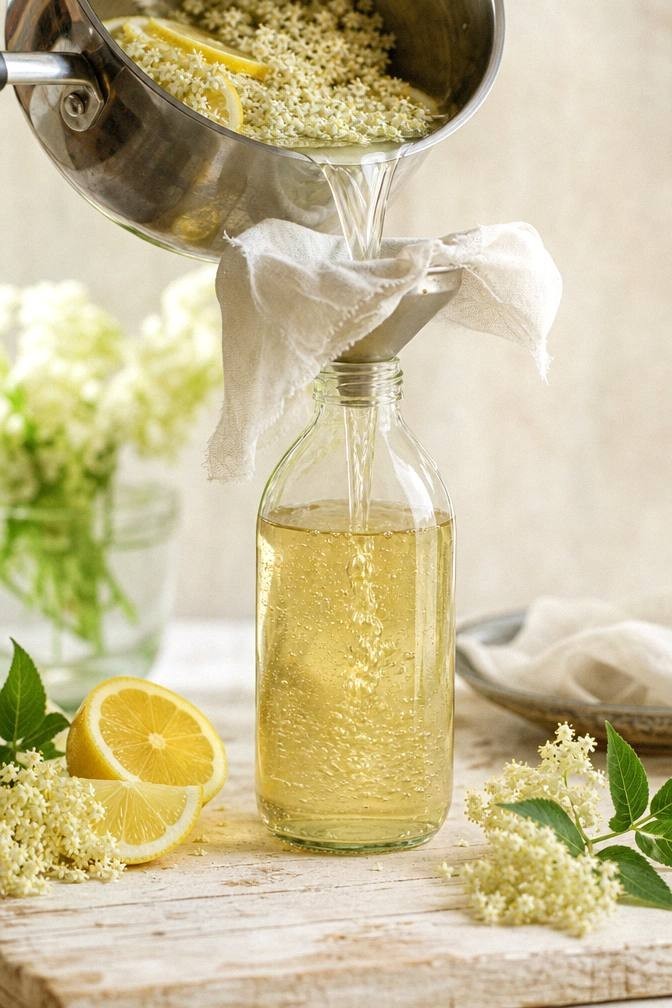
- Strain through clean fine muslin into a clean jug. Measure finished recovery rather than assuming 4 litres; expect roughly 3 litres with losses varying. Transfer to clean closed containers and keep refrigerated. Use within 4 days after straining or freeze small portions for up to 2 months for quality. This is not a canning method.
Yield: Approximately 3 litres; measure actual strained recovery. Time: 20 minutes preparation, about 10 minutes heating, up to 2 hours cooling, 24 hours refrigerated infusion and about 10 minutes straining.
Yield and Serving Ratios
Good Food lists about 4 litres, but 1.5 litres water and 2.5 kg sugar do not provide a reliable 4-litre strained yield once flower and lemon losses are considered. Sugar’s dry bulk volume cannot be added to water as finished liquid volume. Measure what you recover; around 3 litres is a planning estimate, not a fill target. Do not add water at bottling to force 4 litres.
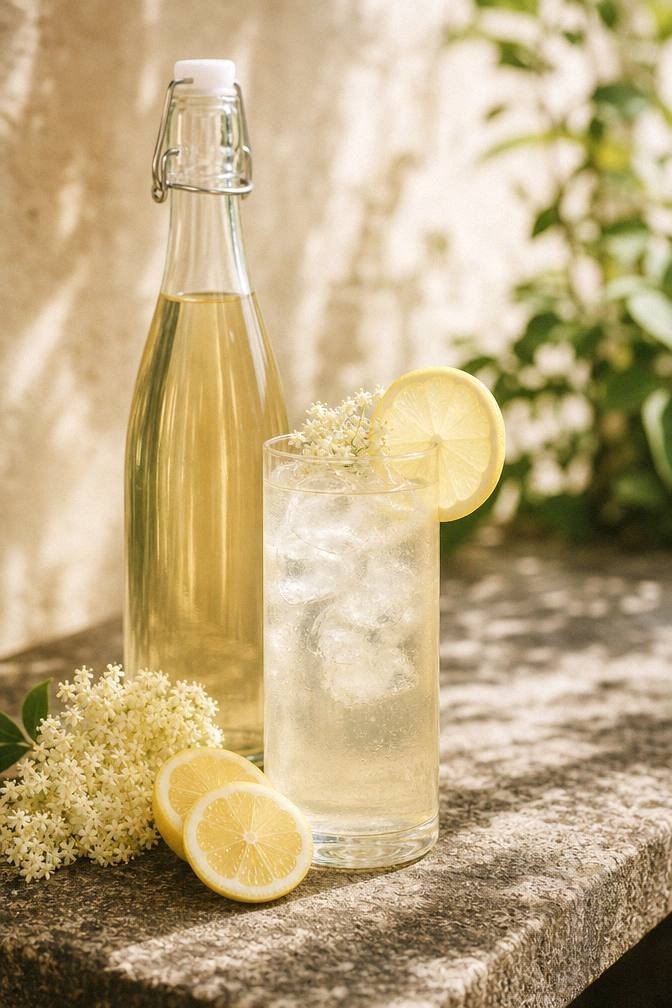
For one 250 ml spritz mix 50 ml cordial and 200 ml cold sparkling water (one part to four parts), then add ice and one washed lemon slice. For a lighter spritz use 25 ml cordial and 225 ml water, making 250 ml at one part to nine parts. For a four-person pitcher combine 200 ml cordial and 800 ml sparkling water just before serving, then divide into 250 ml portions before ice. For iced tea stir 15 ml cordial into 240 ml prepared cold tea; for lemonade add 15 ml to 240 ml prepared lemonade and account for the added sweetness. Each single drink takes 2 minutes with cold cordial. Actual cordial yield divided by 50 ml gives the number of standard spritzes; 3 litres would give 60.
Ingredient Choices and Storage
Use food-grade citric acid by weight. Replacing it with lemons changes both flavor and acid balance; follow the separate complete citric-acid-free recipe rather than assuming an equivalent quantity here. Fresh fully opened flowers matter more than a calendar harvest date; never use an unidentified umbel based on appearance alone. Rinsing cannot remove pesticide contamination. Pick from untreated sites only and use promptly.
Refrigerate promptly at 40 F (4 C) or below in a clean closed container and use within 4 days, a conservative house limit rather than a tested shelf life. Freeze small portions at 0 F (-18 C) for up to 2 months for quality, leaving expansion space; high-sugar syrup may remain soft. Thaw in the refrigerator and use within 24 hours. Discard moldy, unexpectedly fizzy or off-smelling syrup. This is not a canning or room-temperature storage method. Keep fresh milk, fruit and finished drinks at 40 F (4 C) or below. Cool heated mixtures promptly in shallow heat-safe containers or an ice-water bath, then refrigerate within 2 hours; use a 1-hour limit above 90 F (32 C). Discard perishables left without temperature control beyond those limits. Follow purchased ingredient labels if shorter. A normal smell does not establish safety.
Preparation References
Jane Hornby, Good Food elderflower cordial , FDA safe buffets .
Related Recipes
Elderflower cordial recipe without citric acid uk style , Cucumber elderflower spritz , Botanical mocktail recipes for spring parties and gatherings .