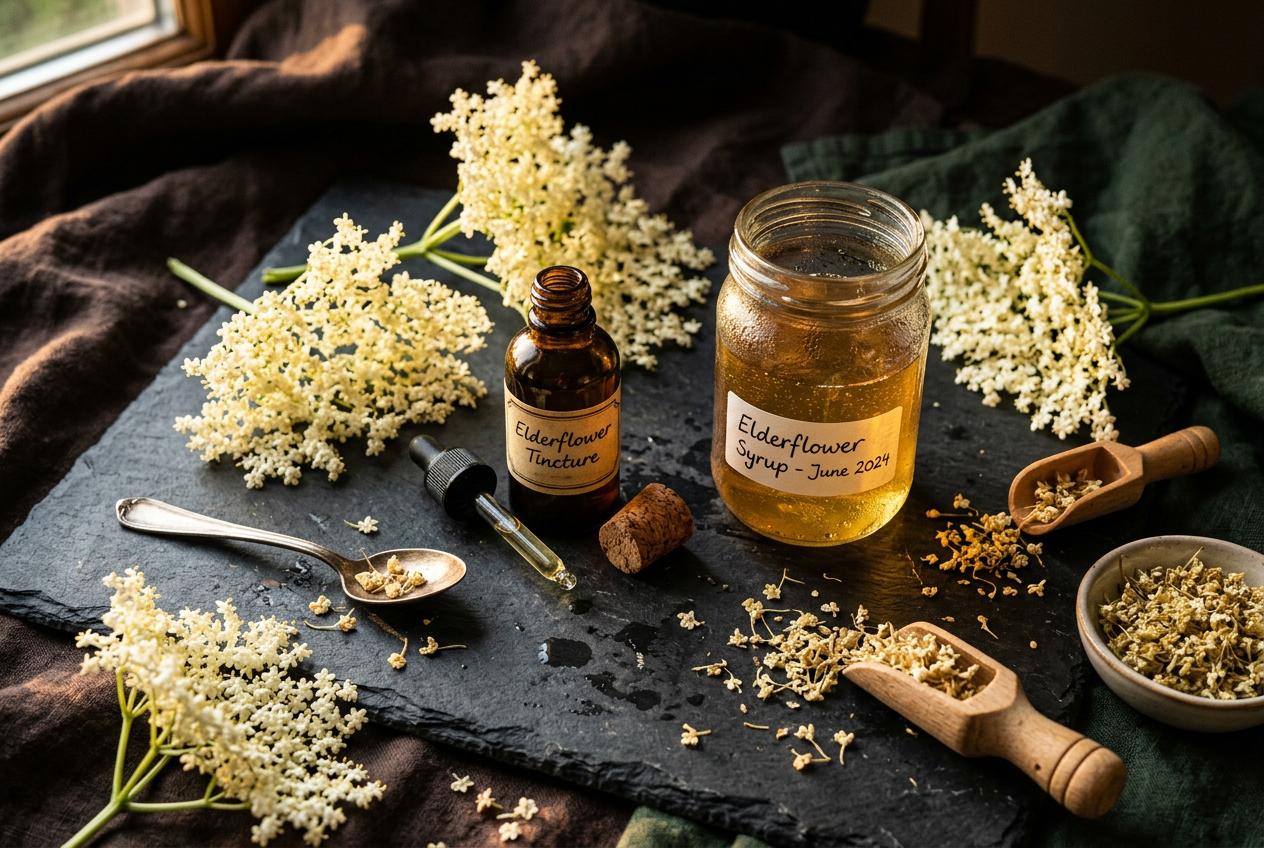
Elderflower is a floral food ingredient and a plant with a history in herbal medicine. Those uses need different evidence. A cordial’s aroma does not establish an immune, fever, allergy or skin-treatment benefit, and flowers should not be treated as interchangeable with elderberries.
Identify the plant and the preparation
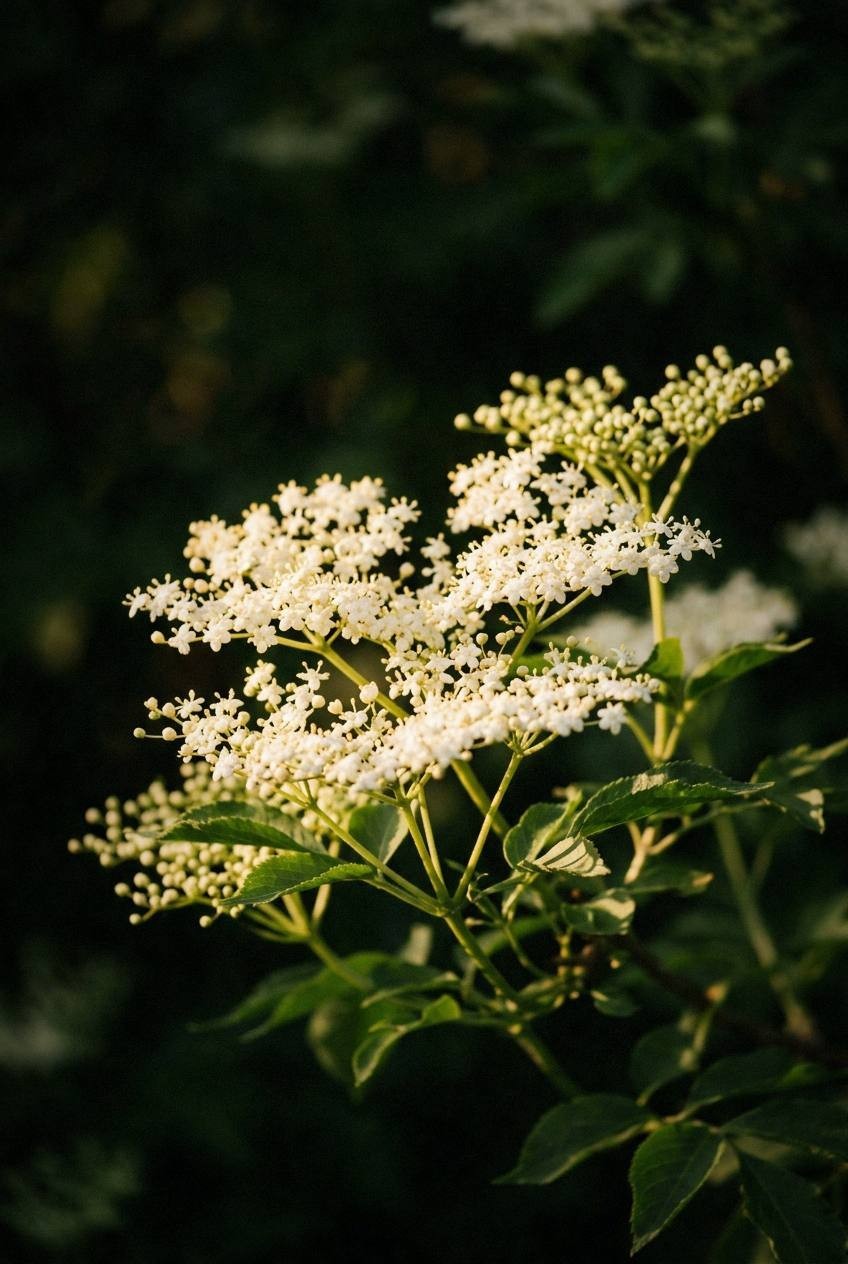
The European Medicines Agency elder flower summary concerns flowers of Sambucus nigra and particular medicinal preparations. It does not cover every elder species, syrup, mixed-herb drink or homemade extract. Read a food ingredient’s label rather than inferring its identity from a common name or a photograph.
| Preparation | What to establish | What not to assume |
|---|---|---|
| Dried flowers sold for food use | Species, food suitability and supplier’s preparation instructions | Fresh and dried volumes are interchangeable |
| Bought cordial | Ingredients, dilution and storage on its label | It has the same composition as medicinal tea |
| Elderflower liqueur | Alcohol content and serving directions on the label | Floral flavor makes it a wellness treatment |
| Elderberry product | Fruit identity and its own preparation directions | Berry research applies to flowers |
| Foraged material | Expert identification and suitable handling | A white flower cluster is enough to identify it |
NC State’s Sambucus nigra profile identifies poisoning concerns with leaves, roots, seeds and stems. This article is not a foraging key or a preparation method for those parts. Use identified ingredients sold for the intended food use rather than harvesting an uncertain plant.
What the medicinal evidence says
EMA’s traditional-use conclusion concerns specified elder flower medicines for early cold symptoms. The agency explains that clinical-trial evidence is insufficient and notes a lack of clinical studies. Long-standing use is the basis of that conclusion; it is not proof that a homemade syrup treats infection or allergy.
EMA’s summary directs users to the medicine’s leaflet or a doctor or pharmacist. Its over-12 restriction concerns those medicinal products and is not a general safety clearance for home preparations in children. If considering medicinal use, ask a qualified clinician or pharmacist about the actual product, particularly during pregnancy, breastfeeding or when taking medicines.
Food flavor and next steps
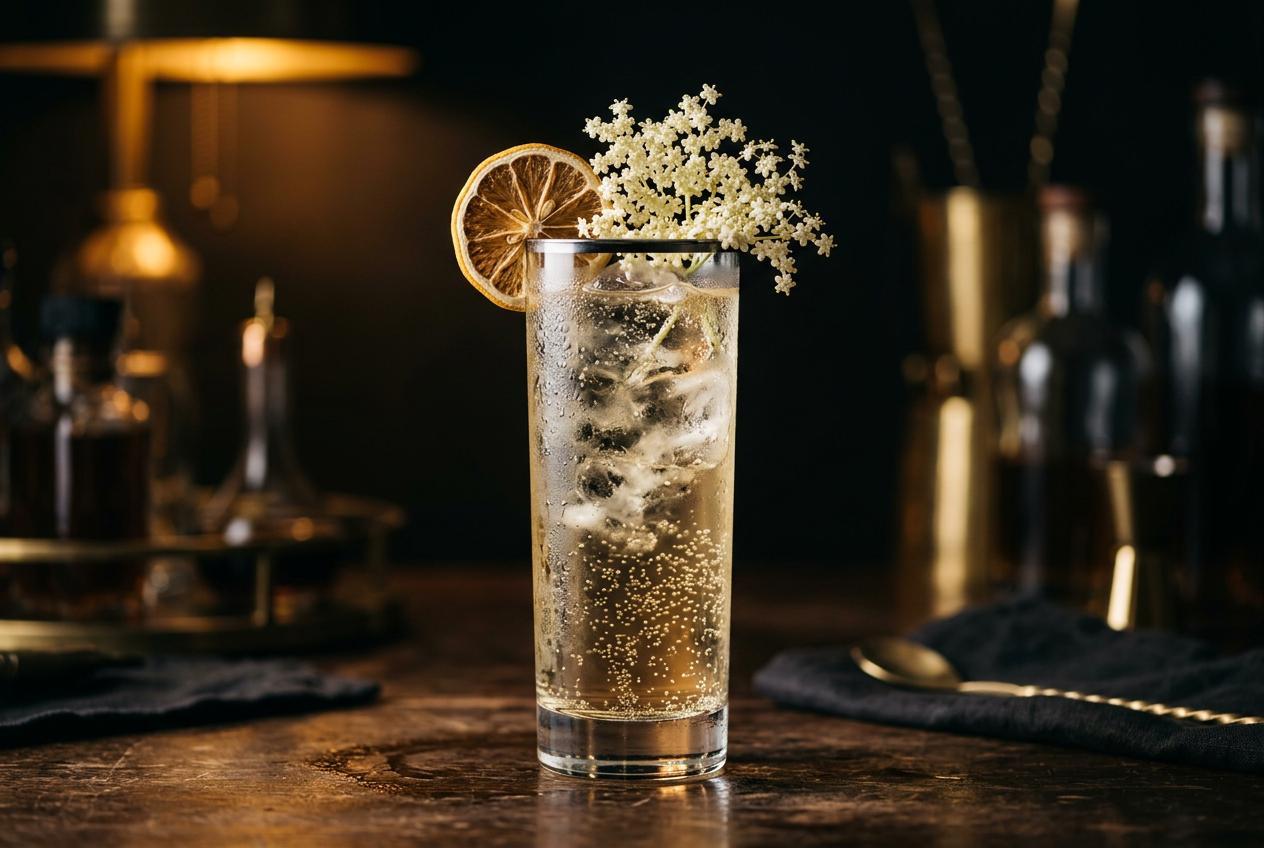
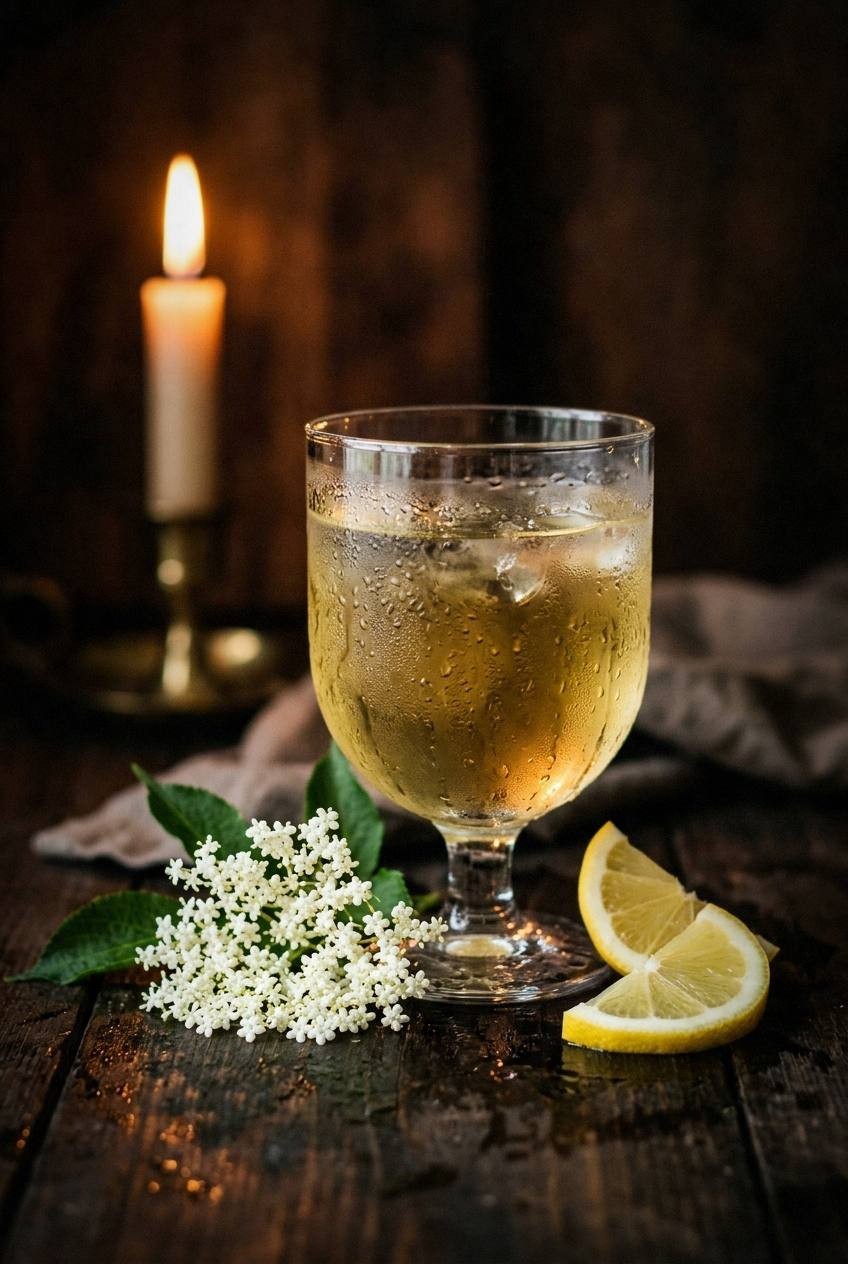
In drinks, treat elderflower as a floral flavor. Bought cordial and liqueur differ in sugar, alcohol and concentration, so follow their labels rather than substituting equal volumes automatically. A labeled cordial diluted as directed is a simpler route than inventing a preserved syrup from flower counts.
The mocktail pantry guide helps compare cordial, sparkling mixers, citrus and other ingredients. The spring allergy tea page gives a separate published lemon-ginger drink and explains why a drink is not allergy treatment. It does not recommend elderflower as an antihistamine.
Why the former syrup is not repeated
The previous recipe equated 20–25 fresh flower heads with half a cup of dried flowers, made citric acid optional as a preservative, and used a 24–48-hour room-temperature steep. Its exact provenance and preservation process were not established. Those are not details that can be repaired by adding a guessed acid amount or a longer storage promise.
A complete published cordial method needs to establish the actual flower measure, water, sugar, acid, handling and storage together. This page remains an ingredient and evidence guide; it supplies neither a replacement medicinal dose nor a preservation claim. For the same reason, the former steam-bowl and skin-application advice is omitted.
Garden context
If you want to grow rather than forage, the backyard herb garden guide gives elder its own shrub space. Planting a labeled shrub helps track identity, but it does not make every part edible or validate a medicinal preparation.