The problem is never the drinks. It is that the drinks are scattered across four rooms.
The nice glasses are in a box under the bed. The syrup is behind the almond milk. The sparkling water is on the floor next to the recycling because it does not fit anywhere. So when someone comes over, making them a drink means three trips and a small apology, and eventually you stop offering.
One shelf fixes that. One shelf, not a cart and not a corner. Here is what actually fits on it.
Quick answer
One shelf holds a working mocktail bar if you assign it five zones rather than just filling it: glasses, fizz, flavor, fresh, and tools. Measure the vertical gap before you buy anything, because a 1 liter mixer bottle stands about 12 inches tall and most shelf gaps are 11 to 13 inches, which is why the tall bottles end up on the floor. Buy in bottleneck order: glasses first, then one homemade syrup, then citrus and a press, then a small tray. If something on the shelf is not used by an actual drink, it is decor, and decor is what makes one shelf look like clutter.
Measure the gap before you buy the bottles
Do this before the fun part, because it decides what you are allowed to buy.
Two numbers matter. Vertical gap is the clear height from the shelf surface to whatever sits above it. Depth is how far back the shelf goes. Bookshelf shelves are commonly 11 to 12 inches deep and spaced 11 to 13 inches apart. Wall-mounted floating shelves are often only 6 to 8 inches deep, which is narrower than it sounds once a glass is standing on one.
What those numbers rule out:
- A 1 liter or 2 liter mixer bottle stands roughly 11 to 13 inches tall. Under a 12 inch gap it either does not fit or it fits so tightly you cannot lift it back out. This is the most common reason a mocktail shelf quietly fails in month one.
- Stemmed glassware on a 6 inch floating shelf. That is a door slam waiting to happen. Stems go in a cabinet, short glasses go on the open shelf.
- Anything two rows deep. On an 11 inch shelf you can physically fit two rows of cans, and you will never touch the back row. Plan for one row.
The fix for the tall-bottle problem is not a bigger shelf. It is buying fizz in a format that stacks flat, which is the next zone.
Zone one: glasses, and only the ones you reach for
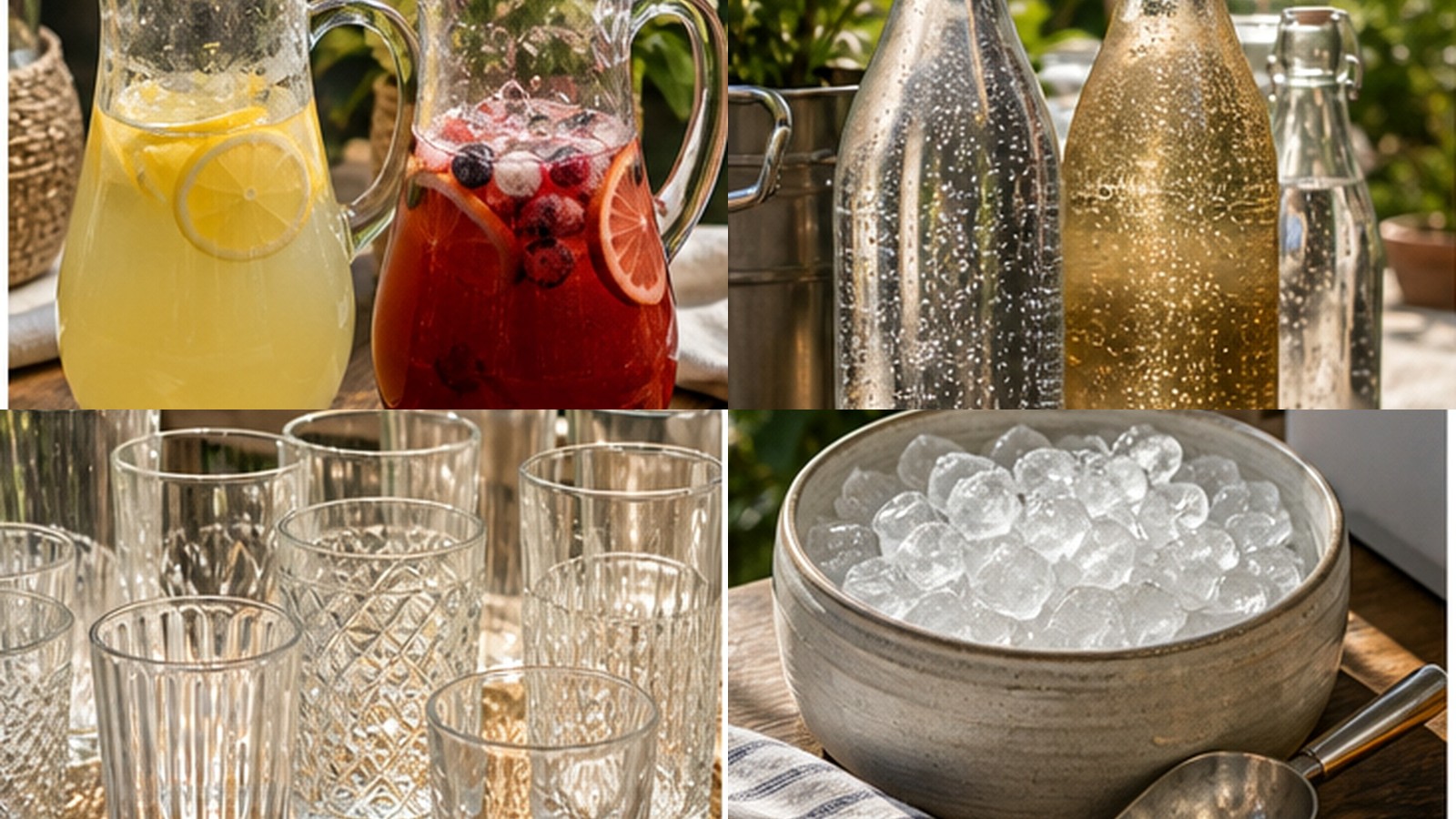
Six to eight glasses is the whole answer for a first apartment. Not a set of twelve. Six that you like.
Short, heavy-bottomed glasses do the most work on an open shelf. They are stable, they feel substantial in the hand, and they suit nearly every mocktail you will actually pour. Weight reads as quality even when the glass cost two dollars secondhand. Vintage glasses that make mocktails feel expensive is the cheapest visual upgrade in this entire guide, and cheap glassware that looks like vintage barware covers what to grab when you spot it.
Store them rim-up rather than rim-down. Rim-down traps stale air, and dust settles into the base ring anyway.
Zone two: fizz, bought in cans
This zone is where the shelf either works or collapses, and it comes straight back to that vertical gap.
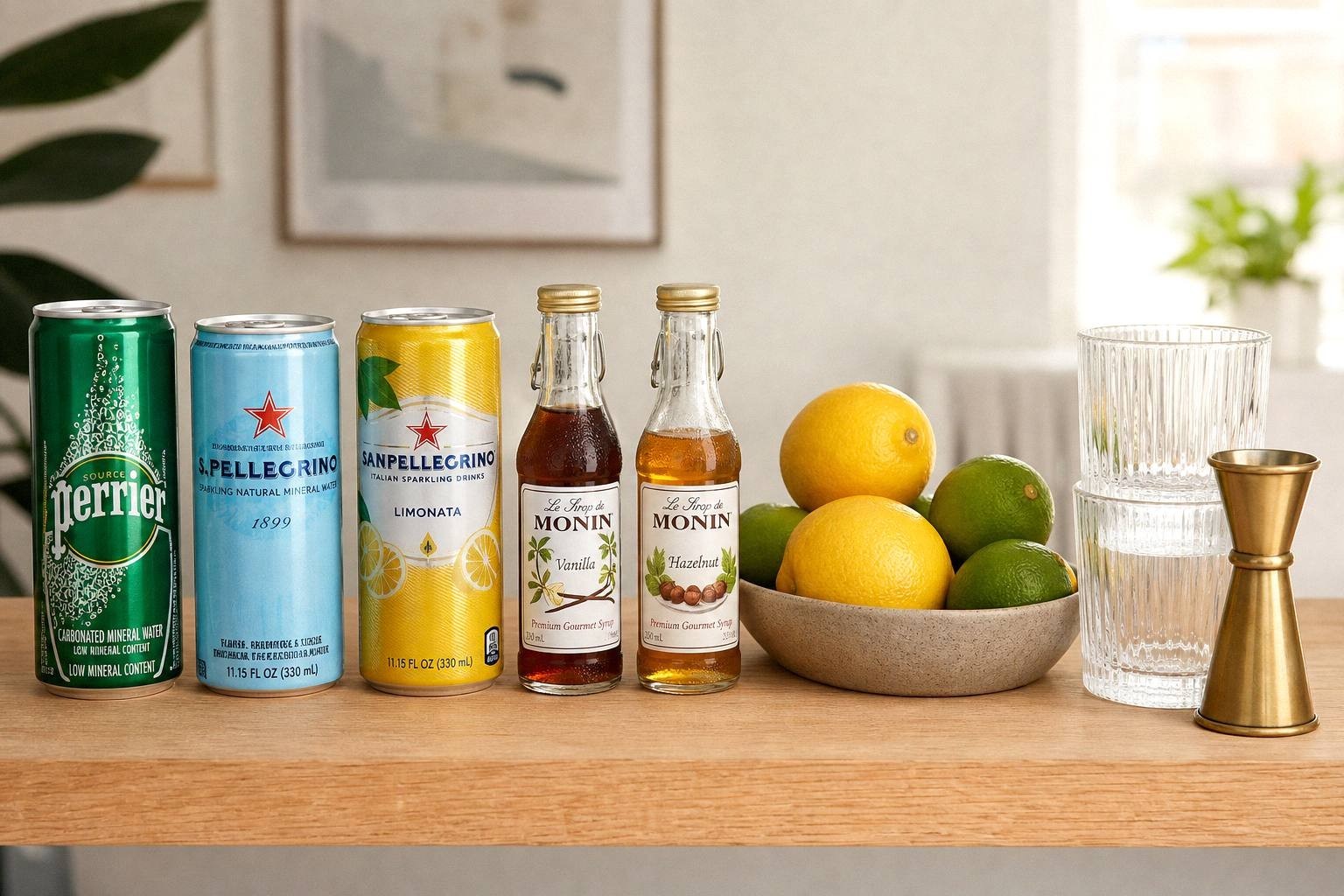
Buy sparkling water, club soda, and tonic in cans or small bottles under 250 ml, not in liters. Three reasons, and all three matter more in a small apartment than they would anywhere else:
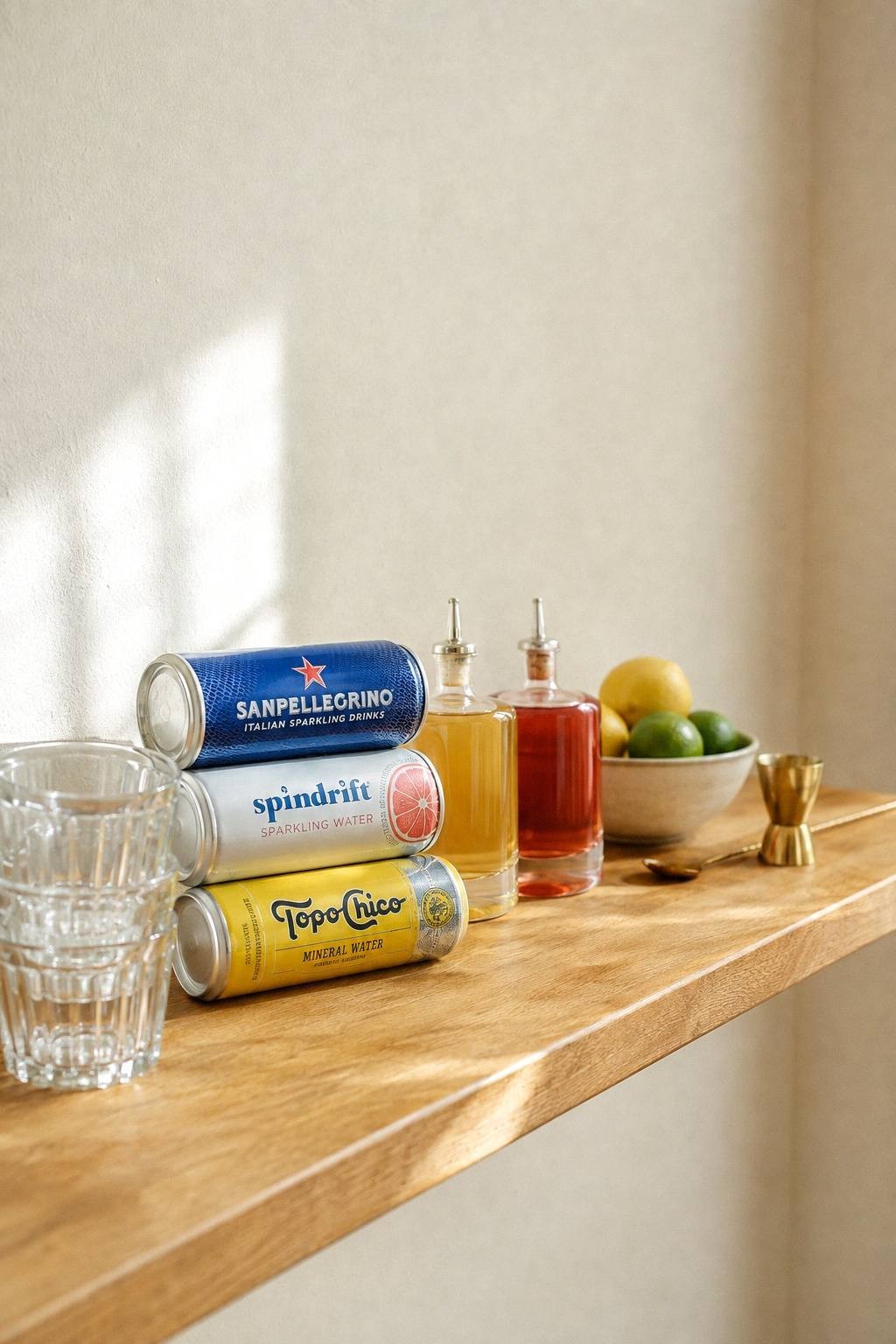
- Cans stack flat. A short stack of cans on their sides is about 5 inches tall, so it fits under any shelf gap that exists. A liter bottle does not.
- Every drink gets full carbonation. A large bottle has gone flat by the third pour, and flat fizz is the difference between a mocktail and sad juice. It is the single most common thing that makes a homemade nonalcoholic drink taste like an afterthought.
- You chill only what you need. Four cans in the fridge door beats a liter bottle taking a whole shelf next to the leftovers.
Keep two options, not six. Plain sparkling water goes with everything you will make. One tonic or one flavored sparkling gives you a second lane. Past that you are storing variety you do not drink.
Zone three: flavor, which is where the shelf earns its keep
This zone turns fizzy water into something worth handing to a person, and it takes up less room than anything else on the shelf.
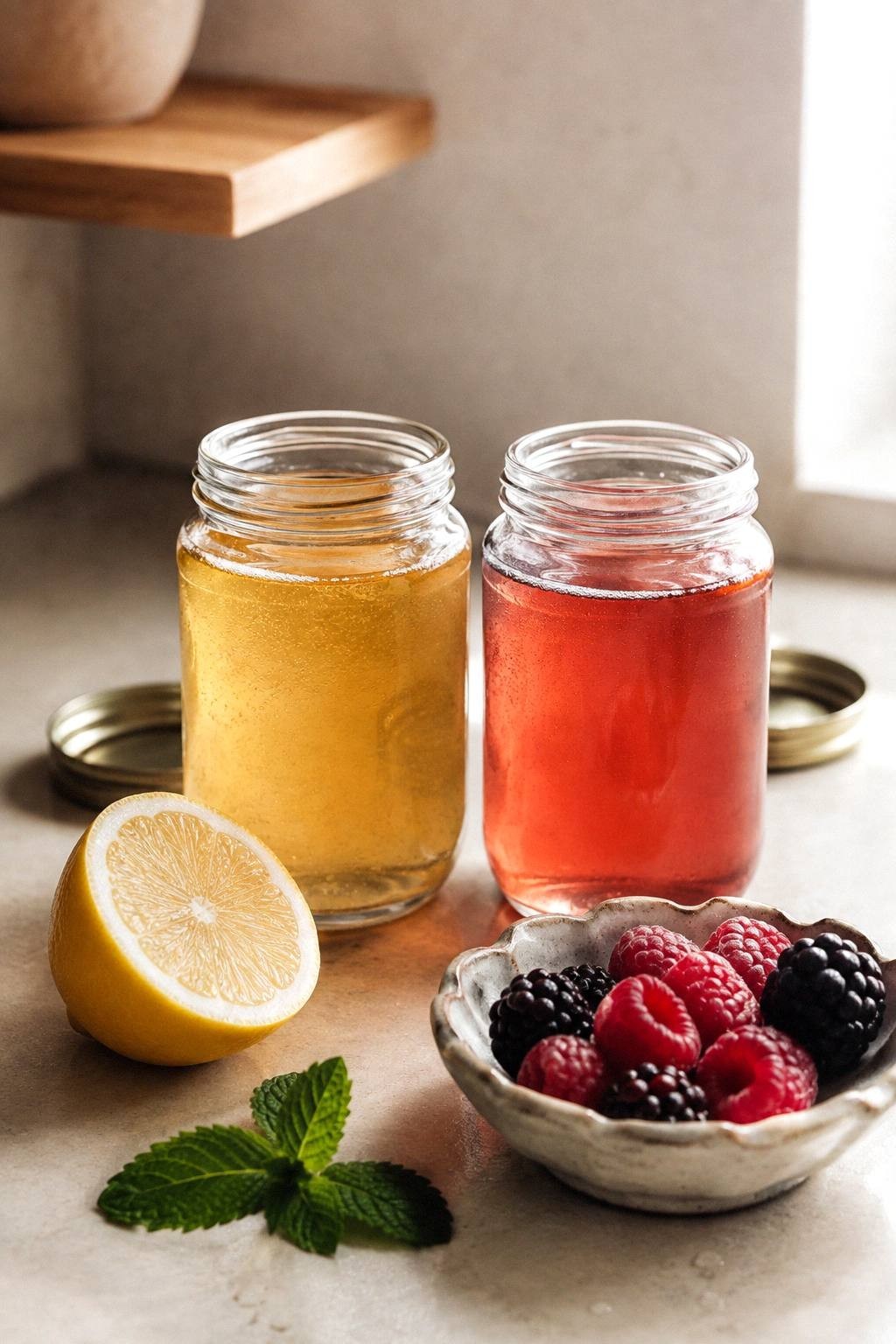
One homemade syrup does more than six store-bought mixers. It costs a couple of dollars, keeps two to three weeks in the fridge, and it is the reason a two-ingredient drink tastes deliberate instead of thin. The method is one pot and about twenty minutes. Botanical simple syrups covers the technique, and one herb syrup, five summer drinks shows how far a single jar stretches before you need another.
If you want the flavor lane sharper and less sweet, a shrub is the move. The vinegar gives a nonalcoholic drink the bite that alcohol usually provides, which is the thing most mocktails are actually missing. Shrub drink recipes explains the ratio, and a strawberry basil shrub is a forgiving first one.
Rotate rather than accumulate. When the jar runs low, make the next batch with a different herb instead of restocking the same flavor. The shelf never grows, but the number of drinks it makes keeps climbing. Ginger honey syrup and hibiscus ginger syrup are two easy directions to rotate into.
Keep the syrups themselves in the fridge, not on the shelf. They cost zero shelf space that way, and the shelf holds the clean empty bottle waiting for the next batch.
Zone four: fresh, in a bowl you can see
Citrus and herbs are the only things here that go bad, so they live where you will notice them.
A small bowl of lemons and limes on the shelf is not styling, it is a reminder. Citrus in the crisper drawer gets forgotten and thrown out. Citrus in a bowl at eye level gets squeezed. That is the entire argument, and it works.
Herbs run the same idea on a shorter clock. A small glass of water holding mint or basil stems, kept in the fridge door, lasts about a week and looks like a florist did it rather than like a bag going slimy. If you want a supply that never rots, herbs to grow for mocktails, tea, and bath soaks covers what survives a windowsill, and grow a cocktail herb garden in pots is the balcony version.
Zone five: tools, which is three things
Three. Not a boxed set.
- A jigger. Because “a splash” is how a drink comes out different every time, and consistency is most of what makes a homemade drink feel professional.
- A citrus press or reamer. Bottled lemon juice is the fastest way to make a fresh drink taste stale, and a hand press is small enough to live in the zone.
- A long spoon. For stirring anything taller than a rocks glass. A long iced-tea spoon is fine.
That is the shelf. A shaker is nice, and a jar with a tight lid does the same job, and it is already in your cabinet.
When you eventually want the fuller list, eight bar cart essentials you will actually use is the honest version, and things every self-serve mocktail bar needs covers what changes once guests pour for themselves.
Buy in bottleneck order, not in kit order
When money is tight, buy against whatever is actually stopping you:
- Glasses. They change how a drink feels more than any ingredient does, and secondhand they are the cheapest thing on this list.
- One syrup, made rather than bought. Two dollars of sugar and herbs, and you have real drinks instead of flavored water.
- Citrus and a press. Fresh juice is the line between homemade and cheap-tasting.
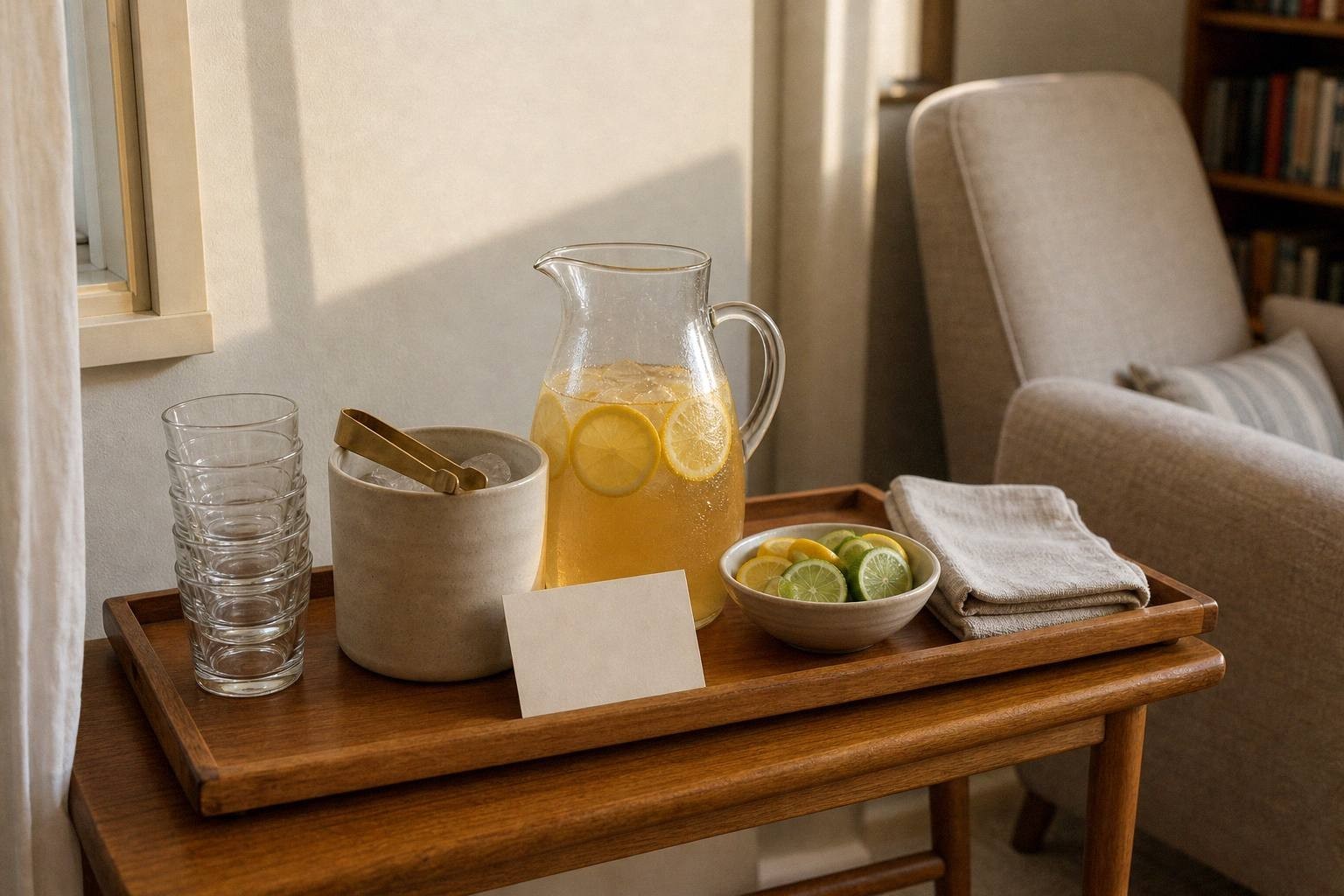
- A small tray. Not for looks. A tray turns the shelf into something you can carry to the couch in one trip, which matters in an apartment where the shelf is nowhere near where people sit.
- A pitcher, once you are making the same drink more than twice in a night. Eight best pitchers for batch mocktails covers that step when you reach it.
Notice what is not in the first three: bitters, nonalcoholic spirits, garnish picks, coasters, and a second set of glasses. Those are month-six purchases.
How to keep one shelf from looking like clutter
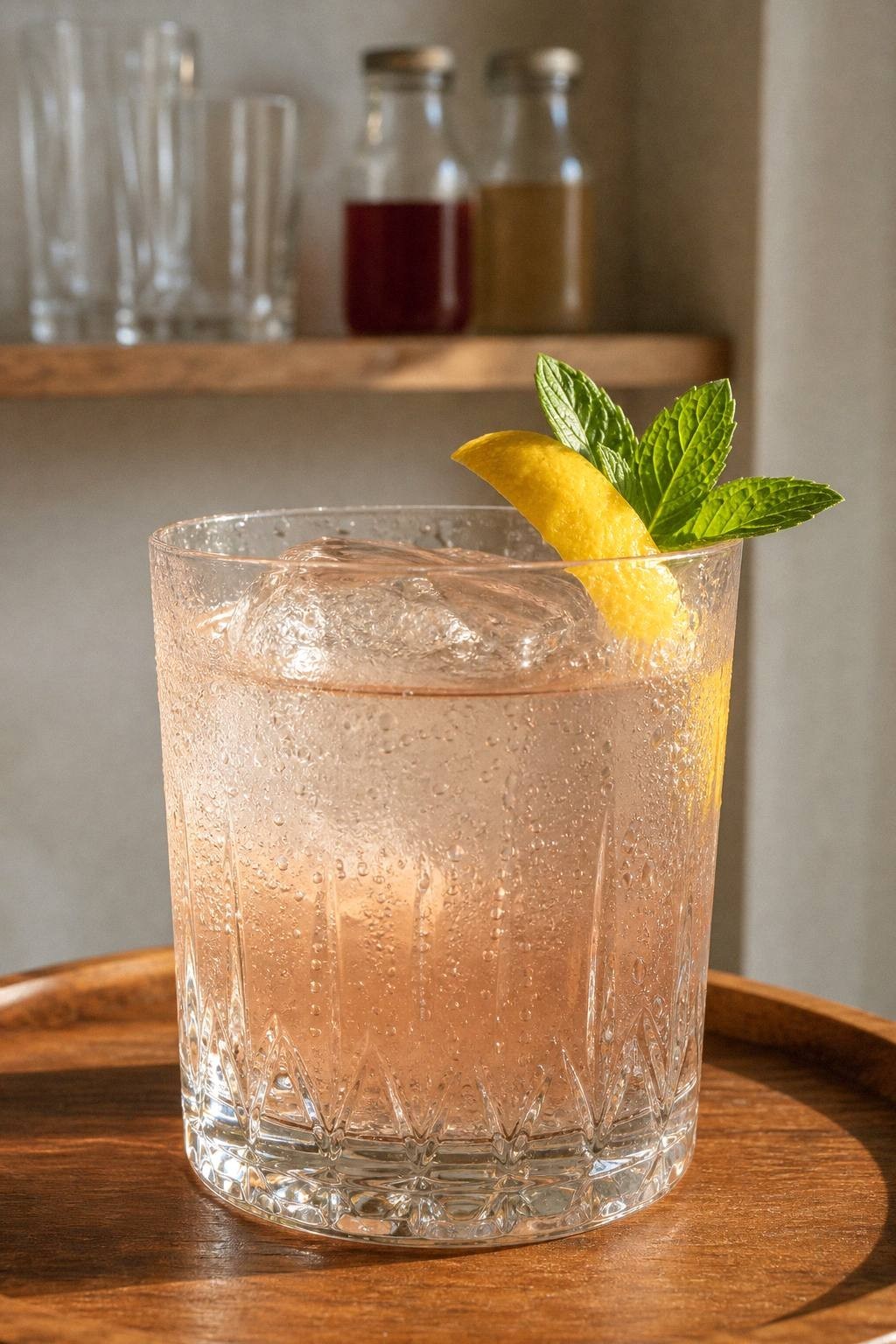
The rule that does the most work: if a drink does not use it, it does not go on the shelf. Candles, small plants, framed things, and decorative bottles are what turn a functional shelf into a junk drawer at eye level. A shelf holding only useful things already looks intentional, because everything on it has a reason to be there.
After that, three quiet tricks:
- Three heights. Tall, medium, low, repeating. Glasses are low, the syrup bottle is medium, a small vase of herbs or a stack of cans is tall. Uniform height reads as a warehouse.
- One repeated material. Clear glass, or warm wood, or brass. Pick one and let it appear three times. This is what makes mismatched thrift finds read as a collection instead of leftovers.
- Leave one gap. A shelf packed corner to corner looks full in the bad way. One deliberate empty stretch is the difference between styled and stuffed.
How to style a bar cart for mocktails and cocktails goes deeper on the visual side for whenever you do get a cart.
What to skip until you host more often
- Nonalcoholic spirits. The most expensive bottle you can put on this shelf and the one most likely to sit unopened. Your syrup does the same job for a fraction of the price.
- A boxed bar tool set. You will use three of the ten pieces and store the rest.
- Bitters, for now. They are excellent and they are a month-six purchase. When you get there, homemade cocktail bitters is cheaper than buying them.
- More than two fizz options. Variety you do not drink is just storage.
- Anything bought for one recipe. In a first apartment an ingredient has to show up in two or three drinks, or it becomes shelf decor.
Common questions
What do you actually need for a mocktail bar?
Five things, as categories rather than brands: glasses, a sparkling mixer, one flavor base such as a homemade syrup or shrub, fresh citrus, and three small tools. That set covers a genuinely wide range of drinks. Essential mocktail ingredients has the fuller ingredient breakdown.
How do you stock a mocktail bar on a small budget?
Buy against your bottleneck instead of buying a kit. Glasses secondhand first, then make one syrup rather than buying mixers, then fresh citrus and a press. Those three purchases cover more drinks than a shelf of premade mixers costing several times as much.
Will a 1 liter sparkling water bottle fit on a bookshelf shelf?
Often not. Those bottles run roughly 11 to 13 inches tall and typical bookshelf gaps are 11 to 13 inches, so it is tight at best. Cans stacked on their sides are about 5 inches tall and fit anywhere, and they hold their carbonation, which is the better reason to switch.
How do I keep a mocktail shelf from looking cluttered?
Take off anything a drink does not use, vary the heights of what is left, repeat one material three times, and leave one deliberate empty stretch. Clutter on a shelf is almost always decor rather than too many useful things.
Can I do this if I cannot drill into the walls?
Yes, and most renters cannot. Use one shelf of a bookshelf you already own, the top of the fridge, or a cabinet with the door left open when guests are over. A tray on any of those defines the zone without a single hole in the wall. How to make a drink station when your apartment has no room for a bar cart covers the no-furniture versions.