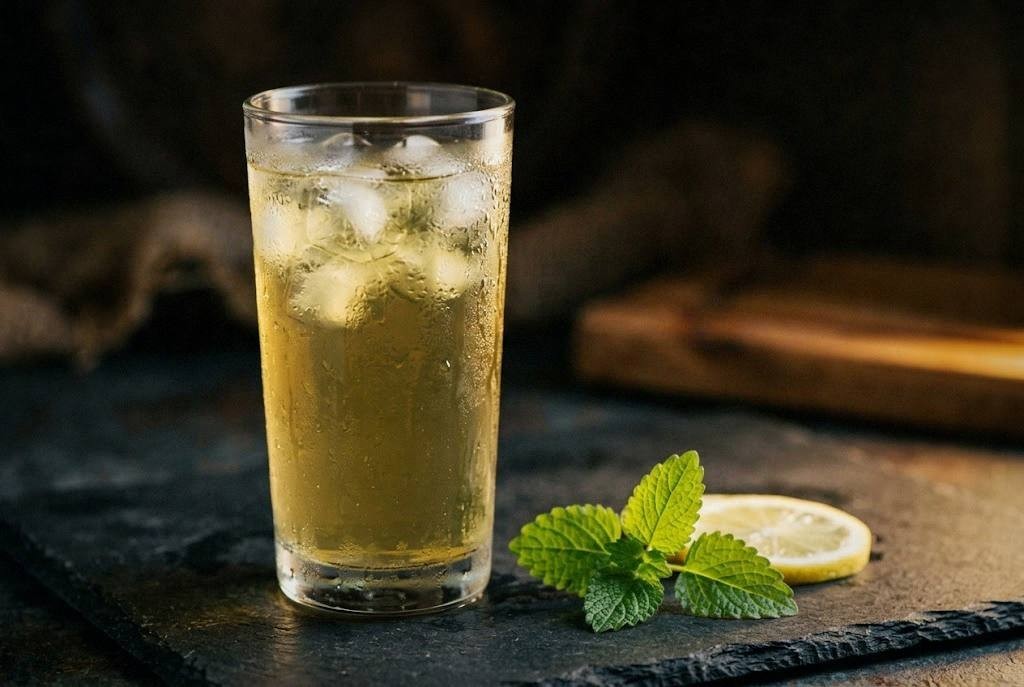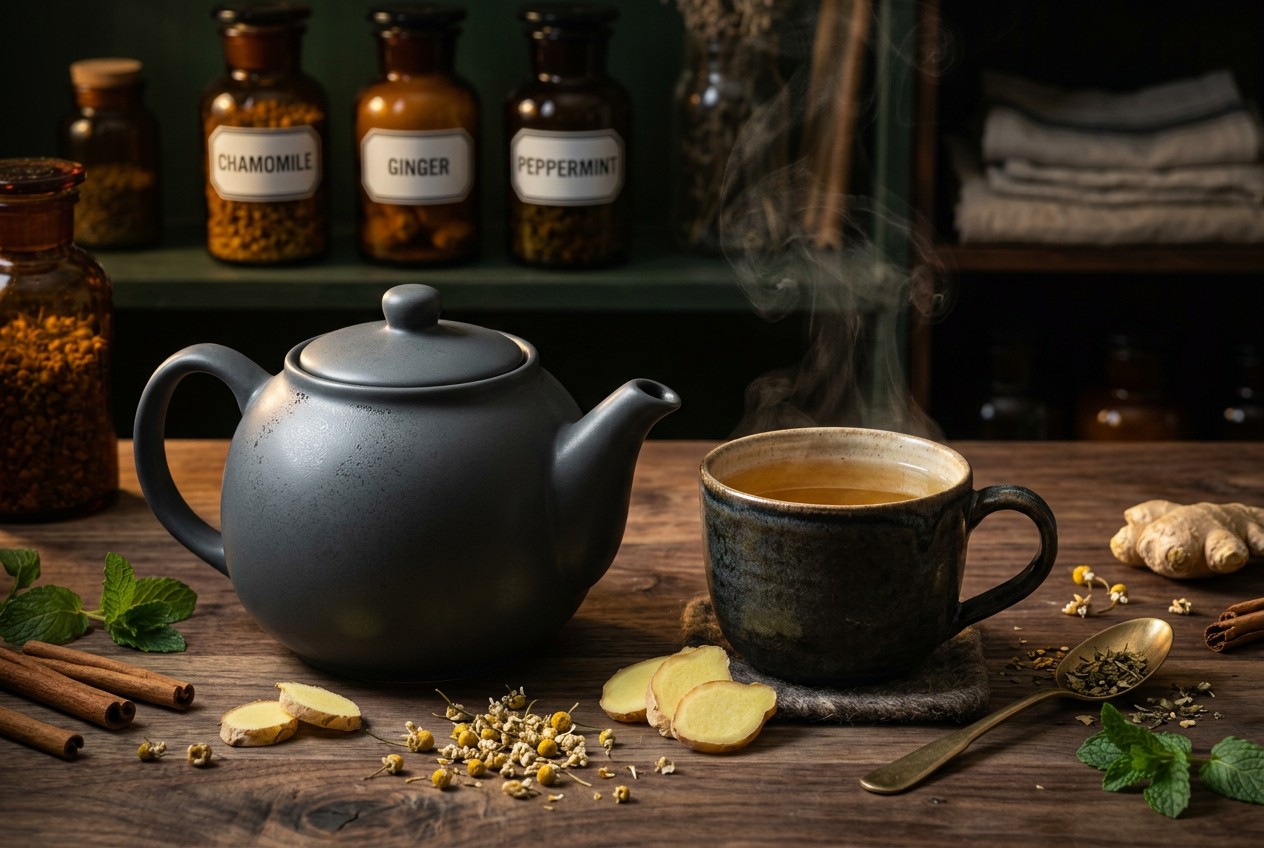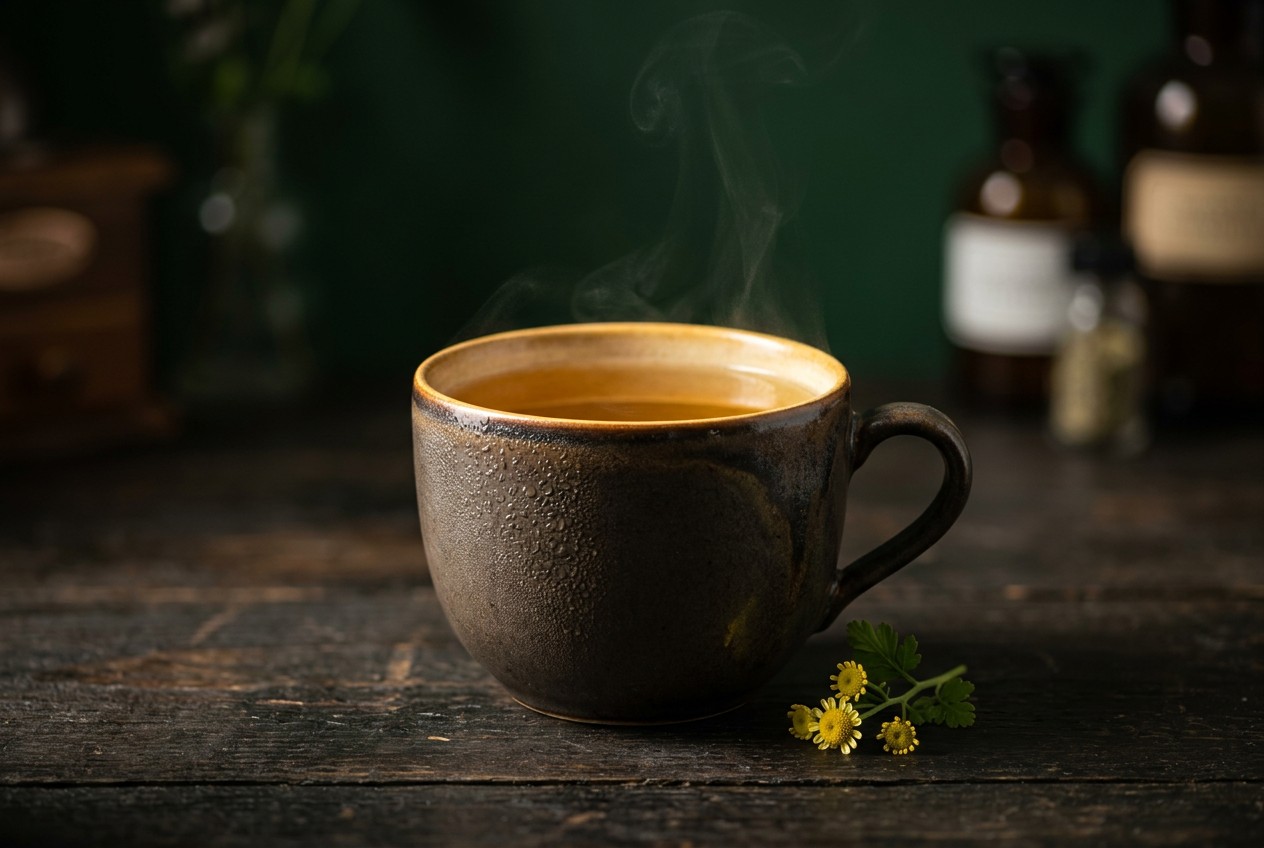
A mint tea is a drink choice when you want something warm; it is not an established migraine or tension-headache treatment. This page gives a published fresh-mint method and separates it from the feverfew and willow-bark mixture previously described here.
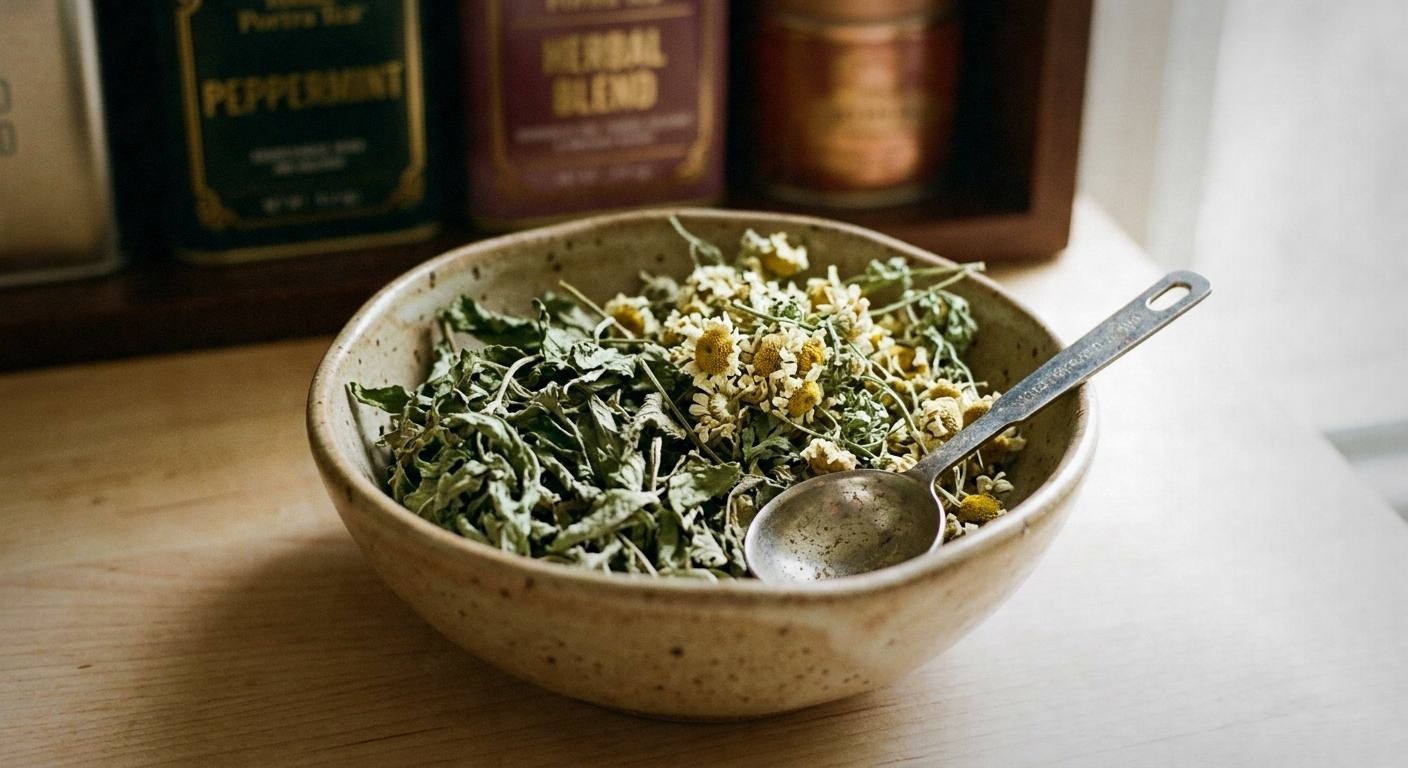
Fresh mint tea: one pot for one or two
The formula follows Miriam Nice’s fresh mint tea at Good Food . The source specifies a handful of mint, not an exact gram weight, so a handful remains a culinary measure. It replaces the unsourced feverfew/willow blend; none of the previous preventive dosing advice carries into this drink.
- A handful of fresh food-grade mint leaves
- 500-600 ml boiling water
- Honey to taste (optional)
Gently clap the washed mint leaves between your hands and put them into a teapot, reserving small sprigs for optional garnish.
Add the boiling water and infuse for 2-3 minutes. Strain into cups and add honey to taste. Let cool to a comfortable drinking temperature.
Separate the drink from the remedy claim
| Ingredient or approach | What can be said | What should not be inferred |
|---|---|---|
| Fresh mint leaves | Flavor and aroma in this published tea | Peppermint -oil research establishes tea efficacy |
| Feverfew | Some migraine-prevention research has mixed results | This former tea is a proven preventive dose |
| Willow bark | A different medicinal ingredient | An interchangeable food flavor or a child-safe addition |
| Daily brewing schedule | A personal drink routine | A validated headache-treatment schedule |
NCCIH feverfew reports mixed migraine findings, possible medicine interactions and slowed clotting; it warns against use in pregnancy and notes related-plant allergies. That evidence does not validate a homemade combination or justify adding willow bark. The former mixture is omitted rather than assigned a new dose. NCCIH peppermint oil concerns oil products; mint leaf tea is a different preparation.
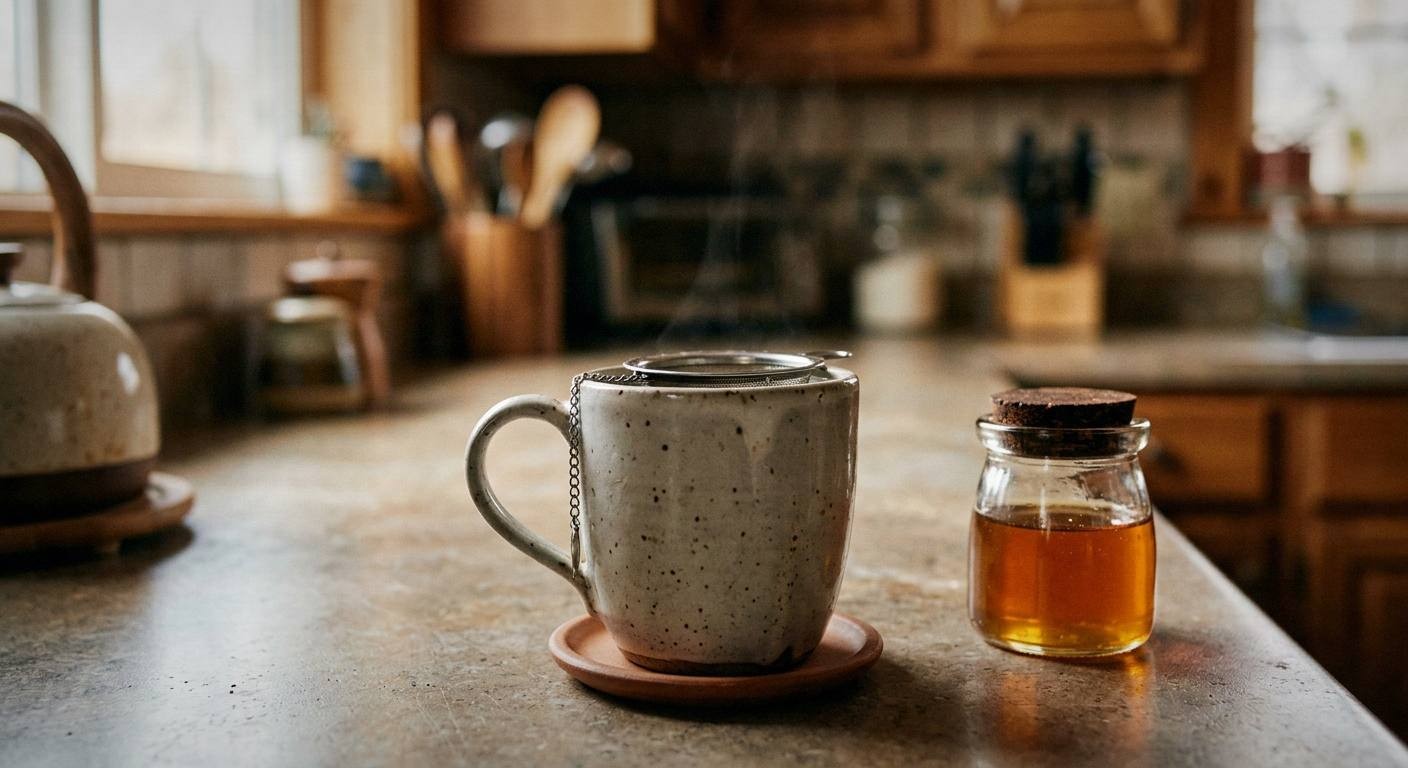
When to get help for a headache
NHS headache guidance recommends assessment for recurring headaches and urgent action for warning signs. A sudden, extremely painful headache, new weakness or difficulty speaking, confusion, or severe headache with a high temperature and stiff neck needs urgent medical help. Follow local emergency services guidance; don’t wait to see whether tea helps.
For frequent headaches, note timing, associated symptoms and medicine use for the clinician. No herb-dose escalation, acupressure technique or daily feverfew schedule is prescribed here.
Flavor and preparation choices
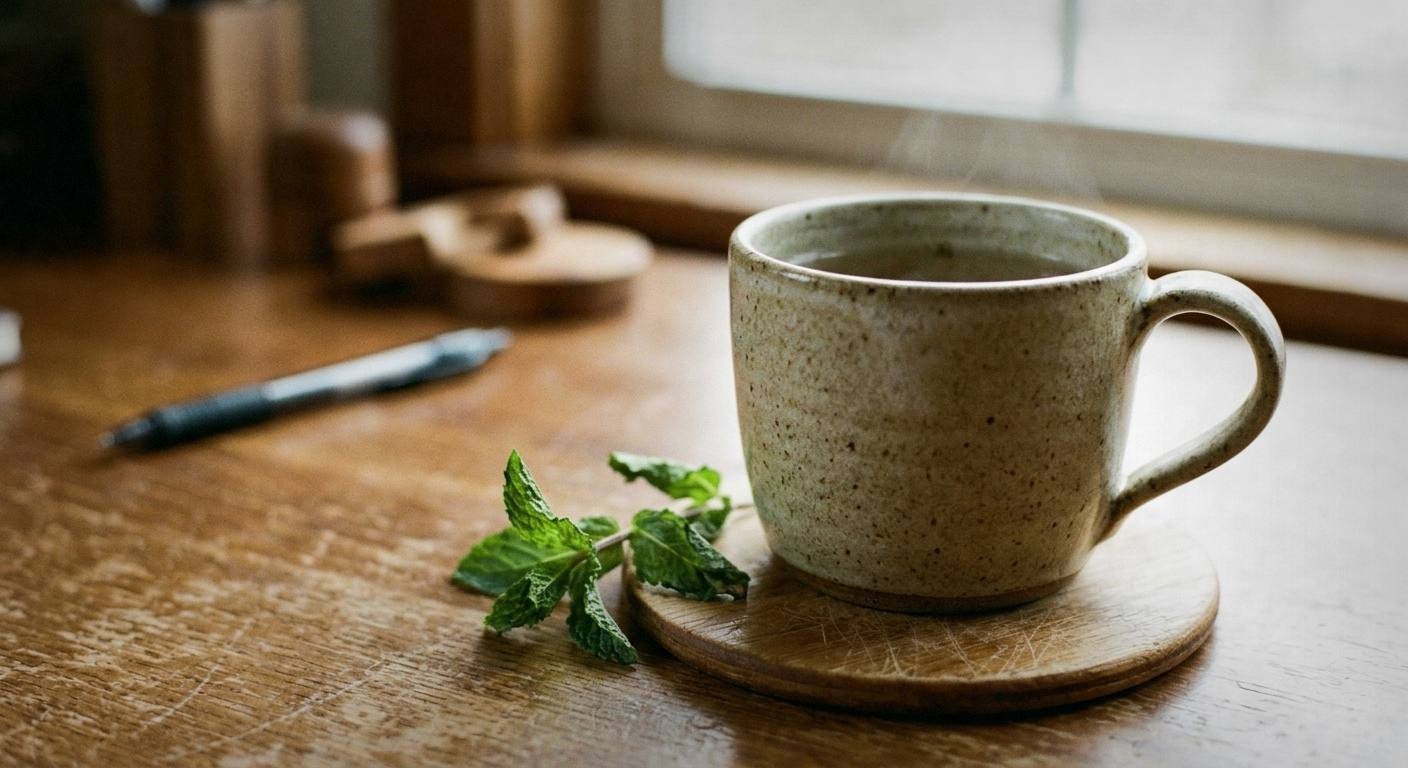
Use washed, correctly identified food-grade mint. Dried leaves, extract and essential oil are not volume-for-volume substitutes for a handful of fresh mint. Make the pot to drink now rather than relying on the former forty-eight-hour storage promise. If you use honey, it is for sweetness; CDC says not to give honey to infants under twelve months.
For a separate published ginger -mint formula, the period-time tea page supplies one cup and its own evidence limits. The loose-leaf guide explains why a spoon measure is not a medicinal dose.