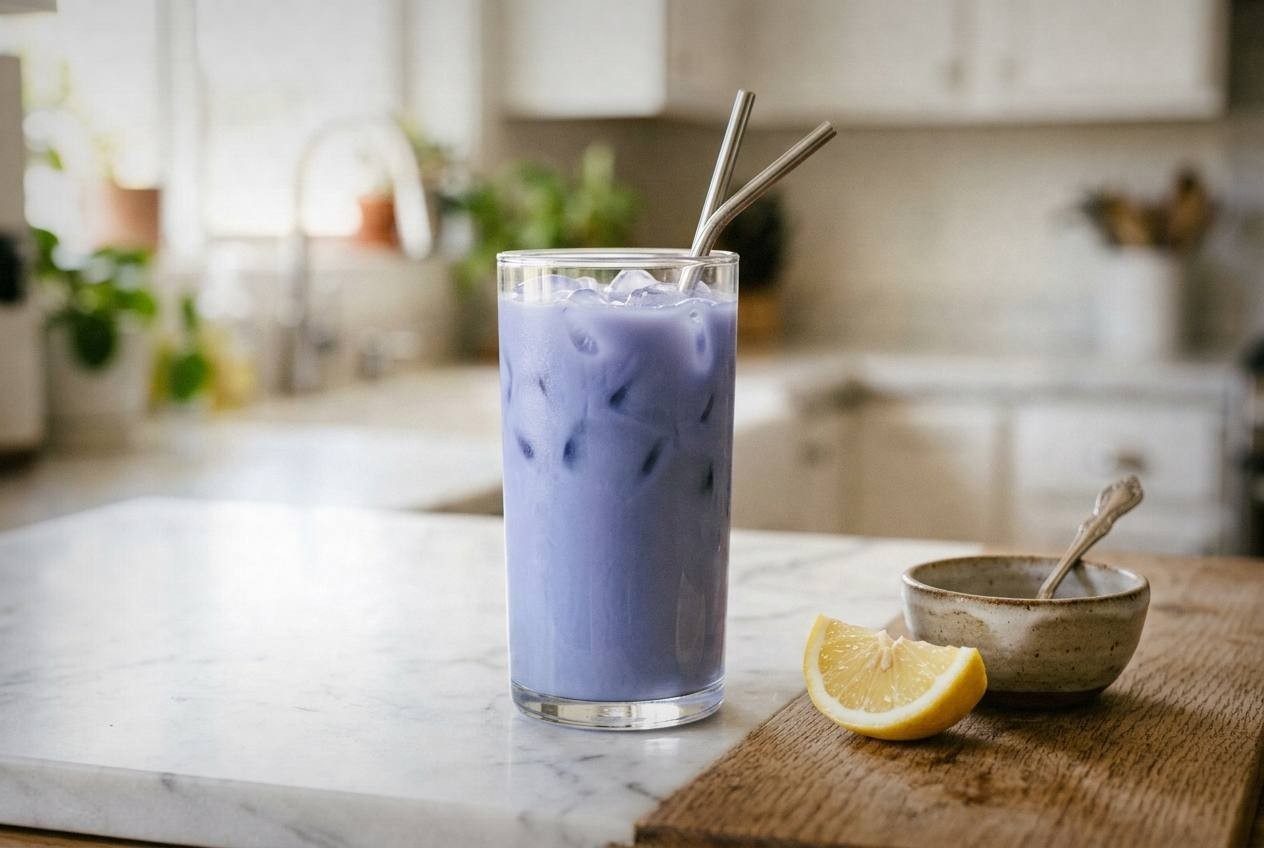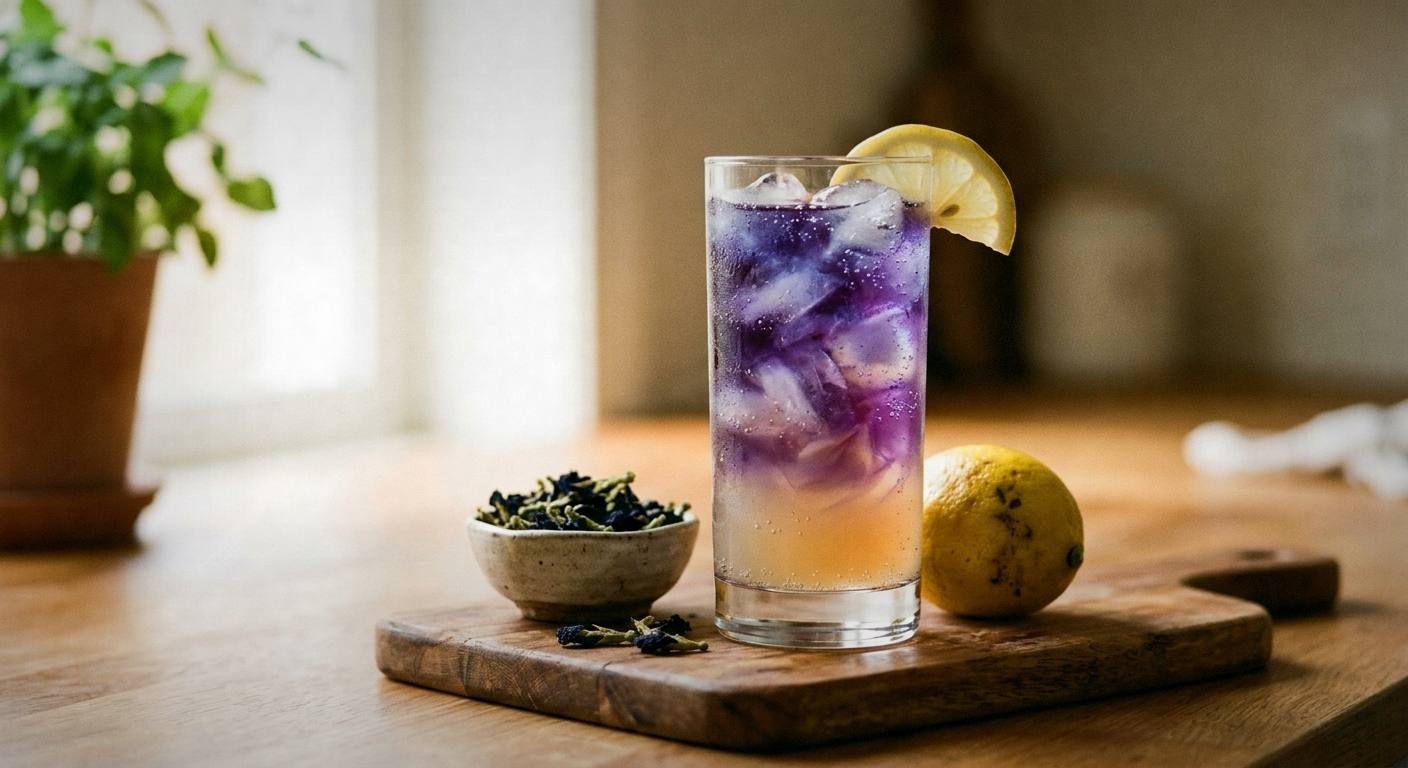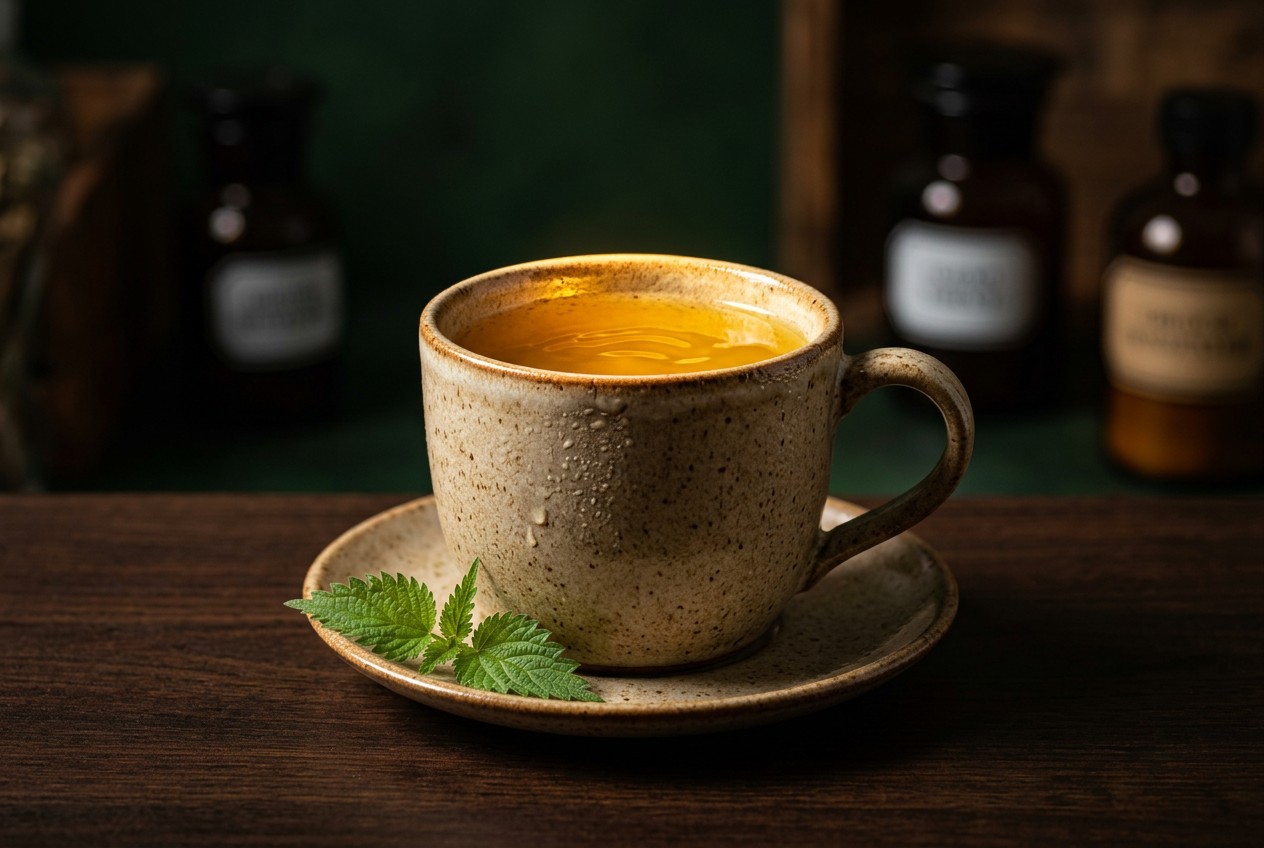
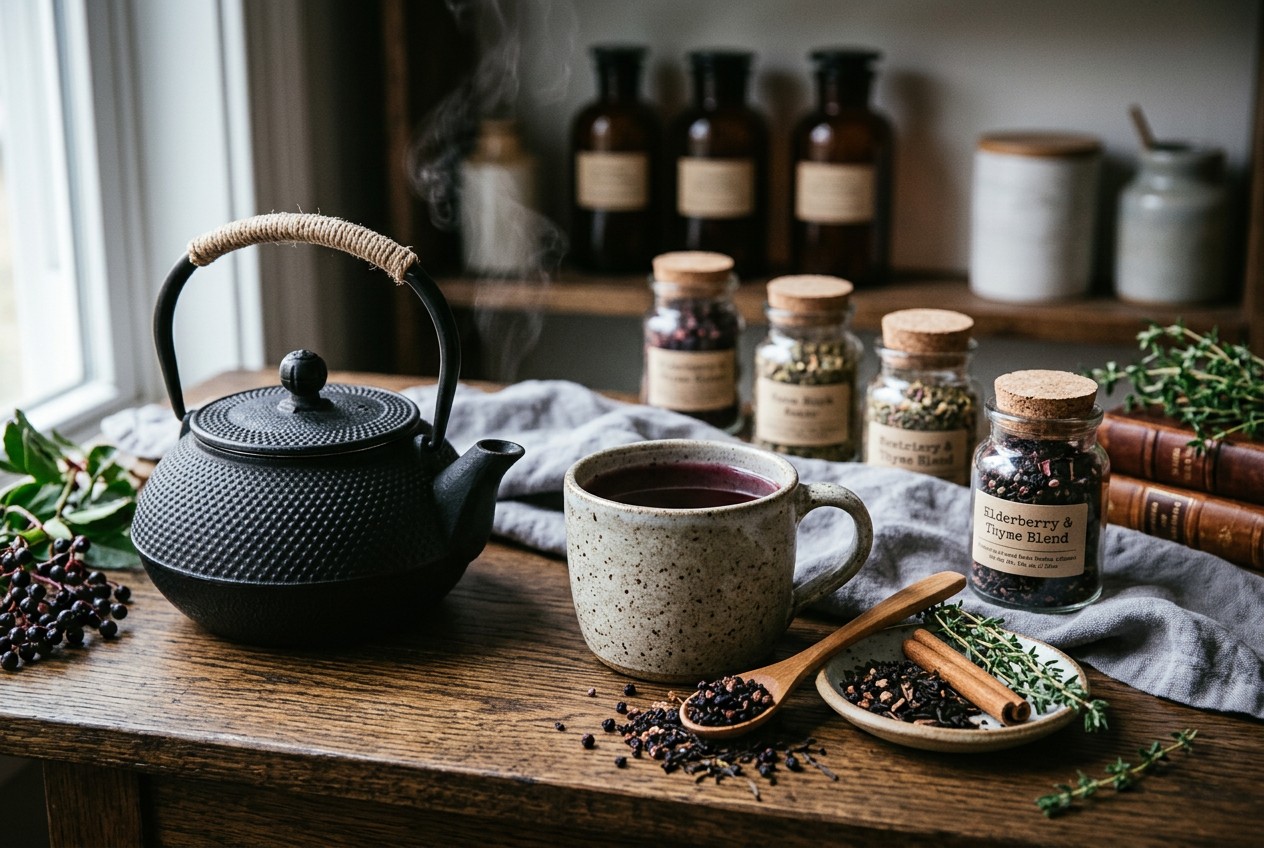
Ginger heat and a berry tea blend make a warm, fragrant cup. This culinary repair uses commercially formulated tea bags in place of the former loose-elderberry and loose-echinacea preparation. It has no treatment dose or cold-and-flu benefit claim.
Prep: 5 minutes. Total: about 30 minutes, longer if chilling is needed. Yield: 4 servings (240 ml tea base each, plus finishers).
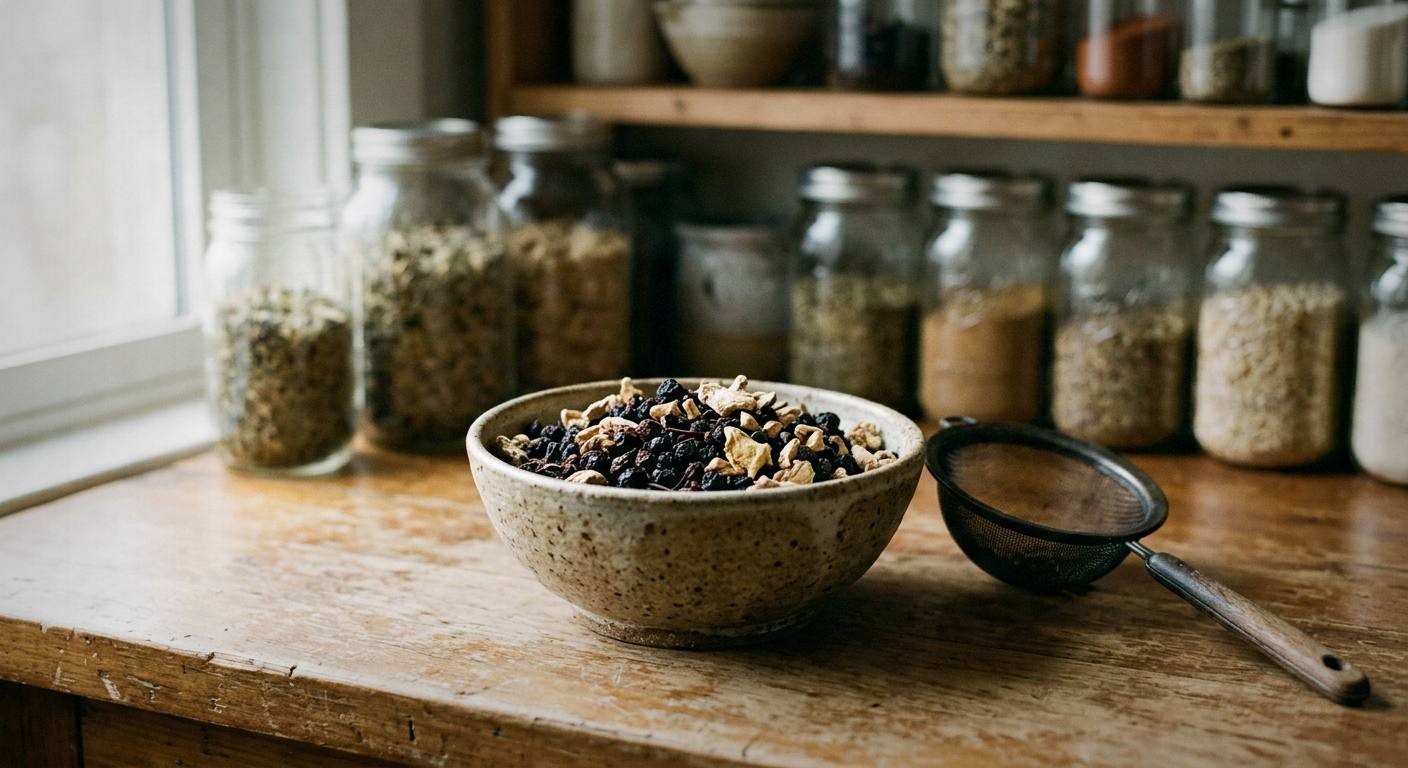
Ingredients
- 4 US cups (960 ml) water, plus freshly boiled water to restore the strained base
- 1 tablespoon (about 6 g) fresh ginger, thinly sliced
- 1 teaspoon dried culinary thyme
- 1 teaspoon dried culinary lemon balm
- 1 small cinnamon stick (about 5 cm), for infusion only
- 4 commercial Pukka Elderberry and Echinacea tea bags
- 4 teaspoons honey, optional
- 4 teaspoons fresh lemon juice
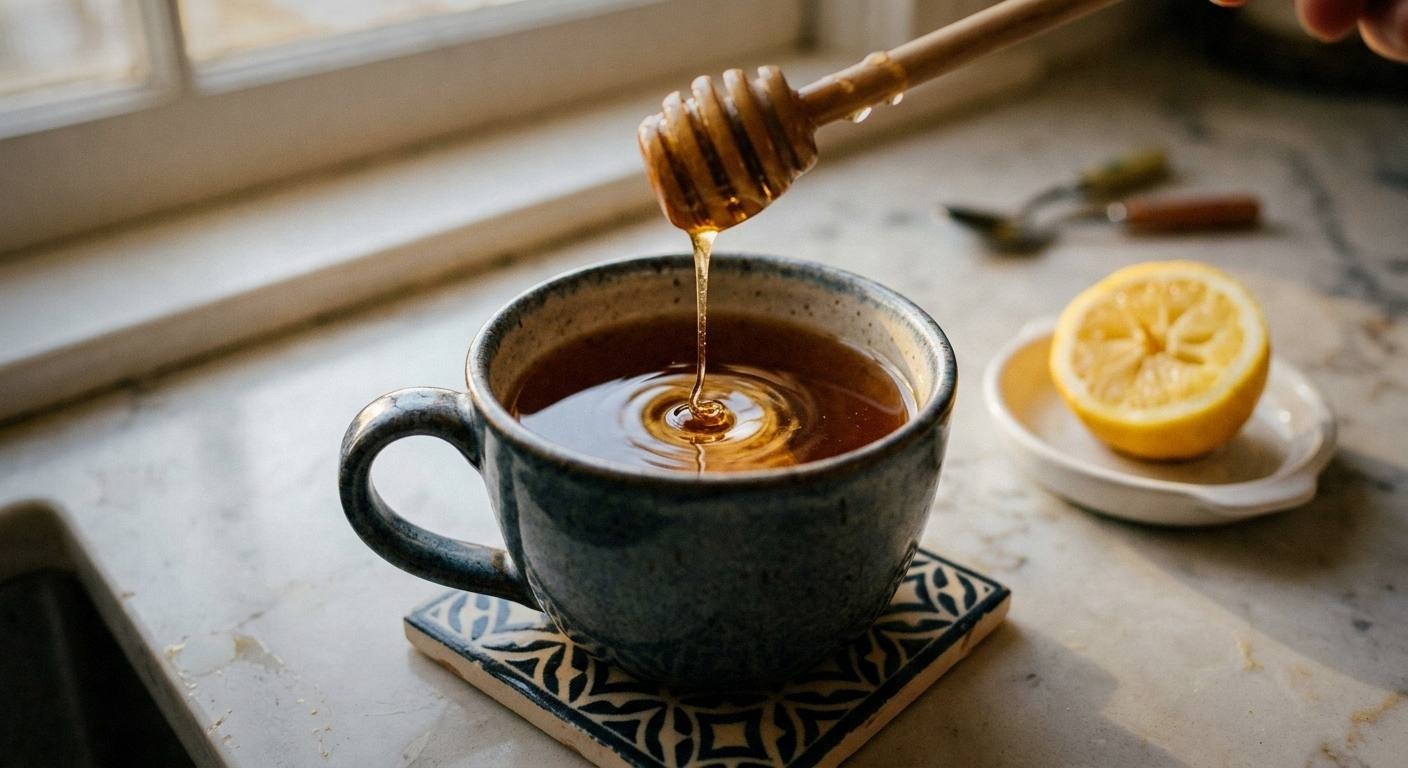
Method
- Bring the 960 ml water, sliced ginger and cinnamon to a boil in a saucepan. Cover loosely, reduce heat and simmer for 5 minutes.
- Bring the liquid back to a boil, remove from heat, add the thyme, lemon balm and four commercial tea bags, then cover and steep for 10 minutes. Follow the current tea package if it requires a different brew time.
- Remove the bags and strain the liquid, discarding every solid. Measure the strained base and add freshly boiled water to make 960 ml.
- Divide into four 240 ml portions. Stir 1 teaspoon lemon juice and, if using, 1 teaspoon honey into each cup; cool enough to drink.
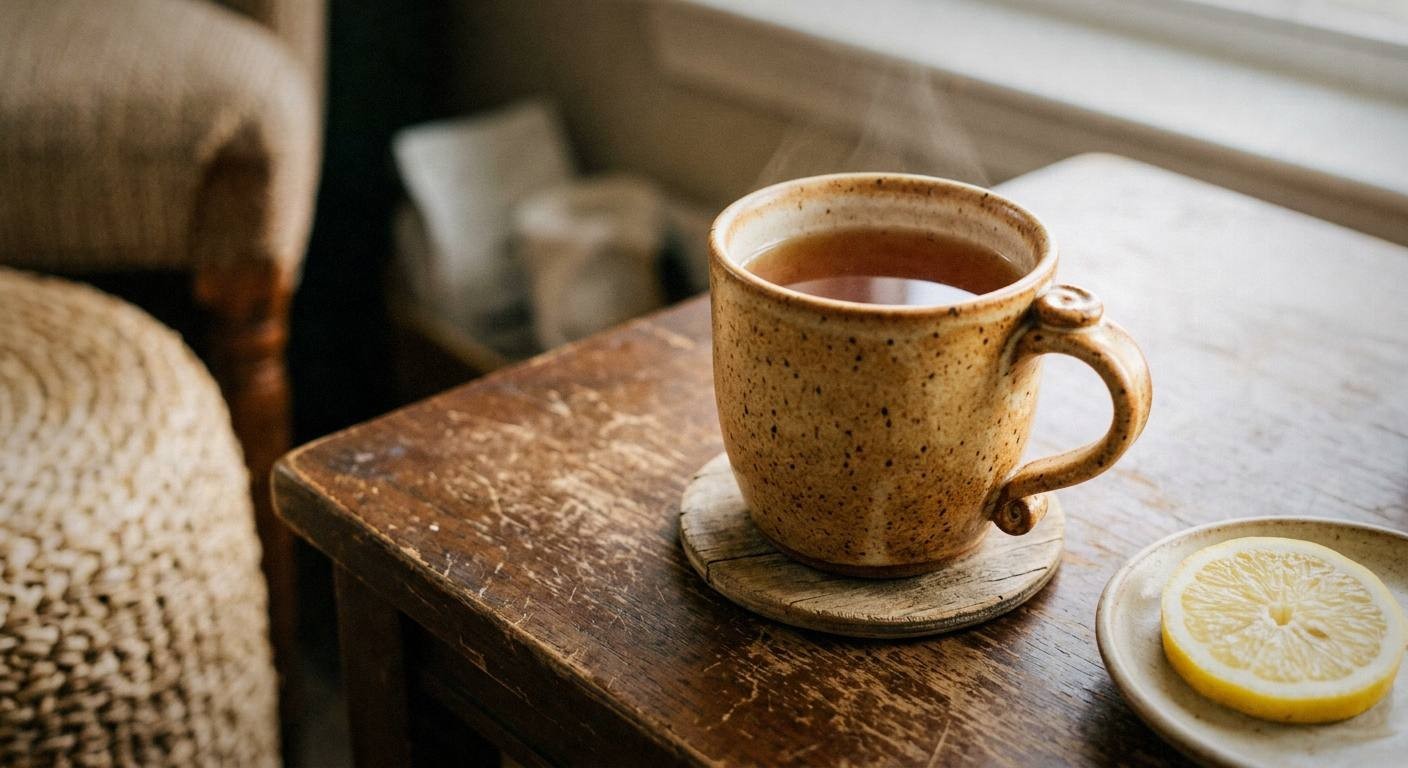
The Berry Ingredient
Use the named commercial tea as formulated and check its current ingredient list and suitability. It includes other herbs, including licorice; it is not simply a bag of dried elderberries. Do not replace it with loose dried, raw or foraged elderberries, or extra echinacea roots. NCCIH identifies toxicity from raw or unripe berries and other elder plant parts; this article does not supply a method for rendering those ingredients safe. The former quick-steep and loose-berry simmer routes have been removed.
Flavor Options and Batches
For ginger-only herbal tea, omit all four commercial bags and keep the water, ginger, thyme, lemon balm, cinnamon, steep and measured recovery unchanged. This yields four mildly savory cups without berry flavor. For extra ginger warmth use 2 tablespoons sliced fresh ginger instead of 1, with the same simmer. For a hot-spice option add 1/32 teaspoon ground cayenne to one finished cup, stir and taste before adding any more. This is seasoning, not a congestion remedy.
For eight cups, use 1.92 litres water, 2 tablespoons sliced ginger, 2 teaspoons each dried thyme and lemon balm, 2 small cinnamon sticks and 8 commercial tea bags. Restore the strained base to 1.92 litres with boiled water, then divide into eight 240 ml portions, each with 1 teaspoon lemon juice and optional 1 teaspoon honey. This doubles servings, not concentration. Allow about 35 minutes, depending on heating time. Cool/refrigerate in smaller containers. Reheat only the needed refrigerated portion to 165 F (74 C), then let it cool enough to sip. The former marshmallow-root/yarrow additions and three-to-four-cups daily therapeutic schedule are removed.
Preparation and Storage
Wash fresh produce under running water before cutting, and scrub firm fruit or cucumber. Use culinary botanicals sold for food or tea, not ornamental flowers. Keep ready-to-drink juices, opened milk and commercial mixers as their labels direct.
Refrigerate prepared bases promptly at 40 F (4 C) or below in clean covered containers. Cool hot infusions in shallow heat-safe containers or an ice-water bath; do not wait indefinitely for them to reach room temperature. Refrigerate within 2 hours, or within 1 hour above 90 F (32 C). Keep party pitchers refrigerated or on ice at refrigerator temperature. Add bubbles and serving ice at the last moment.
Use fresh-fruit/herb bases the same day, or within 24 hours, for flavor. Use strained tea or homemade syrup within 3 days. These are conservative house quality targets, not tested shelf lives. Finished fizzy drinks are best served immediately. Follow any shorter ingredient-label limit. Honey is unsuitable for infants under 12 months.
More Drinks
- Grapefruit Thyme Fizz with Honey and Lime
- Ginger, Thyme and Sage Tea with Honey
- Thyme Bourbon Sour with Maple
- Golden Milk with Turmeric and Honey for Wellness
Sources and Recipe Notes
Published sources inform the method. House portion sizes, recovery marks, flavor variants, clocks and shorter storage targets are specified here; no kitchen or shelf-life testing is claimed.