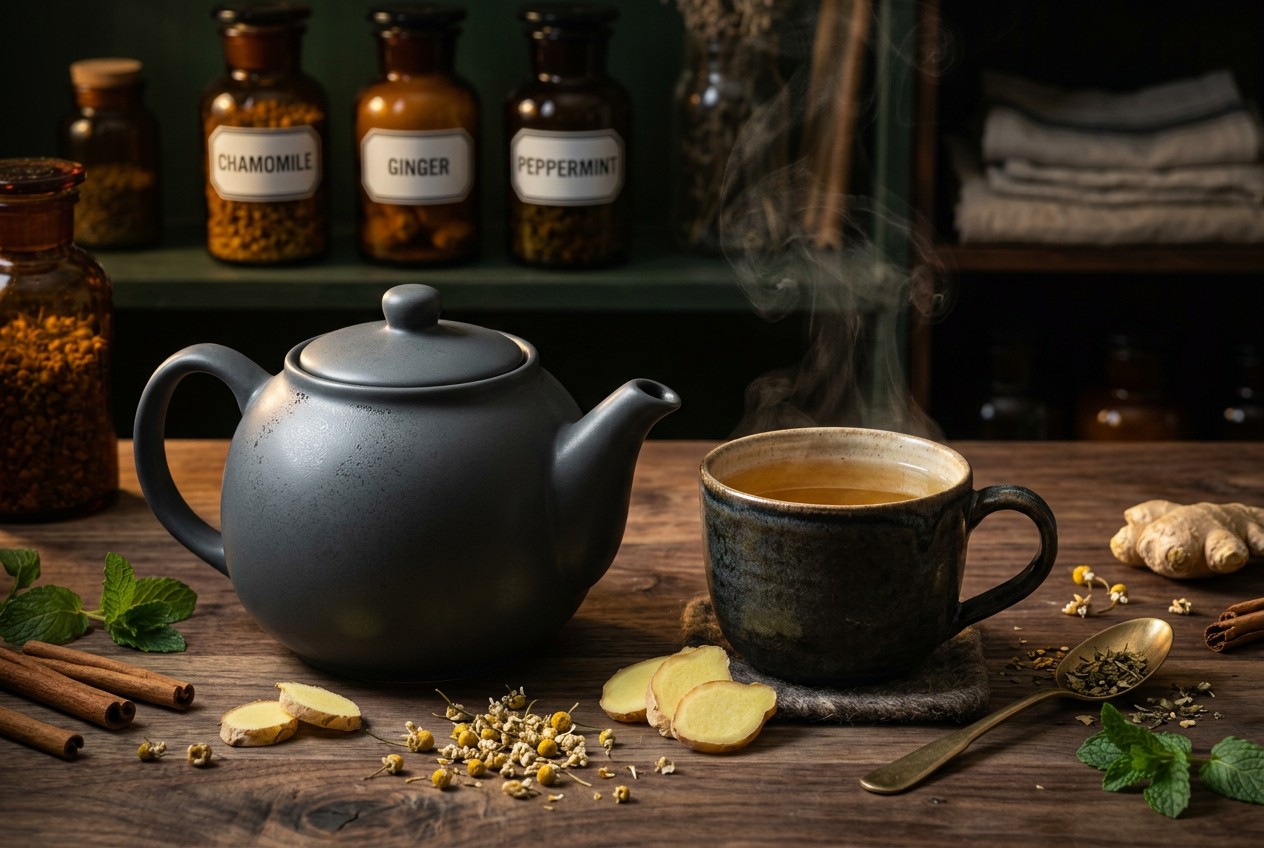
Ginger-mint tea can be a warm drink during your period. This recipe doesn’t establish cramp relief, a preventive schedule or an alternative to pain treatment. Its ginger bite and mint aroma are reasons to choose it as a drink.
Published culinary recipe: one cup
The formula follows the Ginger -Mint Tea in UNC Lineberger’s recipe handout , credited there to the American Cancer Society’s What to Eat During Cancer Treatment. That provenance supplies quantities and a method; it does not establish efficacy for menstrual pain. This deliberately replaces the previous unsourced three-cup, chamomile /fennel mixture rather than increasing its dose.
- 1 cup water
- 1 (1-inch) piece fresh ginger, peeled and thinly sliced
- 1 mint tea bag
- 1 tablespoon honey
Simmer the water and sliced ginger over low heat for 5 minutes.
Remove from heat, cover and leave for 5 minutes.
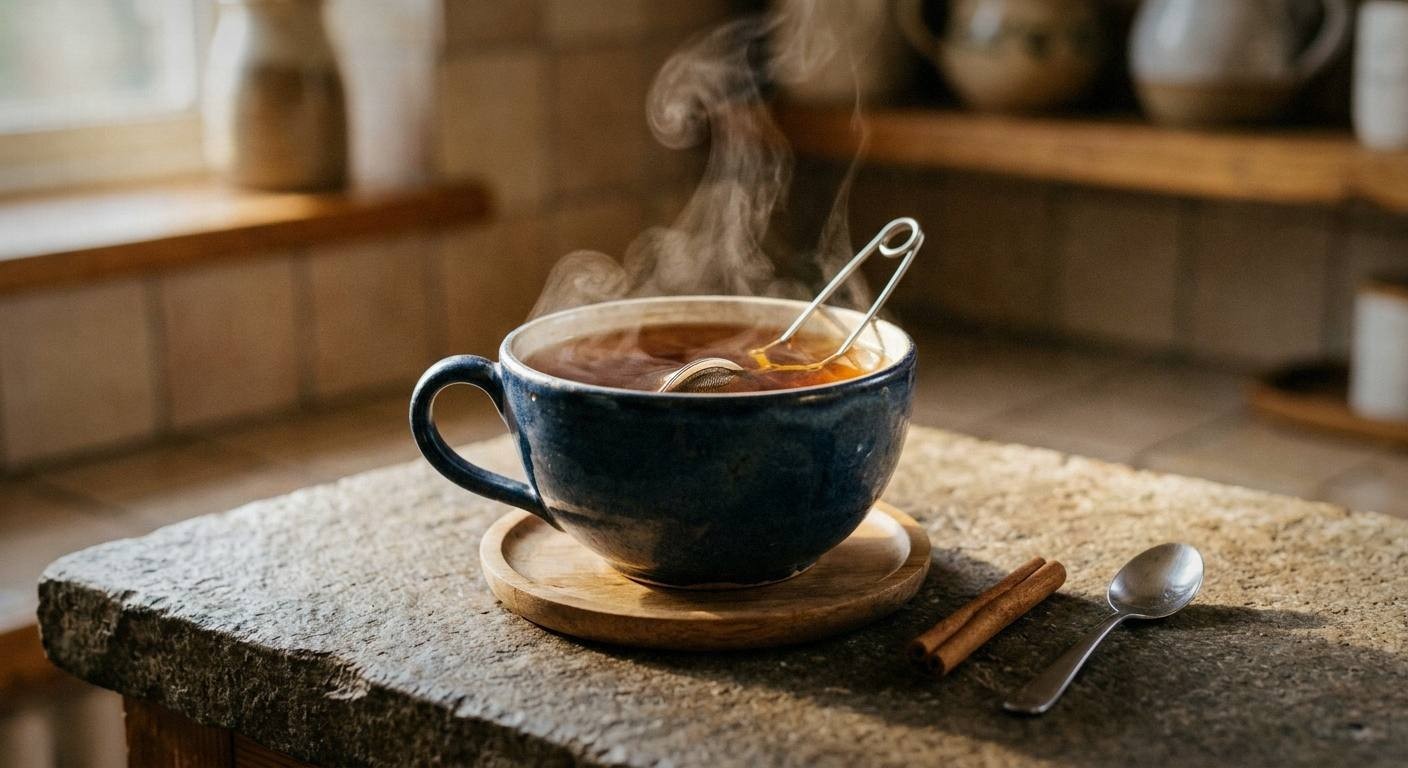
Strain into a mug. Add the mint tea bag and honey, steep for 3-5 minutes, then remove the bag. Let cool to a comfortable drinking temperature.
What the evidence means for the cup
| Question | Supported distinction |
|---|---|
| Does ginger research prove this recipe treats cramps? | No. NCCIH describes promising dietary-supplement research, not a trial of this tea. |
| Does a longer steep guarantee more pain relief? | No validated dose-response is established for this drink. Follow its culinary method. |
| Does tea replace iron lost during bleeding? | No such nutrient replacement is established here; no nettle or iron-treatment claim is made. |
| Is a hot mug equivalent to a heat pad? | No. External heat is a separate self-care option described by NHS. |
NCCIH ginger distinguishes supplements from food research and notes possible gastrointestinal effects and herb-drug interactions. If you take medicines or are pregnant/breastfeeding, ask a clinician about herbal products you plan to use regularly. Choose a labeled mint tea whose ingredients you can tolerate; the source recipe is not a clearance for every commercial mixture. Don’t give honey to an infant under one year, as explained by CDC infant feeding guidance .
When a drink isn’t the next step
NHS period-pain guidance discusses a wrapped heat pad, gentle movement and suitable pain medicines. Seek urgent advice for severe or worse-than-usual pain that painkillers haven’t helped. Arrange assessment for increasingly painful, heavy or irregular periods, bleeding between periods or pain with sex, urination or bowel movements. Those symptoms need more than a recipe change.
For a different culinary flavor, ginger turmeric tea is a separate two-serving recipe with its own evidence limits. The loose-leaf guide explains why teaspoons measure volume rather than a treatment dose.