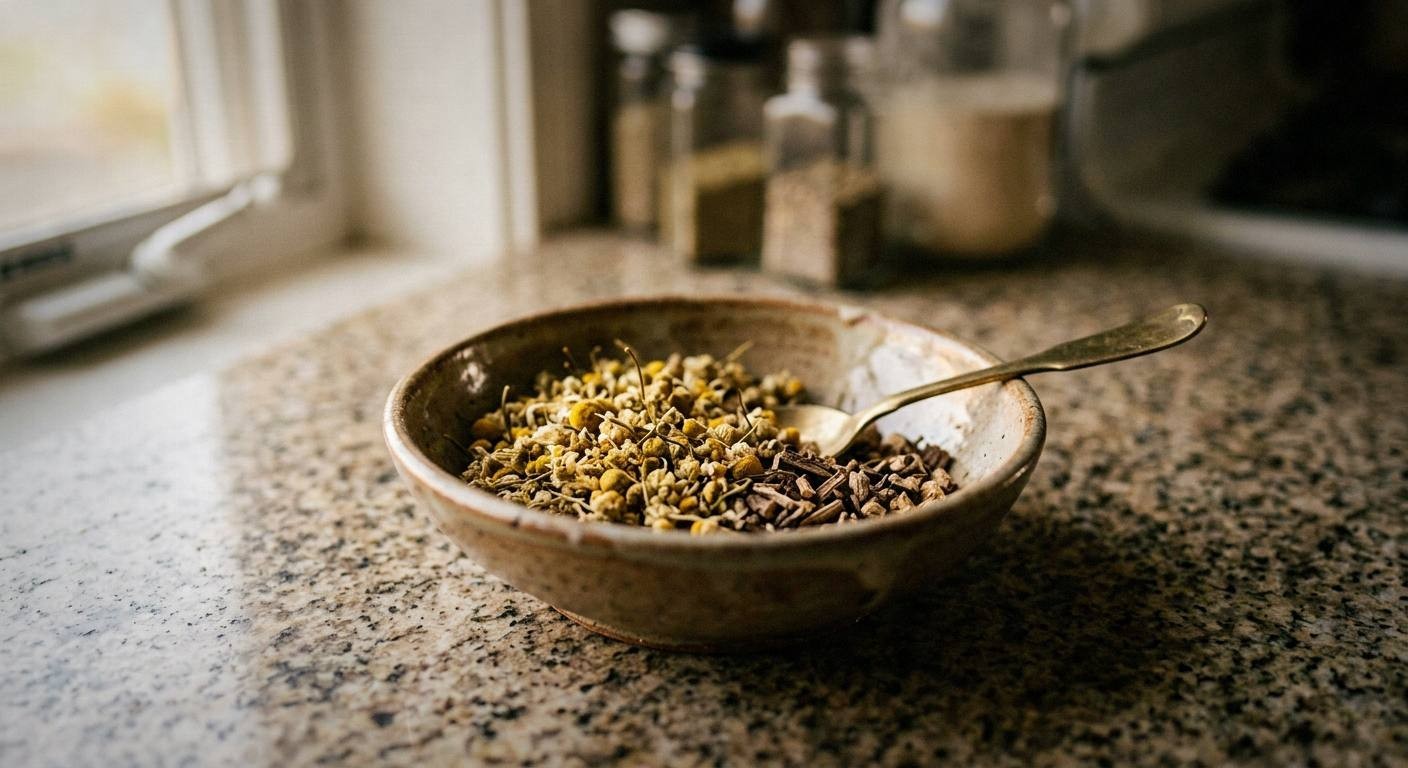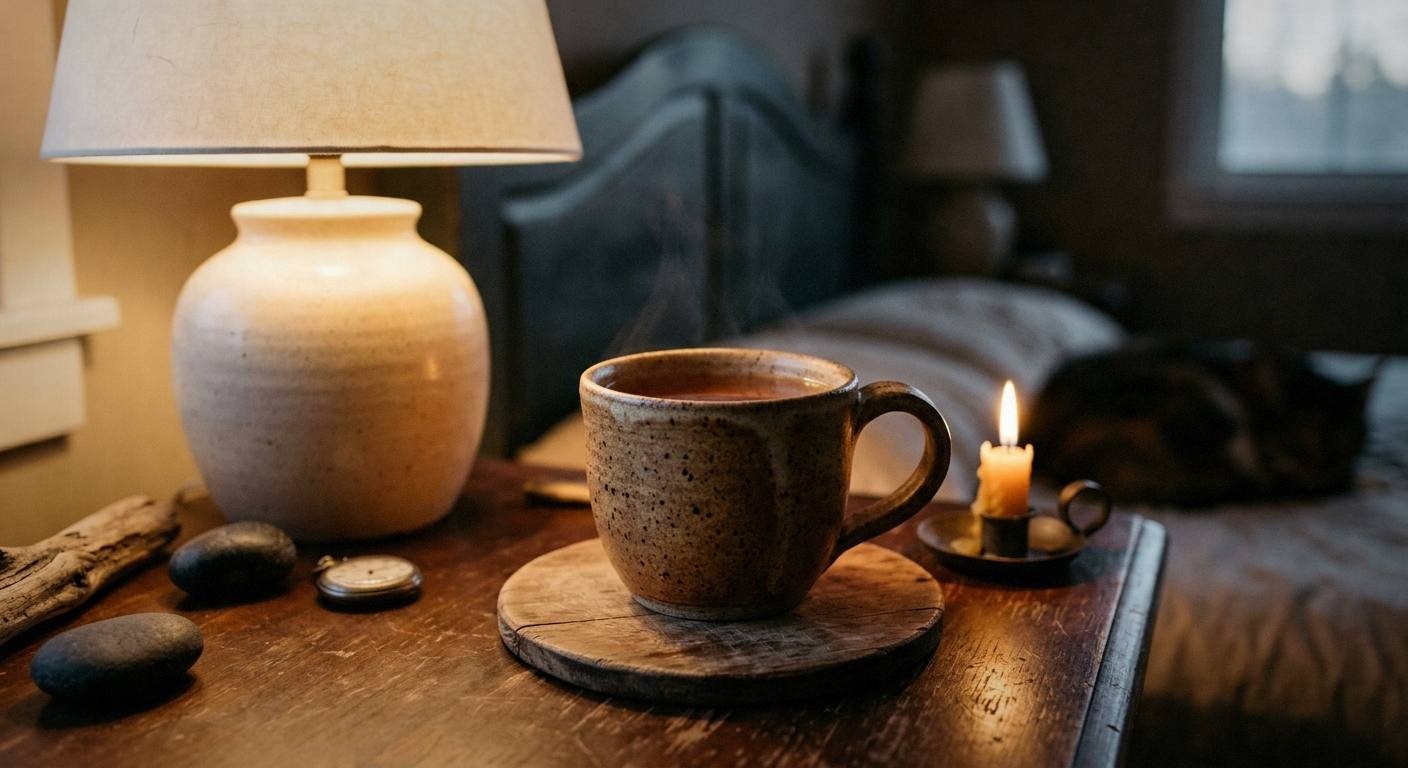
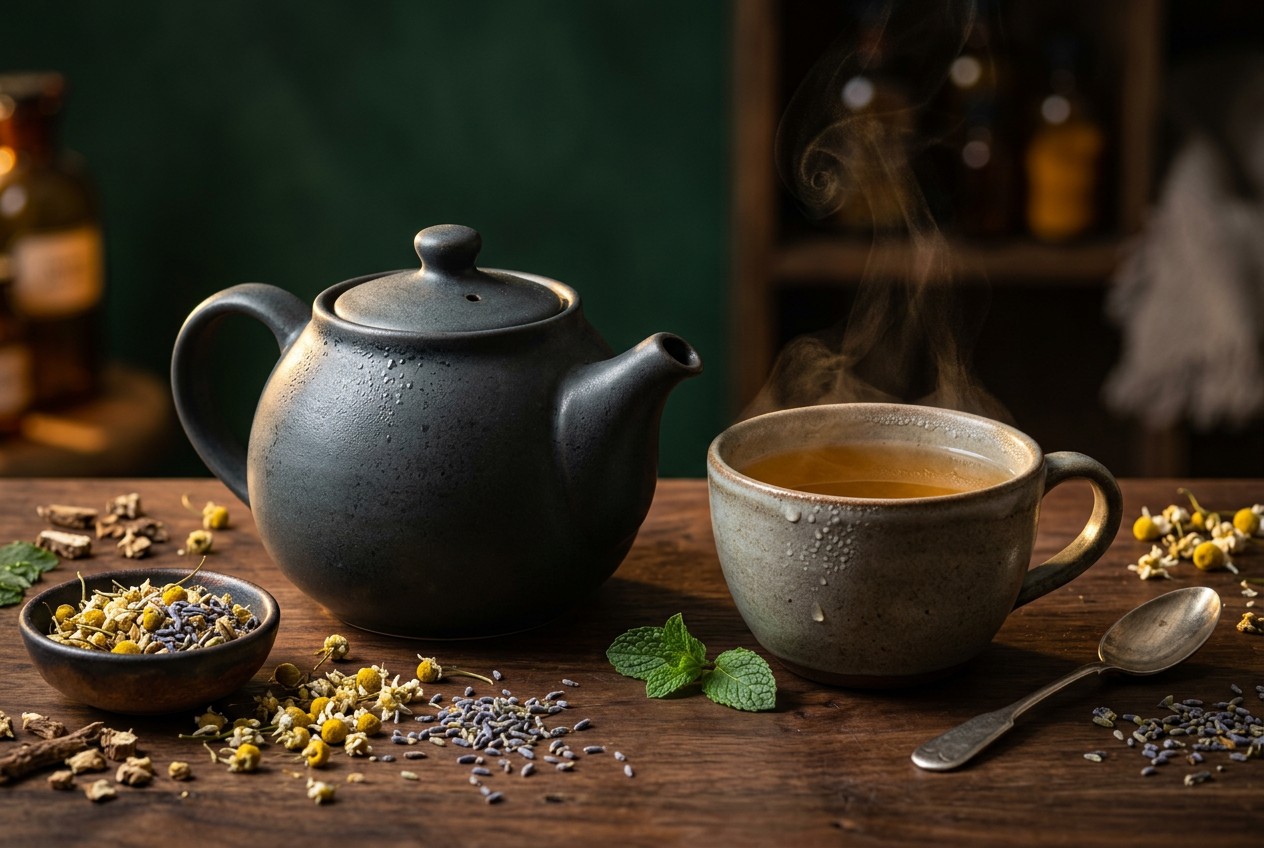
Combine chamomile, lavender, and valerian root. Steep in boiling water for 10-15 minutes, covered, then strain. Drink 30 minutes before bed.
Herbal tea for sleep with chamomile, lavender, and valerian root. Steep 10 to 15 minutes covered and drink 30 minutes before bed. Naturally caffeine-free.
Why You Will Love This
This sleep tea blend wraps around you like a soft blanket. The chamomile tastes gently floral, the lavender adds a whisper of calm, and the valerian root works quietly in the background to ease you toward rest. It is the kind of tea you sip slowly, letting the warmth settle into your shoulders and the worries of the day dissolve.
The Story Behind It
I started making this herbal tea recipe for sleep during a winter when my mind refused to quiet at night. I had read about calming tea blends for years, but it was not until I combined these three herbs in the right proportions that I understood their power. Now, this bedtime tea recipe sits in a glass jar on my counter, ready whenever I need to signal to my body that it is time to let go.

What You Will Need
- 2 tablespoons dried chamomile flowers
- 1 tablespoon dried lavender buds
- 1 teaspoon dried valerian root
- 2 cups boiling water (475ml)
- Raw honey (optional, for sweetness)
- Fresh lemon balm leaves (optional, for extra calm)
How to Make It
Combine the chamomile, lavender, and valerian root in a teapot or heat-safe jar.
Pour the boiling water over the herbs and cover immediately. This keeps the volatile oils from escaping.
Steep for 10 to 15 minutes. The longer you steep, the stronger the calming effect, especially from the valerian.
Strain the herbs through a fine-mesh sieve into your favorite mug.
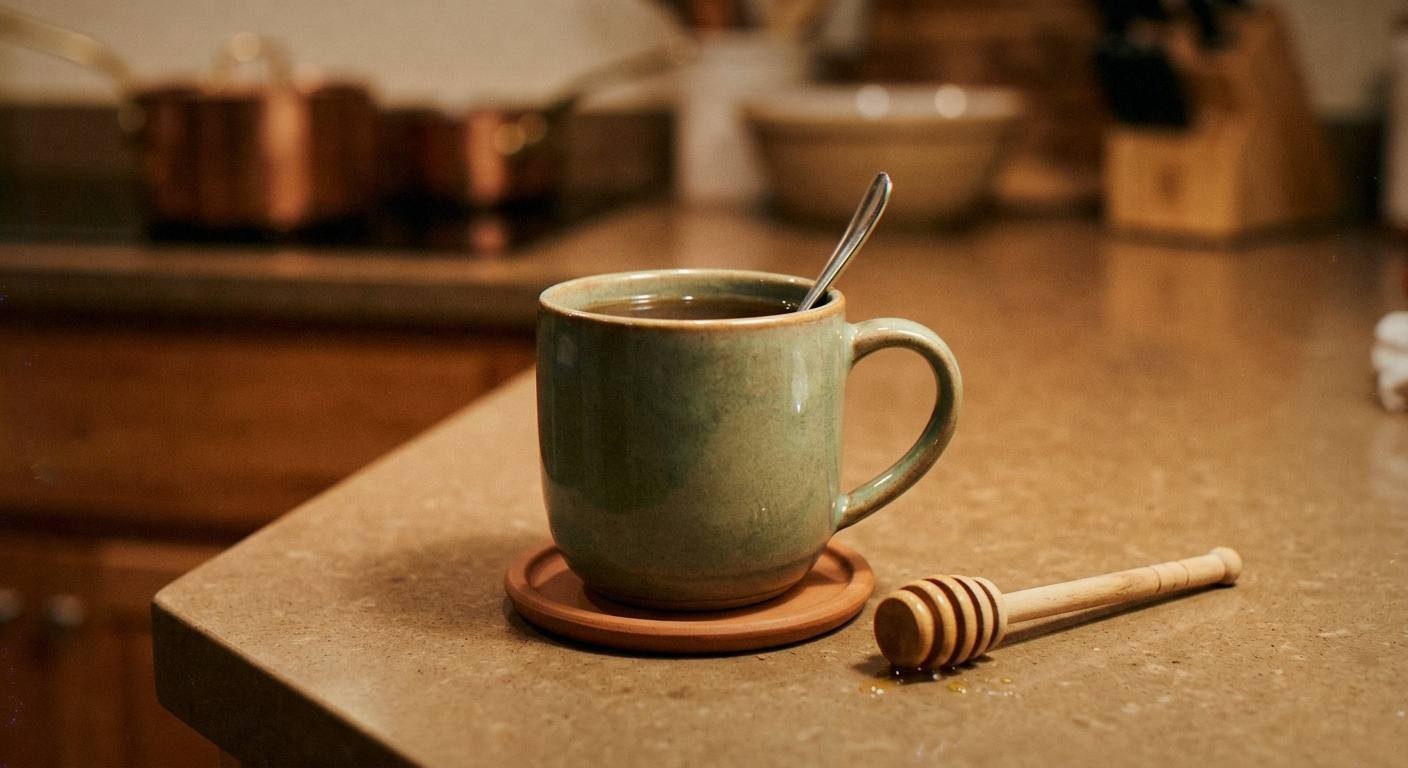
Add honey if you want a touch of sweetness. Stir gently and sip while the tea is still warm.

Herbalist Notes
Chamomile is the gentle workhorse here. It is the classic bedtime flower across most of Europe, and it contains apigenin, which is the compound people reach for when they want to sound authoritative about it. I am not going to walk you through what that compound supposedly does inside your head, because a mug of flower tea and a laboratory assay are a very long way apart. Lavender is the calming herb of the Mediterranean, sewn into pillows and sachets centuries before it ever went into a cup. Valerian is the strong one, the root Western herbalism has kept for nights when nothing settles, and it smells frankly awful, which is the first thing anybody notices about it.
How long before bed should you drink this tea? Aim for 30 to 60 minutes before you want to sleep. This gives the herbs time to work their way through your system. Can herbal tea really help you sleep better? Yes, when you use the right herbs in the right amounts. This is not a knockout remedy, but a gentle invitation to rest.
For those wondering what herbs are best for sleep tea, start with these three. They are easy to find, long-loved, and they work beautifully together in a cup. If you want to deepen the blend, add passionflower or skullcap for more support with anxiety.
Make It Your Own
If your sleep trouble is more about a racing mind than physical restlessness, add an extra half tablespoon of lavender and a few fresh lemon balm leaves. For body tension, increase the valerian to 1.5 teaspoons. You can also make a larger batch of this sleep tea blend and store it in an airtight jar for up to three months. Scoop out 2 tablespoons per cup whenever you need it. Some people like to add a small piece of cinnamon stick for warmth, or a pinch of dried rose petals for a floral note that does not interfere with the calming herbs.

Common Questions
What are the best herbs to use in a sleep tea?
Chamomile, valerian root, and lavender are the three herbs Western herbalism has kept longest for the end of the day, which is why this recipe uses all three. Chamomile is the gentle one, and the one most people already have in the cupboard. Valerian is the heavy hitter, earthy and strong-smelling, and a teaspoon goes further than you expect. Lavender does part of its work before you drink anything at all, because the steam coming off the cup smells like a linen closet in Provence, and that on its own slows most people down a notch. Passionflower and lemon balm are good additions if your trouble is a mind that will not stop talking.
How long before bed should you drink sleep tea?
Drink it 30 to 45 minutes before you want to fall asleep. That timing is less about pharmacology than about ritual: the point is to have finished the cup, brushed your teeth and turned the lights down before you get into bed, rather than lying there holding a hot mug and waiting for something to happen. Valerian is the herb people most often say they notice, and noticing it while you are already trying to sleep is not much use. If you are sensitive to liquid before bed and worry about waking up at night, make the batch with 1.5 cups of water instead of 2.
Can children drink herbal sleep tea?
This is a conversation with a pediatrician, not with a recipe page. I am not going to print an age, an amount, or a safe-for-kids list here, and I want to be straight about why: children are not small adults, a herb that is unremarkable in a grown-up mug is not automatically fine in a smaller one, and I have no idea what else is going on with your child. Ask the person who looks after their health, and take the actual jar of herbs along so they can see exactly what you are asking about. One thing is not a judgement call at all: never give honey to an infant under one year old.
Does herbal sleep tea actually work for insomnia?
These herbs suit mild sleep trouble, the sort where you are wound up rather than genuinely unwell: falling asleep, winding down after a hard day, giving yourself a signal that the day is over. That is what they have been used for, and it is also the honest limit of what I will claim for them. They are not a fix for sleeplessness that has gone on for months, which usually has a cause no cup of tea can reach, and if that is where you are then this page is not the right place to solve it. Think of the tea as one part of a broader routine. A consistent bedtime, low light, and no screens in the hour before sleep matter at least as much as the herbs, and probably rather more.
Can you cold brew herbal sleep tea?
Yes. Combine the same herb ratios in 2 cups of cold filtered water, cover, and refrigerate for 8 to 12 hours. The result is a smooth, less bitter brew because cold water extracts different compounds than boiling water. The valerian extraction is somewhat lower, so the cold-brewed version is milder. Some people find this easier to drink without honey since the cold process reduces the earthiness. Warm the cold brew gently before drinking if you want the soothing effect of warmth, or drink it chilled in warm weather.
When to Serve and Pairings
This tea is best served when you want a quieter drink: something warm, simple, and easy to repeat without much setup.
Perfect occasions include:
- Bedtime wind-downs
- Rainy afternoons
- Slow mornings
- Seasonal sniffle days
- Reading breaks
- After-dinner sipping
Food pairings:
- Honey toast
- Plain shortbread
- Oatmeal with fruit
- Citrus slices
- Almond biscotti
- Simple yogurt bowls
For herbal teas, keep pairings mild and not too sweet so you can still taste the herb, steep time, and honey or lemon if you add them.
Printable recipe
Herbal Tea Recipe for Sleep: Natural Nighttime Blend
Herbal tea for sleep with chamomile, lavender, and valerian root. Steep 10 to 15 minutes covered and drink 30 minutes before bed. Naturally caffeine-free.
Ingredients
- 2 tablespoons dried chamomile flowers
- 1 tablespoon dried lavender buds
- 1 teaspoon dried valerian root
- 2 cups boiling water (475ml)
- Raw honey (optional, for sweetness)
- Fresh lemon balm leaves (optional, for extra calm)
Instructions
- Combine the chamomile, lavender, and valerian root in a teapot or heat-safe jar.
- Pour the boiling water over the herbs and cover immediately. This keeps the volatile oils from escaping.
- Steep for 10 to 15 minutes. The longer you steep, the stronger the calming effect, especially from the valerian.
- Strain the herbs through a fine-mesh sieve into your favorite mug.
- Add honey if you want a touch of sweetness. Stir gently and sip while the tea is still warm.
Keep browsing