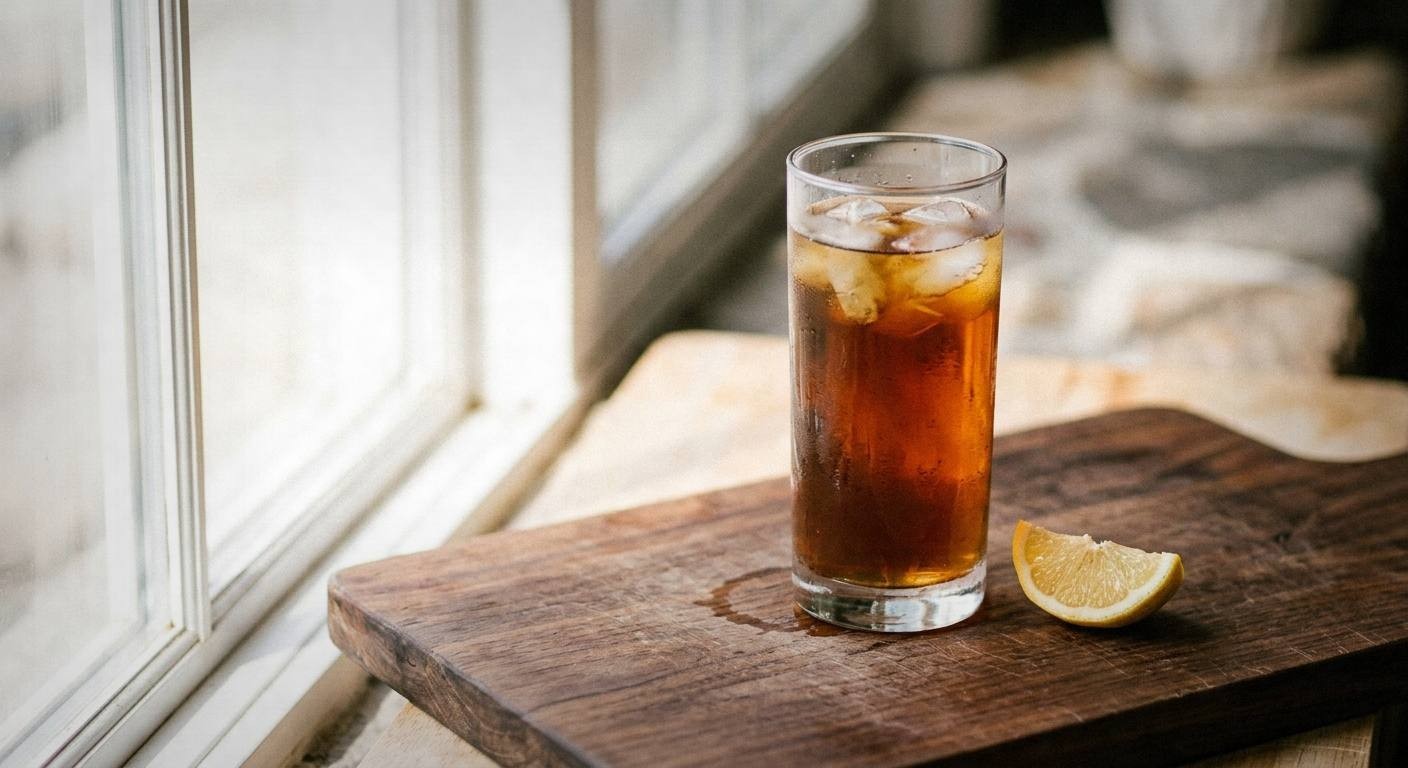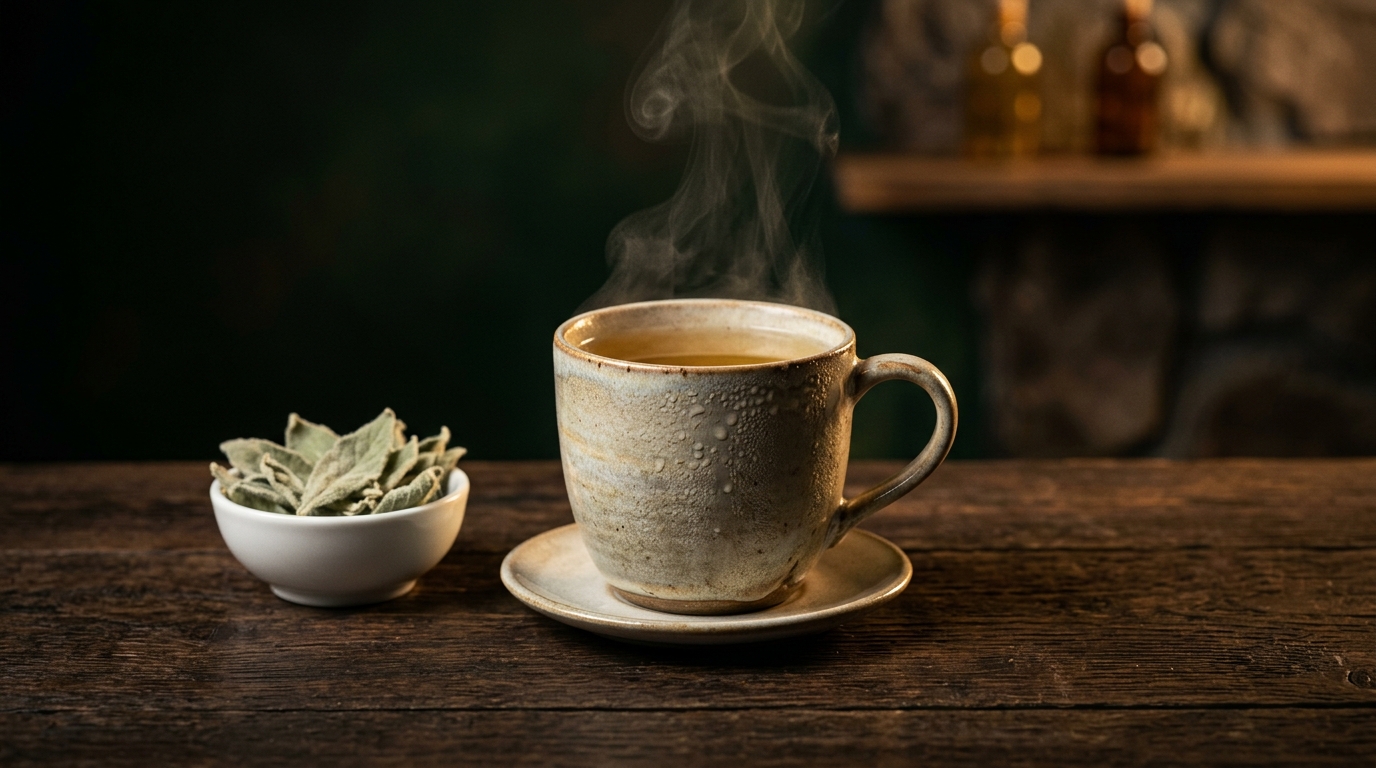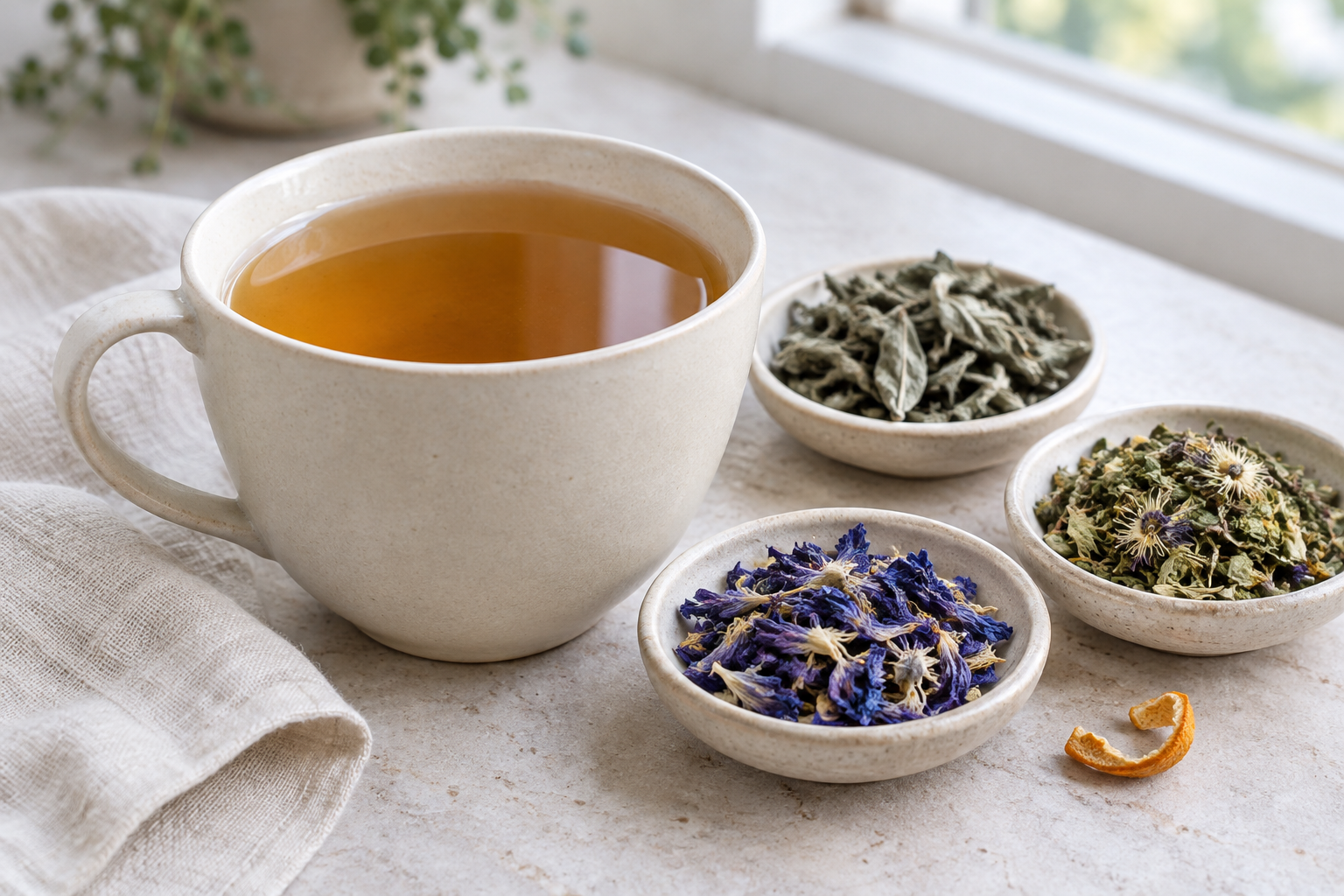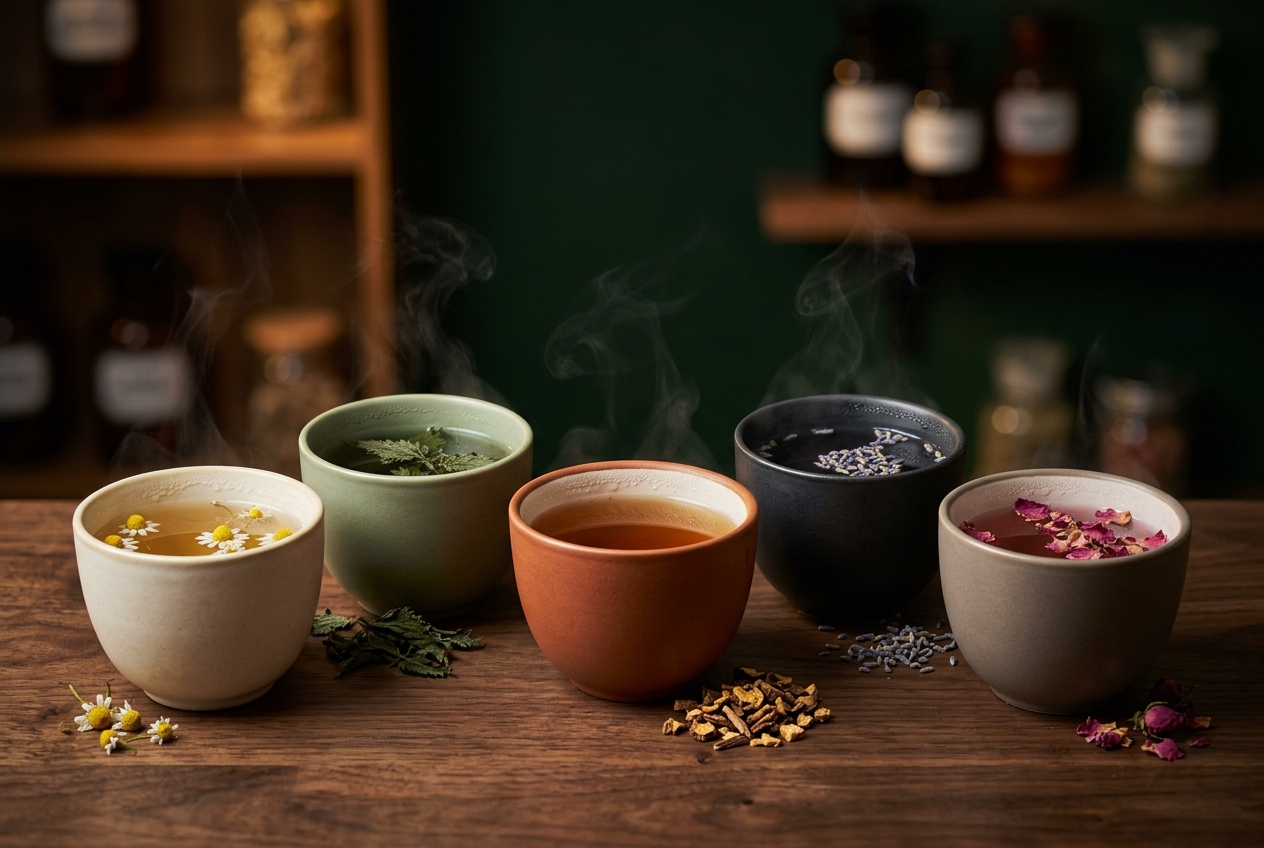
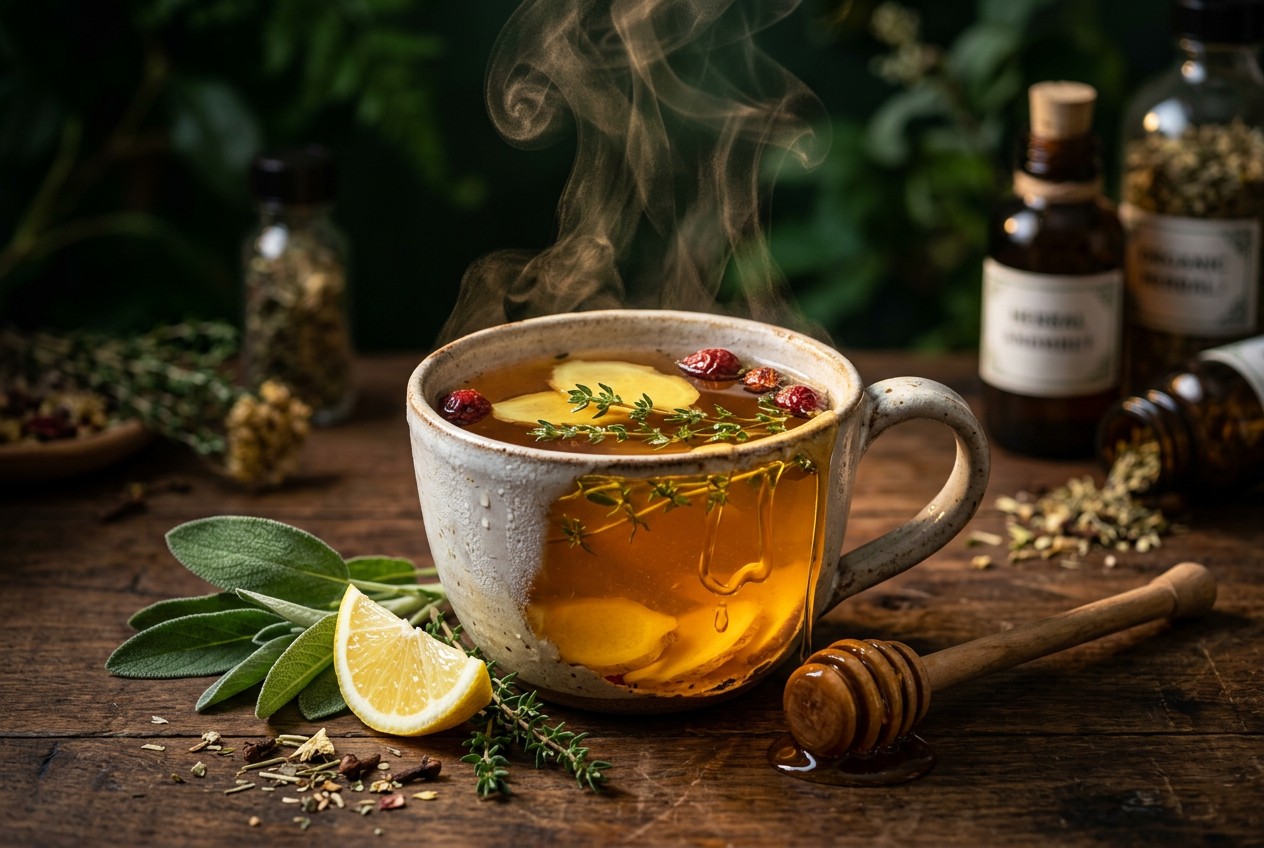
Ginger brings a little heat; thyme and sage give this tea a savory aroma. Lemon and honey round out one large mug. It is a culinary drink rather than a sore-throat treatment or an herbal dosing plan. For another warm ginger infusion with a commercial berry-tea blend, see this ginger and elderberry fruit tea ; that page also makes no cold-or-flu benefit claim.
Ingredients
- 12 US fl oz (360 ml) water
- 10 g fresh ginger, thinly sliced
- 3 small fresh culinary thyme sprigs, or 1 teaspoon dried culinary thyme
- 2 fresh culinary sage leaves, or 1/2 teaspoon dried culinary sage
- 1 tablespoon fresh lemon juice
- 1 tablespoon honey, optional
Method
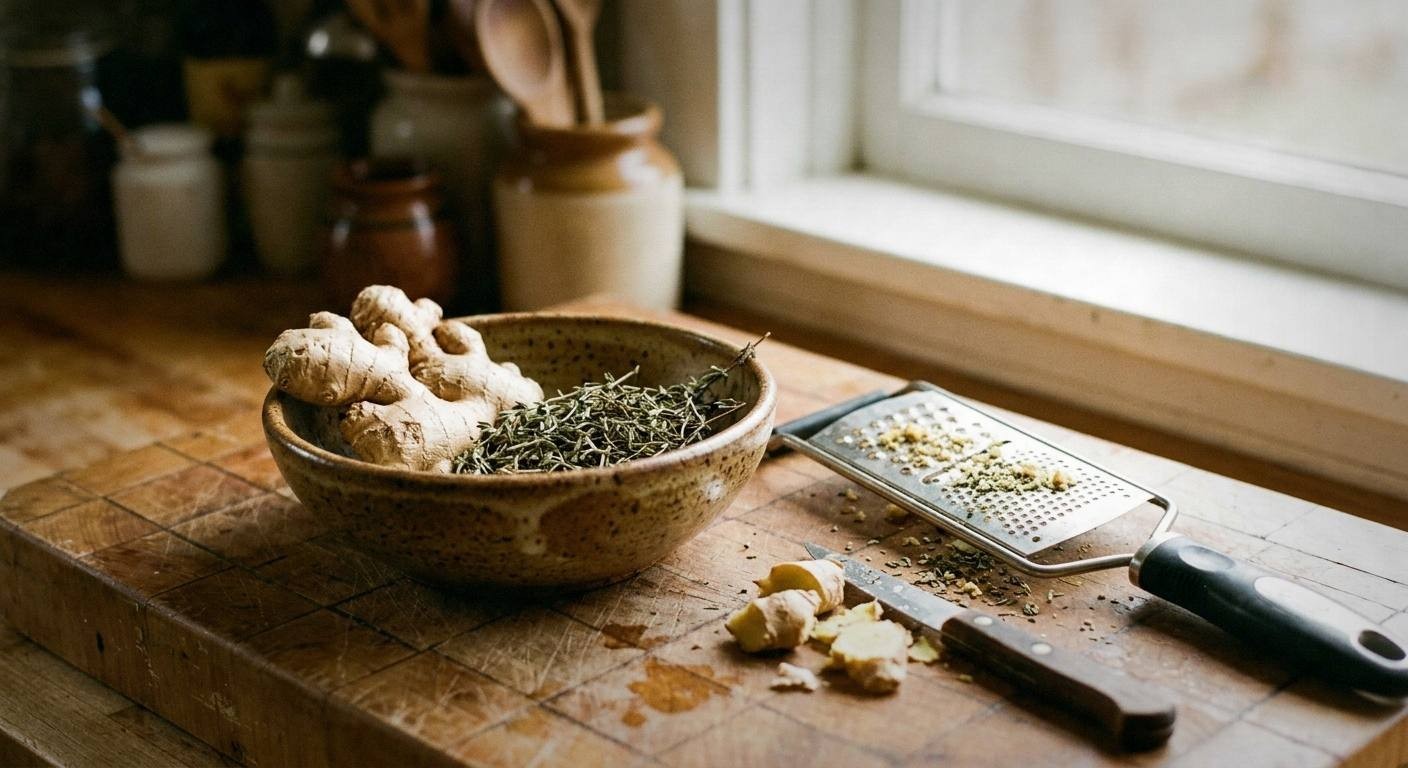
- Rinse fresh ginger and herbs under running water. Put the sliced ginger and water in a small saucepan and bring to a simmer.
- Simmer gently for 5 minutes. Remove from the heat, add the thyme and sage, cover and steep for 5 minutes.
- Strain through a fine sieve into a large heat-safe mug, discarding the herbs. Stir in the lemon juice and optional honey.
- Let cool to a comfortable drinking temperature before sipping. Serve freshly made.
Ingredients and Flavor Options
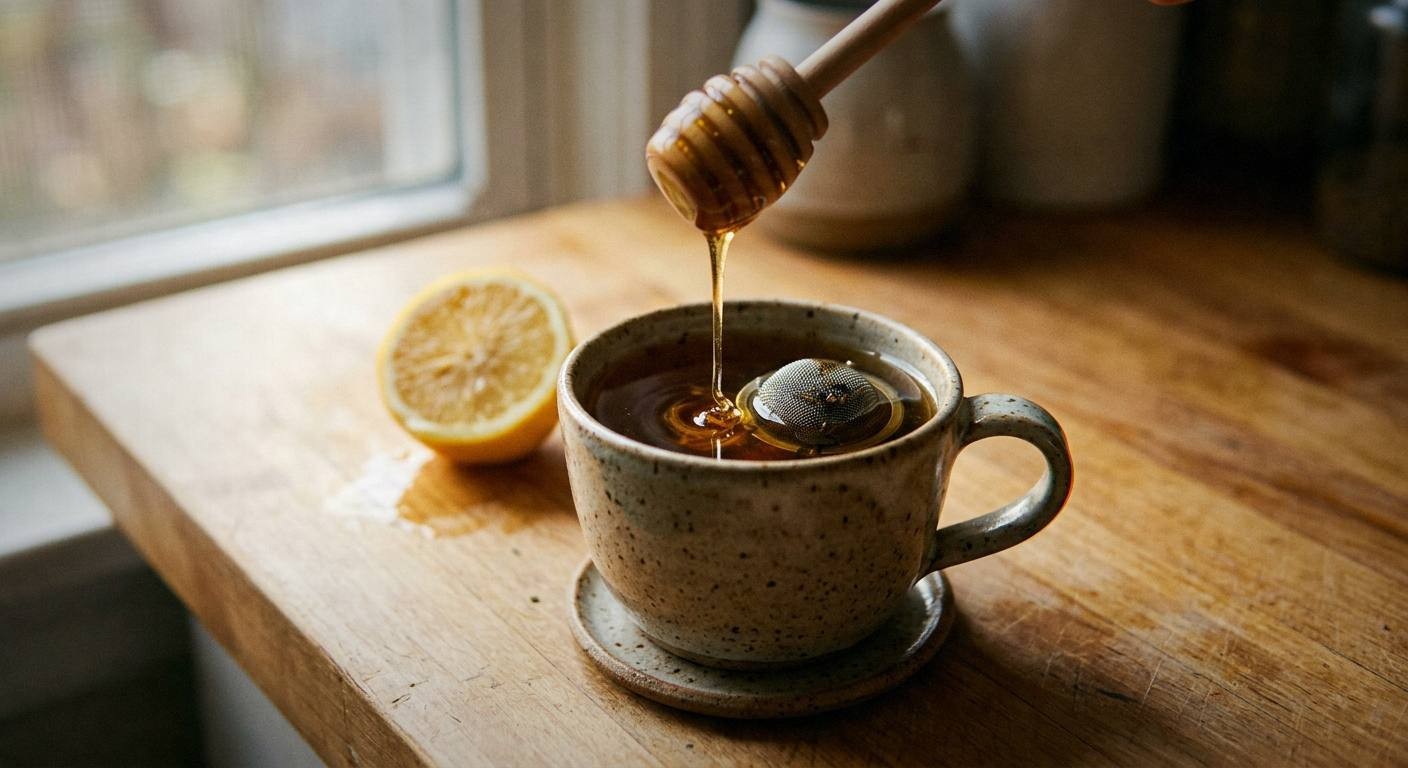
Use food-grade culinary thyme and common culinary sage, not essential oils, extracts or unidentified garden plants. The batch starts with 360 ml water and adds lemon and optional honey; simmering and straining change the final mug volume. Use the stated dried-herb measures rather than a blanket instruction to halve every fresh amount. Omitting honey is fine; honey must not be given to infants younger than 12 months. Raw honey has no demonstrated special advantage for this recipe.
For a spiced variant, add one 5-cm cinnamon stick with the ginger for the simmer, then remove it when straining. Alternatively, add 1/4 teaspoon ground turmeric at the start, accepting some sediment after straining. For chili heat, add only a small pinch (about 1/16 teaspoon) cayenne after straining, taste and omit it if unwelcome. These flavor additions are optional culinary choices, not treatment enhancers.
Dried Pantry Blend
Mix 2 tablespoons dried culinary thyme, 1 tablespoon dried culinary sage and 1 tablespoon dried ginger chips in a clean dry airtight jar. This is 4 tablespoons (12 teaspoons) total. For one mug, use 1 teaspoon blend with 240 ml freshly boiled water, cover and steep 10 minutes, then fine-strain. Add 1 teaspoon honey and 1 teaspoon lemon juice if desired, and cool enough to drink comfortably. Allow about 15 minutes including heating. This is a different, milder dried infusion, not a dose-equivalent fresh-ginger simmer. Keep the dry blend cool, dark and dry and follow the earliest ingredient best-before date. Discard damp or moldy blend.
Two-Mug Batch and Storage
Double the main recipe: 720 ml water, 20 g ginger, 6 thyme sprigs (or 2 teaspoons dried), 4 sage leaves (or 1 teaspoon dried), 2 tablespoons lemon juice and up to 2 tablespoons honey. Use the same simmer and steep times, allowing longer for the water to heat, and split the recovered tea equally. The one-mug recipe takes about 20 minutes including measuring, heating and straining.
Drink fresh, or refrigerate promptly in a shallow covered container at 40 F (4 C) or below and use the same day for flavor. This is a house quality target, not a tested shelf life. Refrigerate within 2 hours, or 1 hour above 90 F (32 C). A thermos does not by itself establish a safe all-day holding temperature. Reheat only the needed portion to 165 F (74 C), then let it cool enough to drink; chilled service is also fine.
If You Have a Sore Throat
This blend has no established treatment dose, frequency or tea-based gargling protocol. Choose drinks that feel comfortable and seek appropriate medical advice rather than increasing herb amounts. Seek emergency care for difficulty breathing, inability to swallow, or severe symptoms that are getting worse quickly. Seek medical advice for other persistent or worsening symptoms. The linked NHS guidance explains when to seek help. The recipe does not diagnose an infection or replace care.
The separate Mallow Tea review records why that former throat-tea preparation is also on hold; it provides no replacement medicinal dose.
More Drinks
- Grapefruit Thyme Fizz with Honey and Lime
- Sage Vodka Sour with Honey and Lemon: Published Egg-Free Version
- Golden Milk with Turmeric and Honey for Wellness
- Basil Gin Smash with Lime
Sources and Recipe Notes
The measured flavor options are house culinary adaptations; the linked publishers inform preparation methods. Timing assumes the ready ingredients stated above.