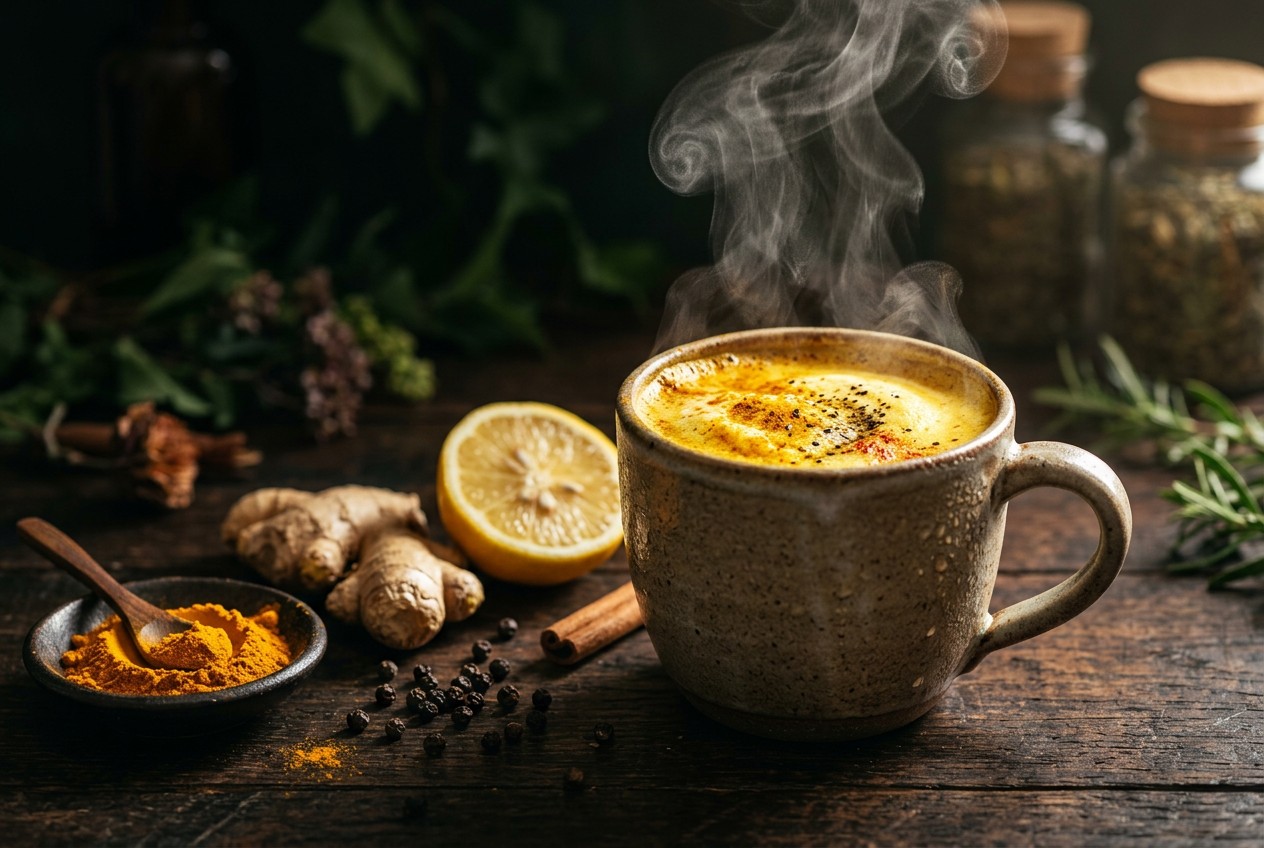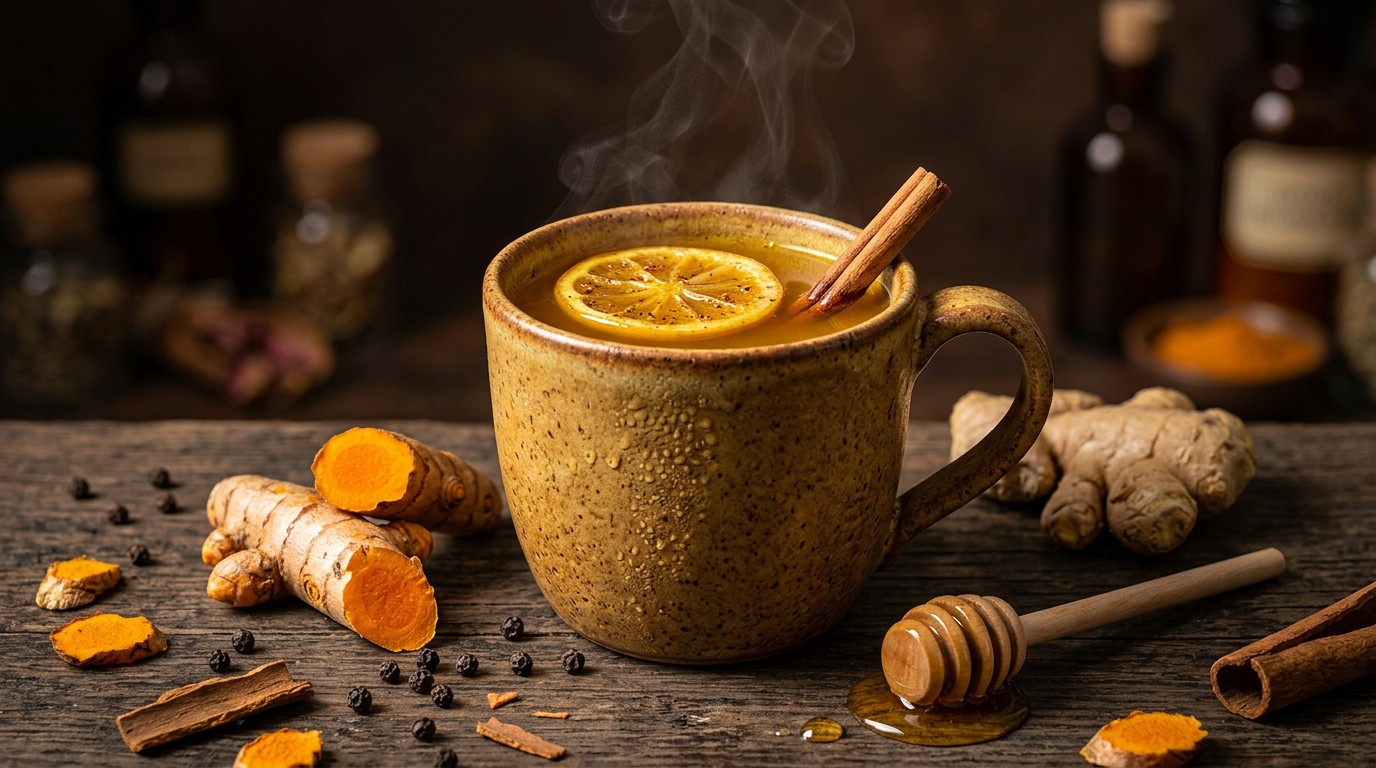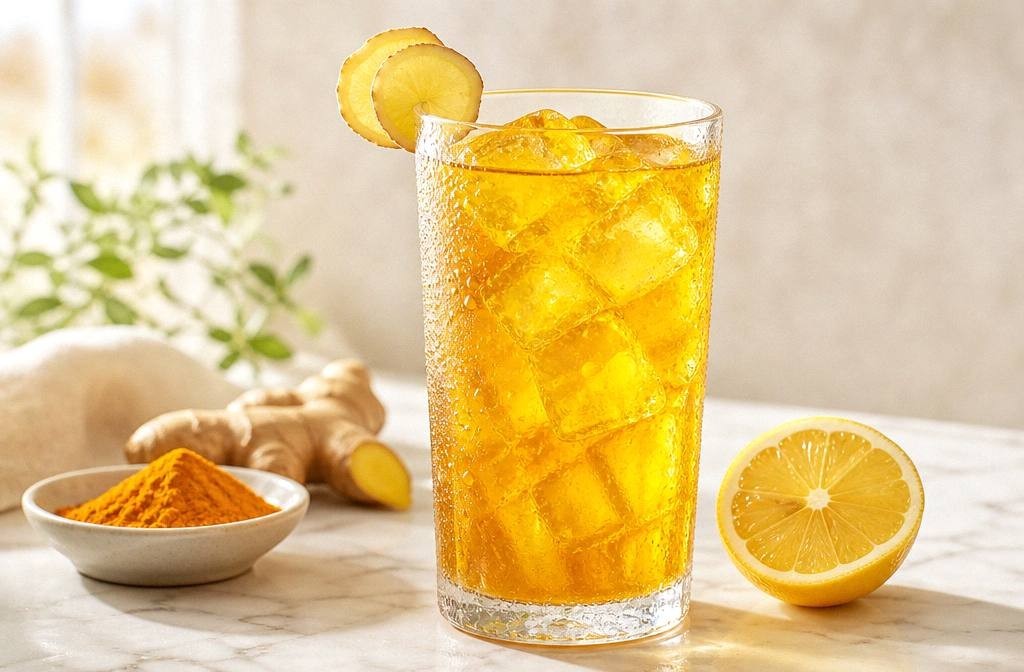
Mint and ginger make a bright, spicy cup. The culinary ginger-mint idea is retained with measured ginger and a labeled peppermint product. The drink is not established to improve stamina, mental clarity or fatigue.
Ginger Mint Tea
The plain peppermint product specifies boiling water and a covered ten-to-fifteen-minute steep. This house variation adds ginger and uses ten minutes. Its product instructions support preparation, not the page’s former energy claims.
- 1 plain Traditional Medicinals peppermint tea bag, or a plain peppermint product with its own labeled amount
- 1 cup (240 ml) freshly boiling water
- 1 teaspoon thinly sliced fresh ginger, rinsed and peeled
- 1 teaspoon honey, optional
- 1 small pinch cayenne, optional
- Place the tea bag and ginger in a clean heat-safe mug holding at least 12 fluid ounces. Add the freshly boiling water.
- Cover and steep for 10 minutes for the specified peppermint bag; follow a longer package time for a different product.
- Remove the bag and strain out ginger. Stir in optional honey or a small pinch cayenne, then let the drink cool to a comfortable temperature.
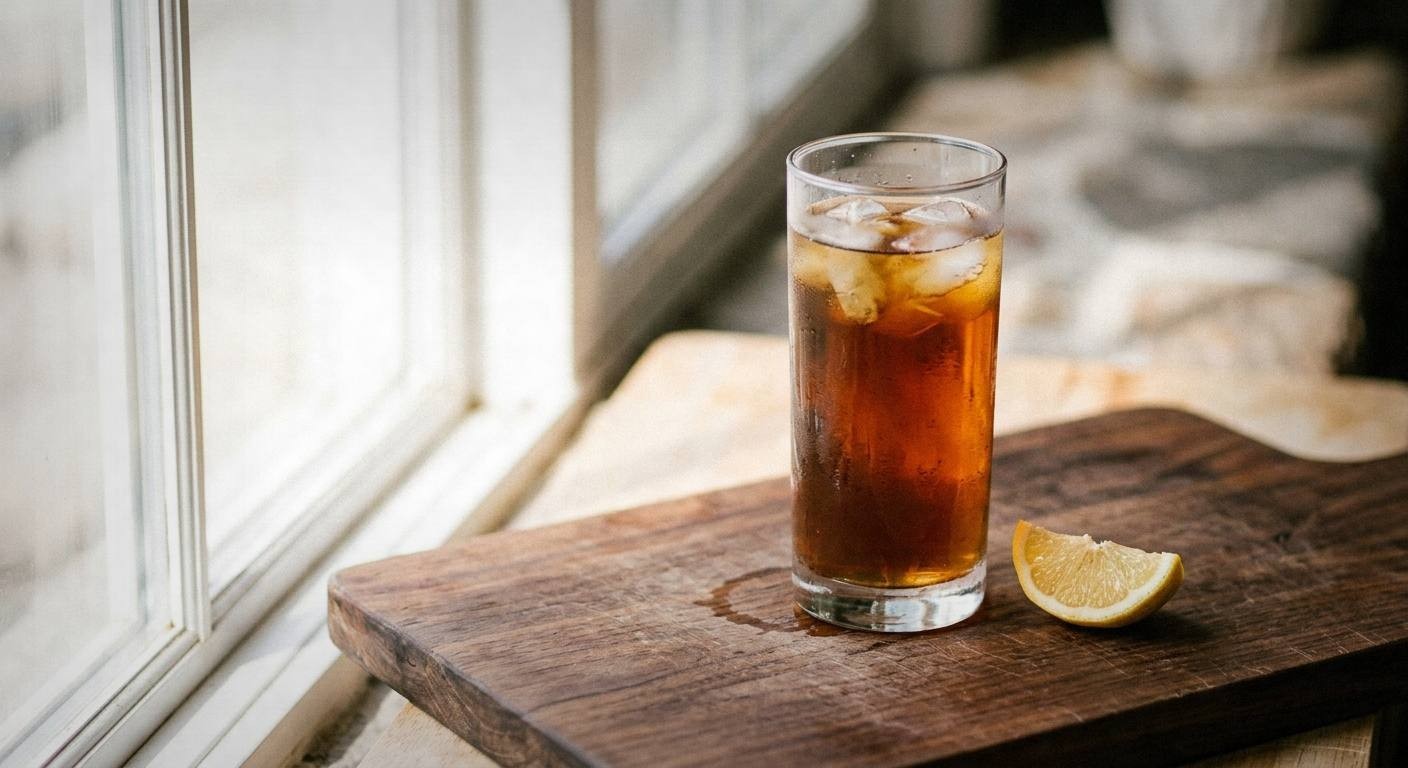
- Enjoy one portion for flavor. For an iced version, cool promptly and refrigerate at 40 F (4 C) or below; use the same day. This is no energy-treatment or daily-use regimen.
Allow about 5 minutes for preparation and heating plus 10 minutes steeping, 15 minutes total before cooling to drink. Makes one portion from one starting cup, with a little absorption and optional additions. Fresh mint or loose dried peppermint can be used when supplied as a labeled food tea; follow that product’s amount instead of assuming a tablespoon-to-teaspoon equivalence.
A Nettle, Rosemary and Fennel Cup
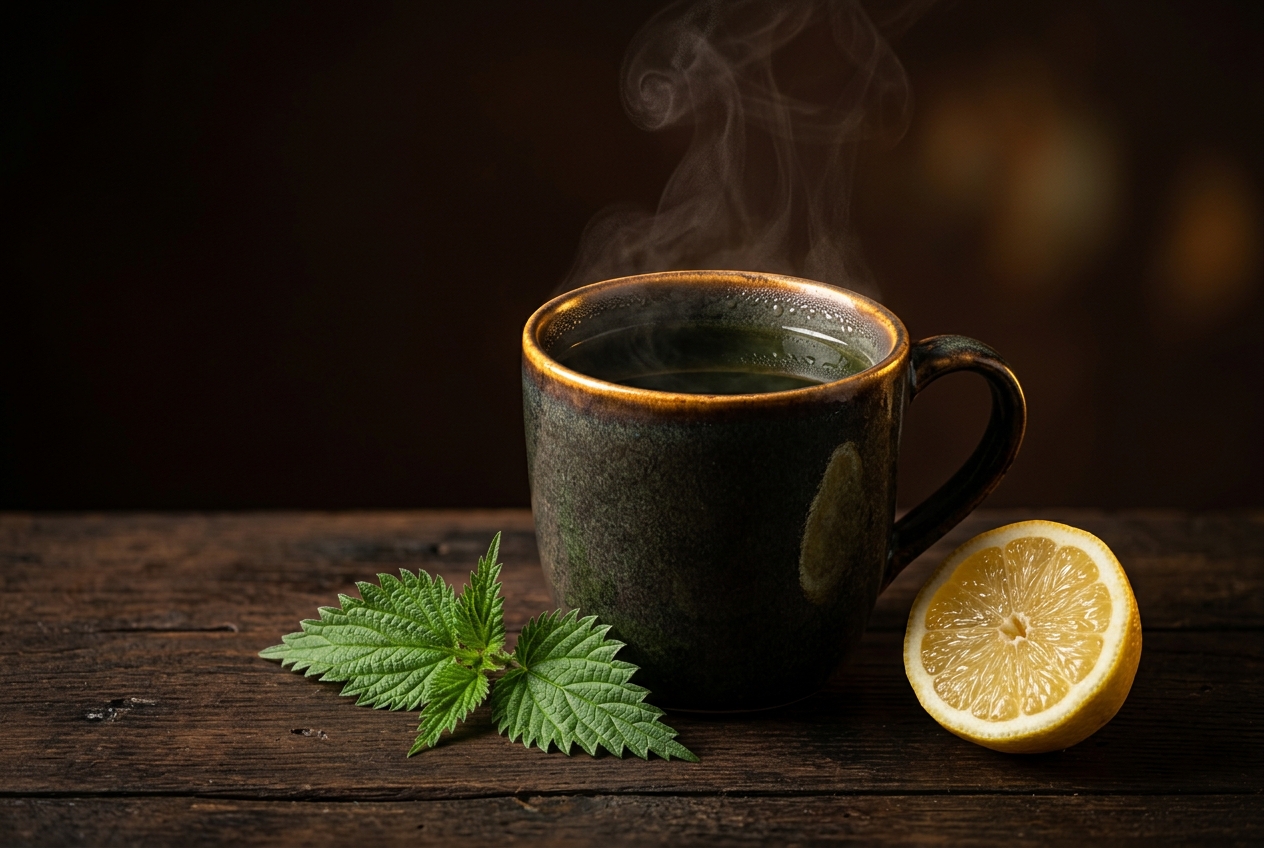
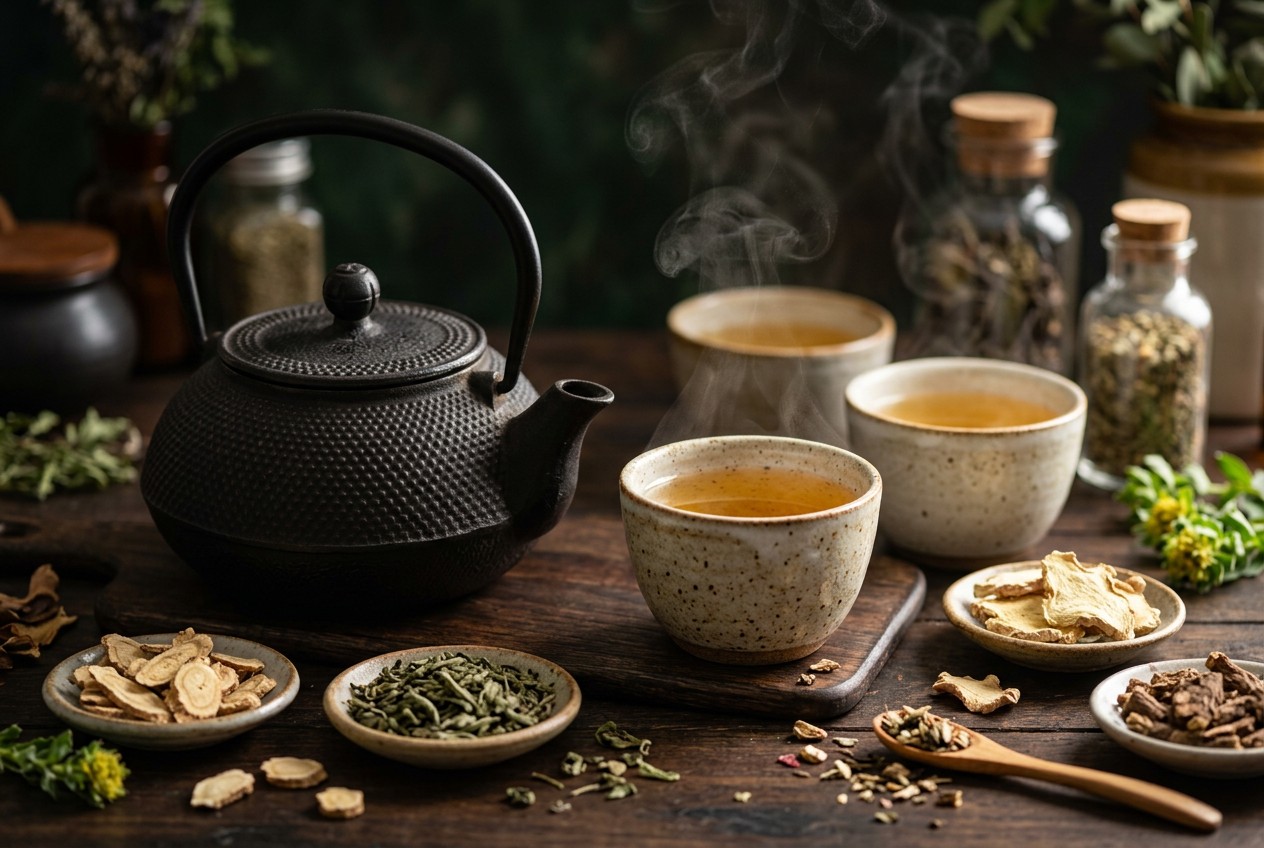
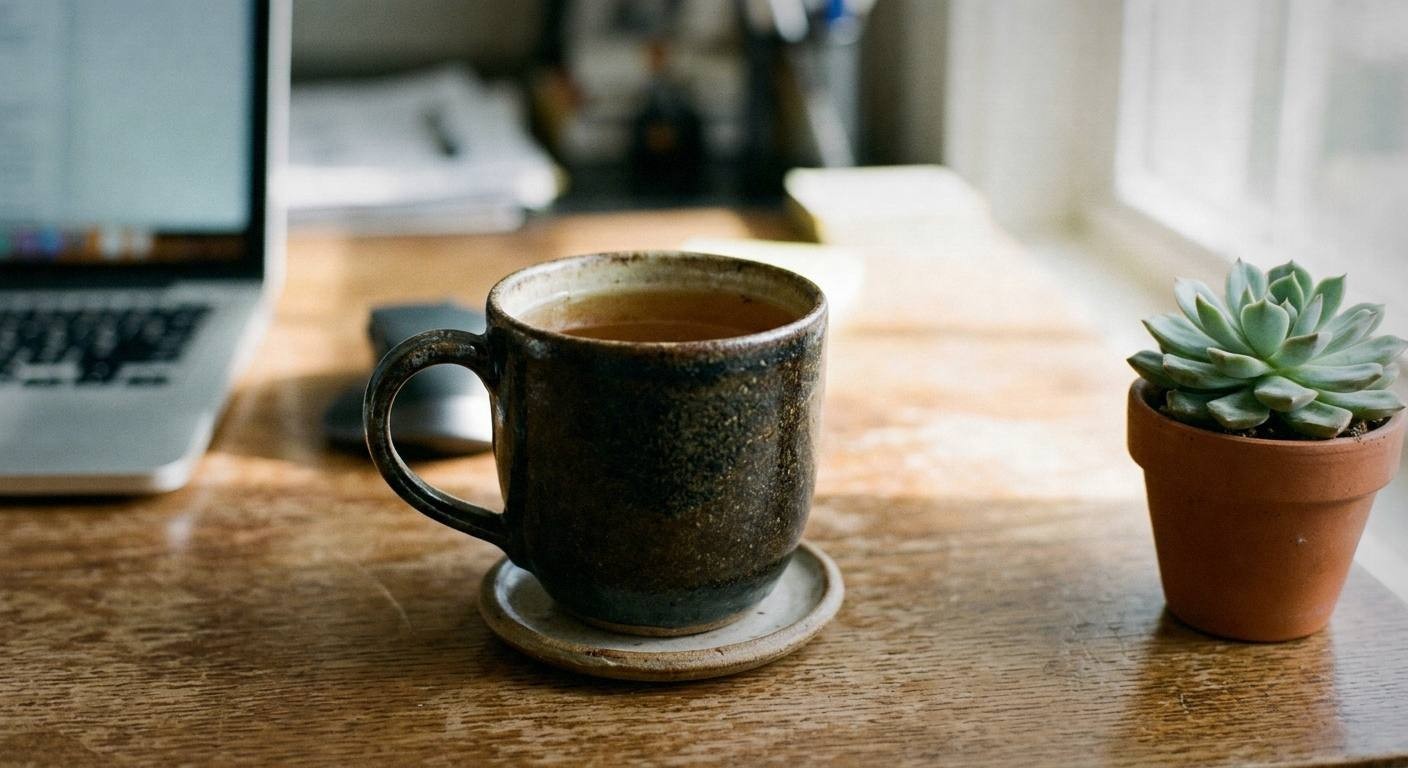
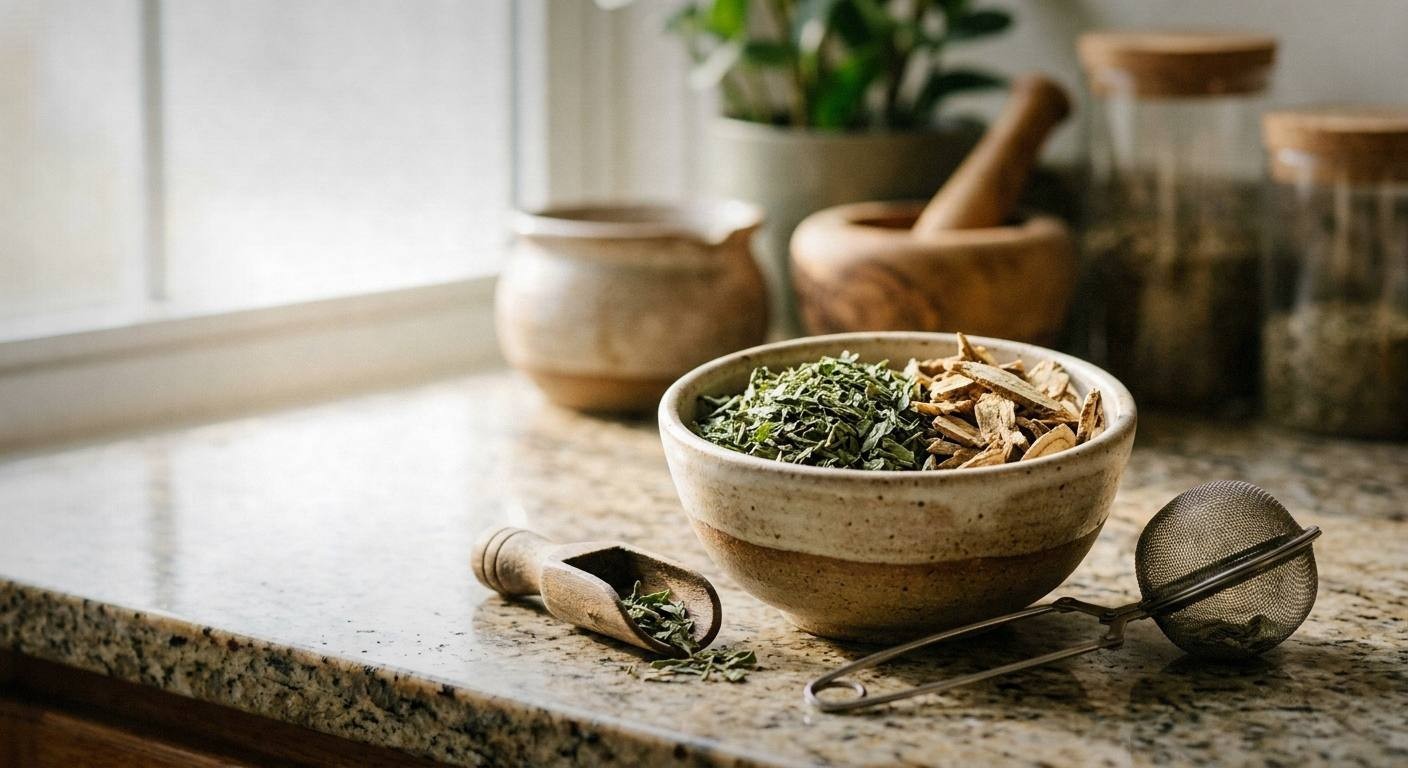
The culinary part of the former afternoon blend can be made without rhodiola: use one plain Traditional Medicinals nettle leaf tea bag , 1 cup freshly boiling water, 1/8 teaspoon food-grade dried rosemary and 1/8 teaspoon lightly crushed culinary fennel seeds. Cover for 10 minutes, remove the bag and strain all loose solids. Add 1 teaspoon lemon juice if desired. Makes one portion; allow about 15 minutes before cooling to drink. This is a house flavor blend, not a hormone or energy intervention. Follow the tea label and check suitability for your health and medicines.
Root Blends on Hold
Audit hold: The former morning eleuthero/licorice blend and afternoon rhodiola blend are withdrawn pending product identity, plant-part, concentration and individual-suitability review. Their quantities, extraction steps and consumption schedule are removed. Do not brew or drink those withdrawn formulas or add those roots to the retained cups.
The former ashwagandha-based blend has a separate Cortisol Tea ingredient and process review ; its preparation and cortisol claims are also withdrawn.
NCCIH warns that licorice can cause serious effects, particularly with prolonged use or some health conditions. Its rhodiola page describes limited evidence, possible side effects and medicine interactions. The old advice to drink these blends daily, on an empty stomach or at a designated afternoon hour did not resolve those issues. Siberian ginseng, also called eleuthero, is not interchangeable with Panax ginseng or with an unspecified supplement extract.
Cold and Milk Variations
For the retained ginger-mint tea only, promptly chill the prepared cup and use 1/2 cup tea with 1/4 cup sparkling water over ice in a 12-fluid-ounce glass. Add a washed mint leaf or two washed cucumber slices if desired. For a milk variation, blend 1/2 cup cooled tea, 1/4 cup chilled oat milk and one pitted date using a suitable blender. Check the milk’s allergen label and serve promptly. Each variation makes one small portion; no root supplement is included. For a plain fresh-mint pot and a review of what headache research does not establish, see fresh mint tea and headache evidence .
A stronger ginger flavor can use 2 teaspoons fresh sliced ginger in the same tea method; mint strength should follow its own label. These are flavor options without an energy claim.
Handling
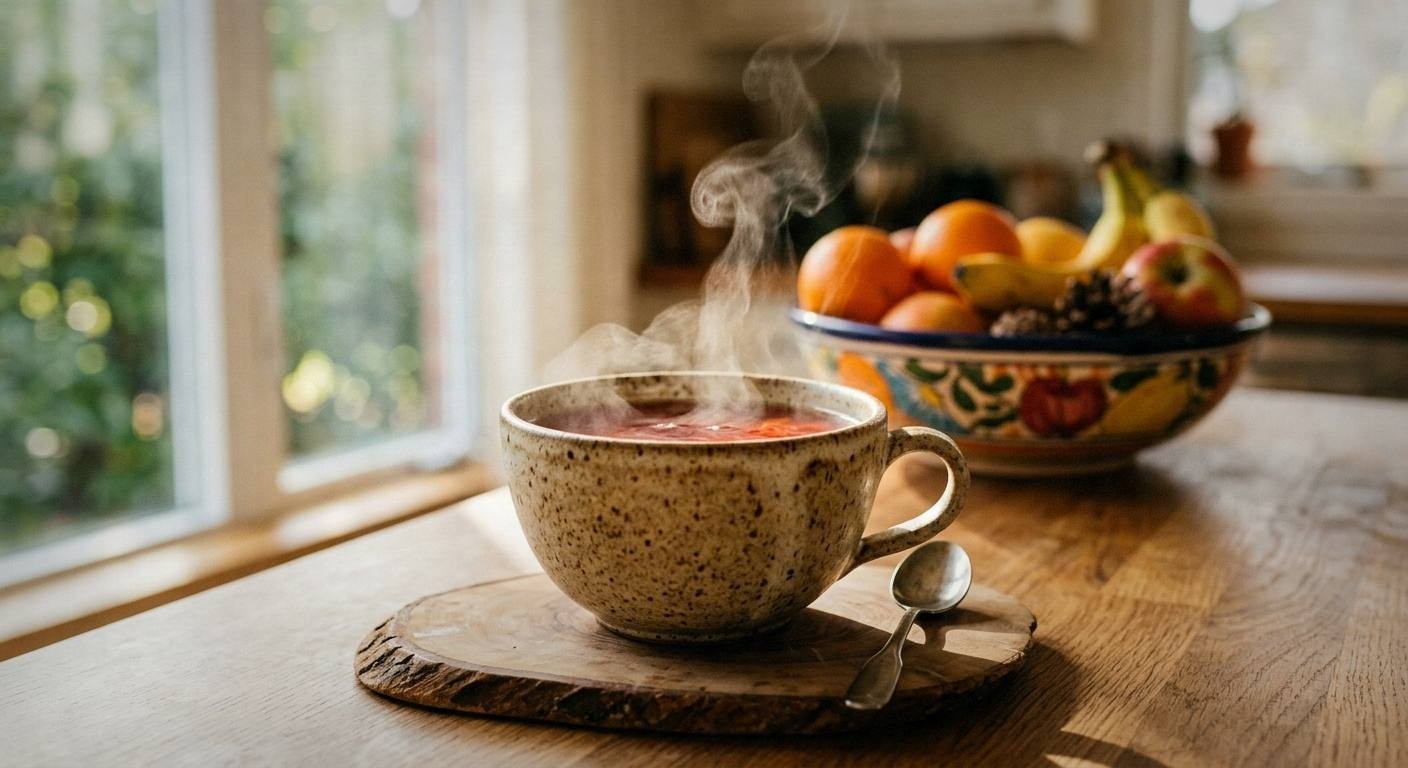
For dried herbal ingredients, use freshly boiling water and steep for at least five minutes or the longer package time. This follows BfR’s preparation guidance ; a hot-water dispenser is not a substitute for a kettle at a rolling boil.
For leftovers, use small heat-safe containers and refrigerate promptly at 40 F (4 C) or below; do not wait for complete cooling on the counter. Discard after more than two cumulative hours without cold holding, or one hour above 90 F (32 C). FoodSafety.gov gives these handling rules. Normal smell and appearance do not establish safety.
Prepare the retained cups for immediate enjoyment; if saving tea, plan same-day refrigerated use. This is a conservative plan, not a shelf-life test. Persistent fatigue warrants medical assessment. Ask a clinician or pharmacist about herbs with medicines, pregnancy or breastfeeding; a recipe cannot determine individual suitability. No physical testing was performed for this revision.