Steep ground coffee directly in rum, filter it and blend with cooled sugar syrup. This version includes measured water and a readable vanilla fraction. A water-extraction method has different timing and yield and is not interchangeable with this direct-rum method.
Ingredients
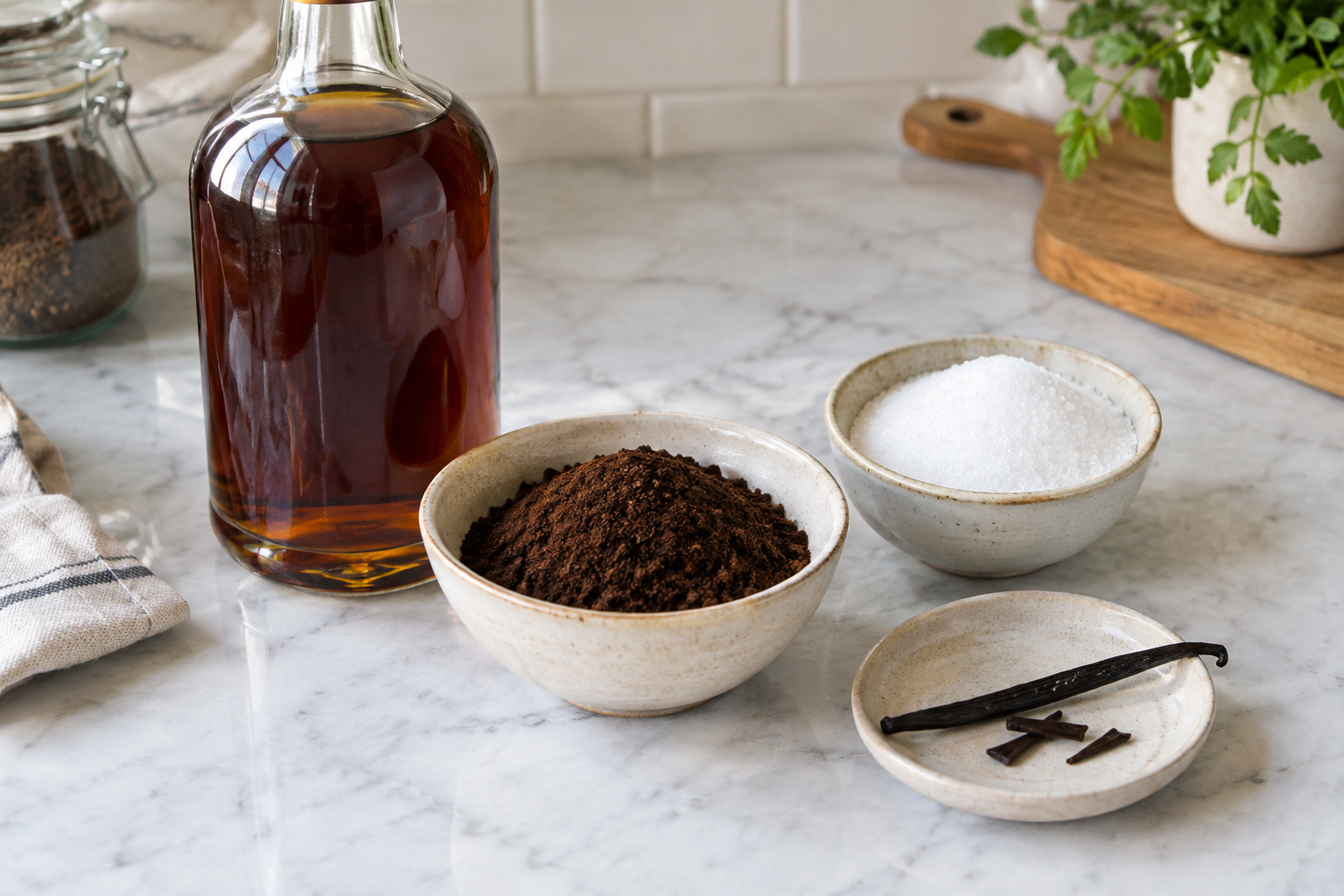
- 500 ml dark rum labeled 40% ABV
- 30 g ground coffee, weighed
- 1/3 vanilla bean, split lengthwise
- 200 g white sugar
- 150 ml water
Instructions
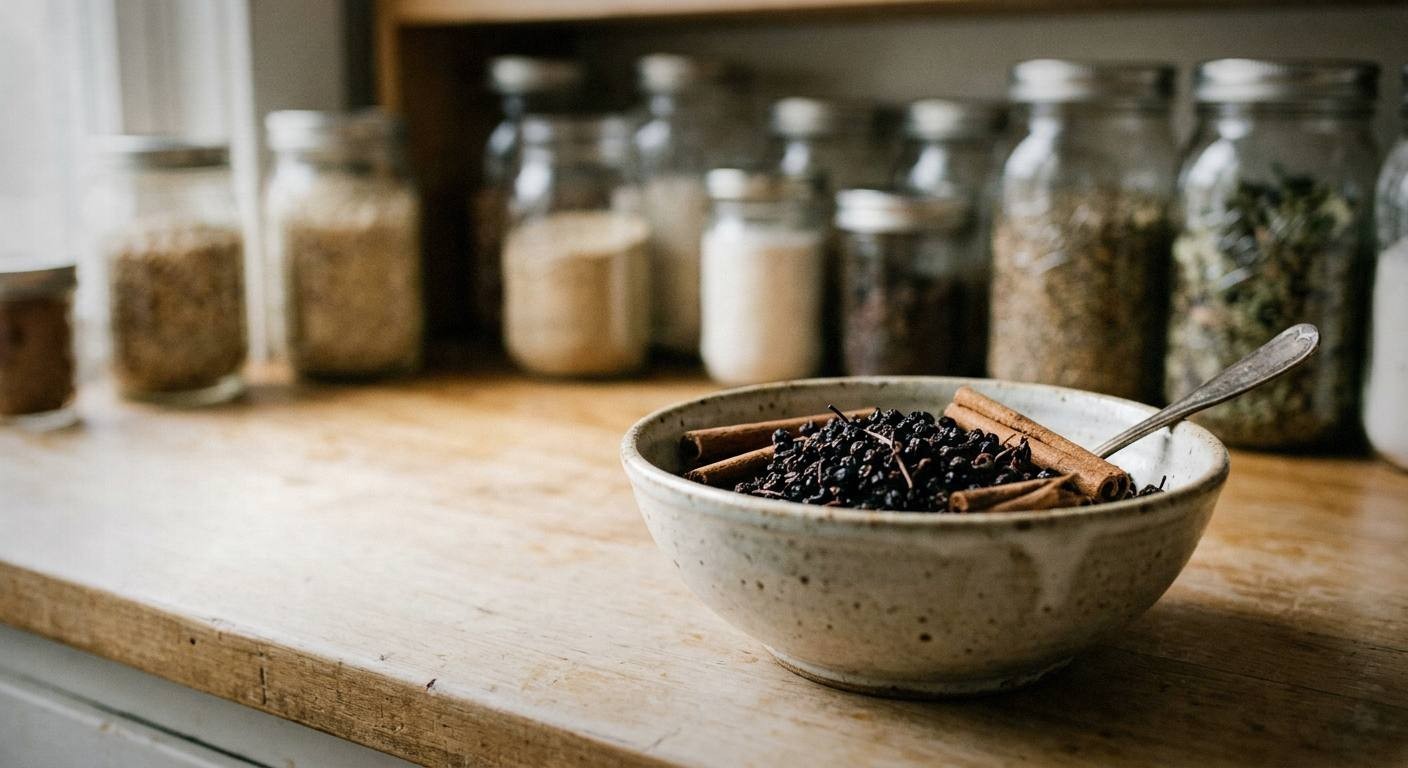
- Combine rum, ground coffee and split vanilla bean in a clean dry 1-litre jar. Close, gently shake and infuse away from heat and light for 8 hours; up to 24 hours for a stronger flavor.
- Heat sugar and water in a small saucepan, stirring until dissolved, about 5 minutes. Remove from heat; cool completely, using an ice-water bath if needed. Never heat the rum.
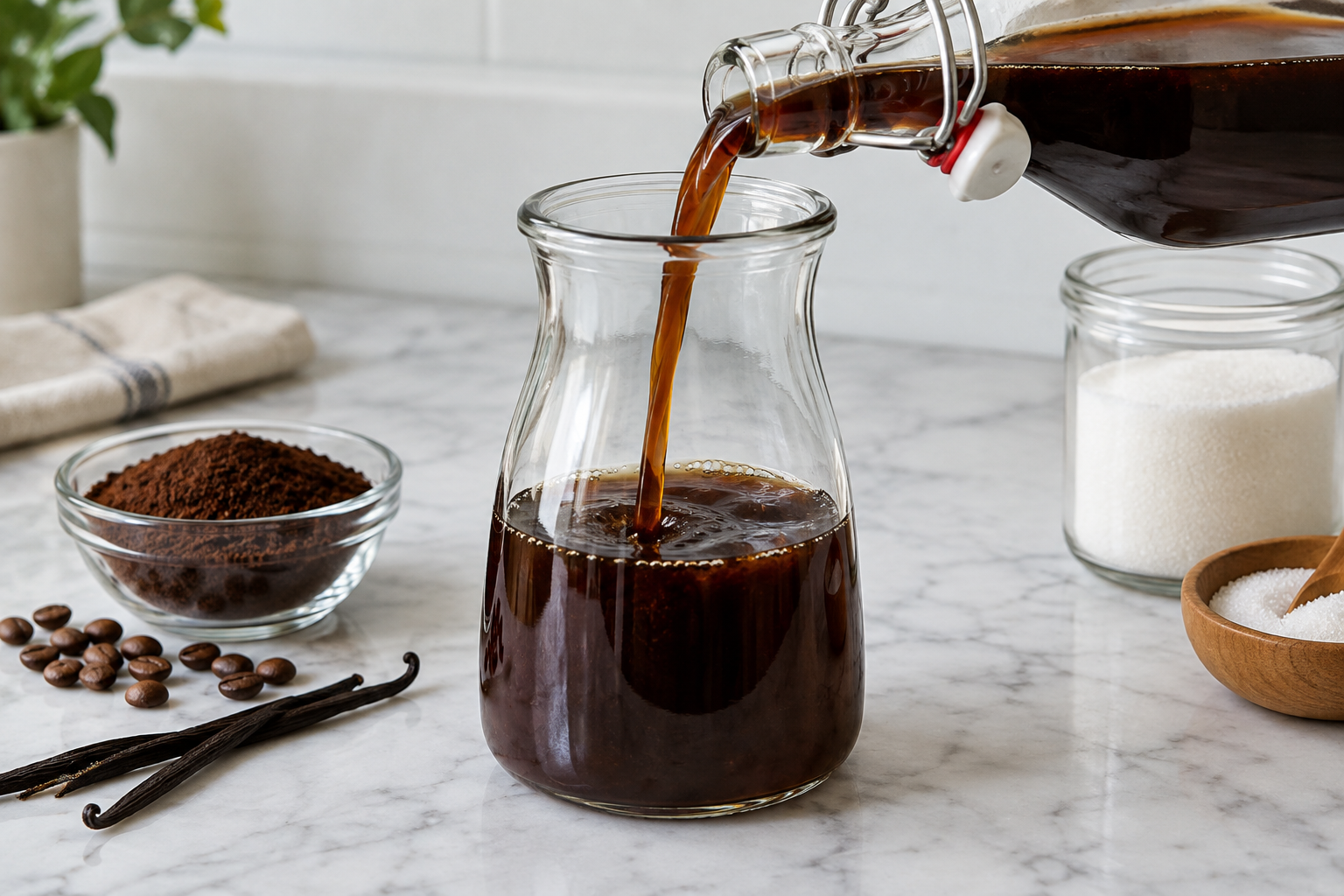
- Filter the infused rum through a food-safe coffee filter into a clean jug. Remove and discard the grounds and used vanilla. Allow additional time if filtration is slow.
- Add half the cooled syrup, stir and taste, then add the rest to preference. Measure and record the actual syrup addition and final recovery.
- Bottle in clean dry containers, label ingredients, alcohol, caffeine and preparation date; refrigerate at 40 F / 4 C or below. Plan to use within 1 month of bottling; this is a house quality limit, not a tested shelf life.
Recovery, clock and bottling
Allow about 20 minutes active work, 8 to 24 hours infusion and roughly 40 minutes for syrup cooling and filtering, longer if needed. The lower-end total is about 9 hours. Do not heat the spirit. Use a clean dry 1-litre infusion jar and bottles large enough for the measured finish; often 650 to 750 ml with all syrup, less with half. Absorption and filtering change recovery, and sugar adds solution volume, so 500 ml rum plus 150 ml water is not an exact yield calculation.
Measure the liqueur and count 30 ml servings from that recovery: 650 to 750 ml gives roughly 21 to 25 small pours. No fixed 16-drink claim applies. Coffee contributes caffeine; this is an alcoholic drink and its final ABV has not been measured. Starting with a 40% ABV spirit does not establish finished strength or sterility.
Adjustments and gift batches
- Use 500 ml of 40% ABV dark or light rum, vodka, bourbon or brandy. Do not substitute a low-alcohol or nonalcoholic drink into this infusion method.
- Replace the 1/3 bean with 1/2 teaspoon vanilla extract or paste, added after filtering. Taste before adding more in a later batch. Remove the used bean and grounds; do not dry a wet used bean for shelf-stored vanilla sugar.
- For less or more sugar, dissolve 150 g or 250 g sugar in the same 150 ml water. Start with half the cooled syrup and add more to taste; record how much went in and measure the final recovery. These are house options, not a shelf-stability adjustment.
- Double batch: 1 litre spirit, 60 g coffee, 2/3 bean, 400 g sugar and 300 ml water. Triple: 1.5 litres spirit, 90 g coffee, 1 bean, 600 g sugar and 450 ml water. Divide between two or three 1-litre infusion jars; never overflow one jar. Bottle by actual measured recovery.
Ground coffee suits this method. Instant coffee is not inherently incapable of making liqueur, but it is not a gram-for-gram replacement here. Do not extend the steep to three days or put new grounds into sweetened finished liqueur to rescue flavor. For bitterness, try a small sample with another teaspoon of the reserved syrup and record the amount; for excess sweetness try 1 tablespoon of the specified spirit at a time. Each addition changes volume and strength.
Storage and gifting
Refrigerate tightly capped at 40 F / 4 C or below from bottling. Plan to use within 1 month of bottling as a cautious house quality limit, not a validated shelf life. This limit does not establish microbiological safety for every variant. Label preparation date, ingredients, contains alcohol and caffeine, refrigeration and planned use date. Deliver chilled and tell the recipient to refrigerate immediately; do not ship as a shelf-stable food gift. No week of maturation is required before gifting.
Fine sediment may be coffee particles, but new bubbling, mold or an unfamiliar smell is a reason to discard, not proof the alcohol will sterilize it. Do not diagnose all cloudiness as harmless. Filter through a new food-safe coffee filter if it is simply gritty immediately after preparation.
Measured uses
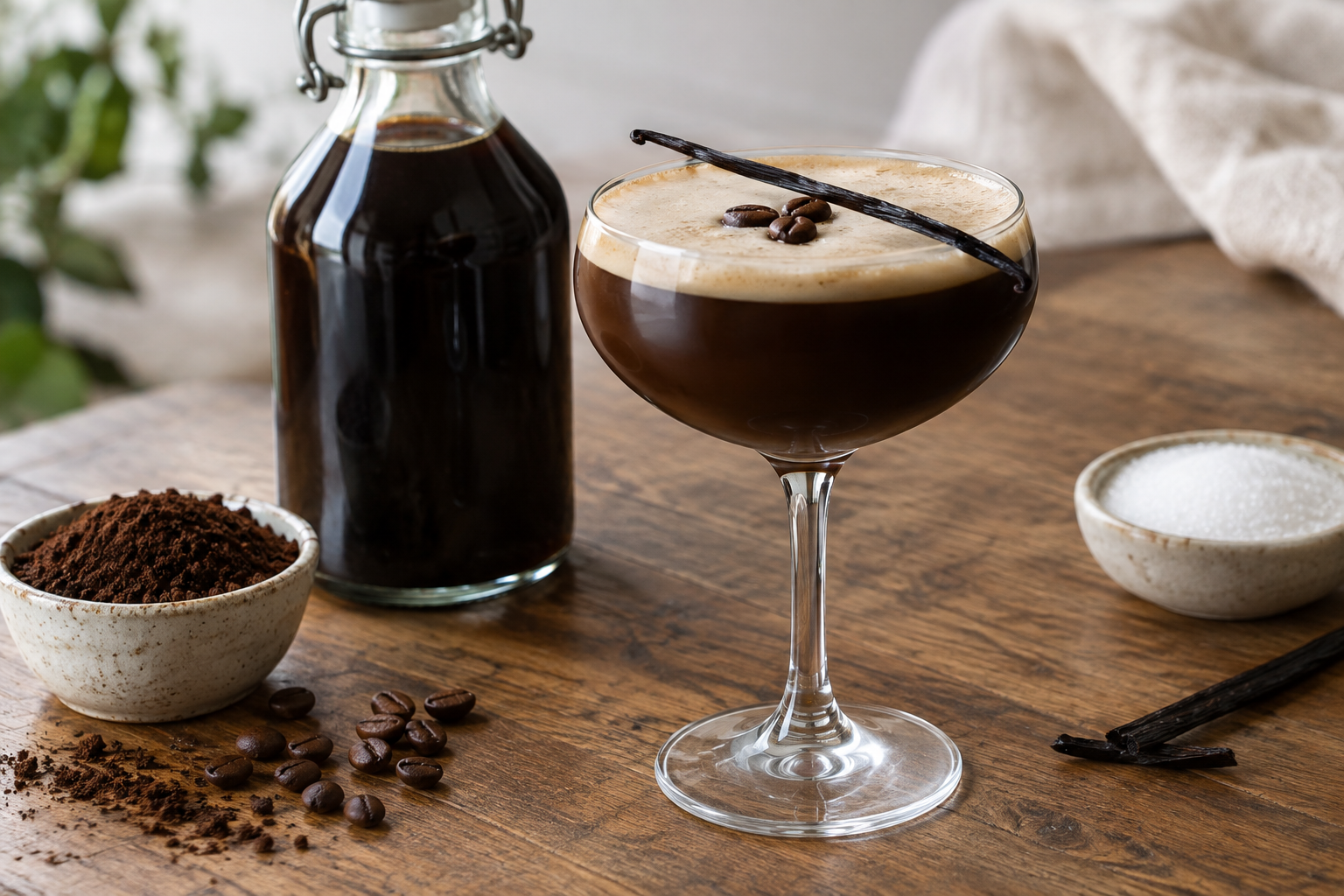
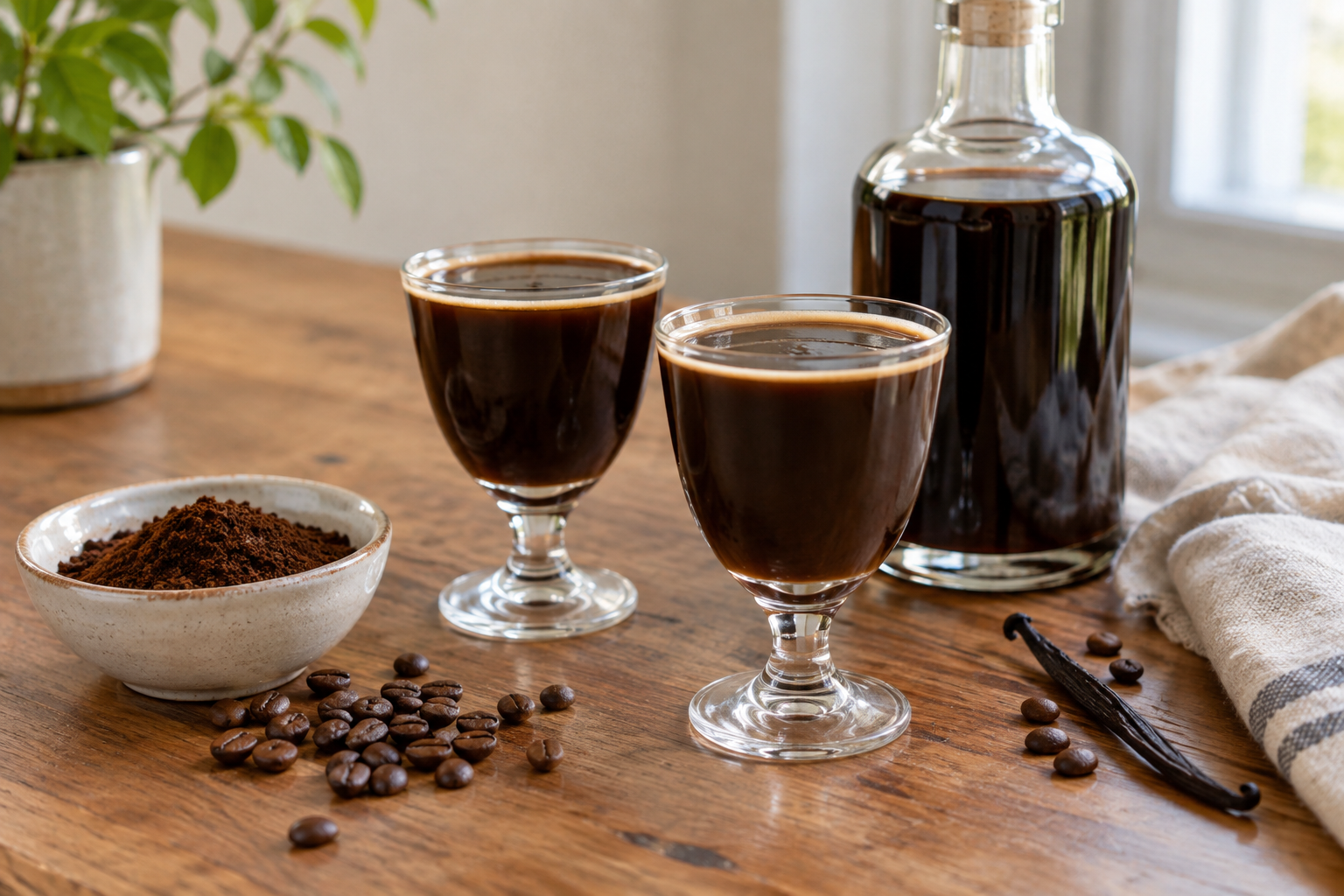
For two small espresso -martini-style drinks, combine 75 ml liqueur, 75 ml vodka and 75 ml freshly brewed espresso cooled fully before closing the shaker. Shake with ice about 15 seconds, strain into two chilled 150 ml coupes and serve; liquid starts at 112.5 ml per glass before ice dilution. Keep decorative coffee beans on the table. This equal-parts build is distinct from a classic martini ratio.
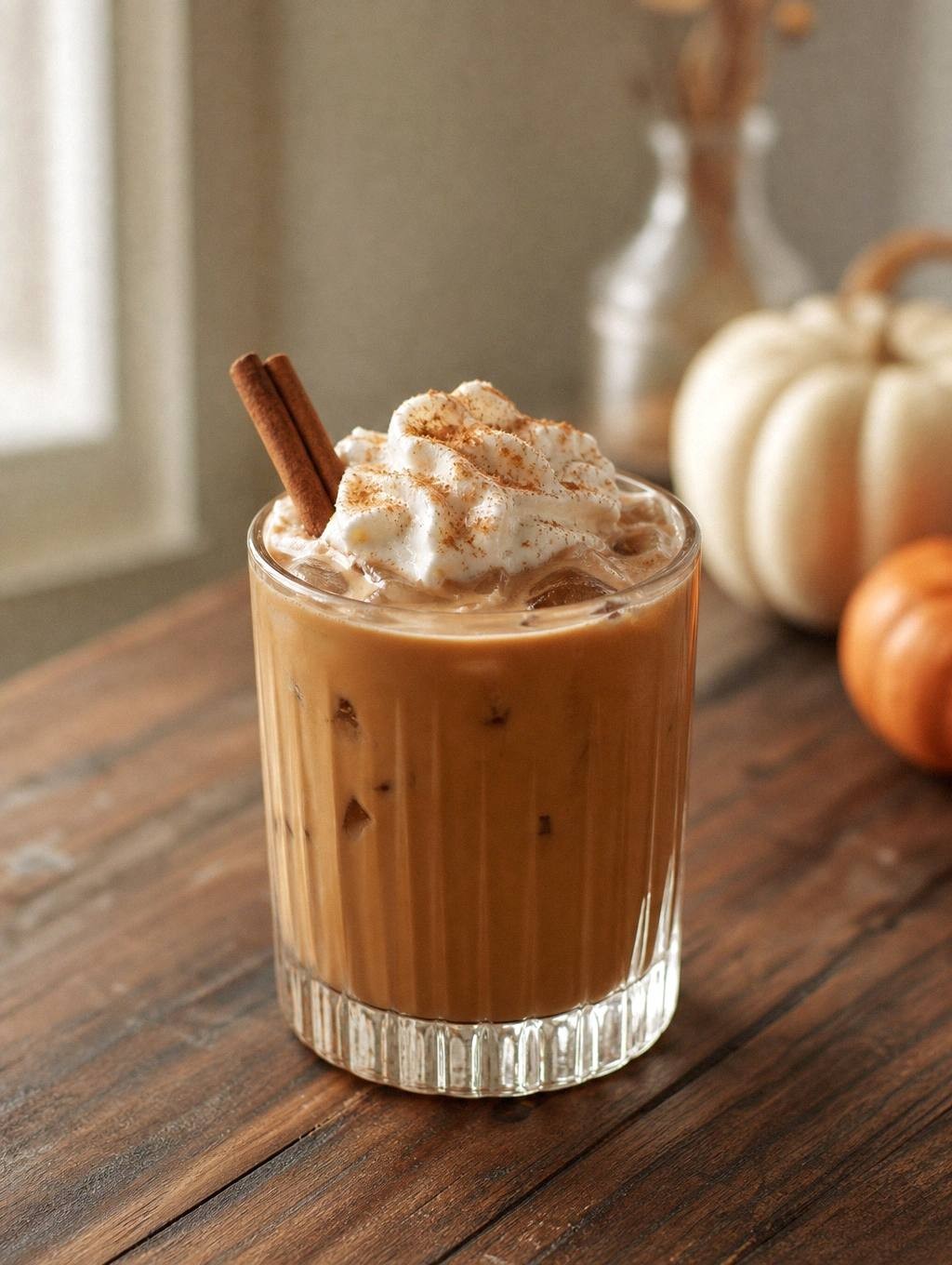
For one house White Russian, stir 30 ml liqueur and 60 ml vodka over 1/2 cup ice in a 250 ml glass, add 30 ml pasteurized cream and serve immediately. Keep the cream cold . For dessert, spoon 15 ml liqueur over 1/2 cup vanilla ice cream and serve to adults. In baking, 15 ml adds a coffee note to a batter; it is not a universal volume substitute for vanilla extract and baking does not guarantee complete alcohol removal. See espresso martini ideas and pumpkin White Russian for context.
Handling Notes
Do not infer an indefinite shelf life or sterility; do not reuse a wet vanilla bean. Recovery depends on the grounds and syrup fraction.
Different coffee and spirit methods can produce different results; no other recipe’s yield is transferred.
FDA: Serving Up Safe Buffets . House shorter refrigerated limits are editorial choices, not laboratory shelf-life validation.