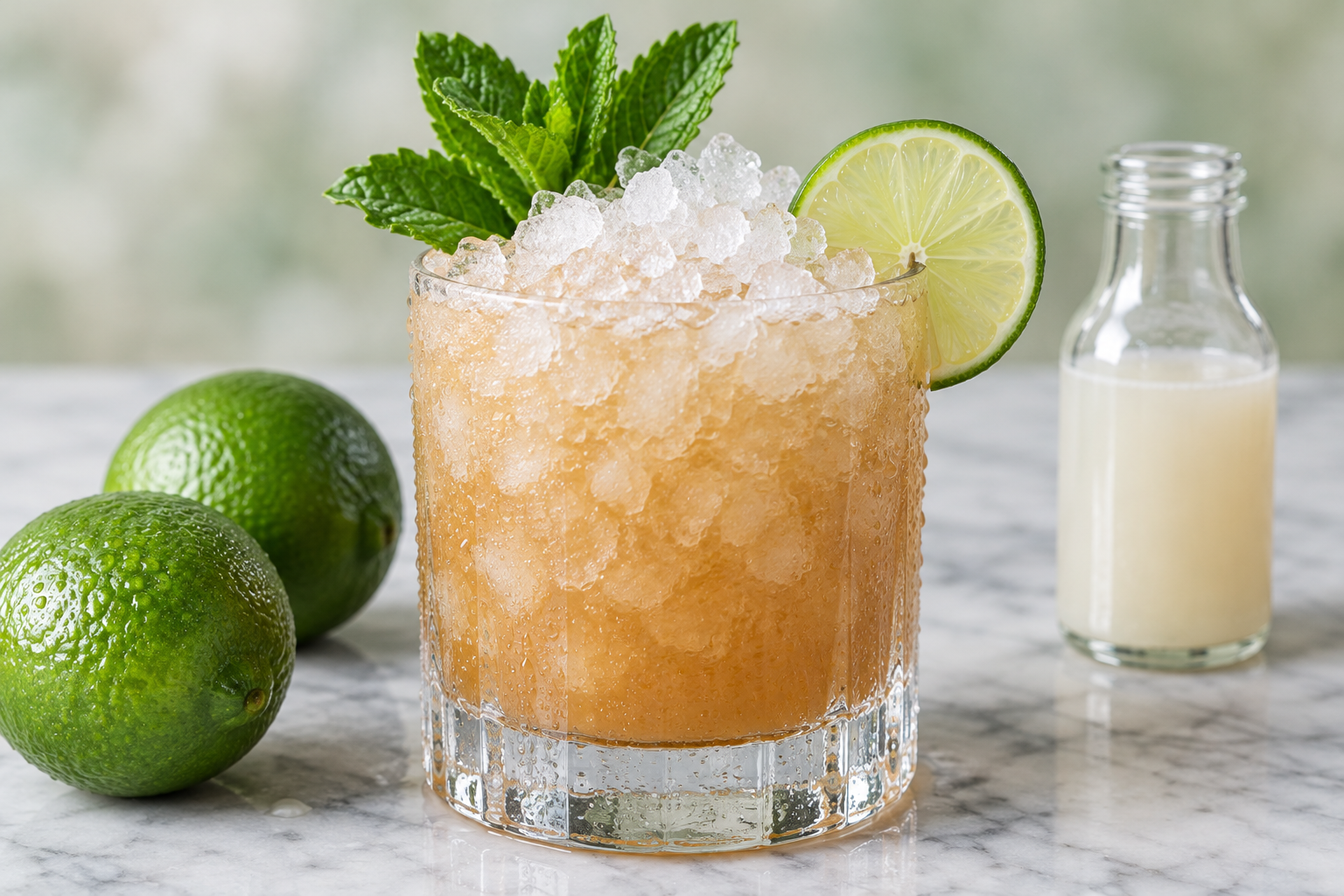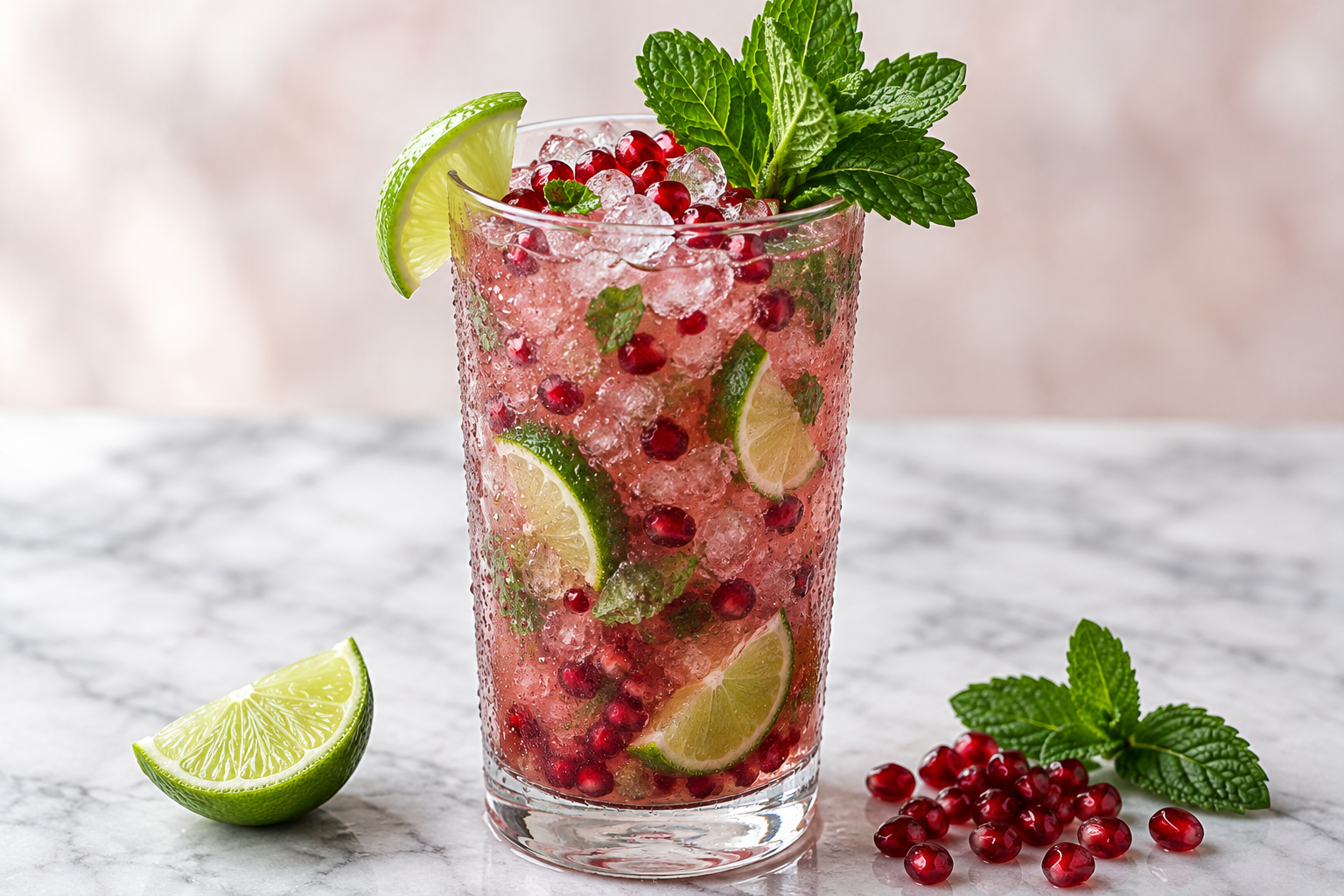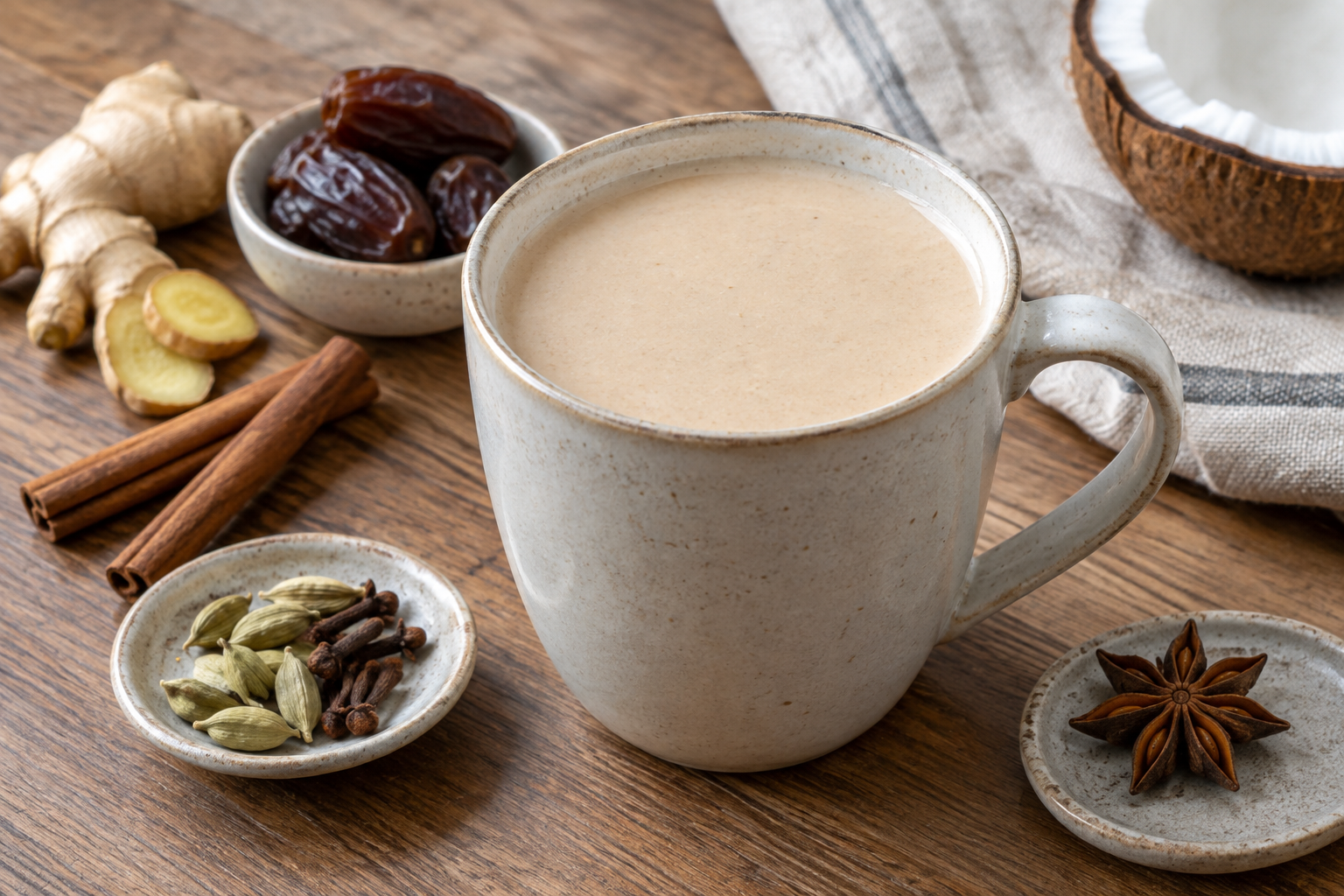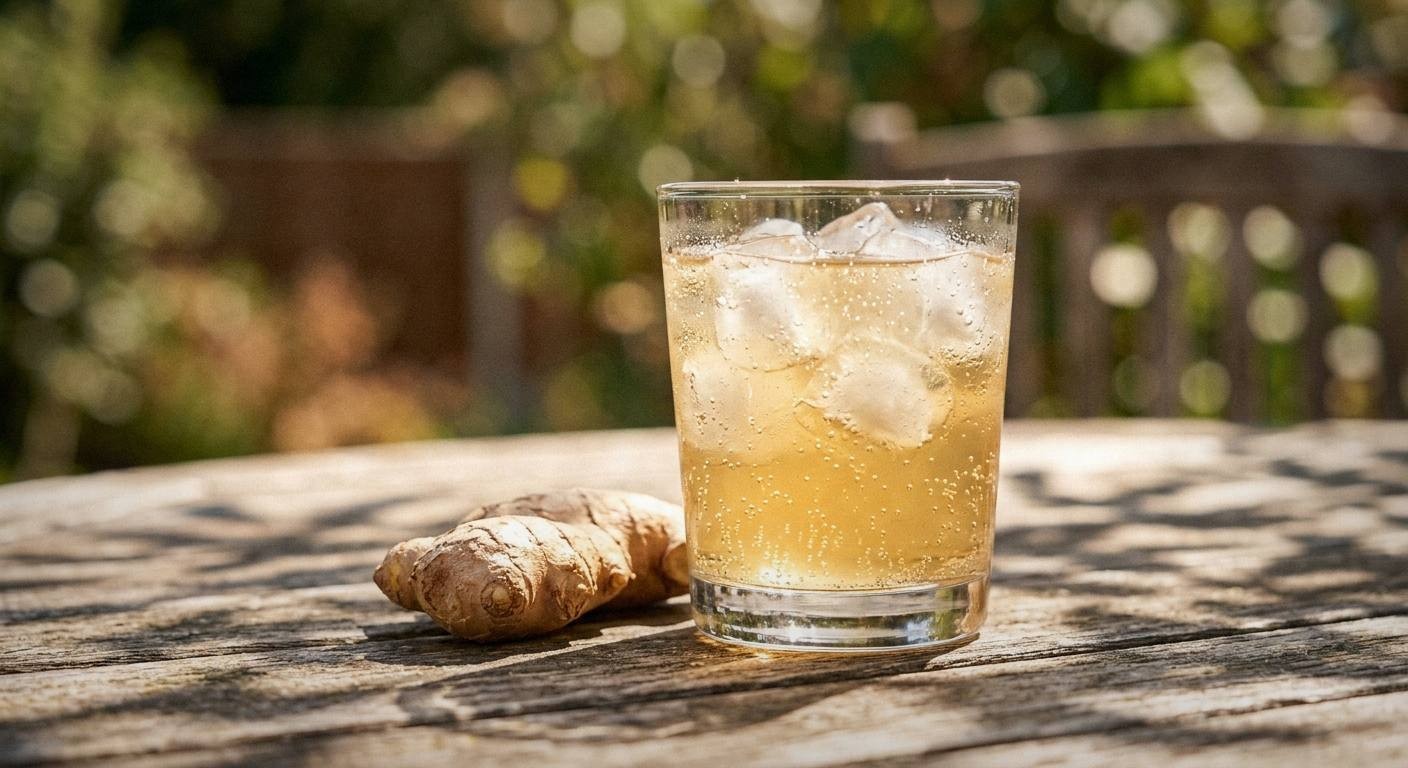
This is cooked ginger soda with commercial carbonation. It replaces the printable fermented-ginger-beer recipe. Its culinary method is compared with Simply Recipes Homemade Ginger Ale ; the house ginger, sugar and lemon balance is an adaptation, not a kitchen-tested copy.
Quick Non-Fermented Ginger Soda
8 drinks; 250 ml each from measured 500 ml concentrate and 1500 ml soda. about 65 minutes or longer including cooling; 5 minutes with prepared cold concentrate.
Ingredients
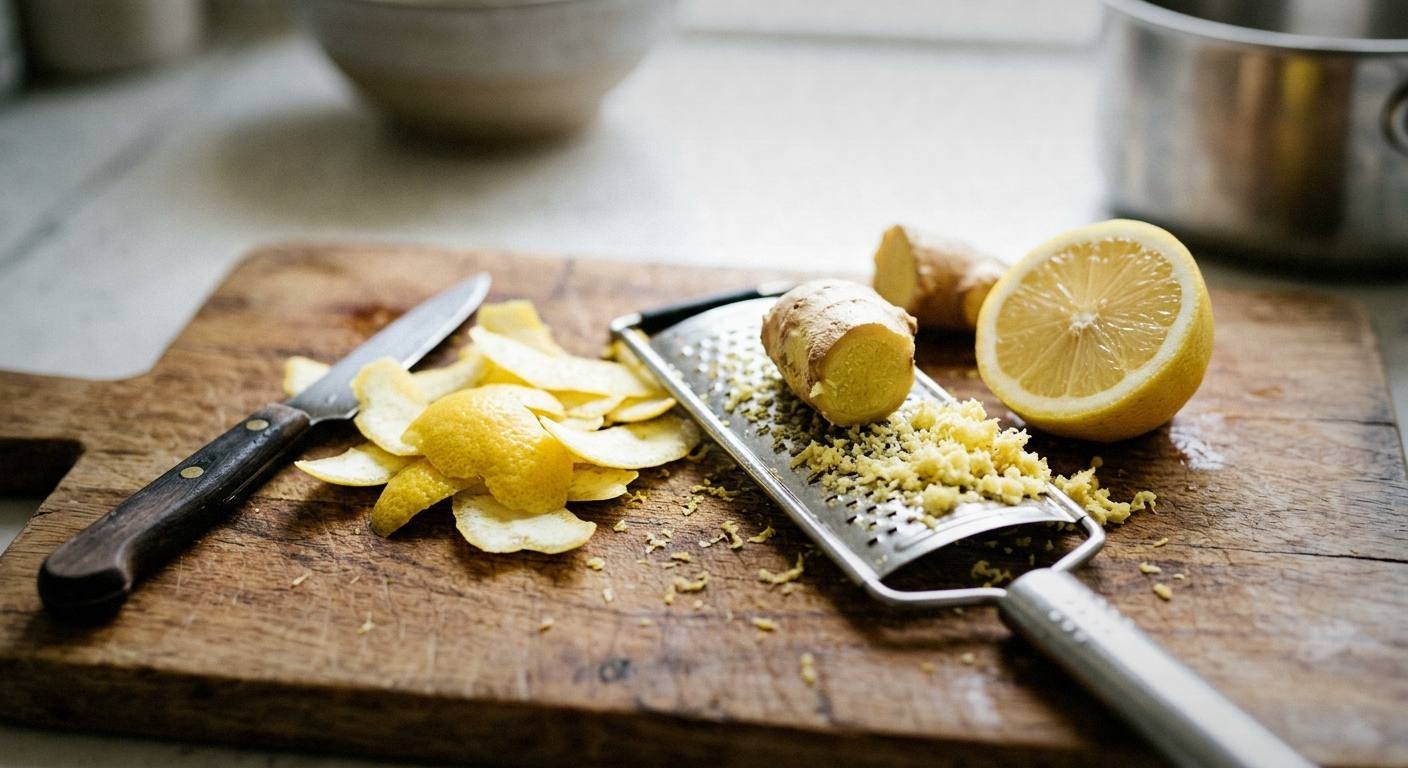
- 60 g fresh culinary ginger (Zingiber officinale), washed and thinly sliced
- 1/2 cup granulated sugar
- 500 ml potable water, plus water for measured recovery
- 30 ml lemon juice
- 1500 ml chilled commercial sparkling water labeled 0.0%
Method
- Simmer sliced ginger in 500 ml water gently for 5 minutes. Remove from heat, cover and steep 20 minutes.
- Strain out ginger into a heat-safe container. Stir in sugar while warm until fully dissolved, and add lemon juice. Measure concentrate; add potable water to 500 ml if short, or reserve excess separately.
- Cool concentrate promptly in an ice bath and refrigerate to 40 F or below, about 30 minutes or longer.
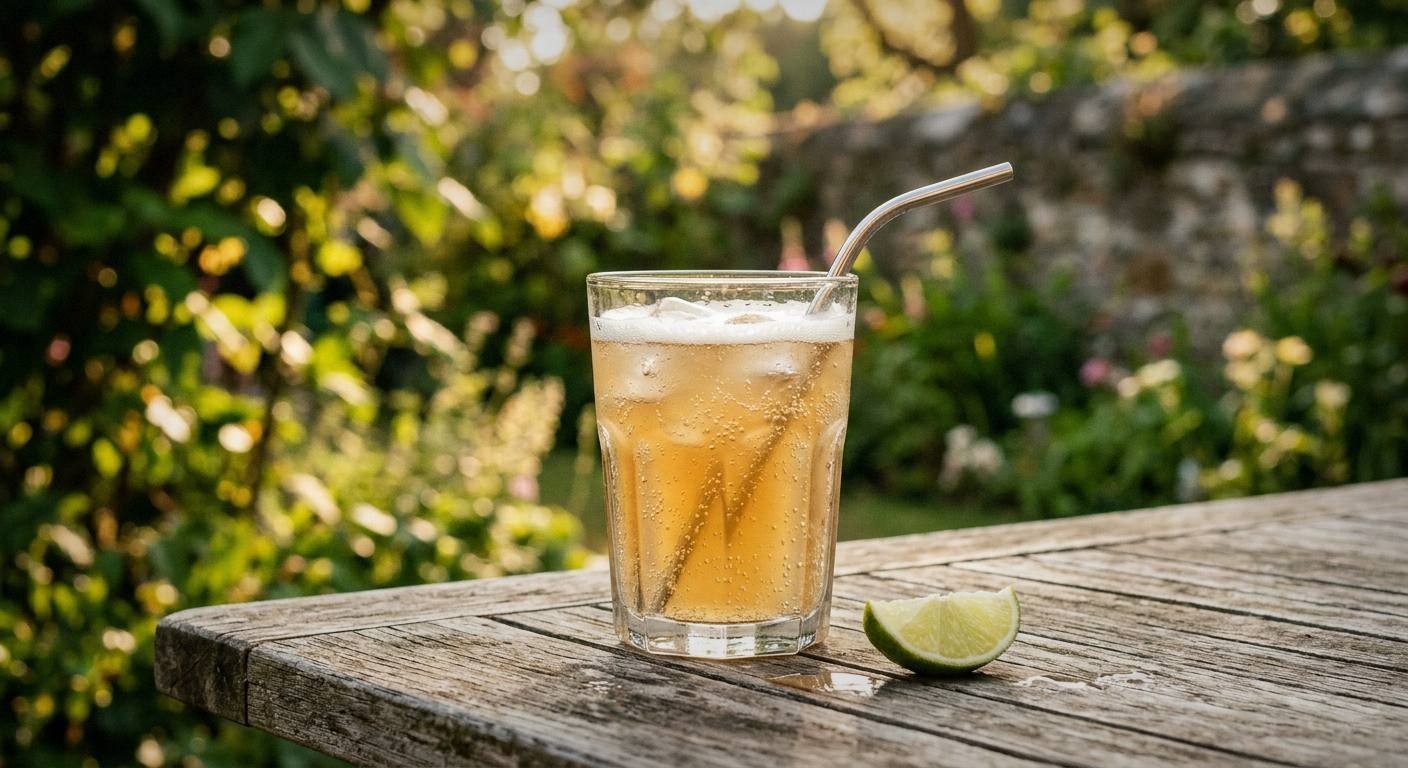
- For each of eight 250 ml drinks, combine 62.5 ml cold concentrate with 187.5 ml sparkling water in a 350 ml glass. Add sparkling water at serving; do not seal for bottle conditioning.
- Use concentrate day made or freeze promptly in small portions, then thaw in the refrigerator and use that day. Refrigeration does not validate an uncontrolled ferment.
Use identified food-grown culinary ginger (Zingiber officinale), not foraged plants sold or described as wild ginger. NC State Extension identifies common cooking ginger separately from Asarum canadense, a wild ginger it says not to consume . These are not interchangeable ingredients.
The final 2 litres comes from 500 ml measured concentrate plus 1500 ml sparkling water; it is not an asserted fermenter yield. The carbonation comes from purchased sparkling water. No live-culture, probiotic or universal alcohol-content claim remains.
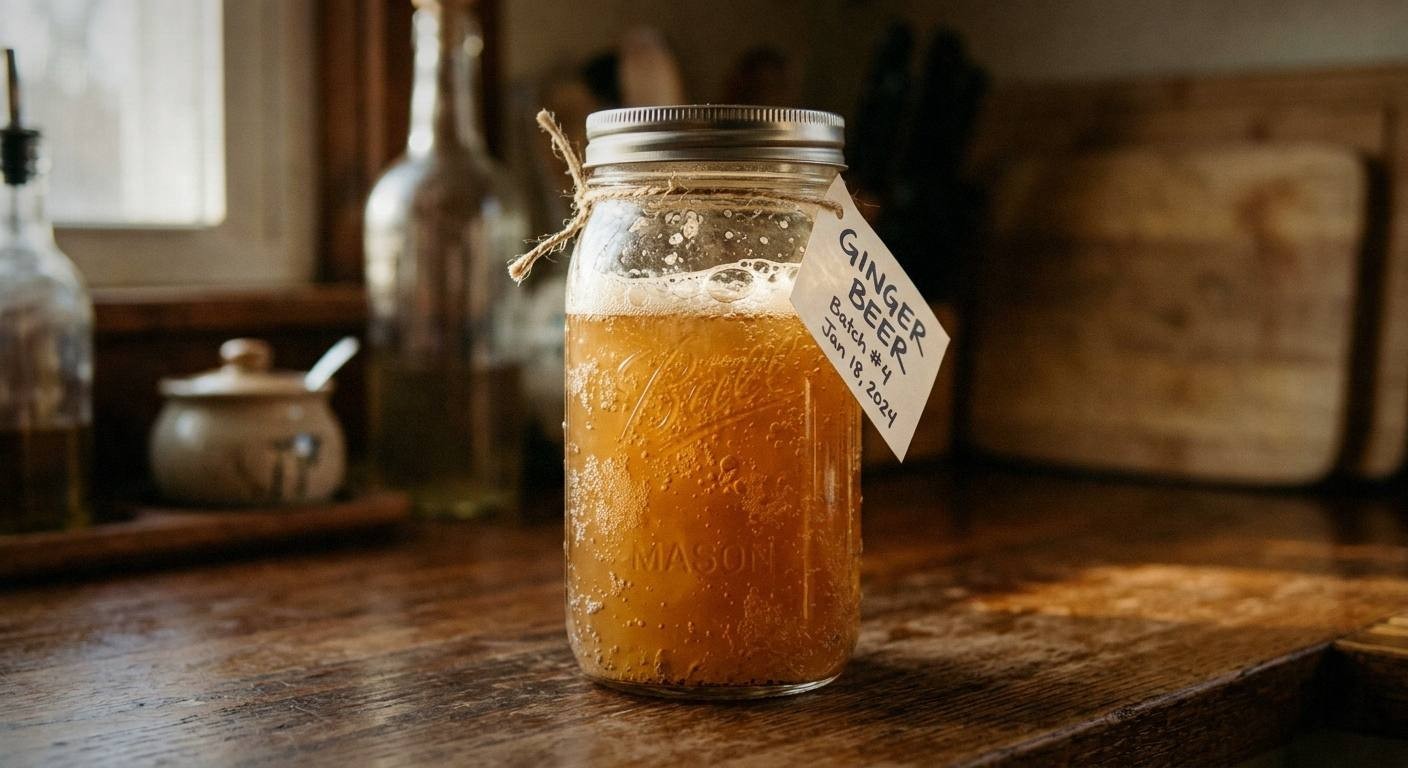
Held: spontaneous ginger-bug and sealed-bottle fermentation
Here, spontaneous or wild fermentation refers to the starter culture, not a wild plant species. The former spontaneous starter, room-temperature fermentation, stalled-batch restart, feeding extensions and sealed-bottle conditioning remain unresolved. This review found no adequate source-based specification for that particular ingredient/starter process, its microbial and chemical controls, alcohol endpoints or bottle pressure management. General BCCDC: Fermented Foods Safety Guidance is not a validated ginger-bug recipe. The former bubbles, smell, white-film reassurance, daily burping and taste tests cannot clear it. Operative quantities, feeding schedules, fermentation temperatures, times, bottling, opening and consumption directions are withdrawn. There is no food Recipe, card or print output for those held preparations. Restore them only after their specific process and failure endpoints have an adequate source-based review. No fermentation experiment was performed.
Soda variations and serving
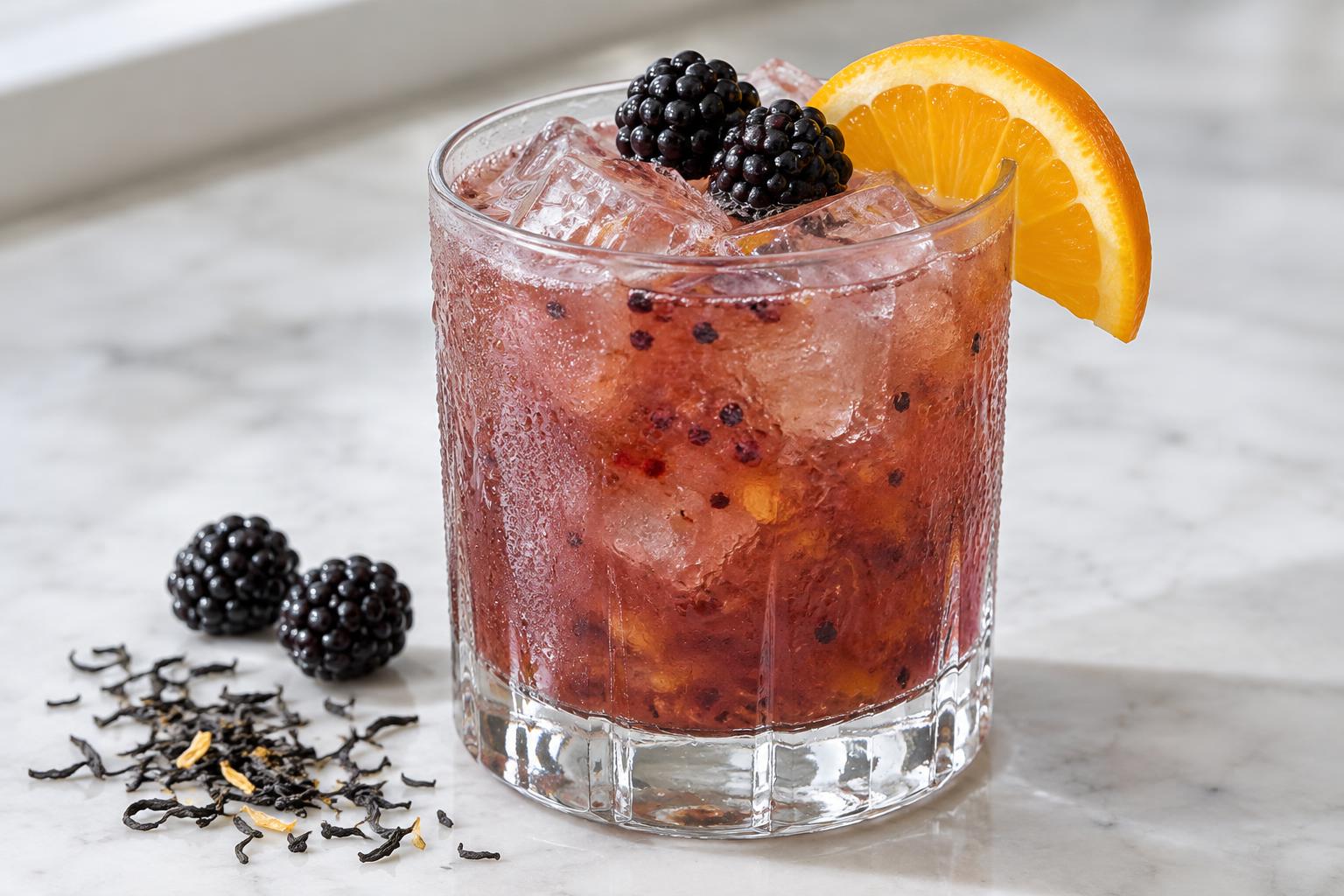
For a milder next concentrate use 30 g ginger with all other component quantities unchanged; for sweeter individual soda add 1 teaspoon prepared plain syrup, adding 1/6 fluid ounce. Plain syrup: heat 1/2 cup sugar with 1/2 cup water 3-5 minutes until dissolved, cool promptly in an ice bath and refrigerate 40 F or below, about 30 minutes or longer; allow about 35-40 minutes or longer from scratch. For a berry soda replace 30 ml of the 187.5 ml sparkling water per drink with 30 ml treated berry juice; total stays 250 ml. Do not ferment fruit or extend the held spontaneous starter to other sodas. A mule-style adult drink uses 2 fluid ounces vodka, 4 fluid ounces this prepared soda and 1/2 fluid ounce lime in a 12-fluid-ounce glass over ice; add soda last. Dark rum may replace vodka 1:1. Nonalcoholic version replaces spirits with 2 fluid ounces cold water. Makes one 6.5 fluid-ounce drink before ice in 5 minutes; no bare copper. Frozen concentrate may separate, so stir after refrigerated thawing; if handling is uncertain, discard without tasting.
Measuring and Keeping Drinks Cold
Liquid ounces mean US fluid ounces, not weight. A US cup is 8 fluid ounces, a tablespoon is 1/2 fluid ounce and a teaspoon is 1/6 fluid ounce. Metric amounts are exact where used; a litre is about 4.23 US cups. Drink volumes exclude ice and fruit. Choose a glass with room for the stated liquid, ice and fizz.
Use clean equipment and wash produce under running water before cutting. Choose pasteurized or otherwise safety-treated packaged juices, food-grown culinary herbs and potable water. Follow opened-package instructions. A concentrate must be diluted according to its label unless explicitly measured as concentrate. For alcohol-free drinks, choose mixers labeled 0.0% alcohol; the name ginger beer or kombucha alone is no guarantee. Avoid alcoholic bitters and alcohol-containing extracts in strict alcohol-free versions.
Keep prepared bases, cut fruit and homemade syrups at 40 F (4 C) or below. Check serving liquid with a thermometer; frozen fruit alone cannot establish cold holding. Discard perishables after more than two cumulative hours without cold holding, or one hour above 90 F (32 C). Replace warm remnants with clean chilled pitchers. Normal smell or appearance does not prove safety.
Use homemade fruit/herb syrups and juice bases the day made, or freeze promptly in small portions after cooling; thaw in the refrigerator and use that day. This is a conservative house handling policy, not a tested shelf-life claim. Add carbonation at serving, outside a sealed shaker. For hot drinks, hold at 140 F (60 C) or above, cool leftovers promptly in shallow containers or an ice bath and refrigerate within the limits above. A slow cooker’s low or warm setting is not a temperature reading.
Keep rosemary , thyme, cinnamon sticks, vanilla pods and whole spices on the table after straining, rather than in serving glasses. Fresh food-grown mint or basil leaves and washed fruit slices can be edible garnishes. Use glass or an intact food-safe lined mug for acidic drinks; bare copper is unsuitable.
These formulas are culinary house adaptations compared with the cited methods. No kitchen, sensory, pathogen, clinical, pressure, alcohol or shelf-life testing is claimed. Images are retained illustrations and may depict the earlier recipe; ingredient lists and methods govern preparation.