This original formula is withdrawn as a preparation guide while its process is unresolved. Do not use the quantities below to brew, taste or serve a batch. Use a culture supplier’s complete documented process instead; this page does not supply a replacement.
This page records a store-bought-starter formula; it no longer provides a brewing procedure. A raw label or visible pellicle does not validate the starter or finished batch.
At a Glance
| Detail | Status |
|---|---|
| Formula | Original store-bought-starter variation |
| Liquid accounting | 16 cups water plus 2 cups starter, before sugar |
| Process and yield | Unresolved; measure any output of a separately documented process |
| Brewing instructions | Withdrawn pending process review |
Why You Will Love This
This page records an original formula for review. Ginger , mint , tea and fruit can change flavor, but neither those ingredients nor live cultures establish a digestive benefit or a safe fermentation process.
The Story Behind It
Fermentation uses microorganisms to change the starting liquid. Culture composition and the resulting acidity, alcohol, residual sugar and gas depend on the process. Appearance alone cannot identify every organism or establish safety.
Original Formula Record
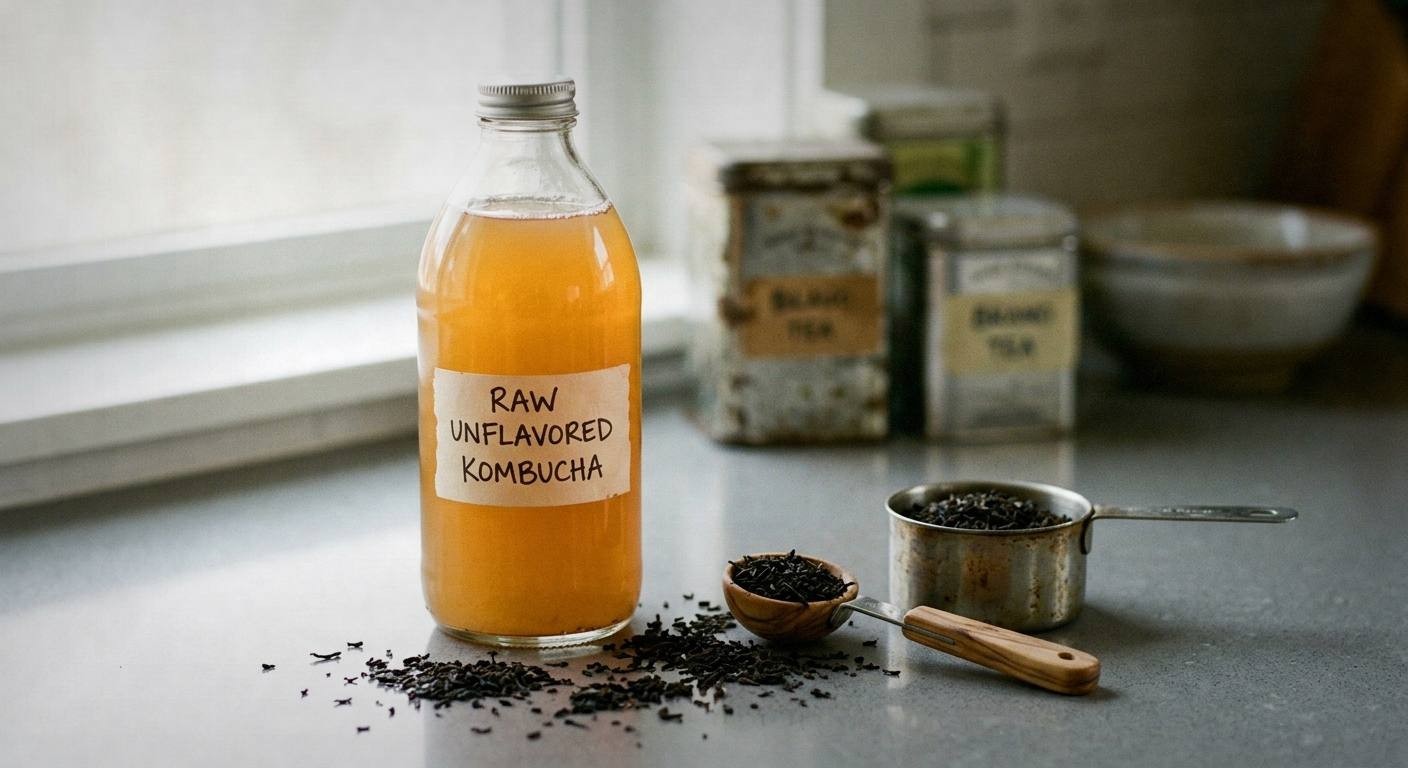
- 1 gallon filtered water (chlorine inhibits fermentation)
- 8 black tea bags (or 2 tablespoons loose-leaf black tea)
- 1 cup white granulated sugar
- 2 cups unflavored store-bought kombucha (raw, unpasteurized)
- food-safe glass vessel larger than 1 gallon, with headspace (use food-safe, acid-compatible equipment)
- Tight-weave cloth or coffee filter
- Rubber band
- Glass bottles with tight lids for storing finished kombucha
How to Make It
This original formula is withdrawn as a preparation guide while its process is unresolved. Do not use the quantities below to brew, taste or serve a batch. Use a culture supplier’s complete documented process instead; this page does not supply a replacement.
Starter volume, elapsed days, surface growth, taste and fizz do not establish a safe finished batch. Acidity, culture conditions, suitable equipment, alcohol and storage need a documented process. The former warm sealed-bottle carbonation schedule remains withdrawn; daily opening does not guarantee pressure control.
Herbalist Notes
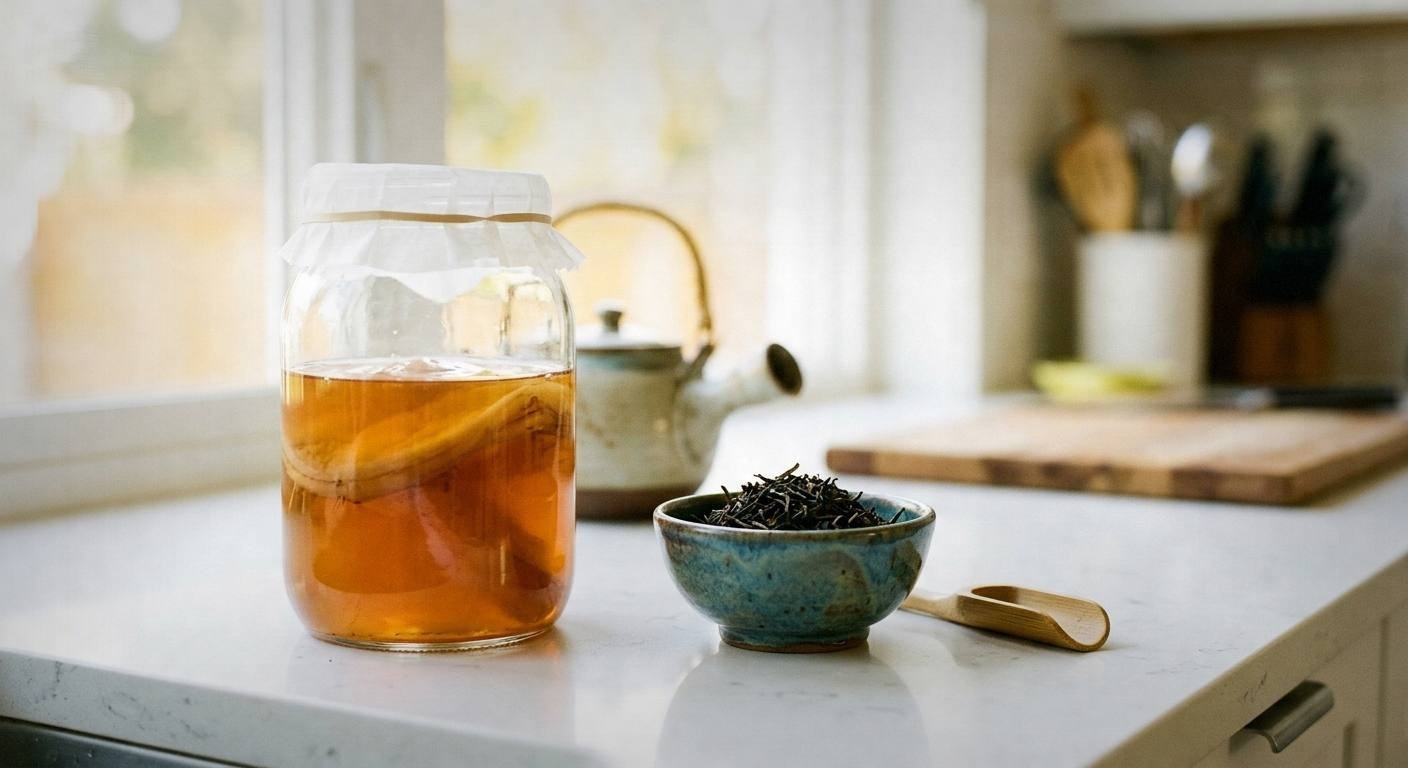
A label saying “raw” or “live cultures” does not establish the suitability of a bottled drink as a brewing starter. No brand, tea substitution or starter quantity is endorsed here as a validated process.
Make It Your Own
Green tea , white tea and mixed-tea variations are not validated alternatives for this original formula. Use the ingredients specified by a complete documented culture process.
Before You Start
The complete process must address acidity, sanitary equipment, culture conditions and finished storage. Do not identify a safe batch by sediment, a surface film, taste or an elapsed number of days.
Common Questions
Is a surface pellicle proof of safe kombucha?
No. A surface film cannot establish safe acidity or identify all microorganisms.
What does the starter arithmetic show?
The recorded 16 cups water plus 2 cups starter total 18 cups before sugar. Starter is 2/18 of that liquid, not 2/14. Reserving 2 cups would leave 16 cups before losses, but the arithmetic does not validate safety or yield.
Can leftover starter be reused or consumed?
This page gives no reuse or consumption instruction for its unresolved batch. Follow the complete documented process for the culture you use.
Brewing safety and source limits
The store-bought starter method is not validated by a label saying “raw” or by a pellicle forming. Pennsylvania Department of Agriculture guidance calls for pH monitoring, suitable equipment and mold controls. Use a documented brewing process; taste alone cannot establish a safe endpoint. This original formula and its green/white-tea alternatives remain unvalidated. TTB explains that alcohol can rise with continued bottle fermentation.