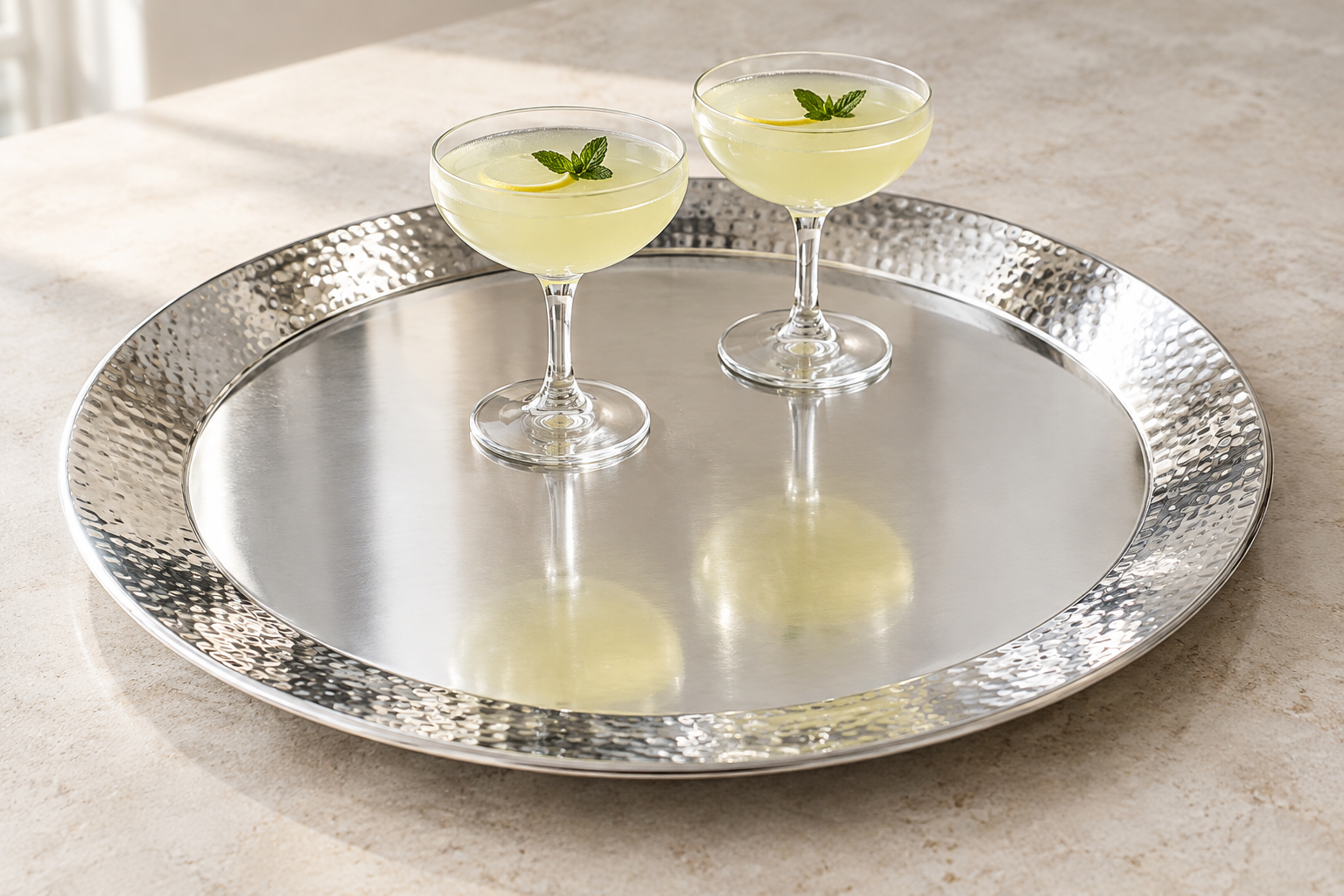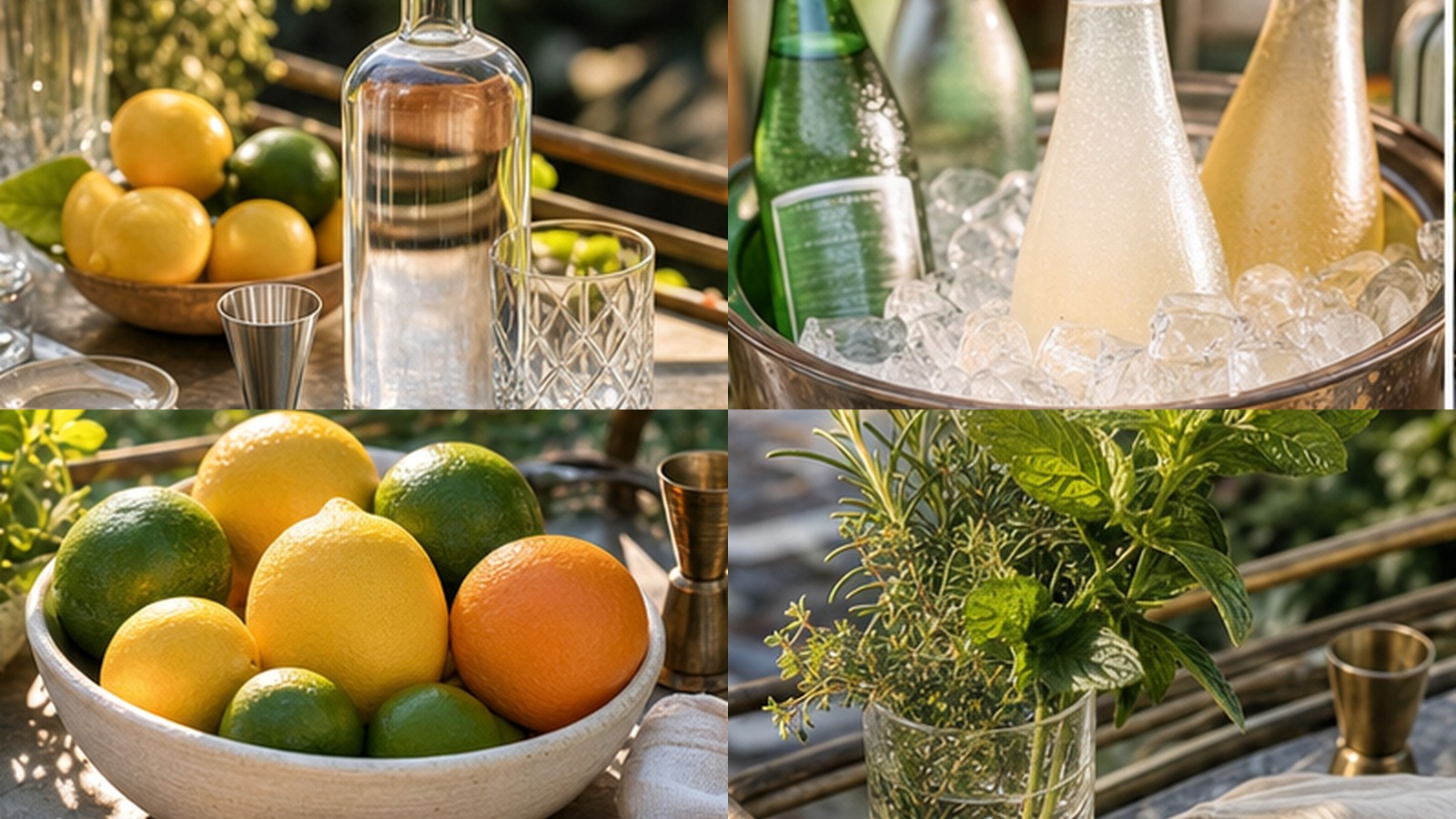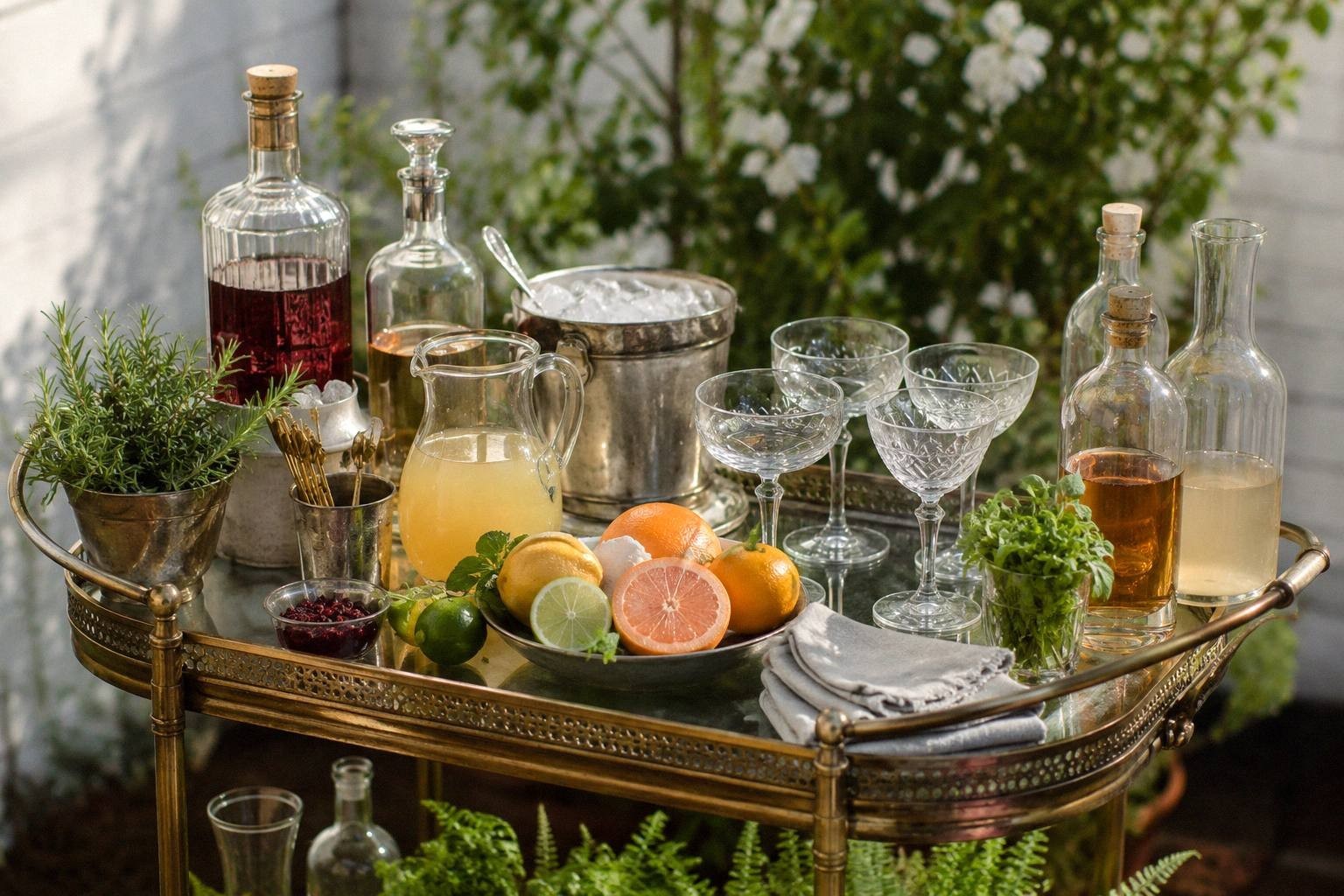
A bar cart should work before it looks pretty. If guests cannot find a glass, napkin, mixer, garnish, or ice plan, the cart is just a shelf with bottles on it. For a seasonal version at an adult Halloween gathering, see these elegant Halloween bar cart ideas .
If the cart is already crowded, use the before-and-after bar cart reset to empty it, sort items by use and rebuild the working shelf.
At a Glance
| Detail | Info |
|---|---|
| Best for | Patio nights, garden parties, mixed mocktail and cocktail groups |
| Top shelf | Glasses, pitcher, citrus, herbs, syrup |
| Lower shelf | Mixers, backup cups, napkins, extra bottles |
| Host shortcut | One base, optional spirits on the side |
| What to skip | Loose decor, extra bottles, hard-to-reach tools |
| Save reason | Copy a cart guests can actually use |
What Goes on a Bar Cart? Start With the Drink Path
Before you style the cart, think through how a guest builds a glass.
They need a glass first. Then ice. Then the base. Then bubbles or mixer. Then citrus, herbs, or garnish. If the cart follows that order, guests can use it without asking you where everything is.
Pretty comes after that.
Bar Cart Top Shelf: The Things Guests Touch First
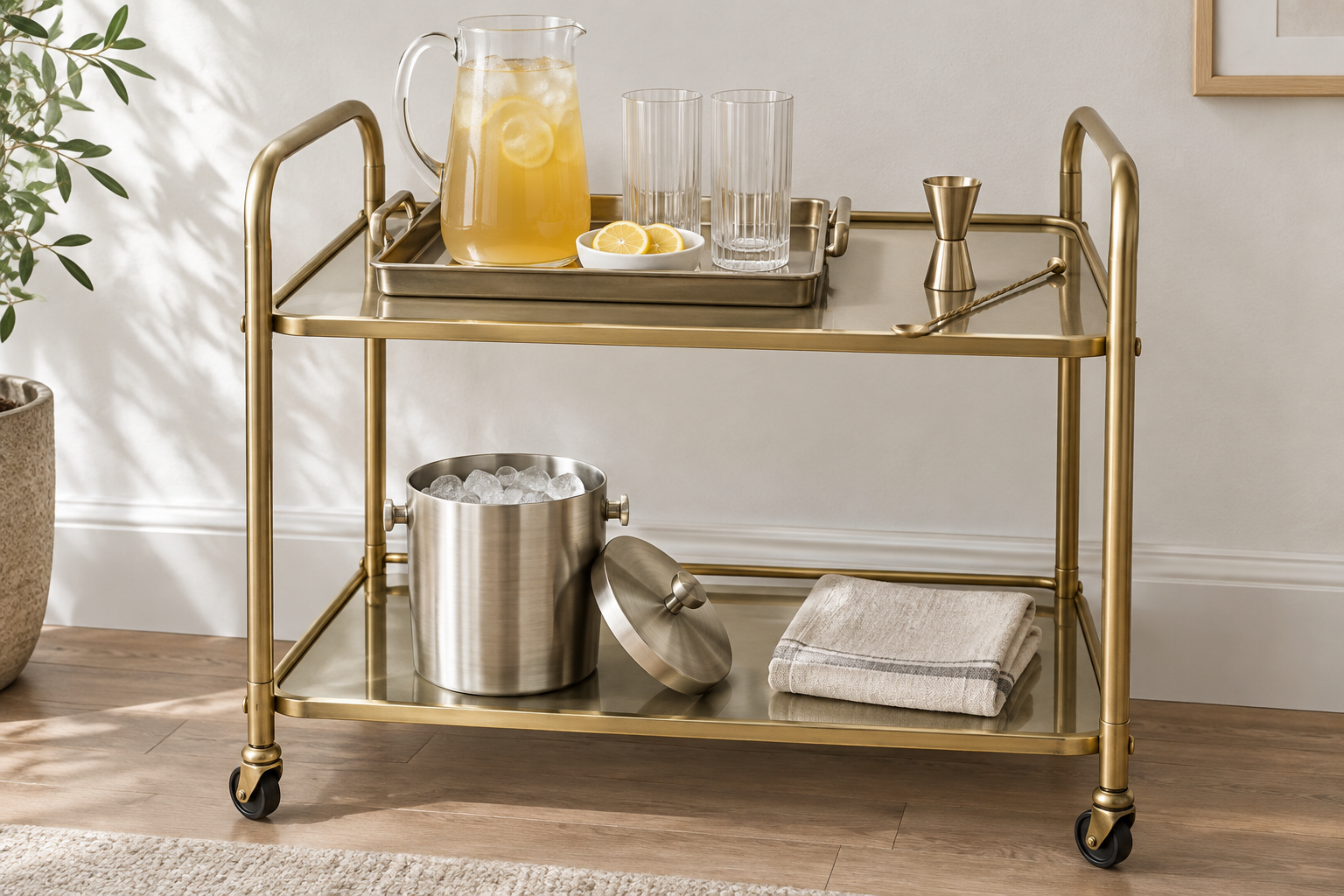
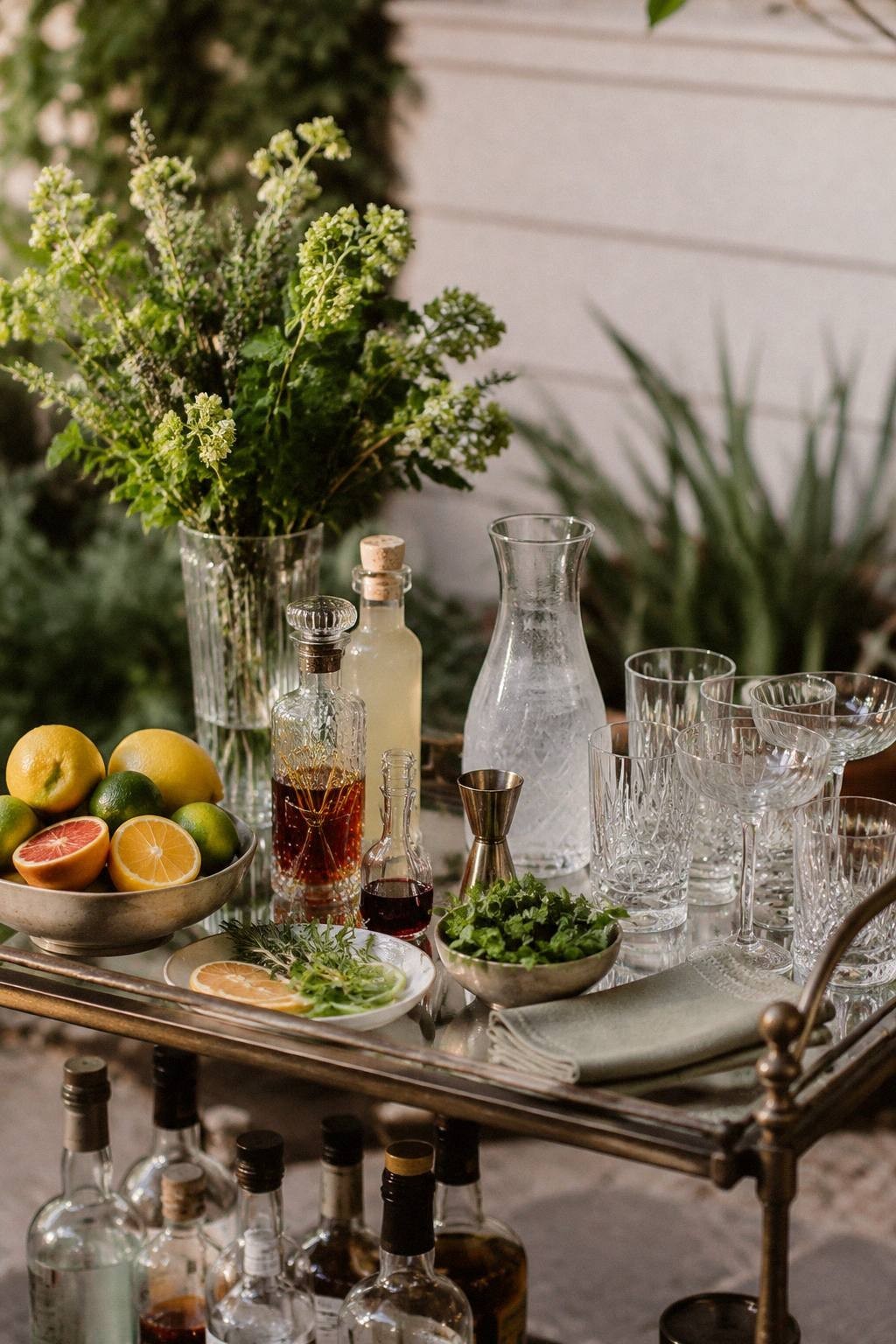
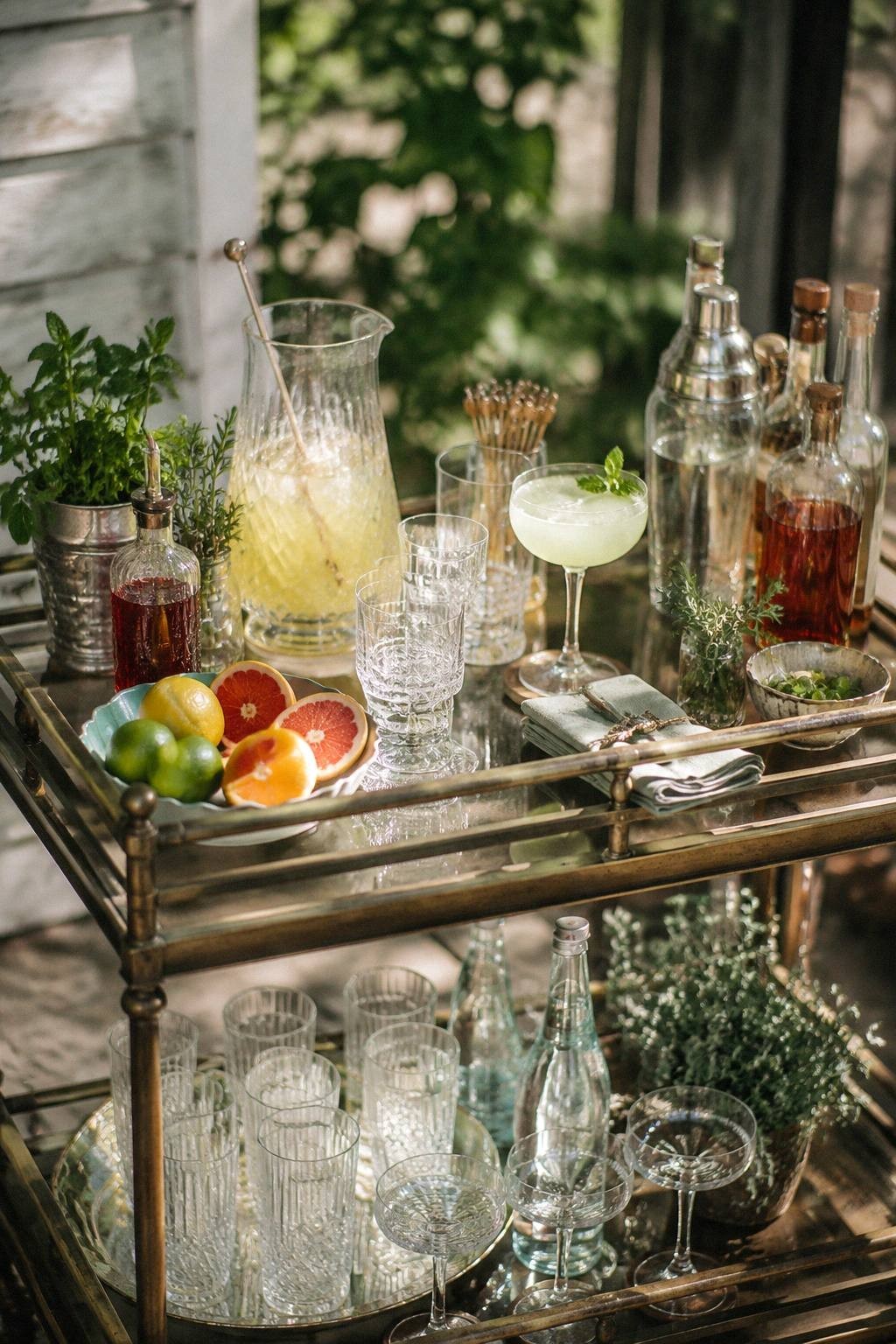
Put the active drink setup on the top shelf:
- Glasses
- One pitcher base
- Citrus wedges or wheels
- Small portions of washed edible mint or basil in cold holding
- Syrup bottle or shrub
- Stirring spoon
- Napkins
Do not crowd the top shelf with unopened bottles. If something is not part of the next drink, it can live below.
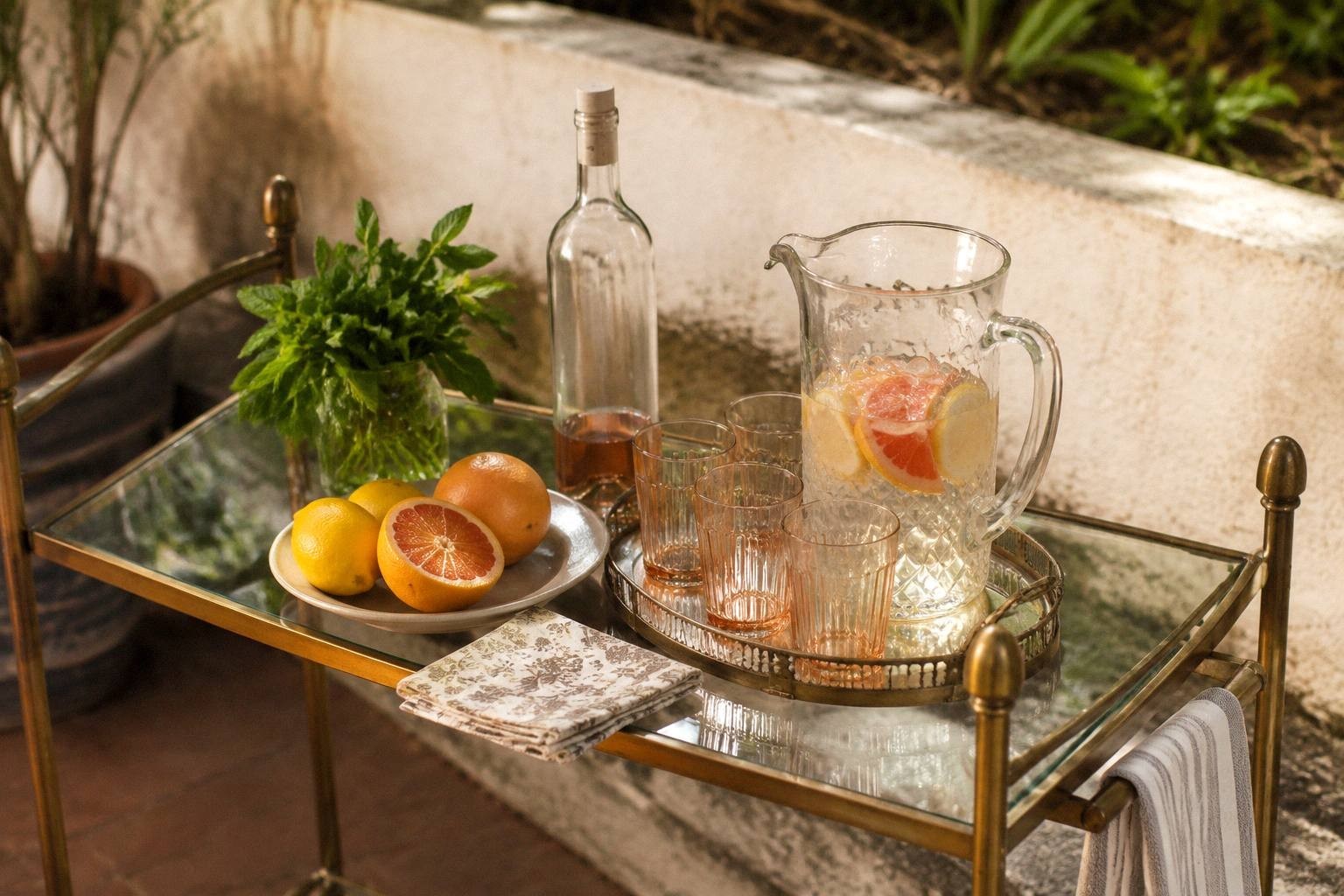
For a botanical setup, fresh herbs do a lot of visual work. Mint, basil, rosemary , thyme, and lemon balm all make the cart feel alive. Keep them contained in a small jar or tray so leaves do not scatter everywhere.
Bar Cart Lower Shelf: Backup and Weight
The lower shelf should hold heavier or backup items: extra mixers, more cups, bottled sparkling water, spare napkins, a towel, and optional spirits.
If you are serving both mocktails and cocktails, keep the alcohol optional and slightly separate. The main base should be non-alcoholic so every guest can start from the same pitcher. Spirits can sit to one side for people who want to add them.
This keeps the cart generous without making non-drinkers feel like they are getting the plain version.
How to Stock One Bar Cart for Mocktails and Cocktails
The easiest shared setup is one base plus two paths.
Example base:
- Peach black tea
- Hibiscus citrus tea
- Cucumber mint limeade
- Strawberry basil lemonade
- Pineapple ginger shrub
Mocktail path:
- Base
- Ice
- Sparkling water or ginger beer
- Citrus
- Herbs
Cocktail path:
- Same base
- Ice
- Sparkling water or ginger beer
- Optional gin, rum, tequila, or vodka on the side
- Citrus
- Herbs
Label the base, not the whole cart. Something simple like “cucumber mint base, add bubbles” is enough.
What to Leave Off the Cart
Leave off anything that makes the cart harder to use:
- Tall flower arrangements in the way
- Loose decor that takes up pour space
- Too many bottles
- Fragile glass pieces nobody can touch
- Sticky syrup bottles without a tray
- Ice bucket with no scoop
A bar cart is small. Every inch has to earn its spot.
Small Patio Version
If the cart is tiny, use one shelf for drinks and one shelf for supplies. Keep only four to six glasses out. Store the extra glasses nearby and refill as needed.
For apartments or balconies, skip the full bottle lineup. Use one pitcher, one mixer, one syrup, and one herb jar. That is enough for a drink night.
Vintage Styling Without Clutter
A vintage cart already has character. Do not bury it under props.
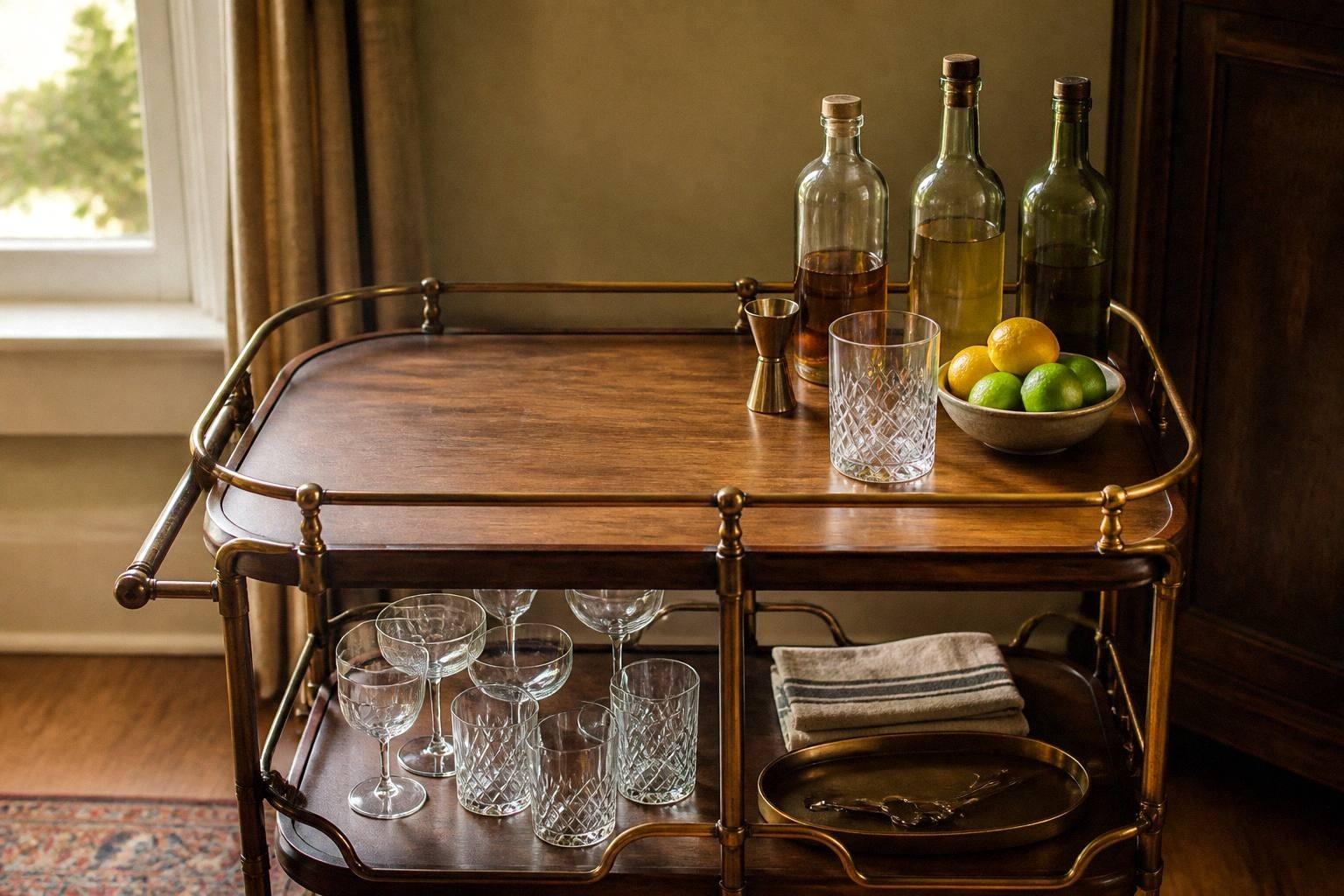
Use one or two collected pieces: pressed glass, a brass tray, a small ceramic bowl, or an old coupe. Then let the fresh things carry the rest. Citrus, herbs, condensation, and a filled pitcher make the cart feel alive.
If you want height, use a tall bottle of sparkling water or a herb jar instead of a random vase. It still belongs to the drink.
Bar Cart Setup Questions
What should go on a summer bar cart?
Put glasses, one pitcher base, a fizzy mixer, citrus, herbs, syrup or shrub, napkins, and an ice plan on the cart. Keep backup bottles and extra cups on the lower shelf.
How do I make a bar cart work for mocktails and cocktails?
Use one non-alcoholic base and keep spirits optional on the side. Guests can build a mocktail first, then add alcohol only if they want it.
What herbs look best on a bar cart?
Mint, basil and lemon balm can supply matching edible garnishes; keep small washed portions at 40 F (4 C) or below. Rosemary and thyme sprigs can decorate the table. A jar of room-temperature water does not provide cold holding.
Do I need a real bar cart for this setup?
No. A side table, rolling kitchen cart, small shelf, or patio plant stand can work. The setup matters more than the furniture.
Cold Ingredients and a Measured Guest Pour
This is a layout guide; the named peach tea, hibiscus tea, cucumber limeade, strawberry lemonade and pineapple shrub are flavor examples, not complete recipes here. Choose a complete recipe for the base or a ready-made commercial product and follow its preparation and storage directions. Commercial shrub is a prepared ingredient, not an instruction to ferment or preserve vinegar at home.
For one drink, pour 4 fluid ounces chilled prepared base and 2 fluid ounces chilled sparkling water or labeled non-alcoholic ginger beer over ice in a 12-ounce glass. That gives 6 fluid ounces before melting. An optional cocktail adds 1 fluid ounce spirit, making 7 fluid ounces; keep it labeled and on a separate tray. Allow 5 minutes with cold base ready. Eight drinks require 4 cups base and 2 cups mixer; bottle counts depend on the package volume. Wash edible garnishes and label caffeine, allergens and any alcohol. Use rosemary/thyme as table decoration, not loose sprigs on the rim.
Refrigerate promptly in small clean containers at 40 F (4 C) or below. Discard after more than two cumulative hours without cold holding, or one hour above 90 F (32 C). Do not wait for a large batch to cool on the counter. Normal smell and appearance do not establish safety. Keep cut produce, tea, opened syrups and juice in cold holding, checking temperature with a thermometer; a cool-looking pitcher or an hourly top-up is not temperature control. Replace emptied pitchers with clean chilled ones. Wash hands and equipment. Rinse produce and culinary herbs under running water before cutting; scrub melons and cucumbers before peeling. Use only correctly identified ingredients grown for food, never florist flowers or plants treated with pesticides unsuitable for food crops. Keep scoop-served drink ice separate from cooling ice.
Food-Contact Check Before Serving
Use verified food-contact, lead-free glassware for these acidic drinks. A smooth rim, clear surface or heavy weight cannot establish whether old crystal or decoration contains lead. Treat unidentified antique crystal and painted or metal-decorated pieces as display objects until reliable composition and food-contact evidence is available. Do not store drinks in lead crystal. Inspect for chips and cracks visually rather than running a finger over a potentially sharp rim; wash intact suitable glasses before use. Acidic drinks and contact time affect lead transfer, as Health Canada explains. This is material-selection guidance, not testing of the pictured glasses.