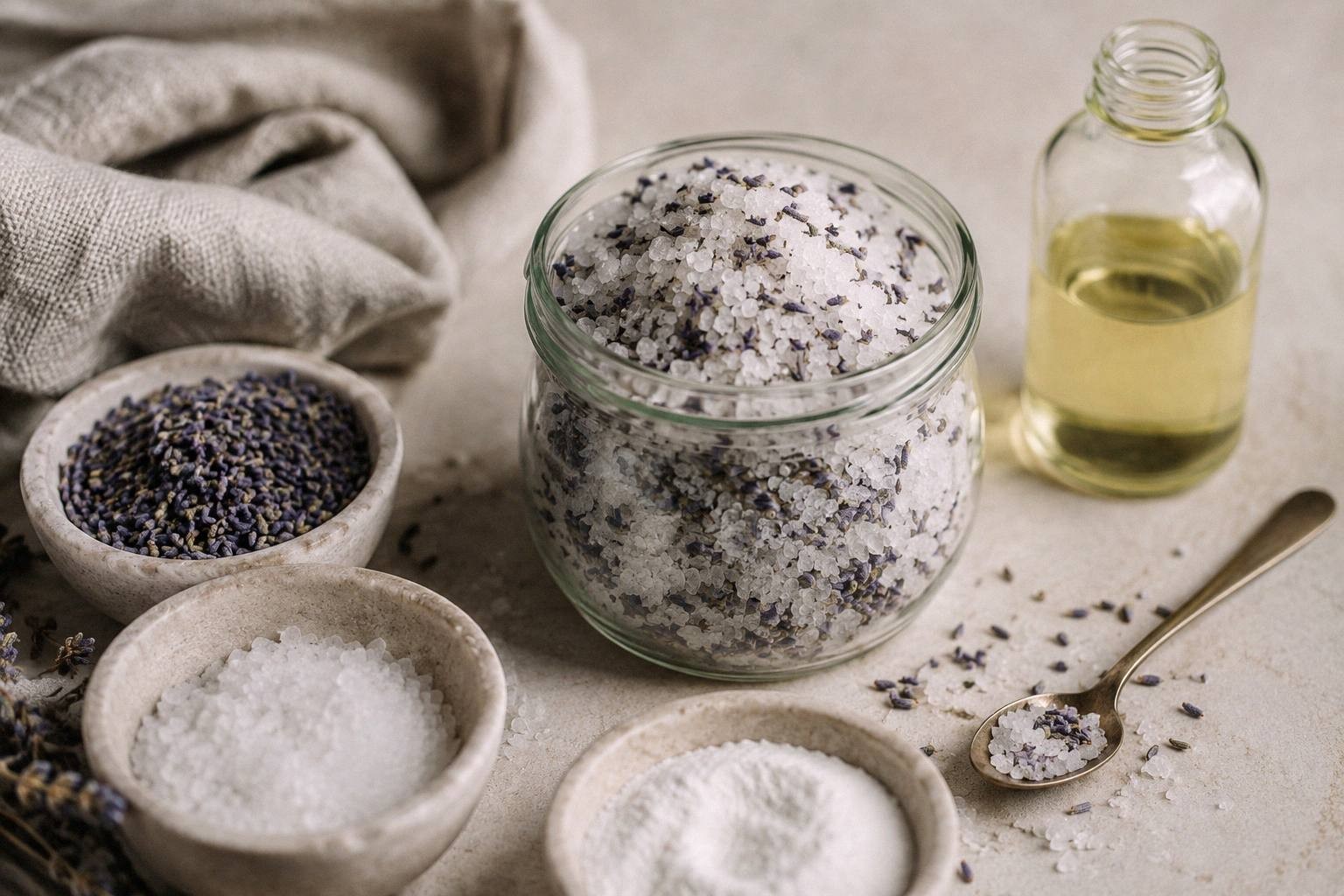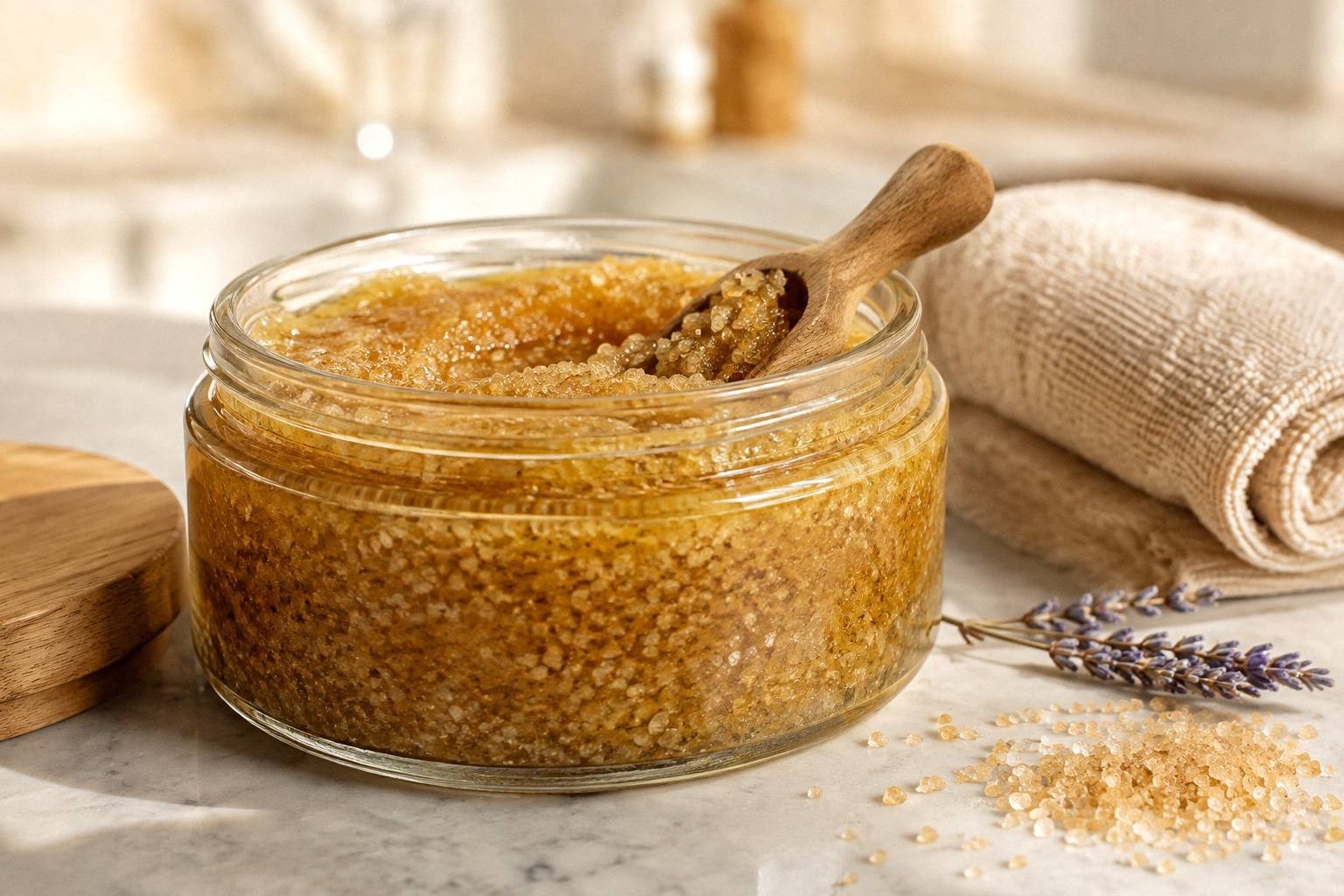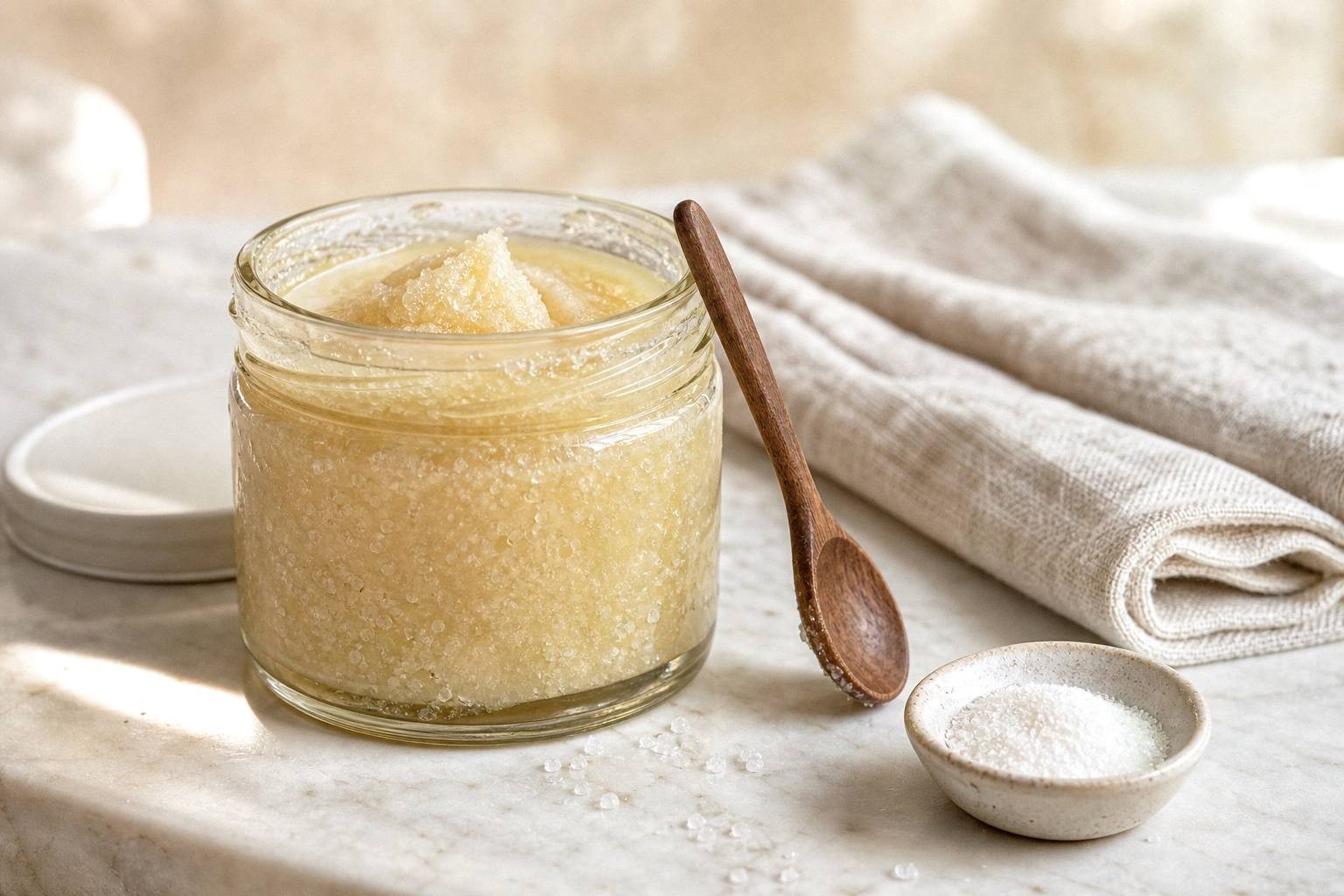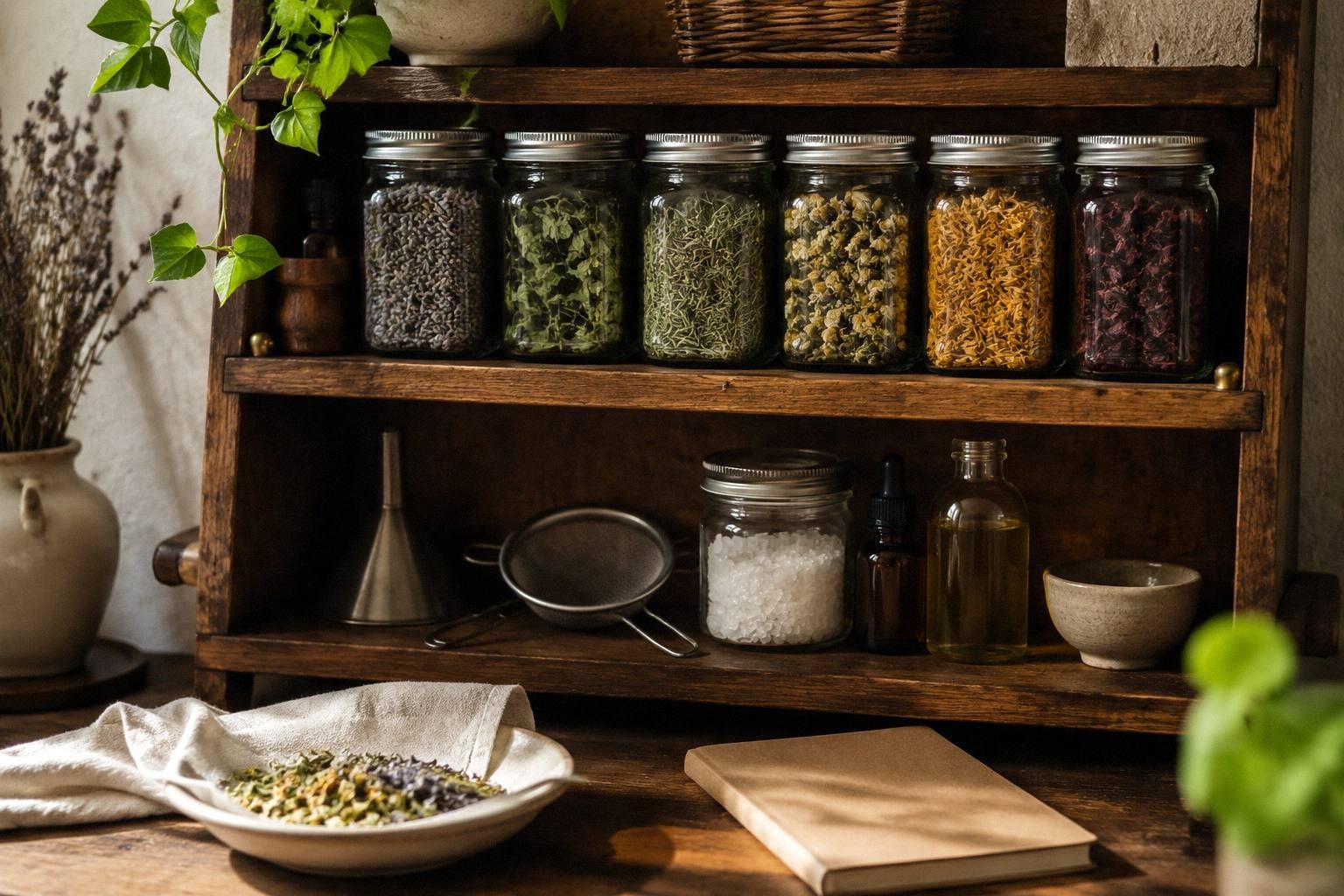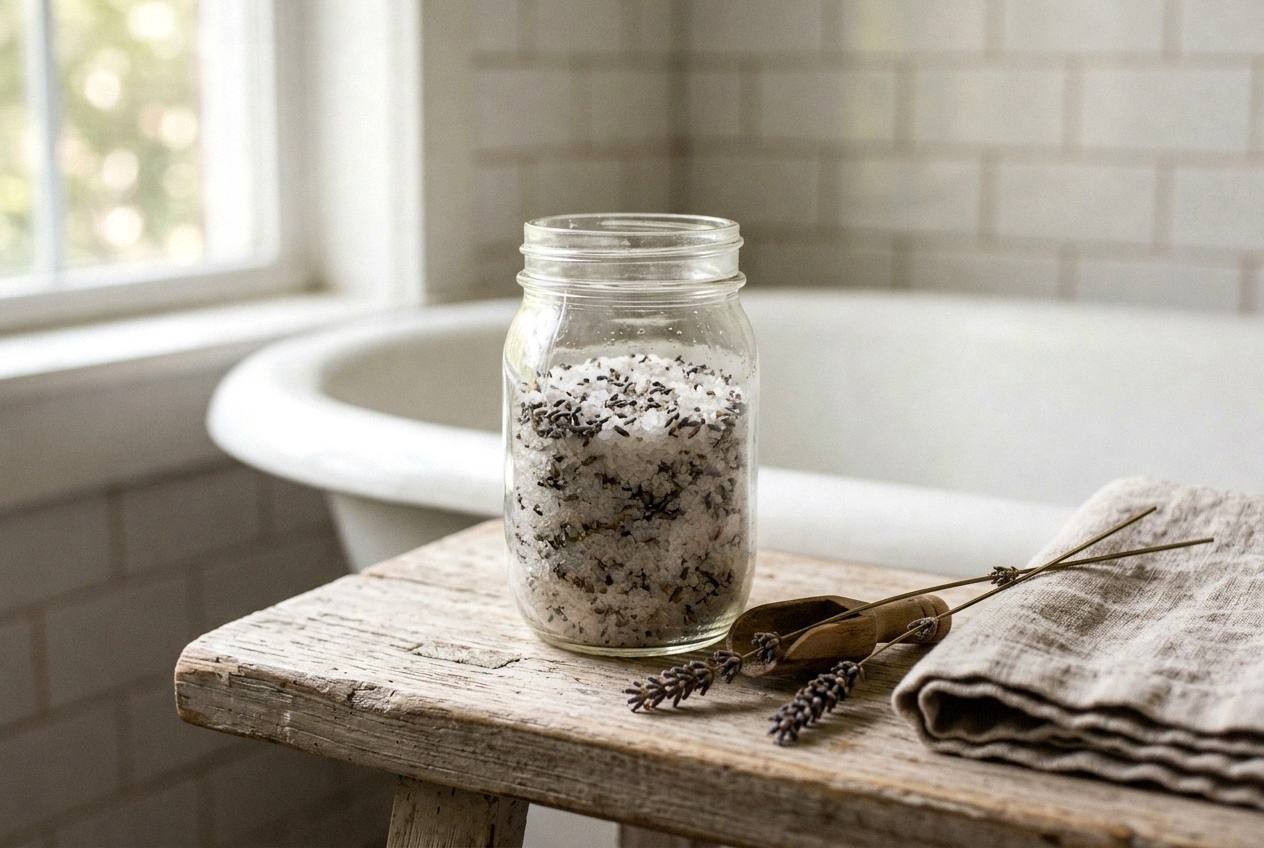
A dry jar of salt and lavender buds is a simple bath preparation. This version keeps essential oils out of the stored mixture and contains the flowers in a muslin bag. It makes no promise about sleep, pain, skin treatment or magnesium absorption.
Dry Master Mix
Mixing takes 15 minutes and needs no 24-hour scent rest. Use a 1-quart jar, not a pint. The ingredients occupy roughly 2 3/4 cups before settling; packing changes final volume. Measure the filled volume and label it. At 1/2 cup per bath, nominal yield is five full portions with about 1/4 cup remaining; optional petals increase it slightly.
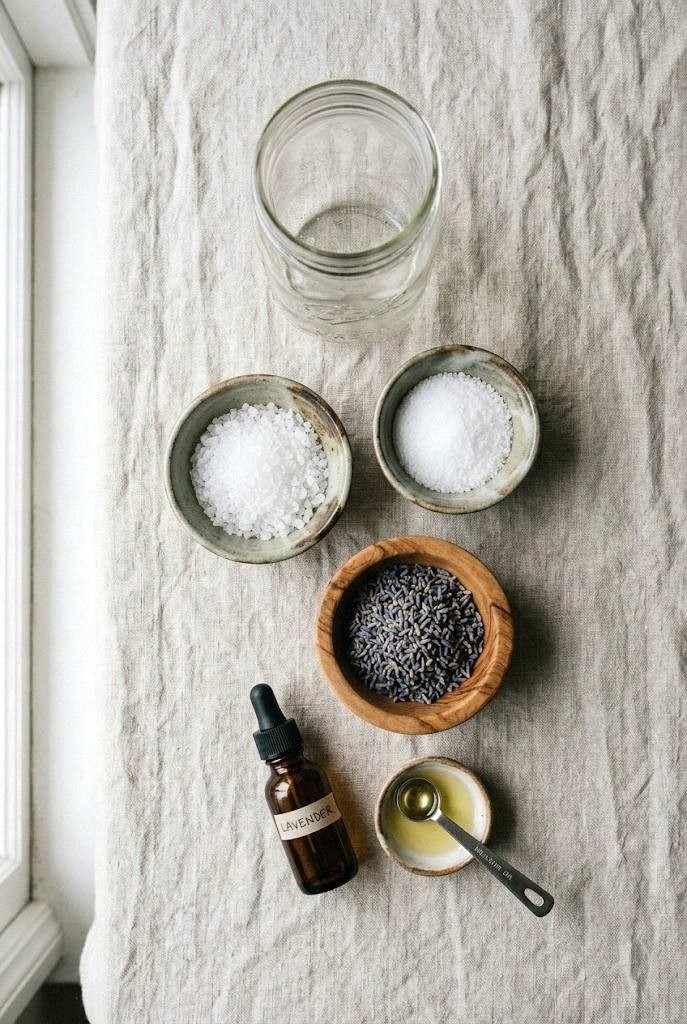
- 2 cups Epsom salt labeled for bath use
- 1/2 cup fine sea salt
- 1/4 cup fully dried English lavender (Lavandula angustifolia) buds
- 1 tablespoon fully dried rose petals or chamomile flowers, optional
- Clean, dry 1-quart jar and a reusable muslin bath bag
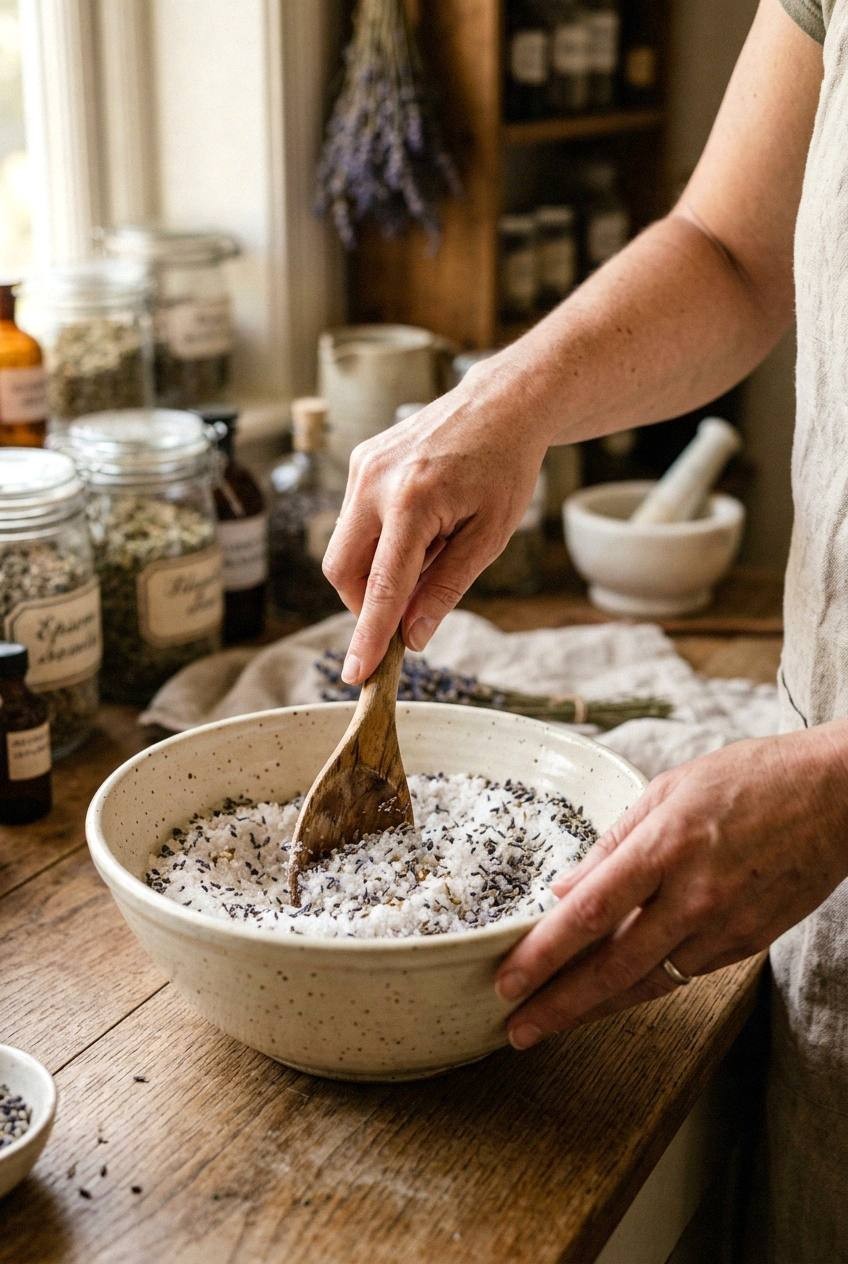
- Combine salts in a clean dry bowl, breaking up dry clumps with a spoon.
- Fold in fully dried lavender and optional dried petals. Do not add essential oil or carrier oil to the stored dry mixture.
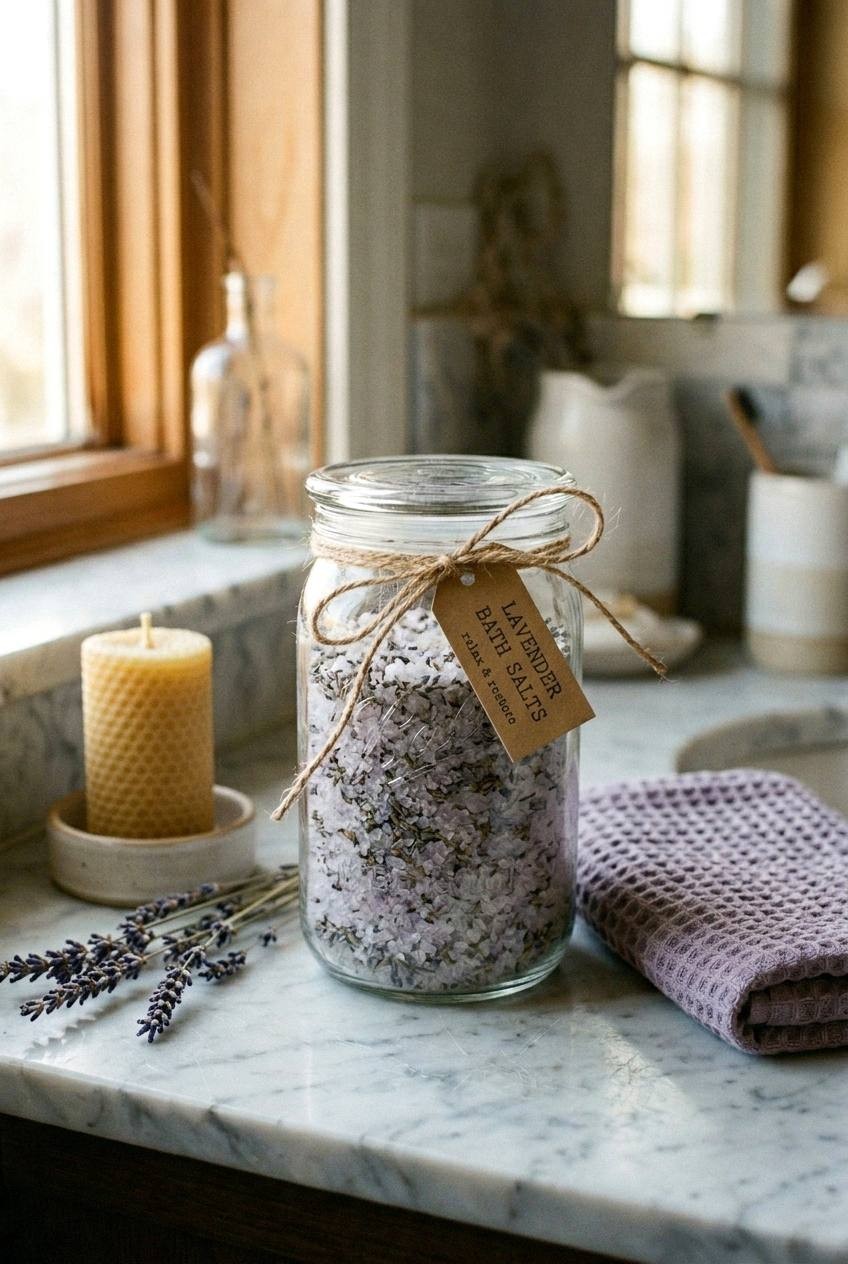
- Transfer to a clean dry 1-quart jar. The loose ingredients total 2 3/4 cups, or 2 13/16 cups with optional petals, before packing; a pint jar is too small.
- Label ingredients, mixing date and external use only. Keep sealed in a cool dry cupboard, away from bathroom steam; use a dry scoop. No six-month stability claim is established.
- For an adult bath, place 1/2 cup mix in a securely closed muslin bag under warm running water, let salts dissolve and keep flowers contained. Use the mixture only if the salt label permits that bath dose.
- Remove the bag after use, empty and wash it, and let it dry fully. Stop and rinse if skin irritation occurs. Discard wet, contaminated or visibly moldy stored mix.
Optional Single-Bath Lavender Oil
Tisserand explains that carrier oil dilutes an essential oil but does not disperse it through bathwater. Oil still floats and can cling to skin or make the tub slippery. For an adult who tolerates lavender , thoroughly mix 1 drop lavender essential oil (Lavandula angustifolia) into 1 teaspoon (5 mL) plain sunflower oil or fractionated coconut oil in a separate clean dish immediately before one bath. Add this blend to bathwater while stirring, never a drop of neat essential oil. Do not store this oil in the dry jar, add more because the scent seems weak, or infer a percentage from tub-water volume. Drops vary in size, so this is a low-dose house adaptation, not an exact percentage formula. Preparation takes 2 minutes; output is one bath’s oil blend.
The bath remains oily. Enter and exit carefully, and clean oil from the tub afterward. For dispersible oil, choose a finished bath product designed for that purpose and follow its label instead of improvising emulsifier ratios. Salt, baking soda and milk do not solve essential-oil dispersion. No ’therapeutic grade’ wording establishes safety. Keep this optional oil out of children’s baths; do not use it on broken or irritated skin. People with fragrance reactions should choose plain bath-labeled salts. Follow ingredient cautions for individual circumstances.
Three Dry Variations
These are scent and texture choices, not skin, muscle or sleep remedies. Use the same dry method, jar and 1/2-cup portion; measure actual packed output.
- Oat option: omit lavender and petals from the salt jar. Use a separate commercial colloidal-oatmeal bath product at its labeled dose if desired. Do not replace it with coconut milk powder or claim the homemade salt mix treats sun-exposed or itchy skin. Keep milk powders out of this dry flower formulation.
- Magnesium-flake option: replace 1/2 cup Epsom salt with 1/2 cup magnesium chloride flakes only when the package permits mixing and the resulting bath dose. No peppermint oil is added. Loose salt/flower volume stays about 2 3/4 cups; flakes may settle differently. There is no muscle-recovery claim.
- Lavender-chamomile option: replace 2 tablespoons lavender buds with 2 tablespoons fully dried chamomile flowers, leaving the total flower volume 1/4 cup. Omit cedarwood and vanilla CO2 extract from this stored mix. Avoid botanicals that cause personal allergic reactions; ’natural’ does not guarantee tolerance.
For a rose accent, the optional tablespoon of dried rose petals replaces the optional chamomile tablespoon rather than adding another tablespoon. For an all-sea-salt version, replace 2 cups Epsom salt with 2 cups bath-labeled sea salt, keeping the other quantities; follow that product’s dose instead of assuming interchangeable skin effects. Baking soda is not required and is not a dispersant.
Using and Storing the Jar
Use a warm bath comfortable to the user and follow the salt label for duration; a universal 20-minute treatment time is not established. The dried flowers provide mild scent, without a guaranteed aroma strength. Use purchased fully dried flowers from an identified supplier; a fixed two-to-three-week home drying period does not establish dryness in every room. Keep salts, flowers and the muslin bag dry between preparations.
No preservation challenge or shelf-life test has been performed on this combination. Follow the earliest ingredient expiry as an upper limit, make a small batch, and discard if water enters or contamination is suspected. A harmless dry salt clump differs from a wet stored herbal mix. Normal scent does not establish freedom from contamination. Do not refresh scent by adding undiluted oil. For children or sensitive skin, a labeled plain bath product supplies more appropriate use instructions than an adult botanical mix.
The Mountain Rose Herbs article is a preparation comparison. Its oil-on-salt directions and health claims are not inherited; Tisserand’s distinction between dilution and dispersion governs the optional oil. This remains a topical tutorial, without food Recipe schema.