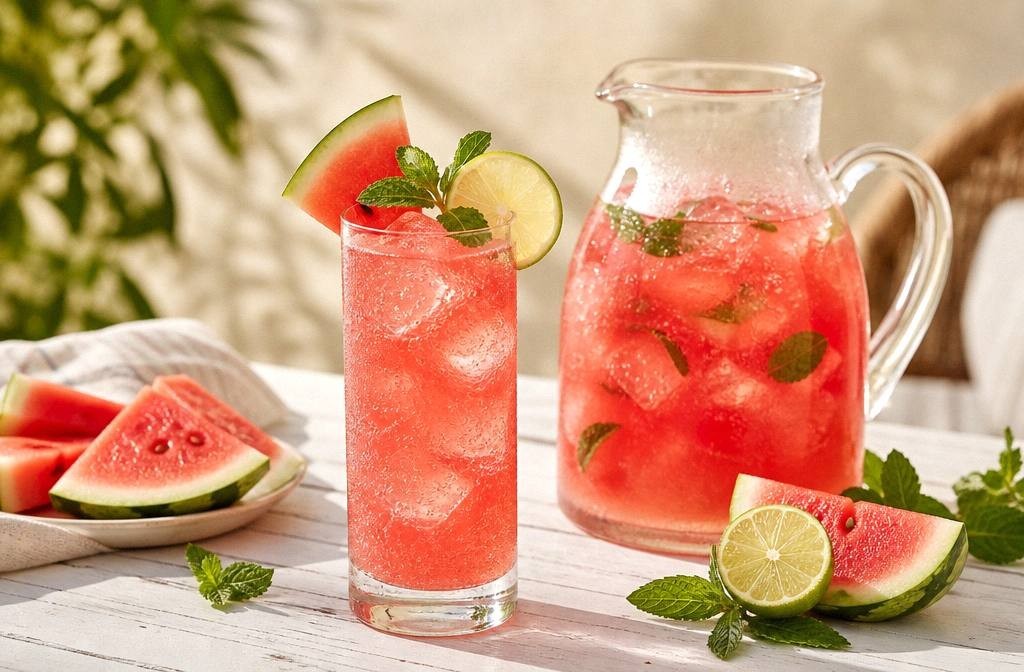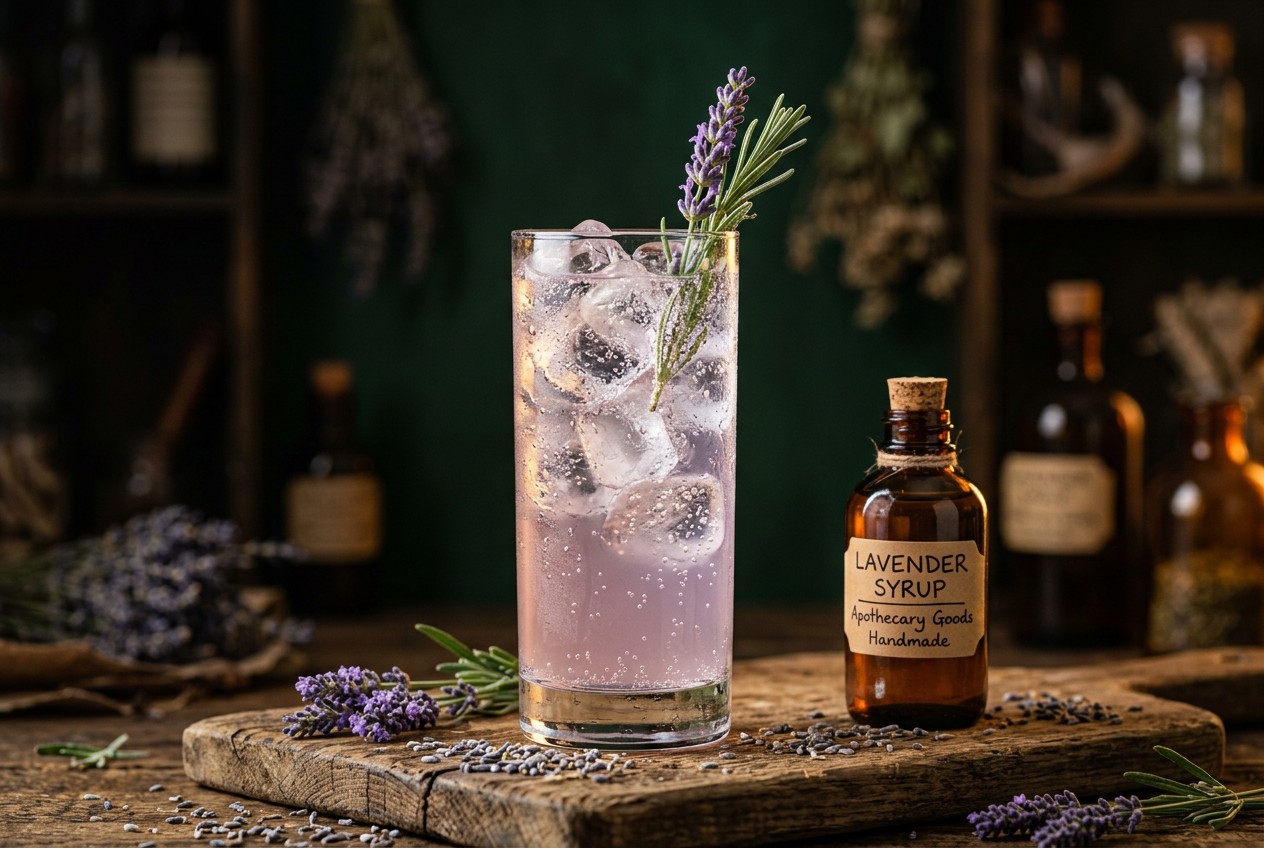
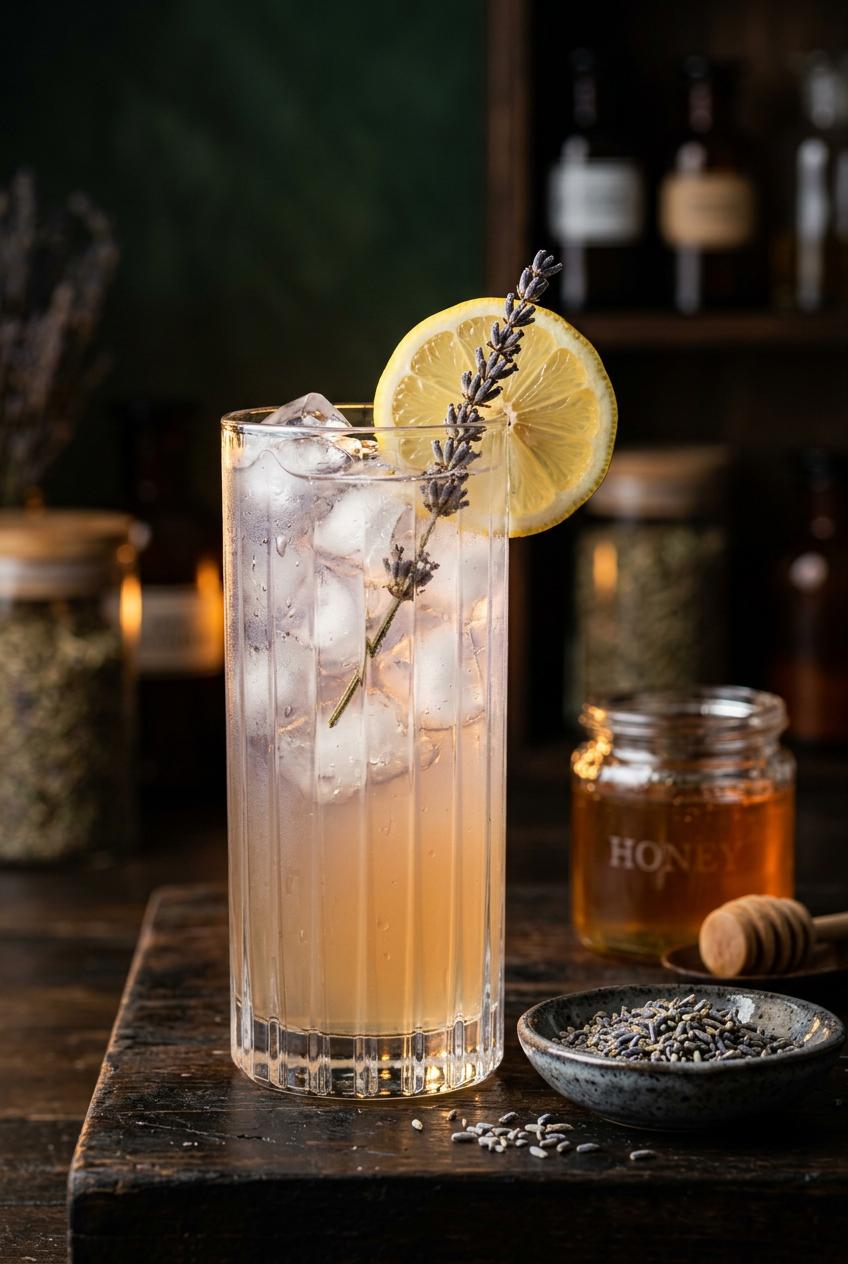
A little culinary lavender brings floral aroma to lemonade. Make the syrup separately so the flowers can be strained out and the pitcher sweetened in measured increments. This is the existing TFA syrup-based lemonade, with corrected output and timing.
Measurements use US cups (8 fluid ounces), tablespoons (1/2 fluid ounce) and teaspoons (1/6 fluid ounce). Fluid ounces measure volume, not ingredient weight. Fruit counts are shopping estimates; measure the juice. The card includes the full syrup preparation, but only 1/2 to 3/4 cup syrup goes into the lemonade. Remaining syrup is extra, not an ingredient silently poured into this pitcher.
Six Portions from One Pitcher
- 1 tablespoon dried culinary English lavender buds, or 2 tablespoons rinsed fresh food-grown buds (house starting amounts)
- 1 cup water for syrup
- 1 cup (200 g) granulated sugar
- 1 cup measured lemon juice
- 4 cups cold potable water for lemonade
- Ice and 6 lemon wheels, optional
- Wash hands, tools and fresh produce. Heat 1 cup water with sugar over medium heat, stirring about 5 minutes until dissolved.
- Remove from heat; add dried or fresh culinary lavender. Cover and steep 10 minutes, or up to 20 minutes for a stronger flavor, then strain and discard flowers.
- Cool syrup promptly in a small heat-safe container in an ice-water bath, then refrigerate. Allow about 20 minutes, longer if needed to become cold. Measure recovered syrup; it is typically around 1 1/2 cups, not 1 cup.
- In a 2-quart pitcher stir lemon juice, 4 cups cold water and 1/2 cup cold syrup. For a sweeter version add up to 1/4 cup more, 1 tablespoon at a time. Keep remaining syrup separate.
- Refrigerate the pitcher 30 minutes before serving. Divide into six equal portions over ice, adding optional lemon wheels. Base yield is 5 1/2 cups, or 5 3/4 cups with all optional syrup, before ice.
- Keep syrup and lemonade at 40 F (4 C) or below and use the day prepared or freeze surplus. Discard after two hours without cold holding, one hour above 90 F (32 C). No two-week shelf life is established for this botanical syrup.
Allow 10 minutes active work, 5 minutes heating, 10 to 20 minutes steeping, about 20 minutes rapid syrup cooling and 30 minutes pitcher chilling: about 75 to 85 minutes elapsed. Cooling depends on the vessel and fridge; wait until cold rather than treating the estimate as a guarantee. With already cold syrup, assembly takes 10 minutes plus the 30-minute pitcher chill. At the starting amount, each of six servings is about 7 1/3 fluid ounces; at the maximum syrup amount it is 7 2/3 fluid ounces. Use a 12-ounce glass with ice.
Fresh and Dried Flowers
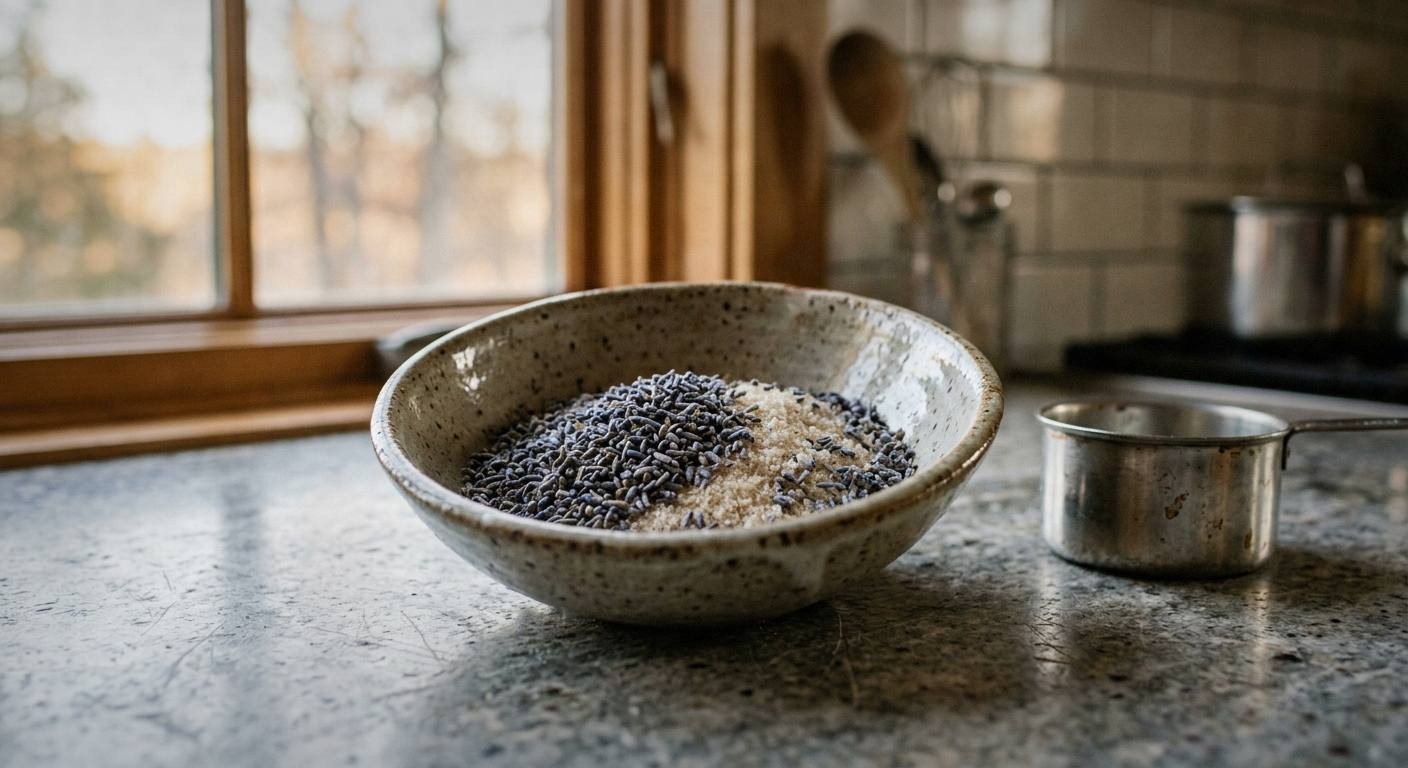
Use food-grown, identified Lavandula angustifolia flowers, never decorative bundles, florist flowers or essential oil. The card’s 1 tablespoon dried or 2 tablespoons fresh is a house starting choice, not a universal conversion by potency. Killebrew’s culinary example uses a twofold fresh volume; the accessible Allrecipes infusion uses a materially different flower loading. Neither requires changing this coherent syrup method into the same recipe.
Fresh buds should be rinsed and drained before measuring. Remove woody stems. Flower form, cultivar and packing affect strength; start with the ten-minute steep. The former ‘one tablespoon per cup syrup’ description confused the water input with finished syrup yield. Here it is one tablespoon per syrup batch made from one cup each water and sugar.
Honey Version
Replace the cup sugar with 3/4 cup honey , keeping 1 cup syrup water and the same flower amount. Heat water to a simmer, remove from heat and dissolve honey; steep flowers off heat as above, strain and cool promptly. Measure recovered output because its volume differs from sugar syrup. Begin with 1/2 cup measured honey syrup in the same 1-cup-lemon/4-cup-water pitcher, then increase up to 3/4 cup. It is a flavor substitution, not equal sweetness, nutrition or preservation. Keep the same cold handling and full preparation clock. Honey drinks are unsuitable for infants under one year.
Measured Serving Variants
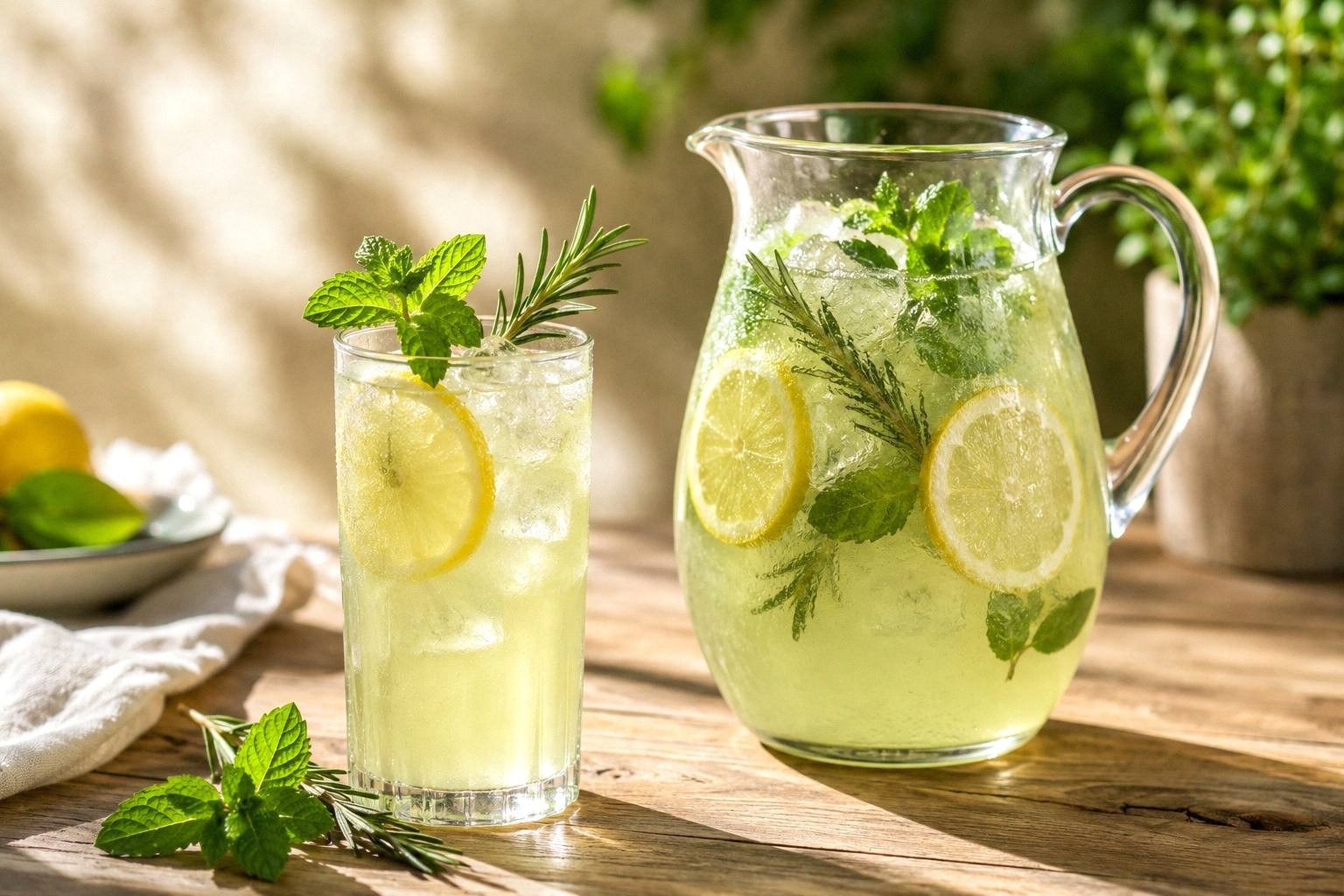
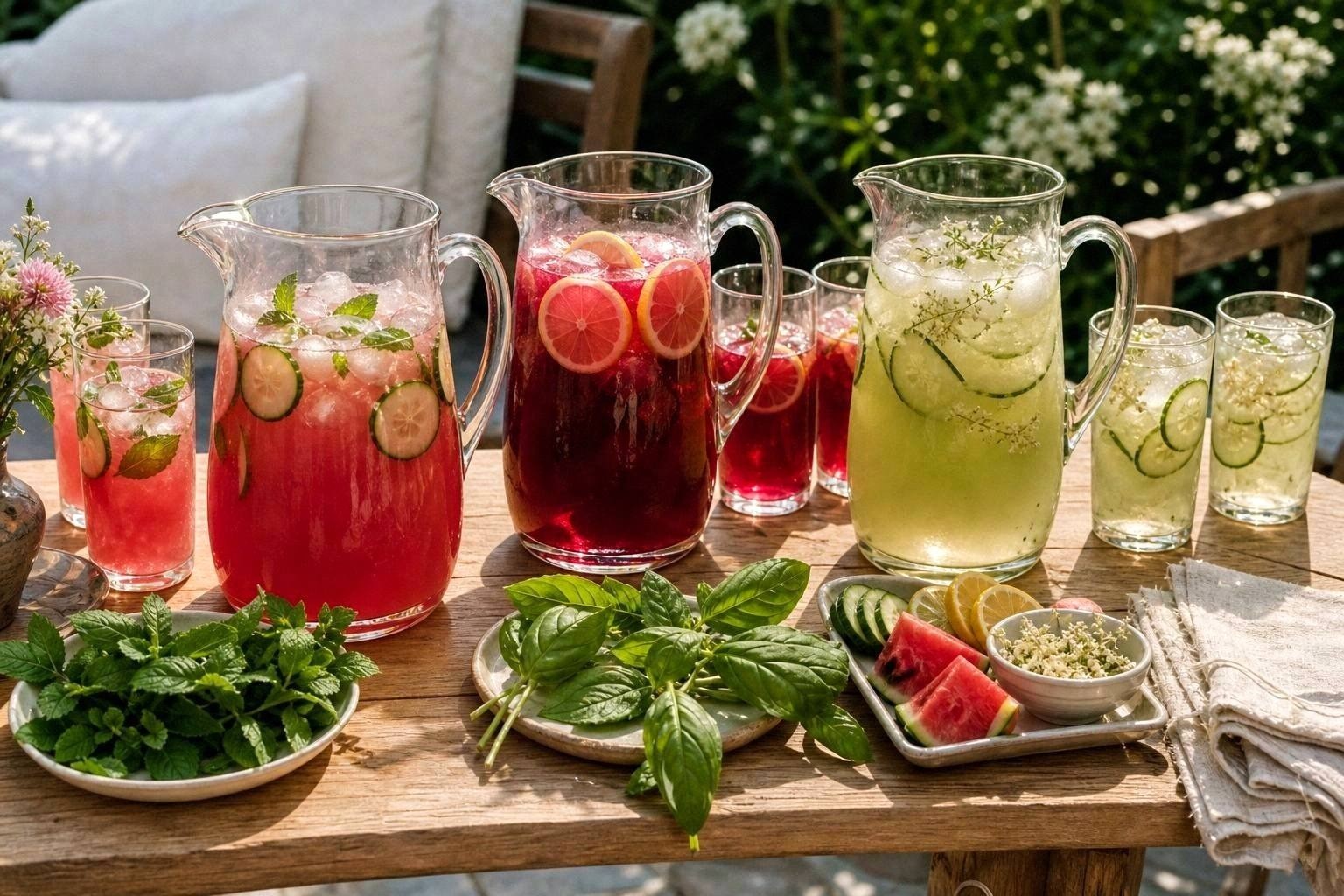
For one six-portion pitcher, add 6 washed mint or basil leaves for a 5-minute refrigerated contact, then remove; add 5 minutes before the final chill. For berry lemonade, mash 1/2 cup rinsed blueberries or strawberries into 1/2 cup of the mixed lemonade, strain it back into the pitcher and measure actual recovered output before dividing by six. Allow 10 additional minutes; pulp recovery varies. For cucumber , add 6 washed thin cucumber slices during the 30-minute refrigerator chill and remove before serving; this is an infusion, not a new fixed juice yield.
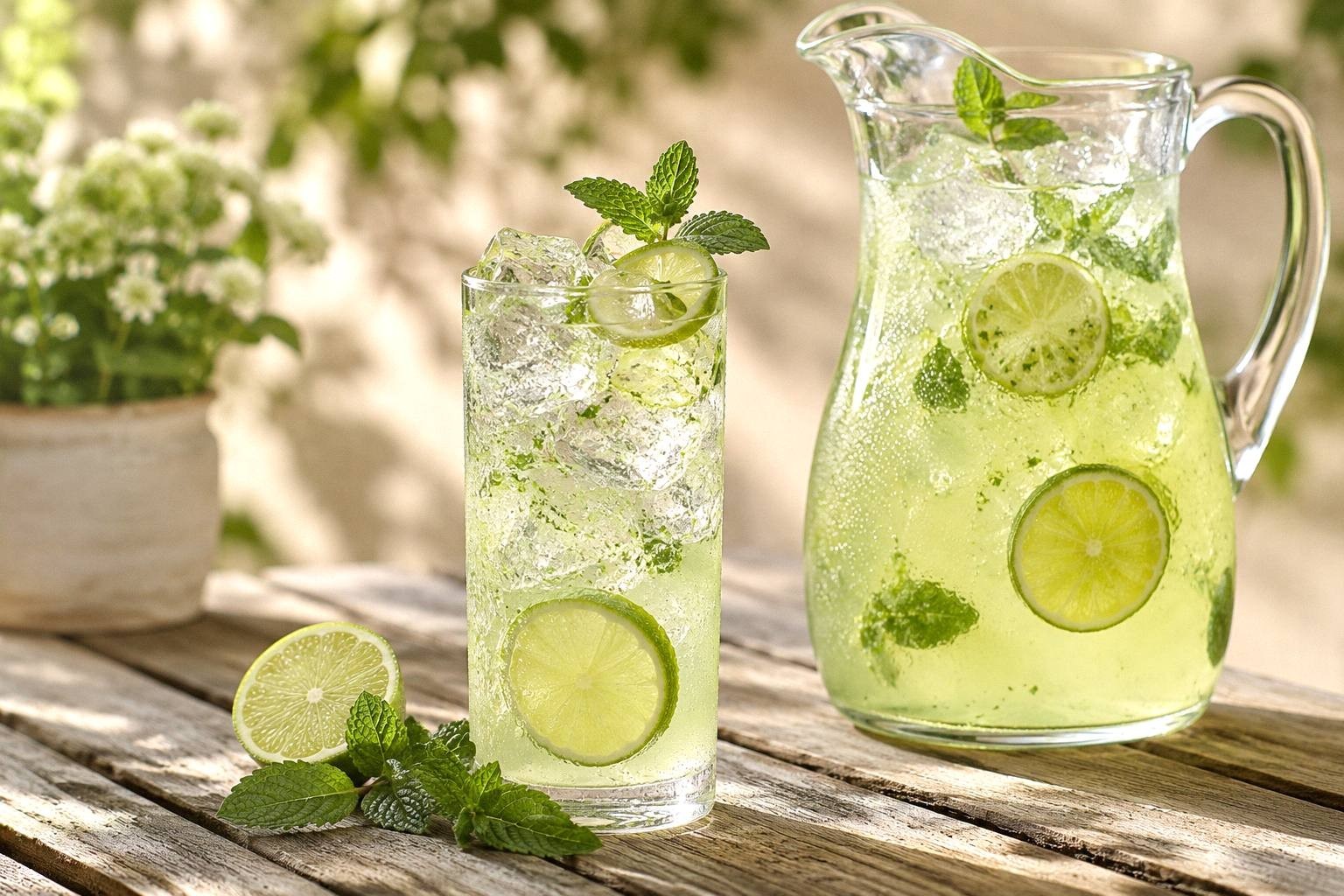
For sparkling lemonade replace 2 cups of the still water with 2 cups soda added at serving: mix a 3 1/2 to 3 3/4 cup still base, divide six ways, and add 1/3 cup soda to each portion. Finished yield remains 5 1/2 to 5 3/4 cups before ice. Do not carbonate the syrup for storage. If flavor needs adjusting, measure a tablespoon of syrup, lemon juice or water at a time and record the resulting pitcher volume; additional dilution changes serving size.
Preparation and Cold Holding
Wash hands and equipment. Rinse produce and culinary herbs under running water before cutting; scrub melons and cucumbers before peeling. Use only correctly identified ingredients grown for food, never florist flowers or plants treated with pesticides unsuitable for food crops. Refrigerate promptly in small clean containers at 40 F (4 C) or below. Discard after more than two cumulative hours without cold holding, or one hour above 90 F (32 C). Do not wait for a large batch to cool on the counter. Normal smell and appearance do not establish safety. Cool hot syrup or tea promptly in small heat-safe containers in an ice-water bath, keeping bath water out, then refrigerate. Use finished drinks and fresh herb components the day they are prepared, or freeze extra base without soda or garnishes. This is a conservative household plan, not a validated shelf life. Follow opened commercial ingredient labels when more restrictive. Never skim mold or taste an unexpectedly fizzing batch. Ice for serving needs its own clean scoop; cooling-bath ice does not go into drinks.
No kitchen or shelf-life test has been performed. Culinary comparisons support the preparation family, not an identical external formula.