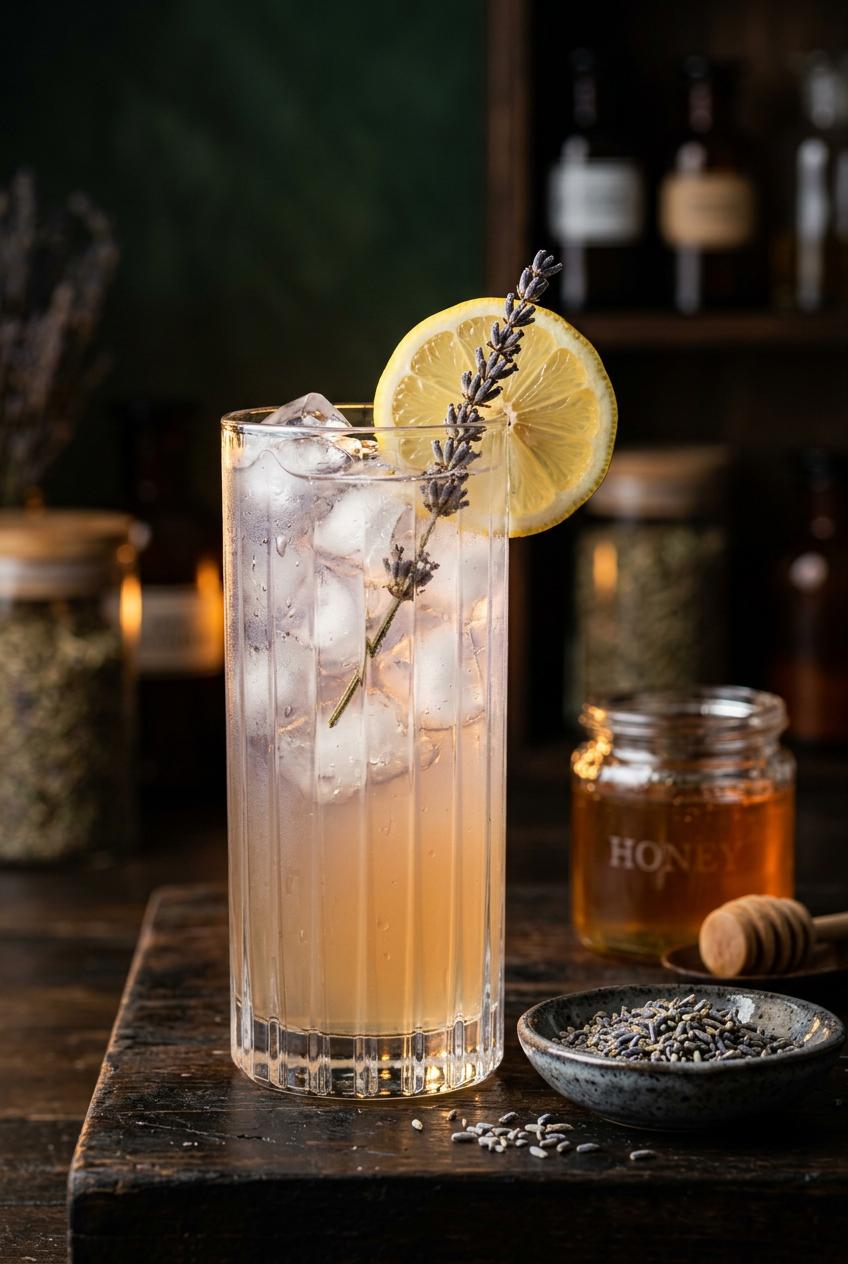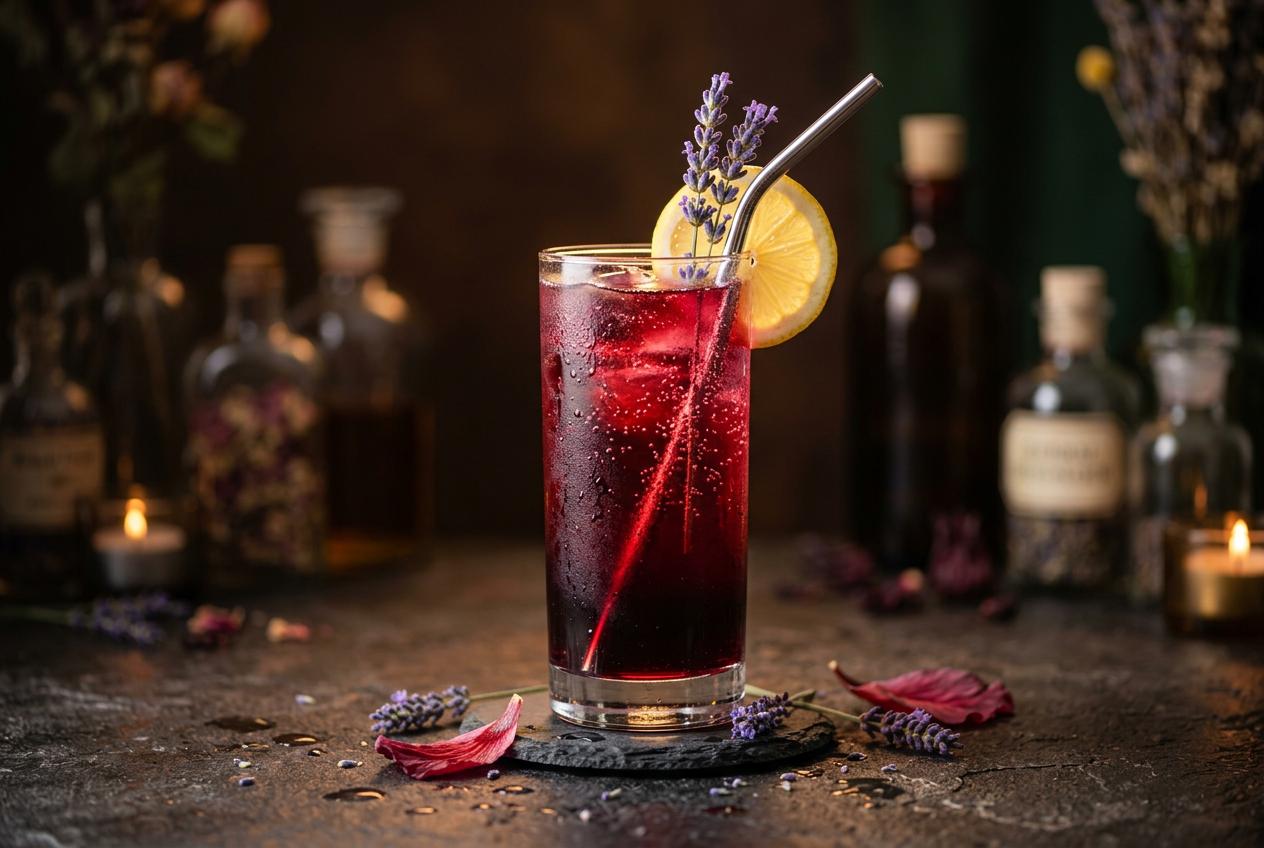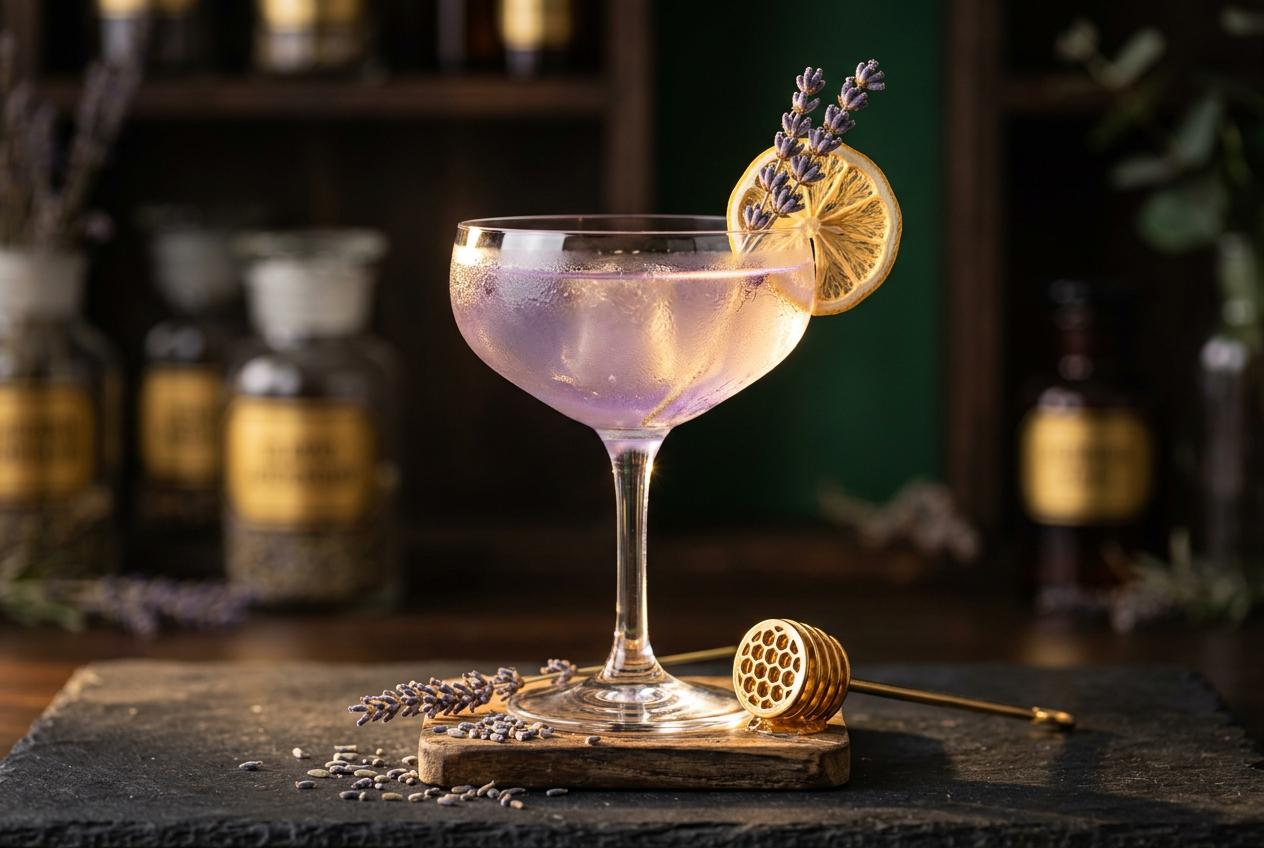
This lavender lemon mocktail uses a lightly sweetened infusion instead of separate lavender and honey syrups. Make the base for two glasses, chill it, then finish each drink with sparkling water.
The formula follows the University of Michigan MHealthy Lavender Infused Lemon Spritzer . Its amounts and ten-minute steep are used here; the instructions are paraphrased. It needs cooling and chilling time, so it is not a five-minute drink from raw ingredients.
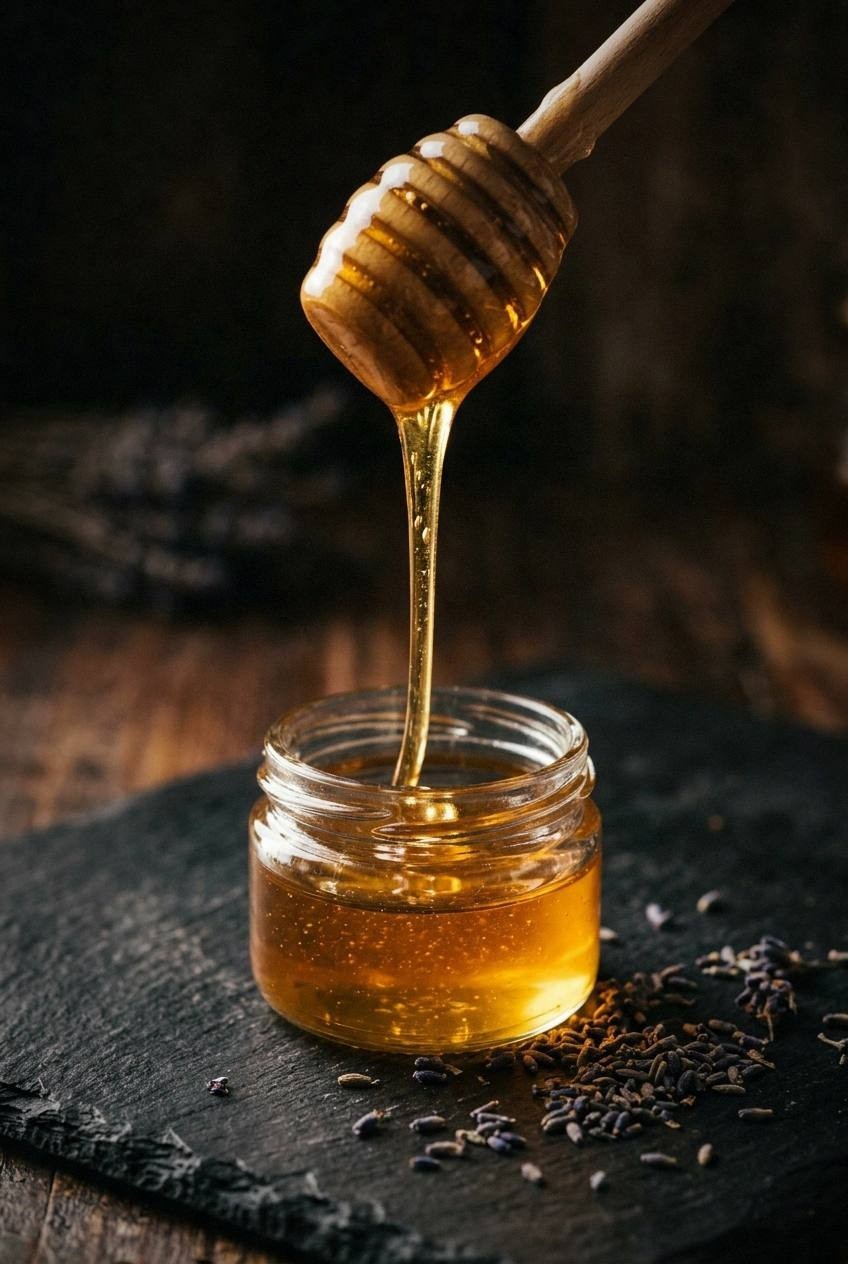
Ingredients for two servings
- 1/2 cup water
- 2 teaspoons honey
- 1 tablespoon food-grade fresh lavender buds (about 4 sprigs)
- 1/4 cup fresh lemon juice
- Cold sparkling water, to top each glass to taste
- Ice
- Lemon zest, optional for garnish
Use lavender sold for food use and the fresh buds called for in the published recipe. Do not substitute a tablespoon of dried buds, decorative potpourri or essential oil. Skip the optional flower garnish and use lemon zest if you cannot verify that the flowers are suitable for food.
Make the infusion, then the drink
- Bring water, honey and lavender to a boil in a small saucepan. Turn off the heat and steep for 10 minutes, then strain out the lavender.
- Let the infusion cool, stir in the lemon juice, and refrigerate until chilled.
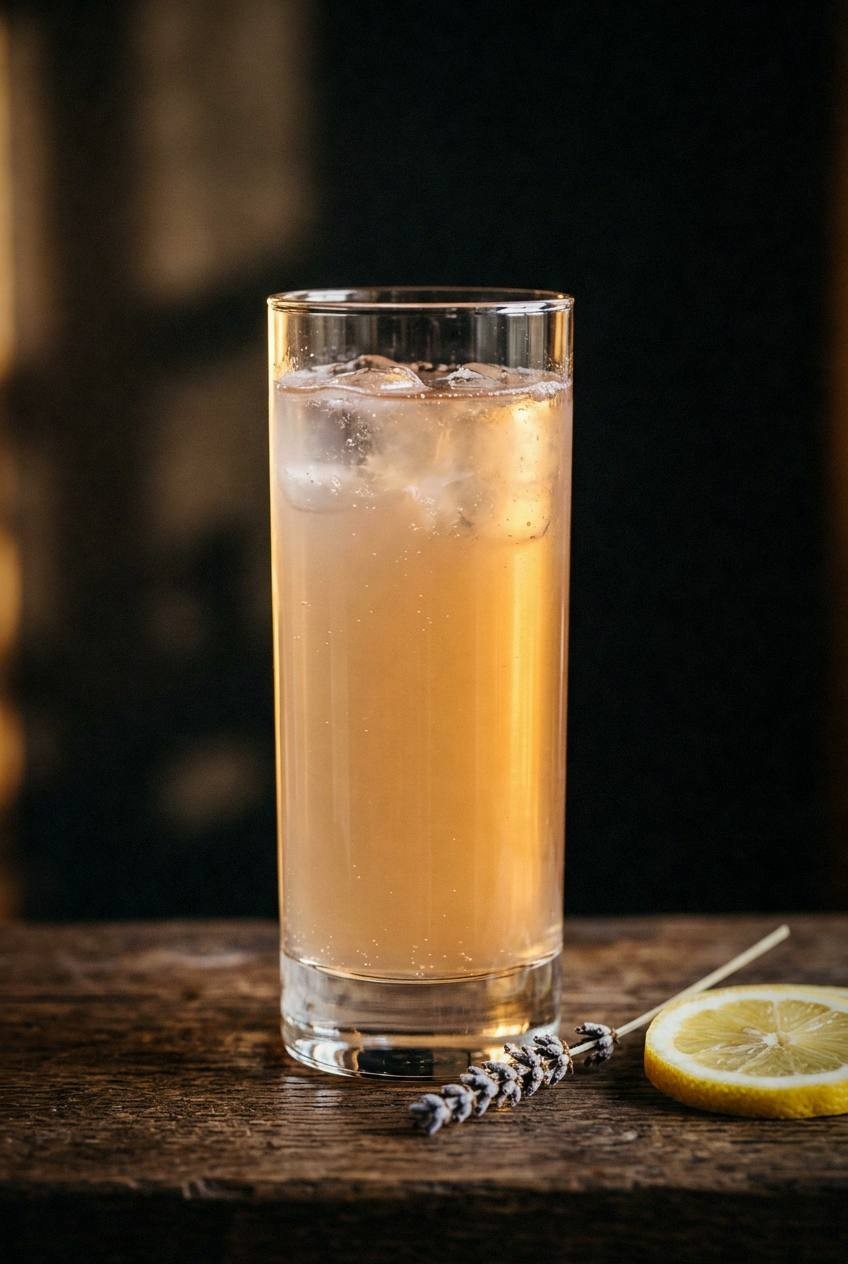
- Divide between two ice-filled glasses. Add sparkling water to taste, stir gently, and garnish with optional lemon zest.
Infusion or bottled syrup?
| Base | Use |
|---|---|
| Infusion | Use the measured water, honey and fresh buds above; split the finished base between two glasses |
| Sugar syrup | Lavender sugar syrup is more concentrated and already sweetened; it cannot replace the infusion at equal volume |
| Honey syrup | Supplies sweetness without lavender; its concentration depends on its recipe |
The separate lavender simple syrup guide uses a sugar-and-dried-bud preparation. It is a different base, so its lavender amount and steeping time do not belong in this recipe. The mocktail pantry guide helps distinguish syrups, cordials and mixers.
Adjust the finished glass
Start with less sparkling water, stir once, and taste. Add more if the floral aroma or tartness is too strong for you. The source leaves this top-up to taste rather than specifying a fixed final glass volume. Adding honey directly to a cold glass is harder to mix; dissolve the measured honey during the warm infusion instead.
For serving two people, strain and chill the still base together, then divide it before adding the sparkling water. Keep the water separate until serving. For a fruit-led alternative that uses a ginger-beer mixer, try the peach mule .
Lavender is here for flavor
This mocktail is not an anxiety or sleep treatment. NCCIH’s lavender review describes limited and preliminary research on different lavender products; it does not establish therapeutic benefits for this drink. Honey supplies sweetness here, not an antibacterial treatment.
NCCIH notes possible interactions with sedative medicines and limited pregnancy and breastfeeding safety information for lavender use. If those concerns apply to you, ask your clinician before using lavender as an herbal product; this recipe is not guidance for medicinal dosing.