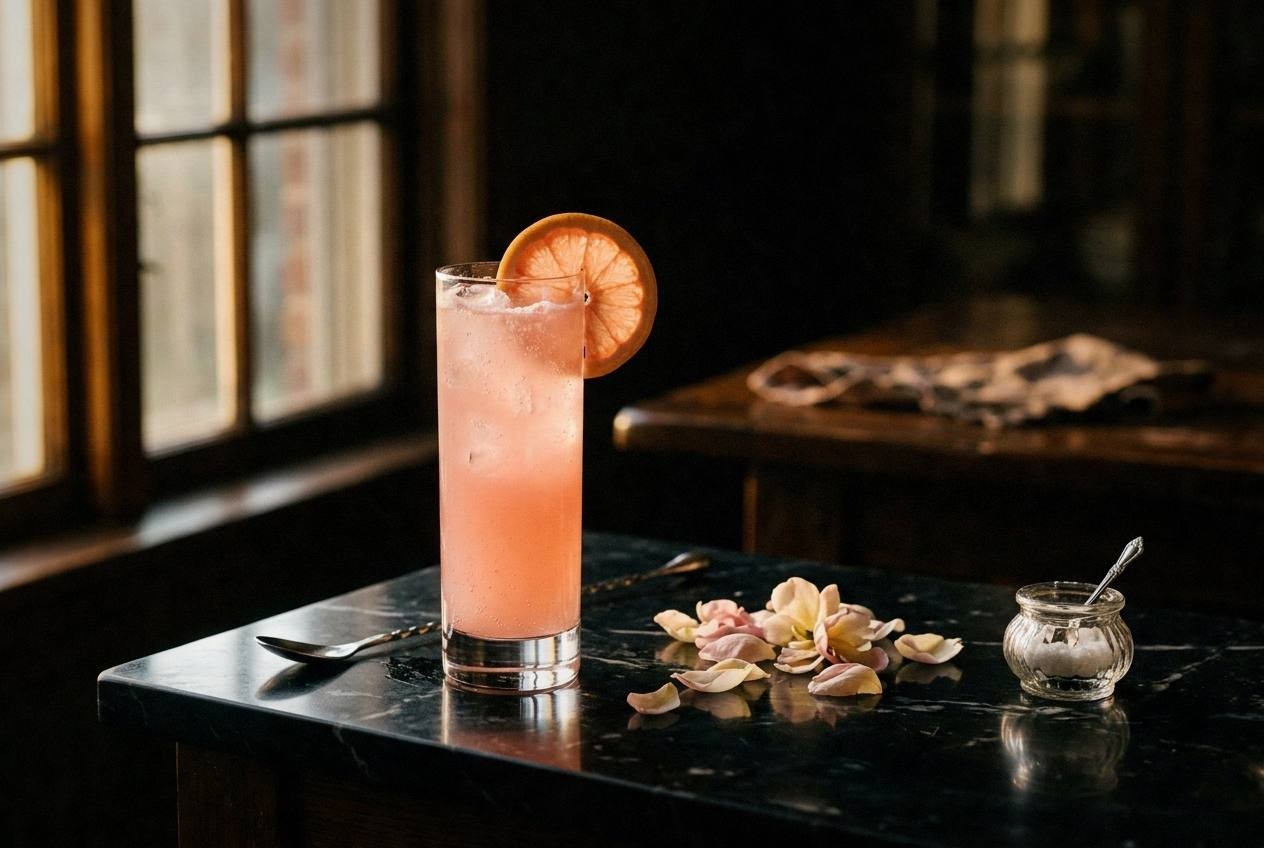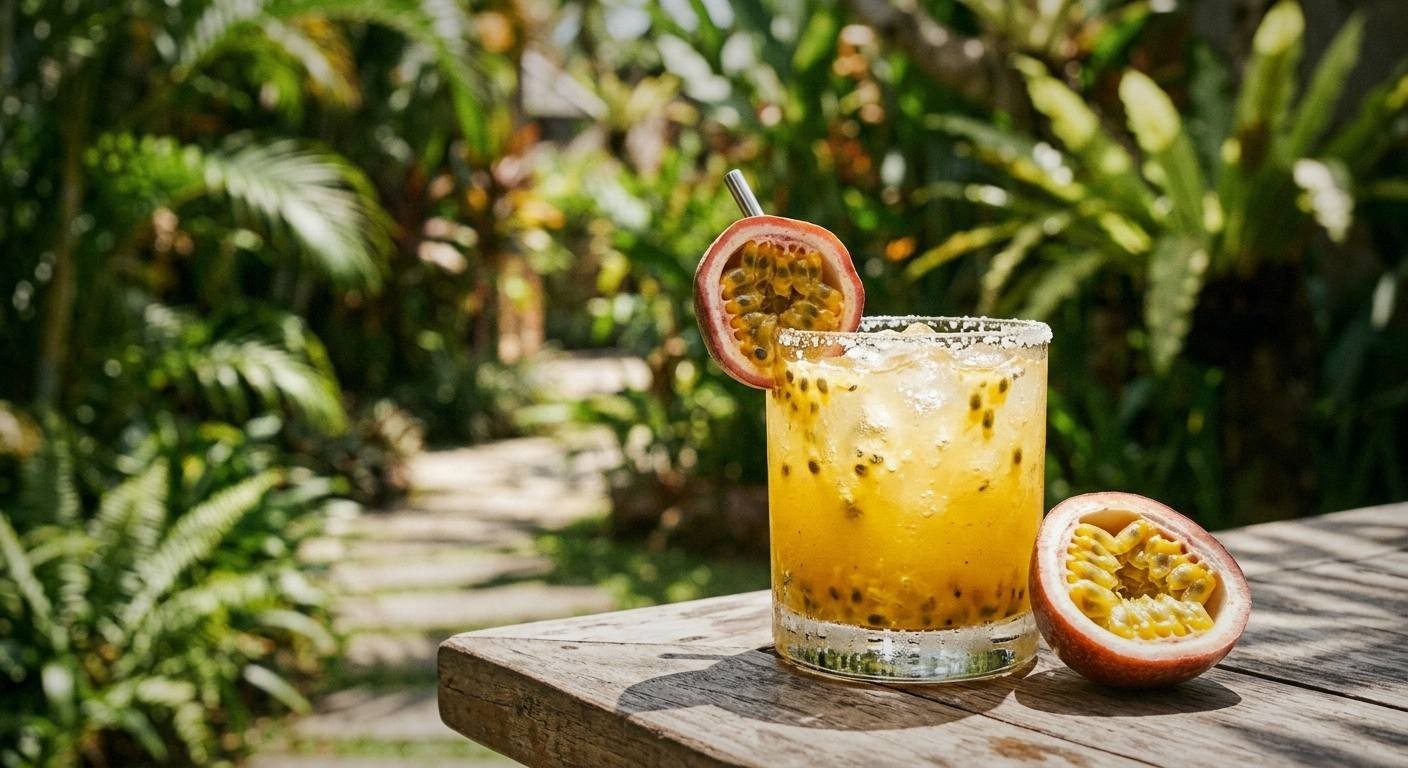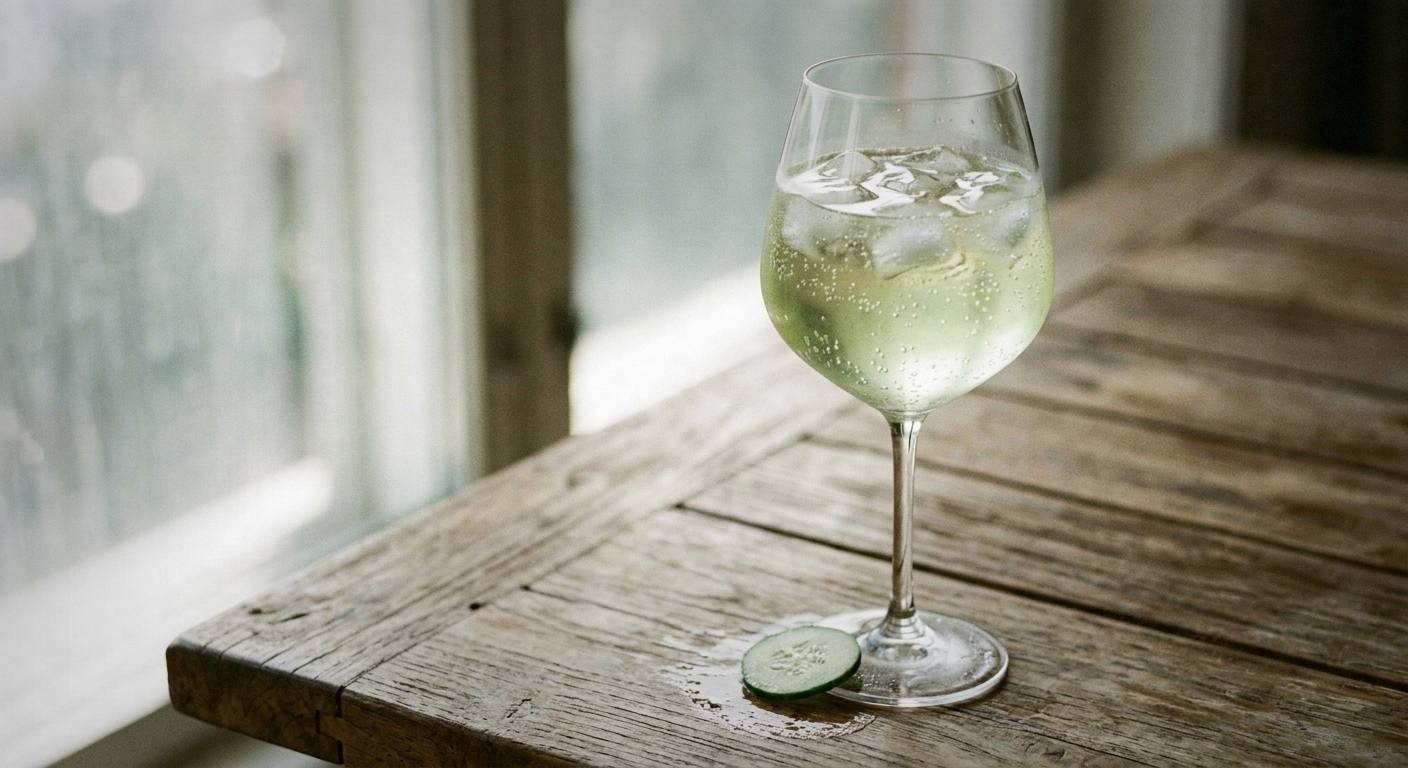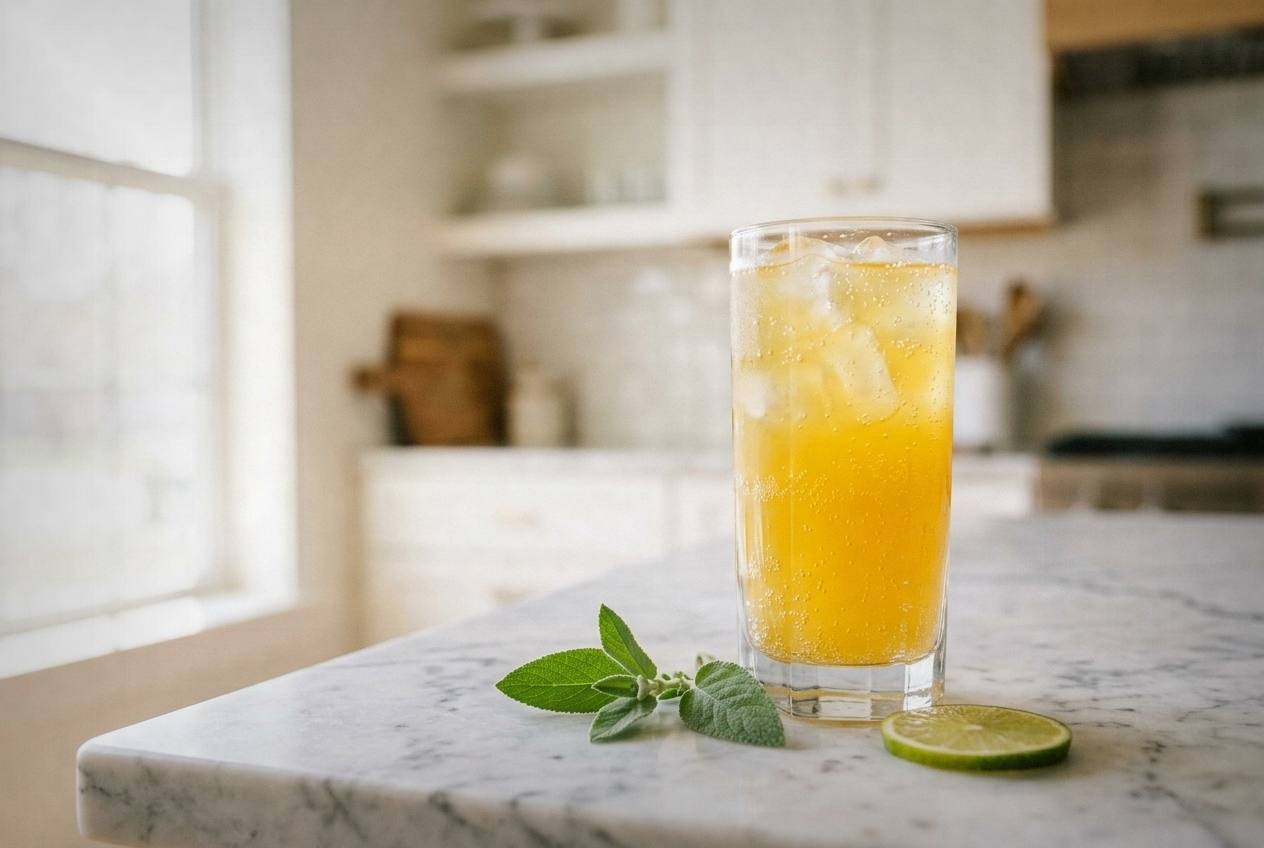
Pineapple sage supplies aroma; this recipe contains added sugar . These are TFA culinary adaptations, checked for quantities and handling against the sources below. They have not been kitchen tested; source comparisons do not certify flavor, shelf life or medical suitability.
Ingredients and Timing
Makes one drink, 5 1/2 fluid ounces of liquids plus leaves, ice and optional lime. Allow 5 minutes with chilled syrup ready; making and cooling syrup adds time. Measure juice rather than relying on half a lime.
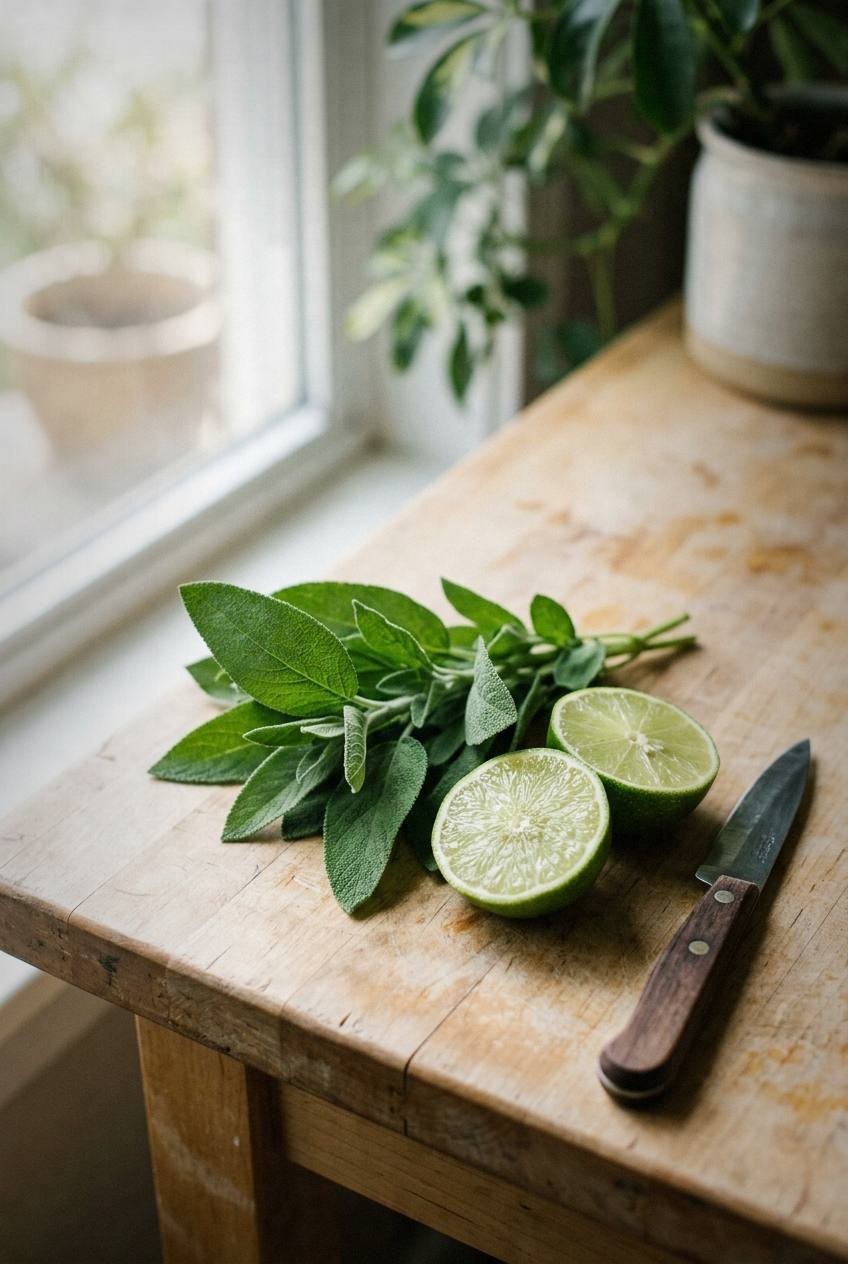
- 8 fresh culinary pineapple sage leaves (Salvia elegans), rinsed
- 1 fluid ounce (2 tablespoons) lime juice
- 1/2 fluid ounce (1 tablespoon) prepared, cooled 1:1 simple syrup
- 4 fluid ounces (1/2 cup) chilled sparkling water
- Ice to fill a 12-fluid-ounce glass halfway
- 1 rinsed lime wheel (optional)
Method
- Rinse the sage and lime before cutting. Confirm the herb is culinary Salvia elegans; do not use an unidentified ornamental sage.
- Put the leaves, measured lime juice and cooled syrup in a 12-fluid-ounce glass. Press gently a few times with a muddler.
- Add ice to about halfway up the glass, leaving room for all 5 1/2 fluid ounces of liquids.
- Add the sparkling water and stir gently. Add the lime wheel if using and serve immediately.
Syrup and Variations
For simple syrup, heat 1/4 cup sugar with 1/4 cup water, stirring until dissolved. Cool promptly in a small heat-safe container; measure the final yield. For honey syrup cipes/grapefruit-thyme-fizz-with-honey -for-bright-spring-days/) syrup use 1/4 cup honey and 1/4 cup warm water instead; this is equal volumes, not equal weights. Use the same 1-tablespoon drink pour. Make either for the day and refrigerate; freeze extra rather than assuming a shelf life.
For a less sweet version, use 1/2 tablespoon syrup and keep the lime unchanged. For a sweeter version, use 1 1/2 tablespoons syrup in a larger glass. If pineapple sage is unavailable, use 2 small rinsed culinary garden sage leaves (Salvia officinalis) and 1/4 fluid ounce pineapple juice instead; this is a stronger herbal flavor, not an exact pineapple-sage match. Alternatively use 4 rinsed mint leaves with 1 tablespoon pineapple juice. For herb ice, put one rinsed, identified pineapple sage leaf in each compartment of a clean ice tray, cover with potable water and freeze. Freezing does not sterilize herbs or establish identity. Optional flowers must be identified food-grown pineapple sage flowers; rinse and use only one as decoration.
Preparing Ahead
For six drinks, mix 12 tablespoons lime juice with 6 tablespoons cooled syrup and keep cold. Muddle 8 leaves per glass at serving and add 1/2 cup sparkling water to each. Do not fill glasses to the rim with ice before adding measured liquids. Refrigerate promptly in small clean containers at 40 F (4 C) or below. Discard after more than two cumulative hours without cold holding, or one hour above 90 F (32 C). Do not wait for a large batch to cool on the counter. Normal smell and appearance do not establish safety.
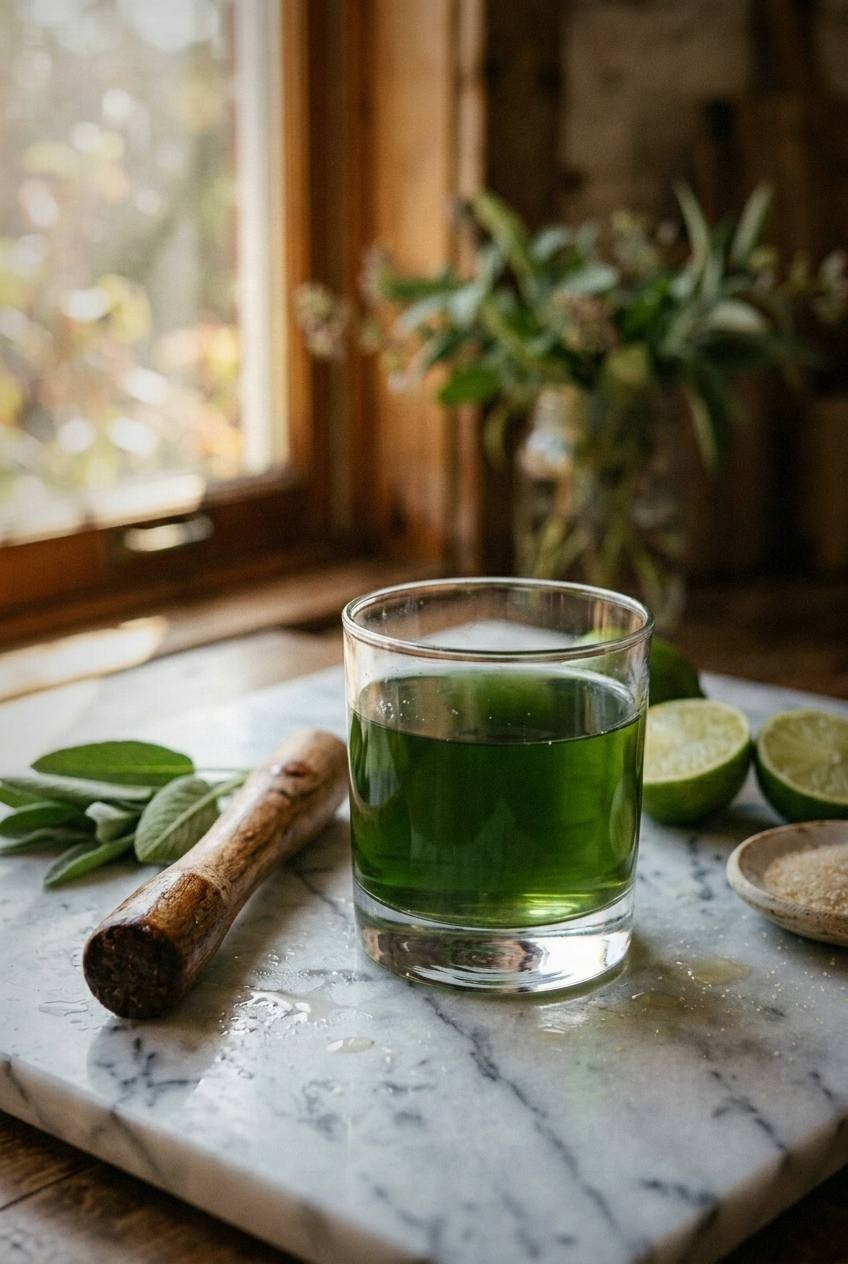
NC State Extension distinguishes pineapple sage from similar ornamental sage and describes its late-season flowers. Its garden-sage entry separately supports culinary use of Salvia officinalis leaves. Aroma, color and sourness do not establish preservation or a therapeutic effect.