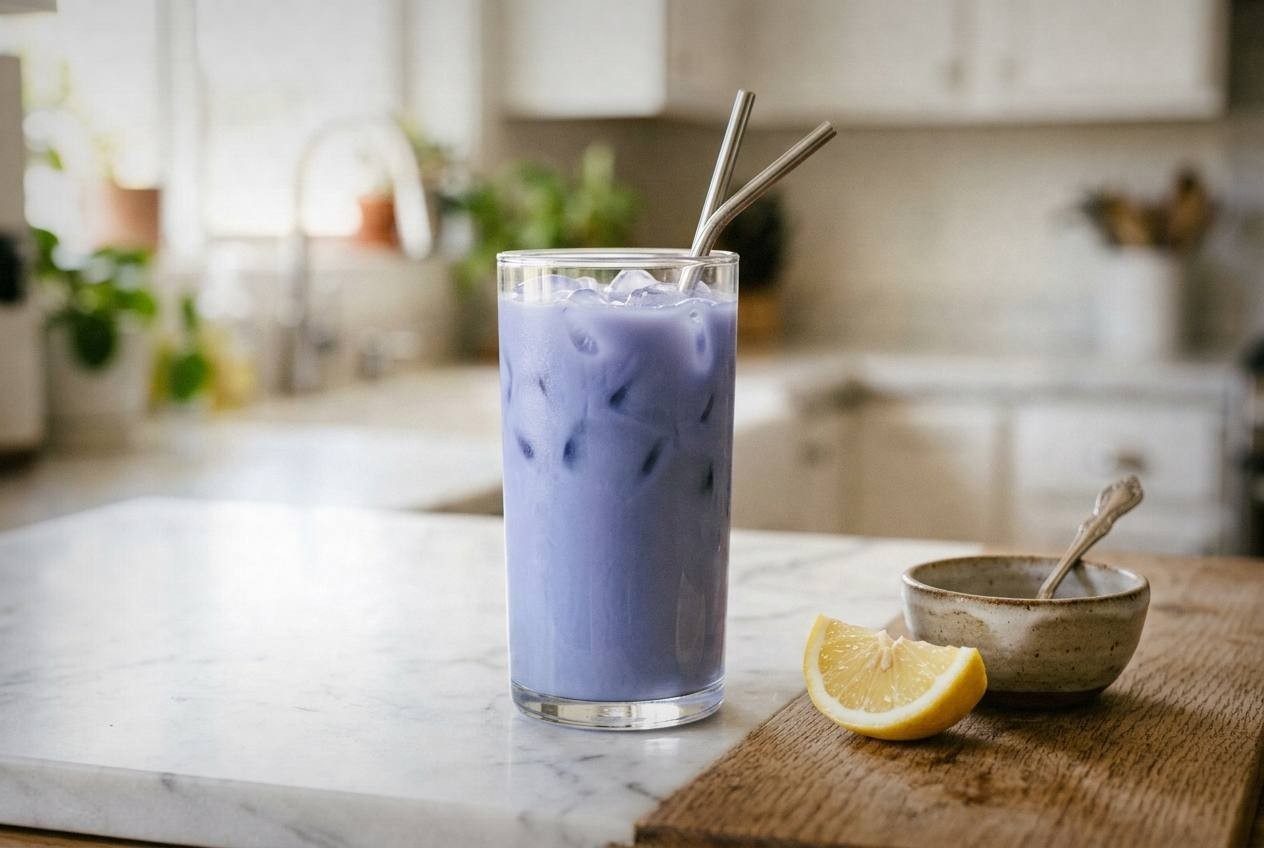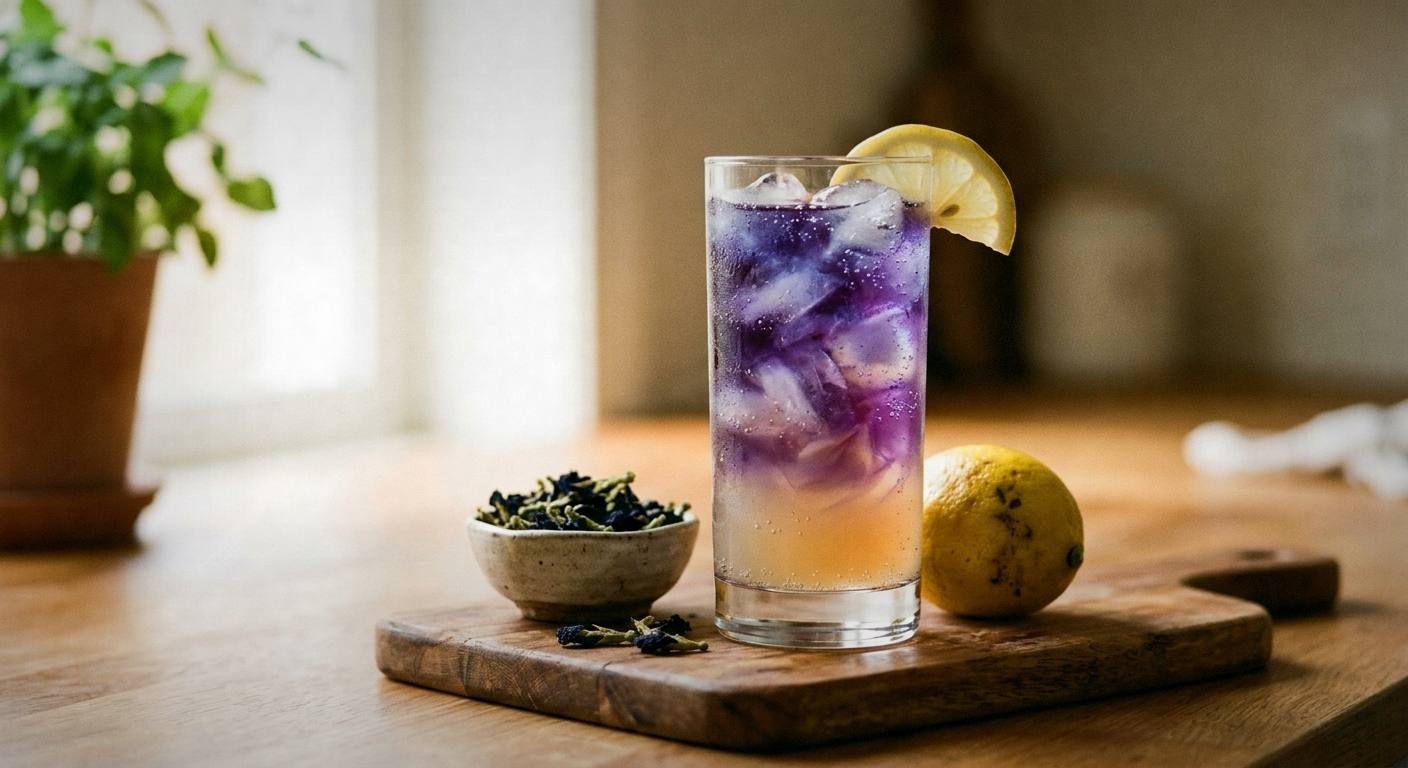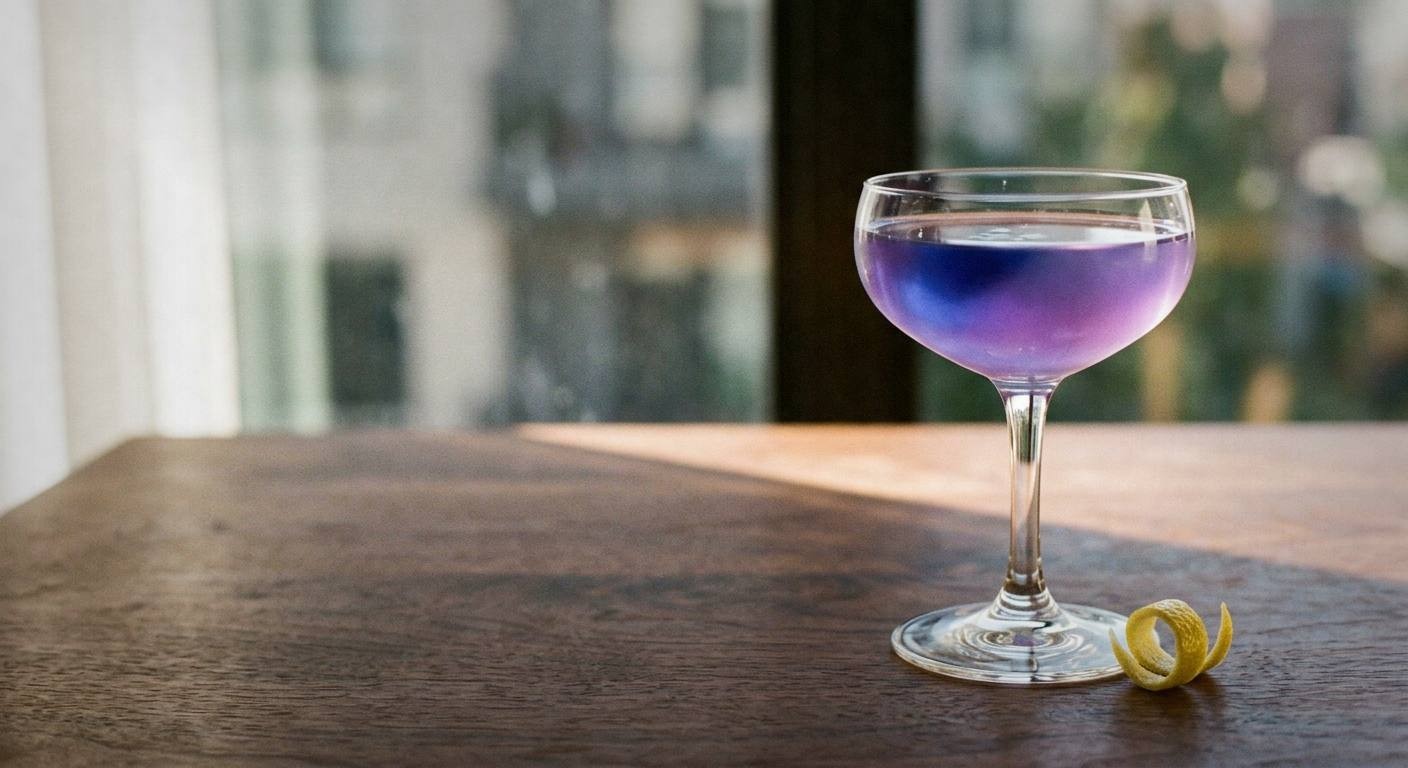
Blue tea meets lemon in a gin highball. Ray Isle’s original butterfly-pea cocktail demonstration supplies a culinary color-change precedent; this gin sour with soda is a separate TFA formulation. Color does not measure acidity or establish safety.
Ingredients and Timing
- 2 fluid ounces London dry gin
- 1 fluid ounce prepared, strained and chilled butterfly pea tea
- 1 fluid ounce measured lemon juice
- 3/4 fluid ounce prepared, cooled 1:1 simple syrup (equal volumes sugar and water)
- 3 fluid ounces chilled soda water
- Ice for shaking and a 12-fluid-ounce highball glass
- 1 rinsed lemon wheel (optional)
One drink contains 7 3/4 fluid ounces liquid before shake dilution and ice. A small coupe will not fit the full soda version. Allow 5 minutes with prepared bases; from dry flowers and sugar allow about 35 minutes, including heating, a 5-minute steep and cooling. Make the bases in parallel.
Prepare the Tea and Syrup
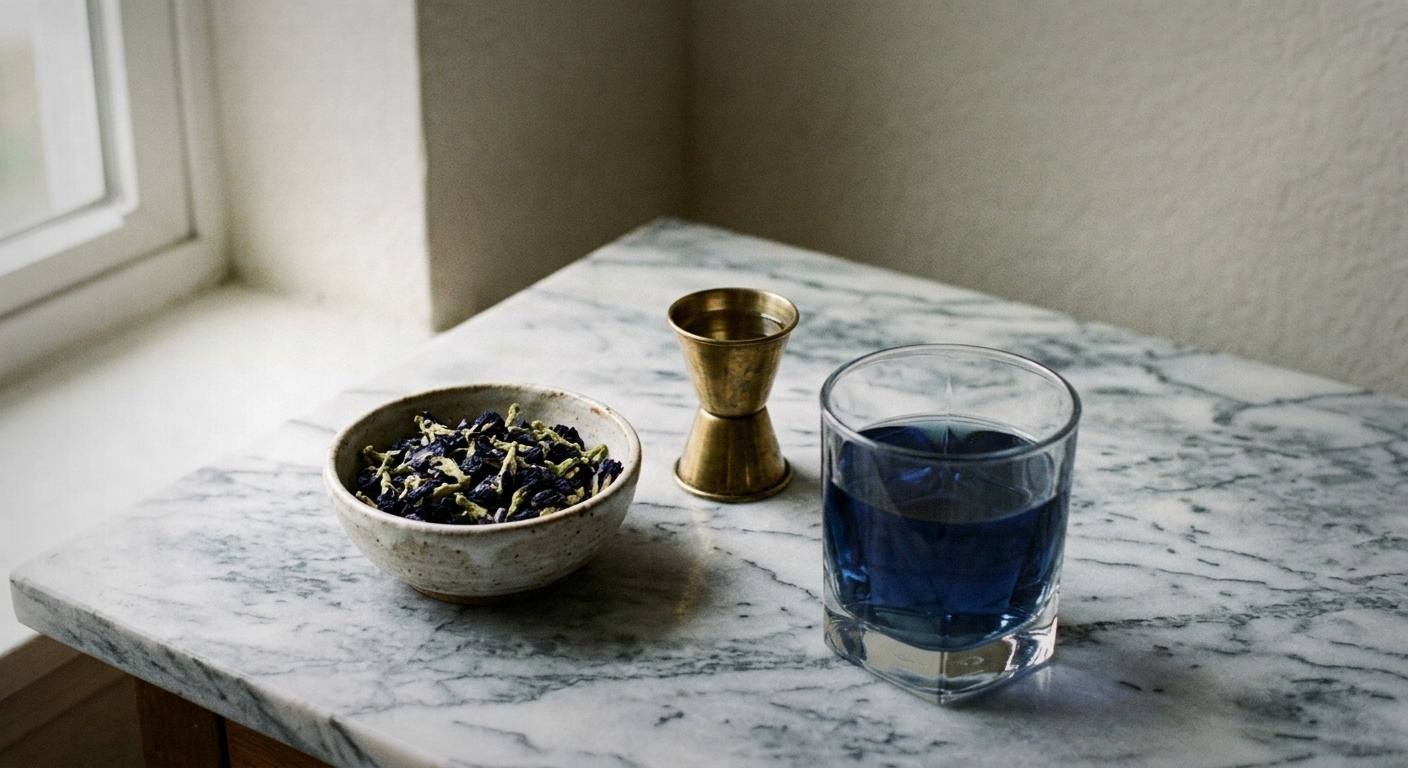
For tea, put 2 teaspoons dried food-grade Clitoria ternatea flowers in a heat-safe cup. Pour over 1/4 cup (2 fluid ounces) freshly boiling potable water, cover for at least 5 minutes or the longer package instruction, then strain. Cool promptly in an ice bath and refrigerate. Measure the strained output; use 1 fluid ounce per drink. If absorption leaves less than that, add enough potable water to the strained tea to reach 1 fluid ounce. Use remaining tea the same day or freeze. This replaces the below-boiling three-minute extraction and ambiguous dry-flower/tea substitution.
For syrup, heat 1/4 cup sugar with 1/4 cup water, stirring until dissolved. Cool promptly; measure output. The 1:1 ratio is by volume, not weight. Use 1 1/2 tablespoons (3/4 fluid ounce) per drink. Refrigerate for the day and freeze extra; do not inherit a tea shelf life or a commercial syrup label.
Method
- With tea and syrup prepared and chilled, put gin, 1 fluid ounce butterfly pea tea and syrup in an ice-filled shaker. Shake 15 seconds.
- Strain into a 12-fluid-ounce highball glass half filled with fresh ice, leaving room for the remaining liquids.
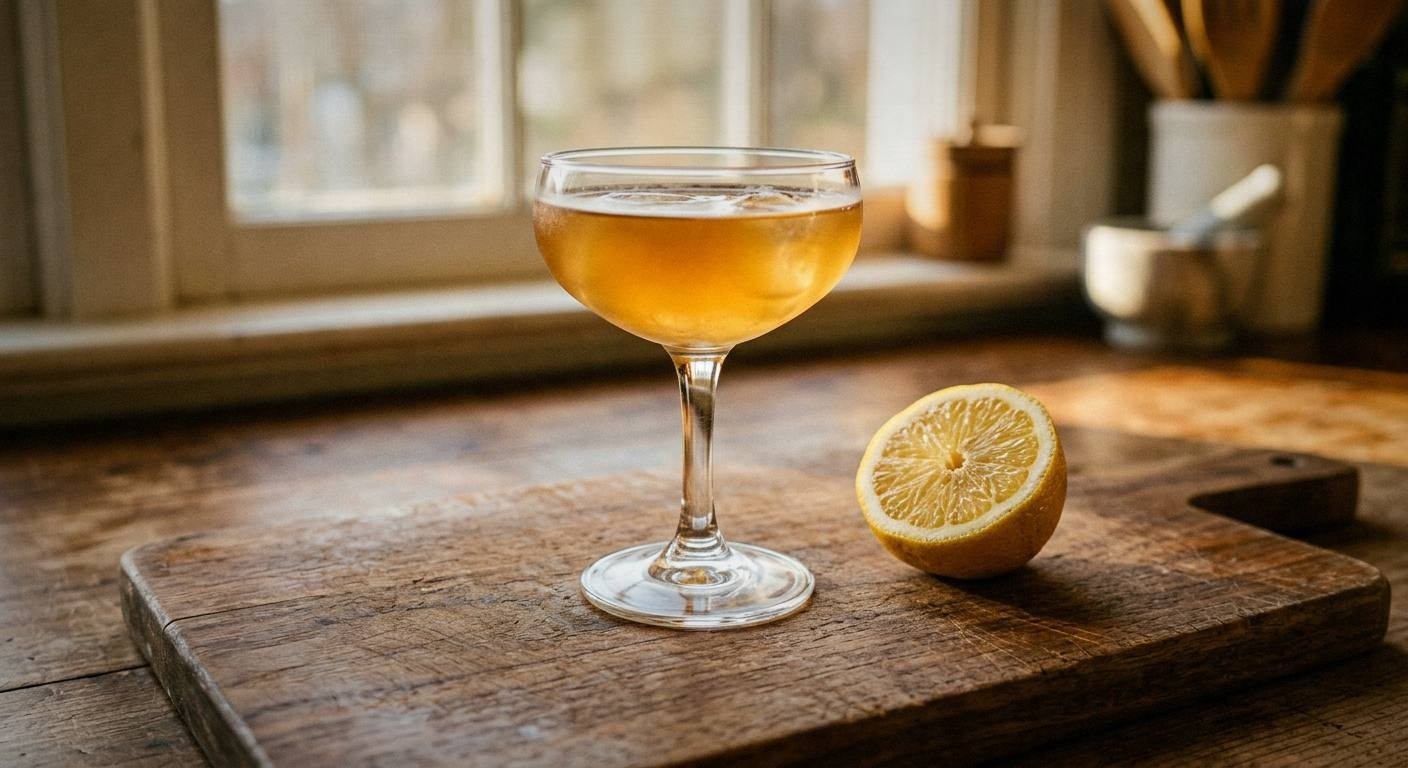
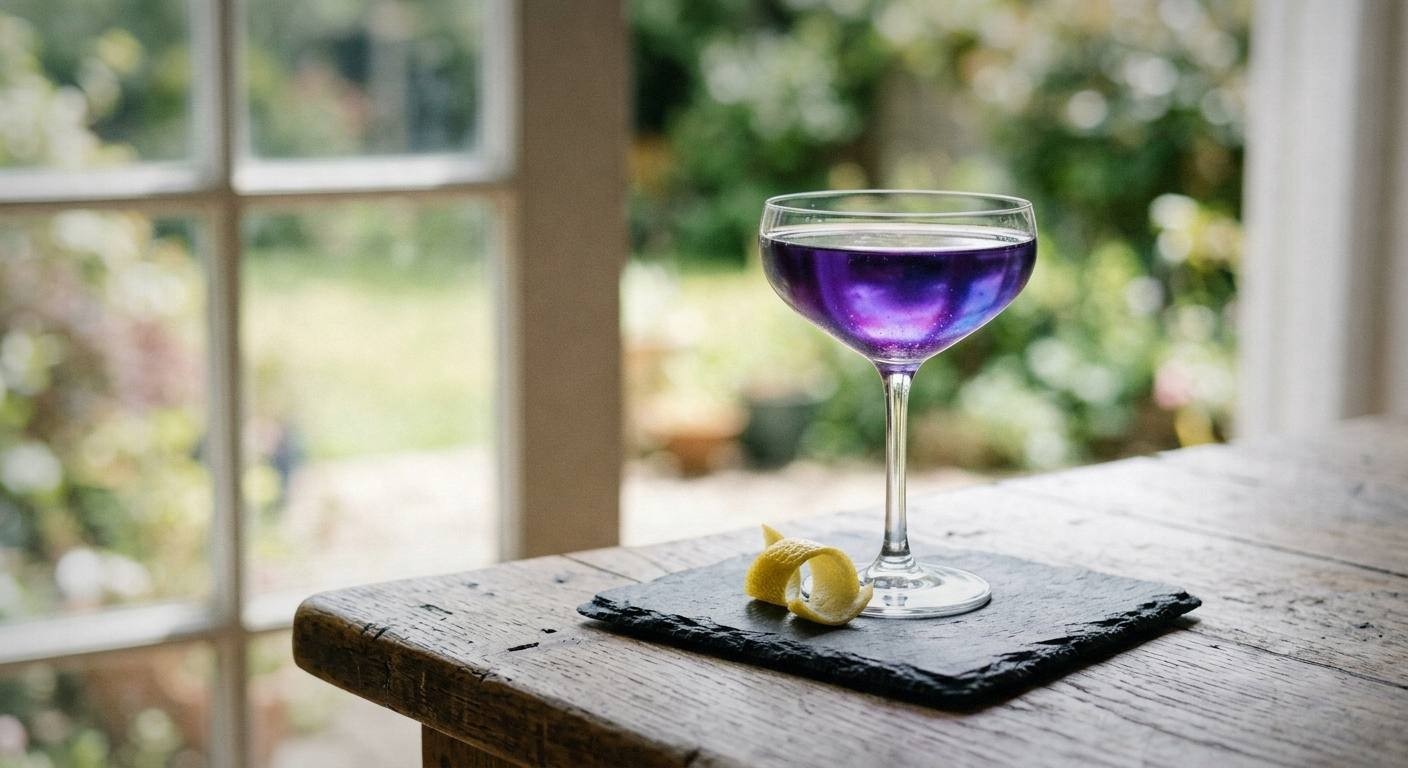
- Slowly add the measured lemon juice. The color may shift toward purple; exact shade and timing vary.
- Add 3 fluid ounces soda water last, stir gently, add the optional lemon wheel and serve immediately.
Measured Variations
For eight drinks, prepare tea with 16 teaspoons flowers and 2 cups boiling water using the same method; measure output and reserve 8 fluid ounces chilled tea. Make additional tea if needed rather than claiming exactly two drinks from every small batch. Make syrup with 1/2 cup sugar and 1/2 cup water, cool and measure at least 6 fluid ounces. Combine 16 fluid ounces gin, 8 fluid ounces tea and 6 fluid ounces syrup and keep cold. At service, divide into eight highball glasses over ice, add 1 fluid ounce lemon and 3 fluid ounces soda to each. Acid already mixed into a pitcher would change the color before serving.
For a mocktail replace gin with 2 fluid ounces potable chilled water. To use white tea instead, brew one food-tea bag in 1/2 cup water at the label’s temperature/time, remove it, cool promptly and measure 2 fluid ounces per drink; white tea contains caffeine. A chamomile option uses one labeled food-tea bag in 1/2 cup freshly boiling water for at least 5 minutes or longer package time, then strain, cool and measure the same pour. These tea options add about 20-30 minutes from dry ingredients. Do not cold brew unknown dried flowers. An optional fizzy mocktail keeps 2 fluid ounces water, uses 1/2 fluid ounce syrup and 5 fluid ounces soda, for 9 1/2 fluid ounces before ice; use a 16-fluid-ounce glass. Commercial tonic may replace the 2-fluid-ounce gin pour in the standard mocktail; use its label and retain 3 fluid ounces soda. For that carbonated replacement, shake only tea and syrup, strain into the glass, then add lemon, tonic and soda gently. Never shake carbonated tonic in a sealed shaker.
A darker tea option uses 3 teaspoons flowers in the same 1/4 cup boiling water, with the same measured 1-fluid-ounce pour and hot method. This is a flavor/color variant, not a supplement dose. Optional decorative flowers must be identified edible food-grown flowers, never florist stock; omit them if identity or treatment is uncertain.
Handling and Review Limits
Wash hands and equipment. Rinse produce and culinary herbs under running water before cutting; scrub melons and cucumbers before peeling. Use only correctly identified ingredients grown for food, never florist flowers or plants treated with pesticides unsuitable for food crops. Refrigerate promptly in small clean containers at 40 F (4 C) or below. Discard after more than two cumulative hours without cold holding, or one hour above 90 F (32 C). Do not wait for a large batch to cool on the counter. Normal smell and appearance do not establish safety. Make bases for same-day use or freeze extra. The printable card uses prepared bases and its 5-minute assembly time; the separate tea/syrup methods above add heating, steeping and cooling. The former color/temperature thresholds, exact pH 7-to-3 change, three-day color/safety guarantee and botanical memory/calm lore have been removed. These are TFA culinary adaptations, checked for quantities and handling against the sources below. They have not been kitchen tested; source comparisons do not certify flavor, shelf life or medical suitability.