Here is the thing nobody warns you about when you host in a small apartment. Guests do not stand where the chairs are. They stand where the drinks are.
So if the drinks are on the kitchen counter, six people are now standing between you and the fridge, and you spend the evening saying “sorry, just need to grab something” while holding a bowl over your head. It is not a furniture problem. It is a traffic problem, and a bar cart was never the solution to it.
You need about two and a half feet of surface, and it needs to be somewhere other than your kitchen.
Quick answer
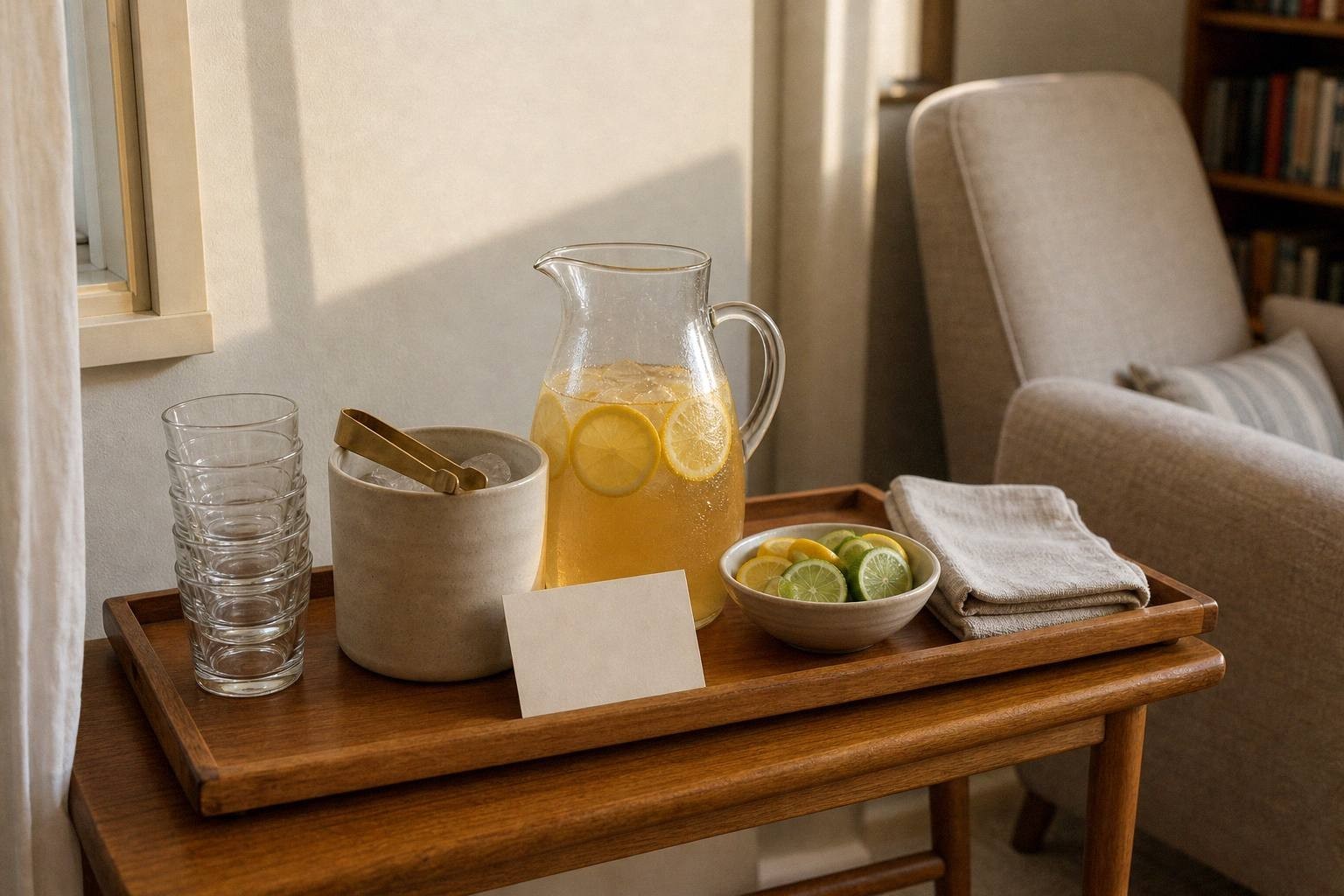
Aim for roughly 24 to 30 inches of stable surface outside the kitchen work zone. A side table or console usually works. Lay it out in the order guests use it: cups, ice, pour, garnish, napkins. A rimmed tray contains drips and makes the station easy to recognize.
Bar cart alternatives for a small apartment
Before anything else, decide where people will stand, because that decision does more for the evening than any styling choice.
The rule: put the drinks as far from the kitchen work zone as the room allows. You want the fridge, the sink, and the stove clear, because those are the three places you will need to reach all night. Every foot of distance between the drinks and the fridge is a foot of clear path for you.
In order of how well they usually work:
- A side table or console in the living room. The best option in almost every apartment. It moves the crowd fully out of the kitchen and it puts drinks next to where people are already sitting.
- A sturdy shelf or cabinet with a clear, wipeable top. Keep liquids away from books, electronics, and anything a spill would damage. Check the shelf’s load limit before putting a full pitcher on it.
- The far corner of the counter, away from the sink. The fallback when the living area has no stable surface. Keep the route to the fridge clear.
What to avoid: directly beside the fridge, in a doorway, and anywhere that makes people cross the room you are cooking in.
How much space does a small drink station need?
Less than people assume, and knowing the number stops you from buying furniture.
A compact station can fit in about 24 to 30 inches of width and 12 to 14 inches of depth if you use one pitcher, a few cups, a small ice vessel, and one garnish bowl. Measure your actual pieces before relying on these dimensions; large pitchers and glasses need more room.
Two things eat that space faster than anything else:
- Glasses stored upright in a row. Stack them only if they are designed to stack safely; otherwise keep a few on the station and the rest nearby.
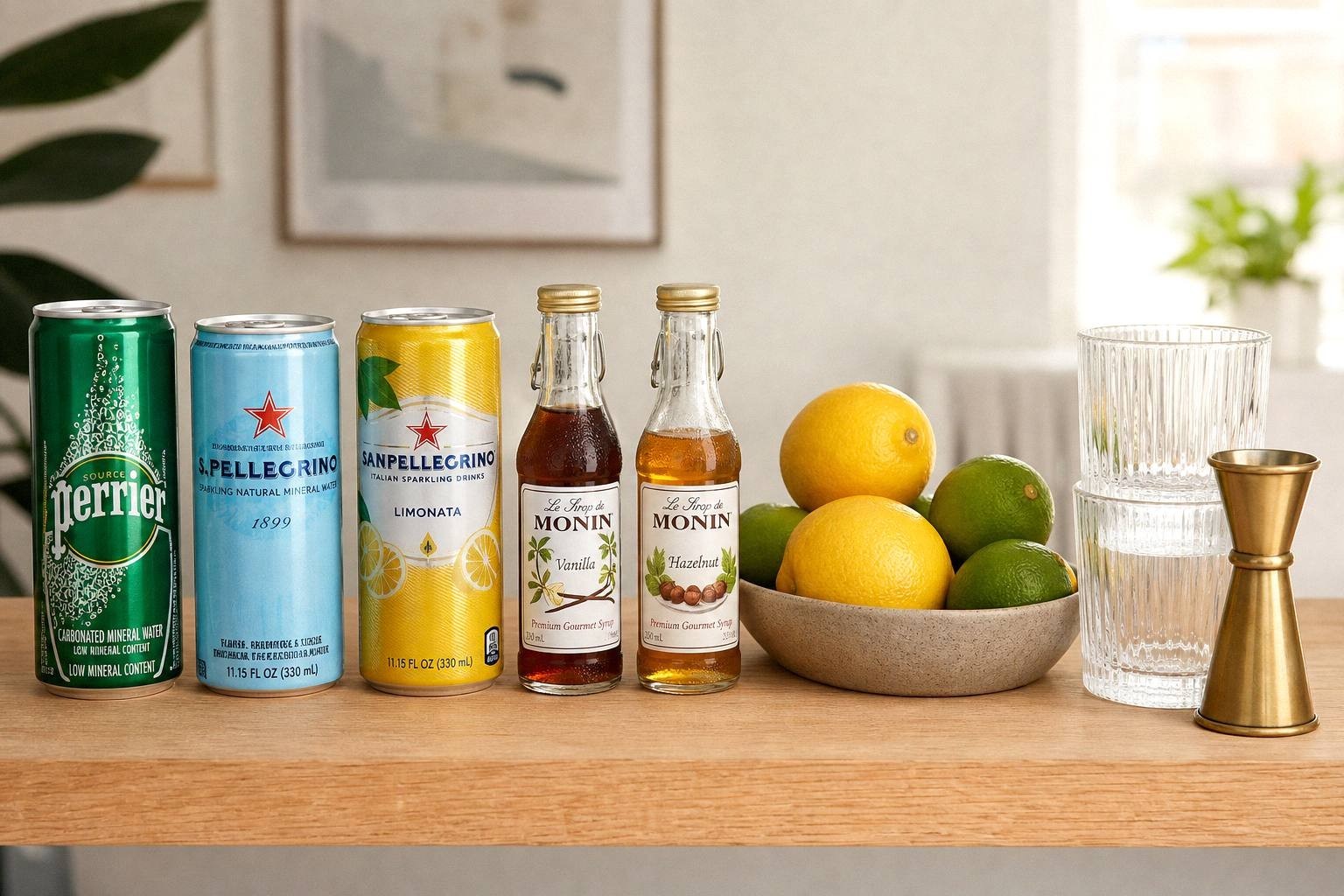
- Bottles standing up. Same problem as everywhere else in a small apartment. Decant into a pitcher, or use cans, and keep backups on the floor beside the table rather than on it.
If you only have a narrow entry table, put the pitcher and cups there and keep ice in the freezer or a stable insulated container nearby. Do not balance a full pitcher on a surface where it can be knocked over.
The tray is the whole trick
If you take one thing from this: a tray is what converts a surface into a station.
It is not decoration. It does three specific jobs:
- It draws a border. People understand instantly that inside the tray is for them and outside the tray is your side table. Without that line, guests hover and ask permission, and the self-serve part never happens.
- It moves in one trip. Set the whole station up in the kitchen, carry it out once, carry it back once at the end of the night. This is the difference between hosting and running relays.
- It contains the mess. Every drink station produces spills and citrus ends. A tray means you wipe one thing instead of refinishing a side table.
Size it to the surface, not to the drinks. Something around 12 by 18 inches suits most side tables. Seven serving tray ideas for mocktails and cocktails covers what to look for, and seven silver bar trays for a vintage home bar setup is the version that makes a bare side table look deliberate.
How to set up a self-serve drink station
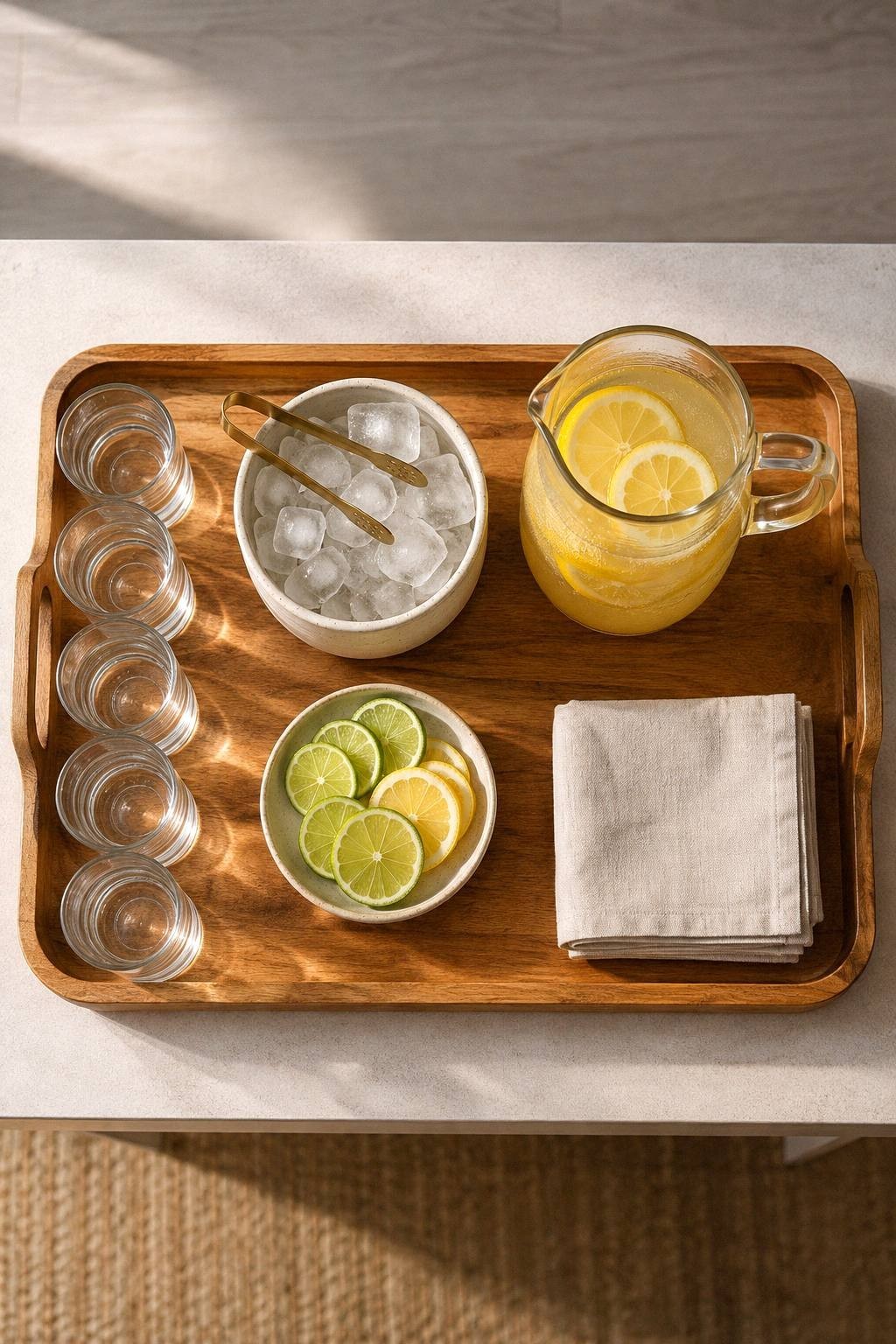
A station guests use without asking is one that reads left to right in the order of the actual task. Set it up in this sequence:
- Cups first, at the near end. Whatever guests reach first should be the first thing they need. If glasses are behind the pitcher, everyone reaches across everything.
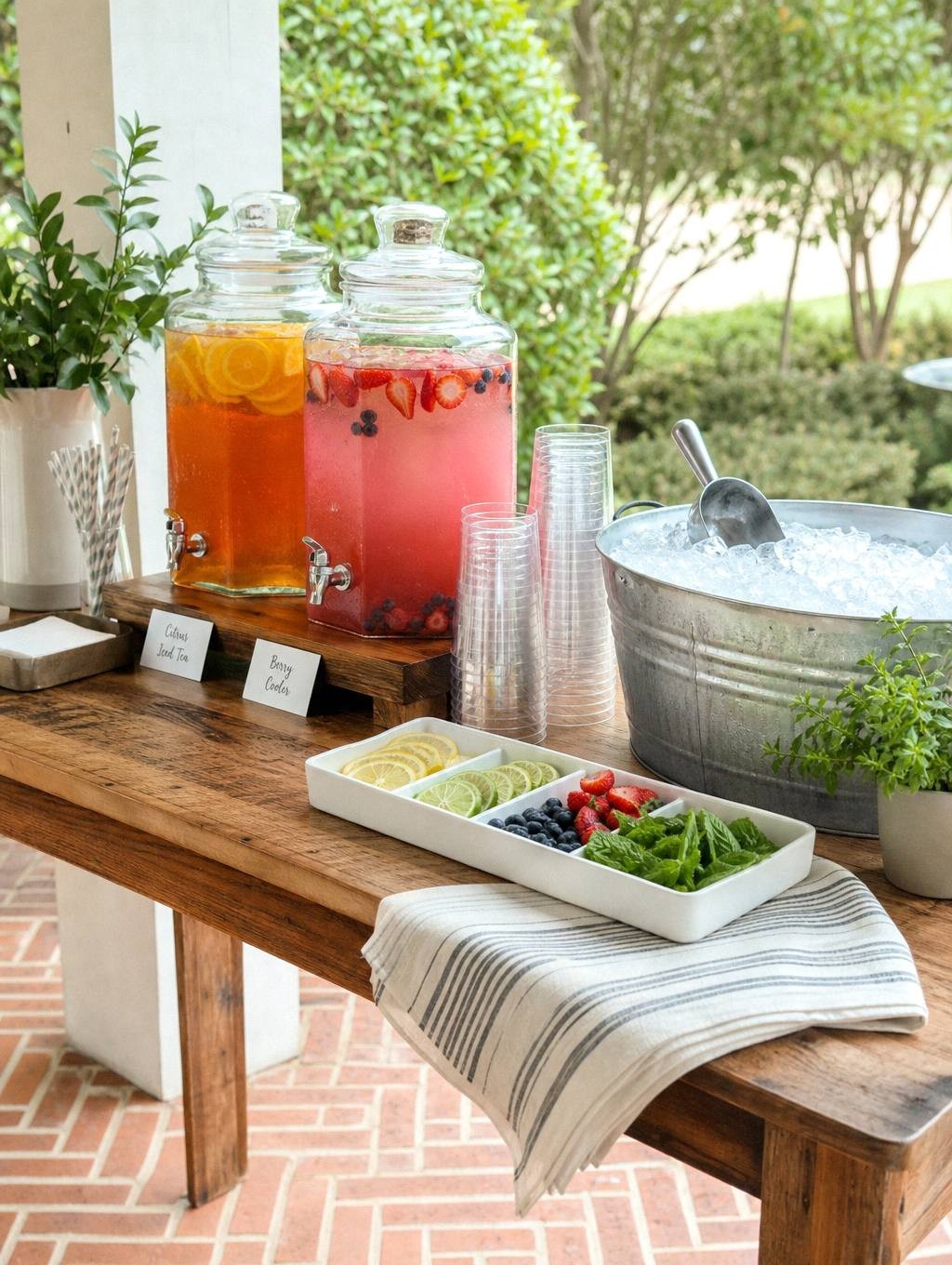
- Ice second. In a small bucket, an insulated tumbler, or a wide bowl. Add tongs or a scoop, because otherwise people use their hands and then everyone knows.
- The pour in the middle. One pitcher, or two cans and a bottle. This is the only zone that needs more than one option.
- Garnish fourth, in something small. A bowl of citrus wheels or a few herb sprigs. Small is the point: a big garnish spread reads as a project and people skip it. Garnish tray ideas guests actually use covers what gets touched and what gets left.
- Napkins last, at the far end. Because they are the last thing anyone needs and they should not be in the way of the first four.
The sequence sounds fussy written down, and it takes ninety seconds to arrange. It is the difference between a station people serve themselves from and a station where everyone waits for you.
Keep it to one drink
The biggest small-space mistake is offering choices.
One drink, made ahead in a pitcher, plus plain sparkling water for anyone who wants something lighter. That is the entire menu. Two options fit on a side table. Five options do not fit anywhere, and they turn you into a bartender in your own living room.
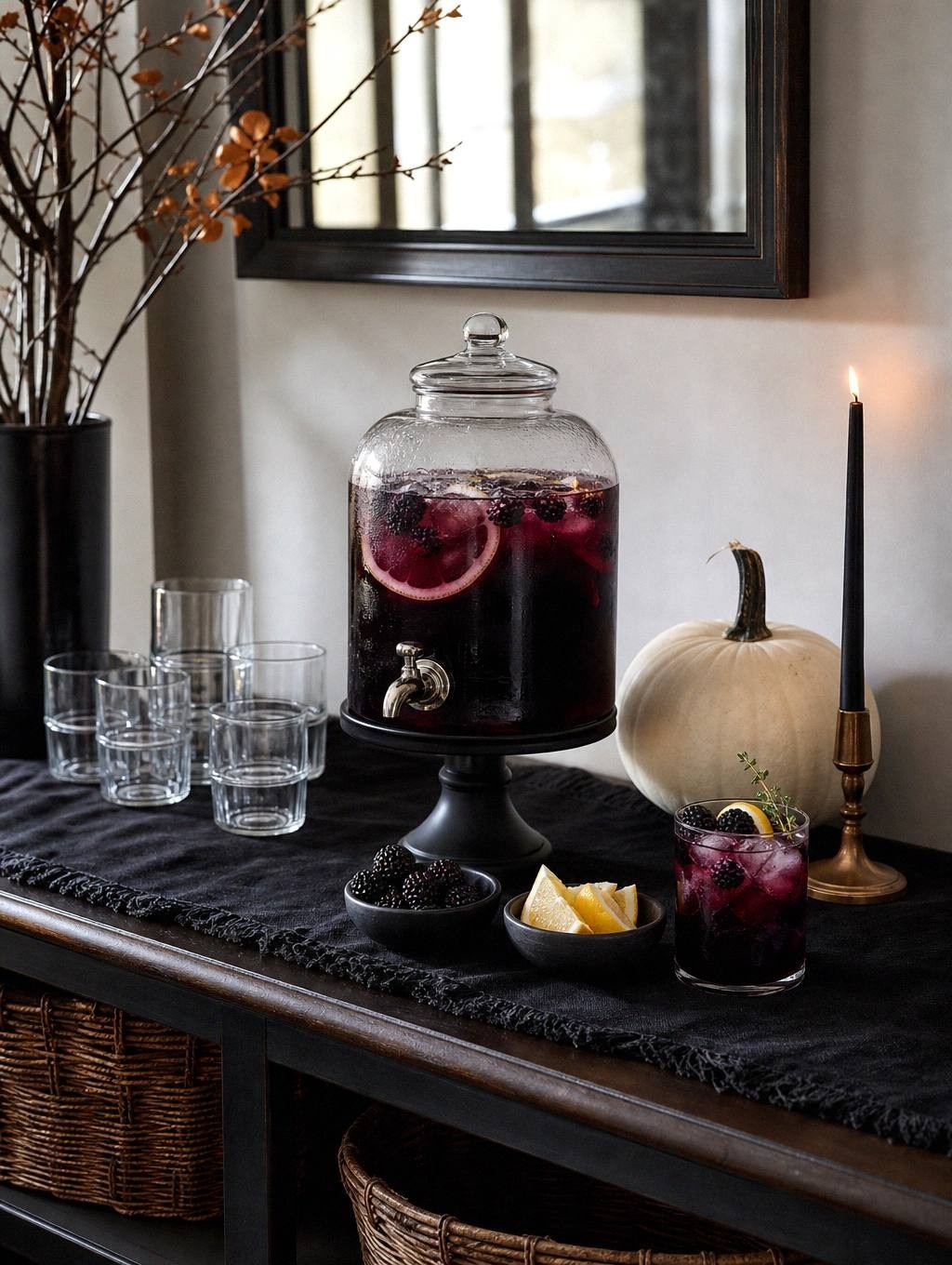
A pitcher drink also solves the space problem twice over: one vessel instead of five bottles, and no one is building anything, so the station does not need tools. Batch mocktails guests can pour themselves is built for exactly this, and easy summer mocktail pitcher recipes for a crowd has the warm-weather versions. If you would rather the drink be a little more of a centerpiece, the self-serve mocktail bar guests actually use covers the slightly larger version.
Write the drink’s name on a small card and prop it against the pitcher. People will not ask what it is, which is the point, and the card is the cheapest thing on the whole table.
Make it look like a station and not like stuff
A small setup looks intentional through height, not through quantity. Three moves:
- Give it three levels. Something tall at the back, something medium, something low at the front. A pitcher is tall, an ice bucket is medium, stacked glasses are low. Flat height reads as clutter no matter how nice the pieces are.
- Repeat one material. Clear glass, or warm wood, or brass, appearing three times. That is what makes mismatched pieces read as collected rather than random.
- Keep the color count down. The drink should be the brightest thing on the tray. If the tray, napkins, and bowls are all competing, nothing looks considered.
Vintage glasses that make mocktails feel like cocktails does more for how this looks than any piece of furniture would, and cheap glassware that looks like vintage barware is where to find them for thrift store money.
What to keep nearby but off the tray
The station stays small because the backup lives out of sight, within arm’s reach:
- Extra ice in the freezer. Refill in one trip halfway through rather than watching a bucket turn to slush all evening.
- Backup cans or the second pitcher in the fridge, not on the tray.
- A dish towel tucked under the table’s edge or folded on a lower shelf.
- A small bin or pitcher for empties. Without one, every flat surface in the room becomes a coaster graveyard. This is the single most underrated piece of a small-apartment station.
- A cutting board and knife put away in the kitchen. Cut all the citrus before anyone arrives, and the station never needs a blade on it.
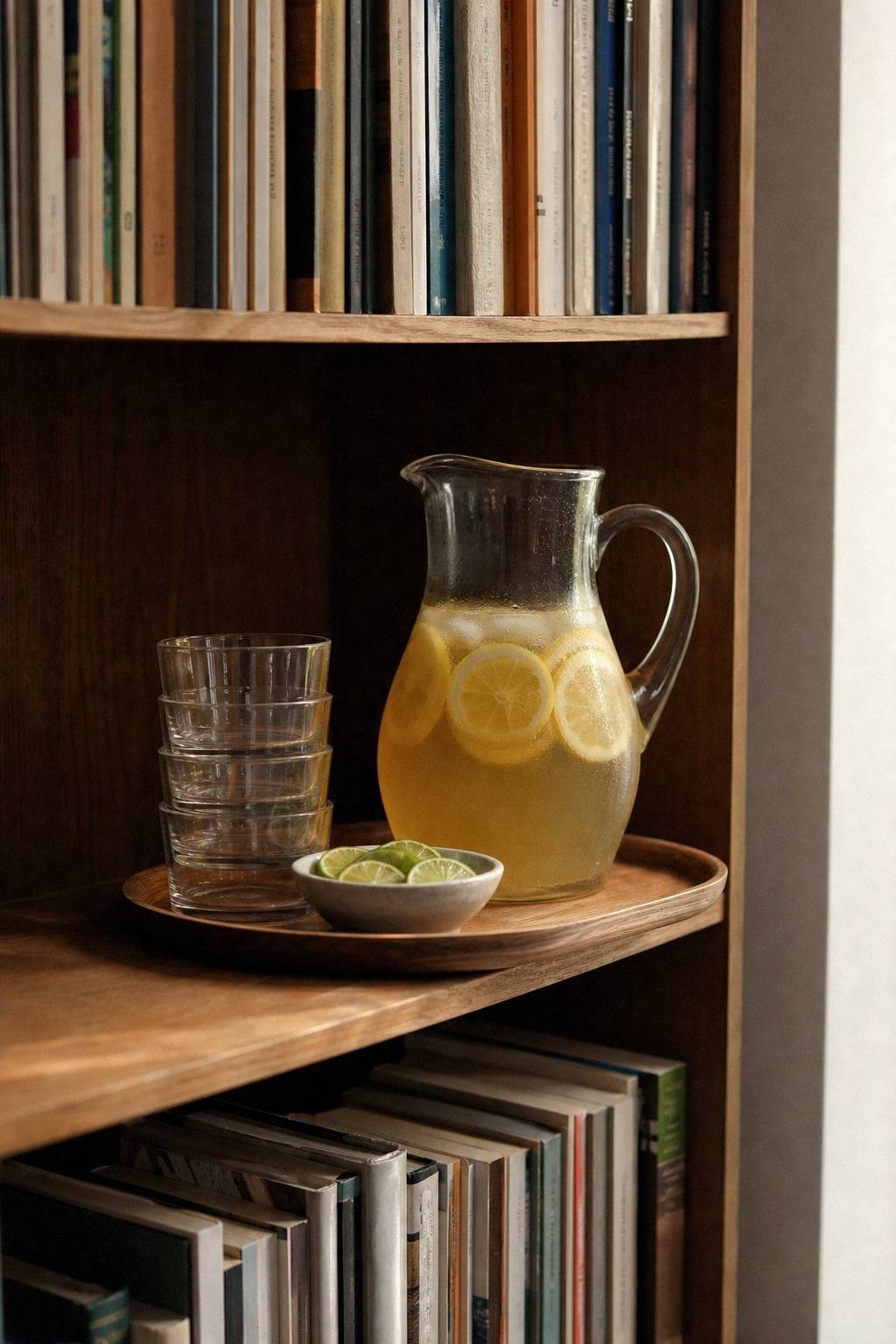
Three small-space drink station setups
The station changes shape depending on what people are doing.
Brunch. Put it on the table itself rather than a side table, because nobody is standing. A pitcher, a carafe of juice, coffee at the far end, and one bowl of citrus. Coffee and cold drinks at opposite ends so the queue does not knot in the middle. Nine brunch drink station ideas has the fuller layout.
Movie night. Lower and closer to the seating, because people are sitting the whole time. A tray on a low bookshelf or an ottoman, everything pre-poured or in a pitcher, and no garnish, since nobody will get up for it in the dark. Add coasters, which is the one night they matter.
Patio or balcony. Everything shatterproof and everything weighted, since a paper napkin is gone in the first breeze. Keep the tray inside and carry it out full, then bring it back in, because leaving a station outdoors is how you get bugs in the pitcher. Backyard drink station ideas for summer parties scales this up when you have the outdoor space.
What to skip
- Buying a bar cart for one party. It will live in your walkway for the other 364 days. If you eventually want one, apartment bar cart ideas under $50 is the honest budget version.
- A drink dispenser with a spigot. They leak, they need a table edge, and in a small apartment they are a puddle waiting to happen. A pitcher pours fine.
- More than two drink options. Covered above, and it is the mistake that ruins the most otherwise good setups.
- A full ice bucket set out early. Put ice out shortly before guests arrive and refill it as needed; melting speed depends on the vessel and room temperature.
- Decor on the tray. Every candle and small vase is space a hand needs to move through.
Common questions
What can I use instead of a bar cart?
A tray on a stable side table, console, or cleared cabinet top. Check that the surface is deep enough for your pitcher, can bear its weight, and will not block a walkway. A corner of the kitchen counter works when no separate spot is available.
How much space does a drink station need?
About 24 to 30 inches of width and 12 to 14 inches of depth is a starting point for one pitcher, a few cups, a small ice vessel, and one garnish bowl. Measure your own pieces and leave enough room to pour safely.
How do I set up a self-serve drink station?
Lay it out in the order people use it: cups at the near end, ice, the pour in the middle, garnish, then napkins at the far end. Keep it to one made-ahead drink plus sparkling water, and prop a small card with the drink’s name against the pitcher so nobody has to ask.
Where should the drink station go in a small apartment?
As far from the fridge, sink, and stove as the room allows, because guests stand wherever the drinks are. A living room side table is usually the best spot. Putting drinks on the kitchen counter is what parks everyone in the one room you need to move through.
Do I need ice in a bucket, or can I use the freezer?
The freezer is fine, and it is often better in a small apartment. A bucket set out early is slush by the time anyone wants a second drink. If you do put ice out, bring it out last and plan on refilling it once rather than starting with a mountain of it.