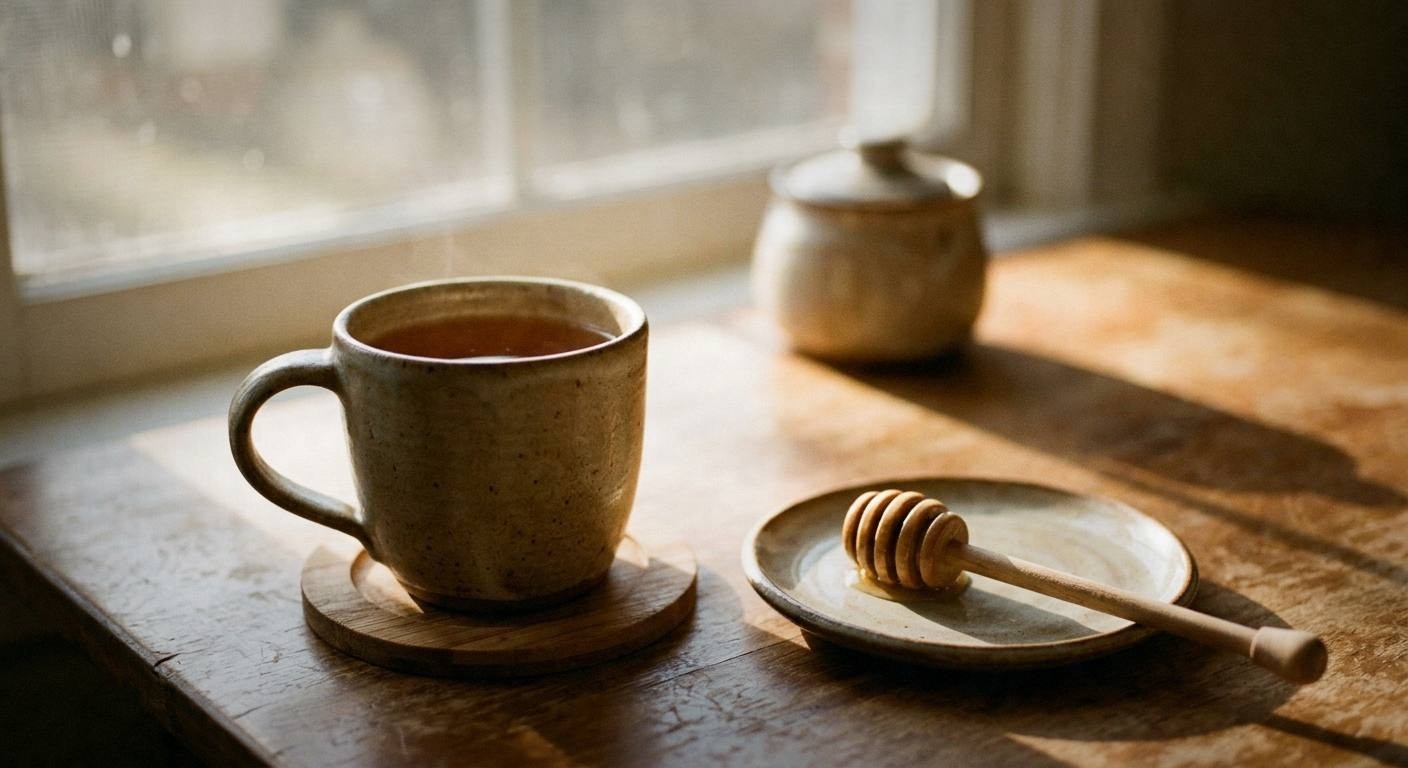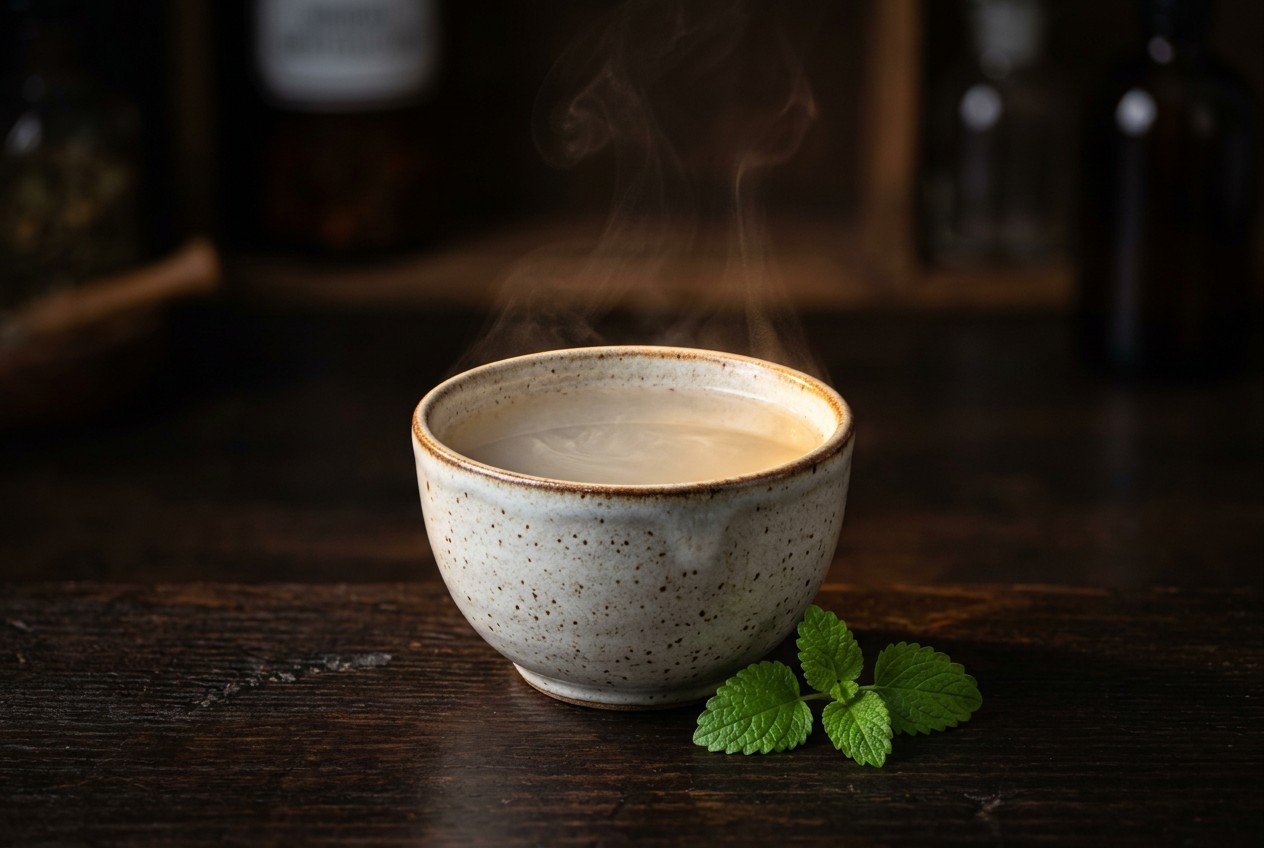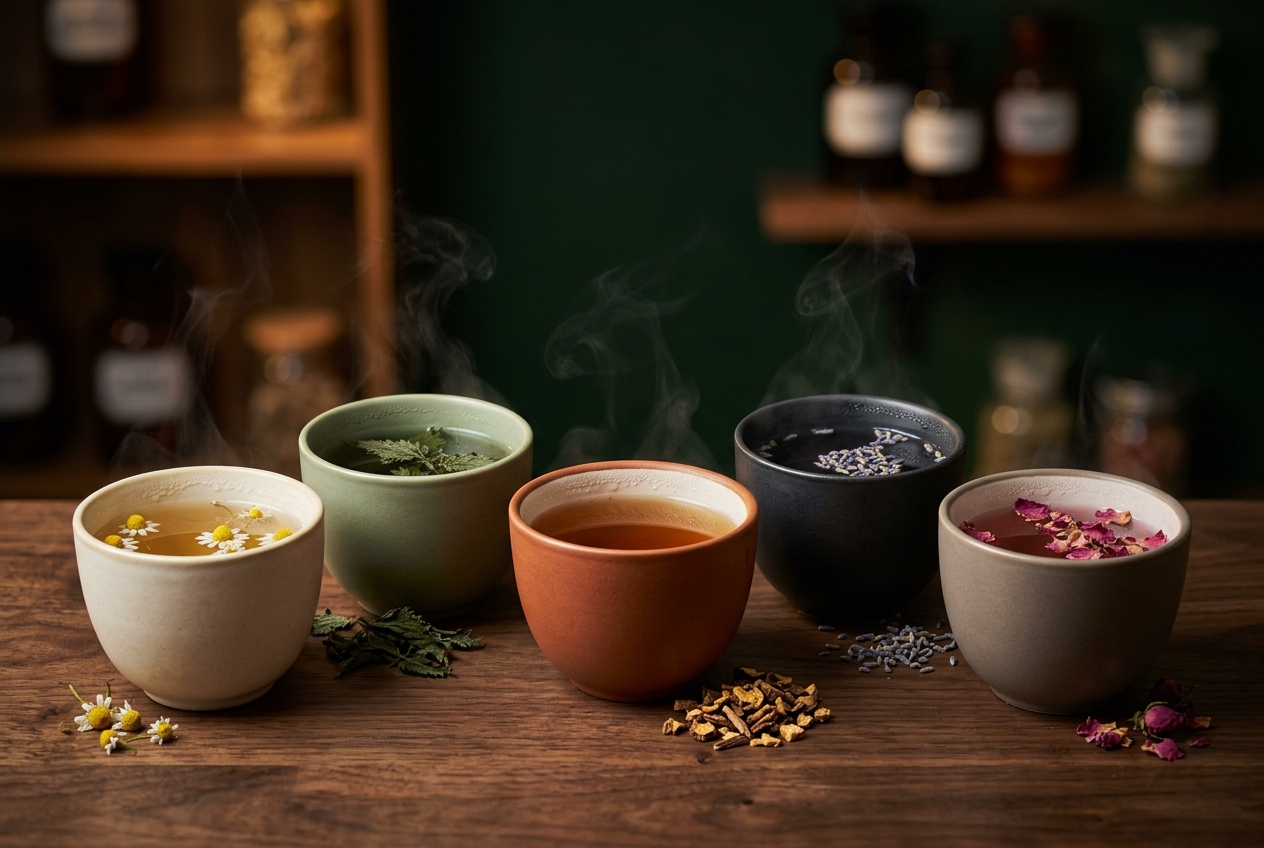
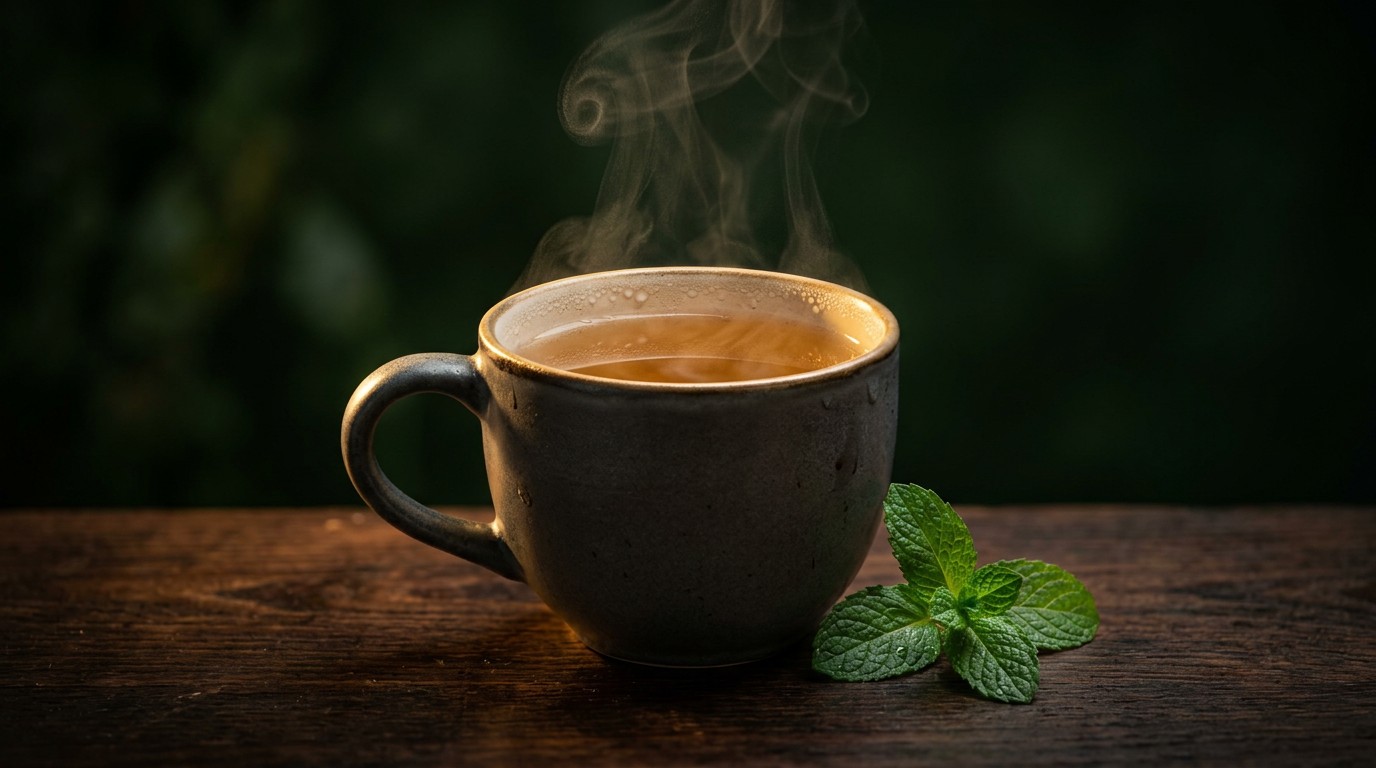
A lemon-ginger tea offers a bright, warm drink during pollen season. It does not establish allergy relief or replace an allergy-care plan. The recipe below uses two culinary ingredients rather than an unsourced symptom-specific nettle/elderflower mixture.
For a different measured spring blend, see the nettle and chamomile spring tea , which also makes no allergy-treatment claim.
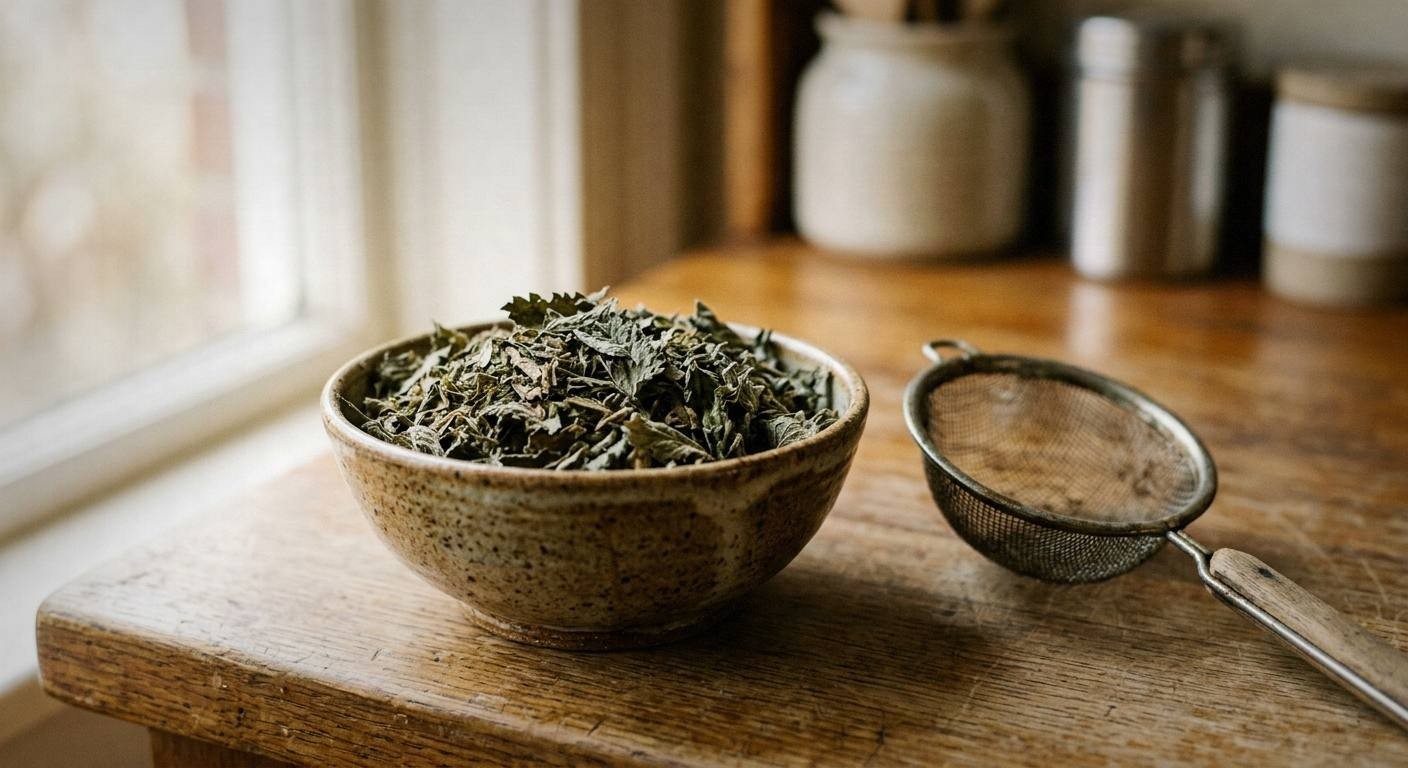
Published lemon-ginger recipe: two mugs
This follows Miriam Nice’s lemon and ginger tea at Good Food . The source fills two mugs rather than specifying a fixed water volume; mug size changes dilution. This deliberately replaces the earlier four-cup nettle, peppermint , elderflower and dried-ginger mixture. It is not a medicinal reformulation.
- 1 lemon
- 2 cm piece fresh ginger, finely sliced
- Boiling water to fill two mugs
- Honey to taste (optional)
Halve the lemon. Juice one half and slice the other half. Divide juice, slices and ginger between two mugs.
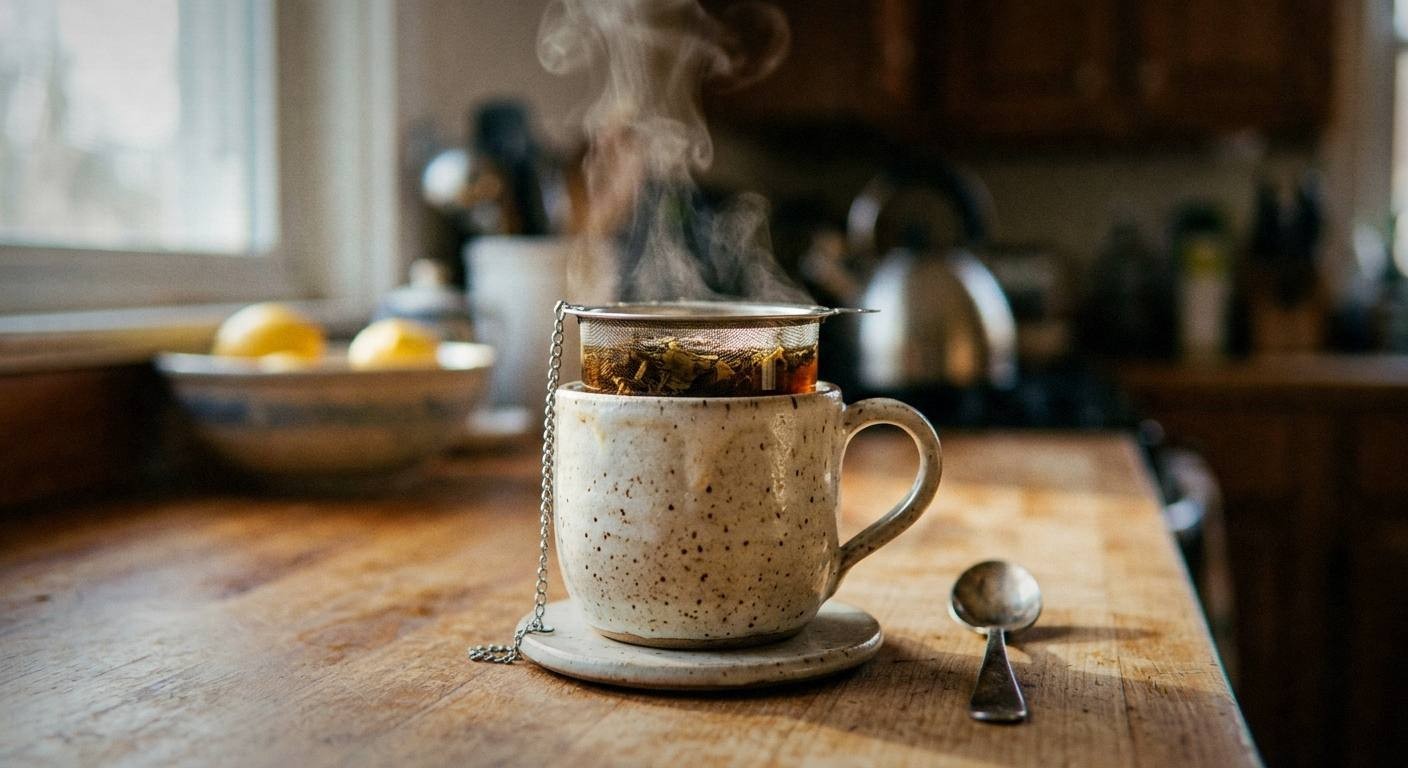
Fill the mugs with boiling water and steep for 3 minutes or until cool enough to sip. Add honey to taste if desired.
Pollen-season claims to separate
| Claim | Evidence limit or better next step |
|---|---|
| Local honey treats hay fever | NCCIH finds no convincing scientific evidence; honey here is optional sweetness. |
| Add eyebright for itchy eyes | This drink has no validated symptom-specific add-on or eye preparation. |
| Begin nettle before pollen rises | No preventive schedule for the former mixture is established here. |
| A cooling mint sensation clears congestion | A sensory description is not proof of symptom treatment. |
NCCIH’s seasonal-allergy review finds no convincing evidence for honey relieving seasonal allergies and discusses limitations of other complementary approaches. Don’t replace prescribed care with a tea or put homemade herbal liquid in your eyes or nose. Honey can also be an allergen; it isn’t a universal safe substitute.
Check ingredients and obtain suitable care
Avoid ingredients that cause a reaction for you. NCCIH ginger notes possible gastrointestinal effects and medicine interactions with herbal products. Ask an appropriate clinician before using herbs medicinally if you take medicines, are pregnant/breastfeeding or are choosing them for a child. CDC advises against honey before twelve months.
NHS hay-fever guidance covers ways to limit pollen exposure and pharmacist advice on suitable treatments. Obtain help when symptoms worsen or do not improve with pharmacy treatment. NHS anaphylaxis guidance describes emergency signs such as trouble breathing or a swollen tongue or throat; seek emergency care immediately, because tea is not the response.
A different drink, with its own recipe
For a cold citrus-herb option, use the lemon basil ginger spritzer . It is a separate culinary formula and does not prevent allergies or infection. The elderflower article distinguishes flower identity and traditional use from medical proof. For more cold options in the same season, the spring mocktail roundup covers ten measured drinks.