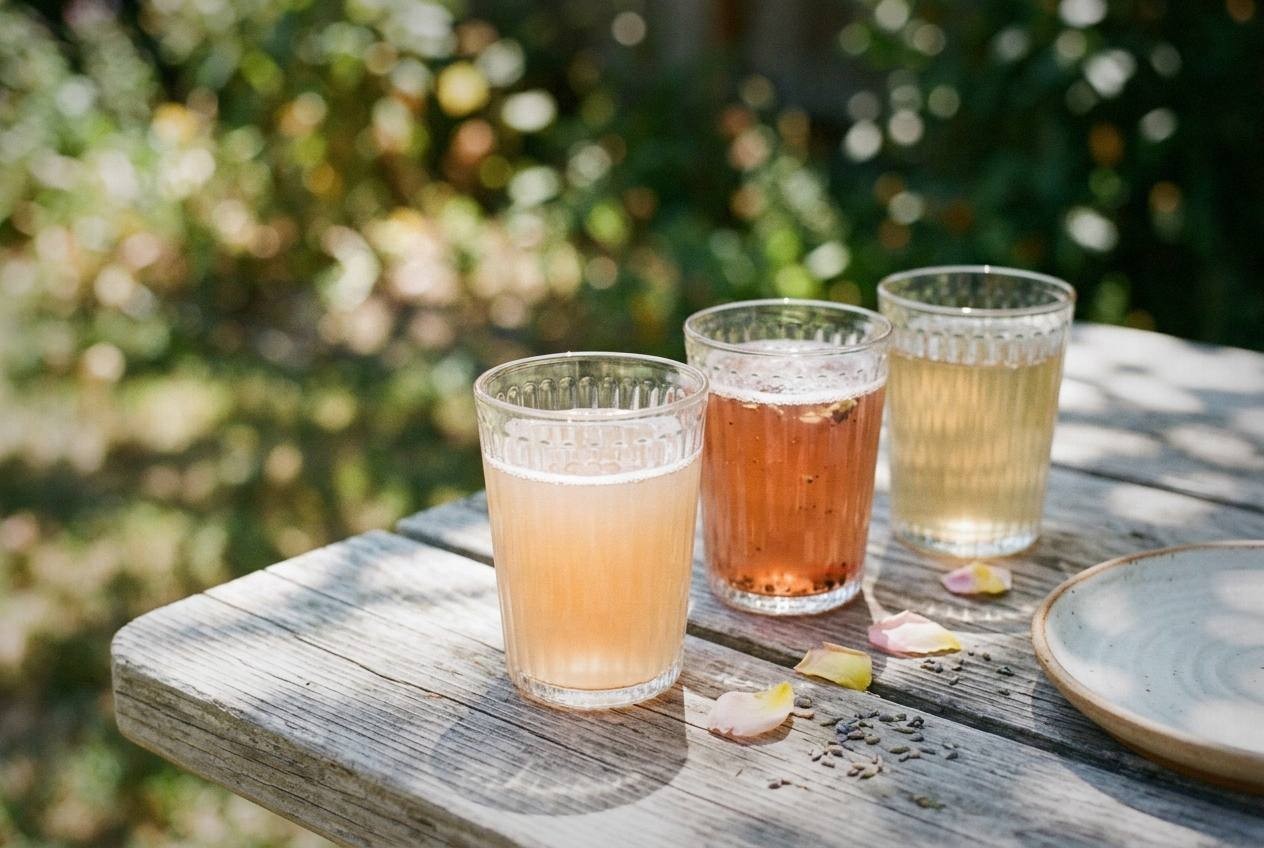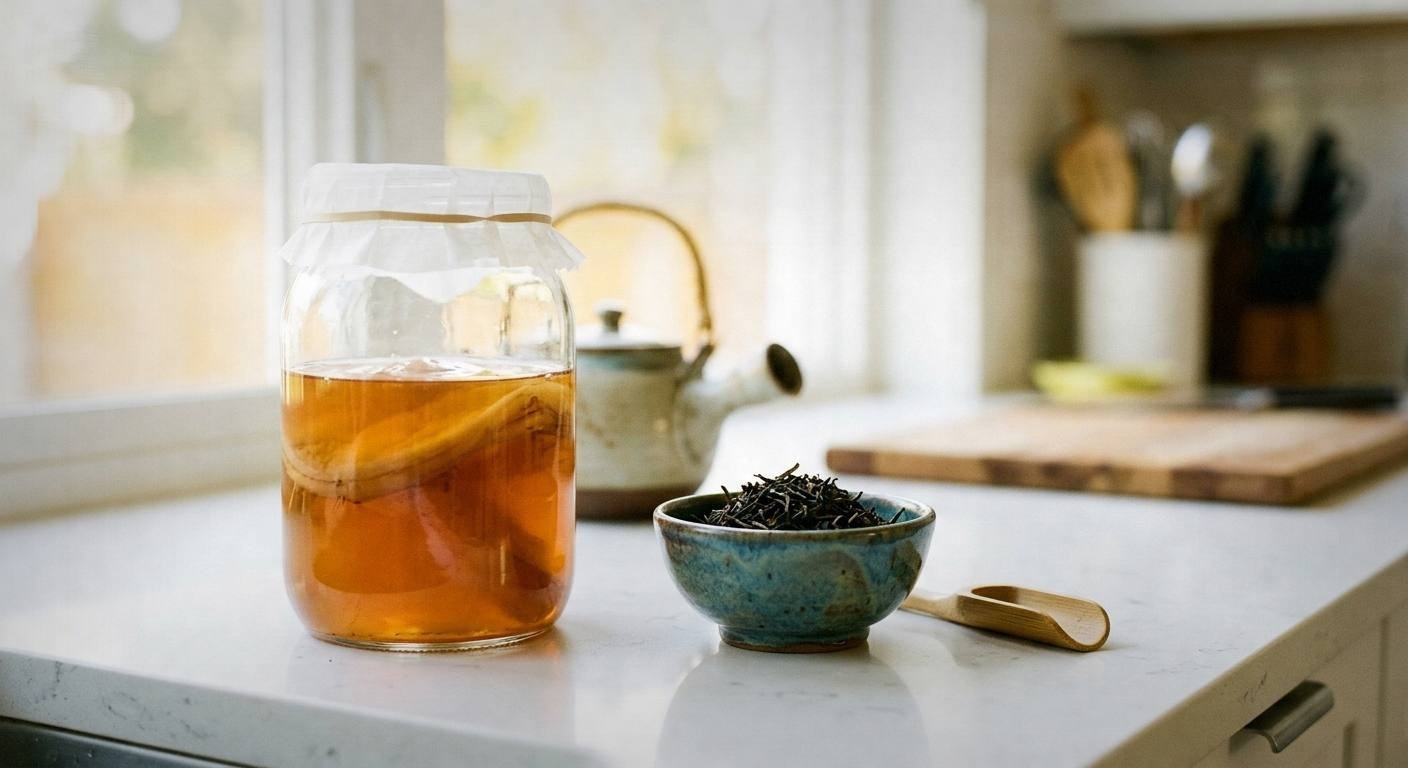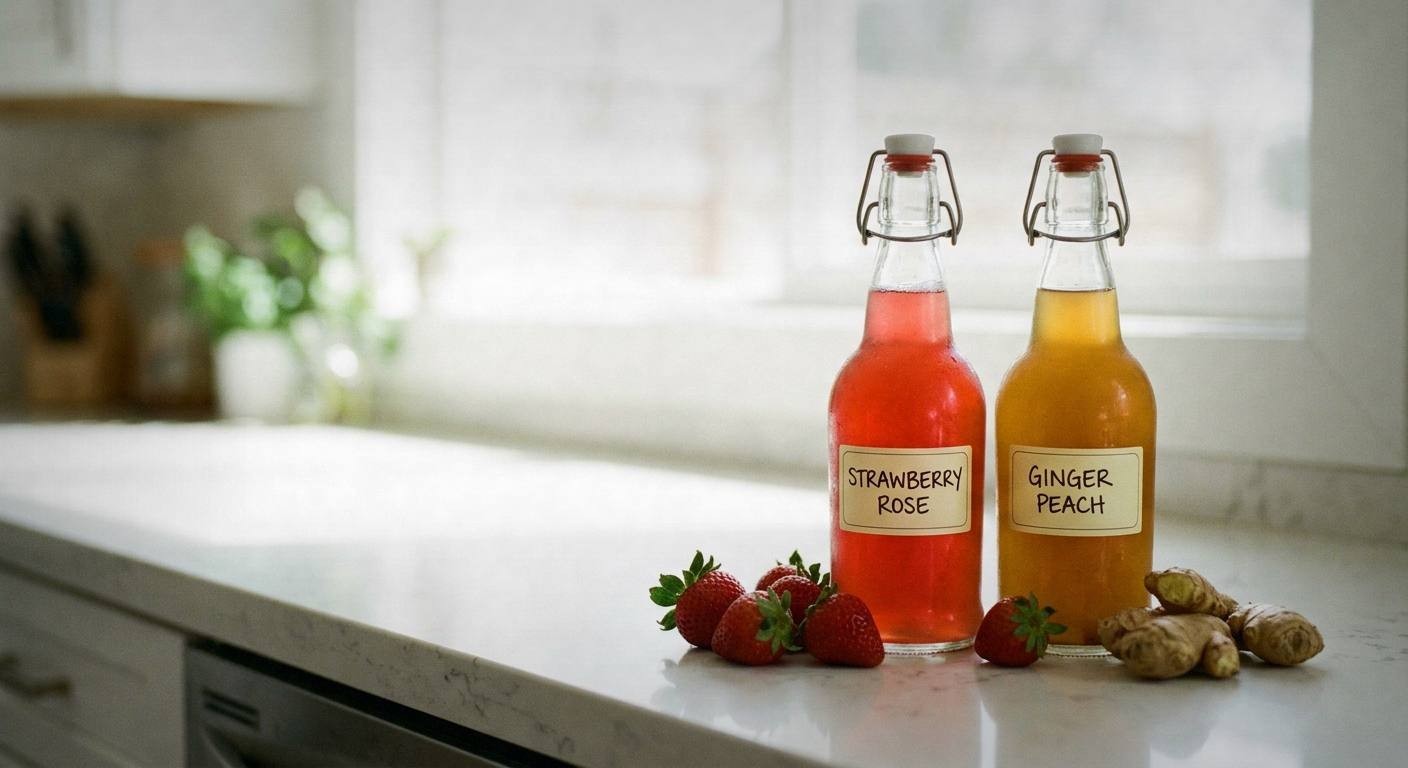
Spring Kombucha Flavor Concepts
Audit hold: The home fermentation and sealed-bottle procedures on this page are withdrawn. Ingredient quantities, brewing, tasting, bottling, carbonation, serving and reuse directions are removed pending process-specific resolution. There is no active Recipe card or Recipe markup. Linked recipes do not release this hold.
The National Center for Home Food Preservation’s complete home kombucha recipe includes starter assessment and a defined process. Its post-fermentation flavor suggestions are distinct from sealed secondary fermentation. BCCDC kombucha and jun guidance addresses acidity, alcohol and contamination after flavoring. These references do not establish that the former TFA time-and-taste schedules are safe for every fruit, flower or herb formulation.
Daily burping, a hiss, headspace and an apparently pleasant taste are not complete pressure or safety controls. Refrigeration slows activity; it does not guarantee that fermentation stops. Added sugar can produce additional gas and alcohol. No universal refrigerated shelf life or alcohol content is established here.
Seven Concepts Under Review
- Strawberry-Rhubarb
- Elderflower-Lemon
- Lavender-Honey
- Mint-Lime-Cucumber
- Raspberry-Rose
- Pineapple-Turmeric
- Ginger-Lemon-Cinnamon
The former base combined 16 cups water with 2 cups starter, plus sugar and a culture, in a 16-cup jar. That exceeds the container’s capacity before headspace. Its seven-to-ten-day first ferment also conflicted with the three-day total in Recipe metadata. The flavor allocations were unclear: a gallon batch and four pint bottles do not have the same working volume.
Withdrawn Variations and Shortcuts
The dried elderflower substitute, chamomile -tea substitute, dried honeysuckle substitute, mango-passionfruit variation, honey or maple additions per bottle, fresh herb additions, increased fruit doses, extra bottle burping and reduced starter option inherit the hold. Cordial and dried flowers are not interchangeable by spoon count. Ingredient treatment and botanical identity, including rhubarb stalks rather than toxic leaves, must be explicit in any replacement.
The claim that this fixed amount of starter guarantees a mold-preventing pH is withdrawn. Acidity must be assessed in the actual process, including after flavor additions. Taste cannot measure pH. Reducing starter to slow fermentation can also weaken the initial acidification; it is not a supported correction.
Timing and Health Claims
The precise 30-to-40-percent spring acceleration, 80-to-90-percent sugar consumption and 0.5-to-1-percent carbonation claims were not established for this formula. Spring does not supply a measured endpoint. The digestion, bedtime and turmeric -absorption claims are removed. No microbial benefit or alcohol-free status is promised.
No tasting, serving or salvage procedure remains on this page. A replacement requires a complete compatible process rather than a borrowed temperature or pH number in isolation.