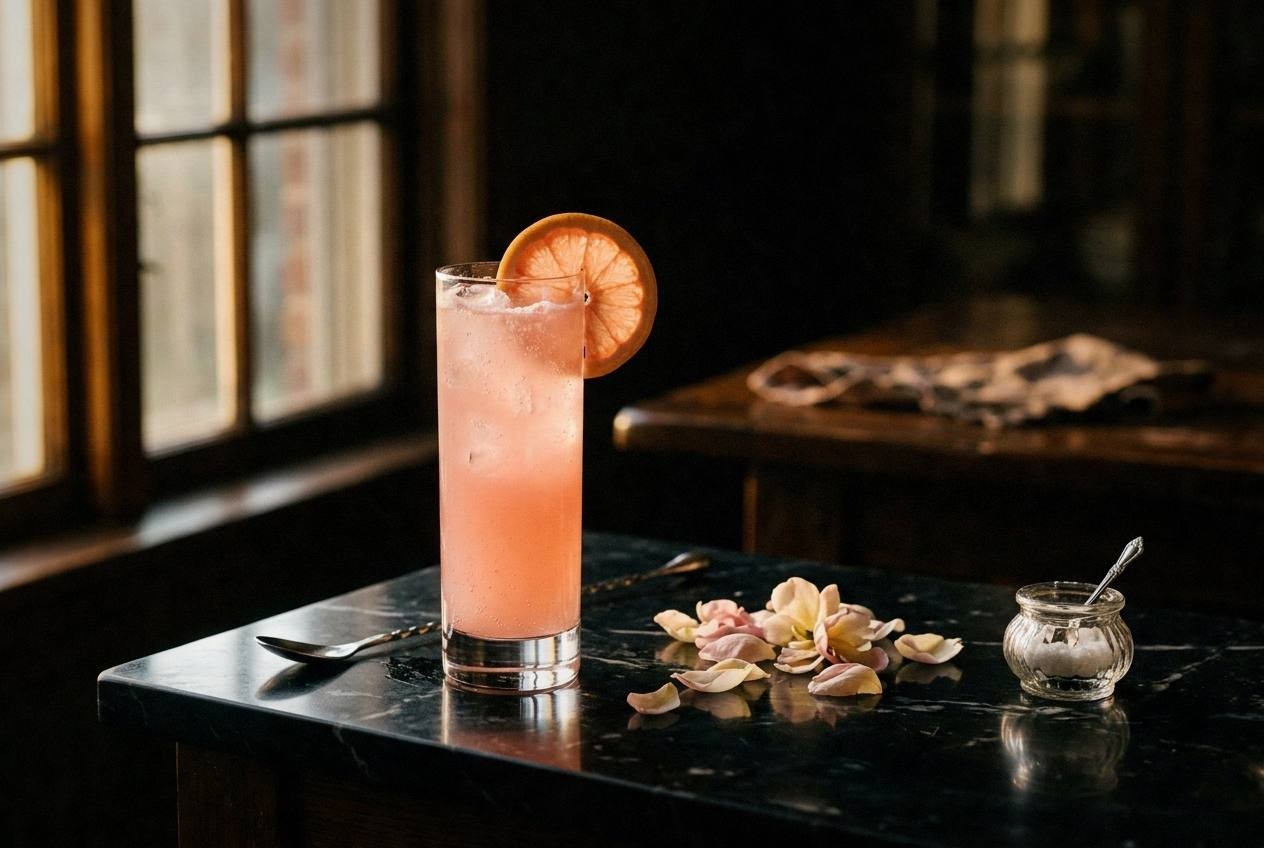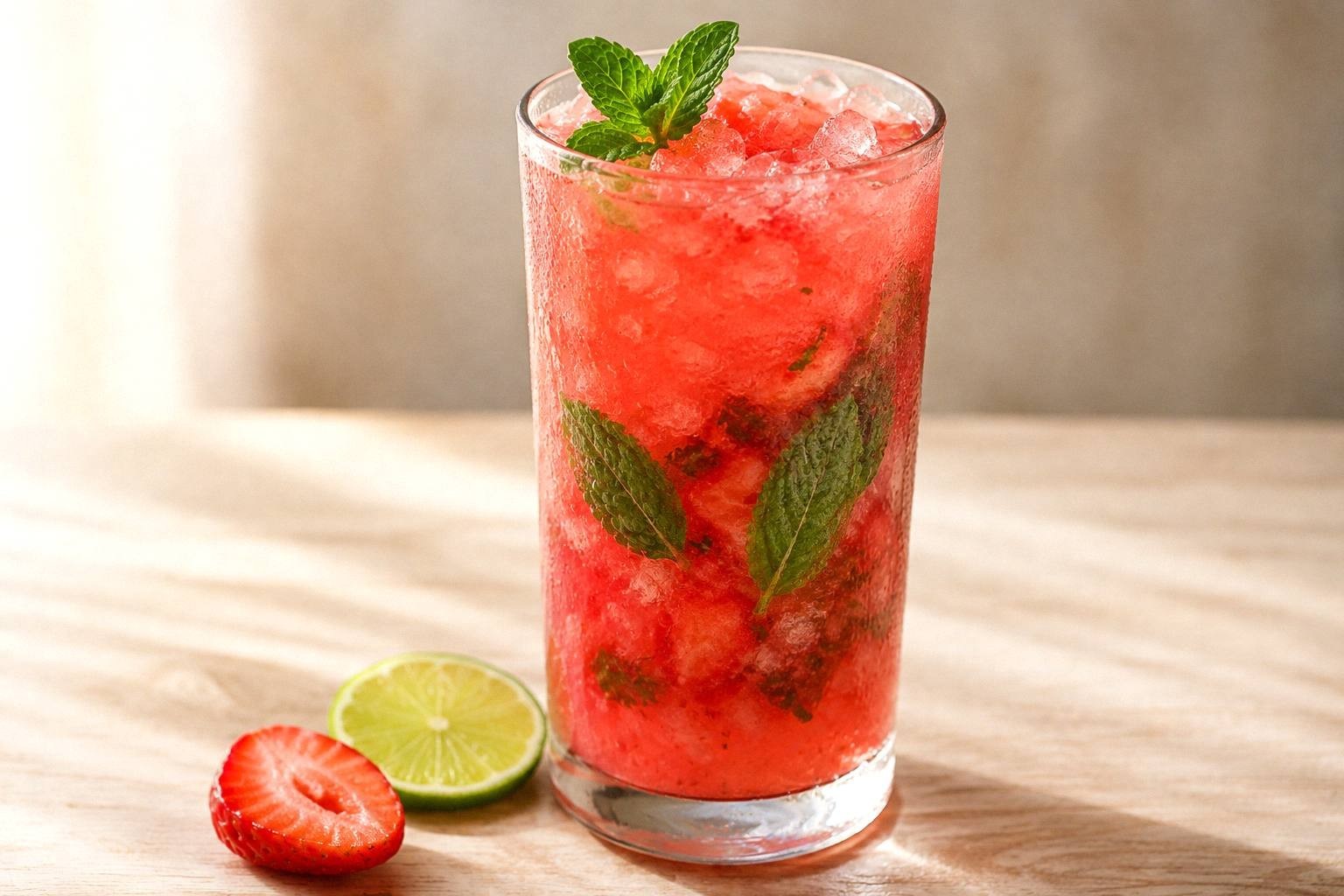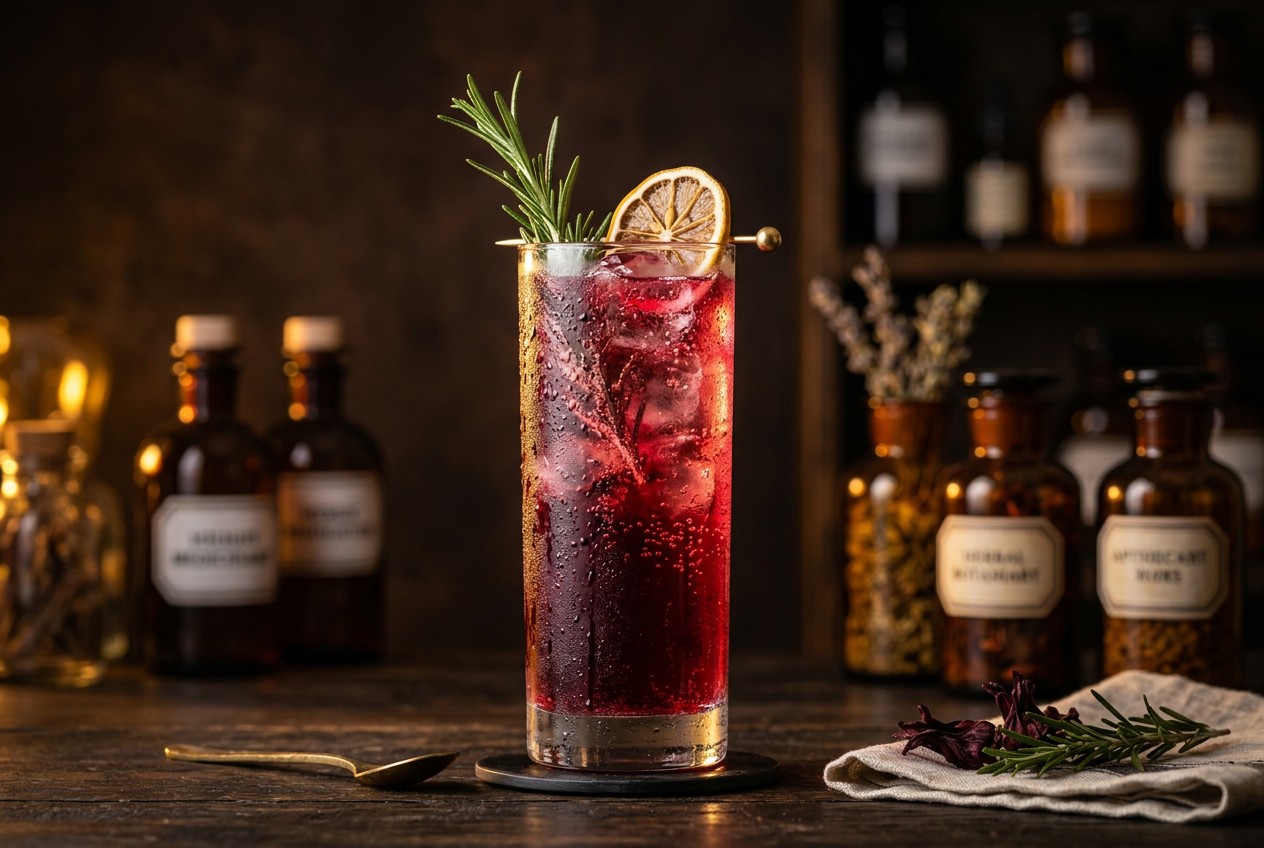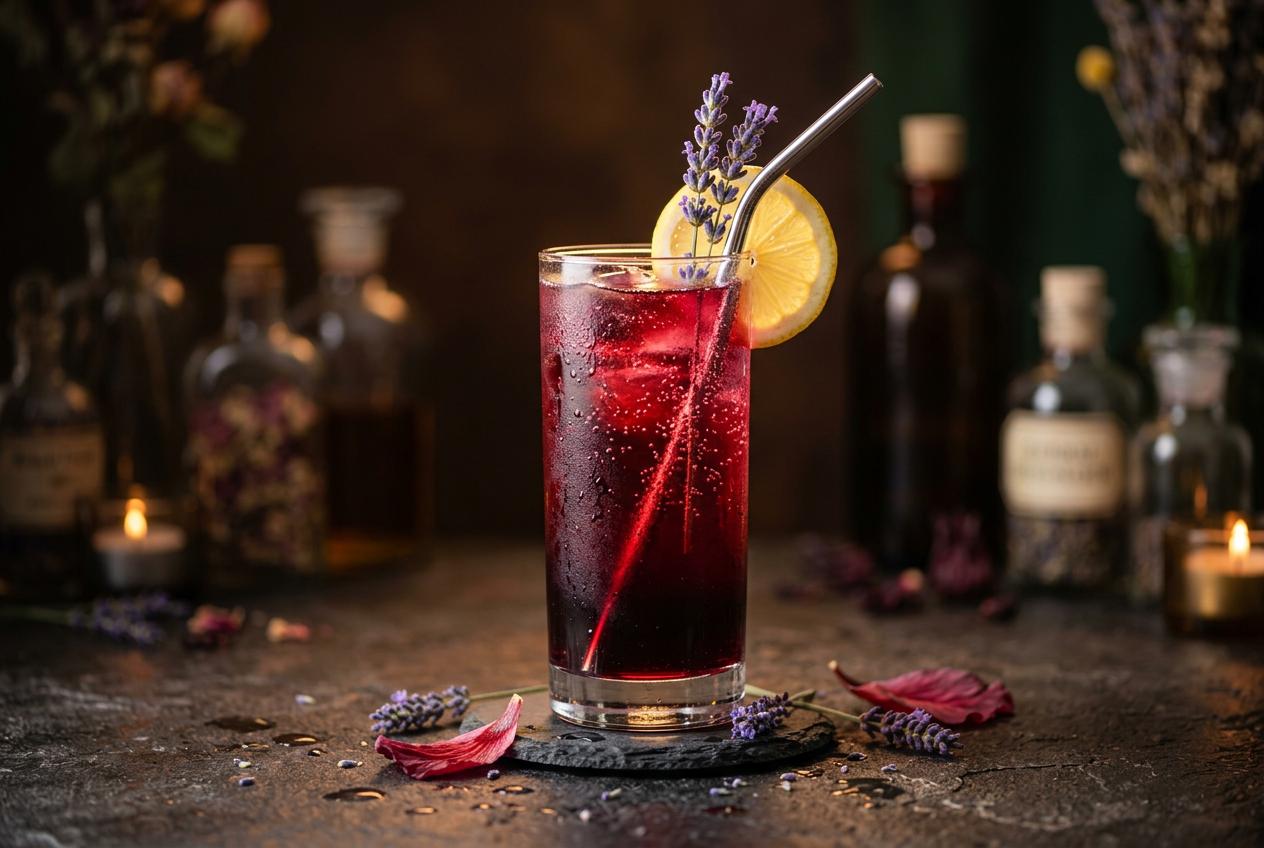
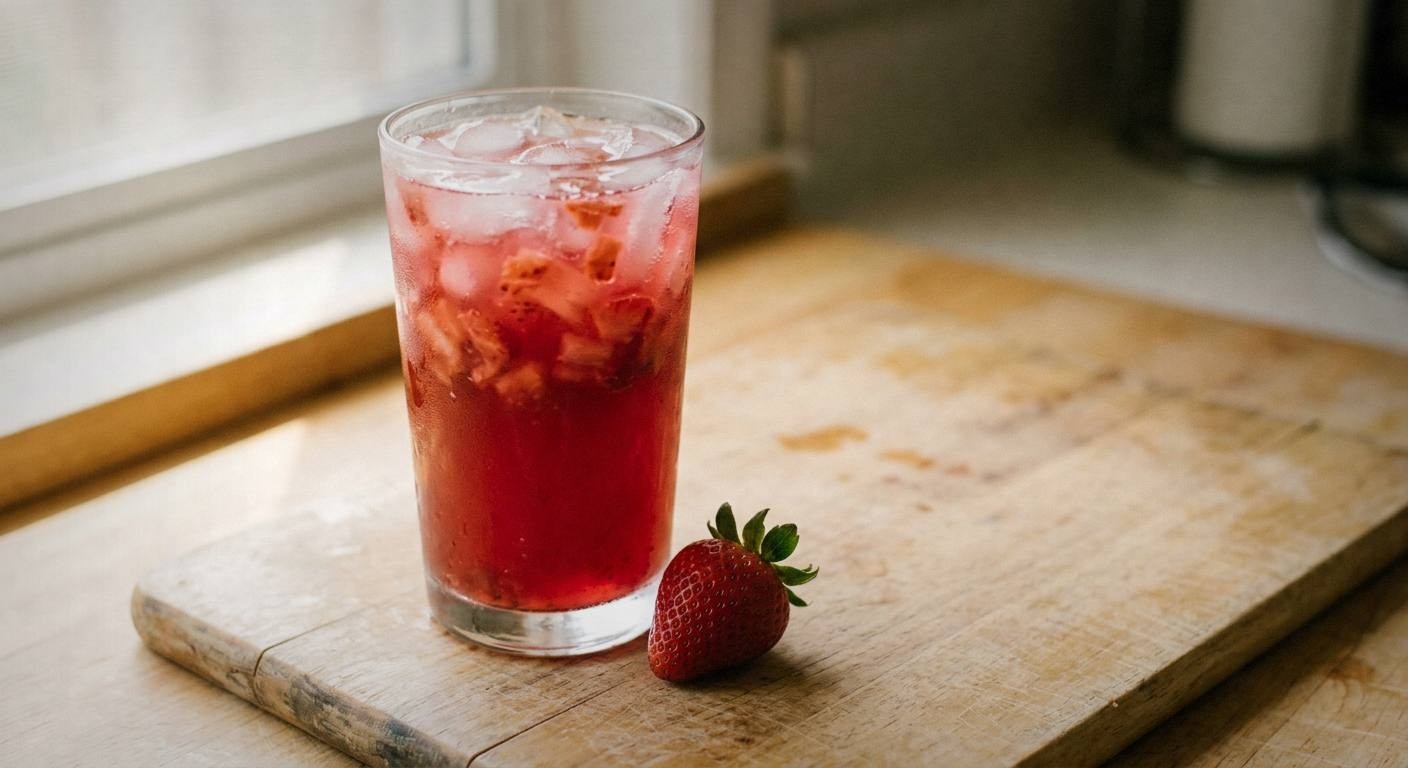
This is a TFA strawberry variation on hot-brewed hibiscus water, compared with Allrecipes’ agua de Jamaica . It uses a different flower concentration and fruit; it is not an exact copy of that spiced recipe. No skin-glow or circulation benefit is established.
Ingredients, Yield and Timing
- 2 cups rinsed, hulled fresh strawberries
- 1/4 cup dried food-grade Hibiscus sabdariffa calyces
- 4 cups potable water, divided
- 2 tablespoons lime juice
- 2 tablespoons agave nectar, plus up to 1 tablespoon more to taste
- Ice for serving
- Rinsed strawberry slices and lime wheels (optional)
Four portions, each one quarter of the measured finished volume. Fruit and straining change the volume, so four portions do not mean exactly four cups. Allow about 10 minutes active prep and about 40 minutes including the 8-minute steep and ice-bath cooling; cooling varies with vessel and water temperature.
Method
- Pour 2 cups freshly boiling water over the hibiscus in a heat-safe vessel. Cover and steep 8 minutes, then strain.
- Set the heat-safe vessel in an ice-water bath, keeping bath water out of the tea. Stir and cool before transferring to the blender; never blend hot liquid in a sealed blender.
- Blend strawberries, cooled tea, remaining 2 cups cold water, lime juice and 2 tablespoons agave until smooth. Strain if preferred; seeds may remain.
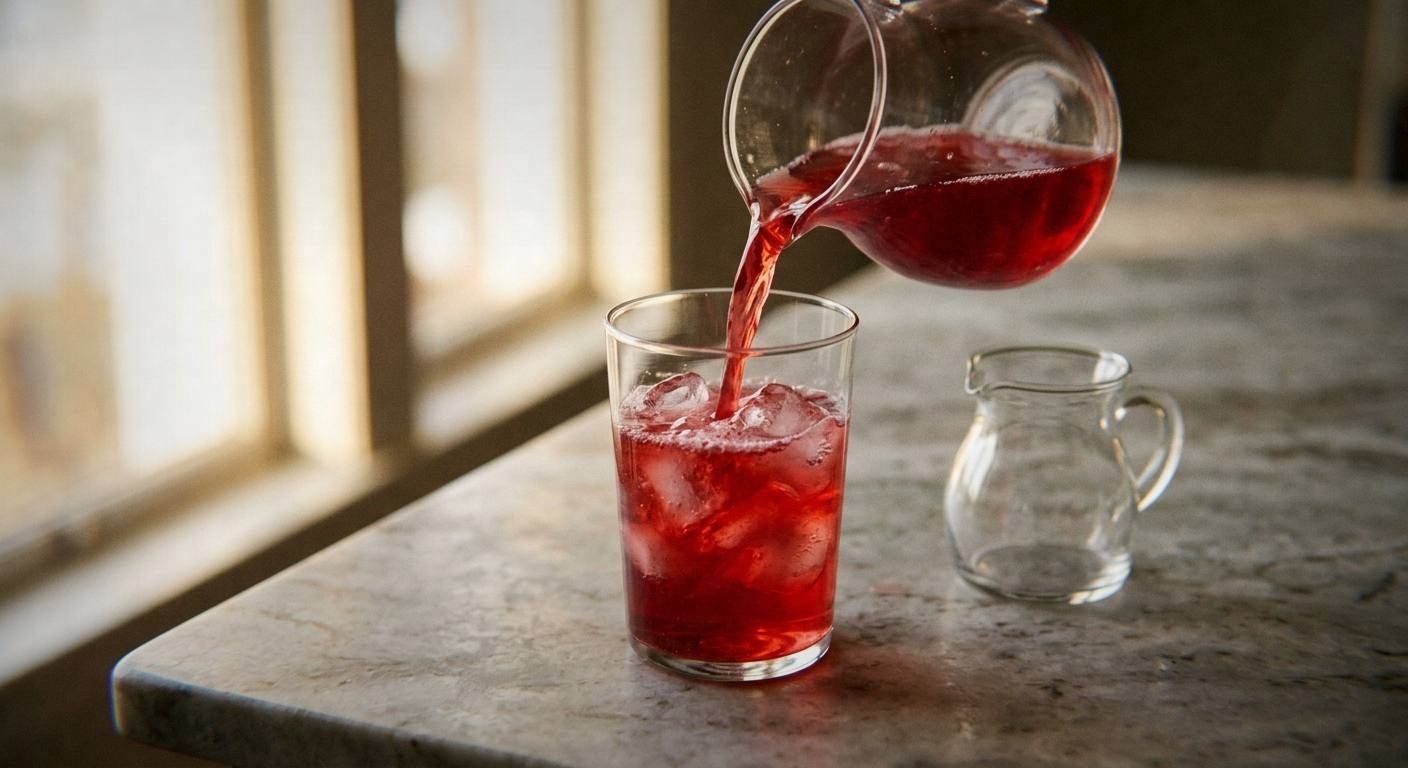
- Measure the finished drink and divide equally among four glasses over ice. Add up to 1 tablespoon more agave to the batch if desired.
- Serve promptly. Keep any reserve at 40 F (4 C) or below and use the same day; freeze extra. Discard after more than two hours without cold holding, or one hour above 90 F (32 C).
Variations
Replace 1 cup strawberries with 1 cup rinsed raspberries or blackberries. For frozen strawberries, use 2 cups thawed in the refrigerator, including their thaw juices; keep the same water amount, then adjust flavor after blending. For a sparkling pitcher, brew in the same 2 cups boiling water and blend with fruit, lime and agave after cooling, omitting the second 2 cups still water. Stir in 2 cups chilled sparkling water after blending, never in a sealed blender. For ginger flavor, simmer 1/4 teaspoon ground ginger with the hot hibiscus infusion before cooling; no health benefit is promised.
Handling
Wash hands and equipment. Rinse produce and culinary herbs under running water before cutting; scrub melons and cucumbers before peeling. Use only correctly identified ingredients grown for food, never florist flowers or plants treated with pesticides unsuitable for food crops. Refrigerate promptly in small clean containers at 40 F (4 C) or below. Discard after more than two cumulative hours without cold holding, or one hour above 90 F (32 C). Do not wait for a large batch to cool on the counter. Normal smell and appearance do not establish safety. The same-day plan is conservative handling guidance, not a tested shelf life. Color fading cannot distinguish oxidation from unsafe handling. Extra lime is for flavor, not a preservation treatment. This page sets no daily medicinal intake and does not certify herbal drinks for pregnancy or medication use. These are TFA culinary adaptations, checked for quantities and handling against the sources below. They have not been kitchen tested; source comparisons do not certify flavor, shelf life or medical suitability.