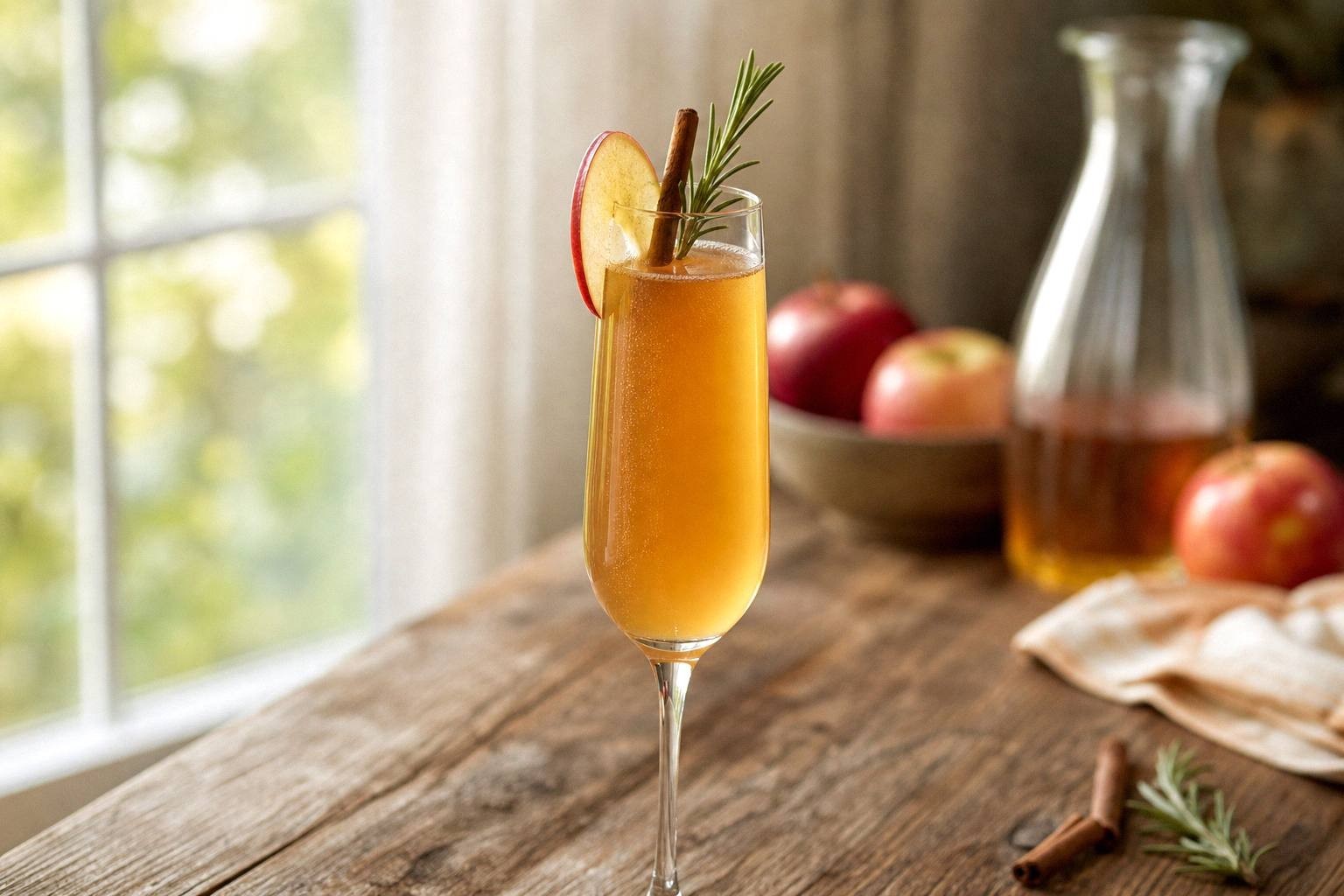
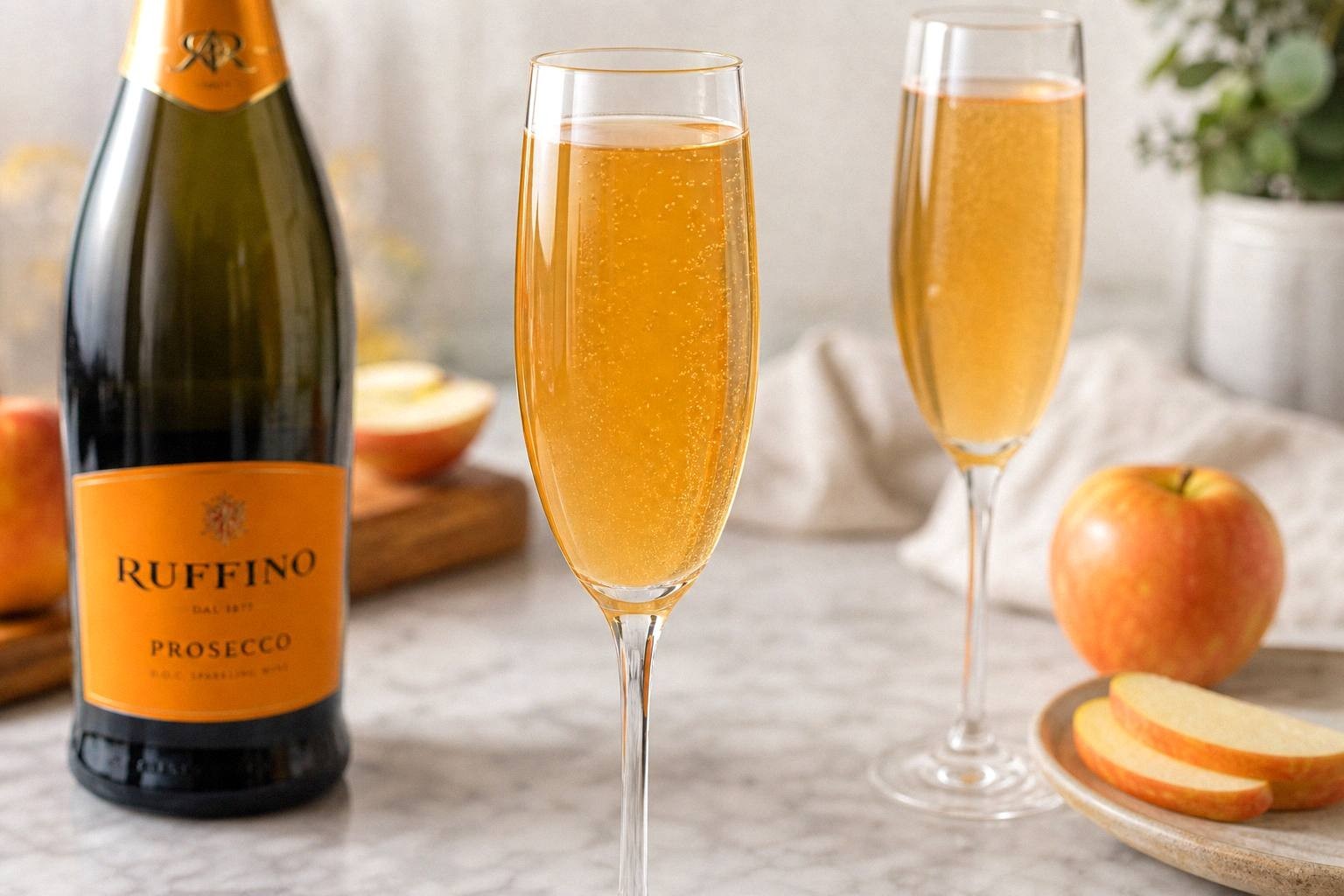
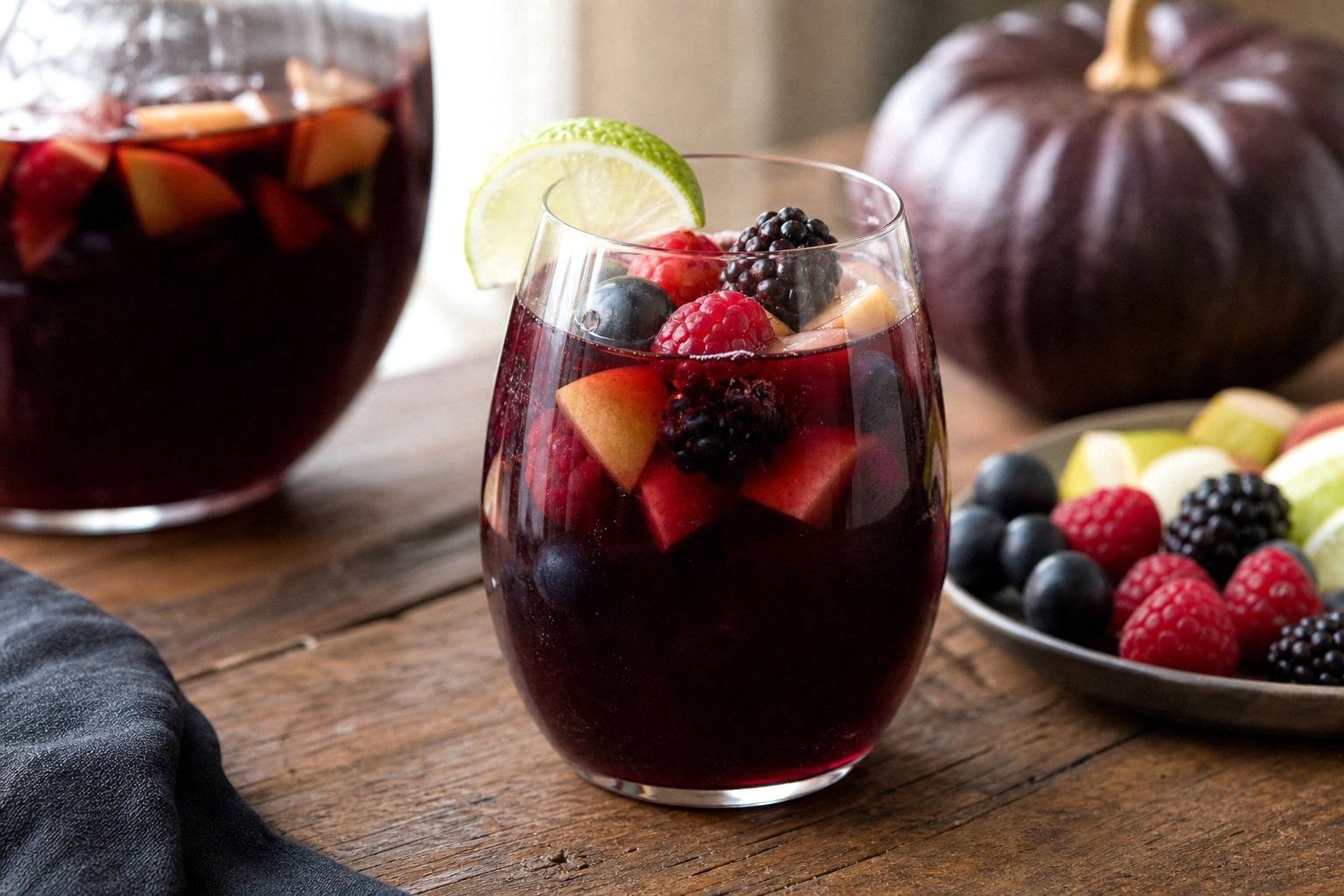
Cider, apple butter and sparkling wine form a spiced punch adapted from Half Baked Harvest. Bottle sizes and about 223 ml liquid portions make the bowl quantity explicit; this primary recipe contains alcohol.
Prep: 10 minutes with components ready. Total: About 40 minutes with components ready; see component times. Yield: 16 small servings (about 223 ml liquid plus apple butter each before ice).
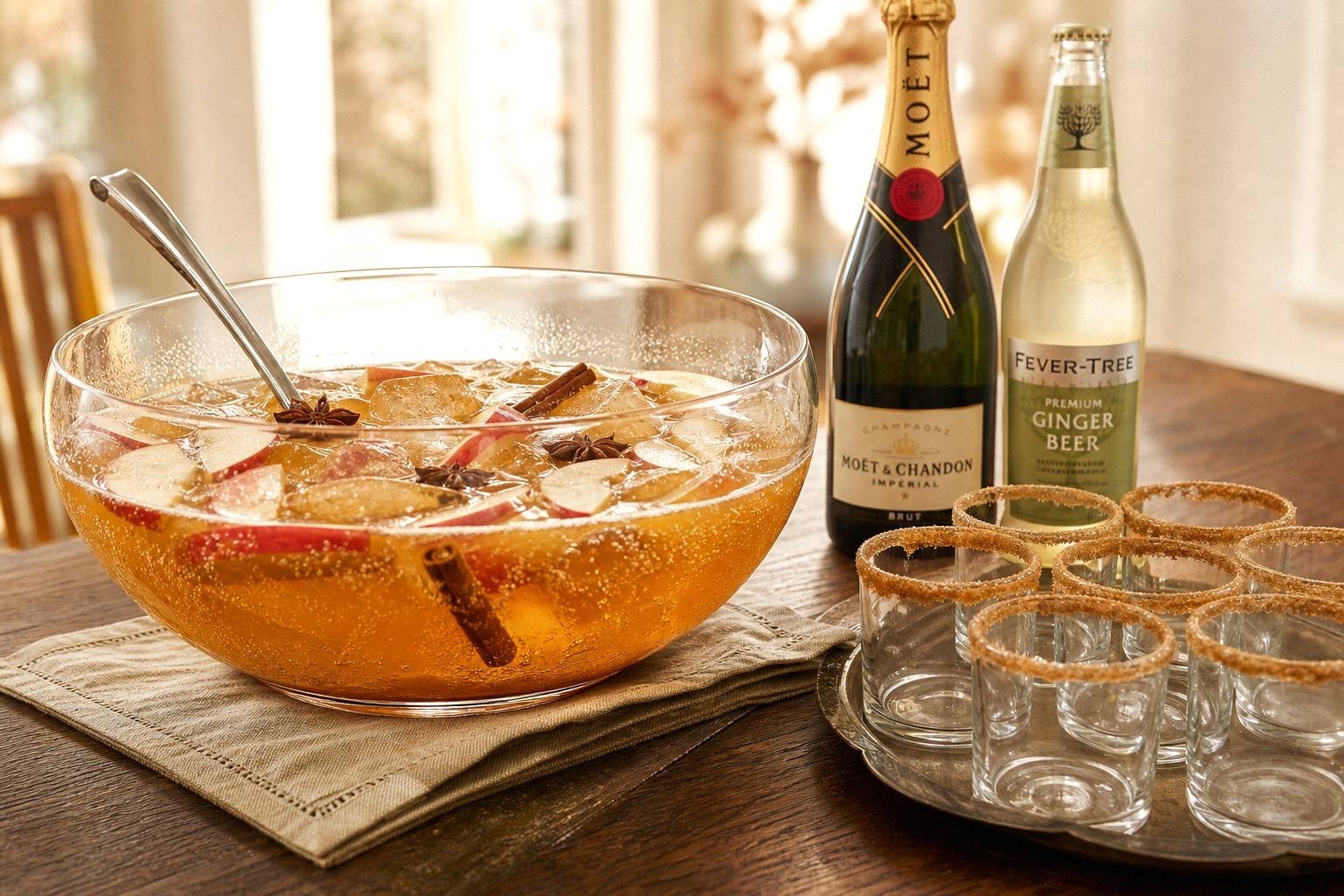
Ingredients
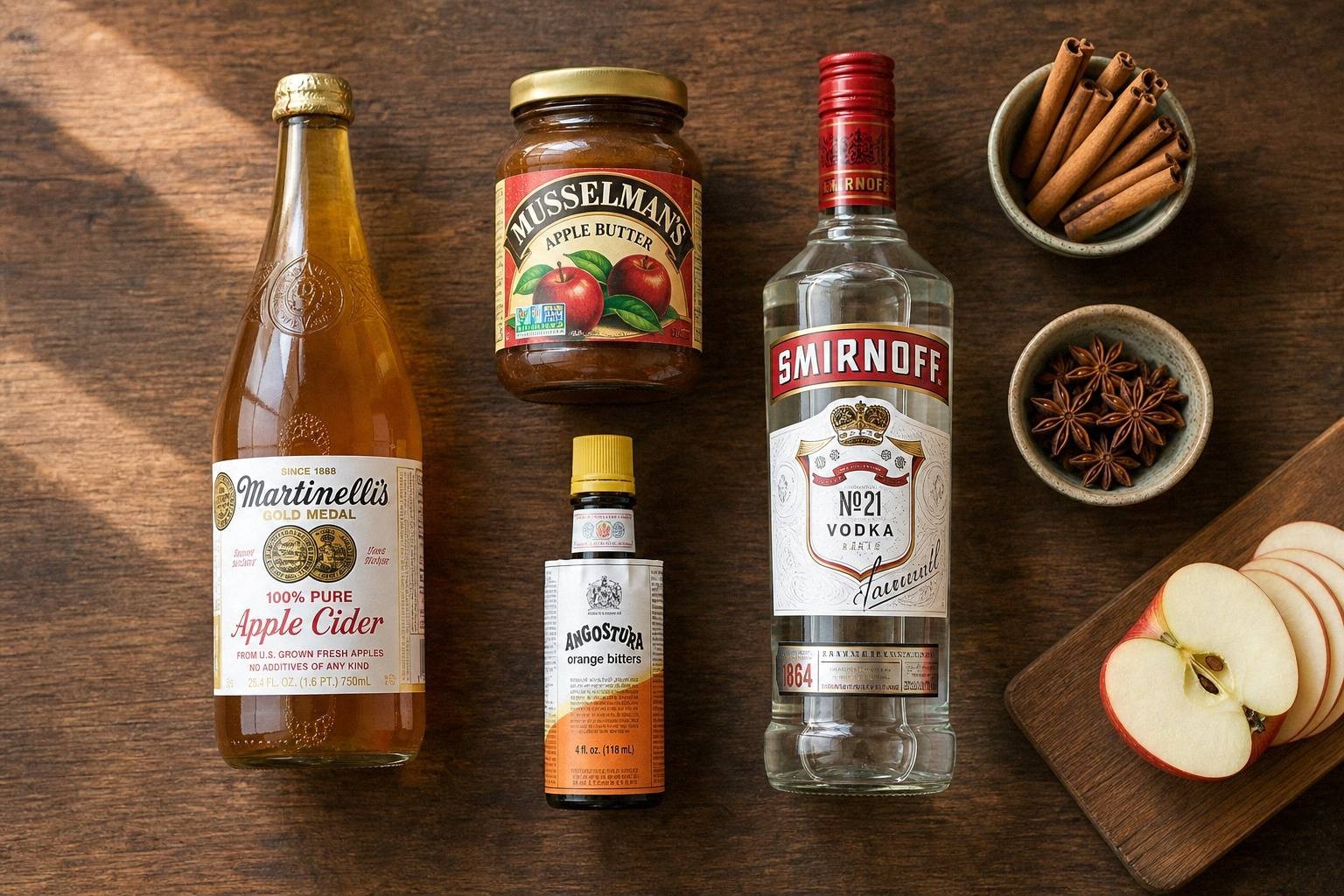
- 8 US cups (1,920 ml) pasteurized apple cider
- 1 US cup (240 ml) vodka
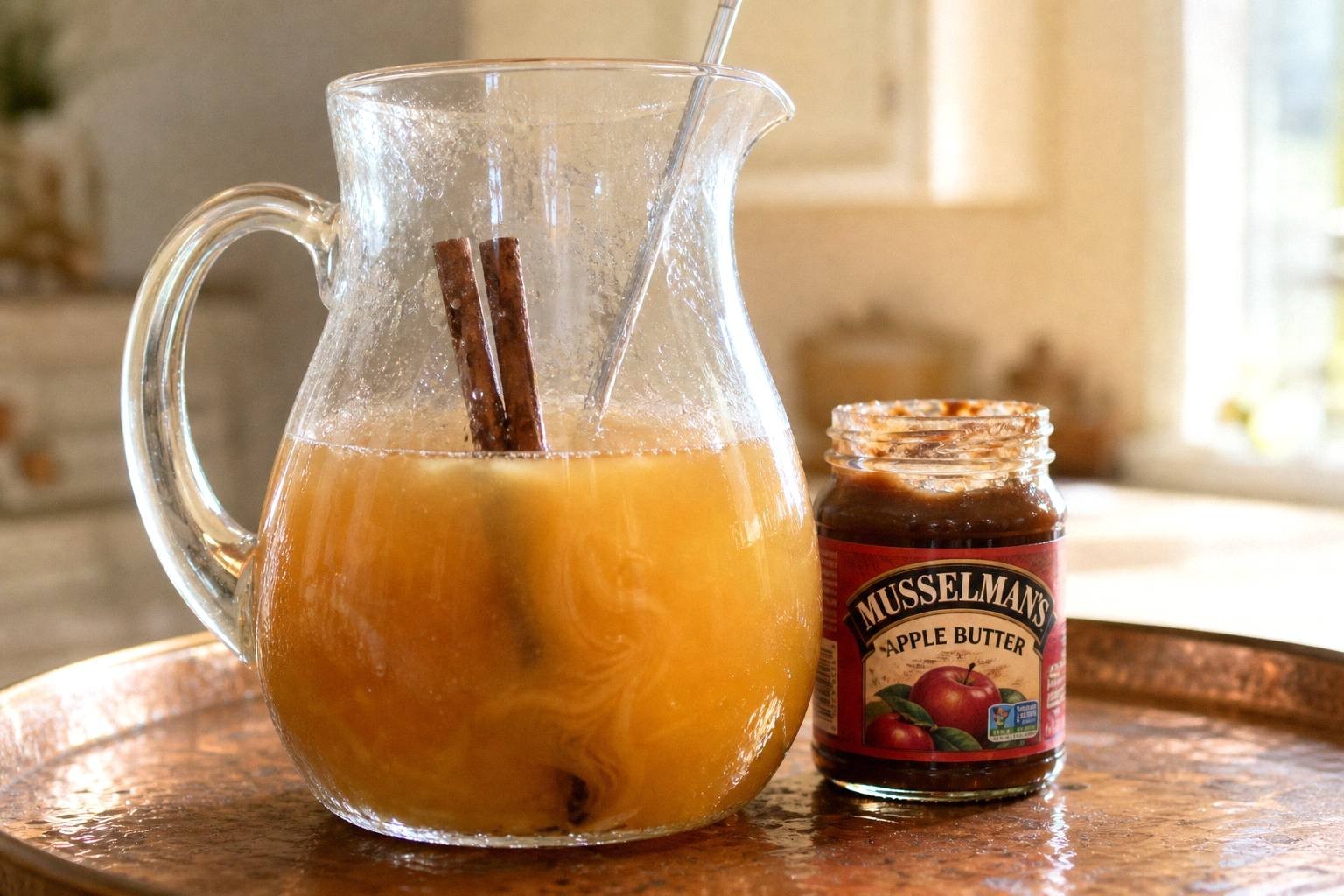
- 1/2 US cup (120 ml) smooth apple butter
- 4 dashes orange bitters (contains alcohol)
- 4 cinnamon sticks
- 1 whole culinary Chinese star anise (Illicium verum), optional
- 1 bottle (750 ml) dry sparkling wine
- 660 ml chilled commercial ginger beer (for example two 330 ml bottles)
- 2 washed apples (about 300 g), cored and thinly sliced
- Ice in serving glasses
Method
- Whisk apple butter into 240 ml of the measured cider; combine with remaining cider, vodka and bitters in a container holding at least 3 litres. Add cinnamon and optional star anise.
- Refrigerate 30-60 minutes, then strain out all whole spices. With ingredients already chilled, allow about 40 minutes total, longer until cold.
- Pour base into a bowl holding at least 5 litres. Immediately before serving add chilled wine and ginger beer, stir gently, then add apples.
- Divide the liquid and dispersed apple butter into sixteen equal portions, about 223 ml liquid plus apple butter each before ice. Share apple slices separately. Serve in glasses holding at least 360 ml with modest ice.
Separate Alcohol-Free Batch
Omit the 240 ml vodka, 750 ml sparkling wine and alcoholic orange bitters. Use 1,920 ml pasteurized cider, 120 ml apple butter, four cinnamon sticks and optional one whole culinary Chinese star anise (Illicium verum). Use the same 30-60-minute refrigerated spice infusion, then remove spices. Add 1 litre chilled labeled 0.0% sparkling white grape juice and 660 ml labeled 0.0% ginger beer at service. Divide the liquid into eighteen equal portions, about 199 ml plus dispersed apple butter, and share the same two prepared apples separately. It differs from the publisher’s mocktail recipe; no pregnancy/child suitability is promised for every product. Conventional bitters must not remain in a zero-proof recipe.
For both versions make each separately and label bowls, rather than splitting a vodka-containing base. For eight primary servings halve each main ingredient, use 375 ml wine and 330 ml soda, recover about 1,785 ml liquid plus apple butter and divide eight equal portions. Optional spices become two cinnamon sticks and omit star anise or use one then remove after 30 minutes.
Warm Cider Variant
For an alcohol-free warm version use 1,920 ml pasteurized cider, 120 ml apple butter, four cinnamon sticks and optional one whole culinary Chinese star anise. Omit vodka, bitters, wine and ginger beer. Whisk apple butter into 240 ml of the cider before combining. Heat gently to a light simmer, simmer 10 minutes, then remove all whole spices. Divide into eight equal portions, about 240 ml cider plus apple butter each, in heat-safe mugs and serve promptly. Allow about 20 minutes. Whole spices stay out of the serving mug. This is a different warm drink, not a heated carbonated punch.
Optional Rim and Cider Ice
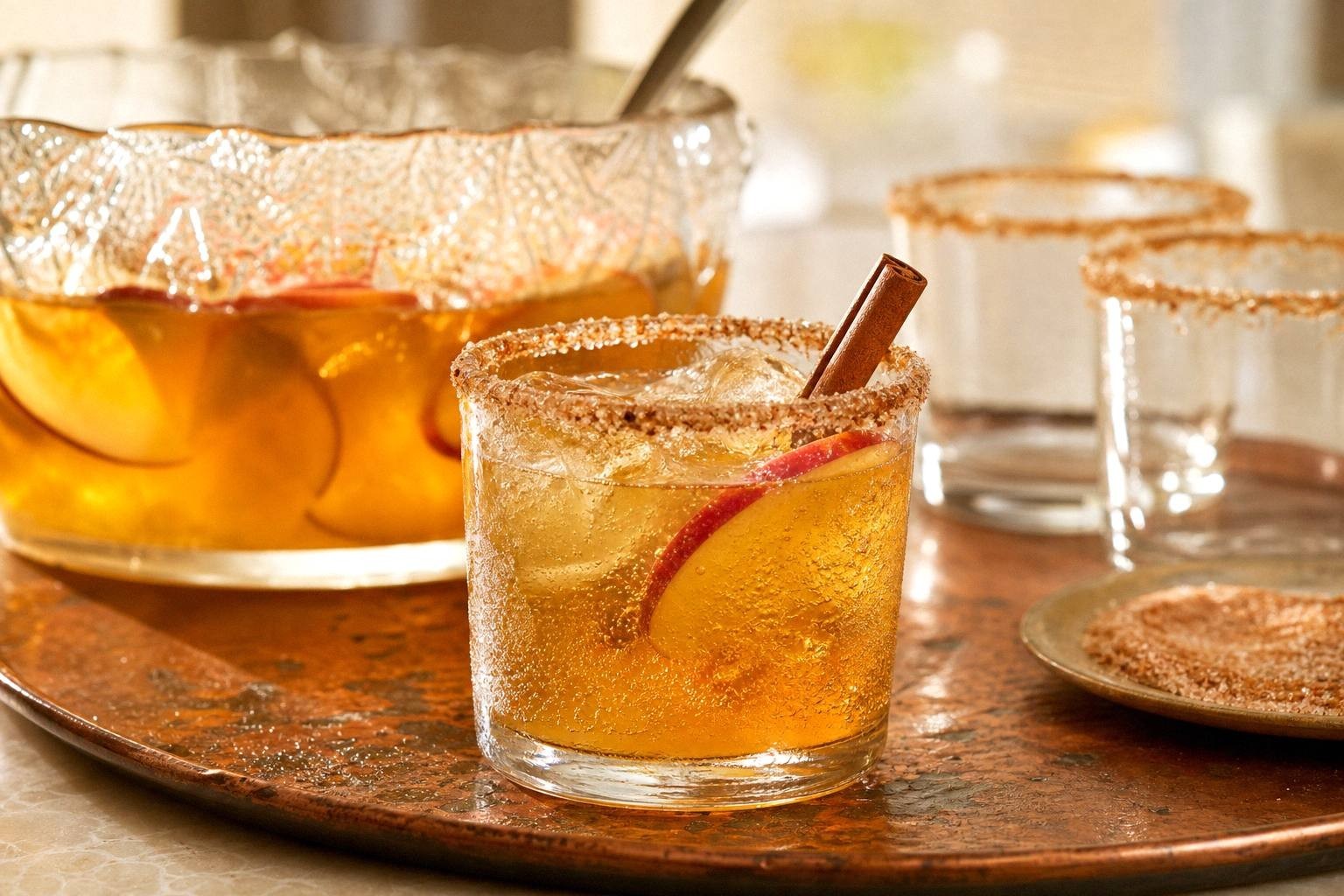
Mix 2 tablespoons coarse sugar, 3 tablespoons brown sugar and 3/4 teaspoon ground cinnamon on a clean plate. Put 30 ml pasteurized orange or pomegranate juice on another plate. Moisten only the outer rims, dip lightly in sugar and let dry; unused mixture is not added to the punch. Prepare rims shortly before service rather than storing wet juice rims overnight. Optional garnish is an apple slice already in the recipe; woody spices remain off rims.
For cider ice freeze an additional 240 ml pasteurized cider in a covered food-safe tray at 0 F (-18 C) at least 4 hours, longer until solid; use cubes in serving glasses instead of ordinary ice. Extra ice liquid is additional to the punch yield. Use within 1 month for quality and thaw surplus in the refrigerator. Apple-butter-free option: omit the 120 ml apple butter and retain the same 3,570 ml liquid, sixteen portions about 223 ml each. Flavor and body will differ.
Storage and Dinner Timing
Prepare the uncarbonated base within 24 hours; remove the whole spices after the stated 30-60-minute cold infusion rather than leaving them all day. Keep covered and cold. Add chilled wine and soda just before each bowl is served; use a fresh measured half-batch if refilling. Discard old fruit with its batch when the warm-exposure limit is reached. Follow the cold-storage policy below. Coffee, botanical and alcohol choices are not claims of health benefits.
Cold Storage and Service
Wash fresh produce under running water before cutting, including melon rind; scrub firm produce with a clean brush. Use pasteurized ready-to-drink juices and cider. Keep prepared drinks and cut fruit covered at 40 F (4 C) or below. Cool heated components promptly in shallow heat-safe containers, using an ice-water bath before refrigeration when useful. Do not seal or shake hot liquid.
Use fruit, dairy and assembled drink bases within 24 hours for quality; strained plain tea and homemade syrups within 3 days, unless an ingredient label requires sooner. These are conservative house quality targets, not tested shelf lives. Add carbonation, ice and garnish at service. Keep a small serving jug chilled over ice and refill from the refrigerator. Discard perishables after a cumulative 2 hours without refrigeration, or 1 hour above 90 F (32 C); adding fresh fruit does not reset that clock. Follow commercial ingredient labels for unopened/opened storage. Honey-containing drinks are for people at least one year old.
Related Reading
- Apple Cider Mimosa
- Apple Cider Old Fashioned Cocktail
- Quick Homemade Ginger Soda (No Fermentation)
- Lavender Mocktail Recipes Better Than Lavender Lattes
Sources and Recipe Notes
Published methods inform these preparations. House measures, recovery marks, flavor options, timing estimates and shorter quality targets are distinguished from original published formulas. No kitchen or microbial shelf-life testing is claimed.