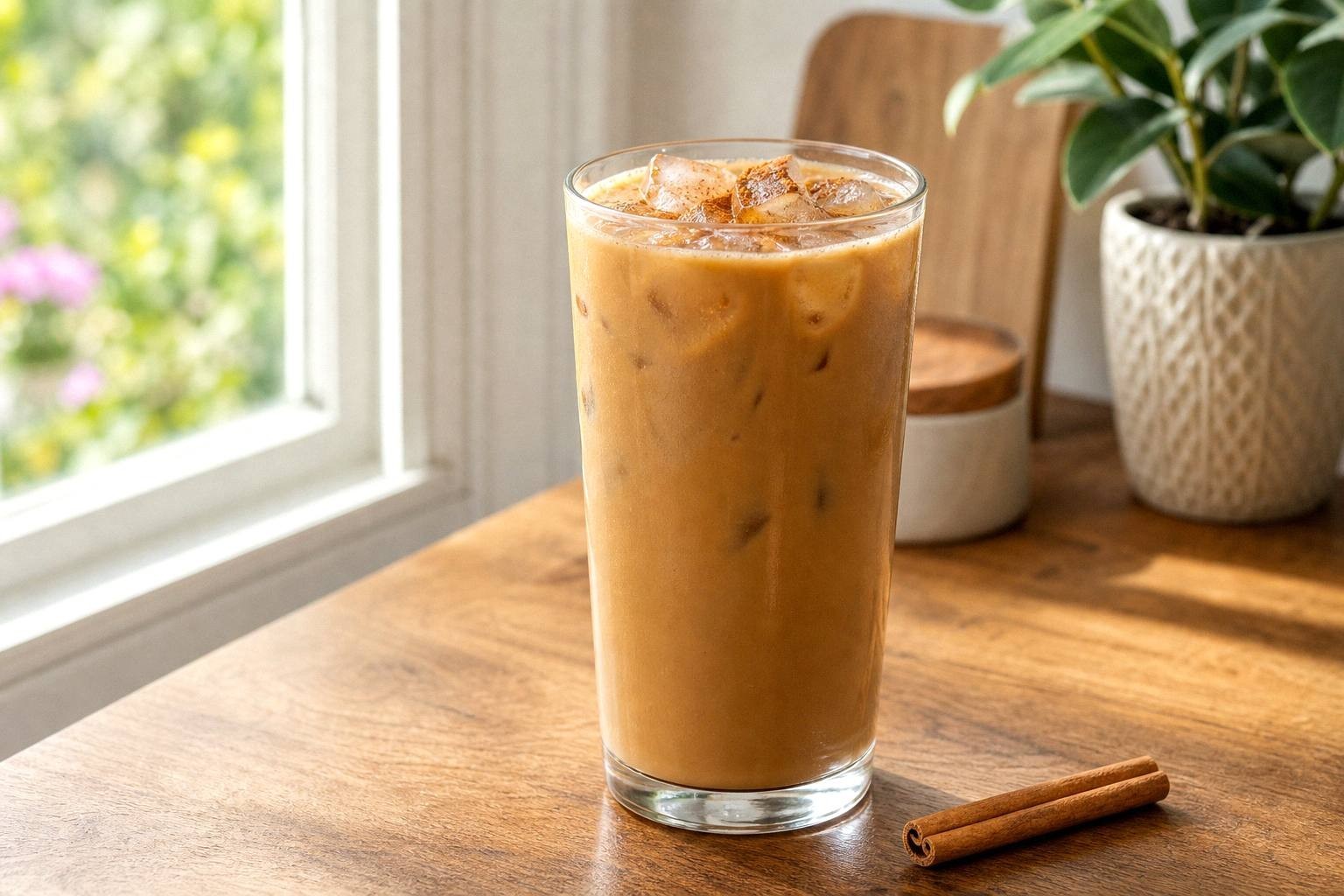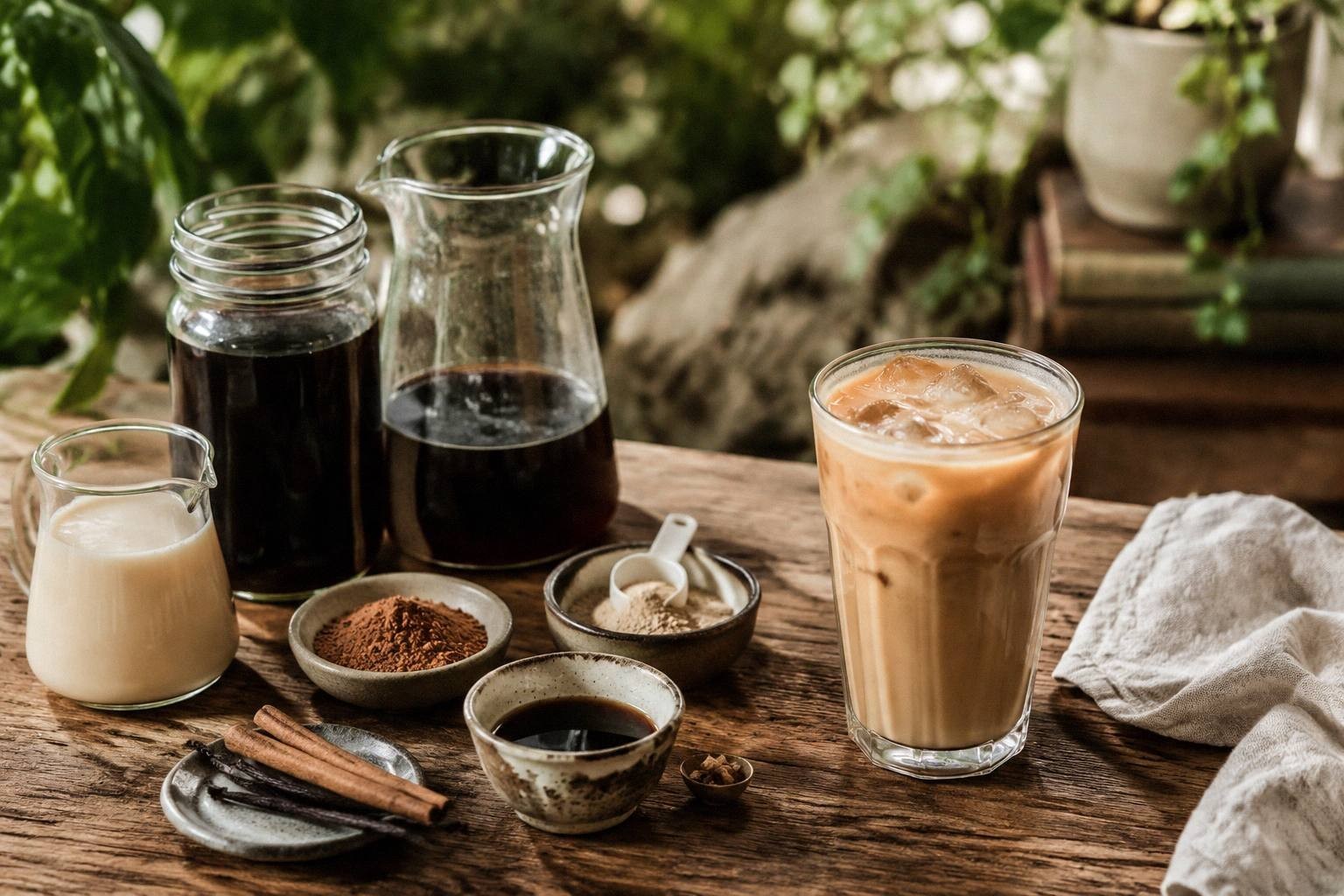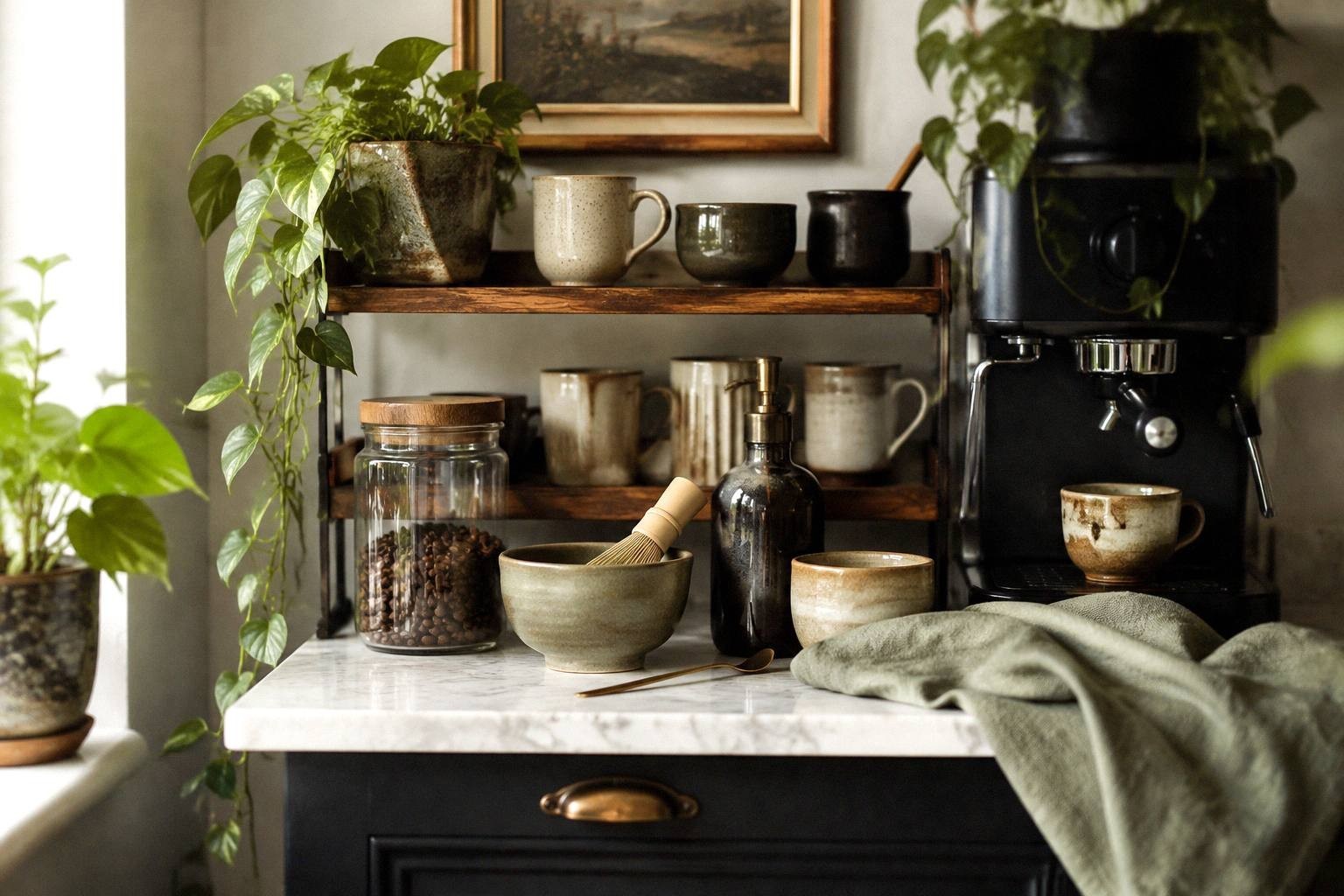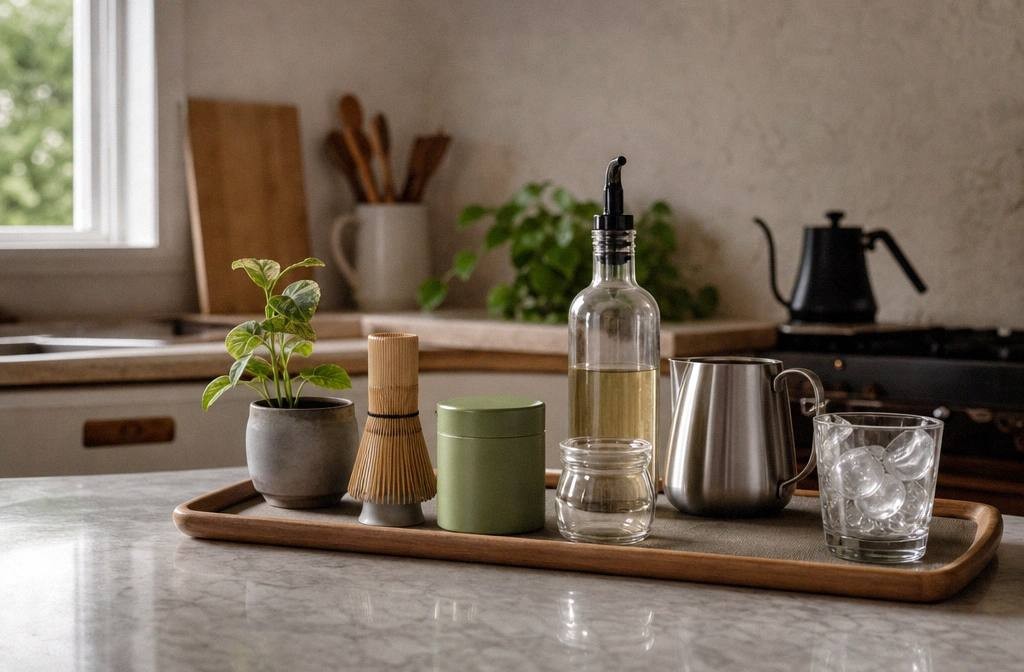
An at-home matcha bar does not need a built-in counter, a new cabinet, or a cart full of tools. It needs one useful spot where the matcha, whisk, milk, syrup, glass, and scoop can live close enough together that you will actually use them.
The goal is simple: make it easier to make matcha before you leave the house.
Quick answer
A matcha bar at home should make the drink faster than leaving the house. Keep the matcha, milk, syrup, ice, glass, and tool in one small spot so the setup earns its counter space.
Small matcha bar checklist
- Matcha tin
- Milk or oat milk
- One syrup
- Glass
- Ice tray
- Whisk or frother
- Small tray
Related helpful guides
- Iced Matcha Latte Recipe
- Matcha Lemonade Recipe
- Plant-Filled Coffee Bar Ideas
- Coffee Ice Cubes for Watery Iced Lattes
What to save from this guide
- The checklist above for the next time you shop, prep, host, or make the recipe
- The practical problem this guide solves before you spend money or set the table
At a Glance
| Detail | Info |
|---|---|
| Best for | Iced matcha , weekday drinks, small kitchens |
| Setup time | 20 minutes if you already have the basics |
| Main idea | One tray or shelf for matcha tools |
| What to buy once | Whisk, small bowl or jar, scoop, airtight tin, reusable glass |
| What to skip | Extra powders, decorative mugs you never use, too many syrups |
| Save reason | Stop rebuilding the drink setup every morning |
Start With the Spot You Already Have
Pick one small area: a tray beside the coffee maker, one shelf in a cabinet, a corner of the counter, or a drawer next to the milk frother. If the setup has to move every morning, you will stop using it.
Keep the everyday pieces visible and the backups hidden. Matcha powder, a whisk, a small bowl or jar, a scoop, and one syrup are enough for the working station. Keep milk in the refrigerator. Backup dry powder and spare glasses can stay in a cool, dry cabinet; follow the tea maker’s storage label.
The Tools That Earn Their Place
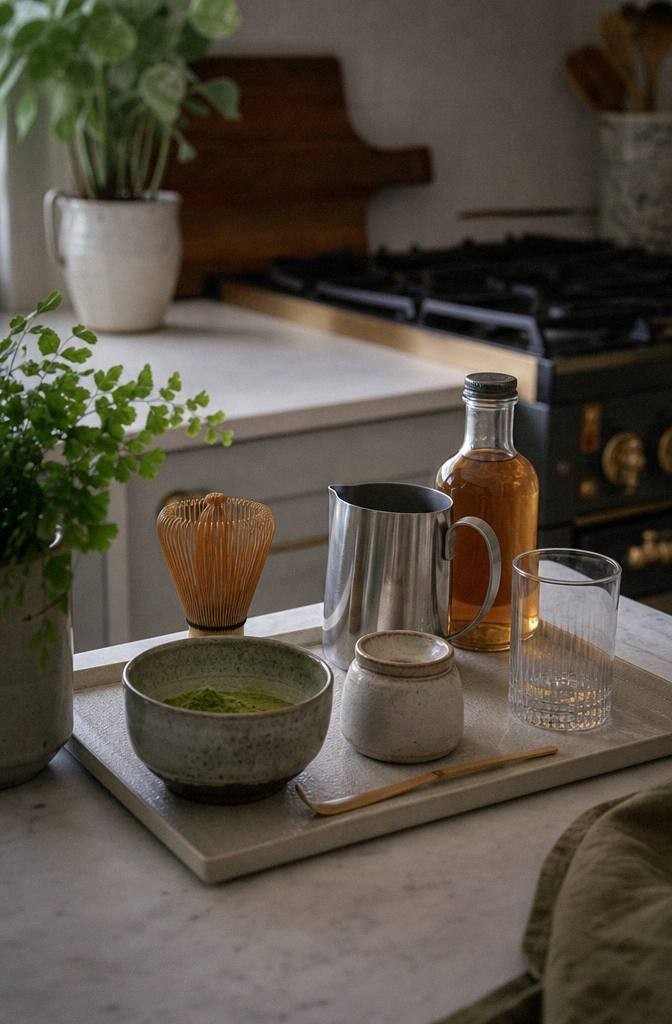
You do not need every matcha tool. You need the tools that make the drink smoother and easier to repeat.
Useful pieces:
- Airtight matcha tin or jar
- Bamboo whisk or handheld frother
- Small bowl, jar, or cup for mixing
- Measuring spoon or scoop
- Fine mesh sieve if your matcha clumps
- Glass for iced matcha
- Small tray to keep the setup contained
If you make iced matcha most often, a jar and handheld frother may get used more than a traditional bowl. That is fine. The setup should match the way you actually drink it.
Basic iced matcha latte
Yield: 1 glass; about 242 ml measured liquids before ice. Time: 5 minutes.
- 2 g pure matcha powder (about 1 level teaspoon)
- 60 ml water at 80 C (176 F)
- 3/4 US cup cold milk or oat milk (about 177 ml)
- 1 teaspoon purchased food vanilla syrup
- Ice
Sift matcha into a heat-safe bowl. Add 60 ml water at 80 C and whisk briskly for 15 seconds until evenly dispersed, with no big clumps. Matcha is a suspension, not a dissolved powder.
Stir syrup into matcha, then pour into a 16-ounce glass with ice and cold milk. Stir and serve immediately.
Syrups That Make the Setup Feel Worth It
One syrup is enough. Vanilla is a familiar flavor. Brown sugar syrup works well with oat milk. Lavender can be good if you use a light hand. Mint is better for lemonade-style matcha than creamy lattes.
Good matcha syrups:
- Vanilla
- Brown sugar
- Honey ginger
- Lavender vanilla
- Mint simple syrup
Do not keep five bottles on the tray. Keep only a labeled purchased shelf-stable syrup at room temperature when its label permits it. Refrigerate opened or homemade syrup when required; no generic shelf life applies.
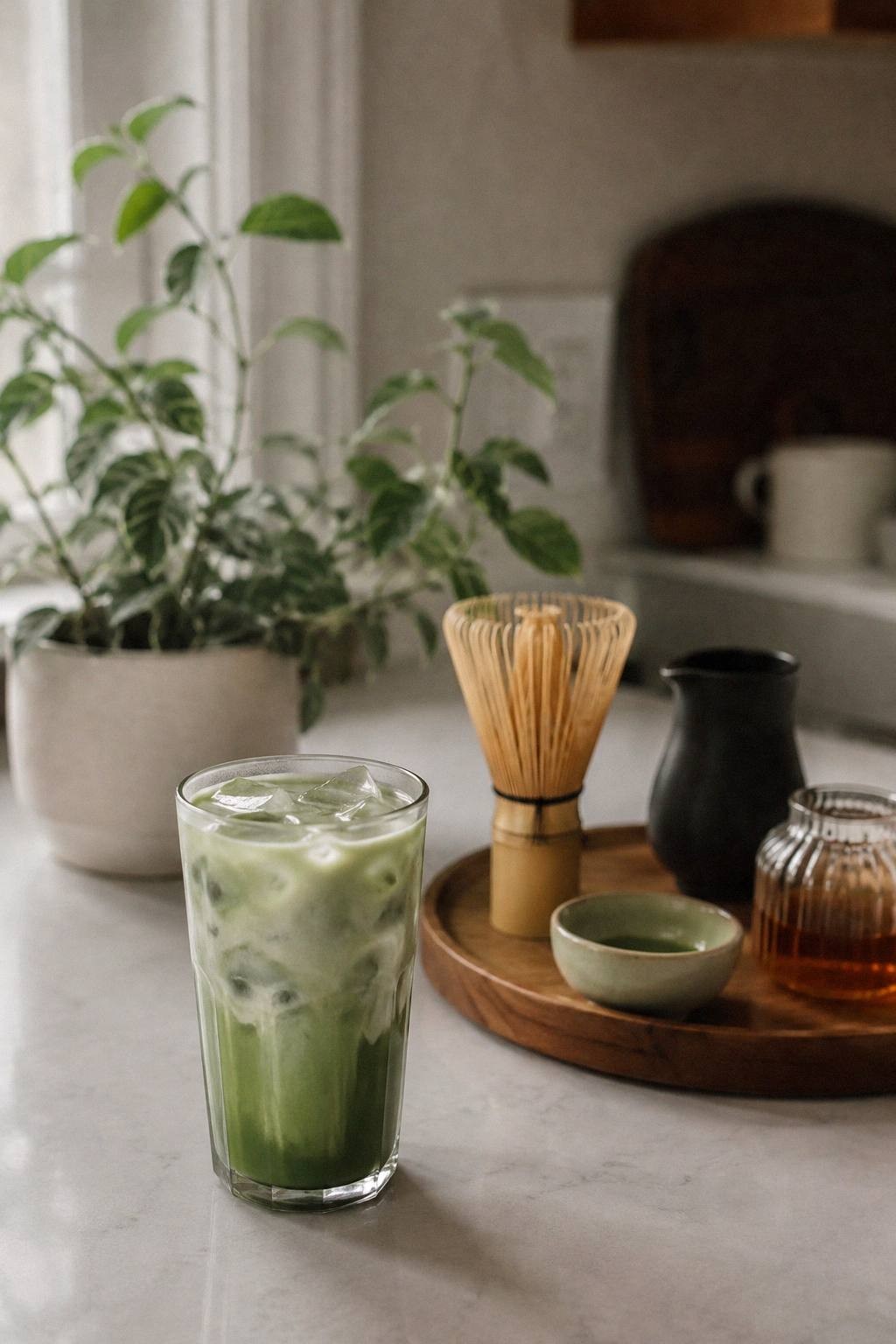
Make the Station Look Calm Without Making It Useless
Plants make a drink corner feel nicer, but they should not crowd the tools. One small plant or herb pot is enough. If you have to move the plant to reach the whisk, the styling is working against you.
Use a tray to make everything feel intentional. A tray also keeps powder dust, syrup drips, and spoons from spreading across the counter.
What to Prep Ahead
You can prep the station without making the whole drink early.
Do ahead:
- Follow the syrup label; do not top up an old bottle with a new batch
- Wash the whisk or frother, rinse and air-dry completely
- Keep matcha in an airtight container
- Chill your favorite glass
- For matcha ice, whisk 2 g matcha with 60 ml water at 80 C, add 177 ml potable cold water, cool promptly, then freeze in a clean covered tray until solid. Use these cubes in place of plain ice; they add matcha and liquid as they melt. This is one 237 ml tray batch, not a fixed number of cubes.
Do not mix matcha hours ahead unless you like the flavor after it sits. Freshly mixed matcha tastes better.
Common Questions
What do I need for an at-home matcha bar?
Start with matcha powder, a whisk or frother, a small mixing bowl or jar, a scoop, milk, syrup, ice, and one tray. Add a sieve only if your matcha clumps.
How do I make iced matcha less chalky?
Use the measured 2 g matcha and 60 ml water at 80 C formula above. Whisk to disperse the powder, then add syrup, ice and milk. It can settle; stir again before drinking.
Can a matcha bar fit in a small kitchen?
Yes. Use a tray, shelf, or drawer instead of a full station. Keep only the daily tools out and store backups somewhere else.
What syrup tastes best with matcha?
Vanilla and brown sugar are the easiest. Honey ginger and lavender vanilla work too, but use less syrup so the matcha still tastes like matcha.
Ingredient notes
Matcha contains caffeine. Use pure food matcha, not an adaptogen blend. Brown sugar, honey ginger, lavender vanilla and mint are flavor ideas for purchased labeled food syrups, not essential oils or unfinished homemade recipes. Use 1 teaspoon per glass in place of vanilla. For a stronger latte, use 3 g matcha with the same 60 ml water; for extra sweetness, use 2 teaspoons syrup, total yield about 247 ml before ice.
Refrigerate in a covered clean container at 40 F (4 C) or below and use within 24 hours, a conservative house handling limit. Keep ice and sparkling mixers separate until service. Discard perishable drinks left out more than 2 hours, or 1 hour above 90 F (32 C).
Sources and recipe notes
These are house culinary adaptations. The linked originals support the ingredient combinations and preparation methods; measured recovery, serving sizes and cooling details are stated above. The 24-hour limit for fresh mixtures is a conservative house handling choice, not shelf-life testing.