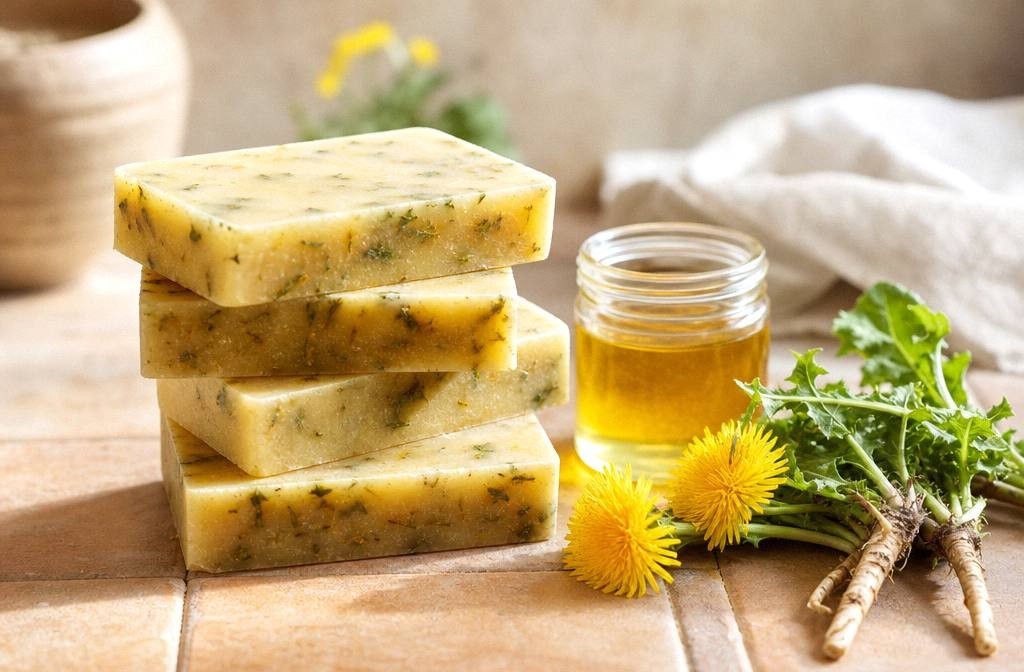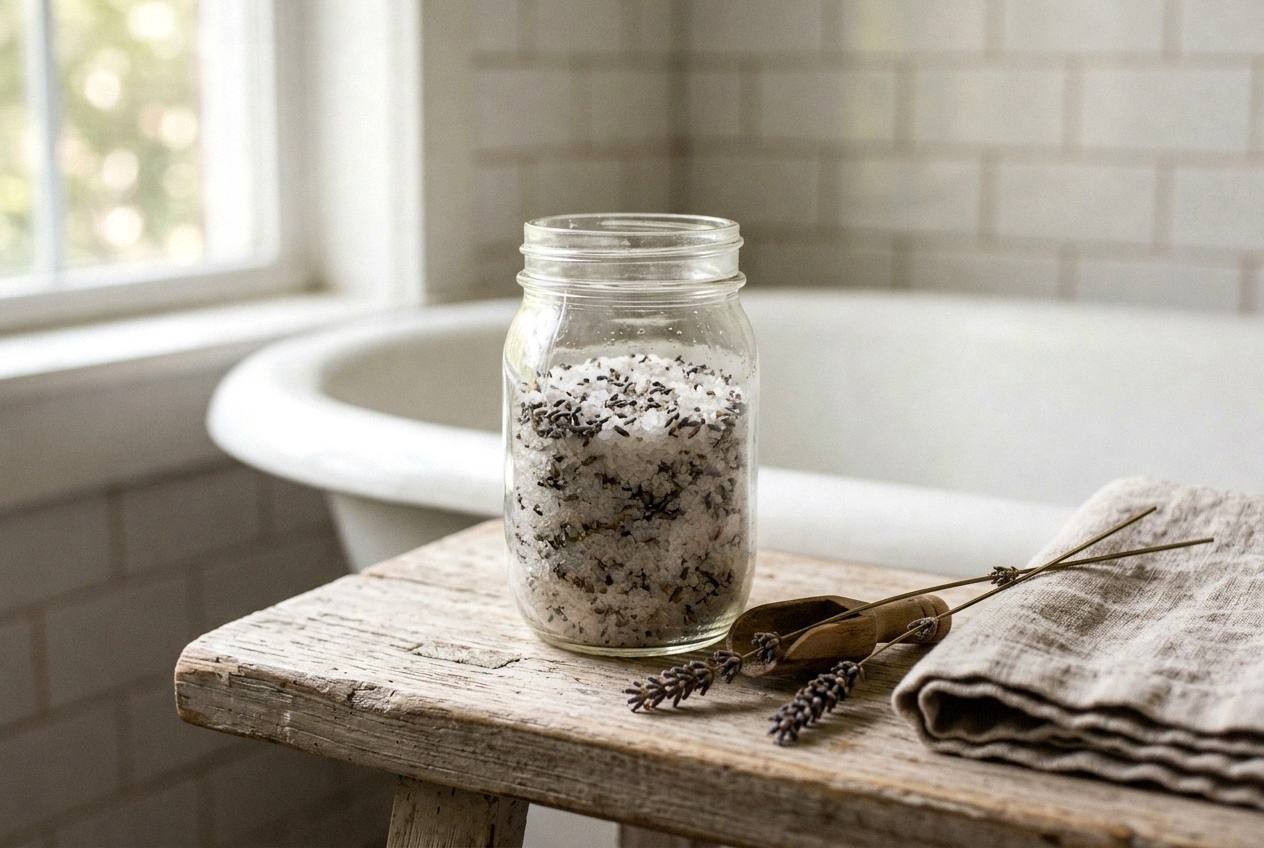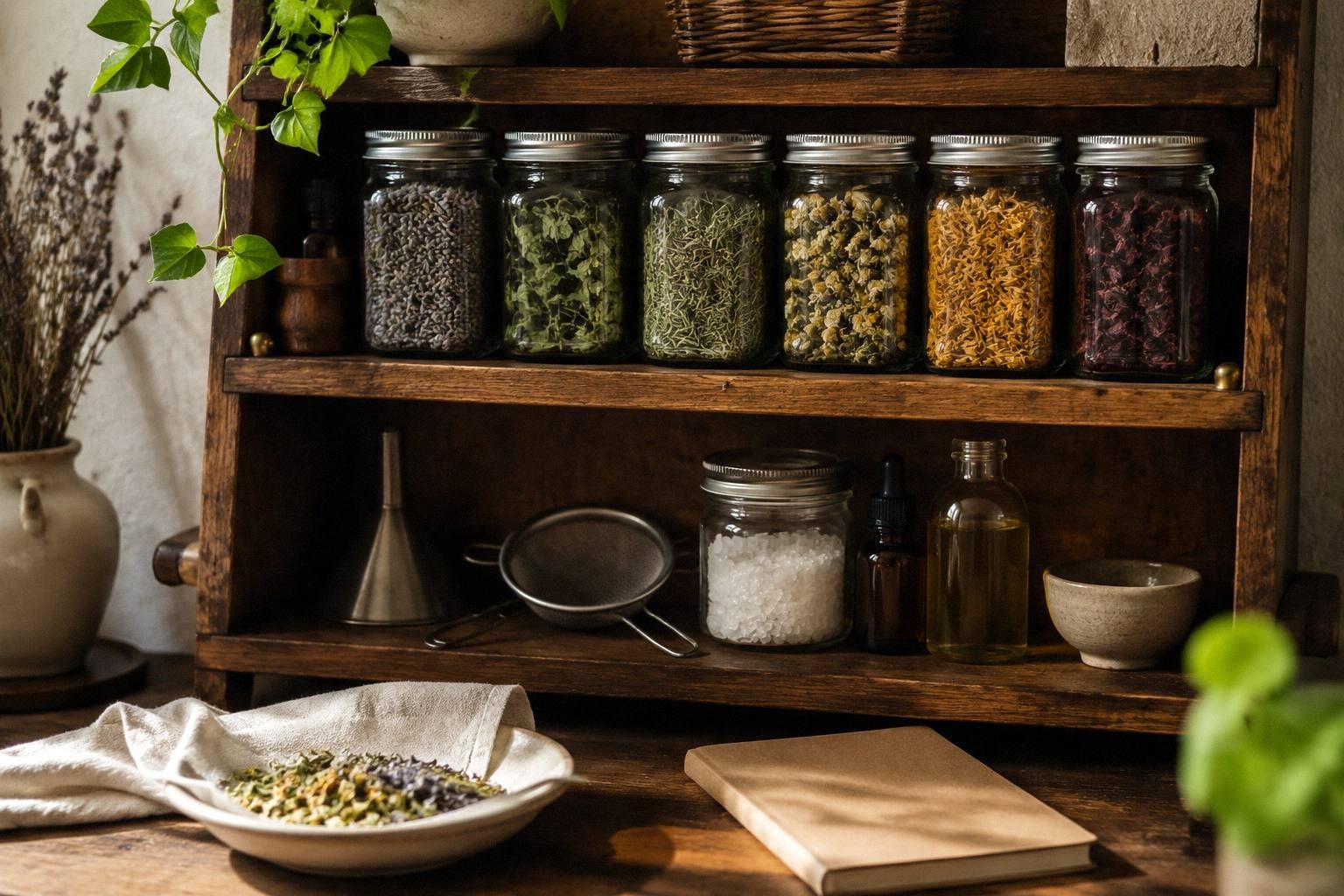
A beginner apothecary shelf should make you want to use it. It should not turn into a row of jars you feel bad about ignoring.
Start with a small shelf, a tray, or one cabinet section. Give every jar a job. If you cannot name what you will make with an herb, leave it off the shelf for now.
Quick answer
Start with one small shelf and only keep herbs, jars, labels, and tools tied to projects you will actually make. Keep culinary tea supplies and separately labeled cosmetic stock organized. The undefined bath, oil and salve formulations below remain withheld; the shelf itself does not establish their suitability.
Beginner apothecary shelf setup
- Small jars
- Useful labels
- Tea strainer
- Small funnel
- Beeswax or carrier oil
- Three useful herbs
- One starter project
Related helpful guides
- Herbs to Grow for Mocktails, Tea, and Bath Soaks
- Sun-Infused Herb Oils
- Calendula Hand Salve: A Beginner Tin for Dry Garden Hands
- Lavender Bath Salts Recipe
- Homemade Herbal Tea Recipes for Glowing Skin
- DIY Body Scrub: Sugar Scrub Recipe and How to Keep It
- Homemade Face Scrub: How to Make One
What to save from this guide
- The checklist above for your next shopping or setup pass
- The problem this guide solves before you set the table, buy pieces, or make the drinks
At a Glance
| Detail | Info |
|---|---|
| Setup time | 30 to 45 minutes |
| Best for | Herbal teas , bath soaks, simple syrups, body oils, and culinary herbs |
| Main idea | Fewer herbs, better labels, easier use |
| Start with | 4 to 6 herbs, small jars, funnel, strainer, labels, oil, salt, and tea bags |
| Skip | Huge bulk bags, mystery jars, and herbs you bought because they looked pretty |
| Save reason | Build the shelf you will reach for instead of a shelf that collects dust |
Start Smaller Than You Want To
The easiest mistake is buying too many herbs at once. A full shelf looks nice for about a week. Then you forget what each jar is for, the labels get vague, and the herbs go stale before you use them.
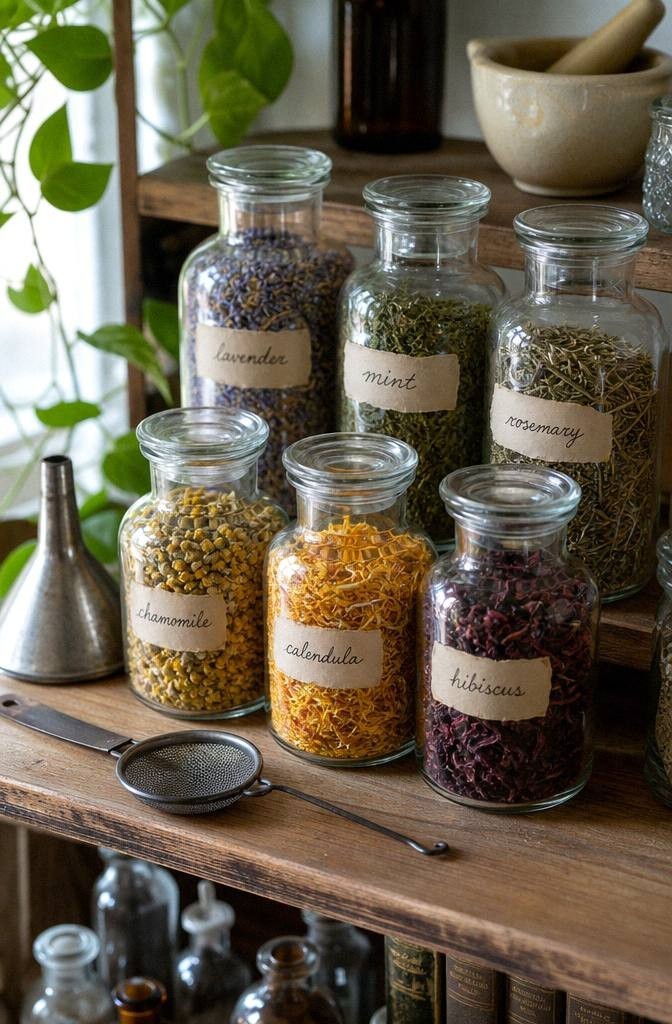
Start with identified culinary herbs for drinks. Purchase any cosmetic ingredients separately and retain their product labels.
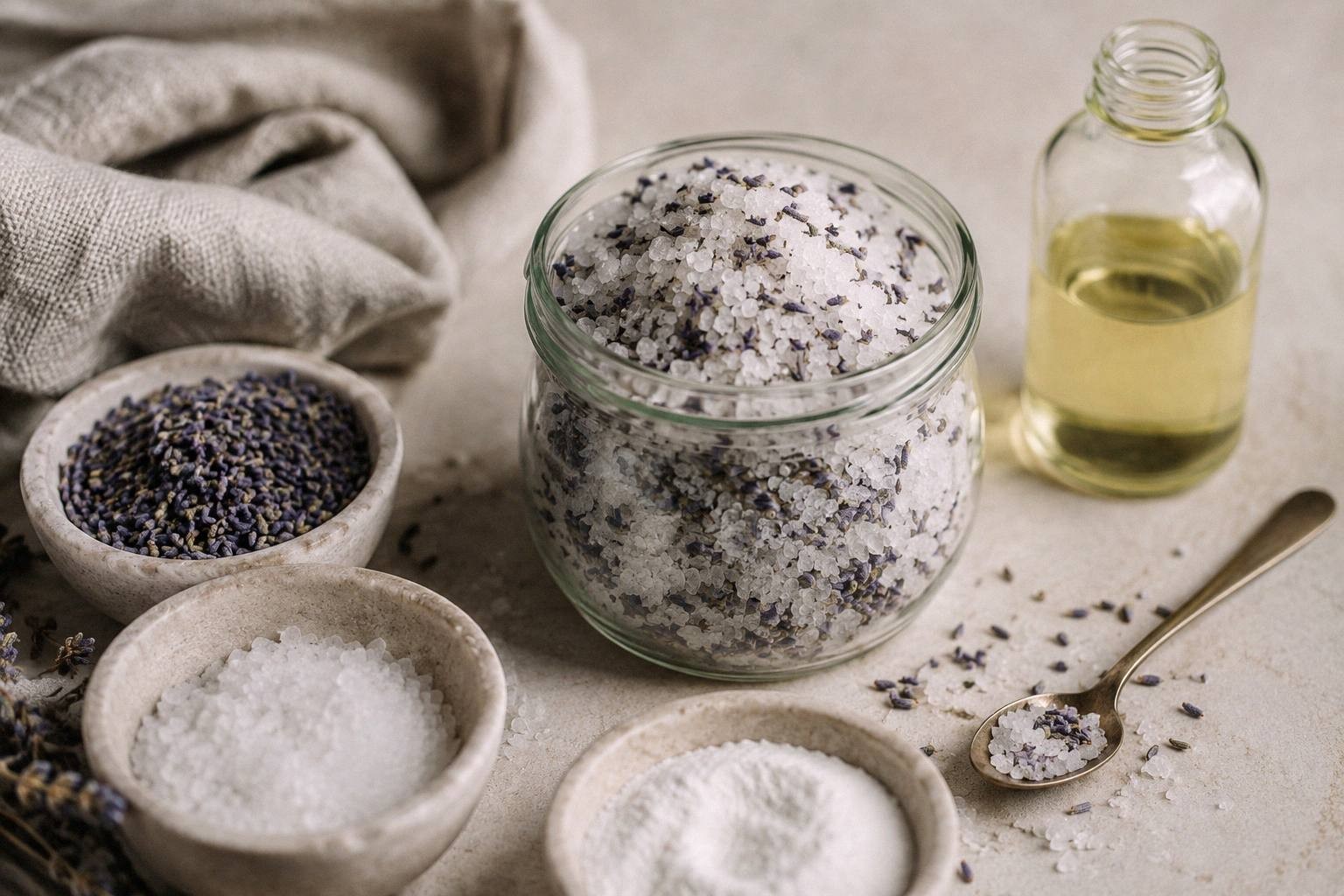
- Culinary lavender for a measured tea blend
- Mint for teas, syrups and summer drinks
- Culinary rosemary for tea or garnish
- Culinary chamomile for tea blends
- Culinary hibiscus for iced tea or syrup
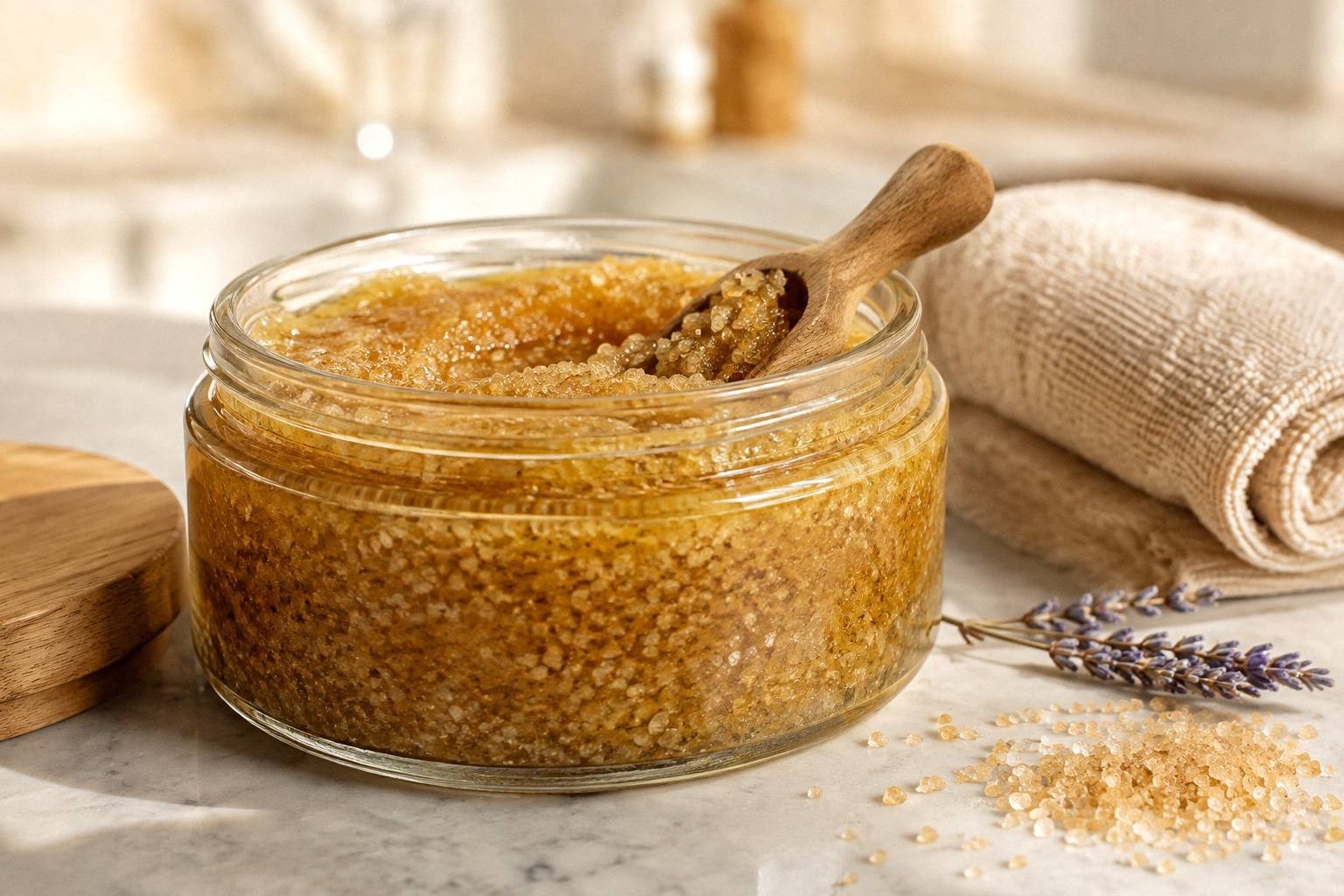
Lavender bath salts, rosemary hair rinse and calendula body oil remain project names awaiting a separate formulation review. Listing an herb here does not establish its suitability for skin, hair or bath use.
You do not need all six on day one. Pick three you already like and two you are excited to use.
Use Small Jars First
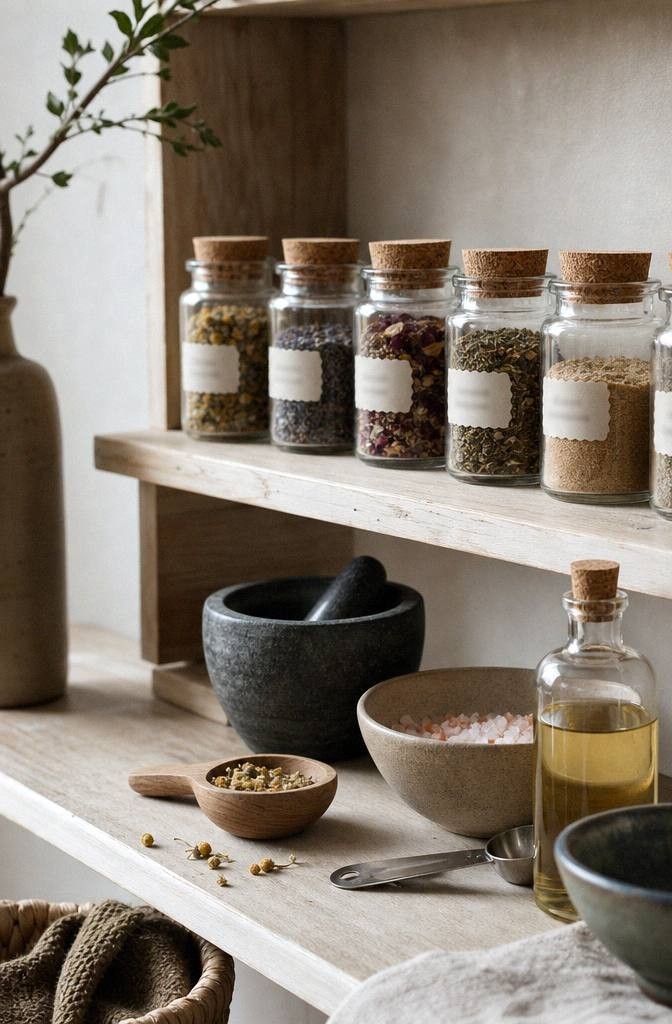
Small jars are better than large jars for a beginner shelf. You can see what you have, use the herbs before they fade, and try new blends without committing to a pound of something.
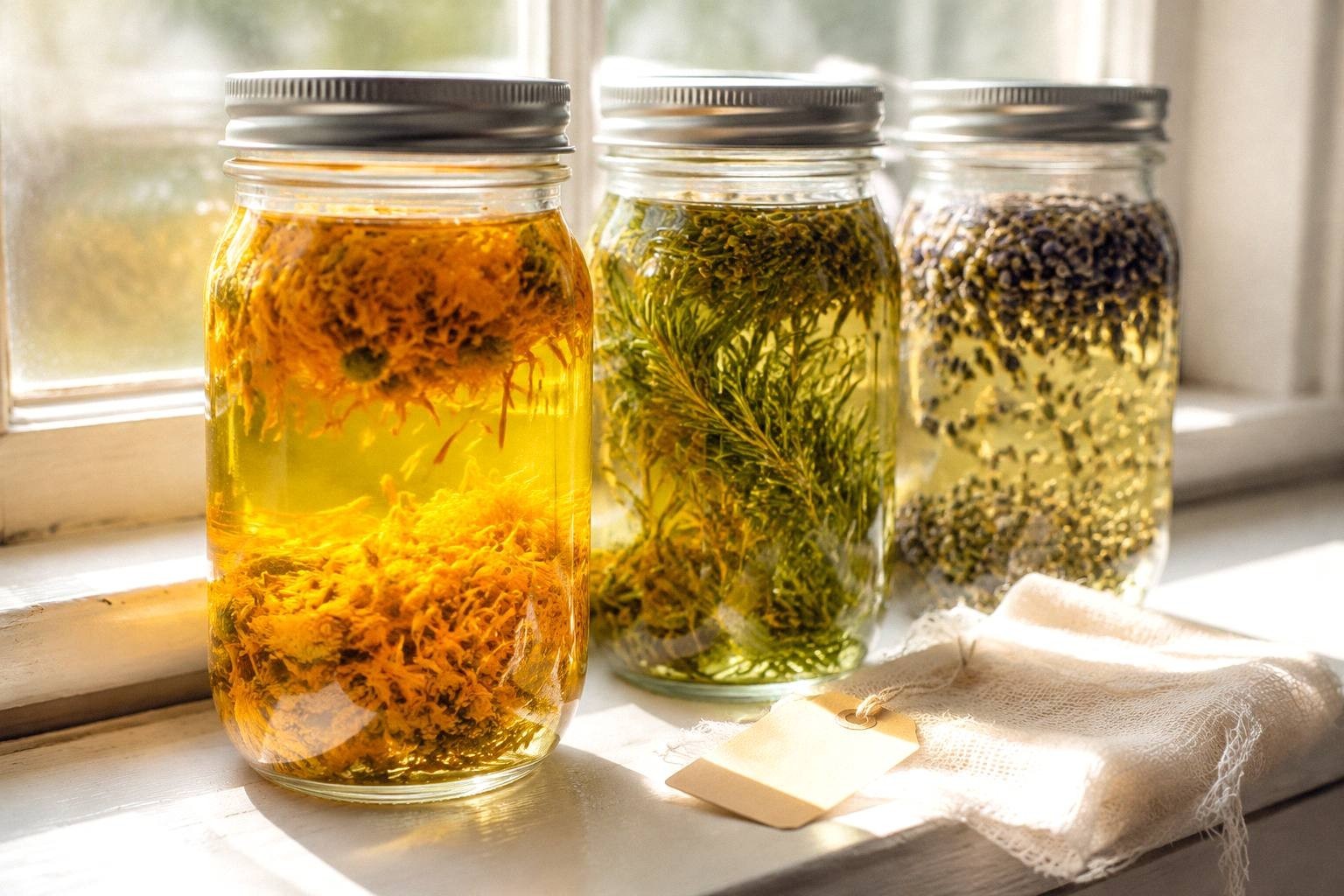
Clear jars look pretty, but they need to stay away from direct sun. If your shelf gets bright light, use amber jars or keep clear jars inside a cabinet.
Label every jar with:
- Herb name
- Date opened
- One or two uses
“Culinary lavender, opened June 2026, tea; separate cosmetic stock for bath projects” is more useful than a pretty label that only says “lavender.”
The Tools Worth Keeping Nearby
Most beginner herbal DIYs use the same few tools. Keep them together so starting a project does not feel like a kitchen scavenger hunt.
Useful tools:
- Fine mesh strainer
- Small funnel
- Measuring spoons
- Clean spoon or scoop
- Small mixing bowl
- Tea bags or tea strainer
- Painter tape or simple labels
- Small notebook
You do not need special apothecary equipment to make a bath soak, tea blend, syrup, or infused oil. Use separate clean utensils for food and cosmetic projects. A clean jar does not make a wet infusion shelf-stable.
What To Put On The Shelf
Think in categories, not clutter.
For drinks:
- Mint
- Hibiscus
- Chamomile
- Rosemary
- Simple syrup bottle in the refrigerator, not on a room-temperature shelf
- Tea strainer
For bath and body:
- Epsom salt
- Fine sea salt
- Dried lavender
- Calendula
- Carrier oil
- Small glass bottles
For quick projects:
- Labels
- Funnel
- Strainer
- Small jars
- Notebook
If the shelf has a drink side and a bath side, you will use it more often. You can make mint syrup without moving bath salts out of the way, and you can make lavender salts without digging through tea tools.
Keep One Easy Project Ready
For a measured mint tea, place 6 washed fresh mint leaves in a heat-safe mug, pour over 1 cup freshly boiled potable water, cover for 5 minutes and strain. Makes about one cup before any optional sweetener. Serve warm, or cool promptly and refrigerate for up to 24 hours.
Bath salts, rosemary hair rinse and calendula body oil are project names here, not recipes. Their earlier ingredient-only combinations did not supply quantities, product identity, preservation controls or use limits. Their operative instructions are withheld pending a specific formulation review; links elsewhere on the site are not certified by this audit. Do not use cosmetic oils or cosmetic-grade herbs in drinks.
What To Skip At First
Skip huge herb collections, complicated tincture gear, and expensive matching jars until you know what you actually use.
Also skip vague wellness promises. You do not need the shelf to fix your life. You need it to keep culinary tea supplies and any separately labeled body-care stock organized. The body-care project names below do not authorize a preparation or use method.
Common Questions
What herbs should a beginner apothecary shelf start with?
Start with identified culinary herbs you already use for food or tea, such as mint, rosemary , chamomile or hibiscus. Keep any cosmetic ingredients separately labeled; food use does not establish a suitable bath, oil or hair-rinse formulation.
Do I need amber jars?
Amber jars are useful if the shelf gets light. If you use clear jars, keep them in a cabinet or away from direct sun so the dried herbs keep their color and scent longer.
How do I keep the shelf from becoming cluttered?
Use small jars, label the date opened, and write one use on each label. If you cannot name what you will make with an herb, do not add it yet.
Storage belongs on the label
Keep fully dried culinary herbs in clean dry sealed jars away from heat, moisture and light. Retain the supplier name, ingredient identity, lot/best-before information and opening date. Keep cosmetic stock separately labeled for external use. Refrigerate milk, prepared tea and homemade water-based syrups at 40 F (4 C) or below; this shelf is not a pantry storage method for wet preparations.
Use wet mixtures within 24 hours as a conservative house policy unless a specific reliable formula provides another limit. Wash and dry tools completely before storage. No oil infusion, salve, hair-rinse or bath-use formula is authorized by this checklist.
Sources and recipe notes
These are house culinary adaptations. The linked originals support the ingredient combinations and preparation methods; measured recovery, serving sizes and cooling details are stated above. The 24-hour limit for fresh mixtures is a conservative house handling choice, not shelf-life testing.