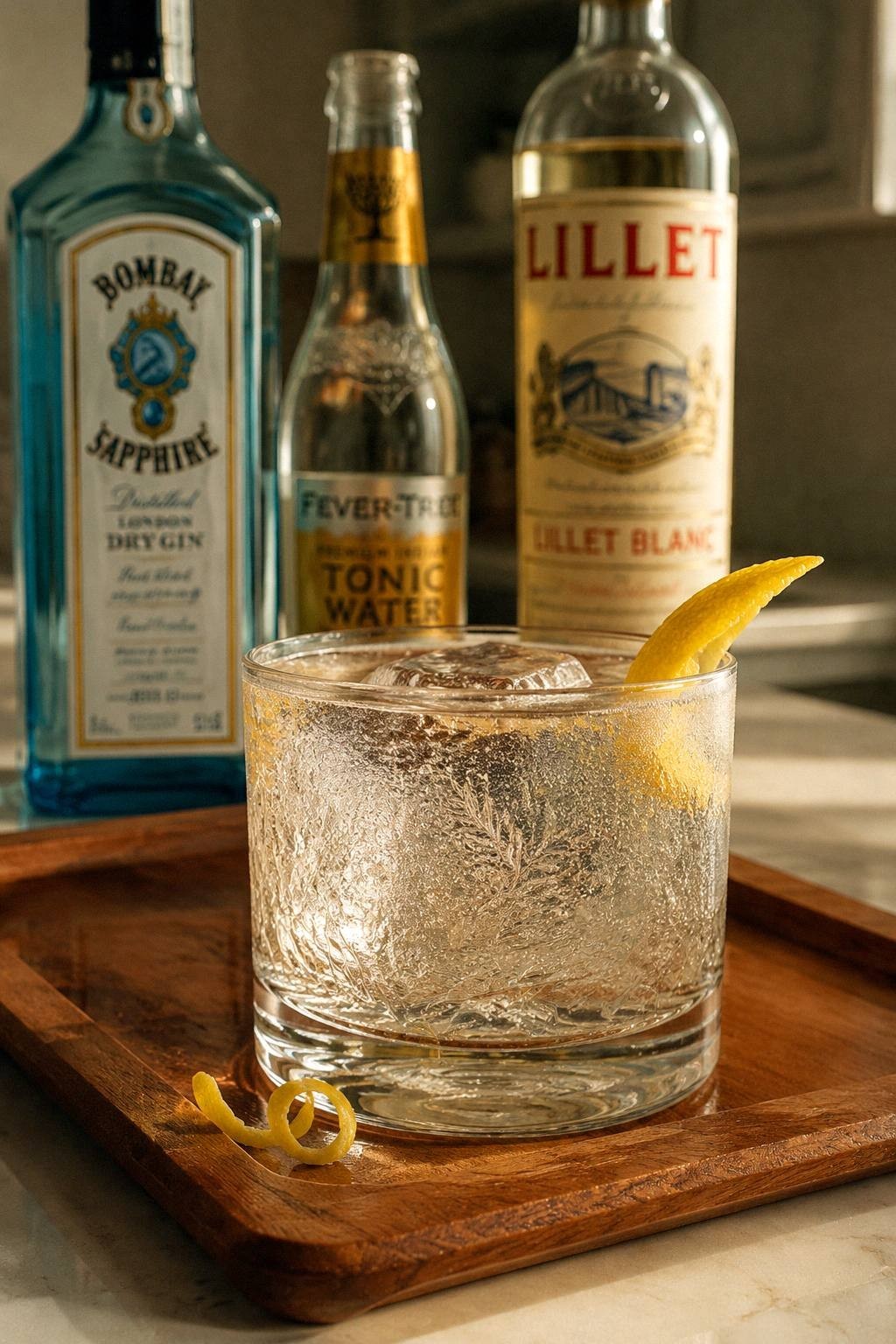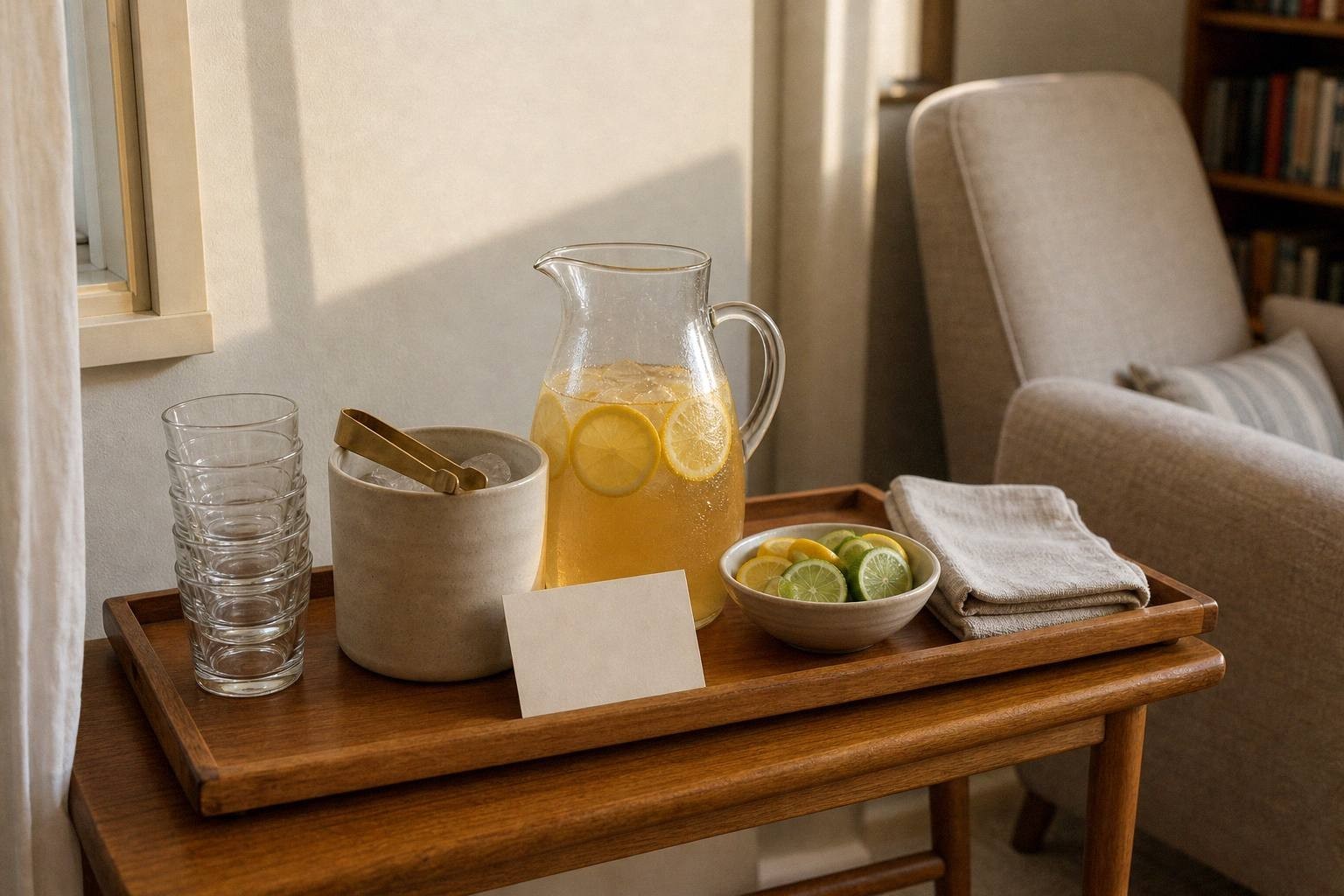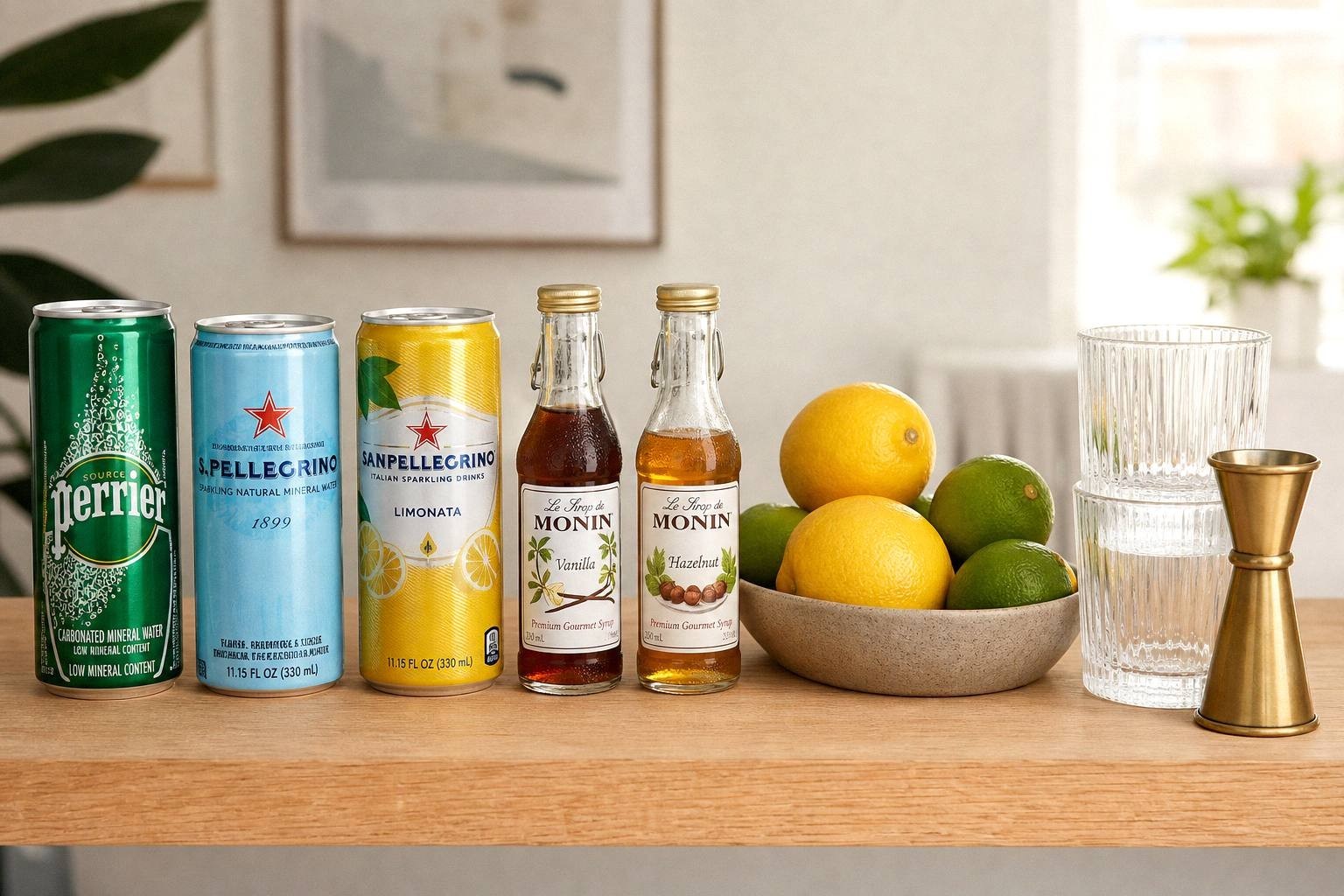
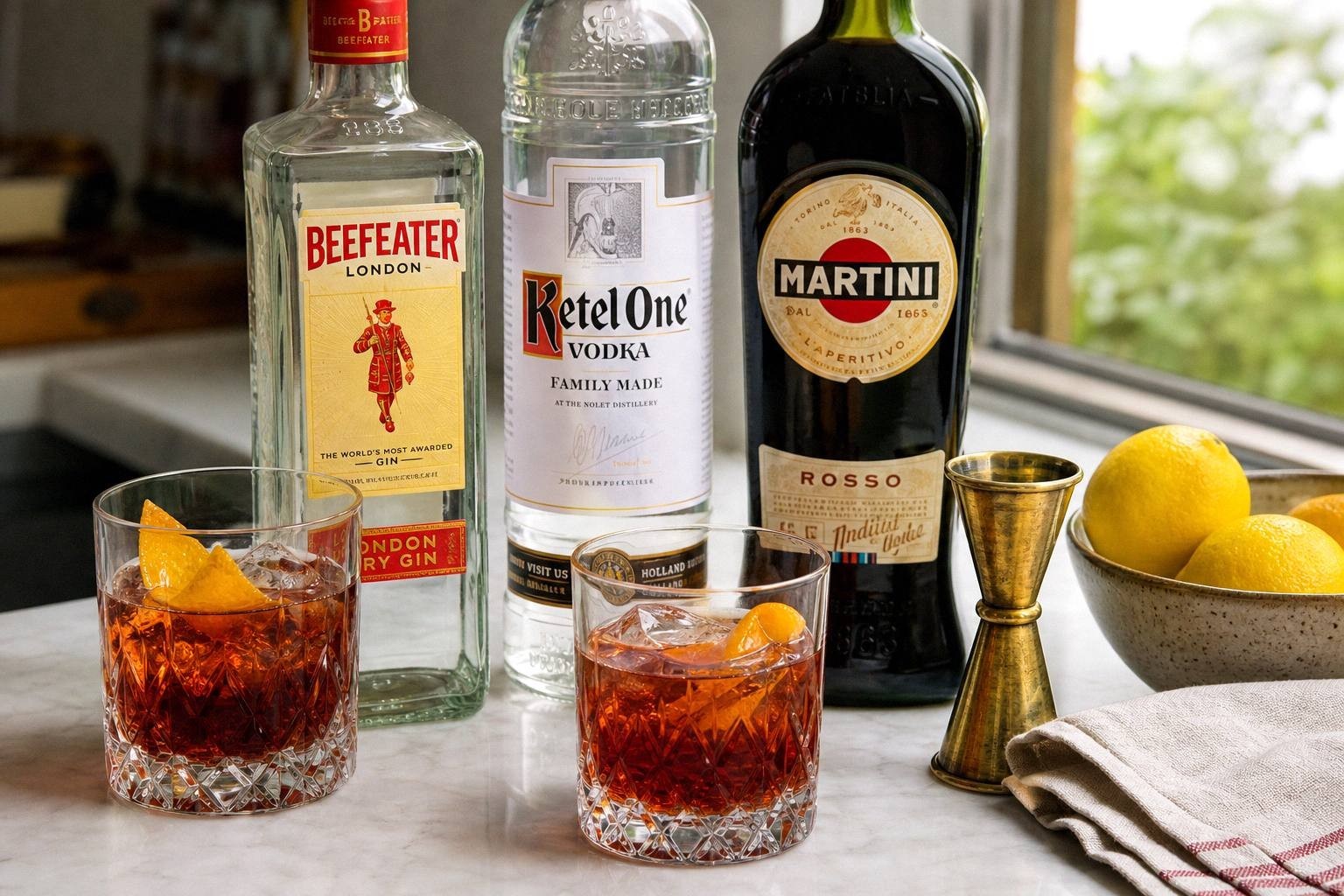
The bottles are not the hard part. Buying three bottles takes ten minutes.
The hard part is the week after, when the gin will not stand up in the cabinet, the two-liter tonic has taken over a fridge shelf, and all of it has quietly migrated to the counter beside the toaster where it will live forever. That is how most apartment bars end. Not from lack of ambition. From lack of eleven vertical inches.
So this guide starts with the tape measure, not the liquor store.
Quick answer
Three bottles fit a small apartment because three is what one carryable tray holds. Measure your shelf gap first: a 750 ml bottle stands roughly 11.5 to 13 inches tall, and cabinet shelves are commonly spaced about 12 inches apart, so the bottles usually end up living out in the open. Plan for that instead of fighting it. Then pick one spirit that overlaps the most drinks, buy the mixer in single-serve cans rather than liters, and make the third bottle a syrup that lives in the fridge door and costs no cabinet space at all.
Measure the gap before you buy the gin
This is the number that decides everything else, and nobody tells you it first.
A standard 750 ml spirits bottle runs about 11.5 to 13 inches tall and roughly 2.75 to 3.5 inches across, depending on whether it is a slim London dry or a wide-shouldered bottle (Dimensions.com ). Kitchen cabinet shelves are typically spaced 12 to 14 inches apart, and 14 inches is what designers recommend specifically when you need room for bottles (Shelfology ). Most rentals were not built with the generous number.
Go measure yours right now, top of shelf to bottom of the shelf above:
- Under 12 inches clear. Nothing full-size stands up here. This shelf is for glassware, and your bottles live on the counter or a tray. Stop trying.
- 12 to 13 inches. A coin flip. Slim bottles stand, wide ones do not, and you will be annoyed every time you guess wrong at the store.
- 14 inches or more. You have a liquor shelf. Take it.
If you get the small number, that is not a failure, and it changes the plan in a useful way: the bar is going to be visible, so it has to look like something you meant to do. That is a styling problem, and styling problems are cheap to solve. A tray, three bottles with labels you do not hate, and glassware that looks more expensive than it was reads as intentional. Six bottles in a jumble reads as clutter.
Also measure the counter depth under your wall cabinets. There are usually 18 inches from countertop to the bottom of the upper cabinets, which is enough for a bottle to stand but not enough to pour into a tall glass without sliding forward first. Worth knowing before you set the bar directly under a cabinet.
The one-tray rule
Here is the constraint that keeps a small bar small: your bar is whatever fits on one tray you can pick up with two hands.
Not a shelf, not a corner, not a cabinet. A tray. Because in an apartment the bar has to move. It lives on the counter until you need the counter for dinner, then it goes to the top of the fridge or the end of the bookshelf, then it comes back out when someone is over. Anything that cannot make that trip in one go stops getting used.
Three bottles, one small cutting board, and a couple of lemons is what a 12 by 18 inch tray comfortably holds. That is not a coincidence. Three is the number because three is what fits.
The rule also does the buying decision for you. Every time you want to add a bottle, put it on the tray. If something else has to come off, you are not adding, you are trading. Most of the time you will decide against the trade, which is exactly the point.
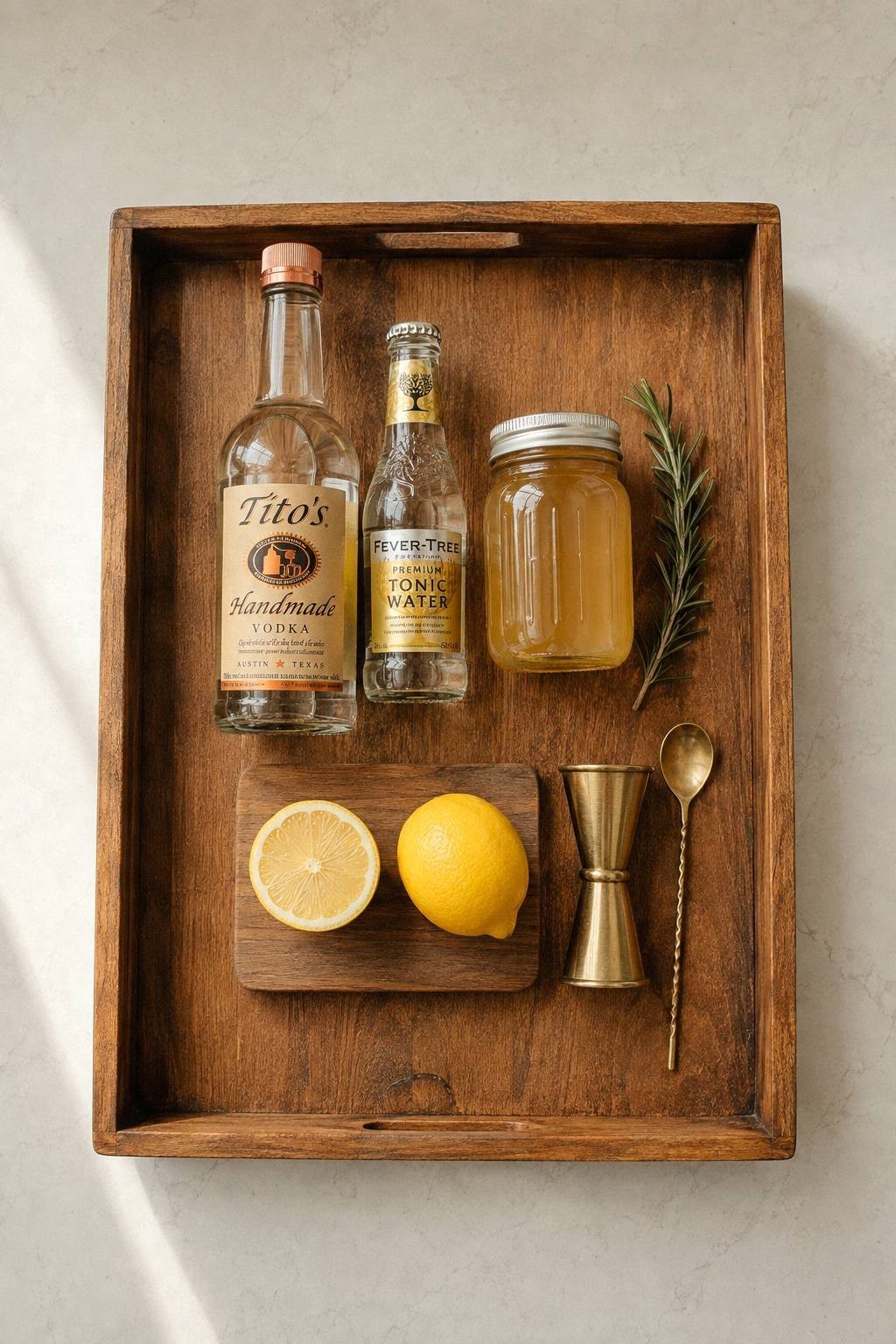
Bottle one: the spirit that overlaps the most drinks
In a big kitchen you buy a spirit because it makes one drink you love. In 600 square feet you buy the spirit that shows up in the most drinks you will actually pour on a Tuesday.
Gin wins that math more often than people expect, because a gin bottle already has a spice cabinet inside it. Juniper, coriander, citrus peel, often angelica root. You are buying flavor that vodka would make you build from scratch with things you have no room to store. One bottle of London dry, tonic, and a lemon covers a shocking amount of ground.
If gin is not your thing, blanco tequila is the better second answer than vodka, for the same reason: it brings flavor with it. The build logic does not change.
I have written the full drink math out separately, because it deserves the space: the three bottle home bar that makes eight drinks walks through the exact builds, glass by glass, including two zero-proof pours from the same three bottles. Bookmark that one for what to make. This one is about where it all lives.
One note on size. A 750 ml bottle is the right buy even in a tiny kitchen. The 1.75 L handle is cheaper per ounce and taller than nearly any shelf you own, and it will end up on the floor of a closet, which is where bottles go to be forgotten.
Bottle two: buy the mixer in cans, not liters
This is the apartment-specific decision, and it is the one most people get backward.
The two-liter bottle of tonic is cheaper. It is also flat by the third drink, and it eats a full fridge shelf while it goes flat. In a shared or small fridge, that shelf is worth more than the money you saved.
Small-format cans or 150 to 200 ml bottles solve both problems at once. Every drink gets fresh carbonation, because you are opening a fresh container each time. And cans store in the fridge door or stacked flat in a crisper drawer instead of standing up on a shelf. A four-pack disappears into space you were not using.
Read the label while you are at it. Real quinine and cane sugar taste like an ingredient. High-fructose syrup tastes like a mixer. Tonic is half the volume of a gin and tonic, so it is not a background player.
If you do not love the bitterness of tonic, plain soda water works in nearly every build, and the classics were made with soda long before craft tonic existed.
Bottle three: the one that costs no shelf space
The third bottle is a syrup you make, and the reason it belongs in a small-apartment bar is almost embarrassing in its simplicity: it lives in the fridge door, so it does not compete for the shelf at all.
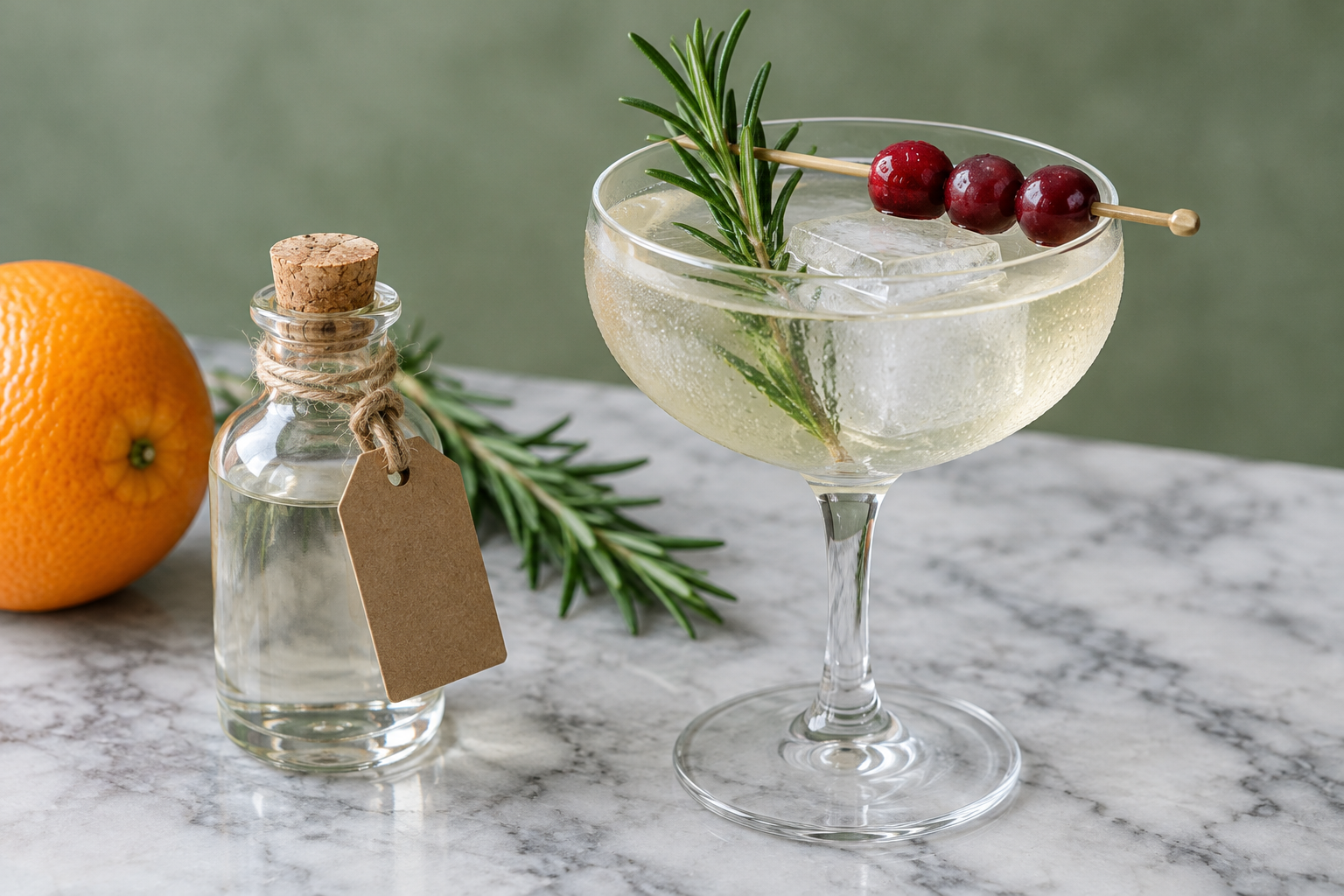
It is also the variety multiplier. One jar of botanical syrup turns spirit and citrus into a finished cocktail, sweetens the alcohol-free pours so they taste deliberate rather than apologetic, and keeps two to three weeks refrigerated. When the jar runs low, make the next batch with a different herb instead of restocking the same one. Your handful of drinks quietly doubles over a season without a single new bottle on the tray.
The rosemary and lemon peel version, with the full method and timings, is in the three bottle home bar guide . If you want to go further into the flavoring-without-storage lane, homemade cocktail bitters live in a two-ounce dropper bottle and take up less room than a pepper grinder.
The ice problem is the actual apartment problem
Everyone plans the bottles. Almost nobody plans the ice, and in a small apartment ice is the thing that breaks first.
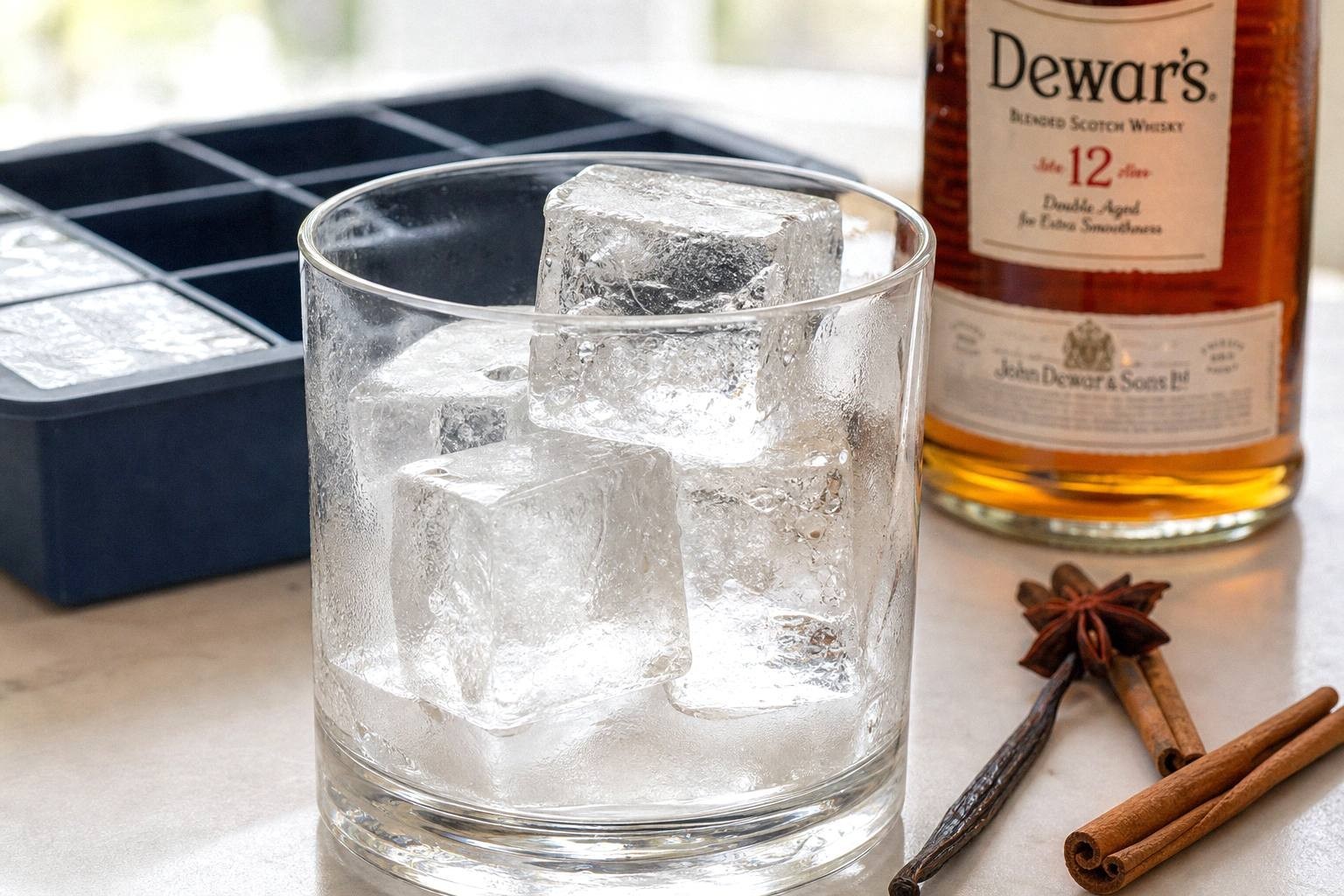
A standard freezer ice tray makes cubes around an inch. Those cubes work fine in a soda. In a mixed drink they turn it into a watery version of itself in a few minutes, because melt rate is governed by surface area relative to volume, and a pile of small cubes has far more exposed surface than one big cube of the same total volume (Difford’s Guide ). A two-inch cube in a rocks glass adds noticeably less water over the same five minutes than the handful of small cubes it replaces.
For an apartment freezer, that fact points somewhere convenient: you want fewer, bigger cubes, which is also less freezer volume for the same number of drinks.
What to actually do:
- One silicone tray of 2-inch cubes, not two trays of small ones. A six-cube tray is roughly the footprint of a paperback and stacks under a bag of frozen peas.
- Pop and bag. Freeze the tray, twist the cubes into a zip bag, refill the tray. A bag of loose big cubes packs into gaps that a rigid tray cannot use, and you can build a real supply before people come over.
- Boil and cool your water first if you want the clear ones. Cloudiness is trapped air. It affects nothing but how the drink looks, and how a drink looks is a large part of why anyone bothers.
- Ice goes out last. In a small kitchen the drink station and the freezer are three feet apart, so there is no reason to fill an ice bucket early and watch it turn to slush.
If your freezer genuinely cannot spare room for a tray, that is worth knowing before you buy bottles, because a home bar without ice is a shelf of bottles. Chill the mixer and the glasses in the fridge instead and pour drinks short.
Where the bar lives when there is no room for a cart
A bar cart wants roughly two feet of floor that nothing else is using. Most first apartments do not have that, and buying one anyway is how people end up with a cart in the walkway.
The spots that actually work in small places, in the order I would try them:
- A tray on the counter corner farthest from the sink. The sink corner is wet and busy. The far corner is dead space in almost every galley kitchen.
- The top of the fridge. Usually the only unclaimed horizontal surface in the room. Put the tray on a rubber shelf liner so nothing walks when the door slams.
- One shelf of an existing bookshelf. Take the books off one shelf rather than buying furniture. Bottles are roughly hardcover depth, so they fit a standard shelf without overhang.
- A narrow entry or side table. This one moves the drinks out of the kitchen entirely during a gathering, which unclogs the room more than any other single change.
The full walkthrough on that last idea, including how to make a tray read as a real station, is in how to make a drink station when your apartment has no room for a bar cart . If you do end up with a small cart eventually, how to style a bar cart covers making three bottles look like a considered set instead of a sparse one.
What to skip while the bar is this small
Skip the pieces that make the setup look bigger without making a drink better:
- The full boxed bar tool set. Most of it is one shaker, one strainer, and six things you will never touch. Buy the shaker and the jigger separately and save the drawer.
- A second set of specialty glasses. Six to eight glasses is plenty for a bar this size. A thrifted glassware upgrade does more for the look of a drink than a fourth bottle does for the taste.
- Vermouth, until you own the martini. It is a wine, it goes off in the fridge in a few weeks, and it takes fridge space you are already fighting for.
- A mini fridge. It is the most expensive way to solve a problem that a four-pack of cans in the door already solved.
- Bottles bought for a single recipe. In a small space, a bottle has to earn its footprint across several drinks or it turns into decor.
For the fuller list of what does earn a spot once you have room, eight bar cart essentials you will actually use is the honest version.
What to add when you start hosting more
Add for the bottleneck you actually hit, not the one you imagine.
If you keep running out of cold drinks, the next purchase is ice capacity, a second cube tray or an insulated bucket, not another bottle. If you are making the same drink eight times in a row, the fix is a pitcher and a batch, not a new spirit. If people keep asking what they can have, write the builds on an index card and prop it against the bottle. That card costs nothing and it turns you back into a guest at your own table.
Bottle four comes last, and only when something in your rotation has genuinely started to bore you.
Common questions
How much space does a three-bottle bar actually need?
About the footprint of one carryable tray, commonly 12 by 18 inches, plus roughly 13 inches of vertical clearance if you want the bottles standing under a shelf. If you have less vertical room than that, the bar lives out in the open on a counter or the top of the fridge, which is a styling decision rather than a problem.
Will a 750 ml bottle fit in a standard kitchen cabinet?
Sometimes. A 750 ml bottle is roughly 11.5 to 13 inches tall and standard cabinet shelf spacing is 12 to 14 inches, so slim bottles usually stand and wide-shouldered ones often do not. Measure the gap before you buy rather than after.
Is a 1.75 L handle a better buy for a small apartment?
No. It is cheaper per ounce and taller than nearly any shelf in a rental, so it ends up stored somewhere inconvenient and gets used less. A 750 ml bottle at the middle price tier is the better small-space buy.
What do I do if my freezer is too small for an ice tray?
Chill the mixer and the glasses in the fridge, pour drinks short, and skip the ice rather than serving lukewarm drinks over three sad cubes. If you can spare any freezer room at all, one six-cube tray of 2-inch cubes is the highest-value use of it, because bigger cubes dilute the drink more slowly than the same volume of small ones.
Can I build this bar with no alcohol at all?
Yes, and the structure holds exactly: one flavor base, one sparkling mixer in small cans, one homemade syrup. That is the same three-slot logic, and the first apartment mocktail shelf is built on it.