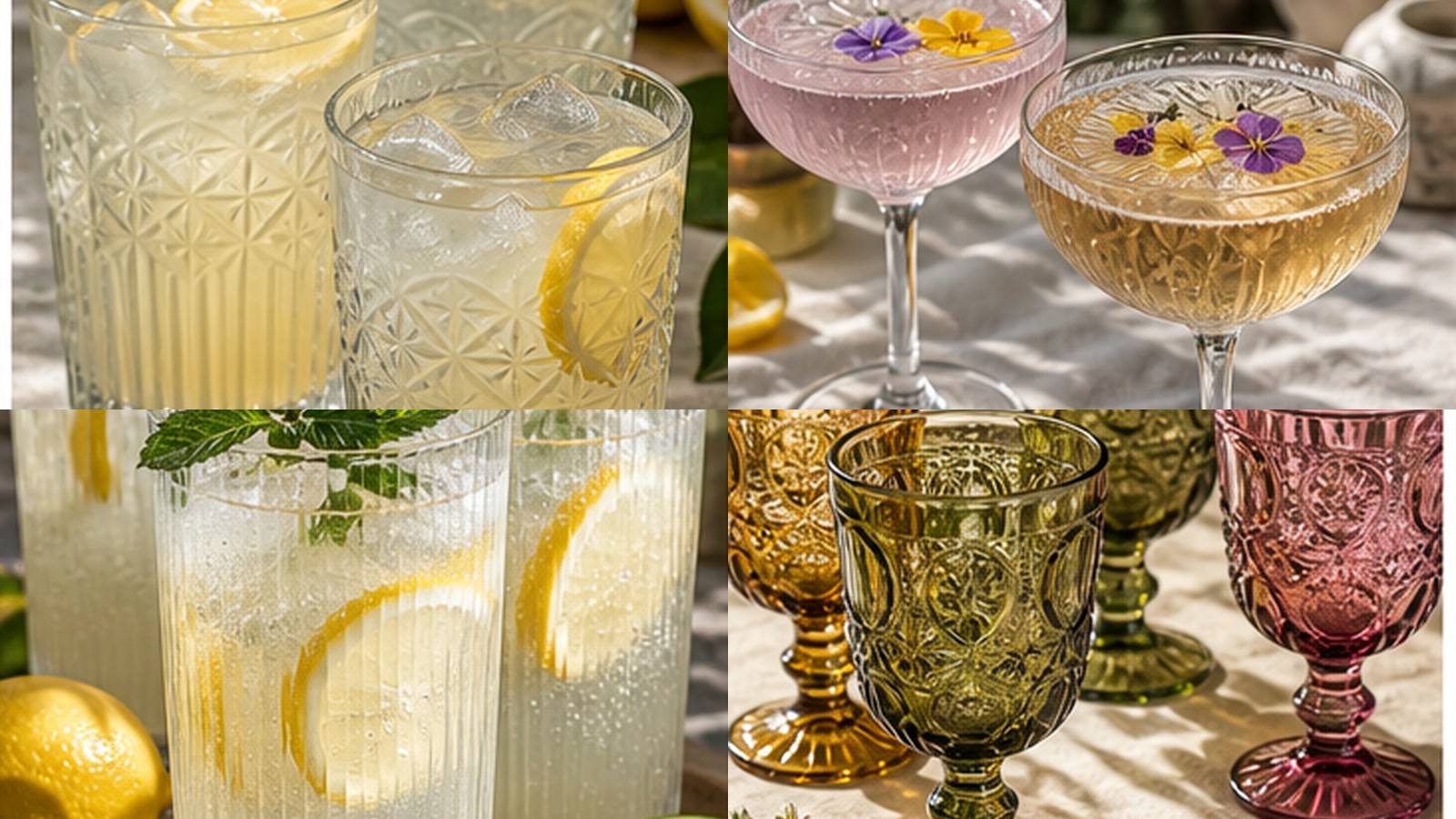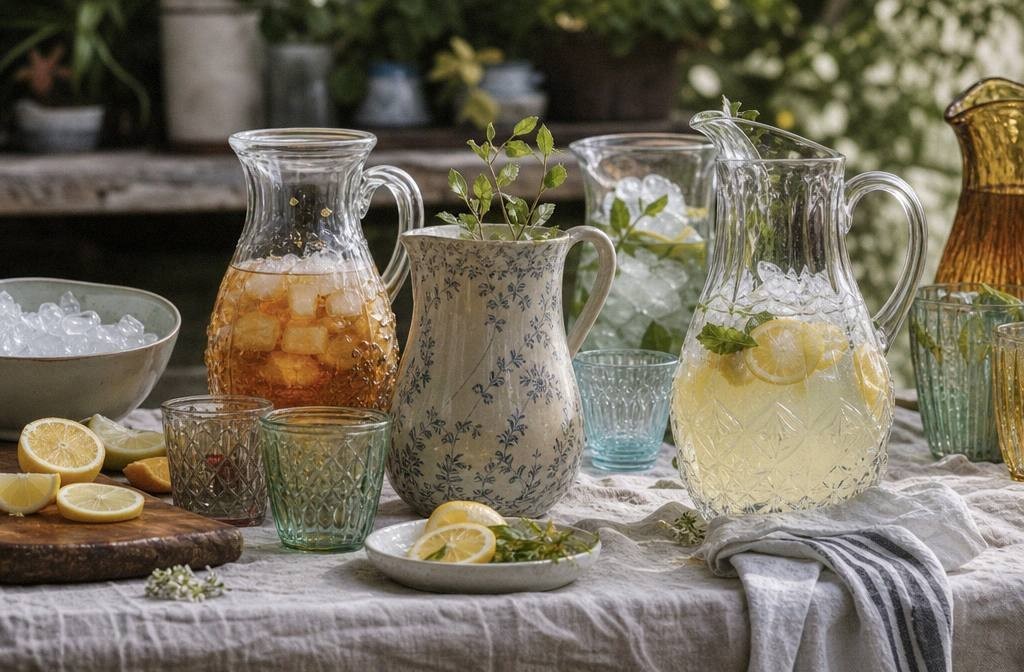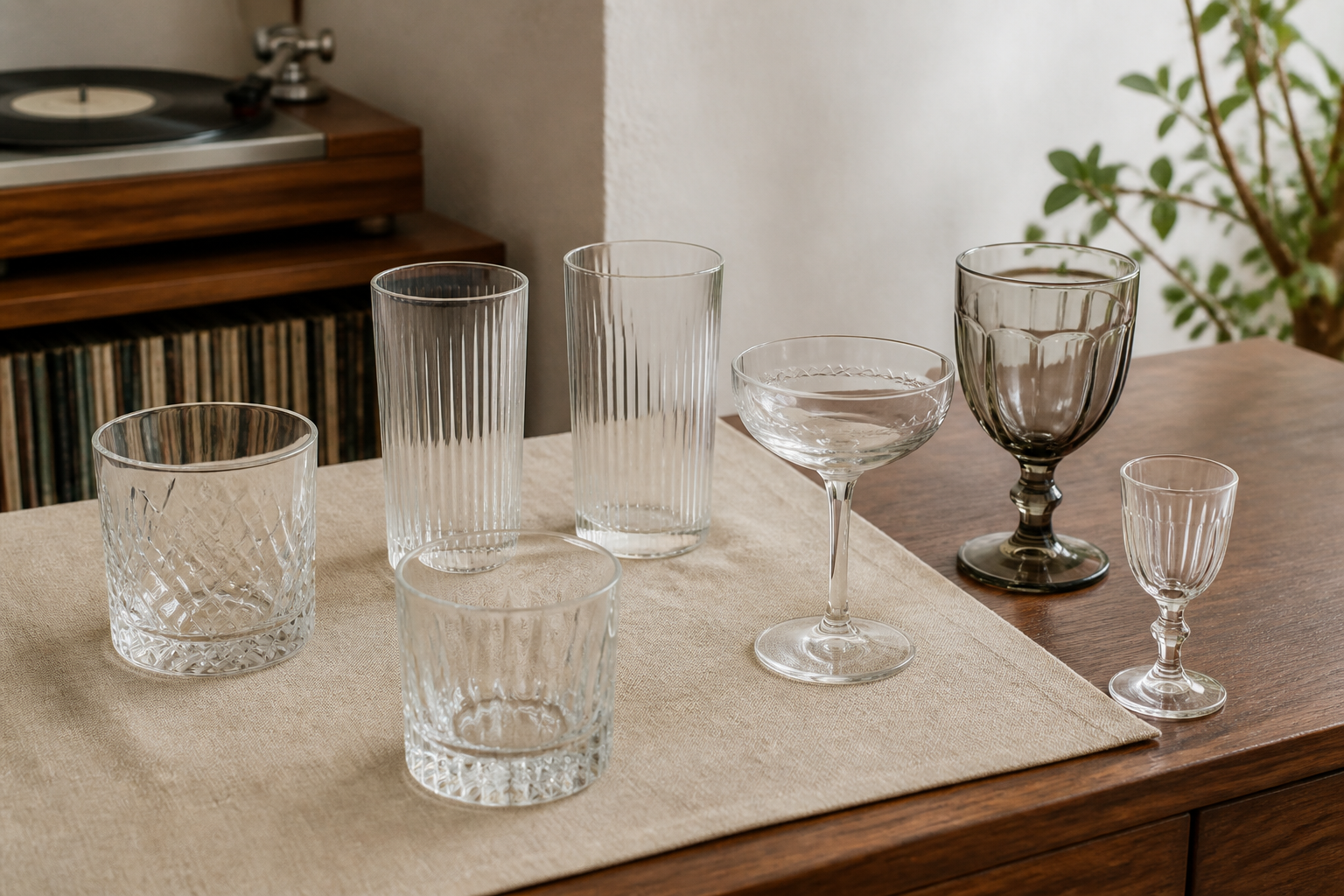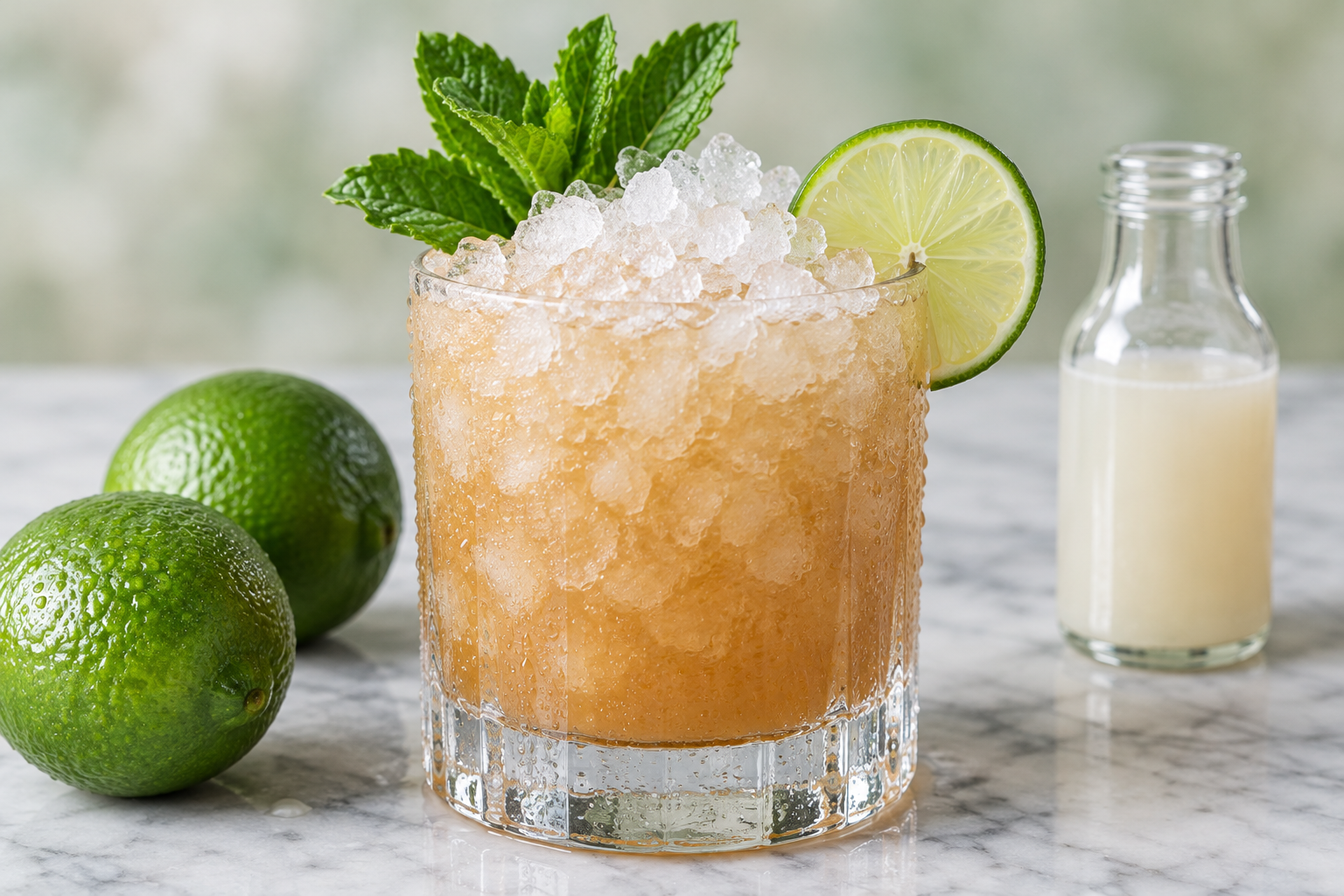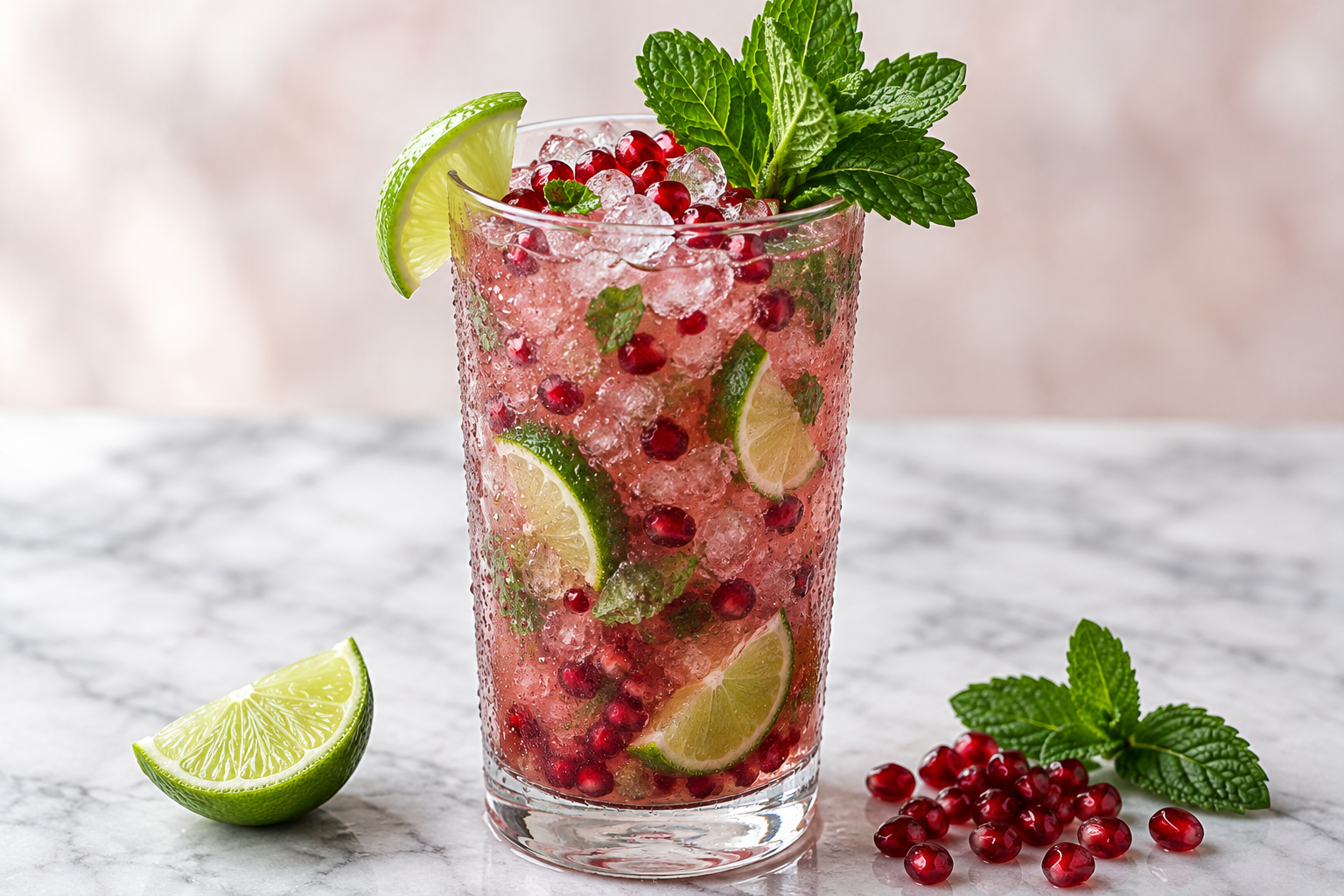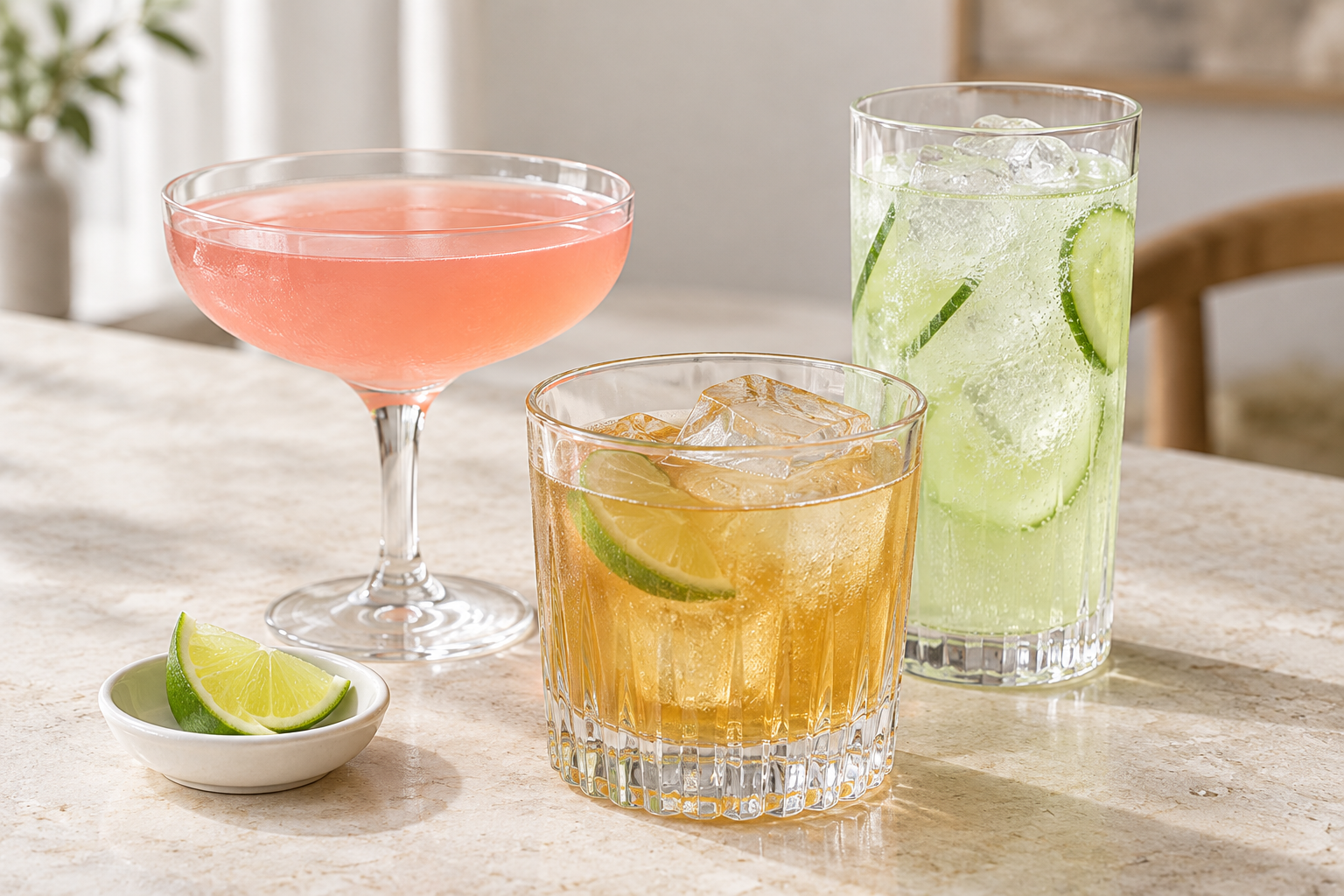
The right mocktail glass is the one that fits the drink and the way you serve it. If guests will add ice, choose a roomy tumbler or highball. For a small, chilled citrus drink, a coupe gives the pour a cocktail-like feel without asking it to hold a pile of ice.
Choose Mocktail Glasses by Drink and Serving Style
| Style | Shopping capacity guide* | Best fit | Trade-off to check |
|---|---|---|---|
| Coupe or Nick and Nora | About 4 to 7 oz | Small, chilled drinks without much ice | Open bowl spills more easily; not ideal for a self-serve table |
| Pressed tumbler | About 8 to 12 oz | Iced tea, shrubs and short spritzes | Pattern and color can hide the drink’s color or make washing harder |
| Highball | About 10 to 16 oz | Tall fizzy drinks with ice | Tall, narrow vintage pieces can be easier to tip or chip |
| Goblet | About 10 to 16 oz | Fruit, herbs and a generous ice pour | A stem adds a break point; check its stability |
| Cordial glass | About 1 to 3 oz | Tasting pours and syrups | Too small for a full mocktail |
*These are shopping ranges to help compare listings and thrift finds, not verified specifications for any particular glass. Measure the actual vessel and leave room for ice and garnish.
Why the Glass Changes the Drink
Mocktails need a little help from presentation. They do not have the built-in ritual of wine, a martini glass, or a rocks pour. Glassware gives that ritual back.
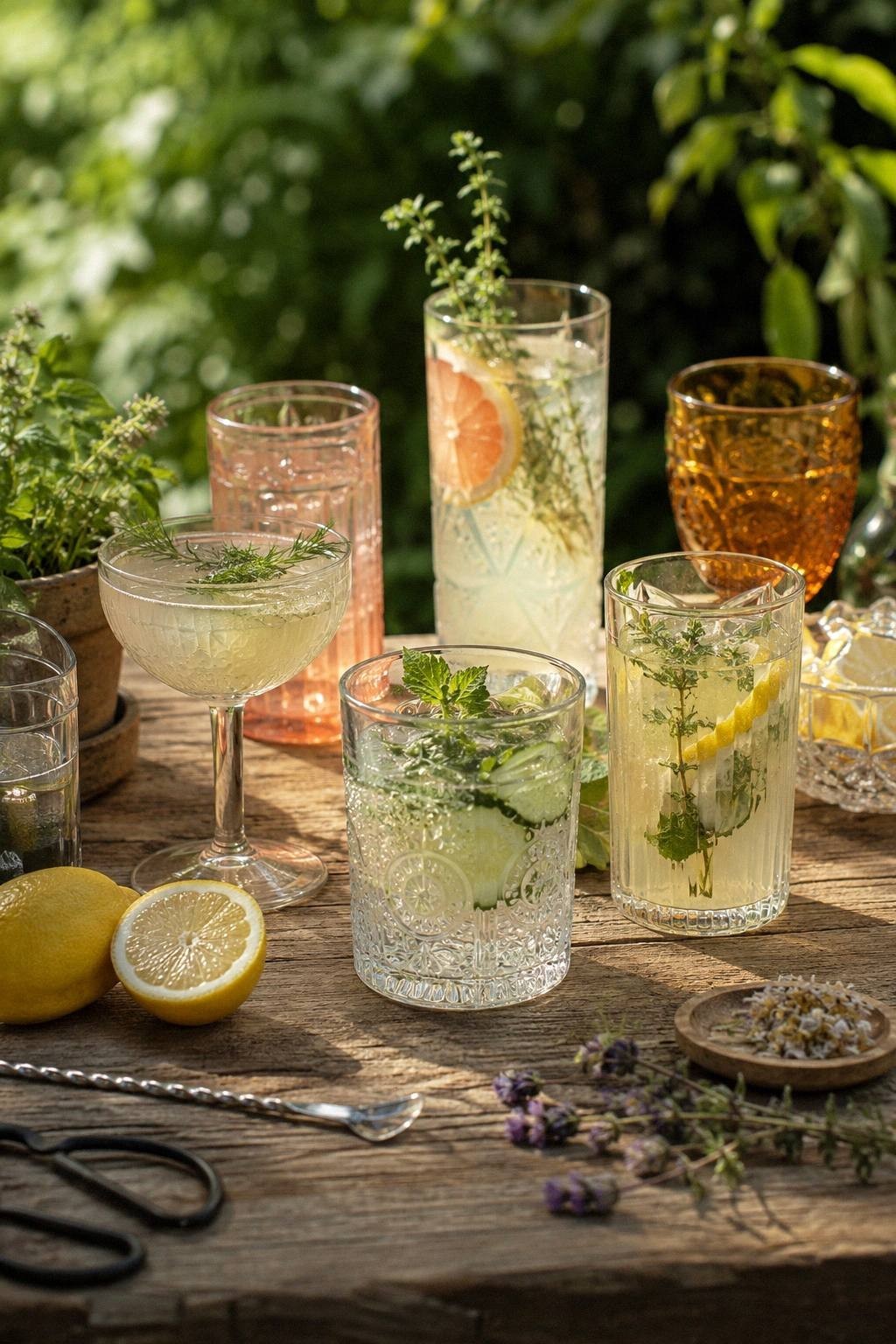
You do not need a full matching set. A few useful shapes are enough: coupes for small chilled pours, highballs for fizzy drinks, pressed tumblers for iced tea and shrubs, and goblets when you want room for fruit and ice.
The trick is to make the glass feel chosen, not random.
Capacity, Ice and Pour Size
Think about the finished drink, not just the glass’s listed capacity. A highball with ice needs room for both the cubes and the mixer. A coupe is usually easier to enjoy when the drink is chilled first and served without a large garnish. For a pitcher party, choose a glass that guests can carry comfortably when full.
The ranges in the table are a first-pass shopping filter. Vintage styles vary, and a decorative shape can hold less than it looks like it should. If capacity matters, check the listing’s measured volume or fill the glass with water and measure it before using it for a recipe.
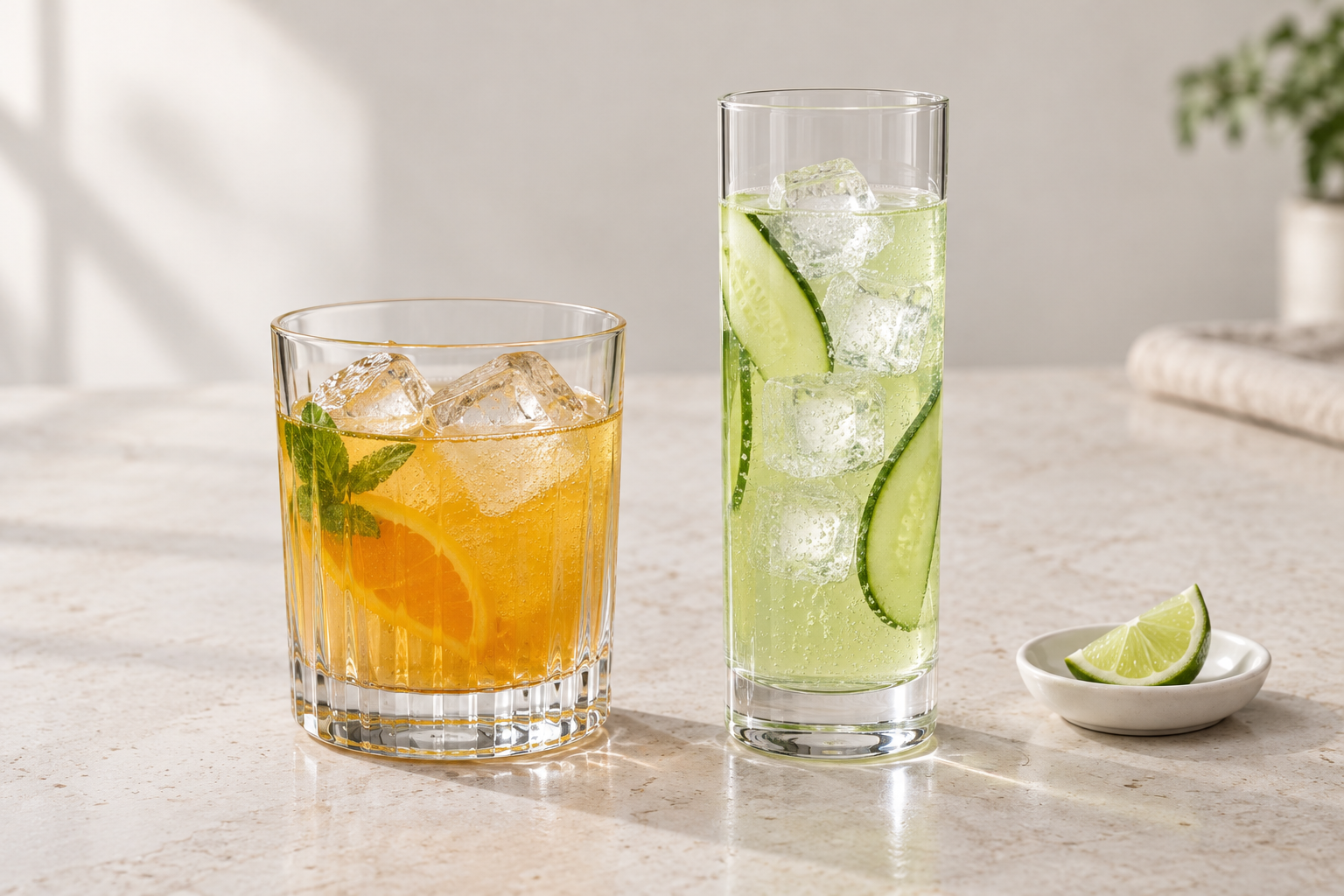
Coupes for Citrus and Floral Mocktails
Coupes make mocktails feel grown up because they slow the drink down. Use them for small pours: elderflower lemonade, rose spritzes, hibiscus sour-style drinks, lavender citrus drinks, and zero-proof aperitif builds.
Skip coupes for tall drinks with lots of ice. They spill easily, and the drink warms up too fast. A coupe is best when the drink is chilled before it hits the glass.
When thrifting, set the glass on a level surface and look for a stable stem. Inspect the rim under good light without touching a sharp edge; leave anything with a nick.
Pressed Glass Tumblers for Iced Teas and Shrubs
Pressed glass is the easiest vintage barware to use often. It has weight, texture, and enough pattern to make a simple drink look finished.
Use pressed tumblers for iced hibiscus tea, shrubs, ginger limeade, sparkling lemonade, cold-brew herbal tea , and fruit-forward mocktails. They work with ice, garnishes, and muddled fruit.
Clear pressed glass is the most flexible. Amber, green, and smoky glass look beautiful, but they can change the color of the drink. That is fine for iced tea and citrus. It can dull pink or purple drinks.
Highballs for Fizzy Drinks
Highballs make sense when bubbles are the point. Tall glass, plenty of ice, mixer on top. Use them for cucumber mint fizz, grapefruit tonic, ginger beer mocktails, iced tea spritzes, and anything with sparkling water.
Glass thickness and durability vary by piece. Check the base, rim and sides for chips, cracks or a wobble. A thicker feel is not proof that a glass is safe or suitable for a dishwasher.
If you host outside, keep the fanciest highballs inside and use sturdier tumblers on the patio.
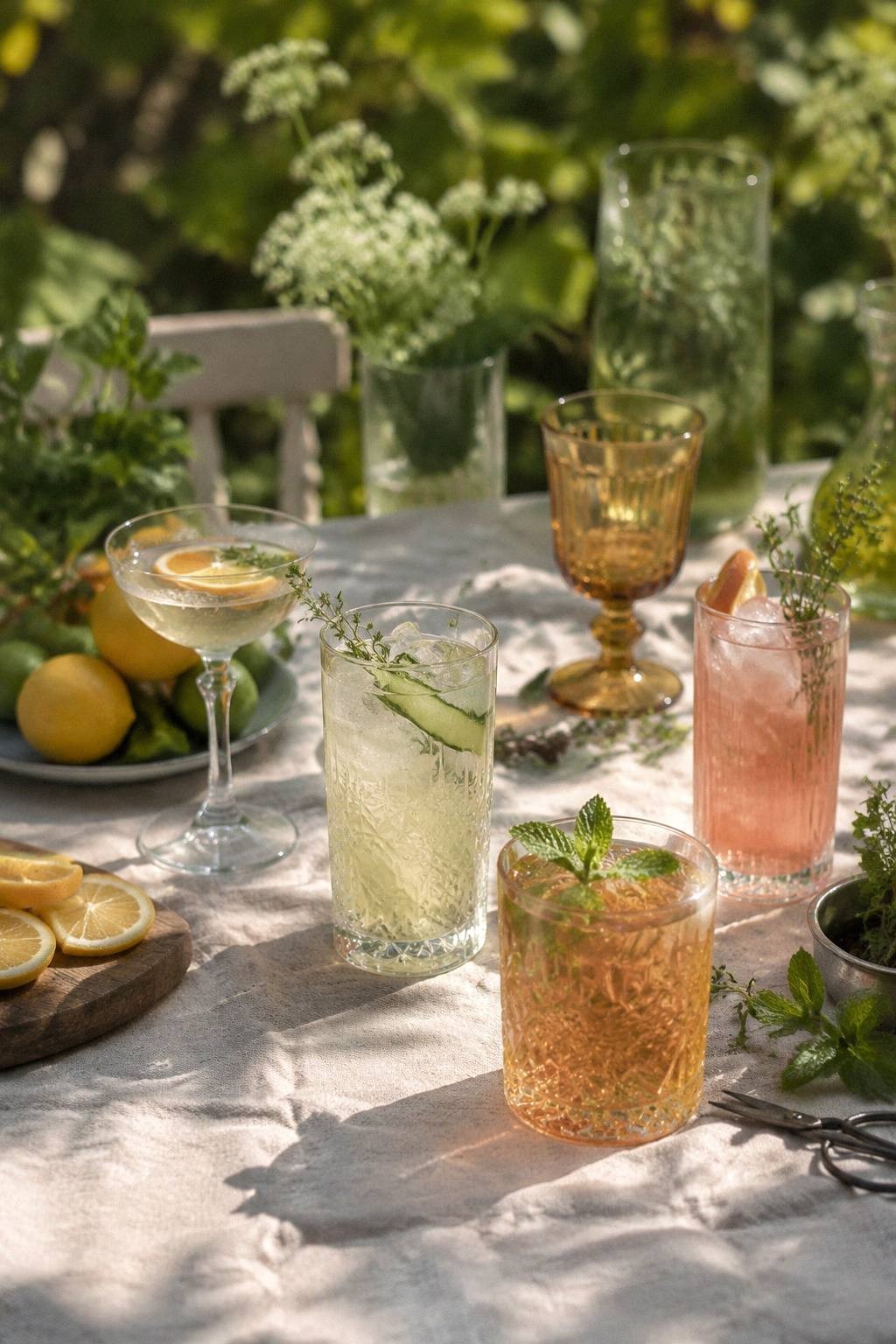
Goblets for Garden Party Mocktails
Goblets are forgiving. They hold ice, herbs, fruit, and larger garnishes without looking crowded. Amber goblets, green goblets, and clear etched goblets all work on a garden table.
Use goblets when the setup is more about mood than precision: pitcher mocktails, iced tea, cucumber water, fruit spritzes, or brunch drinks.
Mismatched goblets can work if the color family is consistent. A table of amber goblets feels collected. A table with every color from the thrift shelf feels busy.
Cordial Glasses for Small Pours
Tiny cordial glasses are useful for syrups, tasting pours, strong herbal tonics, and little welcome drinks. They are also easy to thrift because people overlook them.
Use them for a small hibiscus shot, chilled herbal cordial, shrub tasting, or a tiny coffee tonic. The small pour makes the drink feel intentional instead of stingy.
Cleaning and Durability Checks
Before buying, look for the care instructions if the maker or pattern is known. If they are missing, hand-wash a vintage glass gently and dry it with a soft cloth; do not assume an old, decorated or stemmed glass is dishwasher-safe. Avoid sudden temperature changes, which can stress glass. Keep chipped or cracked pieces out of drink service.
For everyday use, choose simple, sturdy tumblers that are easy to wash and replace. Save thin stems, fragile etched pieces and unknown painted or metal-trimmed glass for display unless you can verify their food-contact suitability and care instructions.
What to Look for When Thrifting
Check these before you buy:
- No chips or cracks at the rim, base or body
- No persistent cloudy haze or damaged decoration
- A stable base and comfortable grip
- Stems that sit firmly without wobbling
- Enough pieces for your table
- Shapes you will actually use
Hold the glass to the light. A cloudy film that will not wipe away may be permanent etching or damage. Leave it unless you want it for display.
How to Mix Mismatched Glasses
Pick one rule and stick to it. Match by color, shape, height, or texture.
Clear pressed glass with clear pressed glass. Amber goblets with amber goblets. Short tumblers with short tumblers. The glasses can be different, but the table needs one thread that ties them together.
If you only have two or three special glasses, use them at the bar cart for display and keep simpler glasses for guests. Not every glass has to be the star.
Common Questions
What mocktail glasses work best with ice?
Start with a tumbler or highball sized to leave room for both the drink and ice. Use a coupe for a smaller pour served chilled with little or no ice. Check the actual capacity because vintage glasses vary.
Is it safe to drink from vintage glassware?
Choose intact glass with verified food-contact suitability and lead-free composition. Clean appearance alone is not evidence. Keep unidentified antique crystal or decorated pieces for display; do not store drinks in lead crystal. The safety note below has sources and more detail.
How do I know if a vintage glass is dishwasher-safe?
Check the maker’s care instructions for the specific pattern. If you cannot confirm them, hand-wash gently and avoid sudden temperature changes. Decorations, age and delicate stems can change how a piece should be cared for.
How many glasses should I thrift for a party?
Start with six to eight useful glasses in one general style. That is enough for a small drink table without forcing you into a huge matching set.
How do I make mocktails look like cocktails?
Choose a glass that suits the drink, add ice that fits comfortably, and use a garnish that will not crowd the rim. A coupe suits a small chilled pour; a highball gives a fizzy drink room to build.
Food-Contact Check Before Serving
Use verified food-contact, lead-free glassware for these acidic drinks. A smooth rim, clear surface or heavy weight cannot establish whether old crystal or decoration contains lead. Treat unidentified antique crystal and painted or metal-decorated pieces as display objects until reliable composition and food-contact evidence is available. Do not store drinks in lead crystal. Inspect for chips and cracks visually rather than running a finger over a potentially sharp rim; wash intact suitable glasses before use. Acidic drinks and contact time affect lead transfer, as Health Canada explains. This is material-selection guidance, not testing of the pictured glasses.