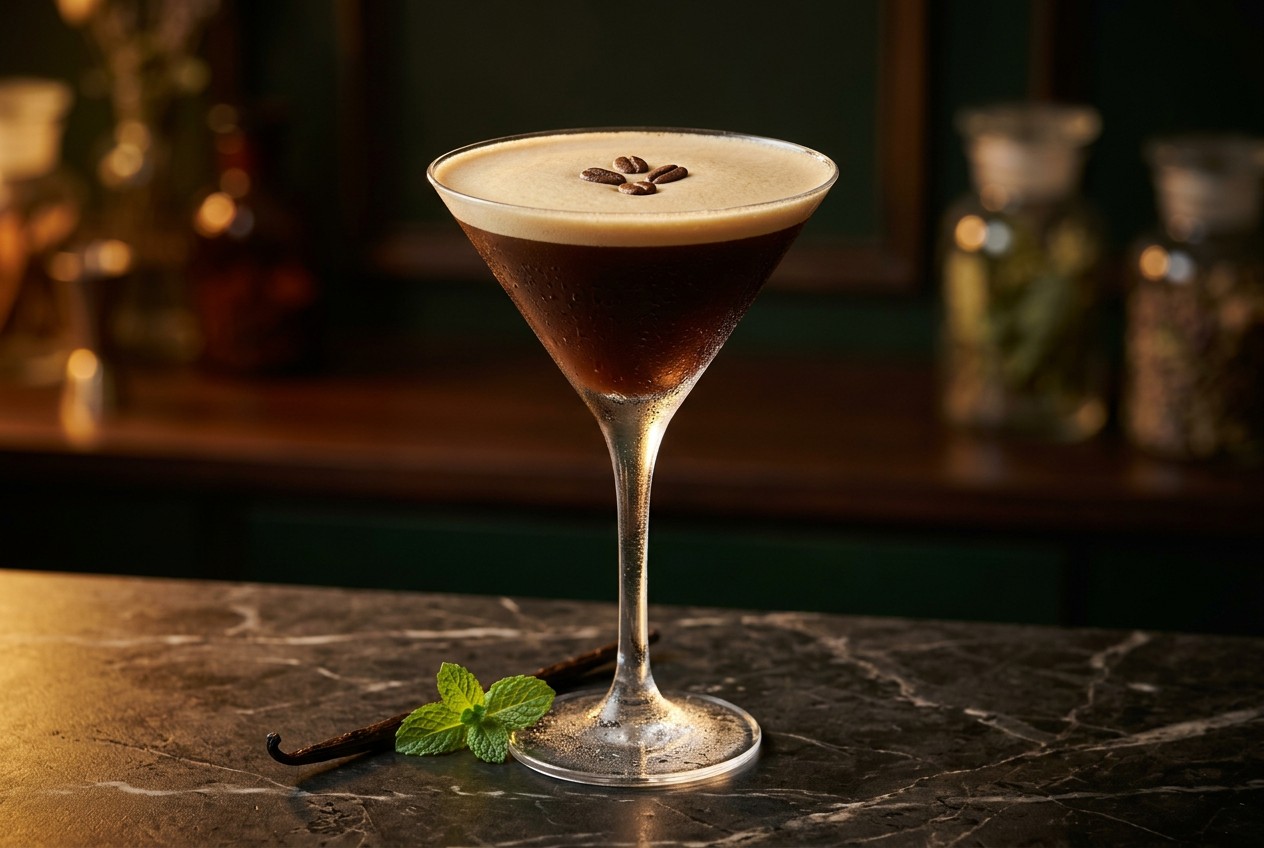
Coffee, a coffee liqueur alternative and vanilla syrup make one cold shaken mocktail. It contains 105 ml (3 1/2 US fl oz) before shaking dilution. Espresso and cold brew differ in strength and foam; use cold brew prepared for drinking, not undiluted concentrate.
Ingredients
- 2 US fl oz (60 ml) chilled espresso or ready-to-drink cold brew
- 1 US fl oz (30 ml) commercially labeled non-alcoholic coffee liqueur alternative
- 1/2 US fl oz (15 ml) prepared, cooled vanilla syrup
- Ice cubes
Method
- Chill a heat-safe martini glass with ice water while measuring the ingredients.
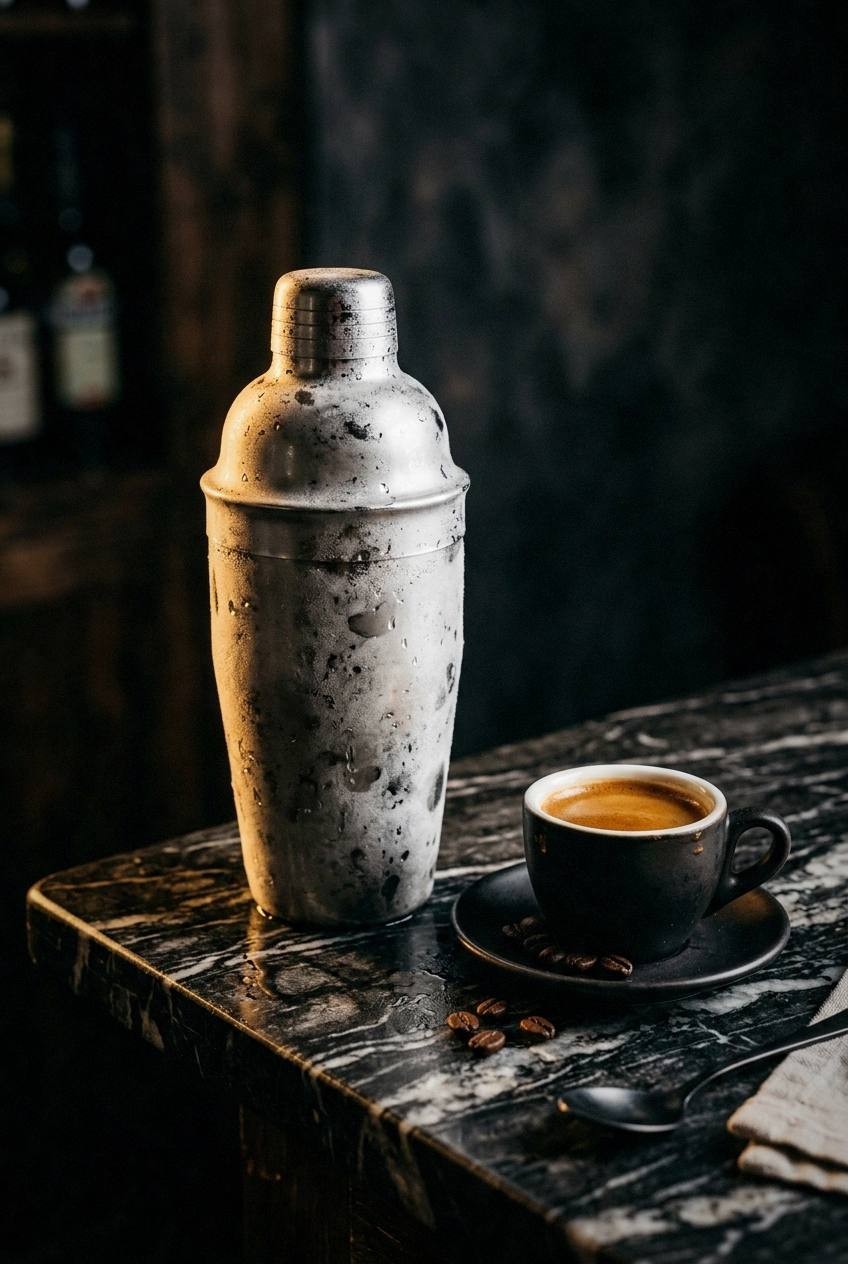
- Put the chilled coffee, coffee alternative and cooled vanilla syrup in a shaker. Add ice.
- Shake vigorously for 15 to 20 seconds until cold.
- Empty the chilling water from the glass. Strain the drink through a cocktail strainer and fine sieve into the glass. Serve immediately.
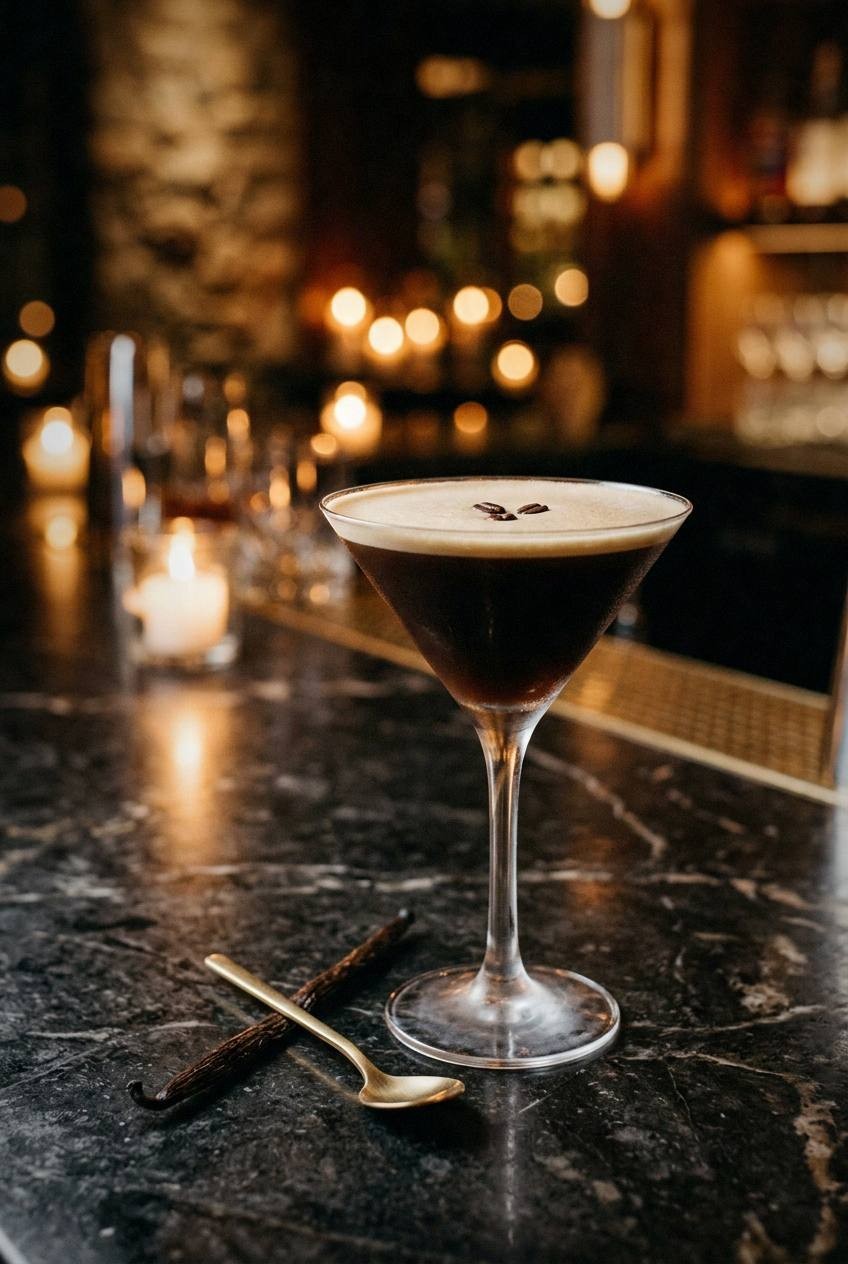
Ingredients and Alcohol Labels
Choose the coffee alternative and syrup by their labels if complete alcohol avoidance matters. Non-alcoholic products can have residual alcohol, and ordinary bitters and vanilla extract may contain alcohol. This drink is not a verified zero-ABV formula. Espresso makes a different foam from cold brew; shaking and fine straining do not guarantee a lasting crema. Decaf coffee can replace the same 60 ml portion if preferred.
Coffee Preparation and Timing
The five-minute total assumes chilled coffee and cooled syrup are ready. Brew espresso according to your equipment and cool it in an open heat-safe vessel over an ice-water bath before measuring; allow roughly 10 to 15 extra minutes, or longer until cold. Follow cold-brew product dilution instructions. Homemade cold brew has its own brewing and chilling clock and is not part of this five-minute recipe.
A Shaker for Repeat Use
If you make shaken coffee drinks often, the OXO Steel cocktail shakerPaid Amazon links: we may earn a commission if you buy through links in this article. Disclosure details. is one option from our bar cart guide. A clean tightly lidded jar can shake these already-cold ingredients; pour through a sieve. Never shake hot coffee in a sealed vessel.
Measured Options
For orange aroma, add 1 drop of a commercially prepared alcohol-free orange bitters product before shaking, checking its label. A salt rim uses a pinch of food salt on half the damp glass rim, without adding it to the shaker. For a cardamom syrup option, make the component below with 2 lightly crushed green cardamom pods in place of the vanilla bean. Omit tonka bean syrup; use culinary vanilla or cardamom instead. Put any decorative coffee beans on a saucer rather than in the drink.
Storage and Service
Shake each drink to order. Keep prepared coffee and syrups refrigerated at 40 F (4 C) or below, follow commercial labels, and use homemade chilled coffee the same day as a house quality target. The finished drink is for immediate service.
Vanilla Syrup Component
For a small batch, heat 1/4 US cup (60 ml) water and 1/4 US cup granulated sugar with half a split culinary vanilla bean, stirring until dissolved. Remove from heat, steep 10 minutes, strain and cool in a clean heat-safe container over an ice-water bath. Allow about 30 minutes total or longer until cold. Measure recovery; use only 15 ml in one drink and refrigerate the surplus. For the cardamom option use 2 lightly crushed green cardamom pods instead of the bean, with the same process. Refrigerate at 40 F (4 C) or below and use within 3 days as a conservative house quality target, not a tested shelf life. A ready-made vanilla syrup can supply the same 15 ml portion; follow its label.
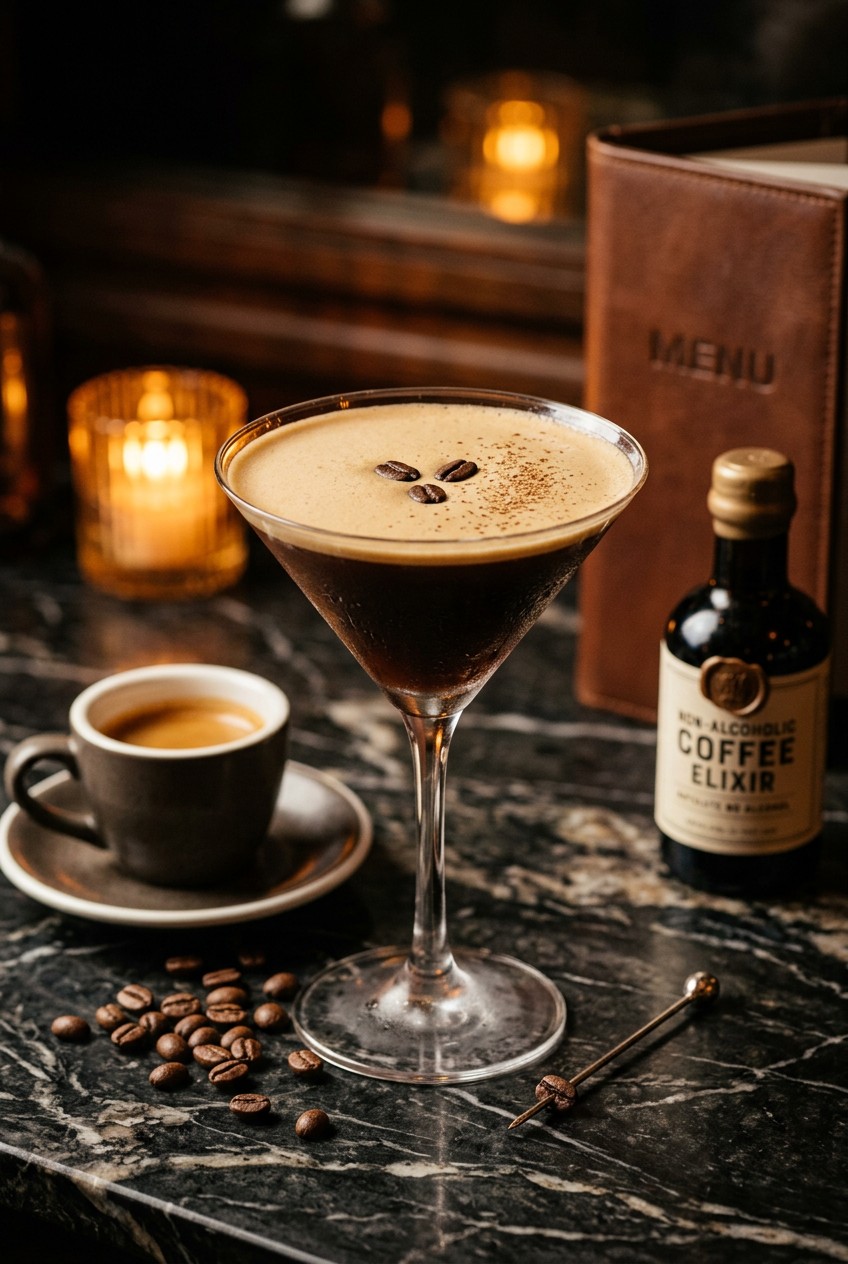
More Drinks
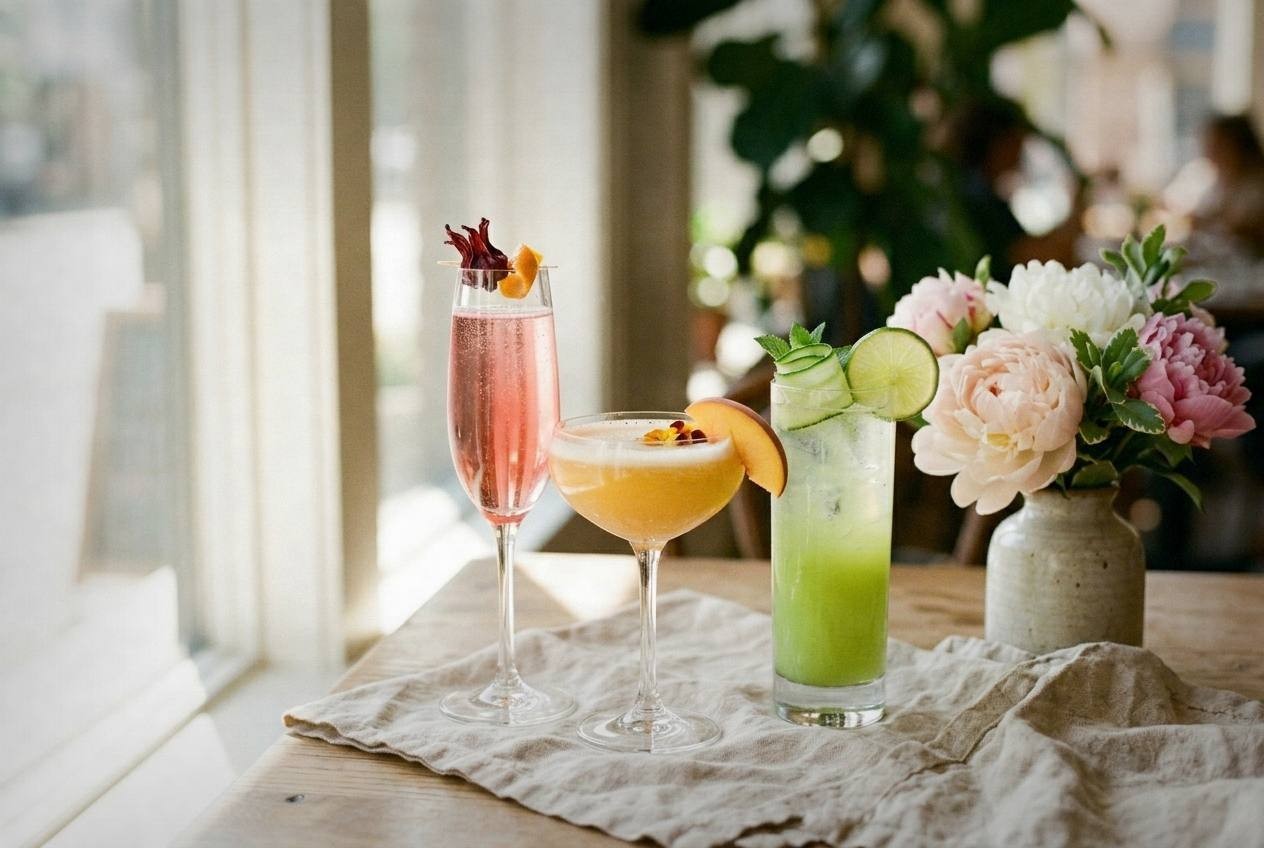
- Fancy Mocktails That Look Like Cocktails: 3 Recipes
- Salted Caramel Matcha Drinks
- Iced Matcha Latte Recipe
- Lavender Honey Lemon Mocktail
- 7 Best Iced Tea Recipes for Spring and Summer
- Homemade Cocktail Bitters: Source-Based Options
Sources and Recipe Notes
The measured flavor options are house culinary adaptations; the linked publishers inform preparation methods. Timing assumes the ready ingredients stated above.